TTG Asia
Asia/Singapore Tuesday, 10th February 2026
Page 2199

Independents reach out for marketing representation

0

Why do some hotel owners prefer to be independent and how do they choose a hotel marketing company to represent them? Raini Hamdi, Xinyi Liang-Pholsena, Paige Lee Pei Qi, Mimi Hudoyo and S Puvaneswary find out
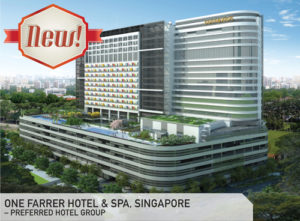
11-july-onefarrerNo. of rooms 250

Positioning Five-star luxury hotel, three hotel concepts in one, trend-setting urban resort. Opening in phases from August

One Farrer Hotel & Spa is the hospitality/lifestyle centrepiece of a mixed use development called The Connexion that includes a state-of-the-art conference centre, a private hospital and specialist clinics.

The owning company, The Farrer Park Company, believes that being an independent hotel gives One Farrer Hotel & Spa full autonomy to tailor its offerings and establish a unique hospitality, wellness and F&B experience for its guests.

The hotel has chosen Preferred Hotel Group (PHG) to represent it, saying PHG will give it a global platform, the endorsement of a renowned brand, connectivity to online and travel agency reservations systems, and on the consumer front, its point-based loyalty programme iPrefer. PHG also has a network of 36 global sales offices and access to 16 frequent flyer programmes.

Richard Helfer, director of The Farrer Park Company and chairman of One Farrer, likes that each member hotel is required to meet or exceed the Preferred standard of excellence, which is anonymously reviewed yearly.

He added: “PHG’s integrated quality assurance measurement programme, which allows member hotels to aggregate and analyse reviews and comments from 45 consumer review and social media sites, is also a valuable platform for helping the hotel to understand residents’ experiences. This will be a significant tool that aids the hotel’s efforts in continuously improving its standards.”
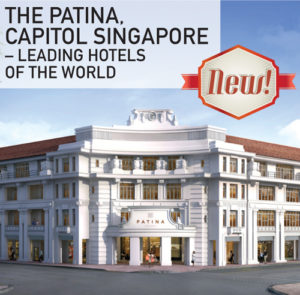

11-july-thepatinaNo. of rooms 157

Positioning Experience-led hospitality, celebrates individuality, art, architecture, heritage and culture. Opening 1Q15

The Patina, Capitol Singapore, is owned by the Kwee family, which owns luxury hotels such as The Ritz-Carlton, Capella, Conrad and Regent in Singapore. The Patina represents an amalgamation of over 50 years of expertise and experience in luxury hospitality, and the move from owning to operating a hotel.

For representation, it has picked Leading Hotels of the World (LHW) as its collection of luxury hotel brands fits the bill, and has track record and international presence, said Marc Dardenne, CEO of Patina Hotels & Resorts. He likes its “bespoke” rather than “cookie cutter” sales/PR efforts based on each hotel’s needs.

“With their global sales, marketing and PR presence, we can leverage and tap on their databases and expertise in target markets, especially emerging markets like India, Russia and China,” said Dardenne, adding that LHW’s loyalty programme, Leaders Club, also enables Patina to reach out to high net worth individuals.
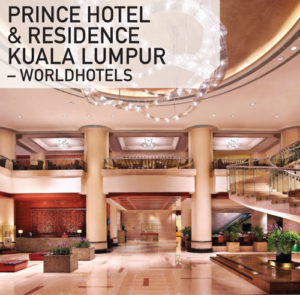

11-july-princehotelNo. of rooms 445 (plus 157 serviced apartments)

Positioning A corporate hotel located in the heart of Kuala Lumpur

The hotel is a franchise of Prince Hotels & Resorts Japan and is operated independently with affiliation to Worldhotels.

Being independent allows autonomy on decision-making among the hotel executive committee team on strategies pertaining to branding, positioning, providing a unique guest experience and driving profit, said general manager Tim Quarm. Hence, senior managers are trained to be entrepreneurs of their own business units and to be creative hoteliers, he said.

The challenge commonly faced by independent hotels is a lack of awareness of the property and connection to the international travel trade as compared to international hotel chains. A marketing representation gives that exposure, and it picked Worldhotels for “its relevant tools, up-to-date innovations/strategies and experienced marketing personnel based in various regions”, said Quarm, who also likes the bridge to multinational corporations that Worldhotels provides.
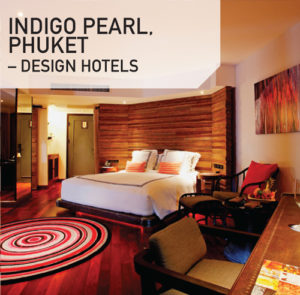

11-july-indigopearlNo. of rooms 177

Positioning Offering cultural, design and architectural lifestyle experiences

Indigo Pearl is owned by veteran hotelier Wichit Na-Ranong who prefers to be independent so he can embrace the brand pillars of cultural heritage, creativity, design and architecture and a close connection to north Phuket with its rich history, national parks, high-quality beaches and tin-mining origins.

For representation, it needed a company that understands this positioning and its unique product. Thus, it settled on Design Hotels which, said general manager Christopher Oakes, also shares its entrepreneurial spirit and enables it to reach high-quality niche markets.

Said Oakes: “Indigo Pearl is not a typical resort; it is very art- and design-focused with a deep connection to the destination. So it is not mass market, but attracts a more refined guest profile.

“We feel Design Hotels demonstrates a strong understanding of our ideals and, with its ability to open up new regional markets to us and increase business across direct and retail channels, we believe they are a good fit.”

Oakes said the resort has expanded its visibility and profile with new travel consultants at events, exchanges and sales missions organised by Design Hotels.
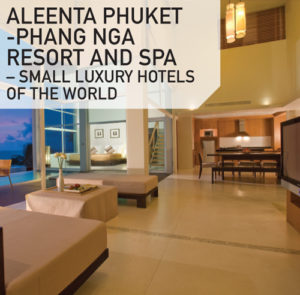

11-july-aleentaNo. of rooms 44 (plus 44 in development)

Positioning Luxury, “all suites, all private” concept, smallest room being 80m2

Aleenta Phuket is owned and managed by AHMS-The Collection, a hospitality management company under the leadership of founder/MD Anchalika Kijkanakorn, who aims to cater to like-minded hotel owners/developers around Asia.
For representation, it picked Small Luxury Hotels (SLH) as it shares the same ethos as AHMS. Anchalika is also chairman of the board of SLH, the first female and Asian representative to be elected to this position.  “SLH has a wide reach globally and their selection of hotels guarantees the correct brand associations and connotations for us at all times,” she said.

“SLH has regional sales and PR teams worldwide including key emerging markets like China, India and Russia as well as all traditional markets.”

On the technical side of distribution SLH provides a state-of-the-art Internet booking engine, seamless packaging opportunities, full GDS connectivity with systems support from a dedicated account manager, she said. It audits all hotels each year. SLH Club Members also has over one million customers who book SLH hotels at least twice per year, and Anchalika said they are “perfect guests with the highest ADR and incremental spend”.


11-july-thebaleNo. of rooms 29

Positioning A hideaway for couples, adults-only policy, luxury pool villas, butlers, gourmet cuisine, spa

The resort is owned by an Indonesian-based company and is managed by Lifestyle Retreats, a Singapore-based boutique hotel management firm. It ended its hotel representation partnership last year as the actual room/revenue production had decreased yearly while production from OTAs and the hotel’s websites increased.

“This is a market shift which I believe is affecting marketing affiliations across the board,” said Jose Luis Calle, managing director, Lifestyle Retreats. Calle believes representation firms can help properties without a brand or solid marketing team to penetrate markets, but once these hotels have positioned themselves, it is a challenge to justify the expense of representation if it’s not supported with actual production of room nights and turnover.

“Representation companies are not always necessary, although I sincerely appreciate their contribution especially during the pre-opening of The Bale in 2002. It put The Bale on the map and gave us the right exposure in a number of magazines. Production through their website represented a significant amount of the overall turnover of the property. Those were the good days definitely,” he said.
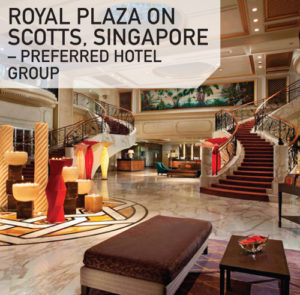

11-july-royalscottsNo. of rooms 511

Positioning Deluxe business hotel

After being part of a hotel chain for 25 years, Royal Plaza on Scotts, owned by Sajahtera Investments, went independent  to “allow us the flexibility to respond to a fast and ever-changing market”, said general manager Patrick Fiat, who believes personalised service delivery is a challenge for chain properties around the world to implement and manage.

Saying it takes two to tango in all partnerships, the first criterion in selecting a representation firm is to ensure it has similar business practices and ideals. He thus settled on Preferred Hotel Group (PHG).
Fiat said: “We have seen a healthy growth in business every year since we embarked on the partnership more than 15 years ago.

“We have gained support from various regional offices to secure corporate RFPs from global MNCs. This translates to a substantial amount of direct business from frequent business travellers of these corporations. PHG also helps to enhance our brand in the global market.”

He added that PHG also reaches out to global travel agencies online and offline, which is a good source of business. “The hotels can use this to their advantage by balancing out the seasonal demands and booking costs,” he said.

Additional reporting from Xinyi Liang-Pholsena, Mimi Hudoyo, Paige Lee Pei Qi and S Puvaneswary

This article was first published in TTG Asia, July 11, 2014 issue, on page 14. To read more, please view our digital edition or click here to subscribe.

HK, Kolkata among Etihad’s 6 new destinations in 2015

0

ETIHAD Airways has announced plans to fly to six new destinations within the first half of 2015, namely Hong Kong, Kolkata, Madrid, Edinburgh, Entebbe (Uganda) and Algiers.

The airline will commence four-times-weekly services to Hong Kong from Abu Dhabi on June 15, and fly daily directly to Kolkata starting February 15.

It will also upgrade its existing daily flights to Brisbane via Singapore to a direct service In June 2015, deploying a three-class Boeing 787-9 Dreamliner on the route.

Further service upgrades within the Asia-Pacific include the introduction of a three-class Airbus A330-300 aircraft on daily flights to Singapore.

James Hogan, president and CEO of Etihad Airways, said: “Our global network development in the first half of 2015 supports a long-term vision to provide travellers with an extensive range of destinations and connections over Etihad Airways’ Abu Dhabi hub. These new destinations have been selected to expand our coverage and strengthen our customer proposition in the strategically important markets of Europe, Asia and Africa.

“The expansion will also create new opportunities to enhance our codeshare agreements and align operations with key airline partners, such as Virgin Australia, Jet Airways, Air Seychelles, Air Europa and Kenya Airways. Between Abu Dhabi and Hong Kong, for instance, our four weekly flights will combine with Air Seychelles’ three weekly flights to provide a daily frequency.”

Besides Hong Kong and Kolkata, the carrier will also fly to Madrid daily from March 29, Entebbe daily from May 1, Edinburgh daily from June 8 and Algiers thrice a week from June 17.

India reveals bold US$166m budget for tourism

0

THE new Union Budget for 2014/2015 unveiled yesterday proposing a Rs10 billion (US$166 million) investment to develop India as a more attractive tourism destination has generally received a positive response from the trade.

The budget covers improving air access, airport construction in second- and third-tier cities, introducing e-visas at nine airports by end-2014 (TTG Asia e-Daily, July 2, 2014), developing heritage sites and creating five themed tourist circuits, though no time frame was announced for most of the projects.

This includes earmarking Rs1 billion for the preservation of archeological sites, Rs2 billion for heritage cities development, while an international-standard convention centre will be built in Goa.

Service taxes will also be waived for Indian tour operators dealing with tours conducted outside of the country.

Other measures welcomed by the trade include allowing cenvat credit for rent-a-cab and tour operator services from October, the proposed nation-wide upgrading of railway lines (TTG Asia e-Daily, July 9, 2014) and the introduction of reits as vehicles for fundraising.

Cheering the new budget, Subhash Goyal, president, Indian Association of Tour Operators, said: “This is the best-ever budget for the tourism industry in the history of India. International tourist arrivals to India will grow by 30-40 per cent yearly once the e-visa is introduced.”

Madhavan Menon, managing director of Thomas Cook India, was particularly enthused by the development of the Sarnath-Gaya-Varanasi Buddhist circuit with world-class amenities, which he called a “manifestation” of the government’s pro-tourism focus.

However, a section of the industry feels the government could have gone further in supporting the industry.

“Major issues related to high energy costs and infrastructure development remains unaddressed,” said Manju Sharma, director, Jaypee Hotels.

And in the area of adventure travel, Akshay Kumar, president of the Adventure Tour Operators Association of India, said: “One of our long-standing demands – the waiver of excise and customs duty on the import of adventure travel equipment – was not met.”

“Reforms are needed mainly on issues related to airlines. Building new airports will not help unless we make the airline business viable and sustainable,’ added Vishal Bhadola, associate manager, CAPA India.

Additional report from Shekhar Niyogi.

HotelQuickly catches the eye of major investors in latest round of funding

0

LAST-MINUTE hotel booking app HotelQuickly has raised US$4.5 million in its latest round of funding from Japanese Internet media company Gree and veteran hotelier William Heinecke, who participated through his family office.

The additional funds will be channelled into product development, marketing and hiring to boost sales across Asia-Pacific and consolidate HotelQuickly’s position in the region.

Gree’s investment into HotelQuickly also marks the beginning of collaboration between the two companies. The former has rolled out its own last-minute booking service Tonight, and the partnership is expected to reap benefits for both sides in terms of shared technical experience and personnel exchange for a start.

The recent funding follows the US$1.2 million raised in August last year and bumps up HotelQuickly’s coffers to over US$5.5 million.

Gree board member, Eiji Araki, said: “HotelQuickly has expanded at a phenomenal pace this past year to emerge as the clear leader in last-minute bookings in Asia-Pacific with more than 3,000 partner hotels and 100 destinations.

“This is a great opportunity for Gree to take part in that growth story, while teaming up with the world-class talent at HotelQuickly to accelerate our own entry to this space. Our two companies share a mobile-first approach, so this partnership is a natural fit. I’m looking forward to what we can achieve together.”

Heinecke, who is chairman and CEO of Thailand-based Minor International, commented: “We’re seeing a clear shift from online to mobile and as traditional booking channels lose ground, there is a tremendous opportunity for a service like HotelQuickly in the Asia-Pacific region.”

Maldives to host surf event

0

THE Asian Surfing Championship will be hosted in the Maldives this September, the first time the islands will hold the Maldives Open.

Main sponsor of the event, state-owned Maldives Marketing & PR Corporation (MMPRC), yesterday signed an agreement with the Asian Surfing Championship and the local Maldives Bodyboarding Association.

At least 70 surfers from Malaysia, Indonesia, the Philippines, Thailand, Singapore and the Maldives are taking part in the event, which will run from September 3-7 at the Adaaran Select Hudhuranfushi resort.

“The event will further position the Maldives as a sought-after surf destination in the global arena,” a spokesperson for the MMPRC said.

The Maldives attracts close to a million foreign visitors a year.

Ovolo acquires three hotels in Australia

0

OVOLO Hotels is expanding in Australia with the purchase of three hotels Down Under – Blue Sydney, Hotel 1888 in Sydney and Oaks on Lonsdale in Melbourne.

Girish Jhunjhnuwala, founder and CEO of Ovolo Hotels, said: “2014 marks a significant milestone for Ovolo Hotels by acquiring three hotels outside Hong Kong. The purchase is part of an aggressive brand expansion strategy across Australia. They presented a unique opportunity for us to reinforce our presence in the Australian hotel market.”

Blue Sydney, formerly W Sydney, is located on the Wharf at Woolloomooloo Sydney with 100 rooms including 36 loft suites offering views of the Sydney Harbour foreshore. Ovolo will formally take over the hotel on October 31 and begin a gradual renovation of the property. The hotel was purchased in June.

Ovolo acquired Hotel 1888 in Sydney in May and Oaks on Lonsdale Serviced Apartments Melbourne in March, and will continue to work with the current hotel operators.

Hotel 1888 was converted from a wool warehouse originally built in 1888 and is the world’s first ‘Instagram hotel’, featuring 90 guestrooms and a good location on the CBD fringe of Pyrmont.

The 4.5-star Oaks on Lonsdale property sits on the Paris end of the Melbourne CBD in the heart of the city’s live theatre precinct. It offers 148 guest rooms in one- or two-bedroom configurations now, but will be transformed into an all-suite lifestyle hotel property in future.

A timeframe for the rebranding of these properties to the Ovolo brand has not been set yet.

Ovolo Hotels first entered the Australian market in 2012 with the opening of the 42-suite Ovolo Melbourne (TTG Asia e-Daily, February 20, 2012).

“Sydney and Melbourne continue to be the top destinations for hotel investors and for foreign capital into Australia. Through the Group’s expansion plan in the country and later in the Asia-Pacific region, we hope to inspire design-conscious living offering high-tech touches that have become a hallmark of the brand.”

Malaysia strives to bring Chinese back

0

TOURISM Malaysia is on an aggressive mission to recover Chinese arrivals, striking up marketing partnerships with airlines and working with outbound operators in China to arrange for charters.

Tourism Malaysia’s deputy director-general (promotion), Azizan Noordin, said the NTO is still discussing the mechanics of a six-month advertising campaign to promote holiday packages with AirAsia and longhaul affiliate AirAsia X. The two airlines collectively fly to 12 destinations in China.

Meanwhile, Tourism Malaysia’s charter agreement with Hubei Wanda New Airlines Travel Services is bearing fruit, with a charter from Wuhan arriving in Kuala Lumpur early this morning.

The flights, which commenced on June 30, will run three times weekly up to June 29, 2015. With the projected number of 158 flights, they are expected to contribute a total of 26,386 arrivals from China and RM76.2 million (US$24 million) in tourist receipts, said Tourism Malaysia chairman, Ng Yen Yen.

According to Azizan, Tourism Malaysia is in further discussions with airlines and Chinese travel agencies to offer charter services to Kuala Lumpur and secondary destinations such as Penang, Langkawi and Kota Kinabalu.

He said: “We want to work with the market to reassure the Chinese tourist that Malaysia is safe and make it a top-of-mind destination for China.”

Part of the recovery plans, which was rolled out starting end-May, also involves intensifying promotions in China’s second- and third-tier cities, where the population is more open to holidaying in Malaysia.

In addition, the NTO will organise regular fam trips for Chinese travel consultants, the media and top CEOs and decision-makers.

Arrivals traffic from China took a drastic tumble in the wake of the mysterious disappearance of Malaysia Airlines’ flight MH370 on March 8, which was on its way to Beijing with 153 Chinese nationals on board.

Some 30,000 tourists from China cancelled or suspended their holidays up to early 2015 after the incident, and tourism arrival statistics for April 2014 show a 19.5 per cent year-on-year drop in Chinese visitors to 132,158 tourists.

PATA releases second volume on APAC visitor forecasts

0

INDUSTRY professionals keen on a deeper understanding of the different Asia-Pacific travel economies can now purchase the second volume of PATA’s Asia-Pacific Visitor Forecasts 2014-2018.

Following May’s release of the first volume, the executive summary, the second volume provides more detailed and extensive quarterly forecast data for each of the 38 destinations within the region for 2014-2018.

These include:

– Between 2014 and 2018, average growth in visitor arrivals is projected at 6.5 per cent annually
– South-east Asia is expected to show strongest average annual growth of 13.3 per cent, followed by South Asia with 7.3 per cent
– Intra-Asia-Pacific travel will increase from 338.6 million in 2014 to 461 million by 2018, thanks to growth in Asia’s middle-class market
– Russian international visitor arrivals into the region are predicted to rise at almost 20 per cent per year over the period, to reach an inbound volume of almost 15 million by 2018

To purchase and read the full report, visit www.PATAstore.com.

Luxury floating hotel cruises into Yangon hotel scene

0

MYANMAR’S first floating hotel at Botataung Jetty, Yangon will be launched in early August following extensive renovation to convert the engine-less vessel into accommodation.

Pyae Phyo Oo, operation manager of the Vintage Luxury Yacht Hotel, said the hotel was influenced by 1920s designs and is owned by the local Hla Hla Pa Pa Company.

He said: “From the survey we conducted, we found that about 20 per cent of total arrivals to Myanmar are in the luxury market. They are mostly from Europe – especially Germany, Russia a the Netherlands – and, from Asia, Japan. So our main idea is to attract them to stay in our hotel and enjoy the scenery and beauty of Yangon River while being less than a five-minute drive from downtown Yangon.”

The 2,000 tonne vessel originally from Finland comes with five storeys and offers 104 rooms comprising two Executive Suite rooms, 46 Deluxe rooms (with and without balcony), and 56 Junior Deluxe rooms, two restaurants, two bars, a meeting room that sits 40 pax in theatre-style, two meeting rooms for 25 pax each, a spa, Jacuzzi, business centre and souvenir shop.

Room rates at the Vintage Luxury Yacht Hotel range from US$250 to above US$800. The hotel’s pre-opening deal offers rates at US$99 without taxes for a junior deluxe room.

The company is planning to add a 400-room vessel in future next to the current one.

Asian cities dominate top 10 global travel destinations

0

THE much talked-about Asian Century is expanding its influence into the travel sphere, with Asian destinations clinching five out of top 10 positions in the MasterCard Index of Global Destination Cities 2014.

Released yesterday, the list ranks global cities according to the number of international overnight visitors the cities are expected to receive for the year. Asia-Pacific bested last year’s efforts, when the region took four places.

While Bangkok relinquished its top spot from last year to London, it still came in strong at second place to lead the other Asia-Pacific cities in the top 10, which are Singapore, Kuala Lumpur, Hong Kong and Seoul respectively.

Accounting for the drop in Bangkok’s ranking, Matthew Driver, president, South-east Asia, MasterCard, said: “It is unsurprising due to the political unrest and uncertainty that has plagued Thailand since the latter part of 2013.

“However we are optimistic that Bangkok will come back in the foreseeable future as number one,” he added. The Thai capital is predicted to see an 11 per cent decline in visitors from last year.

According to the Index, Bangkok is projected to receive 16.4 million visitors this year, followed by Singapore in fourth place with 12.5 million (3.1 per cent growth) visitors, Kuala Lumpur in eighth with 10.8 million (+13.1 per cent) visitors, Hong Kong at ninth with 8.8 million (+seven per cent) and Seoul at 10th with 8.6 million (+4.7 per cent) visitors.

Highlighting the prevalence of South-east Asian markets in the top 10, Driver said: “(The South-east Asian) market is clearly supporting the growth of global tourism as we can see the increasing development of tourism infrastructure there and the broad appeal that they are putting up to the world.

“We have to attribute this growth in the (South-east Asian) market also to the LCCs because they have helped make a prominent presence in air travel today which makes it easier to go to some of these destinations,” Driver added.

Meanwhile, Singapore topped the region with highest international visitor spend of US$14.3 billion expected this year, up from US$13.2 billion last year.

Driver said: “We can see how Singapore has a very deliberate strategy to develop its tourism assets, and in Singapore’s push for quality tourism by driving spending up instead of solely focusing on numbers, it is undoubtedly clear that Singapore is doing a good job.”

The top 10 cities in the MasterCard Index of Global Destination Cities are:

1. London
2. Bangkok
3. Paris
4. Singapore
5. Dubai
6. New York
7. Istanbul
8. Kuala Lumpur
9. Hong Kong
10. Seoul