TTG Asia
Asia/Singapore Thursday, 12th February 2026
Page 2167

Chinese travellers can claim tax refunds back home

0

A TRAVEL agency and currency exchange have joined hands to offer Chinese travellers the option of submitting their overseas shopping tax claims through more than 40 of the former’s outlets in Beijing, with rebates remitted within one week.

Since July, the collaboration between Beijing Caissa International Travel Service and Tianjin Bohai TransForex has reduced the waiting time and risks of losing receipts in tax rebate services.

Caissa’s spokesperson commented that the scheme’s biggest draw is the provision of Mandarin services within China rather than at overseas airports. Rebates in Chinese yuan also shields consumers from exchange rate fluctuations. Common refund procedures, via cash or credit card card, involve lengthy, complicated procedures that discourage some from claiming refunds.

Partners in the scheme include more than 50 countries and 30 million merchants worldwide, representing more than 90 per cent of the participants in global tax rebate shopping.

Currently available only at Caissa’s Beijing outlets, the service will be offered country-wide in future.

Meanwhile, Chinese consumers can also opt to receive tax rebates through Internet payment provider Alipay.

Users simply state their personal and contact details on receipts of participating merchants, obtain verification from customs officers, and submit their claims at international airports. It takes at least 10 working days for the rebates to be credited into consumers’ Alipay accounts in yuan.

One Shanghai tourism industry player noted Alipay’s significant subscription rate in China, plus its relatively short waiting time for refunds compared to credit cards.

At the moment, France, Germany, Italy, the UK and South Korea are currently participating in this new scheme.

Article by Jessie Liu. Translated by Ong Yanchun from the original TTG China e-Daily, September 2, 2014 article.

[SPONSORED POST] Engage Corporate Travel Executives From The Most Diverse Industries at CTW Asia-Pacific 2014

0

MORE than 100 confirmed corporate travel executives from around the region at Asia’s largest corporate travel conference and exhibition – Corporate Travel World (CTW) Asia-Pacific 2014.

CTW Asia-Pacific is an annual conference and exhibition attended by many of the region’s corporate travel executives. The show attracts delegates from all parts of Asia Pacific including Australia, China PR, Japan, Malaysia, New Zealand, Philippines, Singapore, Thailand and many more!

Deadline for the early bird discount has been extended till 12 September 2014. Contactctw@ttgasia.com to register

Singapore attractions to boost visitor spend with wearable tags

0

RESORTS World Sentosa (RWS) is intending to implement wearable radio frequency identification technology (RFID) tags at its Adventure Cove Waterpark to allow cashless transactions and, hopefully, increased expenditure.

The scheme is currently pending a series of trials before full-scale implementation, though RWS said “no firm date” has been set for its commencement.

Jason Horkin, vice president of attractions at RWS, said: “These tags will allow our park guests to pay for services including food & drinks, retail products, as well as top-up their admission for marine interaction programmes.

“With cashless transactions, guests will be able to enjoy a seamless experience as they enjoy their day in the park. Such RFID technologies will also provide insights into purchase patterns and act as valuable feedback to provide better for guests’ demands,” he said.

When visitors to the park want to make a purchase, the staff member simply scans the guest’s tag to complete the transaction.

Separately, local media reported that the Singapore Tourism Board (STB) is also considering the use of RFID, inspired by the success of wearable RFID tags at Walt Disney World in US.

Tender documents put up last week showed that up to 1,000 tags and 20 tag-detecting readers will be tested at two unspecified places – a tourist attraction and a MICE venue, between November and January.

STB noted that Disney increased visitor spending by eight per cent three months after rolling out the use of the RFID tags, and STB said it would be exploring using the technology for events and attractions, entry access, food and retail payments, and social media.

Applications in the readers include the ability to request rights to access user’s social media, suggest purchases based on registration information and post pictures on social media.

Like RWS, STB will use the technology to glean consumer behavioural insights.

Wyndham launches Xi’an and Kunming hotels

0

WYNDHAM Hotel Group is rapidly scaling up its presence in China through recent openings in Xi’an and Kunming.

The five-star Wyndham Kunming Resort was opened in June this year, catering to meetings, groups, and family travellers. It offers convenient access to Kunming Changshui International Airport, a 30-minute drive away, as well as the nearby Jia Lize Wetland.

Wyndham Kunming Resort features 300 rooms, an 18-hole golf course, a jockey club, and a wetland park.

More recently opened is the 565-key Wyndham Grand Xi’an South, which is the largest hotel in terms of rooms. It is located in Qujiang New District, close to Xi’an Qujiang International Conference & Exhibition Center, and provides easy access to the Mausoleum of the First Qin Emperor and Terracotta Warriors.

F&B outlets at the hotel include The Lounge with scenic views, and an all-day dining restaurant with interactive show kitchens and live cooking stations, while meeting facilities include a grand ballroom and 11 break-out rooms for over 5,000m2 of function space.

Coming up later this year is the Wyndham Xuzhou East in the Xuzhou economic development zone where some 3,000 industrial and technology businesses are located.

The 340-room hotel, close to Jinlong Lake, is a five-minute drive away from the Xuzhou High-speed Railways Station and 45 minutes from the airport.

China is a key market for Wyndham Hotel Group, where it opened 211 hotels between July 1, 2013 and June 30, 2014.

Leo Liu, managing director for China, Wyndham Hotel Group, commented: “Expanding its presence in China is a critical step in our company’s strategy to provide more choices for travellers here.”

JAL adds connections to Bangkok, Los Angeles

0

NATIONAL carrier Japan Airlines (JAL) has announced new direct flights between Nagoya and Bangkok, and Osaka and Los Angeles.

To commence on December 20, Nagoya (Chubu)-Bangkok services will run daily on a Boeing 767-300ER aircraft to start. A Boeing 787-8 aircraft will be deployed instead from January 2015.

Flights leave Nagoya (Chubu) at 10.30 and arrive at 14.50, while return flights out of Bangkok leave at 22.55 and touch down in Japan at 06.20 the next day.

JAL currently operates three daily Tokyo-Bangkok flights out of Narita and Haneda, and one daily Osaka-Bangkok service.

Daily flights on the Osaka-Los Angeles route will begin on March 20, 2015 on Boeing 787-8. From Osaka, flights depart at 15.20 and arrive at 09.20, while return trips begin at 11.20 to arrive back in Osaka at 15.50 the next day.

Both flights are subject to approval by the relevant authorities.

New South Wales invites Chinese tourists to join the party Down Under

0

SO IMPORTANT is the Chinese market to New South Wales (NSW) that the Australian state aims to double the arrivals from this priority market by 2020 by banking on local festivals.

In Shanghai on his first international mission as premier of NSW last week, Mike Baird shared that the number of Chinese visitors to the state in the last fiscal year was close to 500,000.

This represents merely two per cent of China’s total outbound market, and NSW will aim to increase the number of Chinese visitors to one million by 2020.

The Chinese also stayed over 12,000 nights and spent A$1.5 billion (US$1.4 billion).

Baird said NSW will leverage the success of Vivid Sydney 2014, the event he was in Shanghai to promote, and other recent promotional activities to strengthen cooperation with industry partners, including airlines and travel consultants, by launching music festival-themed packages.

It will also hold the largest fam trip for Chinese retail and wholesale agents to experience Vivid Sydney 2015 personally, to better promote the event in China.

The light, music, and ideas festival this year injected A$41 million into state coffers this year, and saw attendance by some 30,000 tourists out of 1.4 million participants, a 79 per cent increase over last year.

Sydney has also recently kicked off its Love Every Second in Sydney campaign in Beijing and Shanghai.

Additionally, the China Australia Millennial Project will also be launched as part of the Vivid Ideas segment of 2015 Vivid Sydney 2015, where 100 young innovators each from China and Australia will engage in a five-day exchange.

Article by Jessie Liu. Translated by Ong Yanchun from the original TTG China e-Daily, September 5, 2014 article.

Three-year project to promote tourism in Myanmar’s Kayah state

0

MYANMAR has kicked off a new US$1.9 million joint development programme to nurture the tourism potential of the eastern state of Kayah, funded by the Netherlands government.

Launched late last month, the project is co-designed by the Netherlands Centre for the Promotion of Imports from developing countries and Geneva-based International Trade Centre (ITC), and will be implemented by the ITC.

The project aims to raise awareness about tourists’ needs, build capacity of tourism-related suppliers and services, reduce poverty through job creation, set up tourism-related associations in Kayah, among others.

Speaking to TTG Asia e-Daily, Kyaw Min Htin, vice chairman, Union of Myanmar Travel Association, and managing director of Myanmar Polestar Travel and Tour, commented: “There are a number of travel agencies doing tours to Kayah state, but it is not popular yet. However, more travel consultants are preparing to include Kayah state after the official announcement of this project.”

Kayah, bordering Thailand, is known for picturesque views and for being home to diverse ethnic groups with rich cultural heritages. But the lack of development has prevented more tourist traffic to the state.

“The lack of infrastructure is the main obstacle that needs to be overcome in developing tourism in Kayah. The state has very few hotels, so we need more accommodation and of course better transportation facilities,” noted Phyoe Wai Yar Zar, chairman of Myanmar Tourism Marketing, and managing director of All Asia Exclusive Travel.

When implemented, the million-dollar scheme will benefit more than tourism.

“Kayah needs development, not only for its attractions, but also in the form of education for locals. Some long-neck local tribes go to the Thai borders to make more income rather than do business on their land. Hopefully, this will change their lives in the near future and boost tourism,” said Aye Nyein Chan, sales and marketing manager, Orchestra Myanmar Travel.

Kedah establishes tourism board to lead international promotions

0

THE Kedah state government is setting up a state tourism board to spearhead domestic and international promotional activities, and the search for a suitable candidate to head it is on now.

“Kedah is rich in history, culture and nature. We have a lot of products, but nobody knows about it,” said Mohd Rawi Abdul Hamid, executive councillor and State Tourism Council chairman, Kedah.

He shared that the leader for the new tourism board is likely to be selected within a month or two, and will ideally come with tourism industry knowledge, but from the private sector.

Pishol Ishak, immediate past chairman, Malaysian Association of Tour and Travel Agents Kedah Chapter, said: “It is high time Kedah set up a state tourism board so we are on a par with domestic and regional destinations in attracting tourists. Industry players will be able to work with the board to meet common objectives and goals.”

Anthony Wong, group managing director of Asian Overland Services Tours & Travel, said the board should also look at promoting Langkawi as it falls under the state of Kedah.

He said: “Langkawi has to be integrated into the tourism plans for the state. The board will also have to do a product audit to know what is there, what products have to be further upgraded and exposed more.”

New SPG Pro loyalty programme rewards event planners individually

0

STARWOOD Hotels & Resorts Worldwide has launched SPG Pro, a new B2B loyalty programme that enables travel trade and related professionals to accumulate points earned from booking events under their personal loyalty account with the hotelier.

Speaking at the Asia-Pacific launch of the programme in Bangkok, Thailand, Alison Taylor, senior vice president sales Asia-Pacific said SPG Pro combines three previous B2B brands – StarChoice, Starwood Preferred Planner, and Starwood Pro – under the new SPG Pro, which is driven by the same engine powering the consumer Starwood Preferred Guest (SPG) loyalty programme.

“It’s up to travel planners how they use the points. They can use them for the benefit of their company, to offset meeting costs, to donate to charity or for their own benefit (for free room nights),” she said. “More importantly, they can use them globally across the entire brand.”

SPG Pro focuses on individual clients rather than a corporate entity, meaning that the individual is able to keep their loyalty points even when they move jobs. The programme also hopes to deliver more value to smaller accounts.

“Currently 80 per cent of group business across the brand is from small groups who book 60 rooms or less,” she said. “SPG Pro makes it simpler for us to reward smaller groups and smaller bookers.”

B2B trade accounts for more than 70 per cent of Starwood’s room revenue, and Starwood’s top one per cent of customers deliver 40 per cent of revenue. If SPG Pro expands the top tier by another percentage point, it will deliver additional revenue of US$80 million a year.

Meanwhile, Stephen Ho, president for Asia-Pacific at Starwood, announced the company had signed two new properties in Thailand, a Sheraton in Koh Samui and W Phuket, the first time either brand has entered the respective markets. Le Méridien Suvarnabhumi, Bangkok Golf Resort & Spa is tabled to open next month.

Are you millennial-ready?

0

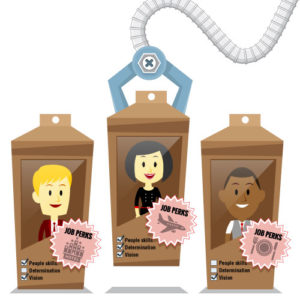
As the competition for next-gen talent heats up, travel and tourism companies must have a game plan. By Paige Lee Pei Qi
05-september-millennial

As Asia’s travel and tourism industry primes itself for an unprecedented growth, it is also heading for a labour crunch of unseen proportions.

The World Travel & Tourism Council has hailed this as the fastest expansion rate of any region in the world – by more than six per cent each year over the next decade. By 2020, Asian travellers will account for nearly one-half of all global tourism expenditures.

However, according to a TravelRave 2013 report produced by the Singapore Tourism Board (STB), the industry in Asia is projected to face a labour shortage of about eight million jobs in the next 10 years.

During a roundtable in Singapore on developing human capital and talent management co-organised by TTG Asia Media and STB in July, the spotlight was on how to attract Millennials (born between 1981 and 1995) to the industry.

STB assistant chief executive, Neeta Lachmandas, said: “As we look at consumption patterns, the reality is that Millennials are going to consume differently. If we want to be relevant to them, I hope we are bringing in young talent into the industry and using the talent to design experiences for the future.”

Among the solutions raised  included raising awareness of the range of opportunities in tourism and the international exposure the industry offers.

Patina Hotels & Resorts CEO, Marc Dardenne, explained: “Today we have to take a different approach and re-invent the way we approach the Millennials.”

Emphasising the need to professionalise the industry, East West Planners Singapore CEO, Janet Tan-Collis, who is also president of the Singapore Association of Convention and Exhibition Organisers and Suppliers, said the association has been tailoring its programmes to a younger crowd by developing internationally recognised courses.

Other trade professionals approached separately by TTG Asia agreed that more had to be done.

Andreas Sungaimin, senior vice president, human capital & development, Pan Pacific Hotels Group, said: “Millennials are positive, confident and goal-oriented – all of which are excellent traits for success.

“However there is a tendency for them to move quickly between jobs to explore different options. Thus, the challenge would be to create an attractive and rewarding work environment.”

To lure such job seekers, Sungaimin said the Leadership Apprentice Programme, which targets young adults in their early 20s, aims to groom and fast-track identified individuals for management positions through work rotations across the different operational functions.

When it comes to existing staff, Starwood Hotels & Resorts has a one-year talent development system exclusively designed for its Asia-Pacific division. It comprises three distinct clusters – executive, mid-management and entry level – in order to prepare promising talents for the next stage of their careers. The associate should have the ability to be promoted to the next level within the next 24 months.

Similarly, the Kuala Lumpur Convention Centre in Malaysia introduced the Talent Acceleration Programme (TAP) in November 2013.

Director of human resource, Rohizat Baharum, said: “The programme entails field trips, experiential learning sessions, and internal and external leadership sharing, among others. Participants are exposed to competencies such as commercial awareness, customer focus, decision making, change management and teamwork. Upon completion, TAP graduates will be eligible for higher positions within the organisation.”

Another activity popular with Gen Y staffers is the Chat with Alan sessions – monthly informal chats for up to nine team members with general manager, Alan Pryor.

In terms of leveraging technology to attract and retain this demographic, Dylan Choong, HR director, Asia-Pacific, Starwood Hotels & Resorts, shared that the hotel group reaches out on social media platforms to share industry success stories.

He said: “Millennials have a stronger need to be recognised as individuals partly because of a longer educational undertaking and tougher economy today.

“With exposure to social media, Millennials tend to demand connectivity, instant responses and gratification.”

Chan Brothers Travel Singapore marketing communications manager, Jeremiah Wong, added: “This group of workers has grown up with access to cutting-edge technology and have integrated them seamlessly into their daily lives…any lack of reliable and up-to-date technology is probably going to cripple their work productivity.”

However, Tour East Singapore group vice president of sales and marketing, Judy Lum, warned against going too far.

She said: “Many of the Millennials are tech-savvy and they assume this is the all-important factor…they may lack the skill and understanding to deal with people face-to-face to foster respectful relationships.

“We have to be careful and manage their ideals as this industry needs more EQ than IQ.”

Regent Hotel Singapore, director of administration, Wong Kwee Lian, opined that although change has to come from within the industry, she pointed out that Millennials also had to have appropriate expectations.

“While corporations adapt to the Millennial mindsets with a more collaborative culture, Millennials need to understand that change takes time,” said Wong.

Additional reporting by S Puvaneswary

This article was first published in TTG Asia, August 22, 2014 issue, on page 4. To read more, please view our digital edition or click here to subscribe.