TTG Asia
Asia/Singapore Friday, 13th February 2026
Page 2152

Bitcoin: fad or future?

0

10-october-bitcoinThis P2P currency may not be taking over the world yet, but is one to watch as more travel companies mine its potential. By Hannah Koh, Xinyi Liang-Pholsena and Mimi Hudoyo

As if the travel industry hasn’t had enough, struggling to deal with disruptors like last-minute booking apps and the temperamental algorithms of big boys like Google and Facebook – here comes the bitcoin.

Las Vegas’ the D and Golden Gate casino hotels began accepting bitcoins this year, driven by consumer demand, and the first bitcoin ATM has just appeared on the tourist strip. Expedia also announced in June it is accepting the currency as a form of payment for hotel purchases. The OTA, however, declined to comment for this article.

In Asia, there is an ambitious project in Bali to turn the popular destination into a ‘bitcoin island’ by year-end, where bitcoin would be the currency of choice. Rakuten’s CEO, Hiroshi Mikitani, has also said the Japanese online retail giant will sooner or later accept bitcoins.

What, I hear you cry, are bitcoins? Is that the money they use in Pokemon games? Fret not, you are not alone in your digital alienation, so let’s go back to the basics.

The Oxford Dictionary describes bitcoins as “a type of digital currency in which encryption techniques are used to regulate the generation of units of currency and verify the transfer of funds, operating independently of a central bank”.

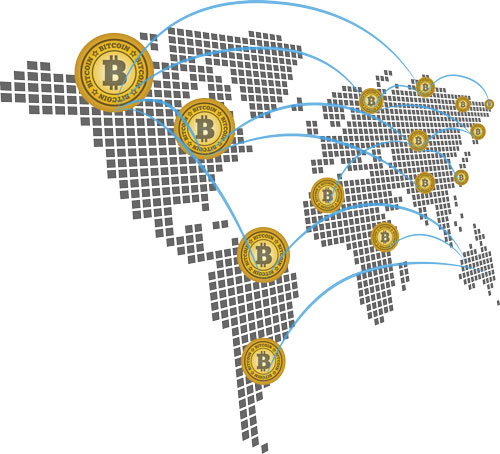
In other words, it’s a new international, borderless currency that has real world value and is being traded electronically through the Internet. It has a very basic ecosystem underpinning it, complete with digital wallets, transaction fees, exchanges, and a small but growing number of buyers and sellers.

The currency can be used anywhere on earth as long as it is accepted, leaves a public ledger of transactions verified by a chain of miners and has no to little service fees as compared to regular banking services.

Bang for your bitcoin
The advantages seem obvious enough – low transaction fees, no hassle of dealing with physical money and a reduced risk of theft.

The absence of bank and government control can also be a boon for peoples in countries where these institutions are corrupt, as well as a solution for the unbanked or people with no access to banking facilities, said Lawrence Chan, director of public relations of the Association of Crypto-currency Enterprises and Start-ups, Singapore (ACCESS), which was registered in Singapore only in mid-2014.

Tomas Forgac, founder of Coin Of Sale, which alongside with Bitcoin Indonesia, is aiming to convert Bali into a bitcoin island, has also been quoted in the media as suggesting it can be a way to help Indonesians cope with chronic inflation.

Peter Noldus, director of Pattaya Beer Garden in Thailand, which accepts bitcoins, said: “As there are virtually no fees, no possibility of chargebacks, and no risk to the merchant, it would be foolish not to accept bitcoins.

“Being an early adopter has brought in extra business from bitcoin people who tend to be very supportive of bitcoin merchants. We have had customers travel from Bangkok just so they can try out buying something with bitcoin.

“A more useful question would be why so few merchants in Thailand accept bitcoin when the use case is so extremely strong.”

Interestingly, bitcoins can be employed as a marketing strategy.

Stephen Schwer, general manager, MacKay Tourism, has been putting together an online booking system and payment gateway for tourism in Mackay, located on the eastern coast of Queensland, and is gunning for bitcoin payments to be allowed.

“The reason I want to accept bitcoin as a payment method is essentially for the sake of targeting a suitable market for our destination. The Mackay region is for people who want to try something new. We are off the beaten track. We are on the road less travelled. We appeal to people who want to try new things.

“The same goes for bitcoin users. They have a similar mindset to our target market, in that they aren’t afraid to tell their friends they are using a new, digital currency that hardly anyone else is using.”

High hopes, low uptake

Yet for the myriad benefits bitcoin enthusiasts espouse, take-up is inching along.

Asked why, ACCESS’ Chan said: “Unless your bread and butter comes from the technology industry, people tend to be more conservative and afraid of liability. It’s still super early days, and it was only one-and-a-half years ago that the Singapore tech community took note of bitcoins.

“(Internationally), there’s been no remarkable example of bitcoin adoption.”

Hans Tjandra, general manager of Bookpanorama.com, was pessimistic about the outlook of bitcoins in Indonesia, noting that the absence of an intermediary party implementing safety measures in transactions means bitcoins are vulnerable to hacking and fraud. He added: “There is no clear (financial) institution to control the bitcoin exchange rate. The fluctuating of its value depends on brokers and individuals so…bitcoins can be over-valued.”

However, Schwer said: “In terms of risks, the same risks that exist for usual online payments exist for bitcoins. It is also a more volatile currency at the moment. But as with any currency investment, there are risks and there are benefits.”

As it stands, bitcoin adoption can be likened to a chicken-and-egg scenario. Government, banks and the general population are wary of this new digital upstart, and the lack of professionals getting in on the action means the currency will continue to be a little suspicious to the tech unsavvy.

Said Chan: “Where are the bitcoin accountants, lawyers, security specialists?  There isn’t a support industry right now, which makes the bitcoin companies relatively weak.”

Regardless, Hans commented that bitcoin could, in fact, find room to grow in the region.

“Hong Kong tycoon Li Ka-shing has invested heavily in BitPay (which powers the D and Golden Gate hotels in Las Vegas). If he succeeds in adopting this payment method in his companies and lobbies the government for recognition, then bitcoin has a chance to be adopted by other companies, in other countries,” he said.

On its website, the World Travel and Tourism Council also stated earlier this year: “Either way, BitPay processed over US$100 million in 2013, and this is something that should not be sniffed at.”

At this stage the future of bitcoins in the travel industry seems certain, but when it will become mainstream is anybody’s guess.

Quipped a travel marketing researcher: “Bitcoin is an interesting topic…but I wonder if bitcoins will happen in our lifetime when we still have much of the industry grappling with websites and trying to get them out of the 1990s.”


How to use bitcoins

Typically, you start by setting up digital wallet online. A good number of websites online provide options tied to hardware, in the cloud, on your desktop and/or mobile device.
Once you’ve got your wallet, you will have a 34-36 character-long alphanumeric bitcoin address that will allow you to make transactions. New addresses can be generated at any time, which is recommended by some as an additional safety precaution.
Users can then start receiving bitcoins from other users, or go to a bitcoin exchange to buy bitcoins much in the same way you go to a money changer before a trip. An increasing number of retail outlets are accepting bitcoin payments. Here are some:
–    Expedia.com
–    Bacchanalia, 23A Coleman Street, Singapore
–    Bartini Kitchen, 29 Boon Tat St, Singapore
–    Pattaya Beer Garden, Beach Road, Pattaya

A note of caution
Bitcoin value is volatile because of its “young economy, novel nature and sometimes illiquid markets”, says bitcoin.org. Bitcoin sites advise users against storing their life savings in bitcoin for these reasons.
Transactions are not completely anonymous due to their traceability, so some effort must be made to protect your privacy.
Though not official currency, most jurisdictions require individuals to pay tax on all properties of value, including bitcoins.


Additional reporting by Xinyi Liang-Pholsena and Mimi Hudoyo

This article was first published in TTG Asia, October 10, 2014 issue, on page 5. To read more, please view our digital edition or click here to subscribe.

Holiday Inn launches in South Korea’s tech central

0

INTERCONTINENTAL Hotels Group has opened the doors to Holiday Inn Incheon Songdo in South Korea’s ‘smart city’ near Incheon.

The 202-room hotel is located in the centre of Songdo, making it only a 20-minute drive from Incheon International Airport. It is close to key attractions such as the Canal Walk shopping and restaurant hub and the Jack Nicklaus Golf Club, while Incheon Dohobu Government office, Wolmi Traditional Garden, Sora Port and Chinatown are also a stone’s throw away.

Dining options take the form of Surache Dining for international fare; Arts Deli, a fresh café for a quick or light bite with salads, sandwiches and soups on offer; and its Lobby Lounge & Bar. Touch Sky, the hotel’s rooftop bar provides sunset views with the option of indoor and outdoor seating, and a private function room.

Guests can also enjoy views of the West Sea and Incheon Bridge from the reception and lobby on the 19th floor.

For meetings and events, the hotel has five function rooms, a 320m2 ballroom for up to 240 pax and a traditional ceremony room for Korean weddings, the Pebaek room.

IHG now has eight hotels open across South Korea, including InterContinental Seoul COEX and Holiday Inn Resort Alpensia Pyeongchang.

To mark the occasion, Holiday Inn Incheon Songdo is offering a 10 per cent discount on its best flexible rates, bundling free breakfast for two guests.

The deal is available for stays between October 6, 2014 and January 31, 2015.

Fairmont secures Barcelona hotel through rebranding

0

FAIRMONT Hotels & Resorts will take over the management of Hotel Rey Juan Carlos I in Barcelona, which will be rebranded as Fairmont Rey Juan Carlos I, Barcelona this autumn.

The 432-key property will also undergo an extensive renovation in 2015, though it will remain operational throughout.

Designed by renowned architect Carlos Ferrater, the hotel is located on Barcelona’s main avenue Avenida Diagonal, and close to the famous shopping districts of Placa Catalunya and Passeig de Gracia.

Next to the hotel is Camp Nou, home to FC Barcelona, while the Royal Polo Club of Barcelona is adjacent to it.

Jennifer Fox, president, FRHI International and Fairmont brand, said: “Barcelona is one of the most popular destinations in Europe and a key hub for the cruise market, as well (as) for MICE travel, a segment in which Fairmont has established itself as an industry leader.”

Facilities at Fairmont Rey Juan Carlos I, Barcelona include the Polo Restaurant, Club Lounge, a lobby bar, a fitness centre and spa with both indoor and outdoor pools, as well as 13 treatment rooms.

Meeting planners can take advantage of the property’s 2,500m2 of banquet and meeting space. The hotel provides direct access to the Palau de Congressos de Catalunya, a congress centre with over 4,000m2 of exhibition space and a 2,000-seat auditorium.

Added Martin Kandrac, executive vice president, real estate & development, FRHI Hotels & Resorts: “The addition of such a high-profile asset, in a key gateway city, is an important part of our growth strategy in Europe, and the hotel joins other iconic hotels in key markets such as The Savoy in London, Fairmont Hotel Vier Jahreszeiten in Hamburg and Fairmont Monte Carlo.”

India’s air safety standards get a relook from US, EU inspectors

0

AVIATION authorities from the EU and US will re-examine India’s air safety standards in November and December respectively.

The US’ Federal Aviation Administration (FAA) will begin a review in the second week of December, having downgraded India’s safety rating to Category 2 earlier in January.

This effectively barred Indian carriers from expanding routes into the US, where Air India and Jet Airways already operate to.

Since then, India’s Directorate General of Civil Aviation (DGCA) has tightened flight safety standards and engaged The Wicks Group under a bilateral assistance programme funded by the US Trade and Development Agency to win back Category 1 status.

The FAA was unable to say how long it will take to reach an outcome for the review.

Ahead of that, the EU will also review air safety in India in November and is seeking details on the DGCA’s new measures.

Novotel returns to Myanmar with Inle Lake opening

0

ACCOR opened Novotel Inle Lake Myat Min yesterday in southern Shan state, marking the brand’s comeback to the country, which once had a Novotel at Mandalay.

Located on the east bank of Inle Lake, the four-star resort features 60 Junior Suites, 60 Lake Villas and two Presidential Villas, each offering separate living areas and bedrooms.

Other facilities include three restaurants, two bars, a ballroom, two meeting rooms, a business centre, a swimming pool, a fitness centre and spa facilities.

Patrick Basset, COO for Accor Thailand, Vietnam, South Korea, Cambodia, Laos, Myanmar and the Philippines, said: “This is the first Novotel resort in Myanmar. We have also signed to develop a five-star Pullman hotel in Yangon with the same local company, Myat Min, and it is now in the second phase of development.

“Besides this, we opened the five-star boutique The Lake Garden Nay Pyi Taw, MGallery in Naypyidaw in September, and we have a Novotel hotel in Yangon to be soft-opened in December this year. We also have some projects in Mandalay and Muse.”

Phyo Hla Wai, managing director of Myat Min Company, added that Myat Min and Accor are also collaborating for a 100-room serviced residence, Sebel Yangon Myat Min.

“We are also considering a fourth project in Bagan, most surely with Accor again, and hope to start that project next year,” he said.

Minister of hotels and tourism, Htay Aung, noted that Novotel was not a completely new brand to Myanmar. “We first had Novotel in Mandalay in 1996. But due to the political situation and economic sanctions, Novotel backed off like other foreign companies.”

JTB expands Asian presence through Tour East acquisition

0

IN THE latest move in its expansion drive, JTB Group has reached an agreement with Holiday Tours & Travel for the sale of the latter’s stake in Tour East Group entities.

JTB will take over the interest in Tour East Group entities in Singapore, Australia, Hong Kong, Indonesia, and Malaysia when the transaction is complete.

Meanwhile, the Japan-based tour operator is in discussions for the acquisition of Tour East Thailand as well.

The completion of the sale is subject to regulatory clearance and will only take effect once the transaction is finished.

In a media release, Tour East said: “The agreed acquisition with JTB would put Tour East on the road to further expansion and growth, as JTB’s strong brand will enable Tour East to enhance its business proposition to customers through enhanced global reach, technology, and more comprehensive products and service offerings.”

JTB Group earlier this year bought over Singapore-based Dynasty Travel and appointed Dennis Law as global inbound general manager.

Economy fares on Indonesian airlines might go up

0

AIRFARES on Indonesian airlines are poised to increase when the Ministry of Transportation raises the price ceiling for economy class tickets by 10 per cent next month to help local carriers cope with fuel costs.

With the new regulation in place, the upper limit of a Jakarta-Bali ticket will increase from Rp1.4 million (US$115) to Rp1.5 million, based on an aviation turbine fuel cost of Rp13,000 per litre at the exchange rate of Rp12,000 for every US dollar.

The increase is a revision to the limits on fare prices imposed by the government in 2010, and comes in response to a request by the Indonesian National Air Carriers Association (INACA), which had sought government support to ease the burden on the aviation industry from the depreciation of the rupiah.

Chairman Arif Wibowo said the association had appealed to the government to hike the price ceiling by 25 per cent, but expressed satisfaction at the 10 per cent increase.

Arif noted that the revised price ceiling did not automatically and uniformly bump up economy tickets prices, as market forces would continue to have a hand in price determination.

“Airlines will not sell tickets at maximum price when it is low season or at certain hours of (the day or week). But when demand is high, we need to have more room to increase the price so that airlines will be able to continue to be operational in the face of the high fuel costs,” he said.

Qliq Damansara welcomes new GM

0

VIVE Hospitality has unveiled its choice of general manager for Qliq Damansara in Petaling Jaya, ahead of the hotel’s opening in January 2015.

Bennet Chang joins Qliq Damansara this month, and will be responsible for day-to-day operations at the hotel.

He has held various senior management positions with major international hotels chains, including The Regent Kuala Lumpur, Hyatt Hotels & Resorts Malaysia, Shangri-la Kuala Lumpur, Eastern & Oriental Hotel, Hotel Nikko Kuala Lumpur, Meritus Hotels & Resorts, and Swiss-Belhotel International.

Chang was most recently general manager at Swiss-Belhotel International Hotels & Resorts, tasked with ensuring compliance at the group’s properties in Kuala Lumpur, Bali, and East Kalimantan.

Hyatt appoints new senior VP of brand and commercial strategy, APAC

0

CARINA Chorengel has been appointed senior vice president of brand and commercial strategy, Asia Pacific at Hyatt Hotels & Resorts Asia Pacific.

In her new role, Chorengel will support the driving and optimisation of hotel revenue streams and devise strategy to enable the speedy ramp-up of new hotels. She will also assist hotels with delivering experiences designed for each brand’s target customers.

Chorengel been with Hyatt for 25 years.

Hyatt earlier this year also made a couple of appointments to its core team –  David Udell is now group president – Asia-Pacific while Larry Tchou steps into the newly formed position of senior advisor – Greater China.

IHG shakes up senior appointments

0

INTERCONTINENTAL Hotels Group has shuffled its appointments to key positions in its Asia-Pacific, and Middle East and Africa operations.

Former COO, Australasia and Japan, and operations performance, AMEA, Alan Watts, now has an expanded portfolio as COO for Asia, Middle East and Africa.

He oversees the performance of IHG’s 246 hotels across 37 countries and territories, supported by Pascal Gauvin, COO, India, Middle East and Africa, and Phil Broad, vice president, food & deverage, AMEA.

Paul Logan has been moved into the newly created position of chief development officer, and will gradually transition his growth responsibilities to Clarence Tan. Logan will retire at the end of 2015.

Watts and Logan will continue to be based in Singapore.

Tan, previously COO for South-east Asia and resorts, is now senior vice president, development for AMEA and will relocate to Singapore in the future.