TTG Asia
Asia/Singapore Saturday, 14th February 2026
Page 2148

Overhaul in China’s associations industry required

0

CHINA needs to relax the stringent rules governing associations and nurture a more vibrant industry by gaining a deeper understanding of the roles of associations in society.

New associations must register with both the relevant ministry overseeing its field and the Ministry of Civil Affairs, hindering the establishment of associations. Government scrutiny of association activities also acts as an obstacle.

However, sources have revealed that the Chinese government could introduce reforms to ease these restrictions before end-2014 at the earliest, a move that could boost the MICE industry.

American Society of Association Executives (ASAE) China representative, Maria Tong, observed that many NGOs have offered advice on possible reforms to existing legislations, such as mandating applications to be submitted to oen authority instead of two.

At the same time, ASAE research found that Chinese associations are still in their infancy, with little concept of association management.

International association management firms should thus enter the China market gradually, communicating knowledge on association management to help improve professional standards, and enhance the relationship between associations in China and the US.

Meanwhile, Tong pointed out that attracting the young, a challenge for counterparts in the West, was also an issue here. ASAE provides a range of services for associations including harnessing new communication methods such as social media and keeping abreast with the latest trends to better engage youth members.

Likewise, MCI Group’s director of association management and consulting, Florence Chua, commented that industry associations must research on the youth’s consumption and social behaviour and develop accurate understanding of their needs.

Translated from the original TTG-BTmice China e-Weekly, October 8, 2014, article by Ong Yanchun

Seeing red and blu

0

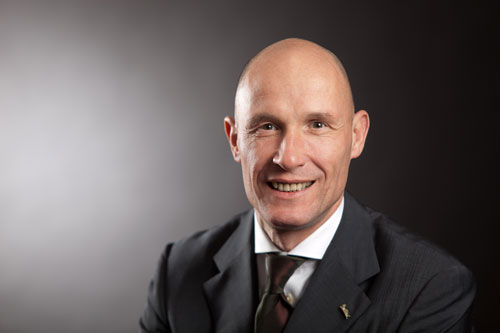
He’s been with the group for 20 years and in April this year took over from Simon Barlow as Carlson Rezidor Hotel Group’s president Asia-Pacific based in Singapore. Thorsten Kirschke tells Raini Hamdi he is open to franchising and aims to expand the chain’s two new brands in the region

17-october-kirschke-thorsten

Your predecessors created a lot of growth. By year-end, the group will operate more than 100 hotels across Asia-Pacific. How do you hope to top that?
There is still a lot of demand for branded, reliable hotel brands. Markets like India and China drive the growth because of their sheer size but there are other pockets such as Indonesia, the Philippines and Thailand, and new sparks, for example Myanmar or even Bangladesh, where many international chains are trying to make an entry. We are present there (Bangladesh) with one hotel in operation and another in pre-opening.

Australia, the surrounding New Caledonia and New Zealand are yet another great potential for branded inventory.

What’s your strategy?
Three-pronged. One is to deepen our strategic alliances. They come in several shapes: some are on the back of an articulated contract, like a JV, others are more built around relationships, but no matter what they are, they are  fundamental to development in this part of the world.

For example, the SM Group (in the Philippines) is a contractual agreement with the commitment for development over several years but, as we know, it is a private family that is at the base of this company. Here’s where Carlson Rezidor has a huge advantage because we ourselves are a private company and we do understand the values that drive a family business. Thereby, the relationship aspect with that company becomes more important. Understanding the ‘mechanics’ and not being forced to report to a stock exchange on a quarterly basis is of great value.

What’s the second prong?
To broaden our business model. We see the opportunity for controlled franchise development, and to target conversion opportunities, which previously were not as clear on our agenda for growth.

For example, we are evaluating a multiple-unit franchise agreement in China with a well-respected group that owns one of our properties today and several others. This could be a fantastic recipe for future growth, provided our partners demonstrate the capabilities of operating the hotel within the brand promise.

Has Carlson Rezidor done any franchising in Asia-Pacific to date?
In India, there is a master licence agreement for Country Inns & Suites with CDMS (Country Development & Management Services, a joint venture between Country Inns & Suites and Chanakya Hotels since 1998). Other than that we have stayed away from franchising which is precisely why I believe there is opportunity for future growth as we see capabilities evolve in this part of the world.

How have capabilities evolved?
We see owners becoming more ‘educated’ as the hospitality industry grows in Asia-Pacific. Some of them have started to form their own management companies.

The China group for example has started to build its own management capability, as in people and resources. We have a long-standing relationship with the company; we have known the properties’ GMs for many years. So there is an opportunity to expand this relationship under the umbrella of franchising.

India too, is a long-standing relationship. We have deep trust in each other. They were the founding members in driving our presence today in India. We are the largest international hotel operator in India and this would not happen if it hadn’t been for the mutual trust. This proves that franchising as a business model and vehicle for growth has its merits even in developing markets and particularly here in Asia-Pacific.

How do you intend to franchise and is it only for Country Inns & Suites?
We would not give an exclusive master licence either for a brand or a territory – that is one step ahead in this business model, particularly in China.

We’re open to franchise all brands, but the higher the segmentation, the more complex it becomes. In China, we are considering the higher-positioned brands, Radisson and Radisson Blu, for franchising, but again it is case-by-case evaluation. What I’m saying is we are not ruling out franchising anymore. We would be negligent if we do not consider the increased capabilities investors have assumed over time, and franchising as an avenue for growth as a result of it.

So selective franchising and conversion targeting is the second dimension we are pursuing for further growth in the Asia-Pacifc region.

Why are conversion opportunities on your agenda now?
A report some years back identified a list of conversion opportunities in Asia-Pacific but the number then was not very large. We see that growing and, of course, we know conversions are lucrative and fast-to-market, so we have identified this as a platform to grow.

These can be existing hotels where agreements are expiring, or conversion of potentially non-branded to branded assets, or on the rare occasion, re-adaptive use of existing buildings. As the real estate market in Asia-Pacific matures further, we’ll see more of that going forward.

So what’s the third prong?
The third is the introduction of new brands into market, Quorvus Collection and Radisson Red (TTG Asia e-Daily, July 25, 2014). Quorvus is a luxury brand by affiliation, catering to hotels that are clearly looking for a platform and distribution while protecting their heritage and identity. Red clearly taps into a niche that has evolved in the last number of years and is making its way into developing markets around the world. It speaks to changing demographics – we know that today the younger generation, which forms almost a third of tomorrow’s travellers, uses hotel facilities differently than maybe myself or other generations before me. It is much centred on community and communality. It is an upscale select offering – there are reduced services and facilities but it is upscale from the build-out to the quality. I call it lifestyle select.

What happened to your luxury partnership with Missoni?
Missoni was defined as a fashion/lifestyle brand in partnership with the Missoni family but we are dissolving the relationship for several reasons I wouldn’t want to go into at this point. We are ‘folding’ two of the former Missoni hotels (GV Royal Mile Hotel Edinburgh and Symphony Style Hotel Kuwait; the collection also now has a third member, The May Fair Hotel London) into the Quorvus Collection. At this point, too, we will not create another distinct fashion/lifestyle brand.

Is it a fair criticism that chains just dream up brands so they can get management contracts?
Every company has to grow. Whether it is retail, fashion or liquor, companies are expanding their portfolios continuously, not for sake of growth but in response to new and evolving demand from changing demographics, markets and different consumer trends around the world. Ikea is not what it was 20 years ago, and we can quote many other companies from other industries that have evolved over time.

Of course underneath all that is the looming danger of commoditisation when we bring new brands to the market and I know this is also on the minds of my colleagues around the world.
But I think the industry is doing a good job.

Really? I see a lot of sameness in the rush to cater to Gen Y, for example.
Of course you’d find global international chains collectively responding to the changing demand – that is only logical. The question then becomes who is delivering and executing to the best of the consumer expectations. You can’t just develop a brand on a piece of paper, you must be able to deliver it.

As customers change, won’t your older brands be sidelined by the new brands?
No, we have taken great effort to rejuvenate our portfolio – our Radisson Re-imagined initiative was probably one of the largest brand renovation projects. We also developed the fourth generation of Country Inns & Suites so that the brand is more relevant to younger travellers.

So we do always manage our brands to stay relevant but of course every brand can only ever evolve so much in its rightful positioning, and there is always an opportunity to launch new ones. The upscale select brand, for example, was not an opportunity that existed 15-20 years ago, when mostly upscale, full-service hotels were built. That was also the time all the great brands of the world were travelling globally.

So what’s next – a Green? Is there another gap the group wants to fill?
I know there are still segments we’re not covering today – we do not have a brand in the economy/budget sector, for instance.

This article was first published in TTG Asia, October 10, 2014 issue, on page 9. To read more, please view our digital edition or click here to subscribe

Golden Week performance holds for HK, but future bookings shaky

0

THE impacts of the ongoing Occupy Central protest on Hong Kong’s tourism sector are becoming more apparent since it started in late September.

While Harbour Plaza 8 Degrees saw minimal cancellations during the week-long National Day holiday and maintained an occupancy rate similar to last year’s (over 90 per cent), general manager Christina Cheng said that the hotel received cancellations of 180 room nights for this month.

She added: “Some business partners told us that some overseas clients have switched to other destinations due to the current situation in Hong Kong. This affects our future pick-ups.”

Sharing similar views, InterContinental Hong Kong, director of sales and marketing, Linda Hodgson, said: “During and immediately following China’s Golden Week, there was a slowdown in bookings and enquiries particularly from the Chinese market. However, the business segment continues to show strong bookings for the month and the general pace has increased again over the last few days. We did not receive any requests to postpone or cancel events in the next few months.”

While there were rumours that the Chinese government suspended the issuance of group tour and FIT visas to Hong Kong since late September, Sincere International Travel Services managing director, Charles Ng, shared that he did not receive any official documents so far.

“For sure, the visa service was stopped during the Golden Week holiday but I haven’t seen Chinese traffic stopping over the past week,” he said. “The movement did exert a negative impact on the city, but Chinese travellers are (in fact already) spoiled with many itineraries and destinations more affordable than Hong Kong. It’s not a must for them to come here.”

Although Chinese arrivals to Hong Kong grew 5.6 per cent over the Golden Week, Travel Industry Council chairman Michael Wu expressed worries that if the protest drags on, business and MICE traffic might be diverted to Macau.

Preliminary statistics by Public Security Police Force of Macau showed over 840,000 Chinese visited the city during the Golden Week, an increase of 17 per cent.

However, Gray Line Tours of Macau managing director, Andy Wu, said: “The growth this year is within our expectation. Chinese group tours always put Hong Kong and Macau as twin destinations, so they would not just come to Macau.”

China’s theme park war revs up with Universal Studios Beijing

0

THE Chinese capital is set to become the third destination in Asia to have a Universal Studios theme park, following Japan’s Osaka and Singapore, according to media reports.

The 20 billion yuan (US$3.3 billion) park will span some 120ha in Beijing’s south-eastern Tongzhou district, according to China Daily. The complex will be jointly owned by Universal Parks & Resorts and Beijing Shouhuan Cultural Tourism Investment, a consortium of four state-owned companies.

The destination will be home to China-themed attractions as well as well-known ones based on Western brands like the Harry Potter series, according to a Reuters report.

Tom Williams, chief executive of Universal Parks and Resorts was also reported by Reutersto have said that the park would target to attract visitors from outside China, while Hollywood director Steven Spielberg would be participating in the design.

Although no opening date was announced by the company and its Chinese partners, local media said that the park would debut in 2019.

The Beijing Universal theme park is expected to join a flurry of theme parks debuting in China in the next few years, including Shanghai Disney Resort, which is due to open in late 2015, and a entertainment complex by DreamWorks Animation, scheduled to launch in Shanghai by 2016.

VietJet starts Hanoi-Siem Reap in November

0

VIETJET will be introducing a new route connecting Hanoi and Siem Reap, effective November 3, 2014.

The daily direct flight will depart Noi Bai International Airport in Hanoi at 17.15 and Siem Reap International Airport at 18.05.

The new route will leverage demand for travel between the two hubs, further boosting the development of trade and tourism between Vietnam and Cambodia.

Desmond Lin, business development manager of VietJet, said: “Our goal is to continue to offer more destinations to residents of Vietnam as well as for tourists travelling through the region.”

Passengers travelling from Singapore can connect to Siem Reap from Hanoi via Ho Chi Minh City (HCMC), to where VietJet offers daily flights.

VietJet currently operates 21 local and international routes. In addition to this latest connection to Cambodia, the airline also offers direct flights from Hanoi and Danang to Seoul, and from HCMC to Bangkok.

Destination management plan kicks off at Inle Lake

0

THE Myanmar Institute for Integrated Development (MIID) yesterday presented the draftDestination Management Plan for the Inle Lake Region, with the aim to support current conservation and management efforts for Inle Lake and its surrounding hill areas.

With support from the Ministry of Hotels and Tourism, the plan is the first of its kind in Myanmar, and a model for future plans in flagship and emerging destinations country-wide. It is aligned with the 2013 Myanmar Tourism Master Plan in which destination management is a key recommendation.

A result of extensive consultations, interviews, focus group discussions and expert analysis, it covers a region stretching from Ywangan and Pintaya Townships of the Danu Self-Administered Zone in the north to Loikaw City in Kayah State in the south; and from Kalaw in the west to Hopong Township of the Pa-O Self Administered Zone in the east.

It is centred around nine strategies namely sustainable development, heritage conservation, infrastructure development, human resource development, marketing and promotion, business development and support, community empowerment, environmental management and product development.

The strategies are designed around the wishes of local communities of Inle Lake Region, and aim to channel government and private investment as well as donor and aid funding into real identified needs.

Htay Aung, union minister for hotels and tourism, said: “Inle Lake is our natural heritage… no one will visit Myanmar if our natural heritage becomes extinct. We should make a collective push to maintain our landmarks.

“Destination management looks beyond hotels and attractions. It also includes considerations for infrastructure, education, environmental management, products and services, and employment for local people.”

Inle Lake and the surrounding hills form one of Myanmar’s top four flagship tourism destinations, having received about 250,000 visitor arrivals in 2013-14, according to an MIID report.

Joern Kristensen, executive director, MIID, highlighted: “Such rapid (tourism) growth in Myanmar brings new economic opportunities, but can also create uncertainty including environmental, social and cultural changes.

“Planning now for destination management will help guide tourism policy for the long-term conservation of the Inle Lake Region.”

Planet Hollywood Hotels finds new fame in Goa

0

WYNDHAM Hotel Group has entered into a franchise agreement with Indian conglomerate JMJ to launch the first Planet Hollywood hotel in India, the brand’s second property in the world after Las Vegas.

Set to be operational by the end of 2014, Planet Hollywood Beach Resort is a 115-room and 15 luxury tent resort situated on Uttorda Beach in South Goa.

Replicating the same style as its sister property in Las Vegas, the Hollywood-inspired theme property will be decorated with movie memorabilia including props from famous films, amid low-rise Goan-style architecture, tropical gardens and a coconut orchard spanning more than 4ha.

With large indoor and outdoor banqueting facilities, Planet Hollywood Beach Resort Goa also serves as a romantic destination to tie the knot. In addition, the property will feature a mix of eclectic boutiques, a fitness centre, a spa, pools and yoga retreats, and an amalgamation of various international and Indian cuisines at its restaurants.

Deepika Arora, ‎regional vice president, Indian Ocean, EMEAI for Wyndham Hotel Group, said: “We are thrilled to welcome Planet Hollywood Beach Resort Goa into our hotel group family and to one of India’s premier destinations. We look forward to a successful partnership with JMJ and to continuing to expand throughout India.”

Sachin Joshi, managing director, JMJ group, said: “Given its features, we are looking forward to Planet Hollywood being a landmark destination in Goa. The brand’s ‘Let there be fame’ philosophy means guests at the property will be treated like celebrities.”

Peach establishes new Okinawa base, eyes Asia

0

JAPAN’S Peach Aviation is in the pink of health, if its latest move to carve out a new base is anything to go by.

Based at Osaka’s Kansai International Airport, the Japanese LCC has branched out to Okinawa with the launch of an Okinawa (Naha)-Taipei (Taoyuan) service on September 20, marking its 17th route.

Speaking to TTG Asia e-Daily on the sidelines of the CAPA Aviation Asia Summit & LCC Congress 2014, Shinichi Inoue, representative director and CEO of Peach Aviation, said: “Okinawa’s airport operates 24 hours a day, same as Kansai airport. The prefecture is close to the rest of Asia, and has many sightseeing attractions of its own, making it attractive even to foreigners.”

Inoue also shared that Peach hopes to adopt the same approach to expansion and operation as Ryanair, which has over 60 bases in Europe and North Africa, although he was unable to comment on the carrier’s next base. “That depends on business circumstances,” he added.

The airline’s vice president, communications, Naoto Domeki, also told TTG Asia e-Daily that the airline is keen to connect with Hong Kong, Thailand, Malaysia, Vietnam and Singapore, but no time frame has been drawn up for the commencement of these routes.

Established in 2011, Peach Aviation began its first flights in 2012 and made history when it turned a net profit in just 25 months.

Asian LCCs looking to strike up more partnerships

0

PARTNERSHIPS are enabling the region’s LCCs to gain better scale and reach amid a competitive landscape, according to speakers at this year’s CAPA Asia Aviation Summit & LCC Congress in Singapore.

Speaking during a panel on LCCs in North Asia, Jeju Air CEO, Ken Choi, highlighted the benefits of scale that come with airline partnerships: “Even though Jeju Air is the number one LCC player in terms of number of planes, routes and revenue, interestingly the second and third players are subsidiaries of full-service carriers. They exercise complementary network strategies and provide codeshare services (with parent companies).

“Being independent is great but provides some limitations on route strategies,” he noted, adding that small-scale LCCs like Jeju Air cannot build franchise models such as Tigerair or AirAsia. The carrier designs routes to be complementary to other Asian LCCs, said Choi.

Kwan Yue, CEO of Tigerair Taiwan, which received its air operator’s certificate last month, expects the new carrier’s affiliation with Tigerair Singapore to pay off in future, especially with the rise of multi-destination travel.

“Taiwan is strategically located for North and North-east Asia travel, while Singapore is the established hub for South-east Asia. In Taiwan we (can) almost serve the whole of South Korea and Japan. Once China opens up, that would allow for a lot of growth and where the most potential is,” he commented. “So we’re the two major ports serving Tigerair, and we cover almost the entire Asian region.”

Similarly, Jetstar Asia CEO, Barathan Pasupathi, shared that collaborations are important to the airline given that Singapore has “no domestic market”. There are six to seven new links with full-service carriers still in the pipeline for the LCC, which announced a partnership with Emirates earlier this year.

“We are moving to the next stage (of growth), which is where we are cultivating high-yield traffic. In order to achieve 95 per cent load, we can’t simply be offering one-dollar fares – that would be irresponsible in terms of revenue management. So we’ve got to reduce capacity and consolidate.”

Paul Jebely, global head of aviation finance of Clyde & Co, a global law firm focused on industries including aviation and marine trades, remarked that LCCs already – and should continue to – have exchanges in terms of aircraft leasing, although there were obvious sensitivities involved. Speaking to TTG Asia e-Daily, he said: “Partnership is critical. It’s fundamental – you can’t operate in a vacuum.”

On the other hand, Vanilla Air, executive VP – operations, Hiroshi Kitahara, said that while parent company All Nippon Airways (ANA) and Vanilla Air currently work separately, collaboration is likely but at least a couple of years away.

Typhoon Vongfong pounds southern Japan

0

BARELY a week after a strong tropical cyclone hit Japan earlier last week, typhoon Vongfong this morning made landfall on Kyushu – the southernmost of the country’s four main islands – after slamming across Okinawa over the weekend.

At least one person is missing and dozens are injured while more than 300 flights were cancelled due to the powerful typhoon, according to Japan Times. Kyushu’s bullet train services were suspended since Sunday due to the wind.

Local authorities have issued evacuation advisories to more than 440,000 residents, mainly in south-western Japan.

The Japan Meteorological Agency is expecting the powerful typhoon to head north-east across the Japanese archipelago at a speed of 30km per hour, with the likelihood of reaching the Kanto region including Tokyo late today or early Tuesday.

The Japan Times also reported Japanese airlines have cancelled at least 372 flights, while West Japan Railway said it planned to suspend all local services in the Kansai region later in the day.