TTG Asia
Asia/Singapore Tuesday, 7th April 2026
Page 1653

Still gaps to fit in Asia’s travel distribution market

0

Despite the waves of consolidation currently seizing the marketplace, Daryl Lee, director of WebBeds FZ – which owns B2B travel distributor Fit Ruums – thinks the landscape is still characterised by fragmentation and complexity while vast markets like China have hardly seen any penetration.

“We see Fit Ruums as an alternative to global players. There’s no true alternative to the big players, so we see ourselves as filling in the gap, not so much to disrupt but to connect the dots,” said Lee.


Lee: filling the gap rather than disrupting

“We still see a lot of demand for travel products and hotels, and for the travel trade to operate more efficiently… with our robust platform, rather than a one-size-fits-all approach of the big players,” he added.

Since launching in October 2016, Lee said Fit Ruums has been seeing a “quick buildup” from its initial core markets of Singapore, Hong Kong, South Korea and Taiwan to now India, Indonesia, Malaysia and Thailand.

Also, it would be impossible for the Singapore-based Fit Ruums to ignore the “dynamic” growth potential that China presents as both an inbound and outbound market, as Fit Rumms now has its sights set on establishing a China office by 3Q2017 to tap the synergy of its partnership with Dida Travel Technology inked late last year.

Despite being the largest travel aggregator in China, Dida does not even have one per cent of the domestic market cornered, Lee pointed out, highlighting the immense room for development in the Chinese travel distribution space.

Fit Ruums’ data-driven approach to travel distribution will hence enable agents to better understand the workings and nuances of this fast-changing Chinese market, said Lee, especially as the Chinese are now showing an increasing preference for last-minute travel and taking more holidays frequently throughout the year than during the major holidays.

To highlight his point, Lee revealed that 30 per cent of Fit Ruums’ latest bookings from the Chinese market are for travel within the next 72 hours – and not just confined to domestic destinations but across Asia-Pacific.

Likewise, plenty of opportunities lie untapped for the inbound market into China, Lee opined, seeing room for growth for the bleisure sector as well as lesser-known provinces like Guizhou, Tibet and Inner Mongolia if information and accessibility improve.

Europe hot for emerging SE Asian markets

0

Outbound travel agents in four emerging travel markets in South-east Asia – Indonesia, the Philippines, Cambodia and Vietnam – are reporting strong growth in bookings for Europe this year.

For Sok Sopheaktra, general manager of 2World Travel Cambodia, bookings to Europe soared from about 100 last year to more than 300 to date for 2017, as more Cambodians, already familiar with Asia, seek “change in destinations for their holidays”.


Notre Dame de Paris

Prum Veasna, owner of Golden Travel Cambodia, has also seen a rise in demand for Europe, with Italy, Switzerland, France and Germany being hot favourites. Prum opined that the country’s swelling middle-class and expendable income have led to more of the population being able to afford longhaul holidays.

“Increased access into Europe and more direct flights in the future are expected so (the region) has great (growth) potential,” he added.

Vietnam’s appetite for Europe is growing too. APT Travel Vietnam has seen a sharp hike in the number of Vietnamese opting for Europe over Asia in 2017.

While Binh Terl, APT Travel tour manager, did not specify numbers, she said the increase is “much bigger this year and we think it will get better”. She added that more clients are trading trips to Russia for Europe too.

BenThanh Tourist Vietnam manager Dung Hoang said France and Italy are popular with clients and predicts that Eastern European will pick up pace in the future. He credited competitive prices and a stronger desire for longhaul travel for the shift in demand.

For the Indonesian market, a growing national economy, stabilised domestic politics and favourable exchange rates have come together to boost demand for Europe.

Yongky Yanwintarko, managing director of Sun Tours and Travel Indonesia, said a healthy domestic environment has “boosted travellers’ confidence in travelling longhaul”. His company has seen a 50 per cent year-on-year growth between April and July this year, with England, Scotland and the Balkans drawing the most interest.

Destination Tour Indonesia has also witnessed a 20 to 30 per cent rise in bookings for Europe, with forward bookings made up to November. CEO Yento Chen revealed that Norway and Finland are new favourites this year, while North, Central and Eastern Europe hold evergreen appeal.

Explaining the stronger interest in Europe, Yento said: “The exchange rates between the rupiah and US dollar have stabilised while the euro and pound are trading better against the rupiah. Furthermore, many airlines are offering promotional rates which make Europe packages more attractive. In fact, some are more affordable than Japan.”

Over in the Philippines, travel agents have been so encouraged by the sales potential of Europe that some have formed a “collective” – a group selling tour packages to specific European destinations – and are attracting both FITs and GITs with tours that take advantage of airline and other promotions, according to Vilma De Claro Mendoza, president, Mart Evers Travel and Tours.

Korean operators ride Muslim travel wave from SE Asia

0

South Korea’s inbound tour operators have seen a surge in Muslim travellers from South-east Asia, lured by the destination’s improved provision of Muslim-friendly facilities from prayer rooms to halal food, its colder climate as well as the popularity of K-dramas.

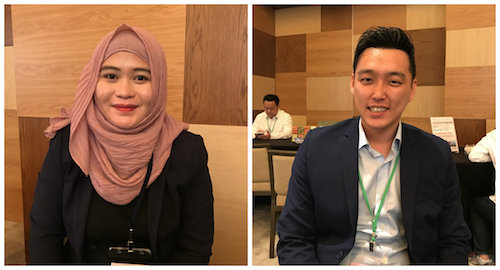
Mustalifa Yunus, Korea eTour’s sales manager, said: “The percentage of Muslim travellers visiting South Korea is more than non-Muslims visiting the country. For my company, the percentage can be 60-40 sometimes. We get many requests from Muslim travellers, especially those based in Singapore, Malaysia, Indonesia and Brunei, as well as the occasional Arab country.”

Mustalifa Yunus (left) and Youngsik Youn

To cope with the growth, Mustalifa shared that Korea eTour recently opened its first branch office in Kuala Lumpur, “where our main bulk of Muslim travellers come from”.

Eileen Lim, global bound team manager, HanaTour ITC, agreed: “There is a large increase of Muslim travellers to Korea, and we handle a fair share of Indonesian Muslim travellers. As for Singapore, we’re trying to move into this market as we foresee it picking up.”

Stunning Korea, which has handled around 50 Muslim FIT groups of 20 pax or less, is likewise targeting Muslim travellers from Singapore, Indonesia and Malaysia, according to the agency’s president, Youngsik Youn.

While Seoul remains a popular destination among Muslim travellers with no shortage of halal facilities and restaurants, agents face greater challenges outside of the capital city.

Justin Kim, sales manager, South-east Asia Team, HanaTour ITC, pointed out: “It’s hard to arrange for halal travel in Busan and the southern part of South Korea, as most of the facilities and restaurants are in Seoul.”

HanaTour’s Lim added: “In order for us to better serve our Muslim customers, we have to address the restaurant issue. You can’t bring them to the same restaurant every day.”

Nevertheless, some agencies like Stunning Korea are eager to bring their Muslim clients beyond Seoul by exercising greater flexibility to cater to their dietary needs.

Youn shared: “Most tours do Seoul, Busan and Jeju. We have shifted our focus to the coastal line such as Yeongdeok and Tongyeong. As it’s difficult to get to these places, most tour companies don’t go there.

“For Muslim groups, we can (arrange for) catering from halal restaurants in Seoul to the coastal line, (where) there are no halal restaurants. Otherwise, we can offer them fish or seafood.”

Bed tax not such a bad thing, says Kyoto trade

0

News of Kyoto effecting a new accommodation tax starting April 2018 is welcome as long as the levy is moderate and the money raised is used to improve tourist infrastructure, say hoteliers and agents interviewed.

A committee of the Kyoto municipal government has since August 2016 been discussing the tax, meant to generate government funds to support the increase in visitor numbers. A primary objective is to alleviate congestion in popular districts such as the Gion geisha quarter.


Hyatt Regency Kyoto’s executive suite twin

The fee is likely to be 300 yen (US$2.64) per person per night for accommodation of 10,000 yen or higher per night.

A similar tax of 200 yen per night is already in effect in Tokyo while Osaka is introducing a levy come July.

Miriam Varoli, general manager of the Hyatt Regency, Kyoto, does not see issues with the tax proposal. “From a guest’s point of view, 300 yen is very reasonable and I do not see it having a major impact on arrivals,” she said.

“We need additional infrastructure in Kyoto, and as long as this carried out with complete transparency, I do not see a better way of raising the money needed for those improvements.”

Robert Day, president of Australia-based Robert Day Travel, added that an accommodation tax “is not unusual” in popular cities in Asia-Pacific.

“I think my clients will accept it and it will not have an impact on the number of people that I take to Kyoto because that figure is reasonable and the sort of money (lost) in currency rate fluctuations overnight,” he said.

“If the money is going to be ploughed back into improving the facilities and experience for visitors to Kyoto, then they can go right ahead,” he added.

AirAsia links up Sihanoukville with Kuala Lumpur

0

AirAsia will commence four-times weekly flights between Kuala Lumpur and Sihanoukville on August 9, 2017, marking the Malaysia-based LCC’s third route into Cambodia after Phnom Penh and Siem Reap..

Located in south-western Cambodia at the Gulf of Thailand, Sihanoukville – the country’s fourth-largest city – is known for its unspoiled beaches and natural beauty, said AirAsia in a statement.


A beach in Sihanoukville

Spencer Lee, head of commercial for AirAsia, said: “Sihanoukville is an exciting destination with many untouched gems that have yet to be discovered… We aim to develop Sihanoukville to become a tourist hotspot like how AirAsia has introduced unique destinations such as Luang Prabang, Banda Aceh and Bhubaneswar among others and we believe this route introduction will be the first vital step to unlock more travel options for visitors into the coastal city.”

Flight AK264 will depart from Kuala Lumpur at 12.15 every Monday, Wednesday, Friday and Sunday, to arrive in Sihanoukville at 13.00.

The return flight, AK265, will take off from Sihanoukville at 13.40 on the same day to land in Kuala Lumpur at 16.30.

Another events company on cards in AccorHotels’ acquisition spree

0

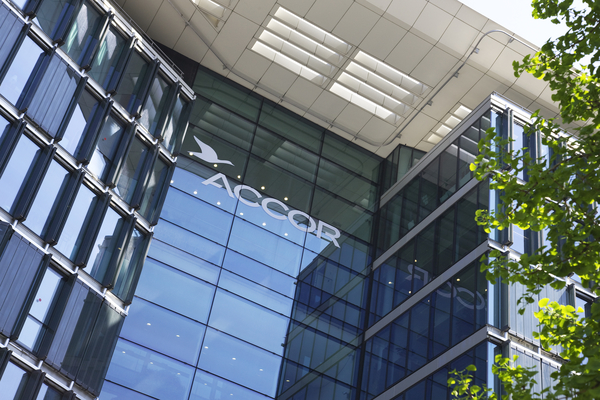
Just weeks after news of the hotel group negotiating the purchase of Potel & Chabot, AccorHotels is now in talks with FCDE (Fonds de Consolidation et de Développement des Entreprises) to acquire all the latter’s unspecified minority interest in French events and catering company Groupe Noctis.

FCDE had invested 11 million euros (US$12.2 million) in Group Noctis over 2013 and 2014 to help it roll out its events business, in particular through acquisitions. Over the past four years, it was reported to have grown revenue by 250 per cent.

Established the company in 2008, Group Noctis has a collection of exclusive venues in France and abroad, and has signed agreements to open about 10 new venues in Paris.

Through this strategic partnership, AccorHotels hopes to cement its leadership in the City of Lights, a prominent events destination, while Noctis will be able to tap into AccorHotels’ hospitality expertise for business clients, both companies said in a statement.

Laurent de Gourcuff, Groupe Noctis chairman, CEO and founder said: “Now we’re starting a new, decisive chapter in our story, with AccorHotels’ investment in our equity. It’s the best partner to team up with to push ahead with our bold development plans, and we’ll be able to share a group’s expertise in serving upscale customers and extract synergies with their various business lines.”

Sébastien Bazin, chairman and CEO, AccorHotels, stressed that Groupe Noctis represents “more than an enviable address book”.

He said: “This alliance blends naturally into our plans to transform and boost AccorHotels with a view to catering to increasingly discerning customers’ wants and needs beyond the travel universe. Its expertise and ours complement each other, and pooling our assets will put us in a position to tap into growth opportunities and synergies in France and beyond.”

Marriott to bring Moxy into Japan this year

0

Moxy Hotels, Marriott International’s millennial-focused boutique hotel brand, will enter Japan with two new properties late this year, following the opening of Asia-Pacific’s first Moxy in Bandung, Indonesia in 3Q2017.

Moxy Tokyo Kinshicho, a 205-room modern hotel converted from a stand-alone office building, is located in the heart of Tokyo’s historic Kinshicho, a short walk from the Kinshicho Station. It is owned by Goldman Sachs and managed by Tokyo-based commercial real estate developer Pacifica Capital.


A rendering of the Moxy Hotel in Washington, D.C

The 155-room Moxy Osaka Honmachi, also a conversion from a stand-alone office building, is situated a short distance to Honmachi Station, and is owned by Goldman Sachs while being managed by EGW Asset Management.

Moxy Hotels first debuted in Milan in September 2014, and currently operates nine additional hotels in New Orleans, Tempe, Berlin, Munich, Frankfurt, Vienna and the UK.

The brand currently has more than 70 deals in the global pipeline, in destinations including Amsterdam, Frankfurt, London, Oslo, New York City, San Francisco and Seattle.

Scott Dunn expands into Asia with Singapore office

0

Luxury tour operator Scott Dunn has expanded into Asia with the opening of its first regional headquarters in Singapore, adding to its existing offices in London and San Diego.

Andrew Dunn, founder and president, Scott Dunn, said: “We are excited to bring the Scott Dunn offering to the discerning Asian market. Our guest base from Asia-Pacific has been growing steadily for some time with the increasing demand for experiential travel, so it has been an ambition of ours to get a team of specialists on the ground here for a while.

“Singapore offers exciting opportunities for us to grow – the country has a strong base of avid and sophisticated travellers who would
benefit from the Scott Dunn experience. We look forward to expanding our services to this market,” he aded.

Founded in 1986 by Dunn as a European ski chalet operation, Scott Dunn now curates private journeys for travellers to more than 100 destinations around the world, including the Alps, Australia, Myanmar, Japan, New Zealand, South Africa and Thailand.

Expedia takes up majority stake in SilverRail

0
SilverRail Technologies (PRNewsfoto/Expedia, Inc.,SilverRail Techno)

Expedia is set to acquire a majority stake in rail distribution technology provider SilverRail, with the transaction expected to close in mid-2017.

“Rail is ready for an online revolution, and we’re ready to be a part of it. Rail’s shift online is one of the fastest growing areas of innovation in the US$1.3 trillion travel market, and SilverRail is powering that innovation,” said Dara Khosrowshahi, Expedia president and CEO.

SilverRail Technologies (PRNewsfoto/Expedia, Inc.,SilverRail Techno)

Said Aaron Gowell, SilverRail Technologies’ CEO: “Expedia is an ideal fit for us as it sees the huge potential in rail and has a history of keeping its brands nimble.”

SilverRail will remain focused on transforming the consumer experience of rail for carriers, travel retailers and corporate travel companies, it said in a statement.

Shangri-La Hotel, Singapore’s Tower Wing reopens with new look

0
Shangri-La Hotel Singapore

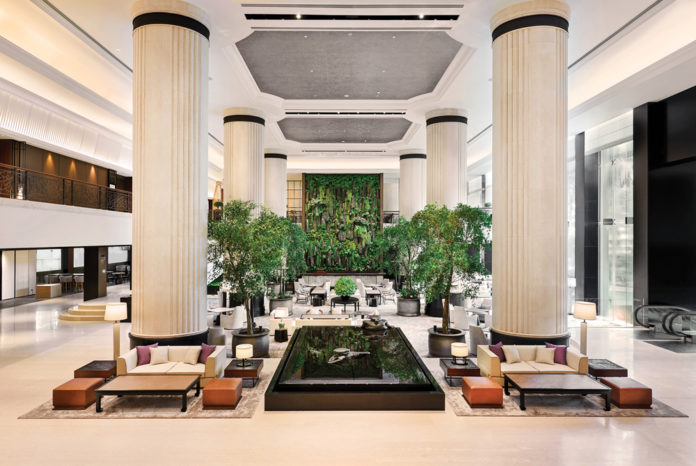
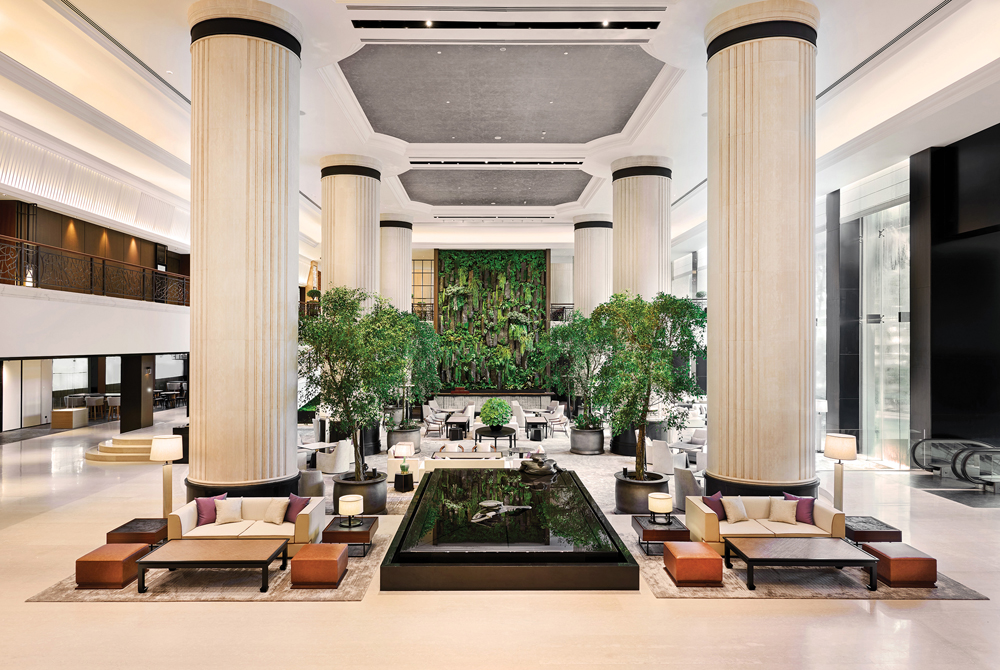
Following an extensive makeover lasting eight months, the Tower Wing at Shangri-La Hotel, Singapore reopens today to reveal a refreshed lobby, brand-new rooms and suites, three novel restaurant concepts and a revitalised club lounge.

A new highlight in the lobby is the ceiling art installation, made of thousands of cascading stylised leaves, by renowned Japanese designer Hirotoshi Sawada.


Tower Wing lobby

The Tower Wing’s 503 refurbished guestrooms and suites include the Tower Wing Deluxe Rooms, Horizon Club Deluxe and Executive Rooms, the Family-Themed Suite, the One-Bedroom Suite and the 250m2 Grand Suite.

The 38m2 Deluxe Rooms, for example, come complete with stylish furnishings, luxurious amenities, Internet access, glass wardrobes, floor- to-ceiling windows and a choice of city or pool views, while the Horizon Club Rooms offer guests access to the Horizon Club Lounge on level 24.

Among the fresh F&B concepts at the Tower Wing is the Lobby Lounge, which will showcase Singapore favourites such as fish head bee hoon soup, prawn noodle soup, bak chor mee, Hainanese chicken rice, Katong laksa, and chilli crab with mantou.

Next door, ShopHouse is a grab-and-go retail concept offering freshly baked bread, homemade sandwiches, salads and snacks, as well as gourmet sauces, chocolates and 3D cakes.

Nami Restaurant and Bar, on level 24, is helmed by head chef Akiba Shigeo, who cooked at the royal wedding of Japan’s Prince Akishinomiya and Princess Kiko.

To celebrate the reopening of the Tower Wing, Shangri-La Hotel, Singapore is now offering an exclusive promotion for Golden Circle members, which enables a stay in the Deluxe Rooms at Best Available Rate from May 16 to July 31, 2017 with breakfast at The Line and double GC Award Points.