Virtuoso has named Lori Sheller as vice president, global cruise. She brings extensive experience in sales, marketing, and business development, having held leadership roles at EBG, Swan Hellenic, MSC Cruises USA, and Tourico Holidays/Hotelbeds Group.
In her new role, Sheller will lead Virtuoso’s global cruise strategy, strengthen partnerships with top cruise lines, and drive growth in the global cruise market. She will report to Úna O’Leary, vice president, global partnerships, and be based in Parkland, Florida.
Fairmont Hotels & Resorts has appointed Emma Darby as global vice president spa & wellness.
In this role, Darby will oversee spa and wellness operations across Fairmont’s global portfolio of 92 properties.
With over 20 years of hospitality experience, she has held senior roles at Rosewood Hotels & Resorts and The Ritz-Carlton Hotel Group. Most recently, she served as chief operating officer at Resense Spas, where she managed a global portfolio of luxury spas, leading business expansion and maintaining high wellness standards.
The Laguna Phuket Marathon 2025 presented by Supersports will take place on June 14–15, 2025, welcoming over 8,000 runners from 50 countries. Now in its 19th year, the certified AIMS (Association of International Marathons and Distance Races) event continues its Run Sunset & Run Sunrise format, with races held on both Saturday evening and Sunday morning across Phuket’s scenic landscape.
The event promotes sustainability, community wellness, and tourism, supported by public and private partners including the Phuket Provincial Government and the Tourism Authority of Thailand.
The Laguna Phuket Marathon will welcome over 8,000 runners from 50 nations
The weekend begins with the lively Lifestyle Weekend Night Market on June 13, followed by the 2K Kids Run, 5K Fun Run, and 10K Mini Marathon on June 14. The Half Marathon, Full Marathon, and Marathon Relay take place on June 15. New age categories for runners aged over 70 have been introduced to promote inclusive participation.
The route passes through plantations, villages, and beaches, with full medical and safety support. Proceeds help fund local children’s shelters through the Laguna Phuket Foundation and Children First Fund. Special accommodation packages at Laguna Phuket resorts include free transport to the race venue.
Malaysia is increasing efforts to grow tourist arrivals from Saudi Arabia, its highest-spending source market, which recorded a 23.7 per cent year-on-year increase in 2024, reaching 68,382 visitors.
There are currently 41 weekly flights from Jeddah and Madinah to Kuala Lumpur.
Tiong King Sing shared that discussions are underway with airlines as limited flight options continue to restrict growing demand from Saudi travellers
To support growing demand and improve access, Malaysia’s minister of tourism, arts and culture, Tiong King Sing, stated that the ministry is in discussions with Malaysia Airlines, AirAsia, and Batik Air to explore the reinstatement or expansion of direct flights to Saudi Arabia.
He noted that limited flight availability, particularly for corporate travel, has been a constraint. At present, Saudia is the only airline operating regular commercial services to Malaysia, while Malaysia Airlines mainly serves Hajj and Umrah pilgrims.
Tiong recently led a delegation of tourism representatives, including hotels, tour operators, and attractions, to Arabian Travel Market in the UAE. This was followed by a sales mission to Riyadh and Jeddah to promote Visit Malaysia 2026 and Malaysia Culture Week 2025, and to strengthen Malaysia’s presence in the Saudi travel market.
Arokia Das Anthony, executive director of The Essence of Asia Tours & Travel, observed that improved air connectivity between Saudi Arabia and Malaysia could also benefit travellers from neighbouring countries by offering connections via Saudia to Kuala Lumpur.
He also noted a shift in travel preferences, with more Middle Eastern travellers – particularly from Saudi Arabia – now choosing flexible, independent travel over traditional full-board packages.
He shared: “Many now book only accommodation and airport transfers through us, and choose from a list of tours based on their interests. This trend reflects a growing preference for personalised travel experiences.”
Following the recent escalation in hostilities between India and Pakistan, a significant segment of India’s outbound travel sector is witnessing a steep decline in demand for Turkey. Indian travellers and travel agents have expressed strong displeasure over Turkey’s statements of support for Pakistan during the conflict, leading to widespread cancellations and a freeze on new bookings.
According to Sandeep Khetarpal, founder of Zotrav, a B2B marketplace for travel agents, there has been “a sharp decline in interest for Turkey as a travel destination with nearly 80 per cent of bookings either cancelled or postponed”.
Indian travellers freeze bookings as political tensions spill into travel choices, slashing demand for Turkey-bound trips; Kizil Kule in Turkey, pictured
“India was once among the top source markets for Turkey, with a 20.7 per cent year-on-year increase in Indian visitors in 2024 as compared to 2023. However, the current scenario is quite different. Since the recent Indo-Pakistan conflict, we have not received any new enquiries for Turkey and the outlook for the upcoming holiday season remains bleak,” he said.
The downturn follows a deadly militant attack in Kashmir’s Baisaran Valley last month which killed 26 tourists. India responded with Operation Sindoor, launching airstrikes on militant infrastructure in Pakistan and Pakistan-administered Kashmir. The subsequent military exchanges heightened tensions across the region.
Amid these developments, Turkey issued a statement expressing solidarity with Pakistan, triggering a strong backlash from the Indian travel trade community and outbound travellers alike.
“Sentiments of Indian travellers have been badly hurt due to Turkey’s support to Pakistan. There are some business trips still happening but the leisure demand is almost zero. In the short run, we see demand impacted across all segments, whether leisure, MICE or weddings. Destinations like South-east Asia and Europe will benefit from the decline in demand for Turkey,” noted Aman Baweja, director, strategic alliances and partnerships, Travomint.
Aditya Tyagi, founder, Luxe Escape highlighted the slowdown in overall outbound demand post the border skirmishes, however, he stressed that “our clients just do not want to visit Turkey at the moment”.
Meanwhile, both India and Pakistan agreed to a ceasefire last week, bringing a halt to hostilities.
Luxury Lodges of Australia is marking its 15th anniversary with a renewed focus on representing the country’s evolving high-end travel sector, with the addition of Orpheus Island and Pelorus Private Island to its portfolio.
The network’s newest members, added in February, bring the total number of lodges to 20.
Luxury Lodges of Australia expands its portfolio with Pelorus Private Island and Orpheus Island
“Luxury Lodges of Australia is not about growing numbers so when we bring on a new member, it’s quite a big deal,” said Penny Rafferty, executive chair. “It was always about having the best of the best that demonstrated Australian experiential luxury.”
Speaking to TTG Asia at Australian Tourism Exchange 2025 in Brisbane, Rafferty said the new additions exemplify a broader trend towards ultra-private, bespoke group travel. “Having private islands or multi-roomed private villas within a luxury lodge environment is fantastic for those smaller group travels, especially with the rise of intergenerational and multigenerational family travel,” she noted.
Orpheus offers 14 suites and rooms, while Pelorus features a five-bedroom villa, catering to families seeking privacy alongside top-tier amenities.
Luxury travel trends continue to evolve, noted Rafferty. Wellness experiences have shifted from a focus on spas to greater engagement with nature, while culinary travel has become more refined, with stronger connections to regional communities and the use of Indigenous ingredients.
“The next chapter will see an even greater emphasis on nurturing Australia’s unique environments and cultures, while ensuring we remain relevant to the changing expectations of luxury travellers worldwide,” she said in a separate statement.
Originally established to shift perceptions of Australia as a luxury destination, Luxury Lodges of Australia has recently launched an updated trade and media portal for agents globally. The platform offers a more comprehensive and user-friendly interface, featuring over 350 experiences.
Described as a one-stop shop, the portal includes an extensive image and video library, sample itineraries, availability calendars, and training modules designed to support travel advisers.
Luxury Lodges of Australia stated it remains committed to elevating Australia’s profile in the global luxury travel market, continuing to emphasise its long-standing pillars of positive environmental and cultural impact.
Accor will expand its regional footprint through a new partnership with Bayview International Hotels & Resorts, established in 1993, bringing together Bayview’s local legacy and Accor’s global scale and experience.
From May, Accor will assume management of three existing properties: The Sydney Boulevard Hotel in East Sydney; Bayview Geographe Resort in Busselton, Western Australia; and Wairakei Resort Taupo in New Zealand’s North Island.
From left: Accor’s Adrian Williams and Bayview’s Peter Pysk at The Sydney Boulevard Hotel
The agreement marks a strategic step in Accor’s regional growth, with plans to refurbish and rebrand all three properties under Accor’s hotel portfolio. The hotels will continue to operate under their current names until the refurbishments are complete.
The Sydney Boulevard Hotel includes 277 rooms, seven suites, 11 meeting spaces, a ballroom, restaurant, café, and a top-floor meeting room with views of the CBD and Sydney Harbour.
Bayview Geographe Resort, located in Busselton three hours south of Perth, comprises 137 rooms and villas, an indoor heated pool, tennis court, golf putting green, and direct access to the beach.
Wairakei Resort Taupo, situated near Lake Taupo in a geothermal area, includes 187 rooms, a nine-hole golf course, geothermal swimming pool, day spa, multiple dining options, and conference facilities.
Adrian Williams, chief operating officer for Accor in the Pacific, said: “These three properties are well-loved by locals and visitors alike, and we are thrilled to bring them into the Accor family. Our vision is to elevate their guest experiences through our powerful brands, ALL loyalty programme, and world-class service offering.”
Derek Yan, vice president projects and product development for Bayview International Hotel & Resorts, added: “With Accor’s global expertise and strong brand portfolio, we are confident that these hotels will thrive, offering even greater experiences for our valued guests. It reaffirms our commitment to growth and excellence in the region.”
Edit Hotels & Resorts officially launched on May 5 with four properties across New Zealand, targeting value-conscious travellers seeking straightforward, comfortable accommodation. The Edit brand, developed by the team behind Fable Hotels & Resorts, features recently refurbished properties in Auckland, Picton and Hanmer Springs, and is designed to offer a simplified hospitality experience centred on practicality, minimalism and local engagement.
The initial portfolio includes Edit Auckland Central (formerly President Hotel), Edit Auckland Greenlane (formerly Greenlane Suites), Edit Picton (formerly Picton Yacht Club Hotel), and Edit Hanmer Springs (formerly Hanmer Springs Hotel). Each location offers mid-range accommodation focused on essential services, such as reliable Wi-Fi, quality bedding and streamlined service, in central locations.
Edit Hotels & Resorts has opened four refurbished properties in New Zealand, introducing a new brand focused on simple, cost-effective stays; Edit Hanmer Springs, pictured
Edit Picton and Edit Hanmer Springs also include conference and event spaces, accommodating up to 100 and 250 guests respectively. These venues are designed for business meetings, retreats and social events in regional settings.
A digital-first approach underpins the brand’s guest experience, with features such as digital compendiums, interactive activity guides and business cards already in use. Chromecast streaming and paperless check-in are currently being developed.
Edit Hotels & Resorts is also involved in local community initiatives. In Auckland, the group supports Bailey Road School in Mt Wellington by providing students with school supplies and sponsoring a leadership programme. A summer work experience scheme is also in development. In Picton, Edit contributes funds each school term to help students access extracurricular activities and basic school needs. In Hanmer Springs, the brand sponsors weekly school lunches at the local primary school.
“Edit is for the savvy traveller from families looking for value, business travellers needing seamless connectivity, or travel hackers who know how to make the most of every trip,” says Lisa Breckon, director of sales and marketing, Edit Hotels & Resorts. “We designed Edit Hotels & Resorts to be affordable without ever feeling cheap. It’s smart, comfortable, and uncluttered – ideal for guests who would rather spend more on experiencing the destination, than the room they sleep in.
“Being part of a community means more than just operating in it; it’s about lending a hand and building meaningful, long-term relationships. We’re proud that each Edit property gives back to local school children and families who need a little extra support in a way that’s personal, tangible, and truly makes a difference.”
Royal Caribbean has released details of the entertainment and dining options that will be available aboard Star of the Seas, set to debut in August 2025 from Port Canaveral (Orlando), Florida. The new vessel will feature a wide range of performances, food venues, and activities for all ages.
The ship will host five main shows spanning theatre, water, air, and ice. These include a new Royal Caribbean production, Create, following a robot character named KRE-8 through a story told via music, dance, and visual arts. Families can also watch Pirates & Mermaids at the AquaTheater, which combines dance, diving, and synchronised swimming with comedic storytelling.
Star of the Seas will feature new entertainment and dining offerings on Caribbean sailings from August 2025
The highlight of the programme is Back to the Future: The Musical, adapted from the Broadway version. It will be performed with the support of the largest orchestra at sea and feature choreographed sequences and special effects. Other shows include Torque, a water-based performance involving divers, swimmers, and slackliners, and SOL, an ice show themed around the journey of the sun.
Dining options include more than 40 restaurants and bars. Among them is the AquaDome Market, exclusive to the Icon Class, which will feature five food stands including new options offering American barbecue, South-east Asian dishes, and South American snacks. Central Park’s Lincoln Park Supper Club, new to the fleet, will offer a multi-course meal with live jazz and cocktails inspired by 1930s Chicago.
Other venues include Chops Grille for steak, Izumi Hibachi & Sushi, and Celebration Table for private dining. Casual options include Surfside Eatery, Basecamp, and Windjammer, which will continue to serve a variety of international cuisines.
Evening entertainment will extend beyond the shows. Guests can visit the adults-only comedy club The Attic, try karaoke, or visit Casino Royale. There will be more than 20 bars and lounges, including favourites such as Dueling Pianos, Rye & Bean, Lou’s, and Bubbles in Central Park.
Star of the Seas will sail seven-night itineraries to the Eastern and Western Caribbean, including stops at Royal Caribbean’s private destination, Perfect Day at CocoCay in The Bahamas. From December 2025, itineraries will also include Royal Beach Club Paradise Island, part of the new Royal Beach Club Collection.
“At Royal Caribbean, we know that dining and entertainment are at the heart of our guests’ vacation experiences and memories. With the Icon Class line-up redefining what it means to vacation, Star pushes the boundaries of flavours and entertainment with a mix of brand-new and fan-favourite offerings, so every kind of vacationer can make memories of a lifetime together and in their own ways,” said Kara Wallace, chief marketing officer, Royal Caribbean.



 In her new role, Sheller will lead Virtuoso’s global cruise strategy, strengthen partnerships with top cruise lines, and drive growth in the global cruise market. She will report to Úna O’Leary, vice president, global partnerships, and be based in Parkland, Florida.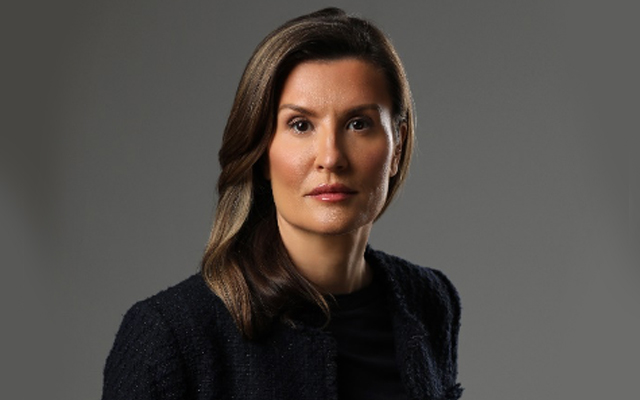
 With over 20 years of hospitality experience, she has held senior roles at Rosewood Hotels & Resorts and The Ritz-Carlton Hotel Group. Most recently, she served as chief operating officer at Resense Spas, where she managed a global portfolio of luxury spas, leading business expansion and maintaining high wellness standards.


 Here’s wishing all our Buddhist readers a happy Vesak Day!