TTG Asia
Asia/Singapore Friday, 10th April 2026
Page 1486

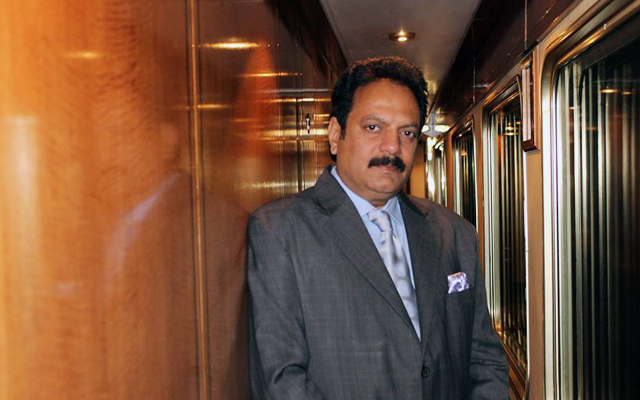
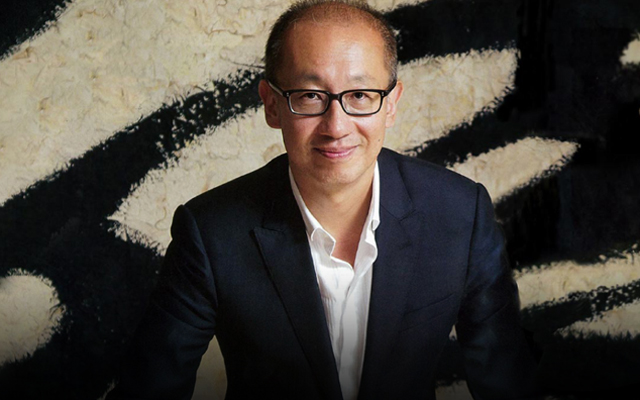
Why Steven Pan sold Regent

0
Pan: bringing back Regent Hong Kong a key motivation behind the IHG joint venture

When Steven Pan fought off some 20 suitors eight years ago to become the new owner of Regent Hotels & Resorts, he had high hopes.

In a 2011 interview, his mission was to bring back the brand to its full glory and grow the portfolio to 30 or 40 hotels in five years, from seven or eight properties in operation at the time. He talked about building a global infrastructure for the new Regent, a worldwide reservations system, a web marketing system, a sales and marketing and operations team. He picked Ralf Ohletz as president, a hotelier from the school of Adrian Zecha who, together with Bob Burns and George Rafael, founded Regent in 1970. He appointed Burns honorary chairman.
Pan: bringing back Regent Hong Kong a key motivation behind the IHG joint venture

Eight years and US$56 million later (excluding the investments on building that global infrastructure), there are only six Regent hotels in operation and three to open, in Jakarta (2018), Harbin (2019) and Phu Quoc (2020). In fact, Regent has shrunk and the 30 to 40 hotels by 2015 was a pipe dream rather than pipeline.

“I am not sure why it hasn’t grown, except that it is hard to grow a small management company. That, I do know!” said Mark Edleson, founder & president, Alila Hotels & Resorts, who faced the same crossroads in 2014 and is now part of Two Roads Hospitality comprising over 100 hotels in five brands.

Pan did not reckon the industry would be facing game-changing challenges that squeeze smaller hotel groups. The sharing economy, for instance, drove industry consolidation – a bun fight among chains for economies of scale and customer loyalty.

Said Robert Hecker, managing director Pacific Asia, Horwath HTL: “Probably the biggest challenge (for Pan) was in creating a sufficiently resourced development and management infrastructure to support growth and performance needed to fulfil third-party owner needs and expectations.

“I think it has reached a point where a partner with sufficient scale and brand/marketing/distribution expertise is the only way to realise the underlying and full value of the brand, and such party would need a majority stake to make such a commitment and have it serve a key role in the growth.”

Added Bill Barnett, managing director, C9 Hotelworks: “Lack of a global loyalty programme, basing the group in Taipei was not easy, and lack of scale.”

Asked what compelled him to let go a majority stake (51 per cent) of Regent to InterContinental Hotels Group (IHG), Pan told TTG Asia: “The decision for the joint venture (JV) is mainly the unique opportunity of Regent Hong Kong and the fact that IHG is committed to develop Regent as the super luxury brand of the group. The industry factor is the scale and distribution.”

What would he do differently on hindsight? “I would have deployed a lot more resources to development to sign more Regent hotels in the early years,” Pan said.

Pan grew up with the Regent brand since Regent Taipei, which he owns through Formosa International Hotels, opened in 1990. “I live and breathe Regent; it is the one and only for me. Mr Burns was the founder and I’m proud to be the steward of the brand and will do everything I can to ensure its prosperity in IHG care.”

IHG, too, has a natural connection with Regent. In 2001, IHG (then Six Continents) Asia-Pacific CEO, Richard Hartman, gave the chain its biggest deal in the region when it acquired the Regent Hong Kong and rebranded it InterContinental. IHG badly needed an InterContinental flagship and the Regent, a waterfront hotel with marvellous views of the harbour, was a coup for the brand. Additionally, IHG was also one of the suitors that Pan elbowed out in 2010 in the bid for the Regent brand.

So when Goodwin Gaw (Gaw Capital led the purchase of InterContinental Hong Kong in 2015) called him about a potential JV with IHG to rebrand the hotel back to Regent Hong Kong, “I immediately agreed,” Pan said.

“The combination of Regent Hong Kong and IHG’s scale will accelerate Regent’s global expansion to gateway cities and resorts. With the rebranding of Regent Hong Kong, Regent will regain a global luxury flagship. It’s a win-win-win for IHG, Gaw and us.”

Still sexy?

But the question is, is brand Regent just a romantic apparition or does it still have traction today? Its sexiness lies in the notion that an Asian-based hospitality group could outsmart European and US chains by ushering new standards of luxury. In the 80s and 90s, Regent was the first hotel brand to introduce the five-fixture bathroom, the all-villa resort and the mixed-use hotel development.

But do new luxury travellers care for a five-fixture bathroom? And why didn’t Regent flourish even under Four Seasons Hotels & Resorts, which acquired it in 1992? The property in Singapore was even rebranded Regent Singapore – A Four Seasons Hotel, as if Regent could not stand on its own merits.

Regent also did not grow under Carlson Hotels Worldwide, which bought it in 1997.

But Hecker believes brand Regent still has motive power. “The outpouring of positive sentiments after the deal announcement about the legacy of the Regent brand indicated strongly the Regent brand’s lasting goodwill in the market and the desire to see its former prominence restored. IHG will need to reconcile the existing properties and ensure all new properties are in line with a restoration of its luxury image, perhaps a new/contemporary luxury image.”

Edleson agreed: “I think it still has a good name. Kenny Gaw is excited about this deal because he can now reopen the Intercontinental Hong Kong as the Regent Hong Kong as it was originally known and he stated it again at HICAP Update (recently) in Singapore. That alone should be a great boost for the brand. IHG should be able to grow it faster than it has grown over the past few years.”

Barnett points to other luxury brands like Four Seasons and Ritz-Carlton which have a high number of projects with branded residences, saying Regent gives IHG this key tool. “It is well-suited for both urban and resort residences, so it is a strong strategic move,” he said.

The clarity of the 51:49 per cent joint venture is also a plus point, with IHG handling operations and development, and having the right to buy up the remaining 49 per cent in phases from 2026. A source said Pan appears to be another hotel owner who wants to operate and develop and own – yet it takes a very different skills set to operate successfully.

Asked how much say he’d have over Regent going forward, Pan said: “I will be chairman and act as brand ambassador for Regent. IHG will develop and manage all Regent hotels outside Taiwan, while we continue to operate in Taiwan. IHG is evaluating key executives for Regent JV and we certainly recommend and hope IHG will retain key leaders like Ralf, who has been the concept master behind Regent.”

Asked what’s the best scenario for him eventually, he said: “The best scenario is to remain JV partner with IHG because we believe in the future of Regent and we want to be part of the brand we love and nurture.”

In the 2011 interview, when asked when Regent would return to Hong Kong, Pan said: “It’s a question I think about every day.”

Now, he can sleep.
Sri Lanka all set to kick off long-overdue campaign

0

After repeated delays in the past years, Sri Lanka will finally roll out the first phase of a multi-year, US$45 million campaign later this month.

Managing director of the state-run Sri Lanka Tourism Promotion Bureau (SLTPB), Sutheash Balasubramaniam, said a US$650,000 campaign will roll out on CNN platforms by end April, while a larger, six-month digital marketing campaign targeting China, India, the UK, Germany and France worth US$3.5 million would be ready by end May.

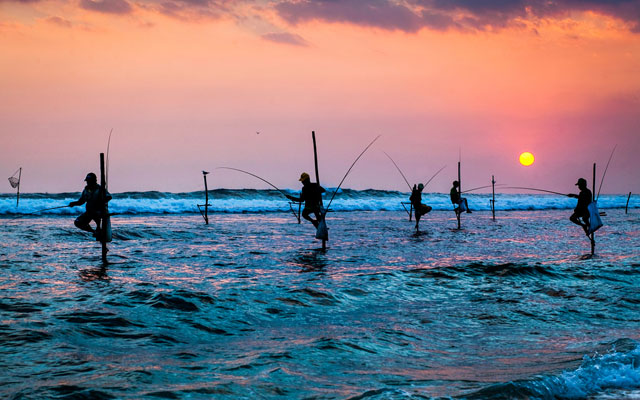
SLTPB is finally ready to launch a tourism campaign that has been delayed time and again; traditional stilt fishermen at sunset near Galle pictured

Other networks such as CCTV, NDTV (India) and Al-Jazeera will also be used in these campaigns.

Once the digital campaign tapers off, a US$41 million global marketing campaign will take off as part of a three-year programme later this year. Sri Lanka is targeting 2.3 million arrivals this year from 2.1 million in 2017.

Balasubramaniam said the global marketing campaign will focus on the five main markets and three others, which are likely to be the Middle East, Australia and Japan, in addition to promotion in other smaller markets.

Harith Perera, president of the Sri Lanka Association of Inbound Tour Operators, which is represented on the SLTPB board, said the digital campaign will be across all digital platforms and social media in those five key markets. “We are targeting all social media and B2C customers. The global marketing campaign later in the year encapsulates everything, above the line, below the line, to digital,” he added.

Consideration is also given to the MICE market, according to Achini Dandunnage, senior manager at the main Sri Lanka Conventions Bureau. “When calling for proposals to appoint special representatives, they will be asked to include one day specifically for MICE buyers in a two- to three-day overseas roadshow.”

She said they are targeting incentive houses and conference organisers while special fam tours – separate from destination management marketers – are also being arranged under these campaigns.

The latest developments are spelling hope for the Sri Lankan trade, which has for years been anticipating the launch of the campaign.

Shiromal Cooray, managing director, Jetwing Travels, said: “This (campaign) is long overdue and the quicker it starts the better. Our visitors and potential visitors need to be constantly reminded about Sri Lanka and its attractions. While other countries have been very high in ‘top of the mind’ marketing, Sri Lanka has been inadequate in this area.”

Mahen Kariyawasam, managing director of Andrews Travels, hopes the campaign would “finally get off the ground”, deeming it key to create buzz about the destination in key markets such as India and China.

Devindre Senaratne, managing director of Journey Scapes Travel, added: “The non-existence of a marketing plan had forced upmarket resorts to sell at three-star rates, losing an opportunity to attract at least 500,000 high spending guests in the next few years.”

Crystal AirCruises gets private jet tours off the ground

0
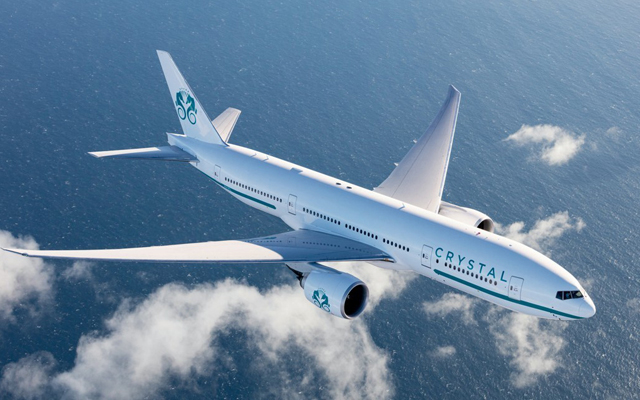
Crystal Skye private jet uses the Boeing 777-200LR aircraft

Following inaugural flights to the South Pacific islands of Tahiti and Fiji in August 2017 and departures to Sydney-Hawaii and Kenya early this year, private jet operator Crystal AirCruises (CAC), owned by Genting Hong Kong, now plans to launch three to four departures yearly.

With the concept off to a “very quick” start, Thatcher Brown, president of CAC and Dream Cruises, said: “Our next (private jet) itinerary for the 2019 New Year period will feature Tokyo, then on to Las Vegas and New York before heading back to Hong Kong. This would complete an around-the-world adventure in nine days.”

The interest generated by these curated itineraries has also spurred charter enquiries. Brown pointed out: “There’s been greater interest in chartering our converted Boeing 777 – the product has been tested in the marketplace and people know its quality and service plus its capability to provide very long-distance flights.

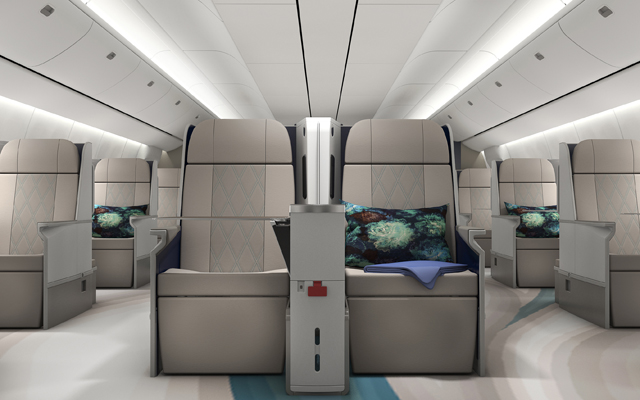
Crystal Exclusive Class seats for Crystal Skye’s 88 guests

“The business model is hence a combination of curated trips followed by the charters that come out of our earlier air cruises. For example clients returning from Kenya expressed interest in repeating the trip with friends in summer,” he continued.

Brown remarked that the market mix has been very balanced, in part due to the company’s ability to cater to different segments.

Taking CAC’s last trip to a Kenya safari for example, Brown said guests hailed from Malaysia, Hong Kong, Taiwan and China (Shenzhen and Beijing). Two chefs were flown into the camp in Nairobi to cook a lavish Chinese New Year dinner, he shared.

Genting’s talent pool and hospitality footprint – spanning gaming, cruising and resorts – in different parts of Asia have also proved beneficial. “We have a lot of skilled people to do land tours for the river boats and ocean boats with decades of experience in Asia. From a branding and marketing perspective as well, we have the ability to diversify Crystal’s products, cross-sell and promote our products easily,” Brown said.

As to how CAC’s private jet offerings differ from those by Four Seasons Hotels and Resorts, Brown opined that CAC has larger capacity. “And while Four Seasons connects every trip with their hotels, ours can go anywhere,” he added.

Looking ahead, new destinations and itineraries CAC is looking into include Iceland and Finland due to the appeal of the Northern Lights. Brown is also interested in arranging a golf tour to gauge interest for Scotland or golf courses in South Africa and the Middle East.

New Korean tour company offers cute ‘oppas’ for hire

0
Rent an oppa!

Rather than dream of meeting an oppa in South Korea, you can now hire one as your personal tour guide.

Popularised by the K-wave, the term oppa is used by Korean women to address older family members or friends, or romantic interests.

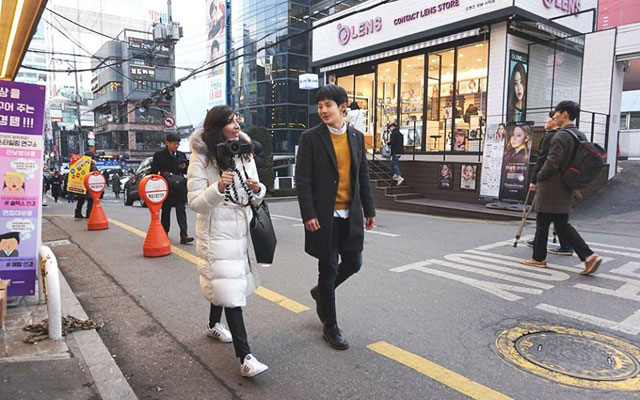
This tour service targets foreign visitors hoping to find their own “oppa” when visiting South Korea

Inviting tourists to “rent a Korean oppa for a dating tour” on Facebook, the Oh My Oppa platform did a test run of its service in February and is now accepting online reservations ahead of an official launch in April.

“We thought we would present these tourists with men we can be proud of. Although it was a joke at first, we followed up with an actual website and the social media reaction has been beyond our expectations,” Lee Joon-woo, CEO of Winwincook, the software company behind the tour service, was quoted as saying in an article from The Korea Herald.

The website currently presents seven oppas for visitors to choose from. Visitors first choose based on the names and beauty shots of their potential oppas. They then click on individual profiles to view details including what language(s) the oppa can speak in, his interests and a brief itinerary.

Apart from market or village tours, oppas may also “cut up steak, take flattering photographs and offer encouraging comments”, according to The Korea Herald article.

Traveltek hires tech exec to pursue SE Asia’s cruise growth

0

Traveltek Group has appointed Adam Tan as business development manager (BDM) in South-east Asia to drive demand for its cruise dynamic packaging technology.

An experienced travel technology professional, Tan joins from Sabre Travel Network (APAC) where he was an account manager for five years. In his new role, he will team up with current BDM, Javine Tan, at Traveltek’s Singapore office, which was launched in October last year.

Adam Tan

As Traveltek is introducing cruise packaging technology that is new to market, Tan’s remit is to maximise opportunities in Singapore, Malaysia, Indonesia, Vietnam, the Philippines and Thailand – a region where cruise demand is currently experiencing record double-digit growth – the company stated in a press release.

The UK-based travel technology firm forayed into North Asia with a new regional office in Hong Kong last year.

Sydney next in line to get a splash of Indigo

0

InterContinental Hotels Group (IHG) and Watson Elite have signed a management agreement for Hotel Indigo Sydney Central, which is targeted to open in 2021.

Located in Sydney’s central precinct, opposite Capitol Square, Hotel Indigo Sydney Central will have 168 rooms including five suites. Other facilities include a restaurant, cafe and bar, as well as a gym, and rooftop terrace for meetings and events.

The Sydney property is the third Hotel Indigo signing for Australia

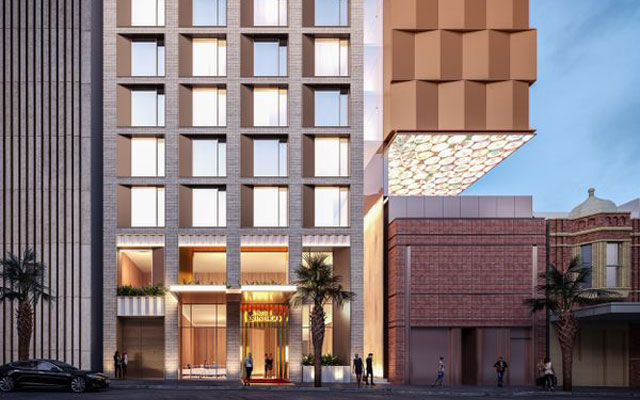
The hotel decor will reflect local culture by integrating materials, colour palette and custom pieces from local artists, photographers and furniture makers. From the outside, a wing cantilevered out over the adjacent heritage-listed Corporation Building and a grand artwork are set to be distinctive external features for the hotel.

Hotel Indigo Sydney Central marks the the third Hotel Indigo signing for Australia, following Hotel Indigo Brisbane Fortitude Valley and Hotel Indigo Melbourne Docklands.

The brand was first launched in Asia-Pacific with the opening of Hotel Indigo Bangkok Wireless Road in January 2015, followed by Hotel Indigo Singapore Katong in July 2016 and Hotel Indigo Bali Seminyak Beach in late 2017.

Singapore’s RevPAR finally poised for growth this year

0
Continued growth in tourist arrivals could help RevPAR recover from 'devastating' conditions in recent years

After enduring three years of sliding RevPAR, Singapore hoteliers are expecting the tide to turn in their favour this year.

RevPAR fell consecutively in recent years, from S$204 (US$156) in 2014 to S$183 last year. However, hospitality players and experts at the recent Hotel Investment Conference Asia Pacific (HICAP) 2018 expressed confidence that numbers will pick back up.

Continued arrivals could help RevPAR recover from ‘devastating’ conditions in recent years; pictured, guests at hotel lobby in Singapore

“The environment is starting to get better. The past few years were devastating, and it was on the back of the government believing that demand (for rooms) would continue to come in, and this resulted in a big imbalance,” commented Gerald HK Lee, CEO of FEO Hospitality Asset Management.

“I think that will be addressed this year, as we clocked in about six per cent of arrivals last year. If we can achieve (more) growth in arrivals, at least the equation will be turned around,” he surmised.

Chee Hok Yean, managing partner, Asia Partner, HVS, concurred. She predicted: ”This year, occupancy will probably inch up, room rates will probably stay flat, and the refurbishment of major hotels bodes well for performance.”

Experts and operators predict that RevPAR growth will bounce up to three per cent from last year. This recovery is also anticipated due to lower operating costs, including labour, speculated Lee.

The industry has already seen a “good trend for the first months of 2018”, said KC Moy, executive vice president, Capella Hotel Group.

Since 2014, there has been little deviation in Singapore’s average occupancy rate, with 84.7 per cent recorded for last year. Meanwhile, total gazetted hotel room revenue hit a five-year high of S$3.7 billion last year.

Biometrics the future for air travel: SITA

0

Sixty-three per cent of airports and 43 per cent of airlines plan to invest in biometric ID management solutions in the next three years, according to a new report published by SITA, Biometrics for Better Travel: An ID Management Revolution.

With passenger numbers rising, the use of biometrics to check passenger’s identity is expected to become more commonplace worldwide as a way to power faster and more secure self-service processes at airports.

Biometric ID technology on the cards for airlines and airports

Sean Farrell, director, strategy & innovation, SITA, said: “Airlines are required to check that passengers are who they say they are and that they have the right travel documents. This is a fundamental element of securing the travel process which cannot be eliminated. With passenger numbers set to double by 2036, airlines and airports need to be able to move passengers through these checks as securely and quickly as possible.

“Efficient identity management is essential for better security while at the same time improving the passenger experience. Biometrics is the technology that can deliver this.”

SITA said the good news is that passengers are happy to use biometrics, a technology that’s becoming a fixture in people’s lives. For example, more than 75 per cent of smartphones are expected to have fingerprint sensors by 2020.

Farrell elaborated: “Passengers are ready and want to use biometrics. The easiest way for airlines and airports to make this happen is to use technology that integrates easily with their existing infrastructure – kiosks, bag drop, automated boarding gates. Moving to single token identity management where passengers can simply use their biometric, such as their face, at every checkpoint on their journey will speed passengers securely through the airport.”

SITA’s report further outlines how airlines and airports must have a global consensus on how to securely resolve passenger identity issues as an integral part of the next generation of self-service systems. All industry stakeholders have a role to play, and the air transport industry must collaborate with governments to ensure scalability and interoperability across borders.

Indian association connects members with new distribution technology

0
TP Connects free to use for TAAI members

The Travel Agents Association of India (TAAI) has linked arms with travel technology provider, TP Connects, to launch a new initiative to digitally empower its membership base of about 2,500 across the country.

Launched on the sidelines of the last week’s TAAI Convention in Srinagar, TAAI Connect allows travel agents to have their own website, booking engine, mobile application, corporate booking tool and decide their commission directly with 39 suppliers integrated into their platform.

TP Connects free to use for TAAI members, says Narula

TAAI Connect will also allow agents to book directly with airlines using IATA’s New Distribution Capability (NDC), in addition to integrating content from GDSs as well as hotel suppliers, consolidators, car rentals and cruises, according to TAAI’s vice president Sanjay Narula.

“TAAI Connect will allow our member travel agencies to be able to research and compare on one particular platform, rather than multiple platforms which is happening currently,” he added.

Rajendran Vellapalath, CEO, TP Connects, declared: “Unfortunately at this stage all the GDS companies in the industry have a technology that is old. As we are using the latest technology, airlines will be able to push any particular offer to the customer through a travel agent using our channel.

He elaborated: “As a travel agent I don’t need to worry about what is going to happen in technological advancement in terms of maintenance, development or upgrade. These aspects will be taken care by TP Connects as a technological provider.”

The technology is offered free of charge to TAAI members but TP Connects will charge agents a fixed nominal amount per transaction.

Some 120 travel consultants have already signed up for TAAI Connect, with the technological solution finding favour especially among the SME agencies.

Neeraj Malhotra, CEO, Ganpati Travels, said: “TAAI Connect offers an opportunity to small travel agencies that can’t own an online booking portal to own one. Moreover, the platform offers more suppliers than any GDS companies. We expect to grow our business through TAAI Connect.”

Gurmeet Singh Vij, proprietor of Nagpur-based Nova Tours & Travels, added: “I operate from a tier-II city which means that we have to generally depend on our counterparts in metro cities for booking travel-related services and pay a mark up fees to them. With TAAI Connect we will be directly dealing with suppliers, thus it will result in cost benefit to us.”

Singapore Flyer resumes operations

0
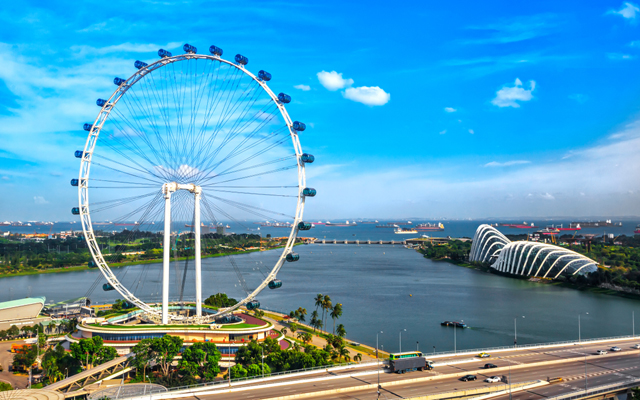
Singapore Flyer spinning again with technical glitch out of the way

The Singapore Flyer reopened on April 1, more than two months after its suspension in late-January, The Straits Times reported.

The decade-old attraction was forced to suspend operations after a “technical issue”. It is understood the problem was traced to a glitch in the mechanism which allows the wheel to rotate. Located at the base of the wheel, it did not affect the observation wheel or any of its 28 capsules structurally.

Singapore Flyer announced on March 31 that it had received approvals from the relevant authorities to resume operations, and that the “necessary safety checks and tests have been carried out to the satisfaction of the Building and Constructions Authority”.