The Swiss hospitality management school will set up an international campus in Singapore
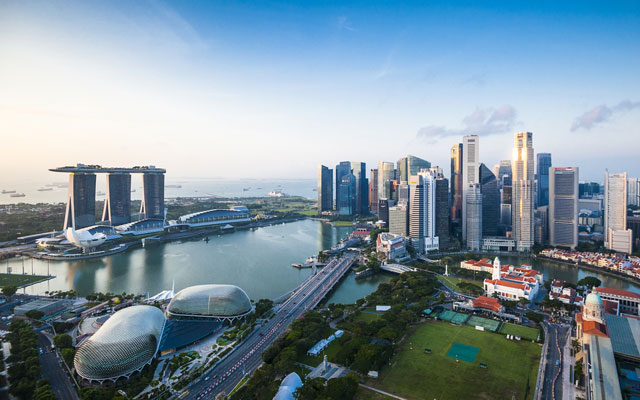
While international visitor arrivals into Singapore grew by 7.3% year-on-year to reach 4.6 million in 1Q2018, tourism receipts dipped marginally with declines seen in shopping, accommodation and F&B expenditure, according to the Singapore Tourism Board’s 1Q report.
The destination’s top five visitor-generating markets in the quarter were China (0.9 million), Indonesia (0.7 million), India (0.3 million), Malaysia (0.3 million) and Australia (0.3 million). Combined, they accounted for 54% of total arrivals.
Tourists spending less on shopping, F&B and accommodation
China (+10%), India (+22%) and Indonesia (+4%) registered the largest absolute year-on-year growth, while Germany (-7%), Australia (-3%) and the Philippines (-4%) posted the largest declines.
Tourism receipts for 1Q2018 were down 0.5% to S$6.7 billion (US$4.9 billion). While sightseeing, entertainment and gaming (+6%) and other tourism receipt components (+22%) grew, shopping (-9%), accommodation (-13%) and F&B (-16%) declined.
Gazetted hotel room revenue for 1Q2018 however was up 8.5%, coming in at an estimated S$1 billion. Average occupancy rate was 86.1%, a 1.4 percentage point increase.
Average room rate increased 2.3% to S$222 while revenue per available room increased 4% to reach S$191 in 1Q2018.
A train of the Guangzhou-Shenzhen-Hong Kong Express Rail Link. Photo: GovHK
With confirmation that the long-delayed Hong Kong section of the high-speed rail service will be operational on September 23, the Hong Kong Tourism Board (HKTB) is intensifying efforts to promote the city as part of multi-destination itineraries.
Along the Guangzhou-Shenzhen-Hong Kong Express Rail Link, the line running between Guangzhou Nan and Shenzhen Bei opened in December 2011, and completion of the Hong Kong extension was originally scheduled for 2015.
A train of the Guangzhou-Shenzhen-Hong Kong Express Rail Link. Photo: GovHK
According to a report by the South China Morning Post, recent agreements that transferred operating rights to MTR Corporation were accompanied by the announcement that travellers will get direct access from the West Kowloon station to 44 locations across the border, up from 20 announced earlier.
Peter Lam, chairman of the HKTB, said: “The commencement of the high-speed rail will reinforce Hong Kong’s position as China’s southernmost gateway by connecting Hong Kong to the mainland’s national high-speed rail network.”
The development is allowing HKTB to step up its ongoing efforts to promote multi-destination travel. Leveraging the tourism resources along the rail line, more business opportunities could emerge for the travel trade in Hong Kong and mainland, Lam remarked.
“Riding on the commencement of the high-speed rail, the HKTB is in discussion with the travel trade in Hong Kong and the mainland to launch tourism products featuring the high-speed rail, such as rail-cruise products jointly developed with cruise companies; as well as high-speed rail tours,” said Lam.
Anantara Hotels, Resorts & Spas, in partnership with MJets, has launched private jet experiences taking guests from Bangkok to Sri Lanka and the Maldives.
The new offering combines private jet transportation with stays at the Anantara Kihavah Maldives Villas and Anantara Peace Haven Tangalle Resort in Sri Lanka.
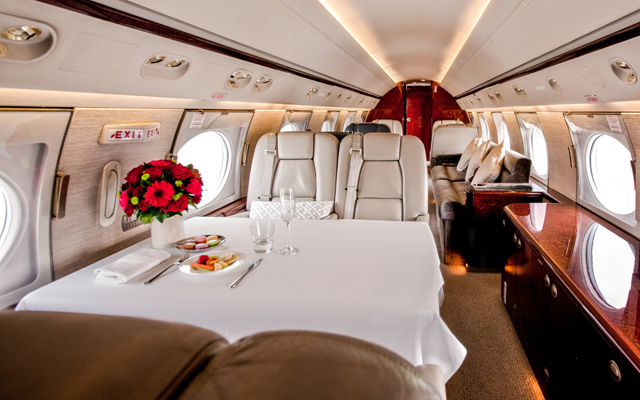
Larger groups will cruise in the Gulfstream V jet, with a three-zone cabin environment for working, dining, entertaining and resting. Amenities including shower facilities, fully reclining beds, entertainment systems and two flight attendants.
Interior of MJets’ Gulfstream V private jet
Cessna Citation X, which carries up to eight passengers, has features including fully reclining body club seats, entertainment systems and one flight attendant.
Upon touching down at Colombo International airport, guests are transported via private limousine to a private ocean-view villa at Anantara Peace Haven Tangalle on Sri Lanka’s southernmost shore.
Activities at the resort range from Aryurvedic wellness journeys to surfing and personalised spa experiences. After dining on sustainably sourced cuisine, brought from farm to cliff side table by a private chef, guests may also take a class in Sri Lankan cuisine.
From here, guests have the option to jet off to the Maldives. At Anantara Kihavah Maldives Villas, they will stay in overwater villas, which feature a two-tiered deck with shaded swinging daybed, dining area and ocean hammocks above, and a lower deck that steps into the lagoon.
Day-time activities include diving, snorkelling with mantas and whale sharks and enjoying the aquamarine lagoon of a UNESCO Biosphere Reserve. At night, guests can stargaze in the only observatory in the southern Indian Ocean.
The Anantara Private Jet Experience can be tailored to suit each guest or scaled to accommodate larger groups.
Best Western Hotels & Resorts will introduce its new soft brand, BW Signature Collection by Best Western, to Asia for the first time this year, following the signing of a lakeside resort in Thailand’s Prachinburi province.
Tawaravadee Resort, owned by My Green Resident, is scheduled to launch in 3Q2018.
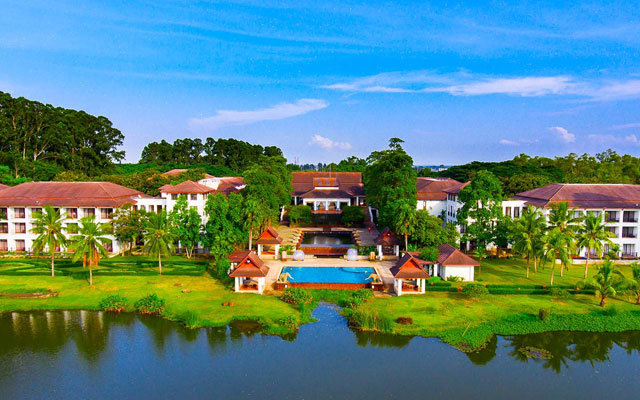
Nestled in verdant countryside about 160km from Bangkok, the low-rise resort features 199 rooms and suites, ranging from traditional Thai rooms to larger lakeside suites.
Guests can choose from an all-day dining restaurant specialising in Thai, pan-Asian and international cuisine with views of the pool, and the Lobby Lounge. In addition, the karaoke rooms are ideal for evening parties.
The hotel also features facilities such as an outdoor pool, fitness centre and spa, while activities available to guests include tennis, badminton, cycling, snooker, and a golf driving range.
For meetings and events, the hotel offers an 800-guest convention hall and several other meeting rooms that can cater for between 10 and 200 delegates.
In a statement, Best Western said it has identified Thailand as one of its key target markets. At present, the company operates nine hotels and resorts across the country, covering five of its brands: Best Western, Best Western Plus, Best Western Premier, BW Premier Collection by Best Western and SureStay Plus Hotel by Best Western.
Best Western has 17 new properties in the pipeline for Thailand. In addition to BW Signature Collection by Best Western, the company will introduce Vīb, its millennial-focused hotel concept, to Thailand later this year.
The deal gives Peakwork customers access to shop, book and manage more than 330 LCCs and more than 25 NDC full-service carriers
Making further strides in the industry-wide flight content revolution, global travel software specialist Peakwork has partnered flight content aggregator Travelfusion.
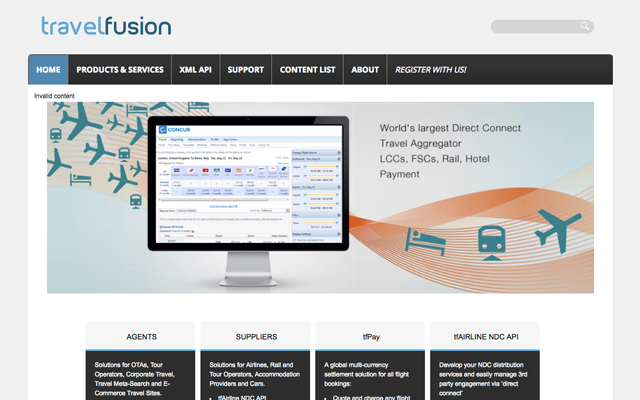
Travelfusion is a flight content aggregator and innovator of direct connect distribution solutions. Headquartered in London with offices in Shanghai and Thessaloniki, Travelfusion aggregates over 330 LCCs from around the world and 25 NDC full-service carriers.
The deal gives Peakwork customers access to shop, book and manage more than 330 LCCs and more than 25 NDC full-service carriers
Peakwork and Travelfusion have implemented technical connectivity that allows Peakwork customers to source flight content from Travelfusion’s portfolio.
Travelfusion creates flight offers in Peakwork’s EDF data format where flight bookings are directly channelled from the Peakwork network to Travelfusion’s booking interfaces.
Jonathan Penn, senior vice president sales at Travelfusion, commented: “Peakwork customers… now have access to shop, book and manage more than 330 LCCs and more than 25 NDC full-service carriers from around the world. Our rich data includes support for all ancillaries, branded fares, post booking and special fares to enhance the tour operators’ competitive offerings.”
Christian Andersen, director flight at Peakwork, added: “Travelfusion contributes an immense flight portfolio to the Peakwork network. The connectivity of both technology partners brings fast and flexible flight sourcing for all partners in the Player Hub Network.”
Travelfusion benefits from the quickly expanding Player Hub Network as a new distribution platform. More than 100 tour operator brands, about 50 airlines and flight offer providers as well as 45 accommodation providers now sell their offers in the network and source additional services.
Global Internet companies and metasearchers also connect APIs to receive offers for leisure travel sales. Peakwork technology connects travel providers such as TUI, Thomas Cook and Lufthansa, to digital global players including Google, Facebook, Kayak and Trivago.
Didi Chuxing is China's largest online ride-hailing platform
Chinese ride-hailing giant Didi Chuxing has suspended its Hitch carpool service after a female passenger was raped and killed by a Didi Hitch driver.
The company announced it was suspending its Hitch system for review as the most recent incident revealed problems in its customer service system. The vice president of Didi Hitch, which pairs car owners and passengers, has also been fired.
Didi Chuxing is China’s largest online ride-hailing platform
The suspect, named only as Zhong, had a previous complaint made against him by a passenger alleging that she was driven to a remote location by Zhong.
In the most recent case, BBC reported that on Friday, the 20-year-old passenger entered Zhong’s vehicle in Wenzhou at 13.00. She messaged a friend for help an hour later before losing contact.
Police on Sunday detained the 27-year-old driver, who confessed to raping and murdering the passenger.
In May, a 21-year-old flight attendant died after using the service in Zhengzhou.
The transport ministry was reported to have said that the two incidents brought to light operational loopholes of the platform, and urged the company to take steps to ensuring passenger safety.
Didi is said to have completed more than one billion journeys in the past three years, more than any other ride-hailing companies in the world.
LOCATION
Signiel Seoul packs 235 guestrooms on the 76th-101st floors of Lotte World Tower – South Korea’s tallest skyscraper and the world’s fifth-tallest building – in the premium district of Jamsil.
The hotel is directly connected by underpass to Jamsil Station, as well as Lotte-brand siblings, Lotte World, Lotte Department Store and Lotte World Mall.
Signiel Seoul
ROOMS
There are nine room types, crowned by five suite categories. All rooms offer sweeping views of the city skyline and the Han River.
I stayed in the cosy yet spacious Grand Deluxe Room on the 91st floor that pampered me with a host of treats such as free access to the Salon de Signiel lounge, premium bedding, Diptyque toiletries and an automatic bidet.
Tall windows flood the room with the glow of daylight, illuminating its subtle Korean aesthetics: a cherry blossom mural painted and embroidered by hand, and framed by blue accents.
F&B
Apart from the rooms, lobby and Salon de Signiel, Stay restaurant on the 81st floor affords panoramic vistas of Seoul and its surrounds. It is run by three-Michelin-star chef Yannick Alléno, who brings a creative blend of modern French cuisine to the restaurant.
Epicureans will be delighted to learn that chef Alléno also directs the hotel’s entire F&B division, from banquets to in-room dining.
For my breakfast at Stay, I was given an à la carte menu from which to order my main course, and I helped myself to a buffet line of cold cuts, cheese and oats. I was then presented with my own basket of fresh fruits to end the meal with.
Also situated on this level is Bar 81, which serves more than 80 varieties of champagne and chef Alléno’s contemporary Parisian menu. One-Michelin-star Korean cuisine restaurant Bicena has also recently moved into Signiel Seoul.
FACILITIES
I was treated to a multisensory therapy session at the signature Evian Spa on the 86th floor. The massages are indulgent, and incorporate French skincare and ambient audio and visual immersion into the entire treatment experience.
In between appointments, I lounged in the quiet and private Salon de Signiel, which is fully stocked with beverages and afternoon snacks, including tasty green tea cookies.
Signiel Seoul also houses a gym and studio, an indoor pool and a sauna.
SERVICE
Every staff member is attentive and amicable. From entering the lift lobby to my room, I was escorted by name, served welcome tea and offered assistance if needed. The concierge was also helpful in calling for taxis and advising about travel around Seoul.
VERDICT
A truly opulent yet modern retreat in a comparatively quiet district of a busy global city.
No. of rooms 235 Rates From 380,000 won (US$340) Contact details
Tel: (82) 2-3213-1000
Email: concierge.signiel.se@lotte.net
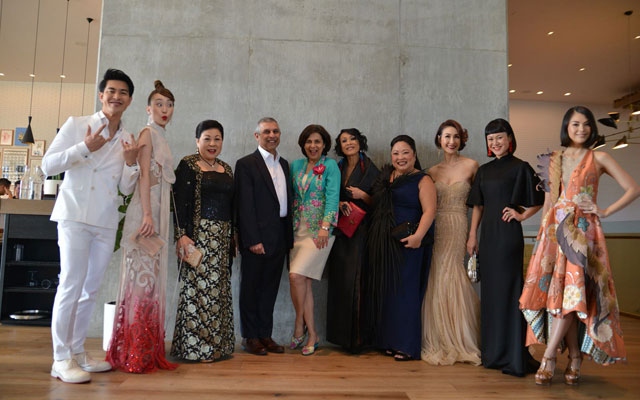
Local thespians in the Crazy Rich Asians movie. Photo credit: STB
The premiere of the movie Crazy Rich Asians, adapted from the satirical novel by Singaporean–American author Kevin Kwan about the upper echelons of Singapore, has sparked a boost in tourism promotions for the country.
The movie features an all-Asian cast and portrays scenes in Singapore’s luxurious spaces as well as down-to-earth neighbourhoods.
Local thespians who were part of the Crazy Rich Asians movie. Photo credit: STB
It serves as a talking point “to get the conversation going about the real Singapore and pique interest in visiting the country”, said Lynette Pang, assistant chief executive, marketing group, Singapore Tourism Board (STB).
She continued: “(It) is not just about the opulence and luxury showcased in the film, but Singapore’s richness in terms of our diversity, as well as the depth and breadth of experiences for both locals and visitors.”
To capitalise on this, trade players have also stepped in to craft unique tours that bring Crazy Rich Asian experiences to reality.
Indus Travels now offers a 12-day Crazy Rich Singapore Culture & Thailand Beaches itinerary that spends four days touring the Lion City’s historic sights, traditional cuisine and natural wonders.
Meanwhile, Wok ‘n’ Stroll has launched the Crazy Rich Asians – Behind the Scenes Food Tour that treats participants to food mentioned in the novel and movie, such as carrot cake, roti prata and Malay cakes at venues like Newton Hawker Centre and Joo Chiat.
The three-hour night tour, which provides a shuttle bus for its participants, will also visit more upscale venues like Michelin Bib Gourmand restaurant New Ubin Seafood at CHIJMES and a bar on Keong Saik Road.
“When I first read the book, I knew that we must have a food tour about Crazy Rich Asians. Now it’s a 3D experience – there’s the book, the movie and the tour,” shared Wok ‘n’ Stroll founder and CEO Karni Tomer.
“Singapore looks so attractive and sexy in the movie. We wanted to give the audience the experience of being a crazy-rich Asian for one evening,” she said.
Ahead of the tour’s first run this weekend, bookings for October are already streaming in, revealed Tomer.
To maximise the destination’s appeal during the movie’s box office run, STB is working with Warner Bros and other partners to roll out marketing initiatives in markets such as the US, Australia, Japan and South-east Asia.
These include private movie screenings and consumer contests, as well as a Crazy Rich Singapore Week in the US that featured Singapore personalities such as Michelin-star Peranakan chef Malcolm Lee and award-winning mixologist Peter Chua.
Pang shared: “To specifically encourage travel to Singapore, we have a partnership with travel company Travelzoo to further promote Singapore through targeted web content, as well as to promote a specially curated Crazy Rich Asians tour package by Indus Travel, where visitors can explore locations and experiences featured in the film.”
Majority of the mid-tier and economy interviewees did not perceive Airbnb as posing a direct threat
Researchers at The Hong Kong Polytechnic University (PolyU) conducted a study to evaluate if Airbnb complements existing accommodation provision or presents disruptive competition that may threaten the traditional market in Singapore.
The findings were presented in Accommodating the Sharing Revolution: A Qualitative Evaluation of the Impact of Airbnb on Singapore’s Budget Hotels by Professor Brian King and Edward Koh, student of the Doctor of Hotel and Tourism Management programme, of the School of Hotel and Tourism Management at PolyU.
Orchard Road in Singapore
Threat looms over ‘clear benefits’
Homesharing sites allow homeowners to “optimise their assets” and offer consumers diversified accommodation options, thus facilitating entrepreneurship, supplementing incomes and widening consumer choice.
However, there is concern over how these developments threaten industry incumbents, particularly those in direct competition at the budget end of the market.
The researchers note that Airbnb entered the market in 2008 and has since undergone “exponential growth”: between 2010 and 2015, the number of rooms booked increased by 105 times and revenues by 115 times.
Staying in local residences offers tourists more localised experiences at prices that compete with one and two star budget hotels, which may need to “differentiate with a view to ensuring their survival”.
Disruptive or complementary?
To evaluate the impact of Airbnb on the traditional market, the researchers started out by searching the platform to identify the available accommodation options in Singapore and compared prices with those offered by traditional hotels and hostels. The average price of S$90 (US$66) for a private room was roughly equivalent to the price of an economy hotel with an average rate of S$105.
Shared rooms on Airbnb averaged S$55, slightly above the average room rate for hostel beds, which started at around S$20. The average Airbnb price for an entire home, S$229, was also higher than the equivalent mid-tier hotel price of S$174.
The researchers also conducted interviews with managers or representatives of four mid-tier hotels, three economy hotels and three hostels, and with a representative from Airbnb’s Asia headquarters in Singapore.
All the hotel and hostel representatives surveyed felt that competition had increased in recent years, and all but one attributed this to the “entry of new mid-tier and economy hotels”.
The increased capacity has not only resulted in lower occupancy rates for mid-tier and economy hotels and hostels, but has also created a price war that had seen prices drop by as much as 50%.
As one hotelier noted, “owning and operating standalone hotels is making increasingly less commercial sense”, while others said that they were finding it increasingly difficult to recruit personnel because of the increased demand from new hotel entrants.
Nevertheless, a majority of the mid-tier and economy interviewees did not perceive Airbnb as posing a direct threat to their business, and were unconcerned about a “prospective glut” of rooms.
Although two of the hostel operators listed their rooms on the site, they said that the associated revenues were insignificant, leading the researchers to conclude that “Airbnb consumers are generally uninterested in hostel options” and that hostel users are “not active Airbnb users”. Rather than representing a threat to existing operators, it seems that Airbnb has generated new markets by attracting budget-conscious families. This, the researchers note, has “expanded the tourism economy for the benefit of all industry players”.
Striking a balance between regulation and competition
All of the interviewees agreed that regulations are needed to guide the home rental market. In particular, they suggested that third party management companies should be allowed to “transact on behalf of home owners and tenants”, which would allow them to be held accountable by the local authorities and ensure compliance in terms of “tax payment and other regulations”.
Airbnb rentals should also be made to comply with standard safety regulations, such as maintaining guest registers and installing CCTV cameras, because poor safety standards could compromise Singapore’s reputation as a safe city. Another problem area that was highlighted by the interviewees is the employment of foreign domestic workers as chambermaids, which is “in clear contravention” of employment laws.
According to the interviewees, the current lack of regulation in the home rental market means that traditional operators and Airbnb hosts are not competing on a “level playing field”.
For instance, serviced apartment operators are only allowed to accept guests for a minimum of a week, while hostel operators must have at least six beds per room, making it impossible for them to offer single and twin-bedded rooms.
Still, interviewees supported the Singapore government’s “belief in fair competition and advocacy of extended consumer options”. Hence, they did not want to see overly cumbersome regulation that would prevent market entry. If the market continues to be unregulated, however, the interviewees expressed concern that conversions of private housing into home rental accommodation may proliferate and that such rapid expansion could certainly represent a future threat.
The Airbnb interviewee did not see the company as a direct competitor to traditional hotels, but rather as “filling a demand gap, namely the budget-conscious family segment”. The interviewee emphasised that the company is quite different from a hotel chain, and merely offers a platform to facilitate transactions, with revenues flowing directly to homeowners. In response to calls by hoteliers to regulate the home rental market, the representative said that the company is “keen and ready to operate within a fair regulatory framework” and would adhere to any new legislation.
Airbnb not a threat – at least not yet
Overall, the researchers say the findings of the study should be of some reassurance to economy and budget hotel operators who are concerned about the rapid rise of the sharing economy.
Despite impressive growth, home rental accommodation sites do not seem to represent a direct threat to existing operators. The main concern is the lack of market regulation, with new hotels and hostels posing the main competitive threat. The researchers argue that governments should introduce legislation to level the playing field so that Airbnb and similar sites can operate as collaborators rather than competitors in future and the market can expand for the benefit of all.
The threat posed by the rapidly growing home rental market could intensify unless the government introduces regulations to “level the playing field” in the near future, the researchers say.
Though some European cities have introduced legislation to regulate the growth of the sharing economy, the researchers note that the market is largely unregulated.
In Singapore, the government recently enacted a law that makes it “illegal for private homeowner to rent out entire apartments and rooms for less than six months” without approval from the Urban Development Authority, but is currently considering a new category of private homes that will be permitted to offer short-term rentals.
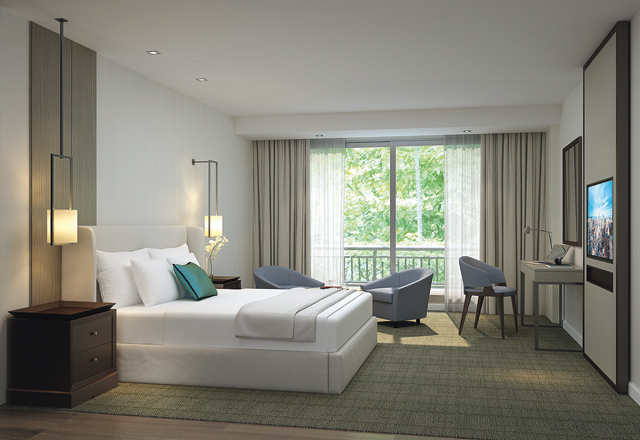
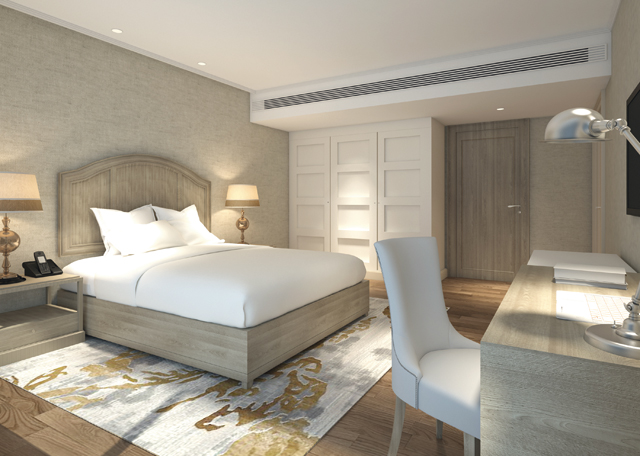
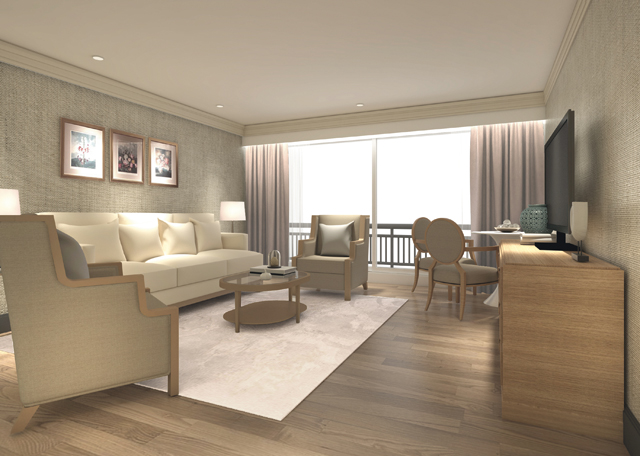
Mövenpick Hotels & Resorts has signed an agreement to rebrand and manage the Nai Lert Park Hotel, which will undergo refurbishment before reopening as the Mövenpick BDMS Wellness Resort Bangkok in early 2019.
Mövenpick BDMS Wellness Resort Bangkok will be a partnership with Bangkok Dusit Medical Services (BDMS), Thailand’s largest private hospital group, which bought the former Swissotel Nai Lert Park in 2016 with plans to develop it into a holistic services medical centre.
Renderings of the revamped Movenpick BDMS Wellness Resort Bangkok
1 of 4
A highlight of the property, according to Mövenpick, is its location, nestled within a garden while affording access to urban comforts in the city’s CBD. The hotel is close to malls, embassies and corporate offices, and within walking distance of Ploenchit BTS skytrain station and Phetchaburi MRT metro station.
The resort will become the third Mövenpick in Bangkok, joining Mövenpick Hotel Sukhumvit 15 Bangkok and Mövenpick Residences Ekkamai Bangkok.
“Opportunities to manage legendary hotels do not arise often, and we’re delighted to bring Mövenpick’s signature style to the Nai Lert Park Hotel, which has been a Bangkok landmark for more than three decades,” commented Andrew Langdon, chief development officer for Mövenpick Hotels & Resorts.
“We look forward to moving this property into an exciting new era as we introduce a health-conscious generation of guests to Mövenpick BDMS Wellness Resort Bangkok and further provide world-class wellness facilities in association with the adjoining BDMS Wellness Clinic,” he added.
Poramaporn Prasarttong-Osoth, COO of BDMS group, said the rebranded property will offer specialised in-house wellness programmes.
Facilities at the 294-key resort will include a large freeform outdoor swimming pool, fitness centre and wellness spa. In addition to the pool bar, F&B options will also include a restaurant serving all natural, organic Thai and international cuisine, while the lobby lounge will offer healthy refreshments.
Mövenpick BDMS Wellness Resort Bangkok will also be positioned as a meetings and events destination, with its ballroom and function rooms featuring natural light and direct garden access. The hotel’s garden will also serve as a venue for al fresco events and weddings.
The Nai Lert Park Hotel originally opened in 1984, but closed its doors at the end of 2016 to undergo a complete refurbishment.