TTG Asia
Asia/Singapore Monday, 6th April 2026
Page 1308

Sabre’s top consumer trends to watch in hospitality

0
Adara derives travel patterns, trends and behaviour from more than 750 million monthly unique traveller profiles across more than 190 travel brands

Sabre has partnered with TrendWatching in a study that looks at the top consumer trends expected to shape the hospitality industry in 2019 and beyond.

“The hospitality industry is always reinventing itself, constantly adapting to the changing expectations of travellers,” said Clinton Anderson, president of Sabre Hospitality Solutions. “As a result, digital transformation has become a rising priority for hoteliers due to its ability to generate more targeted, personalised offers. Ultimately, shifts in how individuals interact with technology, brands and even space translate directly into new, untapped opportunities for hoteliers.”
Engaging consumers through new channels that see ‘magic point-of-sale’

Virtual companions
While time-pressed travellers may wish to avoid other people during their stay, others will welcome companionship – even in virtual form. Travellers deeply accustomed to digital assistants, chatbots and more will look to the next evolution of artificial intelligence. They will seek out virtual personalities that have the power to entertain, educate and befriend. The presence of virtual digital assistants has grown incrementally since 2011, and shows no sign of stopping.

Breaking bricks
Traditional brick and mortar retailers are expanding into hospitality – building immersive brand experiences for their customers – providing an entirely new breed of competition for traditional players, while delighting loyal fans.

Social media feeds have become saturated with picture-perfect travel snapshots of branded lifestyles, and as a result, consumers have ever-higher standards when shopping. Brands hold the capacity of reaching overstimulated customers by launching unique partnerships to cut through the noise, in unexpected locations.

Magic point-of-sale
Using their devices to summon a “magic point-of-sale”, travellers can engage with establishments, browse products, test and purchase in innovative new ways. Smart brands are using technology to gain rich data on consumer preferences and habits, and are leveraging innovative channels like these to reach them in the right place, at the right time.

Globally, the augmented reality (AR) market hit US$1.1 billion in 2018, and is expected to reach US$7.9 billion by 2023. The maturing of virtual reality and AR revolutionises how and where consumers shop and engage with brands.

New workforce
The proliferation of on-demand services and co-working environments are transforming expectations around work and travel. A growing cohort of professionals are making travel their main priority by becoming digital nomads. The explosion in gig economy and freelancing platforms indicate that consumers are embracing alternative lifestyles that don’t tie them down to a specific company, location, or even daily schedule.
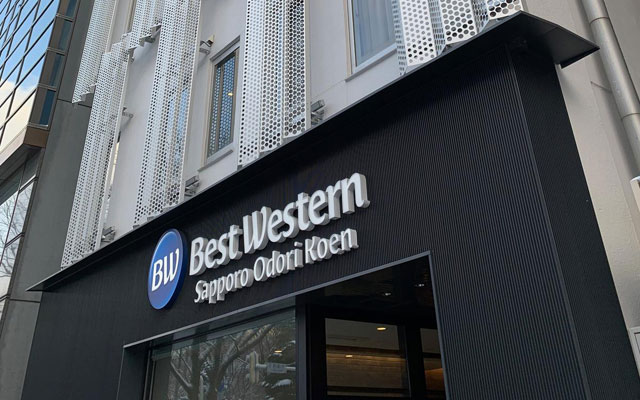
Best Western Sapporo Odori Koen

0

Location
The hotel stands just across the street from Odori Park. During winter, the park is the venue for the Sapporo Snow Festival, while it is a green lung in the warmer months of the year.

I liked that the hotel’s surroundings were peaceful and quiet, which ensured a good night’s sleep.

Hotel’s facade

Sapporo station is a 20-minute walk away, half of which is underground. It is also possible to take the train around, as all of Sapporo’s three subway lines intersect at Odori Subway Station, a 10-minute walk away. Other points of interest within a 10- to 20-minute walking radius include the Tanukikoji Shopping Arcade, Sapporo TV Tower and Sapporo Clock Tower.

Rooms
I stayed in a non-smoking room with twin beds, and as with many Japanese city hotel rooms, rooms are compact.

The room and toilet were spotless, and there were ample power sockets and USB wall chargers – a must in this time and age. Water pressure from the shower was strong, and temperature was constant. The complimentary Wi-Fi was speedy and smooth, and while the beds were on the firmer side, they were comfortable enough for me. I could also adjust the temperature easily, as the room became too warm and stuffy in the middle of the night.

Also hidden in the cupboards were a mini fridge, kettle and hairdryer. There was also cable TV and a tablet, which were good to have, but not necessary for me.

Non-smoking Twin Bed

F&B
A sole restaurant – which seats approximately 20 people on the first floor – serves a buffet breakfast every morning. I was impressed as there was a wide range of international dishes available in such a small space, and the food was good. There were Hokkaido specialities such as corn croquettes, Japanese stalwarts such as miso soup and soba, as well as scrambled eggs and pumpkin gnocchi. The restaurant also served different spreads on the two days I stayed there.

Facilities
There is a laundromat with coin-operated washing machines and dryers. There is also a lift, so don’t worry about having to haul luggage up several storeys. There is also a Family Mart just round the corner from the building.

Service
Check-in was a breeze, and front office staff were welcoming and pleasant. They are also keen to help guests should they have any queries, but English is still not widely understood. Breakfast staff were efficient and immediately refilled any breakfast dish that was nearly empty.

Verdict
A functional and value-for-money property that I would stay at again.

No. of rooms 60
Rates From 6,000 yen (US$54)
Contact details
Tel: (81) 11 2 081 311
Email: sapporoodori@bwhotels.jp

Marriott plans 2020 launch for first Aloft in Japan

0

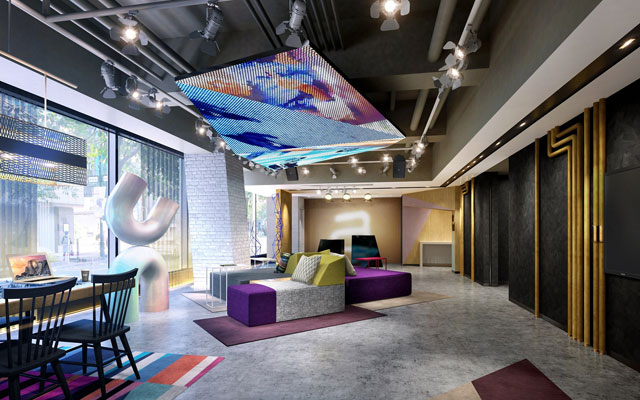
Marriott International signed an agreement with The Sankei Building Company to open the Aloft Tokyo Ginza in spring 2020.

The new-build will be 16-storey high, with 206 loft-like guestrooms including four suites. Rooms are also expected to boast tech features like keyless entry, enabling guests to use their smartphone or Apple watch as a room key.

Aloft Tokyo Ginza’s F&B options will include The Warehouse – a semi-open kitchen concept with buffet-style dining; the brand’s signature W XYZ bar; and Re:fuelby Aloft, which offers grab-and-go food options round the clock. There will also be a fitness centre on-site.

Located in Ginza, the upscale entertainment, shopping and dining district of Japan’s capital city, Aloft Tokyo Ginza will be less than a five-minute walk away from both Ginza Station and Higashi-Ginza Station.

Cluster GM appointed for X2’s Pattaya properties

0

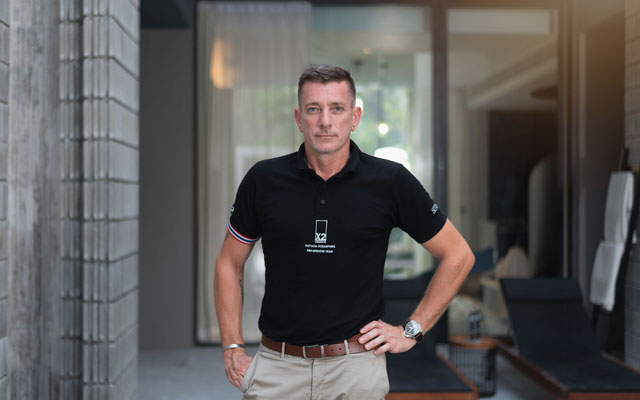
X2 Resorts – part of BHMA Hotels & Resorts portfolio – has appointed a new cluster general manager, Steve Lockhart, for X2 Pattaya Oceanphere and X2 Vibe Pattaya Seaphere.

He moves to Pattaya from X2 Kui Buri, where he was general manager.

The Belfast-born hotelier brings almost two decades of experience to the table. His career has taken him to destinations like Kenya, Papua New Guinea, Saudi Arabia, China, Laos and Malaysia.

Prior to joining BHMA Hotels & Resorts, Lockhart’s previous positions in Thailand have included management roles at Novotel Bangkok Siam Square, Vie Hotel Bangkok MGallery by Sofitel, and V Villas Hua Hin MGallery by Sofitel.

Intra-region holidays acquires greater shine for SE Asian travellers

0
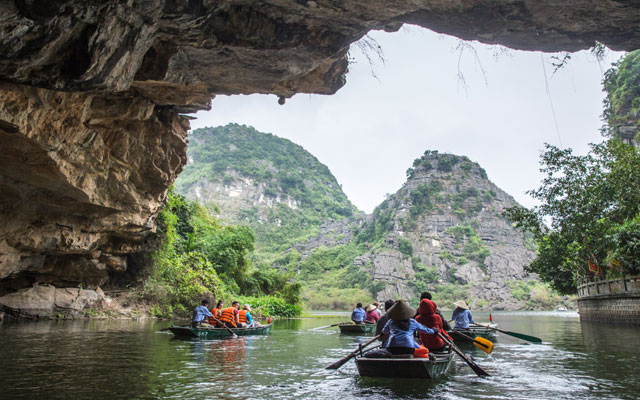
Ninh Binh, Vietnam

South-east Asia may once be perceived as a less sexy backyard for travel but perceptions are now changing, with agents pointing to signs of intra-region holidays becoming a growing trend as unique offerings and experiences become more readily available.

In Thailand, Express Holiday Center has begun to sell South-east Asian destinations like Vietnam, after observing a spike in interest in regional travel among Thai travellers, said tour sales officer Prasert Ittipanuvat.

Regional destinations like Ninh Binh, near Vietnam’s Halong Bay (pictured above) are growing in popularity

“Today, Thai travellers like to explore South-east Asia more than Europe. (Seasoned) Thai travellers have been to Europe and faraway places. They’re finding great heritage in the region, with a lot to see and discover,” he said. Combined with the ecotourism and soft adventure trend, this has enhanced the appeal of South-east Asian destinations such as Halong Bay.

“The outbound market is on an uptrend – we’re seeing about 10 per cent annual increase in outbound leisure business. There’s been a dramatic change in Thais’ desire and ability to travel.”

In the Philippines, Edmond Mayormita, president of Davao-based Travel Advantage, has seen demand for South-east Asian cities grow steadily over the years.

He said: “It’s more expensive to travel within the country than overseas. This year, we will have a second batch of tax increase, which will affect domestic flights, (coming) on top of Philippine Airlines’ fuel surcharge. It’s far cheaper to go to, say, Singapore than to Manila, or elsewhere domestically.”

This was also the experience of Katarina Indrawati, EMFA Tours & Travel in Indonesia, who saw a surge in outbound bookings for the region since the LCC revolution.

On the other hand, the Philippines’ Executive Resources may be seeing a slow increase in booking volumes for South-east Asia, but its focus is still on packages beyond the region, said manager Ayon Sanchez.

“Majority of our packages – about 75 per cent – are not in South-east Asia. (This is because) for South-east Asia packages, we see a lot of clients doing it on their own.”

The ease at which travellers can plan and book their own regional holidays is prompting agents like Sanchez to create more unique experiences in South-east Asia that clients are “not aware of” to fan their interest, Sanchez said.

“Today, our clients are moving away from cookie-cutter tours, towards something more authentic, whether in food or activities,” he noted.

Shorthaul travel still shines for agents in South-east Asia’s emerging economies like Myanmar. For example, Yangon-based Asian Tour in 2015 began pivoting from an inbound to an outbound-focused company.

“The desire to travel is definitely going up in Myanmar, but not the spending power. For now, we are selling mostly neighbouring countries like Thailand, Cambodia and Vietnam,” explained managing director Kyaw Pyay Oo.

New HKTB campaign casts spotlight on the great outdoors

0

In its 10th annual Great Outdoors campaign, Hong Kong Tourism Board (HKTB) will highlight 13 of the city’s landscapes, including through collaborative content with recognised photographers and trail experts.

In addition to partnering photographers, the campaign also includes a detailed guidebook, Your Guide to Hiking & Cycling in Hong Kong.

Hong Kong’s highest peak, Tai Mo Shan (pictured), is one of the locations featured in the campaign

This edition of the campaign will encourage visitors to see Hong Kong using through the lens of ‘One Place, Two Perspectives’, presented by a team that includes French photographer Matthieu Paley, who has lived in the city for nine years. For the campaign, he has captured Hong Kong’s UNESCO Global Geopark’s majestic volcanic rock columns on land before diving into the park’s aqua waters.

Hongkonger Tugo Cheng, with a background in architecture, took his camera to historical Sam A Village to explore the indigenous culture, and then onwards to plants and wildlife that thrive in Plover Cove Country Park.

Contrasting city views with mountains; traditional villages with natural flora and fauna, and landscapes with seascapes, the stories aim to present Hong Kong as a “visual dichotomy”, HKTB said in a statement.

These tales of contrasts celebrate a lesser-known fact that about three-quarters of Hong Kong’s landmass is actually countryside, and that the vast network of hiking and cycling trails is easily accessible from any corner of the city.

Commenting on the campaign, Puneet Kumar, senior manager market development (India), HKTB, said: “Discovering the new, unique and something unknown is a key interest of young and affluent Indian travellers, hence, through this campaign we wanted to introduce a hidden side of Hong Kong – the Great Outdoors.

“Travellers will be amazed to find unspoiled nature and busy urban life in such close proximity to each other and we invite them to come discover Hong Kong like a local.”

Hong Kong’s hiking season runs from November to March.

Four Seasons plans new resort in Okinawa with Berjaya

0
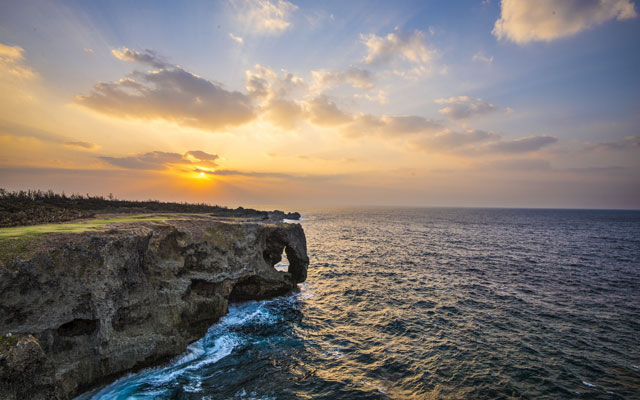
Four Seasons will soon have a hotel in Okinawa (pictured above)

Four Seasons Hotels and Resorts and Berjaya Okinawa Development are once again joining hands to develop its second Four Seasons property in Japan, which will be part of a new US$400 million development set to complete in four years.

This Okinawa resort is a continuation of Four Seasons with Berjaya Okinawa, a wholly-owned subsidiary of Malaysian group Berjaya Land, which in turn is a subsidiary of Berjaya Corporation.

Four Seasons will soon have a hotel in Okinawa (pictured above)

The two partners had earlier collaborated on the Four Seasons Hotel and Residences Kyoto, which opened in December 2016, said Vincent Tan founder and executive chairman of Berjaya Corporation.

Comprising over 40ha of beachfront, the project site is located along the western coast of the island, approximately 50km north-east of Naha International Airport, with easy access by highway from the airport and close to tourist attractions.

Four Seasons Resort and Private Residences Okinawa will comprise 12ha of the project development land area, with 120 hotel rooms, 120 residences and 40 villas.

The resort will be anchored by a resident beach club nestled on the east side, where guests as well as the homeowners will be able to access the natural beach. Additionally, the low-density layout of the resort will also allow guests and homeowners to access every amenity by foot, bicycles or golf carts. The resort facilities will include an all-day dining restaurant, specialty dining and lounge, retail shops and recreation facilities, as well as public grounds and gardens.

The master plan for Four Seasons Resort and Private Residences Okinawa, including planning and landscape architecture, is developed by EDSA Inc. Kengo Kuma, who was recently chosen to design the stadium for the 2020 Olympic Games in Tokyo, and Kuniken, a Japanese firm, will serve as joint architects.

Hotelbeds rolls out new features on its hotel extranet

0
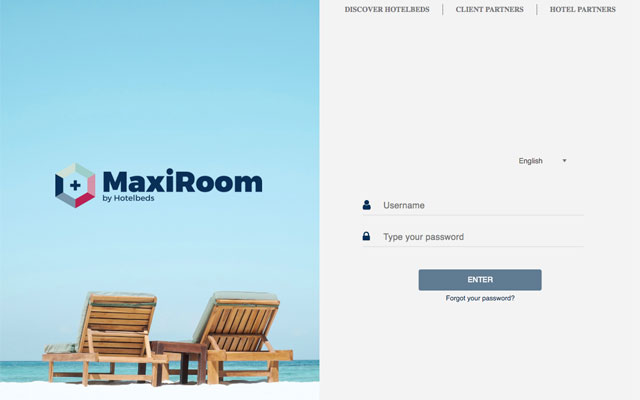
A screenshot from the Maxiroom homepage

Hotelbeds has released new features on MaxiRoom, the global bedbank’s free hotel extranet launched in 2015 to maximise hotel occupancy through its distribution channels.

The new connectivity features on the MaxiRoom extranet allow the visualisation of fares and availability in real time for any hotel, offering hoteliers greater visibility of their inventory and allowing them to detect opportunities and make adjustments through connectivity. This functionality is said to ease and speed up product communication and optimisation.

A screenshot from the Maxiroom homepage

The latest enhancements to its hotel extranet were driven by connectivity, which has become a key part of the tourism business, according to Adam Krzciuk Kuna, head of supplier connectivity partnerships.

“We are the first distributer to offer a screen where hoteliers can check the availability and connectivity rates that have with us at every moment. That is a great milestone for hotels that work according to the supplier integration model,” he said.

In addition, MaxiRoom offers information about an individual hotel’s performance in comparison with its local competitors, enabling hotels to improve their offer and contents to optimise productivity. The platform also provides hoteliers with the necessary information to make decisions about their pricing strategy.

Other features of MaxiRoom include a calendar where hoteliers can make rate and room type changes; a content management system to update the quality of information, images and offers; smart alerts to notify hotel partners of incomplete descriptions or lack of images, among others.

World’s first Zootopia land coming to Shanghai Disneyland

0
An artist's rendering of the upcoming themed land

Following the addition of Disney·Pixar Toy Story Land last year, Shanghai Disneyland will soon embark on a second major expansion themed after the Disney animation movie Zootopia.

Disney revealed that the development of the Zootopia-themed land at Shanghai Disneyland is a result of the animated hit’s huge success worldwide and the strong resonance of the film’s characters and storyline among Chinese guests.

An artist’s rendering of the upcoming themed land

The new themed land will invite guests to fully immerse themselves in the mammalian metropolis of Zootopia, “where anyone can be anything”, the movie’s tagline. Guests will also be able to go on an adventure with lead characters Judy and Nick. There will be also be a brand-new attraction, alongside entertainment, merchandise and F&B offerings.

When it opens, Zootopia will be the eighth themed land at Shanghai Disneyland and the first-ever Zootopia-themed land at any Disney park worldwide.

Construction of Zootopia is scheduled to begin later this year.

China’s hotels smarten up

0
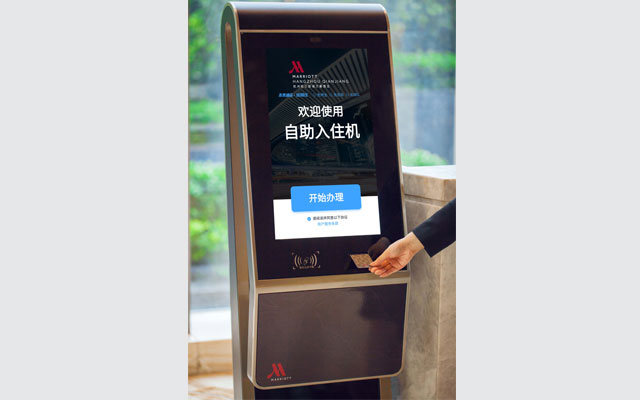
Facial recognition check-in technology on trial at a Marriott property in China

The recent launch of Alibaba’s first automated Flyzoo Hotel in Hangzhou is a clear reflection of the fast state of technology development and strong consumer demand for smart hotels in China, as hospitality players scale up their efforts in smart technologies to provide better customer experiences and meet the expectations of tech-savvy travellers.

In fact, the Chinese hospitality sector abounds with examples of collaboration with the technology world.

The Shangri-La Group has partnered Tencent Holdings to develop smart hotels, leveraging the Chinese tech giant’s cloud and artificial intelligence solutions.

Facial recognition check-in technology on trial at a Marriott property in China

As well, Alibaba Group and Marriott International have entered into a joint venture to trial facial recognition check-in technology at two Marriott hotels in China, Hangzhou Marriott Hotel QianJiang and Sanya Marriott Hotel Dadonghai Bay.

Peggy Fang Roe, chief sales and marketing officer for Asia-Pacific, Marriott International, commented: “For the China market, market research results by consulting firm Ipsos indicated that Chinese travellers have shown a strong interest in new technology in hotels, with over 60 per cent showing preference for facial recognition technology.”

The Alibaba-Marriott joint venture has also enabled wallet-free travel through the deployment of Post Post Pay functionality across over 1,000 Marriott International hotels globally by end-2018, allowing qualified users to travel first and pay after their stay, Fang shared.

Another example is the cross-industry initiative by online entertainment iQIYI to install virtual reality (VR) experience rooms in selected hotels across China. It has already signed agreements with five hotel brands across China and talks for potential cooperation with a further six hotel brands are underway. The number of iQIYI VR Experience hotel rooms is estimated to reach 100,000 by the end of 2019.

Hongkong-based Regal Hotels International, which has 12 hotels in China, is taking a more measured approach to smart technology implementation at its properties.

The group has, however, launched the Riva chatbot in Greater China as a virtual employee to assist customers with room reservations and guest enquiries round the clock, vice president for China, Joseph Yung told TTG Asia.

“We never underestimate the customer acceptability of the smart hotel, but at this stage, people base usage on their curiosity rather than their personal preference, so we prefer to take a gradual approach (to rolling out hospitality technology),” said Yung, adding that the group might consider the implementation of facial recognition technology in the near future.

“After we have implemented the smart solution projects in Regal & iClub Hotel Hong Kong, we will review the effectiveness and apply it to the appropriate China hotels based on the demand, locations, customers profile, etc. As you know, the market segmentation in China will be quite different, so it will require different facilities and services.”

Confident that the Chinese market will continue to show a healthy desire for smart hotel technology, W Shanghai, director of sales and marketing Jordi Pedro, noted: “New smart solutions will bring both hotel and customer new experiences and opportunities that target better service, but also present new challenges to both sides.

“From a hotel point of view, the additional control a hotel gives to customers to book and access any facilities inside the hotel will require new measures and new technology in order to guarantee the legitimacy, safety of the customer and compliance of policies that in China has direct links to public security,” said Pedro.