TTG Asia
Asia/Singapore Wednesday, 28th January 2026
Page 12

Moxy Bangkok Ratchaprasong turns two, launches new rooftop bar

0

Moxy Bangkok Ratchaprasong reaches its second year with a set of offers and additions aimed at travellers and Bangkok residents looking for a central, flexible city stay.

Located in the Ratchaprasong district, the hotel combines accommodation, dining and social spaces within walking distance of shopping centres, offices and public transport, positioning itself as a base for both short visits and staycations.

Sato San Rooftop Bar frames sunset views across Ratchaprasong, adding a new evening setting to Moxy Bangkok Ratchaprasong

The Moxy Bangkok Turns 2 stay offer, available for bookings and stays until March 31, 2026. The promotion applies across all room categories with no blackout dates. Guests receive 2,000 Marriott Bonvoy bonus points per room per night, a 20 per cent discount on food and beverage at Moxy Bar and Restaurant on the ninth floor and Sato San Rooftop Bar on the 32nd floor, along with two-hour early check-in and two-hour late check-out. Marriott Bonvoy membership is required for the bonus points, and early and late check-in are subject to room-type eligibility.

Alongside the anniversary offer, the hotel introduces Sundown at Sato San Rooftop Bar. Held daily from 18.00 to 20.00, Sundown focuses on the city’s sunset period, offering Thai-Japanese-inspired food and drinks priced from 150 baht (US$4.30), with views across the Ratchaprasong skyline. The initiative is aimed at after-work gatherings and informal pre-dinner visits, adding a defined time-based experience to the rooftop.

Sato San Rooftop Bar operates daily from 17.00 until late and accommodates up to 201 guests. The venue combines city views with a menu influenced by Thai and Japanese cuisines, supported by a cocktail list and background music that shifts from early evening into night. The rooftop is open to hotel guests and the public, with entry restricted to those aged 20 and above in line with Thai regulations.

For more information, visit Moxy Bangkok Ratchaprasong.

Hong Kong welcomes new tourism lawmaker

0

Vivian Kong Man-wai has been elected to represent the tourism functional constituency in Hong Kong’s Legislative Council following the 2025 Legislative Council General Election held on December 7, 2025.

Kong succeeds Perry Yiu, who held the tourism seat for the past four years. She secured 131 votes, defeating her sole opponent Ma Yat Chiu, who received 23 votes. Kong was the youngest lawmaker elected in the election.

Since August 2024, Kong has worked as assistant external affairs manager at the Hong Kong Jockey Club, where her responsibilities include promoting horse-racing tourism. On December 29, 2025, the government appointed her as a member of the Tourism Strategy Committee for a term running from January 1, 2026 to December 31, 2027.

StarCruises partners Under Armour for fitness cruise debut

0

StarCruises will launch a fitness-themed cruise in partnership with Under Armour on board Star Voyager from January 19 to 23, 2026.

The four-night roundtrip sailing from Port Klang to Phuket and Singapore introduces a structured fitness programme integrated into a standard cruise itinerary. The sailing forms part of Star Voyager’s limited deployment from Port Klang, which runs from December 19, 2025 to February 2, 2026.

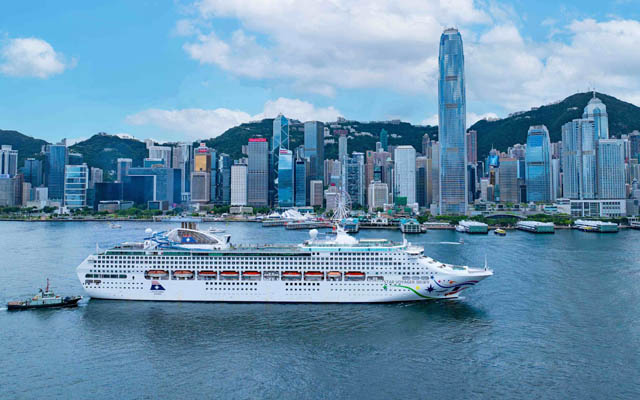
Star Voyager will host the Fitness @ Sea programme in partnership with Under Armour on a four-night sailing from Port Klang in January 2026

The Fitness @ Sea programme will feature daily workout sessions led by an Under Armour-certified trainer. Activities include Animal Flow, Pilates-based sessions, functional training and group fitness challenges. All sessions are complimentary and open to guests, with registration available on board on a first-come, first-served basis. Guests who complete the full series of activities will receive Under Armour merchandise, subject to availability.

Fitness @ Sea is scheduled on one specific sailing but sits within a wider Port Klang programme offering weekly departures. These include three-night cruises to Medan and Singapore departing on Fridays, and four-night cruises to Phuket and Singapore departing on Mondays.

For more information, visit StarDream Cruises.

Indonesia to tighten licensing for unregistered hotels and villas in Bali and Jakarta

0

Indonesia’s Ministry of Tourism (MoT) has introduced new regulations to tighten accommodation licensing after government mapping found thousands of properties listed on OTAs, particularly in Bali, were operating without valid business licences, raising concerns over safety, service standards and fair competition.

The policy establishes clearer business standards, supervision mechanisms and administrative sanctions under the country’s risk-based licensing framework. It requires all accommodation properties to hold valid operating licences and appropriate business classifications by March 31, 2026.

Officials outline Indonesia’s new accommodation licensing regulations at the year-end press conference; photo by Tiara Maharani

Widiyanti Putri Wardhana, Indonesia Minister of Tourism, said the regulation was aimed at restoring order in the accommodation market rather than restricting the growth of digital platforms.

“Licensing is not simply an administrative requirement. It relates directly to safety, professionalism and tax compliance, all of which support sustainable tourism growth,” she said during the ministry’s year-end press conference in Jakarta.

Data compiled by the ministry in October 2025 showed more than 29,000 non-hotel accommodation units listed on OTA platforms in Bali, while only around 14,500 were recorded in the national business registry. In Jakarta, roughly 5,000 non-hotel properties were marketed online, but only about 1,500, or 28 per cent, held valid licences.

Amnu Fuadiy, assistant deputy for Sustainable Tourism Business Management at the Ministry of Tourism, said the mapping revealed a wide disparity between OTA listings and licensed accommodation. “This gap creates multiple risks, from inaccurate government data to unfair competition and potential safety issues for guests,” he said, adding that it also affects tax collection and local revenue planning.

Under the new regulation, accommodation providers that fail to obtain licences by the March 2026 deadline risk removal from OTA platforms. The ministry has coordinated closely with regional governments and major OTAs to ensure a smooth transition, sending formal notices to companies in December 2025 requesting guidance for merchant partners through the Online Single Submission (OSS) licensing system.

Alongside enforcement, the government has rolled out support measures to ease compliance, particularly for small and independent operators. These include licensing education programmes, data verification exercises and coaching clinics to help businesses navigate OSS requirements and select the correct business classification.

Industry players have largely welcomed the push, while underlining the need for consistent implementation on the ground. Fransiska Handoko, head of government and organisation relations at the Bali Hotels Association, said effective field inspections would be key and stressed the importance of continued socialisation to ensure operators understand requirements.

I Gusti Ngurah Rai Suryawijaya, vice chairman of the Indonesian Hotels and Restaurants Association Bali chapter, said licensing enforcement should be accompanied by a review of foreign investment rules in the accommodation sector. “If the aim is to protect local enterprises, there needs to be clearer boundaries on which segments are open to foreign investors and which should remain focused on domestic operators,” he said.

Putu Gede Hendrawan, chairman of the Bali Villa Association, highlighted technical shortcomings in the OSS system, noting that private homes and apartments are often registered under the villa category regardless of whether they meet established standards. “This has allowed many properties to operate as ‘villas’ without actually complying with the criteria,” he said.

The association is preparing a proposal to introduce more detailed villa classifications into the OSS system, with Putu noting that clearer categories would help operators register correctly and make oversight more effective.

IHG to open triple-branded hotels near Universal Studios Japan

0

IHG Hotels & Resorts has signed its largest new-build hotel agreement in Japan, near Universal Studios Japan, in partnership with Sakurajima Kaihatsu, a consortium of four companies: Kajima Corporation, Japan Post Real Estate Co., SMFL MIRAI Partners Company, and Keihanshin Building Co..

The project, celebrated at a recent groundbreaking in Konohana-ku, Osaka, marks IHG’s first triple-branded hotel development in Japan. The collaboration will bring InterContinental, Kimpton and Holiday Inn Resort to a prime riverside location near Asia’s most visited theme park, with the hotels a 10-minute boat ride or drive from the new integrated resort in Yumeshima.

InterContinental, Kimpton and Holiday Inn Resort will open near Universal Studios Japan in 2029, offering luxury, lifestyle and family-friendly stays along Osaka’s riverside; photo by Sakurajima Kaihatsu

Totalling 817 keys, the trio will be Universal Studios Japan official hotels and the only internationally branded properties in the area when they open in 2029. They will offer a range of facilities including all-day dining, bars and lounges, gyms, indoor and rooftop swimming pools, wellness and spa experiences, meeting and event spaces, and family-friendly features such as kids’ clubs and pools, reflecting each brand’s distinctive style from luxury to lifestyle to resort.

InterContinental, Kimpton and Holiday Inn Resort will complement IHG’s existing Osaka portfolio, which includes InterContinental Osaka, voco Osaka Central and RIHGA Royal Hotel Osaka, Vignette Collection. Surrounding infrastructure developments include the extension of the JR Sakurajima Line, new ferry terminals, and Kansai International Airport’s upgraded capacity of 40 million passengers annually.

Universal Studios Japan, wholly owned by Comcast NBCUniversal, has become a major entertainment and leisure landmark, attracting guests from Japan and overseas. Attractions include Super Nintendo World, The Wizarding World of Harry Potter, Jurassic Park’s Flying Dinosaur coaster, and Minion Park.

Abhijay Sandilya, managing director, Japan & Micronesia, IHG Hotels & Resorts and CEO of IHG ANA Hotels Group Japan, said: “This agreement marks an important double growth milestone for IHG – our largest new-build hotel deal in Japan, and our first triple-branded project in the country. This trio of exceptional new-build hotels will expand our current portfolio of 10 properties in Osaka and 12 in the wider Kansai region.

“We can’t wait to introduce our InterContinental, Kimpton and Holiday Inn Hotels & Resorts brands to guests, who will enjoy easy access to the Universal Studios Japan while being within easy reach of its many neighbouring attractions, including the new integrated resort at Yumeshima.”

Katsunori Ichihashi, senior executive officer, general manager, real estate development division, Kajima Corporation, added: “Partnering with an international hotel group of the stature and reputation of IHG will greatly enhance the experiences of our visitors, who will savour everything our collaboration has to offer, including iconic hotels and the vibrant restaurant and bar scene we’re developing on the Osaka riverfront.

“The area, which is already very popular, has the potential to attract even more visitors. By building new infrastructure, adding attractions, introducing an integrated resort, and opening international branded hotels, we’re creating a must-visit destination for visitors, and a fresh experience for Japan.”

New China Bound platform offers one-stop access for international travellers

0

China Daily has launched China Bound, an English-language smart-tourism service platform for international travellers. The platform provides one-stop services from travel inspiration to personalised itineraries, intelligent Q&A, ticket booking and sharing travel stories, helping visitors explore China with ease.

China Bound operates through a website, mini-programmes, intelligent systems and overseas social media. The English-language website uses a “main site + city sub-site” structure.

International visitors can now access one-stop services for travel, itineraries and ticketing through China Daily’s new China Bound platform; Guilin in Guangxi, pictured

The main site features Travel Destinations, Itinerary Planning, Must-buy Items and Must-try Food, presenting China’s landscapes, culture, modern life and local customs. City and regional sub-sites include columns such as Uniquely in (city), Pre-trip Knowledge, Specialty Cuisine, Popular Attractions, Hotel Accommodation and Festive Activities, which will gradually expand to cover more destinations.

The platform is optimised for both desktop and mobile devices.

Mini-programmes on Alipay and WeChat further enhance convenience. Supported by Ant Digital Technologies, the Alipay mini-programme integrates translation, transport and hotel booking, ticketing, currency exchange and online payment. Users can access it by searching “China Bound” on Alipay.

The platform also features a dedicated intelligent assistant for multilingual smart interactions. Users can customise itineraries, check real-time traffic and receive cultural background explanations, offering a “thoughtful companion anytime, anywhere”.

China Daily said the platform will collaborate with national cultural and tourism institutions, cultural venues and service providers to offer credible content, tangible experiences and relatable narratives, providing intelligent, precise, one-stop services. The initiative aims to guide overseas visitors from discovering China to understanding it, serving as a platform for cultural exchange and promotion.

China Daily editor Tian Jun remarked: “With just one click, travellers can unlock the wonders of China. It’s an invitation to friends from all over the world to better see China, feel China, and fall in love with China.”

Power of analytics

0

The Singapore Tourism Board (STB) has been helping tourism businesses plan strategically, make informed decisions, and build capability by harnessing data-driven insights since 2018 with the Singapore Tourism Analytics Network (STAN).

By analysing consumer behaviour, market dynamics and product performance, STAN plays a critical role in providing deeper understanding of visitor segments for stakeholders in supporting STB’s Tourism 2040 growth ambitions, according to Industry Technology Transformation, director, Chew Chien Way.

Chew continued: “For our next round of digital transformation, we envision building a collaborative data ecosystem where industry partners and STB can share data.”

This, she elaborated, will enable the industry to identify potential opportunities; make strategic adjustments when there is a need to pivot from existing segments; and measure product affinity to target segments, in terms of how destination offerings can drive purpose of visits and extend visitors’ length of stay.

“For the immediate next five years, we have identified three emerging technologies to monitor. GenAI for improving productivity and enabling more personalised experiences; XR (Extended Realities) for immersive attractions; and robotics for alleviating manpower constraints.”

The emerging technologies, she explained, will be explored through enterprise-level pilots, and STB is keen to have more industry partners come onboard to trial and adopt the proven solutions.

Since 2020, Mandai Wildlife Group has been using STAN. Its assistant vice president, digital & data, Srihari Puthanveettil, shared: “By combining STAN’s inbound tourism trends with our own ticketing and in-park transactional (F&B and retail) data, we have gained a clearer understanding of how visitors from different markets engage with our precinct.”

Data is also used to identify high-value market segments and estimate potential revenue from both ticket sales and in-park spending and to direct marketing efforts to attract them.

STAN’s overnight visitor numbers, Puthanveettil shared, serve as a reliable anchor point, to combine with other forward-looking indicators like inbound airline bookings and flight capacity to anticipate shifts in demand, to fine-tune the group’s strategy and stay ahead of trends.

To further enhance STAN’s impact, he suggested more frequent updates – such as weekly tourist arrival numbers and more regular market forecasts.

Shengwen Chua, hotel manager, Four Seasons Hotel Singapore, which started accessing STAN in 2021, noted the year-on-year data trends, post-pandemic, were instrumental in providing more insight on how each market recovered at different speeds.

Tracking the monthly tourist arrival statistics, and source markets bringing in the largest volume of tourists, were “useful to compare against our own internal statistics to understand if we are getting our fair share of the market”, he noted.

The hotel was able to channel sales and marketing efforts to target specific countries with the highest demand, utilising its own lead time data to target a specific segment prior to their peak travel months.

Chua added: “Using STAN has helped our bottom line as we were able to identify potential opportunities… from identifying specific geographic sources where the hotel was not seeing a similar year-on-year increase in bookings in comparison to the STAN data, which in turn allowed us to achieve the targets we had set for ourselves.”

Escape to Western Australia this Valentine’s Day

0

Western Australia presents a Valentine’s escape shaped by space, nature and an unhurried pace, with experiences that range from forest retreats and vineyard lodges to coastal stays and urban hideaways.

The destination offers couples the chance to step away from routine and reconnect through simple, shared moments, whether that means waking to birdsong in the bush, walking along quiet beaches, enjoying long dinners among the vines or exploring creative neighbourhoods at a relaxed tempo.

Hidden Valley Forest Retreat’s eco lodges provide a secluded forest setting, inviting couples to disconnect from routine and reconnect through quiet moments surrounded by nature; photo by Hidden Valley Forest Retreat

In the Margaret River Region, Hidden Valley Forest Retreat features secluded chalets set within native bushland. Each is designed for privacy, with outdoor spas, fireplaces and wide glass fronts that open to the forest. Days here revolve around slow mornings, short walks and evenings spent indoors as the light fades and wildlife becomes active.

Nearby in Yallingup, Cape Lodge sits within its own vineyard and lake setting. With a small number of rooms and an adults-only environment, it prioritises quiet stays. Dining is centred on local produce and regional wines, with space to walk the grounds or simply sit outdoors without interruption.

Closer to Perth, Seashells Mandurah provides a straightforward coastal option. The beachfront property overlooks the marina, with suites that include spa baths and balconies. The surrounding area offers cafés, galleries and boardwalks that suit unplanned days and early evenings by the water.

Between Busselton and Bunbury, Peppermint Grove Beach appeals to couples drawn to simpler stays. Accommodation ranges from cabins to camping at the nearby holiday park. The area is known for wide beaches, clear skies and calm mornings suited to walking and informal meals by the shore.

For a day trip, Araluen Botanic Park in the Perth Hills offers landscaped gardens, shaded paths and lakes. In February, it remains a quiet setting for picnics and unstructured time outdoors.

In Fremantle, The Garde reworks former warders’ cottages into a boutique stay within walking distance of the harbour. On site dining includes Emily Taylor Restaurant & Bar and Anglesea, adding to the area’s established food and arts scene.

For more information, visit Tourism Western Australia.

Malaysia kicks off Visit Malaysia 2026 with New Year’s Eve festival

0

Malaysia formally ushered in its Visit Malaysia 2026 (VM2026) tourism campaign with a New Year’s Eve Countdown Festival at Pavilion Kuala Lumpur, bringing together thousands of locals and international visitors. The event marked an energetic start to a year the government hopes will set new records for travel to the country.

The highlight of the evening was the countdown led by prime minister Anwar Ibrahim, who joined the crowd to welcome the New Year. The multimedia-rich celebration included fireworks, drone shows, traditional and contemporary performances, and appearances by popular local artistes.

Thousands gathered at Pavilion Kuala Lumpur for the New Year’s Eve Countdown Festival, launching Malaysia’s VM2026 campaign

Tiong King Sing, minister of tourism, arts and culture Malaysia, said: “This celebration was a symbolic event to ignite the momentum for VM2026 while welcoming the world to our shores. Malaysia is now fully ready to showcase its unique culture, creativity, and the warm hospitality of its people. It marks a strong head start towards our aspiration of 43 million international visitor arrivals, further solidifying our position on the global tourism map.”

The VM2026 calendar features more than 300 activities throughout the year, including the Petronas Grand Prix of Malaysia, Rainforest World Music Festival, Malaysia’s Agriculture, Horticulture and Agrotourism Exhibition (MAHA), Malaysian International Furniture Fair, and cultural celebrations such as Chinese New Year, Hari Raya, Deepavali and Gawai.

Airports across the country also hosted special welcome events for arriving guests as part of the campaign rollout.

VM2026 is guided by five strategic pillars: sustainability, cultural heritage, nature-based adventure, digital innovation and global connectivity.

A decade-long streak

0

Securing the ‘Best Serviced Residence Operator’ title for 10 consecutive years led to your induction into the TTG Travel Hall of Fame. Beyond the obvious pride, what does this recognition signify about Frasers Hospitality’s sustained operational excellence and commitment to guest experience?
We are deeply honoured that Frasers Hospitality has been inducted into the TTG Travel Hall of Fame. Not only is this recognition a milestone for us, but it also reflects the dedication of our teams and our unwavering focus on delivering exceptional experiences for our guests across our global portfolio.

What sets Frasers Hospitality apart is how we combine global expertise in long-stay and extended-stay living with a genuine respect for local lifestyles. Guided by our Frasers Living philosophy to connect people with life-enriching experiences, we create spaces that help guests feel at home, connect with the city, and live life on their own terms.

This accolade reinforces that we are on the right path of continuously innovating, investing in talent and technology, and expanding thoughtfully into destinations that modern travellers want to stay. This is a proud moment, but more importantly, it inspires us to keep raising the bar for serviced living in the years ahead.

Winning this award for 10 years requires consistency across a global portfolio. What internal programmes, training initiatives, or technology platforms are critical in ensuring that the high standard of service remains uniform across all Frasers Hospitality properties?
Consistency across our global portfolio is driven by strong internal training frameworks, clear brand standards and technology that supports seamless service delivery. In a people-led industry, it is essential that our teams are equipped to meet the evolving expectations of modern travellers. That is why we invest heavily in continuous learning through digital platforms and structured development pathways, ensuring we continue to deliver innovative guest experiences.

One example would be our recent partnership with the Singapore Institute of Technology (SIT). Through this collaboration, we are formalising industry-leading programmes in education, professional training and applied research. By combining academic expertise with real-world operations, we are strengthening our talent pipeline, embedding a culture of continuous learning, and setting new benchmarks in digital, guest-centric, and sustainable hospitality.

Frasers Hospitality aims to “innovate brands that resonate with modern travellers”. Can you elaborate on the core philosophy driving this portfolio strategy, and what consumer trends or traveller needs are you currently focusing on addressing?
While our portfolio comprises a diverse suite of brands designed to serve distinct audiences; they are united by the Frasers Living dimensions to create intuitive, home-like environments that deliver personalised and meaningful experiences. This philosophy drives us to understand our guests, their changing desires, and how they want to live.

By doing so, we anticipate and stay ahead of emerging trends such as global mobility and digitally enabled experiences.

Recent expansions like Modena by Fraser in Shenzhen and Shanghai, designed for younger, mobile professionals, and Fraser Place Roppongi Tokyo in a key gateway city, reflect this commitment. As we grow, our focus remains clear: to create brands and experiences that truly resonate with modern travellers and the way they want to live.

Looking ahead, what are the key components of Frasers Hospitality’s current expansion or diversification plan? Are there geographic regions, property types, or market segments you plan to prioritise in 2026?
We remain focused on deepening our footprint in Asia while strengthening our leadership in the upscale serviced living and extended-stay segments. We are prioritising markets with strong long-term demand drivers, including gateway cities, rising secondary hubs and integrated developments that support modern business and leisure needs. Upcoming openings such as Capri by Fraser, Penang in Malaysia, Fraser Residence Putrajaya and our flagship Fraser Suites Bangkok in One Bangkok exemplify this approach.

Each new property reflects our commitment to thoughtfully designed living spaces and experiences that cater to diverse traveller segments, from executives to mobile professionals, while integrating wellness into our apartments and facilities in ways that allow guests to enjoy it on their own terms. By taking a disciplined, asset-light approach, we continue to strengthen our brand presence while creating sustained value for our owners, partners and customers.

Given the shifts in the serviced residence, what are the two most significant operational or strategic challenges Frasers Hospitality is currently navigating, and what strategies are you deploying to mitigate these risks?
As with the broader hospitality sector, two key challenges we are navigating are talent shortages and accelerating digitalisation. These dynamics underscore why our multi-brand strategy and leadership in serviced living remain critical. We are investing in robust talent development programmes and leveraging technology to enhance operational efficiency without compromising the human touch that defines our guest experience. We see digitalisation as a powerful enabler across our business.

Our collaborations with partners such as Google Cloud and Kyndryl have allowed us to develop next-generation training applications that automate SOP creation and convert video content into structured learning modules.

At our properties, platforms like Stayplease and Glow are elevating both guest experience and team engagement by streamlining workflows, easing frontline workload and improving access to learning and communication tools. These solutions not only enhance productivity but also play a vital role in talent retention and empowerment.

Looking ahead, we continue to sharpen our operational focus and build future-ready capabilities, to remain resilient and well-positioned for long-term growth.

In 2026, we will launch The Pinnacles, a structured business programme co-developed with SIT, designed to nurture globally minded hospitality leaders equipped to drive innovation across our international portfolio. Together, these initiatives reinforce our competitiveness and strengthen our ability to deliver consistent value, no matter how the operating landscape evolves.