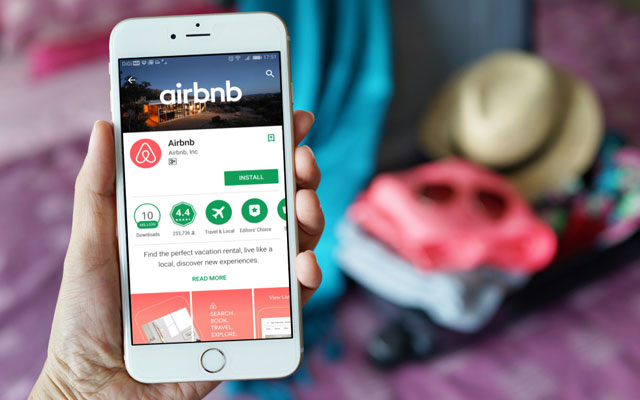
The Malaysian Association of Hotels (MAH) has appealed to the government to immediately put a stop to home-sharing so as to curb the spread of the Covid-19 outbreak.
MAH CEO Yap Lip Seng said in a statement: “Human lives are at stake, please set aside profitability and prioritise on keeping people safe.”
Malaysian hoteliers call on Airbnb to halt operations to prevent the spread of coronavirus
Stressing the weaknesses of home-sharing platforms, Yap said: “Most of these platforms do not even have a local presence in the (destinations) they operate in, hence there is no accountability, or social and community sense of responsibility. The Covid-19 outbreak had taught all of us in the tourism industry a valuable lesson, and we hope home-sharing platforms, hosts and operators can be a responsible stakeholder and do their part in ensuring a sustainable tourism industry.”
The call to the government to suspend the operations of Airbnb and other home-sharing platforms was in response to a recent circular issued by the joint management body of a posh serviced residence in Kuala Lumpur, notifying its owners and residents of a confirmed Covid-19 case involving an Airbnb guest.
Yap shared: “It revealed a worrying concern long highlighted by the tourism industry. The lack of registration information, guest services and support, emergency preparedness as well as basic standard operating procedures poses critical risks to the country’s crisis management, leaving citizens vulnerable to external threats.”
MAH president Kamaruddin Baharin said that the lack of regulations on these home-sharing properties leaves local residents at risk of infection from not just Covid-19, but also other transmissible diseases.
“The idea of having strangers from all over the world moving in and out of homes every other day without any standard operating procedures whatsoever is as risky as operating an international airport,” said Kamaruddin.
He added: “The onus of added maintenance such as cleaning and disinfecting of the properties and its common grounds lies on the joint management bodies, at the cost of every owner and resident, which is unfair. Such home-sharing activities not only puts everyone at risk but also hampers the government’s effort in managing crises.”
The industry had long urged the government to regulate and control home-sharing activities, and the regulatory framework drawn up with the Malaysian Productivity Corporation last year is said to be ready but have yet to see adoption by policymakers and regulators.
Royal Caribbean Cruises (RCL) will dedicate two ships to humanitarian efforts in Australia and California to support some of the people affected by recent crises.
RCL chairman and CEO Richard Fain said Royal Caribbean was working with its suppliers to deliver one million N-95 protective masks into China for government distribution to affected areas.
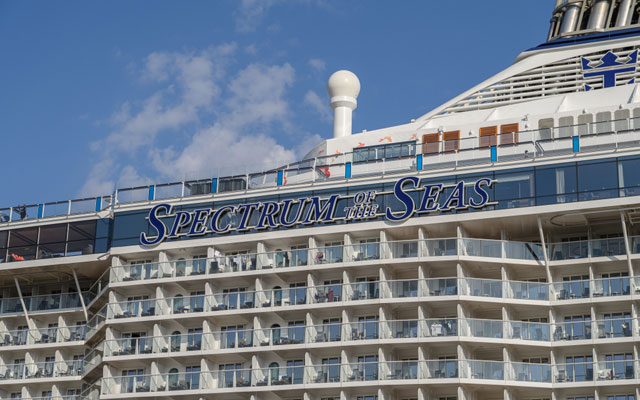
Two Royal Caribbean ships will set sail on humanitarian missions
Spectrum of the Seas will travel to Australia and be deployed on complimentary cruises sailing from Sydney in support of Australia’s first responder community, who worked tirelessly over many weeks of the bushfire crisis.
“We are in a fortunate position to offer these brave and selfless members of the Australian community the opportunity to join us for a few days and let them relax and unwind in the company of other volunteers and first responders,” said Michael Bayley, president and CEO of Royal Caribbean International (RCI). “By welcoming and accommodating them aboard Spectrum of the Seas, we hope to recognise their contribution and offer them our hospitality.”
Bayley noted that the ship and its crew have not been in China for more than two weeks, exceeding public health guidelines.
And when circumstances improve, Bayley said, RCI will dedicate a ship in China to a series of complimentary sailings to thank first responders and medical personnel for their heroic efforts to defeat the virus.
In addition, Celebrity Millennium is repositioning to the west coast of the US earlier than previously scheduled and will offer a series of Cruising for Heroes sailings in support of California firefighters, other first responders, and veterans throughout March and April.
A variety of three-, four- and five-night sailings, which will leave from Los Angeles, have been added to the brand’s offerings to travel the Pacific Coast.
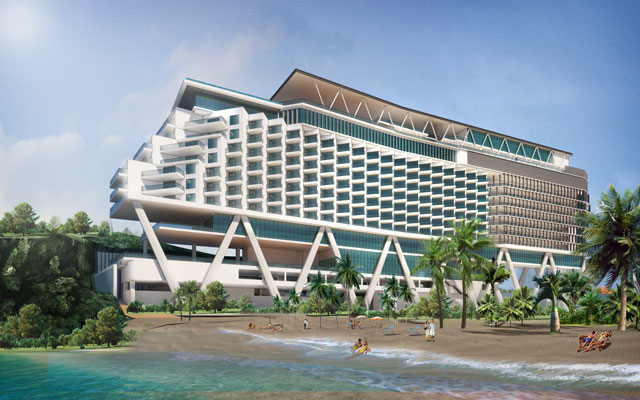
Hilton has signed a 15-year management agreement with Inspirasi Langkawi to build The Nautilus Resort, Curio Collection by Hilton, a 250-room hotel on the island of Langkawi in Malaysia.
Targeted to launch in 2023, The Nautilus Resort is set to be the first property under the Curio Collection by Hilton brand in Malaysia, and Hilton’s first property in Langkawi.
The Nautilus Resort is slated to open in 2023
Resort facilities include an all-day dining restaurant, a speciality restaurant, a rooftop bar, a kids’ club, a swimming pool, a fitness centre, an events space spanning approximately 680m2 and a ballroom of approximately 350m2.
It should come as no surprise that even as we enter the new decade, industries such as retail and travel are seeing continued investments in digital platforms and solutions aimed at delivering Hyper Personalisation.
The reason: millennials have risen in purchasing power, becoming the dominant driver of business and growth. Any business that market its products or services to this audience must adapt and develop innovative approaches to address dramatic shifts in customer behaviour, as well as the demands for mobile and social media.
Caligagan: Hyper-personalisation key to marketing to the rising wave of millennial travellers
Yet, personalisation is much more than tweaking a Marcom message, or deploying a new CRM platform or technology. It is all-inclusive, but in many cases, also involves modifying an existing product or service, transforming it into an experience that resonates with millennials.
When it comes to travel, millennials want exactly that. Today’s consumers are looking for a travel experience that is simultaneously immersive, engaging, inspiring, and in some way, transformational.
For destination marketing organisations, resorts, or tour operators, this means they must now push authentic local experiences more appealing and unique in order to attract visitors, and draw them away from competitors.
The next big part of the equation for travel operators is to market their experience to millennials, and this is where businesses (travel included) needs to put in more work. A number of surveys revealed that, in the eyes of consumers, brands are failing to deliver the level of personalisation that they desire.
To achieve true personalisation, travel operators must engage their audience from multiple touch points, using data gathered from all possible sources. Coined as Hyper Personalisation, this typically involves taking on new technologies and overhauling legacy systems, i.e undergoing Digital Transformation. As one could imagine, this takes up a lot of time, which is part of the reason why businesses are slow to respond.
Since travel personalisation has yet to be in perfected by any in the industry, developing hyper personalised strategies presents another challenge. In Asia, gaps in technology and strategising are prompting travel professionals to seek out Digital Travel Summit APAC, an annual gathering of travel verticals in Marketing, eCommerce and Customer Experience to engage in high-level quality discussions.
Day one will be allocated to achieving personalisation at scale, followed by the future of CX (Customer Experience) for day two. As with previous years, a technology evaluation pre-day will be held for travel brands to benchmark their technologies against their peers, and to meet next-generation travel technologies and their providers.
With powerhouses such as Singapore Airlines, Shangri-La, and Grab representing the speaker line-up, audiences are guaranteed to not only learn from the best of their category, but also get the unique opportunity to cross-learn from relevant case studies, all in the convenience of a single location.
Sustainable tour operator Intrepid Travel has introduced Pakistan as a new destination to its portfolio in 2020, with the launch of an expedition trip exploring the country’s past, present and future on a 17-day adventure from Islamabad to Lahore, travelling through the remote reaches of the Karakoram Mountains.
“We’re always looking to develop experiences that will get travellers out of their comfort zones, to break new ground and to broaden their horizons,” said Tara Kennaway, senior product manager – operations, Intrepid Travel. “We’re excited to be providing the global community with access to Pakistan, one of the world’s few countries that remain under-the-radar with tourists.”
Intrepid Travel now offers tours to Pakistan; Baltit Fort in Hunza Valley, Pakistan pictured
Intrepid Travel’s new Pakistan Expedition, priced from US$3,560 per person, begins in the capital of Islamabad and ends in Lahore.
Highlights of the trip include travelling on the famous Karakoram Highway past panoramas of glaciers, alpine lakes and mountains; taking a 4WD to Khunjerab National Park in search of snow leopards, bears, wolves and rare Marco Polo sheep; as well as checking out the ancient site of Taxila, World Heritage-listed ruins that are evidence of over 500 years of cultural evolution influenced by Persia, Greece and the spread of Buddhism.
Guests will also get to enjoy a homestay with a local family in Gulmit; explore Lawrence Gardens, now known as Bagh-e-Jinnah; and indulge in a spot of retail therapy within the Walled City of Lahore at Akbari Mandi.
The expedition will run twice in 2020, from August 17-September 2, 2020 and September 2-18, 2020, with two additional departures scheduled in 2021.
Grand Park City Hall, the flagship property of Park Hotel Group, has appointed Jeane Lim as the hotel’s new general manager.
In her new role, Lim will steer the team to accomplish a new level in brand representation and awareness, guest experiences and financial results. Her immediate responsibilities include evaluating the current processes with the various heads of department and offer clear directives and effective support to maximise performance and financial results, while strengthening the cohesiveness of the team.
With more than 30 years of hospitality experience, Lim was most recently the general manger of Parkroyal on Pickering.
Prior to that, she has also served as director of sales in Grand Hyatt Singapore, general manager in Copthorne King’s Hotel and Destination Singapore Beach Road, and vice president of global sales at Millennium Hotels and Resorts.
Philippine tourism is undergoing a paradigm shift towards sustainability on an unprecedented scale, beginning with Boracay and extending to more destinations like Luzon and Mindanao.
Philippine Department of Tourism (DOT) secretary Bernadette Romulo-Puyat stressed their determination to set the carrying capacity for all destinations and help bankroll their rehabilitation.
The Philippines steps up its sustainability efforts with several rehabilitation projects across the country, including a recently-concluded one at Sugba Lagoon in Siargao (above)
She emphasised that “what we leave for the next generation…(that) speaks about our responsibility to protect the environment and our irreplaceable natural heritage” was even more vital than growing tourism arrivals and receipts.
Funding for the project will come through the DoT’s infrastructure arm, the Tourism Infrastructure and Enterprise Zone Authority (TIEZA), on top of that from international funding agencies, including the World Bank and Asian Development Bank, which have approached them for funding assistance, Puyat said.
She said the overdeveloped Baguio and its neighbouring BLIST municipalities in Benguet – La Trinidad, Itogon, Sablan, Tuba and Tubalay – are the latest earmarked for rehabilitation, apart from the different phases of rehabilitation that Boracay, Bohol, as well as El Nido and Coron in Palawan, are going through.
TIEZA will provide the funds to redevelop Baguio’s Burnham Park even as request for funding the construction of the sewerage system and the rehabilitation of Mines View Park are under study.
In Manila, its premier historical site, the Walled City of Intramuros, is undergoing a makeover, while clean-up operations for Manila Bay and Pasig River continues. A ferry service has also been launched to bring passengers from Pasig River to various points of old Manila, escaping road traffic congestion.
In Mindanao, the local governments of Siargao’s Sugba Lagoon has just completed a one-month closure that saw the repair and clean-up of its facilities, as part of its annual environmental recovery programme. Meanwhile, South Cotabato’s Lake Holon has been closed for two months to rest its ecosystem and improve facilities.
Other destinations lined up for rehabilitation include Samal in Davao and Siquijor in the Visayas.
Puyat has also tasked every tourism region to devise a tourism master plan, with sustainability as the main focal point.
Last year, the DOT also launched the Save Our Spots (SOS) campaign, which ropes in celebrities to encourage the public to help protect tourist spots in small ways. Puyat noted that the public are becoming more conscious in keeping spots like Rizal Park and Intramuros clean, and that the younger set are more aware of maintaining the cleanliness of destinations.
Despite efforts to make the traveller journey seamless, a new study found that half of travellers spend more time than desired using digital channels to plan and book their flights and hotel accommodation.
In the Maximizing Revenue across the Traveler’s Journey report, which was undertaken in 2019 by travel consulting firm Atmosphere Research Group, and used in a new thought-leadership report, half of all airline passengers said they spent more time than desired using digital channels to plan and book flights. Forty-five per cent of hotel guests also report the same.
Airlines and hotels need to embrace the era of complete retailing to maximise revenue: study
The report highlights global customer dissatisfaction across travel digital channels, and how airlines and hotels need to embrace the era of complete retailing to distinguish their brands from their competitors, make their digital channels more compelling, and strengthen their customer experience if they want to become the Amazon of Travel.
Furthermore, the report also found that data and personalisation, driven by AI and machine learning, are key to unlocking travellers’ “second wallet” for ancillary travel purchases.
Of the global travellers surveyed, 70 per cent reported that they would like to receive personalised offers from travel sellers, while 75 per cent are comfortable sharing personal data if it will help them save money or have better journeys.
Despite this, just 20 per cent say they receive offers that reflect their interests, travel behaviours or stage in their lives. This is despite the travel sector being one of the pioneering e-commerce sectors and one of the largest digital commerce sectors globally.
Travel industry thought-leader and author of the report, Henry Harteveldt from Atmosphere Research Group, said: “The travel technology world is thriving, but poor digital experiences weaken the joy of travel and weaken the potential profitability of travel retailers. Entering the era of complete retailing is the next frontier for travel retailers, where they are dynamically creating and selling relevant, personalised, appealing offers to travellers. Cloud and machine learning technologies that deliver data driven responsive technologies will be core to this.”
He added: “Groundbreaking travel technology companies are already delivering new generations of nimble and responsive technologies that are helping travel sellers to maximise sales opportunities spanning every travellers’ journey, and enter the era of complete retailing.”
CarTrawler, for example, provides the technology for airlines to offer car rental, private airport transfers and on-demand ride hailing services at more than 50,000 locations in 174 countries. Working with more than 100 airlines, CarTrawler expands the airline’s offering to their customers.
Data is at the core of CarTrawler’s offering; the company uses data effectively to tailor offers to increase the potential of a traveller making a purchase. In CarTrawler’s first year of working with SWISS and Vueling, each airline saw its car rental conversion increase by 151 per cent and 298 per cent, respectively.
Boxever, the data and personalisation firm working with major airlines around the world, has been one of the pioneers in harnessing the strengths of data, AI and machine learning to help airlines such as Emirates, Ryanair and Volaris to use their data better and offer smart, effective personalisation to improve conversion rates and average order value.
Hostelworld helps hostels worldwide that especially cater for millennial and Gen Z guests to offer a complete retailing solution with their property management system software. As well as managing occupancy, the software is configured to sell ancillary services online, helping hostels to improve guest experience, reduce operating costs and drive ancillary sales.
The Maximizing Revenue across the Traveler’s Journey report was commissioned by Ireland’s trade and innovation agency, Enterprise Ireland.
It’s a no-brainer that businesses should automate, right? Whether an OTA, TMC, travel agent or indeed any business operating in the travel industry, automation saves time and allows resources to be diverted elsewhere. Companies can be run more efficiently; they are more agile, they can free up resources and of course, reduce costs.
If only business decisions were that simple, but unfortunately, they are not. There are myriad factors to consider when implementing new systems and with automation, it’s no different.
Sevastianov: Businesses need to consider a myriad of factors before automating
Ask most operations people about automation and they will naturally focus on how it will impact the business and the value it will bring. That’s completely understandable, but there is a lot more to think about before you dive in.
Take a good look at the nature of your business. How does it operate? What exactly are your processes and what are the business objectives? Answers to this will have a large bearing on which software package to opt for and help to decide which of your business processes should or should not be automated. To automate intelligently, resulting in the greatest long-term impact, you should consider these four steps:
Link your automation strategy to your business priorities.
Review your organisation and prioritise potential automation projects.
Identify resource needs and skill gaps.
Build a partner plan to unlock the right talent and technologies.
OTAs and TMCs – Drill down on your processes
Take a look at the multiple stages of the business and assess the impact of automation across pricing automation and the booking process, pre-trip arrangements, and post-booking.
Automating the pricing strategy
Today’s online travel marketplace is super competitive, with price-savvy consumers looking to find the best deals on flights, hotel rooms and travel packages. In an online world, pricing matters. Travel companies that offer comprehensive content at competitive prices will stand out, including, of course, offers and promotions.
Pricing strategies are complex, however. Creating and promoting them is time-consuming, especially through direct channels and meta channels. Customers are eager to compare your prices with your competitors, so setting random prices across your product range, or ignoring your competitors’ pricing strategies altogether, is not a good idea.
Understanding your position in the market by analysing your competitor’s pricing behaviour should be one of your highest priorities. Look at automated price tracking software. These solutions let your businesses track competitor prices automatically, gain market intelligence and set dynamic pricing. However, bear in mind that if you fail to feed in proper, accurate data, automated pricing tools become less effective. They can give the wrong price and turn your customers away.
The booking process
Take a look at your booking process. Is it easy to navigate? Are too many customers leaving without buying? Getting the booking process right is key for travel companies which suffer from some of the highest basket abandonment rates of any industry. According to Annex Cloud, travel carts are abandoned 82 per cent of the time, which is the highest rate after finance and non-profit sectors.
Use an automation tool that monitors the performance of your website. Tools like Site24x7 monitor the experience of real users accessing websites and applications from desktop and mobile devices. These automation tools help you figure out why users are leaving without buying and enable you to be more proactive when figuring out how to fix the problem. Customers will value the effort and improved service, making them more likely to become a direct customer next time (non-meta).
Post booking
The post-booking process is long, complicated and costly. Think client communication, queue management, ticketing, fare comparison before and after the ticket has been issued, and many more tasks that are usually performed by members of the team. These processes are labour intensive and complex, and you may want to consider automating them. Make that decision based on the assessment of your business priorities.
Choose a tool that is scalable and supports all major GDSs. You don’t want to go through the same process again once it’s time to change or add another GDS to your business.
Quality control is also something that is often overlooked. Checking reservations for accuracy and policy compliance is labour intensive and can be a costly experience if something fails. Automating this process makes it easy and prevents costly human factor mistakes.
This takes us onto the pre-trip arrangements. Agents are required to offer their clients with exciting travel offerings and important trip notifications. This crucial part of the traveller experience can require a high level of travel tech for automation and efficient post-booking processes by using a number of internal and external smart applications. Technology such as destination guides can be displayed through user-friendly interfaces and help to sell add-ons and ancillaries, but make sure you’ve got the infrastructure internally to support these.
Automate – Yes or No?
Let’s be clear, automation does not work for every company. The problem is that if you automate too quickly, you may find that it doesn’t work and that could be because the business wasn’t ready. You end up with ineffective software for which you’ve invested a big chunk of your budget and resources and find the whole project has been a failure.
The same principle applies to marketing automation which only becomes an effective ROI machine if you can provide enough visitors. So, focus on SEO, Conversion Rate Optimisation, and blogging. When these inbound marketing campaigns start driving a decent amount of traffic to your site, you can go ahead and choose a successful automation software that works for you. There are many to choose from, such as HubSpot and Marketo, and marketing automation road-mapping tools can help with the process. There is a useful article on road mapping from Larry Long at Forbes.
Are there skill gaps you need to fill and members of the staff who need to be convinced? You may find there are opportunities for implementing low risk, inexpensive solutions that will immediately improve efficiency. Knowing where the process is on the automation path and determining where you would eventually like to be is essential. Once you’ve decided to automate the post-booking process, let your team test and implement solutions – we find it essential with clients we work with.
Find the best automation tool and assign a team in charge of testing and implementing it gradually. Fully understand the process you’re automating and, if necessary, change it. Then help your team adopt the new automated process.
What next?
There are a lot of reasons to automate your business processes. Think business priorities, automation objectives, skill gaps and the right technologies. This will maximise the impact and benefits that automation will have on your business, its relevance, and its ultimate success.
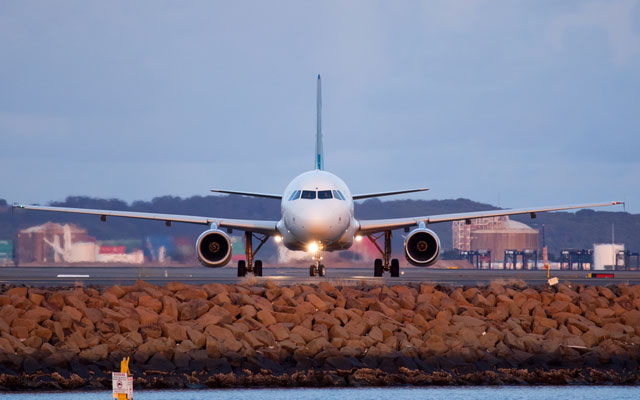
Aircraft manufacturer Boeing is expecting airlines in South-east Asia to need 4,500 new airplanes over the next 20 years, valued at US$710 billion at list prices, with single-aisle airplanes continuing to be the main driver of capacity growth in the region.
This growth will help to stimulate the demand for commercial aviation services, which are forecasted to be worth US$785 billion between 2019 and 2038.
Boeing forecasts that South-east Asia needs 4,500 new aircraft in next 20 years
“Three countries from South-east Asia – Vietnam, Thailand and Indonesia – made the top 10 list of countries that added the most airline seat capacity since 2010. Vietnam has experienced the strongest growth out of the three at nearly 15 per cent per year, followed by Thailand and Indonesia at approximately 10 per cent, respectively,” said Randy Tinseth, vice president of commercial marketing at Boeing.
“With an expanding middle-class, in a market that continues to liberalise, coupled with a strong domestic, regional and international tourism sector, South-east Asia has become one of the world’s largest aviation markets,” he said in a statement.
While single-aisle airplanes dominate the forecast, Boeing believes this region will also require a significant number of widebody airplanes, in terms of value and the number of units.
The demand is driven by airlines adapting to the evolving business environment and new longhaul expansion opportunities.
Widebody airplanes will make up 19 per cent of new airplane deliveries, enabling carriers in the region to serve new international long-range city pairs.
Along with the strong demand for aircraft, Boeing has predicted the region will need 182,000 commercial pilots, cabin crew, and aviation technicians to fly and to maintain the fleet across South-east Asia. This demand is projected based on a mix of new airplane deliveries, annual aircraft utilisation rates, crewing requirements by region, and regulatory requirements.
Worldwide, Boeing projects the need for 44,040 new commercial airplanes valued at US$6.8 trillion, and demand for aftermarket services totalling US$9.1 trillion over the next 20 years.