The Ho Chi Minh City International Travel Expo (ITE HCMC) 2026 will stage its largest edition since the event was established in 2005, marking its 20th anniversary with an expanded programme of business networking, industry forums and regional tourism meetings.
Taking place from August 27-29, 2026, at the Saigon Exhibition and Convention Center under the theme Vibrant Connections – Global Destinations, the expo is expected to host more than 520 exhibitors and brands, 260 international buyers and over 21,000 pre-scheduled business appointments.
ITE HCMC 2026 will bring together more than 520 exhibitors, 260 international buyers and over 21,000 pre-arranged business appointments for its largest edition to date
Organisers expect around 30,000 visitors, 600 international delegates and 60 international media representatives to attend. The hosted buyers programme, the only initiative of its kind in Vietnam, will welcome 260 buyers from more than 40 countries and territories, representing companies including Tui Group, Dertour, Flight Centre Travel Group, American Express Global Business Travel, Trip.com Group and Luxury Escapes.
Beyond business meetings, the programme will include three tourism ministers’ meetings under the CLV, ACMECS and CLMV cooperation frameworks, reinforcing the event’s role as a platform for regional tourism collaboration.
Industry forums will focus on topics including MICE, destination branding, AI, medical tourism and travel technology, with participation from organisations such as UN Tourism, PATA, the Global Sustainable Tourism Council, Google, Mastercard and EuroCham.
The exhibition will also be open to consumers from the afternoon of August 27, featuring destination showcases, cultural performances, tourism promotions and travel offers.
Pham Huy Binh, director of the Ho Chi Minh City Department of Tourism, said the 20th edition reflects the expo’s growth in scale, quality and international standing, while highlighting the effectiveness of public-private partnerships in strengthening tourism development and positioning the event as a platform that benefits both the travel industry and the wider community.
Pullman Kuching is in the final phase of its hotel-wide refurbishment, with completion targeted for mid-2027 as work continues on its remaining guestrooms, suites and Executive Lounge.
The hotel has completed the refurbishment of its lobby, ground-floor public spaces, restaurants, fitness centre and 161 guestrooms. Work is now focused on the remaining guestrooms and suites, as well as the Executive Lounge.
Song expects AirBorneo to strengthen regional connectivity, making Kuching more accessible for both leisure and business events travellers
General manager Sunardi Song said the phased approach has allowed the hotel to continue welcoming guests while minimising disruption.
He said: “We are delivering the remaining work in phases to protect safety and service continuity, while allowing guests to continue enjoying the completed guestrooms, restaurants and event spaces with minimal disruption.”
Song added that the upgraded facilities and refreshed guestrooms have strengthened the hotel’s market positioning, with positive early response to both the new rooms and revised pricing.
“We have seen encouraging momentum across corporate, government, association, leisure and social segments,” he said.
The hotel is also recording stronger demand from Singapore, Indonesia, Brunei, China, Australia and several European markets.
Looking ahead, Song expects AirBorneo to strengthen regional connectivity by improving access from shorthaul markets, supporting both leisure and business events travel to Kuching.
Pullman Kuching is also working with Sarawak’s tourism stakeholders on destination marketing, industry engagement and selected sales initiatives.
Song said these partnerships help broaden buyer awareness, build confidence in Kuching and keep the hotel visible beyond individual room, event and dining campaigns.
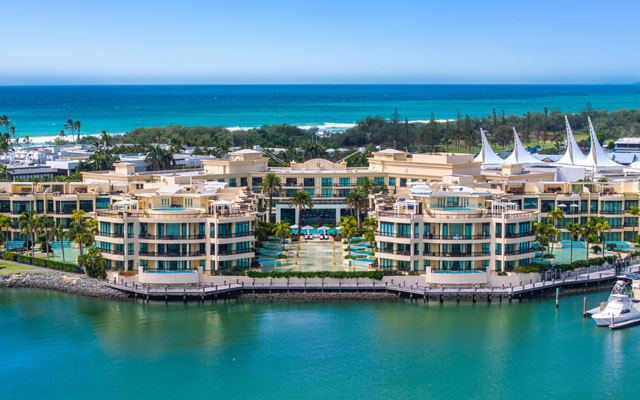
Hilton will introduce its luxury LXR Hotels & Resorts brand to Australia in early 2027, following the signing of a Gold Coast hotel that is currently operating as The Imperial Hotel.
Formerly known as Palazzo Versace, the 200-room property will undergo refurbishment before reopening under the LXR brand. Located on the Gold Coast Broadwater, the hotel offers direct waterfront access and is close to Marina Mirage and other key attractions.
The former Palazzo Versace will reopen as Australia’s first LXR Hotels & Resorts property in early 2027
The signing marks the Australian debut of LXR Hotels & Resorts, Hilton’s collection of independent luxury hotels. Each property is designed to reflect the character and heritage of its destination through bespoke service, distinctive design and locally inspired experiences.
Globally, LXR Hotels & Resorts has 36 operating and pipeline properties. The brand recently expanded into France with Sax Paris and opened Cameo Beverly Hills in the US. Additional openings are planned in destinations including Niseko, Phuket, Danang and India.
The Gold Coast property is owned by Islander Hotel Trading, which is partnering with Hilton on the refurbishment. The hotel will join Hilton’s growing collection brands in Australia alongside Curio Collection by Hilton and Tapestry Collection by Hilton, strengthening the group’s luxury and lifestyle portfolio in the country.
Tushar Raniga, director of development, Australasia, Hilton, said: “The Gold Coast provides an ideal setting for LXR’s distinctive approach to luxury, where place, design and experience are deeply connected. The property holds one of the most alluring positions along the city’s main coastal corridors and will introduce the independent spirit of LXR to the Australian market.”
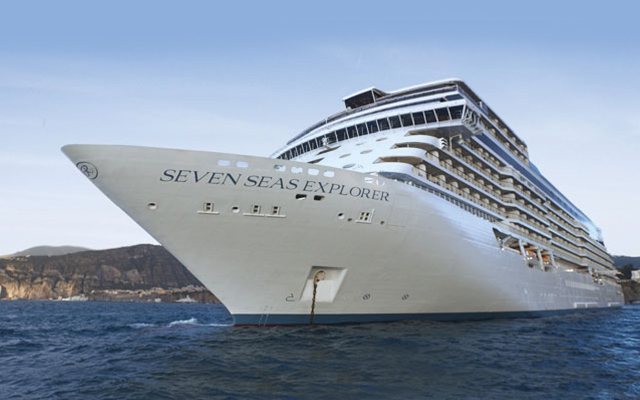
Regent Seven Seas Cruises (RSSC) will reduce the number of suites on its Explorer Class ships as part of refurbishment programmes scheduled for 2027 and 2028, creating larger accommodation and introducing a new suite category.
Following the upgrades, Seven Seas Explorer, Seven Seas Splendor and Seven Seas Grandeur will each have 344 suites, down from 373. The reduction will allow RSSC to enlarge its Veranda Suites, which will increase from 28.5m² to between 38.6m² and 43.1m², becoming the line’s largest entry-level suites.
Regent Seven Seas Cruises will introduce larger suites and reduce accommodation capacity across its Explorer Class fleet from 2027; photo by Regent Seven Seas Cruises
The refurbishment will also introduce Horizon Penthouse Suites to the Explorer Class fleet. Ranging from 57.2m² to 67.1m², the new category will include oversized balconies, separate living areas and full bathrooms.
Each ship will also gain three new Distinctive Suites measuring between 76.3m² and 85.3m². Named Explorer Suite, Splendor Suite and Grandeur Suite respectively, the accommodation will feature separate living and dining areas, one-and-a-half bathrooms, a private balcony and butler service.
The refurbishment programme will begin with Seven Seas Splendor in November 2027, followed by Seven Seas Explorer in April 2028 and Seven Seas Grandeur in October 2028.
The Ritz-Carlton, Bali has partnered with Japanese children’s lifestyle brand Miki House to introduce a limited-time family accommodation package featuring premium baby amenities.
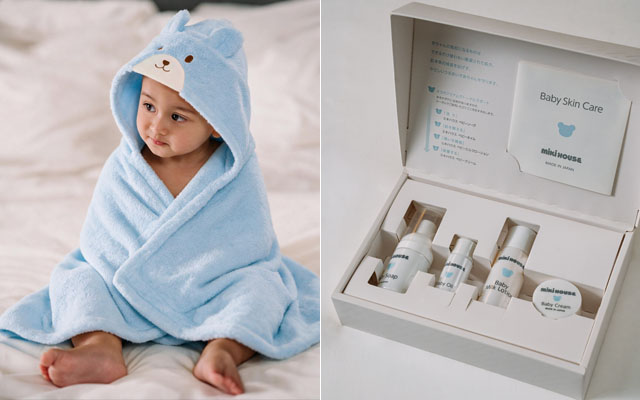
Designed for families travelling with young children, the Little Luxuries by Miki House package includes a Miki House bath poncho made from 100 per cent cotton, a matching bib and rattle set, and selected baby skincare products, including soap, milk lotion and cream, available in limited quantities.
The family stay package includes a selection of baby amenities to support families during their stay at The Ritz-Carlton, Bali
Founded in Japan in 1971, Miki House is known for its range of children’s clothing and lifestyle products. The collaboration aims to make family holidays more comfortable by providing practical amenities for babies and toddlers.
The package complements The Ritz-Carlton, Bali’s existing family offerings, including Ritz Kids activities, family-friendly accommodation and experiences inspired by Balinese culture.
Available for a limited time, the package is offered across the resort’s collection of oceanfront suites, family suites and private pool villas.
The Singapore Tourism Board (STB) and Grab have launched a three-month marketing campaign to encourage visitors from South-east Asia to explore more of Singapore and spend across a wider range of tourism precincts and businesses.
Running from August to October, the campaign builds on a memorandum of understanding signed last year covering joint marketing, data sharing, tourism product development, and support for leisure and business events.
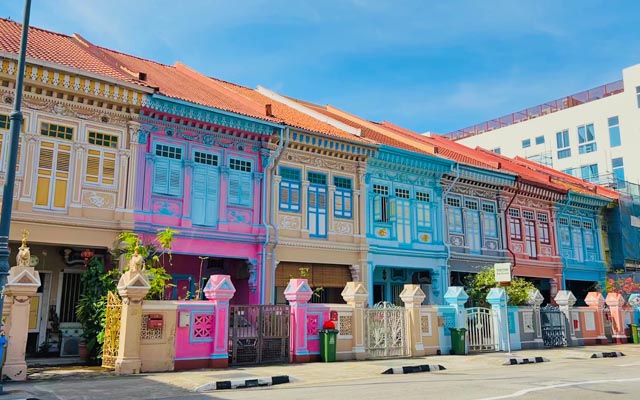
STB and Grab are encouraging visitors to explore neighbourhoods such as Katong-Joo Chiat through an enhanced Singapore Grab Travel Pass offering transport discounts
Central to the campaign is an enhanced Singapore Grab Travel Pass, which now includes two additional ride vouchers. One offers discounted rides to and from tourism precincts including Katong-Joo Chiat, Mandai and Sentosa, while the other provides discounts on trips to and from nightlife areas such as Clarke Quay and Boat Quay between 19.00 and 04.00.
The initiative aims to encourage visitors to venture beyond the city centre and explore Singapore’s neighbourhoods, attractions and night-time experiences. It also complements STB’s We Don’t Wait For Fun campaign targeting Millennials, Gen Z travellers and families.
Targeted digital advertising will run across key South-east Asian source markets to reach travellers planning trips to Singapore. Upon arrival, visitors will receive in-app prompts on Grab highlighting the enhanced Singapore Grab Travel Pass and its precinct-specific offers.
“Through our partnership with Grab and its strong reach across South-east Asia, we’re inspiring more travellers to choose Singapore for their next trip. Together, we’re combining destination storytelling with tangible benefits, encouraging visitors to explore more, spend more across our tourism ecosystem, and leave with memorable experiences that inspire them to return,” said Terrence Voon, executive director for Southeast Asia at STB.
The Philippines’ Department of Tourism (DoT) is tapping into the country’s pop music industry, known as P-pop, to attract more international visitors.
The DoT has named SB19 and BINI as its newest tourism ambassadors to promote the Philippines overseas.
The Philippines is leveraging the global popularity of SB19 and BINI to attract international visitors and encourage fan travel; photos by SB19 and BINI
Tourism secretary Dita Angara-Mathay commented that SB19’s growing international fanbase offers the country an opportunity to reach potential visitors across the US, Europe and South-east Asia.
She said: “SB19’s talent is undeniable. Their music is powerful, and so is their influence.
“Whether it’s a Filipino-American flying halfway across the world or a fan in Taiwan or Bangkok just a few hours away, SB19 is giving people real reasons to visit the Philippines. That’s the kind of reach we want to build on.”
In a separate interview, Angara-Mathay also highlighted music’s role in showcasing destinations, citing BINI’s Huwag Muna Tayong Umuwi (Let’s Not Go Home Yet) as an example of how P-pop can complement tourism promotion.
Philippine Ambassador to China Jaime FlorCruz described the appointments as “a very smart move”, citing the groups’ growing popularity among Chinese audiences.
Tourism counsellor Ireneo Reyes said BINI’s Pantropiko has become a hit in China, while SB19’s Gento went viral on Douyin, China’s version of TikTok, sparking a dance craze.
The government hopes to build on that popularity to attract more Chinese visitors. China was one of the Philippines’ largest source markets in 1H2026, with 219,796 arrivals.
The DoT also expects fan travel for concerts and events to generate longer stays and higher visitor spending.
The private sector is already responding by developing concert travel packages for overseas fans. During SB19’s 2025 world tour launch in Manila, organisers partnered with Novotel and ibis Styles to offer bundled packages that included concert tickets, hotel stays and shuttle transfers. For BINI’s 2025 concert, organisers also teamed up with Solaire Resort North and Novotel Manila Araneta City to offer concert-and-stay packages.
Additionally, Philippine Airlines has partnered with SB19 as the official airline for its world tour, highlighting how airlines are leveraging the growing popularity of P-pop to engage international travellers.
Radisson Hotel Group has launched Long Stays by Radisson Hotels, a global programme designed to meet growing demand for extended-stay travel while strengthening its offering for corporate partners.
The programme brings together participating hotels with apartment units across the group’s portfolio, offering a dedicated B2B solution for long-stay bookings through corporate and partner channels. It provides dedicated long-stay rates, standardised booking conditions and aligned commission structures, removing the need for partners to negotiate individual agreements.
Radisson Hotel Group’s new long-stay programme aims to simplify extended-stay bookings for corporate partners while providing a consistent guest experience
Guests staying under the programme will have access to dedicated hotel contacts, personalised pre-arrival planning and amenities designed for longer stays, with the aim of providing a consistent experience across participating properties.
The programme responds to growing demand for flexible accommodation for international assignments, infrastructure projects, consulting engagements, healthcare placements and workforce mobility.
It also introduces tiered pricing based on length of stay and integrates with existing distribution channels, including global distribution systems (GDS) and corporate agreements. Eligible bookers and planners can earn an additional 20 per cent in Radisson Rewards points on qualifying long-stay bookings.
The programme is initially focused on markets with strong demand for extended stays across EMEA and Asia-Pacific, including Dubai, Riyadh, Zurich and Amsterdam, and is now available at participating Radisson Hotel Group properties.
Gianni Di Fede, chief commercial officer at Radisson Hotel Group, said: “Long Stays by Radisson Hotels gives our partners a simpler and more competitive way to access this growing market. By combining structured commercial terms with a consistent guest experience, we’re making it easier to win and service long-stay business at scale, while strengthening customer loyalty.”


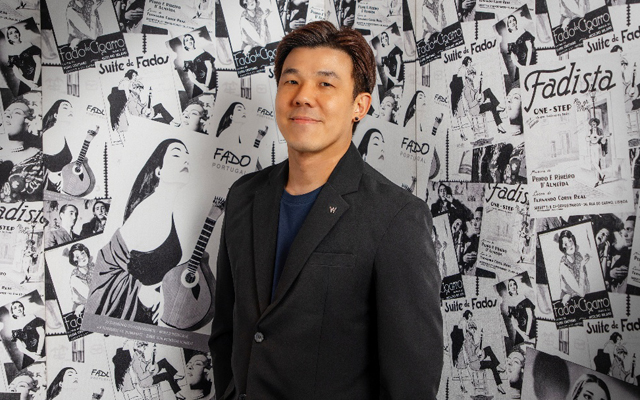
 Most recently, King served as hotel manager at W Hong Kong, having joined the property in 2021 as director of sales and marketing.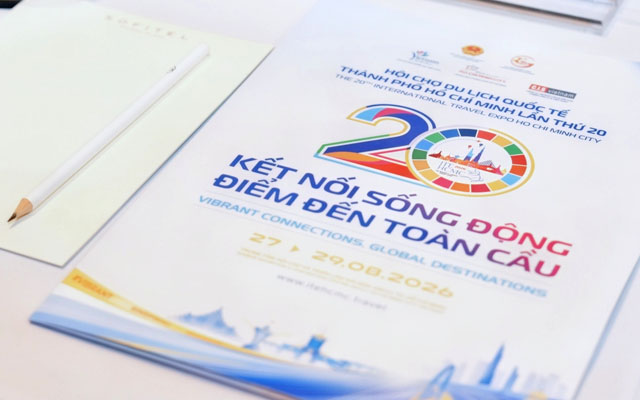
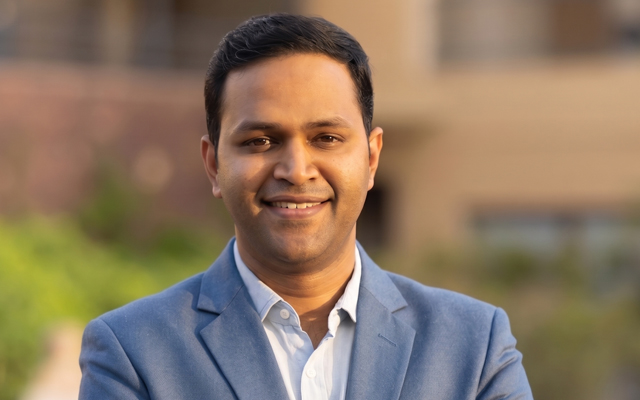
 Pereira joined Marriott International in 2024 as hotel manager of JW Marriott New Delhi Aerocity, following more than a decade with The Oberoi Group.