Ascott’s recent shift in development strategy, which sees it diversifying its presence from only gateway cities to secondary cities as well as residential, industrial and resort locations, has allowed the hospitality company to boast a landmark year of signings across South-east Asia last year.
Ascott added more than 7,300 units across the region, and recorded a 55 per cent increase over the 4,700 units signed in 2024. The growth momentum not only marked Ascott’s strongest signing performance in South-east Asia to date, it also led Horwath HTL to place Ascott among the top three hospitality companies in South-east Asia in 2025.
More than 25 new properties across property types and brands are expected to open within the next 12 months, joining Ascott’s portfolio of more than 200 operational properties in South-east Asia.
Regional expansion will also bring Ascott into 20 new cities, such as Nha Trang in Vietnam; Phuket in Thailand; Labuan Bajo in Indonesia; Davao in the Philippines; and Langkawi in Malaysia.
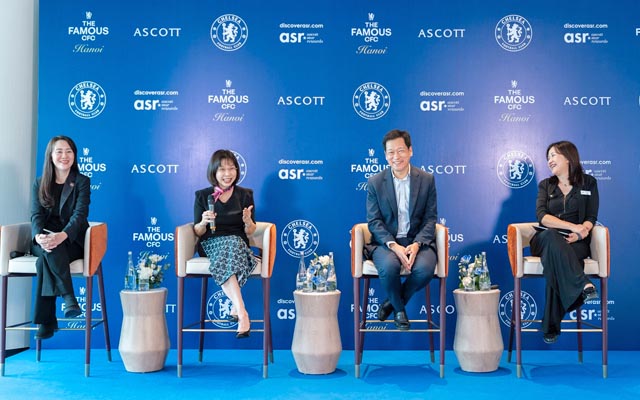
Addressing the media on the sidelines of the Ascott Global Conference, held last week at the brand new Ascott Tay Ho Hanoi’s International Convention Center, Kevin Goh, CEO of Ascott and lodging, Capitaland Investment, said the company has brought “different typologies” into the region over the last three to five years as a result of the change in development approach.
“We used to be only in city locations, but have since brought our brands to resorts, residential areas, industrial parks, and different primary and secondary cities,” said Goh.
Ascott’s leadership said the strong South-east Asia expansion is made possible by the region’s structurally resilient tourism fundamentals, strong post-pandemic intra-region travel demand, rising visitor spending and improving regional connectivity.
South-east Asia’s highly fragmented hospitality market also fuels development opportunity, as hotel supply is dominated by independent and unbranded properties. Ascott noted that about 30 per cent of pipeline in the region is delivered through conversions and brownfield projects.
In response to TTG Asia’s question about conversions opportunities across South-east Asia, Serena Lim, chief growth officer, Ascott, said the number of conversion signings at Ascott has risen year-on-year, encouraged by the ideal location of existing hotels, speed and ease in bringing a property to market, the need to mitigate rising cost of construction, and urgency among real estate owners wanting to reposition their assets in emerging markets.
Lim added that Ascott has an advantage due to its forty-year expertise in its Asian “home base”, “different conversion capabilities”, and brands that are familiar to Asian owners.
Goh said 60 per cent of the hotel inventory stock in South-east Asia are unrepresented by one of the major brands, which meant ample room for conversion here.
Wong Kar Ling, chief strategy officer and managing director, Southeast Asia, Ascott, underscored South-east Asia’s role as both a core growth engine and a showcase for Ascott’s multi-typology brand strategy.
Wong expressed excitement over Ascott’s resort openings in South-east Asia, “which will meaningfully expand our leisure offerings and open up new destinations for Ascott Star Rewards members to explore and enjoy their rewards”.
Indeed, resort properties represent one of the most significant areas of growth for Ascott. New properties are expected across Vietnam, Indonesia, the Philippines, Malaysia and Thailand. Resort openings this year include Lasong Hotel & Villas Sam Son by The Unlimited Collection on Vietnam’s northern coast, Harris Resort Cam Ranh in Vietnam, and 1926 Heritage Hotel Penang by The Unlimited Collection in Malaysia.
Vietnam has also emerged as a development darling for Ascott, with five new properties set to launch between this year and 2028.
Lim described Vietnam as a market that does well across Ascott’s brand portfolio while the country’s extended coastline creates attractive opportunities for resort development. Goh, meanwhile, observed that the China Plus One strategy, which focuses on diversifying supply chains from China to enhance trade resilience, has lifted corporate arrivals to the country.
Escalating international corporate traffic on the back of heightened global investments has prompted Ascott to work with owners to develop properties across that are equipped for meetings and events.
The new Ascott Tay Ho Hanoi takes the limelight in this approach – it boasts the International Convention Center, which packs in 13 meeting venues including what is said to be Hanoi’s largest pillarless ballroom for more than 2,000 guests. The hotel, part of a nine-tower mixed-use development, will open progressively now through 2027.