The escalating US-Israel-Iran war, which has impacted Middle Eastern energy infrastructure and choked oil exports bound for Asia via the Straits of Hormuz, is bruising Asia’s tourism businesses.
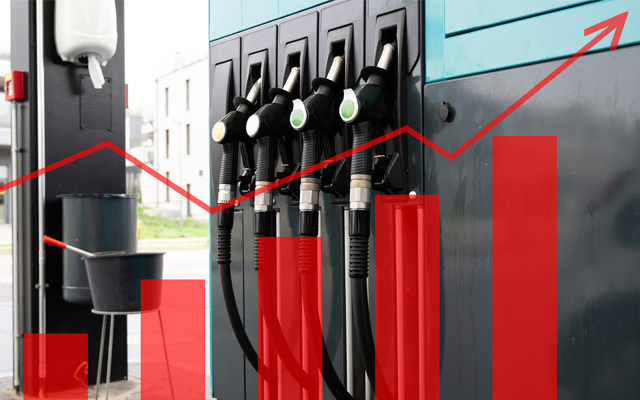
Before the US and Israel’s attacks on Iran on February 28, Brent crude was priced around US$71 a barrel. The price crossed US$112 a barrel on March 23.
International Energy Agency chief Fatih Birol said on March 23 at the National Press Club in Canberra, Australia that the ongoing crisis is worse than a combination of the 1970s oil shocks and Russia-Ukraine war.
Birol remarked in his speech that the “global economy is facing a major, major threat today” and noted that Asia-Pacific is facing the brunt of the oil crisis, given its reliance on oil and other crucial products like fertiliser and helium transiting the Strait of Hormuz.
Impact on Thailand
A primary concern is the direct impact on Thai tourism through increased airfares and operating costs, and indirectly through reduced purchasing power, particularly for longhaul and high-income tourists.
The Airlines Association of Thailand (AAT) is now preparing to propose a temporary reduction in the excise tax on jet fuel to help stabilise airfares amid volatile global energy prices. The measure aims to lower airlines’ operating costs and ease the impact on passengers.
The Bangkok Post has observed disrupted taxi services at Thailand’s Suvarnabhumi Airport, where large SUV taxis are reportedly gradually suspending operations, leaving only 2,500 vehicles – out of more than 5,000 – in active service.
Panlop Chayinthu, president of the Suvarnabhumi Taxi Coordination Association, also told the Bangkok Post that drivers are increasingly reluctant to accept long-distance fares, fearing they may run out of fuel en route with no guarantee of being able to refuel.
The Tourism Authority of Thailand on March 20 convened an urgent summit at the Tourism Crisis Monitoring Center to assess the short, medium, and long-term impacts of the ongoing unrest in the Middle East. It emphasised that any relief measures must be carefully calibrated to strike a sustainable balance between the needs of the general public and the service sector. To mitigate the current energy crisis, the agency is prioritising energy-efficient strategies. These include the vigorous promotion of domestic tourism, local conferences, and group travel to reduce energy consumption, alongside campaigns encouraging travellers to explore nearby destinations and discover Thailand’s “hidden gems”. – Anne Somanas
Impact on Cambodia
A shock spike in fuel prices, from 30 to 35 per cent for regular petrol and more than 60 per cent for diesel, coupled with LPG (liquefied petroleum gas) shortages, have led to a surge in service and transportation costs that are impossible for tourism industry players to absorb.
Tourism specialist Nick Ray said: “The fuel spike immediately pushed transport costs up. As DMCs, we have to see if we can raise our prices. If we absorb it all, we will take a big hit. If we pass it onto our partners, they will not be happy as they cannot put that onto the customer at such short notice. So, we have to discuss how to divide the losses. It’s a big shock.”
He added that Cambodia’s tourism landscape is already suffering set-backs due to the closure of the land border with Thailand since mid-2025.
“This is another issue Cambodia did not need,” Ray told TTG Asia, adding that while the situation is difficult to predict, it poses a threat in the medium-term, with longhaul travellers possibly nervous to fly.
Cambodia was heavily impacted by the sudden halt of Qatar, Emirates and Etihad flights, which carry the bulk of the country’s Western markets. According to the country’s State Secretariat of Civil Aviation, Gulf hubs account for approximately 12,960 travellers to Cambodia a week.
“There was a huge problem of cancellations and postponements, and Cambodia is more vulnerable than neighbouring countries, as we just lost three major carriers through the Middle East,” Ray added.
On March 23, the government unveiled measures to conserve fuel, including encouraging non-essential and long-distance travel, switching meetings from offline to online and encouraging energy efficiency. However, it named transport as a fuel priority, among other sectors.
Sinan Thourn, chairman of PATA Cambodia Chapter, said the fuel crisis has had a major impact on travel costs and itinerary planning. “Cost pressures are evident in multiple service areas. Accommodation, food and beverage, guided tours and transport services are experiencing upward pressure from energy, maintenance and supply chain costs.”
He added that transport has been majorly impacted, from domestic flights and intercity buses to van services and road transport for tours.
“This can influence travellers to shorten itineraries or trim optional activities, especially for budget-conscious visitors,” he said.
Sinan said tuk-tuks, taxis, shuttles and tour operators have faced tighter margins as fuel bills rise. “In some cases, operators adjust fares, impose fuel surcharges or reprice popular day trips, which can affect demand, particularly for last-minute bookings,” he said.
“If cost increases outpace what visitors are willing to pay, operators face tighter margins or the need to boost value through quality, unique experiences or differentiated service.” – Marissa Carruthers
Impact on Singapore
The impact on Singapore’s energy access appears to be less severe when compared against its Asian neighbours. Minister-in-charge of energy and science & technology Tan See Leng stated on March 20 that the country does not need to dip into its energy stockpiles of LNG and diesel yet, and assured that supplies are enough to last for months..
However, energy prices are rising. Electricity tariff are expected to hike by 11 per cent in the coming months, prompting Tan to urge prudent use of energy among households and businesses.
In Singapore, fuel prices at the pump have risen from S$2.88 (US$2.25) per litre on February 23 to S$3.47 on March 21, making land transfers pricier.
Local taxi networks ComfortDelGro and GrabCab have both risen fares to help their drivers tide through these challenging times.
ComfortDelGro’s temporary driver fee for online app bookings go straight to its drivers. The driver fee will be S$0.50 for fares below S$15 and S$0.80 for fares of S$15 and above. ComfortDelGro has also committed to absorbing a portion of fuel costs at its pumps.
GrabCab in Singapore will temporarily raise metered taxi fares from March 30 to May 31. The unit fare for GrabCab rides will be raised to S$0.27 from S$0.26. The change would mean an additional S$0.80 on fares for long-distance trips, such as a 30km journey from Woodlands to Changi Airport. The fare increment follows a move to support its drivers with fuel vouchers last week.
Soon-Hwa Wong, chairman of the PATA Singapore Chapter, said: “The fuel crisis is adding immediate cost pressures across Asian tourism. For Singapore as a regional hub, we’re seeing airlines adjust routes and tour operators struggle with pricing stability.”
Wong underscored the severe impact rising fuel prices and energy supply have on the global economy, warning that when “recession sets in, discretionary consumption such as leisure travel will be the first to be curtailed”.
Ryan Low, director at The Traveller DMC, which has operations in both Singapore and Malaysia, said the full impact of fuel cost pressures has yet to filter through to ground operations.
“Some of our transport partners have already adjusted their rates, while others are holding for now but the direction is clear. Rather than wait for the full impact to hit, we’re taking a proactive approach, reviewing our transport cost structures across Singapore and Malaysia, engaging our partner network to understand their forward pricing, and testing our margins so we can make measured adjustments (in time),” Low told TTG Asia.
The Traveller DMC has chosen to keep rates steady for confirmed bookings in the immediate term.
Low added that “appropriate provisions” are built into new contracts to ensure “realistic and sustainable” pricing, so that visitors to Singapore will continue to enjoy a quality destination experience.
PATA’s Wong said near-term support from the government – whether through fuel subsidies or targeted relief for SMEs – will be critical.