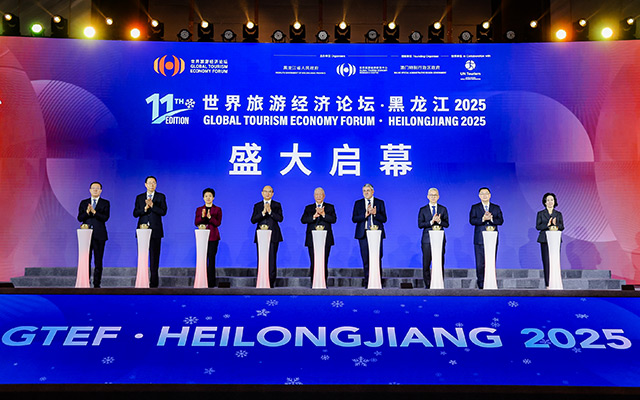
The 11th Global Tourism Economy Forum (GTEF) – Heilongjiang 2025, which concluded last week, provided an international platform for private and public sectors to discuss ways to further tourism industry growth across the world.
High-level dialogues and keynote presentations touched on topics such as pathways to harness tourism’s transformative potential for shared prosperity, partnership to build a seamless travel ecosystem, industry innovation, cultural impact on tourism, and more.
Xu Qin, secretary of the Heilongjiang Provincial Committee of the Communist Party of China, welcomed the audience, saying that GTEF has “far-reaching influence, one that plays a significant role in promoting the development of the world’s tourism economy”.
Xu added that host destination Heilongjiang boasts “unique geographical advantages, excellent ecological environment, profound cultural heritage,” and magnificent landscapes”, allowing it to be “a desirable tourist destination for both domestic and international visitors”.
In his opening address, Edmund Ho Hau-wah, vice chairman of the National Committee of the Chinese People’s Political Consultative Conference and chairman of GTEF, said: “The theme, New Quality Productive Forces, aligns closely with the national 15th Five-Year Plan focus on developing modern industrial systems. Heilongjiang is not only the strategic starting point for this important discourse but also fertile ground where this innovative concept is bearing fruit. The insights and cooperation agreements forged here will inject strong, enduring momentum into the sustainable and high-quality development of tourism in China and the world.”
GTEF 2025 was organised by the People’s Government of Heilongjiang Province and the Global Tourism Economy Research Centre, with the Macao Special Administrative Region Government as founding organiser. The event was also held in collaboration with UN Tourism, with the Department of Culture and Tourism of Heilongjiang Province and the Harbin Municipal People’s Government as execution units, and the China Chamber of Tourism as co-organiser.
It benefitted from the support of multiple agencies, including Ministry of Culture and Tourism of the People’s Republic of China, Hong Kong and Macao Affairs Office of the State Council, WTTC, PATA, and World Tourism Alliance.
The opening ceremony gathered over 1,500 guests from more than 30 countries and regions across four continents. UN Tourism took the opportunity to present Harbin with a certificate recognising its global leadership and excellence in ice and snow tourism development. Harbin is renowned for its winter events, such as the Harbin Ice and Snow World and the Sun Island International Snow Sculpture Art Expo.