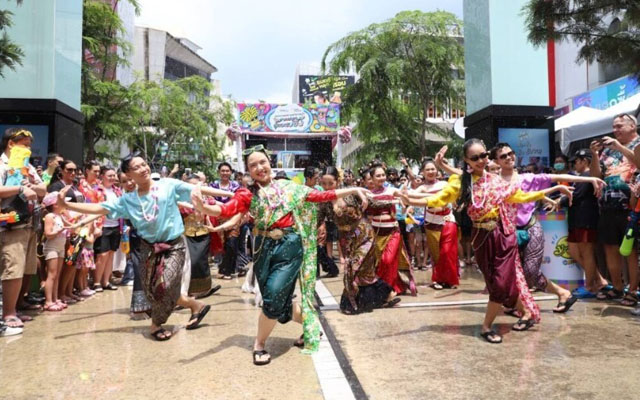
Thailand’s iconic cultural events, Songkran and Loy Krathong, remain underutilised as drivers of international tourism, despite their global recognition. From Songkran’s water celebrations to the candlelit krathongs of Loy Krathong, the festivals reflect deep cultural roots but have yet to reach their full potential in attracting international visitors.
A study by Sasin Management Consulting (SMC) at Chulalongkorn University’s Sasin School of Management found that only a small number of foreign visitors travel specifically for these events. The study identifies key barriers, including safety concerns, limited infrastructure, and inconsistent festival management. It recommends targeted improvements and deeper cultural engagement to elevate the festivals into internationally competitive tourism offerings.
According to SMC research, there is a significant gap between awareness of Thailand’s major festivals and actual visitation. A survey of 2,200 potential international tourists revealed that while 75 per cent were aware of Songkran, only 20 per cent had travelled to Thailand to experience it first-hand. A similar trend emerged for Loy Krathong, with over 50 per cent aware of the festival, yet only 16 per cent had visited during the celebration.
Tourism data from 2018, 2019, and 2024 (excluding pandemic-impacted years) supports this pattern, showing no notable increase in arrivals during the festival months of April (Songkran) or November (Loy Krathong). Among those who did travel during these periods, only one-third came specifically for the festivals; the majority were drawn by general interest in Thailand as a destination.
The study highlights several reasons why more international visitors do not attend Thai cultural festivals: 24 per cent of respondents cited safety concerns at large gatherings, and nearly the same number said they did not know enough about the festivals. Others felt the events were poorly managed, with issues like crowd control and accessibility, while 13 per cent mentioned that the infrastructure did not meet international standards.
The findings point to a gap between what tourists seek – safety, ease of access, and authentic cultural experiences – and what Thailand’s festivals currently provide. While Songkran and Loy Krathong are visually striking and widely recognised, their cultural depth is often underplayed in international messaging. For example, Songkran’s Buddhist traditions are rarely highlighted, with most attention going to the water-based festivities.
However, interest in cultural tourism is strong, with 70 per cent of respondents citing Thailand’s cultural value as a key appeal. This indicates potential to reshape how festivals are presented, balancing entertainment with a stronger focus on tradition and meaning to attract a broader range of travellers.
Songkran and Loy Krathong have the potential to be major global events, attracting millions of visitors like Brazil’s Carnival or Japan’s Cherry Blossom season. By addressing current gaps and rethinking the festival experience, Thailand can turn these beloved traditions into world-class tourism attractions.
To make the most of the tourism potential of Songkran and Loy Krathong, Thailand needs to focus on a few key areas. Improving festival infrastructure is important, ensuring facilities and transport meet global standards. Safety measures should be enhanced, with clear guidelines for tourists. Festival management must be better organised to create more accessible and enjoyable experiences. Cultural storytelling should be promoted, showcasing the history and meaning of each festival through global campaigns. Finally, combining culture with entertainment by offering immersive programmes will make the festivals more meaningful for visitors.