TTG Asia
Asia/Singapore Monday, 23rd February 2026

From motor scooters to billionaires

0

You’ve been around for 25 years now. What do you think is one of the biggest shifts in the definition of luxury during that time?
Twenty-five years ago, luxury was mostly defined by big assets like opulent hotels and boats. That always interested us because our company was never interested in what guests do inside the hotel; we focused on what we could take them to do outside. Especially in the last decade, and particularly since Covid, people are spending far more time outside the hotel seeking luxurious, meaningful experiences. They want genuine street food experiences and unique local encounters that aren’t staged for photo ops, but rather involve participating in local culture alongside artists, conservationists, habitat preservers, and textile makers. True luxury is now about bespoke, unique experiences that your friends haven’t done and that cannot be simply bought on the internet. That’s exactly where Smiling Albino has always wanted to be.

How do you embrace sustainability while creating ultra-luxury experiences?
From day one, right up to day 9,500 – I count our journey in days, not years – sustainability has always been about people, communities, partnerships, and paying things forward. We asked our very first guides a naive question: “What do you want to be paid?”

We approached suppliers with a quality-first initiative, asking what they needed to be paid to be happy and fair, rather than demanding the lowest price we could get. In fact, I don’t think we negotiated a contract in our first 15 years. We wanted to know what the bicycle repair person actually needed, approaching the industry by asking what was best for everyone, including local people and partnerships.

While there’s talk of tension between sustainability and ultra-luxury travel, I see our trips as the ultimate contributor to sustainability. The economic footprint of an ultra-wealthy client’s trip trickles out to hundreds of people, going several suppliers deep into transport, food, crafts, and village traditions. Instead of a restaurant, we might hire an entire village to host and join us for lunch, hiring people to decorate the tables. We bring high-net-worth travellers into the real lives of Thai villages in Isan, remote Lao villages, and northern Vietnamese villages for massive economic impact. It’s never for staging purposes; it’s about genuinely celebrating and sharing local culture.

When did you start hosting billionaires?
About a decade ago. Ironically, when my great friend Scott Coates and I started Smiling Albino in 1999, our mission was entirely about going off the beaten track. We avoided Chiang Mai and Phuket, heading instead to remote parts of Chiang Rai, Mae Hong Son, and Isan. We literally drove 100cc motor scooters for five days to create highly original experiences away from the crowds. We biked, hiked, paddled, and visited monks in caves. Eventually, these gritty, immersive adventures became famous in higher circles. Wealthier travellers started asking us to arrange trips, but noted: “We’re not going to drive a scooter. We need a luxury van. We have a private jet.” By building authentic adventures, the wealthier clientele simply found us.

Where do these ultra-high-net-worth individuals stay?
Naturally, we use the region’s top properties, from the Four Seasons to the Mandarin Orientals. We also utilise small private properties like Pa Sak Tong in Chiang Rai or the beautiful P’apiu Resort in the extreme north of Vietnam. But our greatest achievement over the last two or three years is convincing these guests to forego five-star accommodation entirely.

Exactly a year ago, we organised a seven-day Laos trip for a well-known international billionaire who is a James Bond-type character. We exclusively used charming three-star homestays and guest houses, booking them privately and elevating the spaces by adding customised lighting, fixtures, and design elements – all of which we left behind as gifts.

At the end of Covid, we even transformed a coffee shop in a highly remote part of Isan into a boutique hotel suite. We asked the family who owned it if we could upgrade the beautiful room in the back, bringing in our own linens, lamps, and shelves, which they found amazing. By focusing on comfort and happiness, we create luxury out of basic resources, allowing guests to open their doors directly to the kind of beautiful nature you can only access at remote guest houses.

Looking forward to 2030, what is the next big thing for Thailand’s tourism economy and the Smiling Albino experience?
I believe Thailand recognises the shifting global sands and will increasingly follow a quality-over-quantity model. I didn’t believe this 10 years ago, but I see the country shifting focus toward luxury, quality tourism today. I hope Thailand provides real investment incentives for secondary destinations to pull travellers away from Samui, Phuket, and Chiang Mai, taking them instead to places like Nan, Phayao, and Mae Hong Son. That is exactly what Smiling Albino will focus on. Our mission is to draw the world’s most discerning travellers to South-east Asia, cementing Thailand as the ultimate exotic destination for those willing to go entirely off the grid. We will continue pulling luxury travellers away from five-star hotels and massive city centres to create deeply meaningful, local experiences.

Thai hoteliers forecast flat 2026 foreign arrivals, cite safety concerns

0

Thai hotel operators expect overall foreign tourist numbers in 2026 to remain flat compared with last year, particularly among three-star and below properties reliant on shorthaul markets, excluding China. Anticipated growth in longhaul arrivals is expected to be offset by stagnation in shorthaul demand.

The latest Hotel Business Operator Sentiment Index for January 2026, conducted by the Thai Hotels Association (THA) and the Bank of Thailand, points to a cautious outlook among 99 respondents. While four-star and above properties anticipate growth from European markets, the wider industry warns that Thailand’s lingering negative safety image and the absence of new tourism stimulation projects are weakening its competitiveness against lower-priced regional rivals.

Thailand’s hotel sector anticipates steady foreign arrivals in 2026, supported by longhaul markets amid softer shorthaul demand

Occupancy rates in January averaged 77 per cent, stable month-on-month, with slight growth among four-star and above hotels. The February occupancy forecast stands at 73 per cent, though regional disparities are widening. Southern Thailand recorded an 84 per cent occupancy rate, significantly outperforming other regions, supported by major music festivals hosted in the area. In contrast, occupancy in the North fell to 68 per cent.

Labour shortages intensified in January, particularly in the East, although operators noted that the deficit is currently affecting service quality rather than capacity to accept guests.

The sentiment reflects volatile arrival figures reported by the Tourism and Sports Economics Division. January 2026 saw a sharp 39.6 per cent year-on-year decline in Chinese arrivals to 400,321, alongside a 31.5 per cent drop in the Malaysian market. However, the Russian and Indian markets showed resilience, posting growth of 6.6 per cent and 24.4 per cent respectively.

Despite the slow start to the year, the sector expects a near-term boost from Lunar New Year travel. The Tourism Authority of Thailand forecasts 42.23 billion baht (US$1.36 billion) in circulation during the February 13-22 festival period, a 13 per cent year-on-year increase, supported by the Amazing Thailand 2026 campaign fronted by Lisa Manobal as the Amazing Thailand Ambassador.

Komodo visitor cap sparks concern among operators

0

Indonesia’s Ministry of Forestry has capped daily visitor numbers to Komodo National Park at 1,000, citing the need to protect its terrestrial and aquatic ecosystems.

The regulation follows a series of temporary sailing suspensions due to bad weather and night navigation bans across 10 maritime zones, compounding challenges for tourism players in East Nusa Tenggara.

Komodo National Park, home to attractions such as Padar Island, has introduced a 1,000-visitor daily cap; photo by Indonesia Ministry of Tourism

Weather-related suspensions since December have already disrupted itineraries and bookings. Wayan Suena, CEO of Indonesia Impression, told TTG Asia that several groups were unable to depart, resulting in cancellations late last year.

Sari, reservation and contracting manager at Floressa Bali Tours, faced similar setbacks. “I had a group from Taiwan who were supposed to sail to Komodo, but the weather wasn’t (good) last month. They ended up going to Marine Park in Bali to see Komodo. It wasn’t ideal, and a group from Germany decided to cancel the trip altogether.”

Oyan Kristian, chairman of ASITA East Nusa Tenggara, said compliance with safety directives is non-negotiable, but urged policymakers to consider economic sustainability in a tourism-dependent destination. The quota system, he noted, adds operational complexity.

Hendrikus Rani Siga, head of Komodo National Park Management, said in a statement that the quota will apply across all Komodo National Park Natural Tourist Attractions, with a trial period beginning in March 2026.

Industry players have questioned the need for the cap. Sari observed that daily arrivals rarely exceed 1,000 visitors, except during cruise calls or the summer peak season.

Suena echoed the view. “I don’t think customer restrictions are necessary. The Komodo area isn’t just one island; it comprises dozens of islands that allow for spatial distribution.”

Operators said the key issue is coordination and predictability. Leonardus Nyoman, owner of Flores Exotic Tour, warned that misalignment between institutions has created uncertainty.

“When a policy is not aligned across institutions, it creates confusion and damages the destination’s image. People may start questioning their reasons for going to Komodo because the process has become complicated. It also affects business. Tour operators promote the destination in advance, and if guests arrive only to find the quota suddenly full, it becomes a serious problem,” he said.

He called for closer coordination between the Port and Harbour Authority, the park authority and the Meteorology, Climatology and Geophysics Agency.

In response, tour operators are seeking to mitigate potential losses by diverting travel plans beyond Komodo National Park. Wayan has introduced new programmes to Alor for dugong snorkelling and to Sumbawa for whale shark experiences in Saleh Bay. Others are promoting destinations such as Sumba, East Flores and new experiences in Labuan Bajo, while encouraging visitors to extend their stay to three or four days, positioning Komodo as part of a broader Flores itinerary rather than the sole highlight.

Sono Hotels & Resorts Asia enters Japan with Nagoya hotel

0

South Korea’s Sono Hotels & Resorts Asia has signed Sono Moon Nagoya, marking its first hotel project – and first Sono Moon property – in Japan.

Sono Moon Nagoya will be a mid-scale lifestyle hotel located eight minutes from Nagoya Station. Its design will draw inspiration from the city’s history, food culture, seasonal festivals and lesser-known local stories, offering guests a stay distinctly rooted in Nagoya.

Sono Moon Nagoya marks the brand’s debut in the Japanese market

The property will be owned by Escon Japan REIT Investment Corporation, with Polaris Holdings, a listed Japanese hotel company, acting as master lessee.

Jihong An, senior vice president of Sono Hotels & Resorts Asia, said: “Japan is a strategic growth market for Sono, and this signing represents an important first step in building a long-term presence here.

“Sono Moon Nagoya reflects our approach to combining strong locations, flexible operating models, and brands that resonate with today’s travellers. With major demand drivers ahead, including the Asian Games in September, we see strong potential for Nagoya as a gateway city.”

Aviation roundup: Singapore Airlines, Originair and more

0
Singapore Airlines

Singapore Airlines adds Riyadh to network, boosts frequencies for Northern Summer 2026
Singapore Airlines (SIA) will expand its network in 2026 with the launch of a new Middle East route and higher frequencies across key Asian and regional destinations during the Northern Summer season.

The airline will commence four-times weekly non-stop services between Singapore and Riyadh in June 2026, subject to regulatory approvals. The route will be operated by the medium-haul Airbus A350-900, configured with 303 seats, including 40 in Business Class and 263 in Economy Class. Flight SQ498 will depart Singapore on Tuesdays, Thursdays, Saturdays and Sundays, with the return flight SQ499 operating on the same days. Riyadh will become the SIA Group’s second destination in Saudi Arabia, alongside Scoot’s four-times weekly service to Jeddah.

In addition, SIA will increase frequencies and capacity on selected routes during the Northern Summer 2026 season from March 29, 2026 to October 24, 2026. Bangkok will gain an additional daily service from March 29, 2026, bringing operations to seven daily flights. Yangon will increase from seven to 10 weekly services from March 31, 2026, while Surabaya will rise from 19 to 21 weekly flights from March 29, 2026.

Colombo will operate 10 weekly services between March 29, 2026 and April 30, 2026, before increasing to 14 weekly flights from May 1, 2026. The Airbus A380 will be deployed on the Singapore-Dubai route throughout the Northern Summer 2026 season.

Originair

Originair launches Christchurch-Nelson service
Originair has introduced a new direct service between Christchurch and Nelson from February 13, operating twice weekly on Fridays and Sundays.

Flights will be operated by the 18-seat British Aerospace Jetstream 32 turboprop, with a flight time of approximately 50 minutes. The service adds capacity on the route alongside existing Air New Zealand operations.

The new link strengthens connectivity between Canterbury and the upper South Island, supporting both business and leisure travel as well as access to essential services.

Malaysia Airlines and Firefly

Malaysia Aviation Group boosts domestic capacity for Hari Raya
Malaysia Aviation Group will operate more than 2,700 domestic flights during the Ramadan and Hari Raya Aidilfitri peak period through Malaysia Airlines and Firefly.

Malaysia Airlines is set to operate up to 1,557 flights, while Firefly will run up to 1,176 services across Peninsular Malaysia and East Malaysia, increasing overall domestic capacity during the festive season.

To meet higher demand, Malaysia Airlines will deploy larger aircraft on routes including Alor Setar, Kota Bharu, Terengganu, Miri, Sibu, Kuching, Tawau, Sandakan and Kota Kinabalu. The airline will also introduce red-eye services to Kota Kinabalu, Sandakan and Kuching to maximise seat availability during the peak travel window.

Air Astana

Air Astana expands China and Azerbaijan network
Air Astana will strengthen its international network in March 2026 with the launch of a new China route and the resumption of services to Azerbaijan, alongside frequency increases.

The airline will launch flights between Almaty and Shanghai at the end of March 2026, expanding its China network, which currently includes Beijing, Guangzhou, Sanya and Urumqi. Air Astana first introduced services between Kazakhstan and China more than 20 years ago. Operated by Airbus A321LR aircraft, flights from Almaty will depart on Tuesdays, Thursdays and Sundays, with return services operating on Mondays, Wednesdays and Fridays.

Air Astana will also resume direct flights between Almaty and Baku from March 15, 2026. The route will initially operate twice weekly on Thursdays and Sundays, increasing to three weekly flights in April and to four weekly services from May, operating on Mondays, Thursdays, Fridays and Sundays.

In addition, the Atyrau-Baku route will increase to three weekly flights. From March 18, 2026, services will operate on Mondays, Wednesdays and Saturdays, before shifting to Tuesdays, Thursdays and Saturdays from April.

Johan Eidhagen to lead FlyArystan as president

0

Air Astana has appointed Johan Eidhagen as president of FlyArystan, its low-cost subsidiary, effective March 1, 2026.

Eidhagen joins from Wizz Air, where he most recently served as managing director of Wizz Air Abu Dhabi.

During his tenure, he also held the roles of chief people and ESG officer and chief marketing officer at Wizz Air Group.

Cinnamon Life names Kamal Munasinghe as GM

0

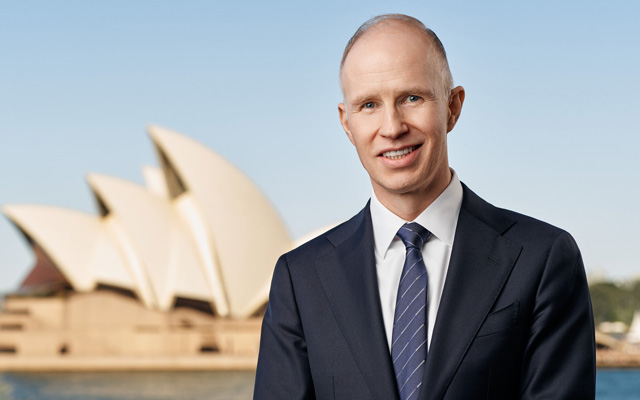
Kamal Munasinghe has been appointed general manager of Cinnamon Life at City of Dreams, while continuing his responsibilities as senior vice president – Colombo hotels at Cinnamon Hotels & Resorts.

A hospitality veteran with over three decades of experience, Munasinghe most recently served as COO of Cinnamon Hotels & Resorts, overseeing a portfolio of 17 properties across Sri Lanka and the Maldives.

He has held senior roles with Marriott, Hyatt, Mövenpick, Cinnamon Grand Colombo, and Alila Bangsar Kuala Lumpur.

Travel and tourism gallops confidently into the Year of the Horse

0
  • Hotel groups across Asia-Pacific are reporting record signings and strong development pipelines, underscoring confidence in the region’s growth

  • Travel spending remains resilient, with consumers continuing to prioritise travel despite geopolitical and economic uncertainties

  • Industry forecasts point to sustained growth, with rising international arrivals and strengthening intra-Asia travel through 2027

Asia-Pacific’s travel and hospitality sector continues to show strong growth momentum, supported by robust demand and expanding hotel development pipelines; photo by Jesse33

Despite a backdrop of intensifying geopolitical tensions, travel and tourism business leaders in Asia-Pacific are stepping into 2026 with optimism.

Coming off another year of  “exceptional year of growth and development momentum”, Marriott International’s Asia-Pacific excluding China (APEC) team expects strong performance in 2026 and forward.

The company’s 2025 performance report for the APEC region, issued on February 12, boasted the third consecutive year of record-breaking development activity. There were 187 organic deals representing more than 28,000 rooms signed in 2025, a 32 per cent year-over-year increase. And the company closed the year with more than more than 730 open properties across 22 countries in APEC, spanning 27 brands, and with more than 400 hotels and over 86,000 rooms in the development pipeline.

Commenting on the 2025 results, Rajeev Menon, president, Asia-Pacific excluding China, Marriott International, said he remains “pretty optimistic and bullish (about) our part of the region”.

Another lodging heavyweight in Asia-Pacific, Ascott, signed a record 19,000 units across 102 properties in 2025, marking 27 per cent year-on-year growth. Its portfolio expansion has resulted in entry into new destinations in the region, such as Wellington (New Zealand), Phuket (Thailand), Langkawi (Malaysia), and Lucknow (India).

Simon Cameron, founder of luxury travel agency, Lightfoot Travel, who sees continued appetite for travel among high-net-worth clients, said travel interest in Asia-Pacific destinations can be inferred from the rate of luxury hotel development in the region.

“Look at the number of Shangri-Las, Amans, Rosewoods and Mandarin Orientals that have opened or are opening here,” said Cameron, adding that airline expansion into new destinations are also spurring travel interest and contributing to tourism growth.

Travel spend holds strong
Simon Baptist, principal economist, Visa Asia Pacific, told TTG Asia that Asia-Pacific bears a “generally resilient outlook”.

“Our latest indicators, including the Spending Momentum Index (SMI) Report for 4Q2025, show a region moving in different gears: some markets are easing after very strong rebounds, while others are stabilising as cost pressures moderate. What’s most notable is that spending patterns are being shaped less by a single regional trend and more by local factors, from household purchasing power to price sensitivity and category‑level shifts,” Baptist explained.

Due to VUCA conditions, he expects spending confidence to remain uneven across Asia in 2026. While some households adjust to higher living costs, others are benefiting from stronger labour markets and stabilising economic conditions.

He added: “Across emerging Asia, we see spending growth normalising after a strong surge in 2024 and early 2025 in many markets. Indonesia and Thailand eased more sharply, while India and Vietnam moderated more gradually. This looks less like a slowdown and more like a return to a sustainable pace as post‑pandemic effects fade.

“So, even in a VUCA environment, consumption in Asia remains resilient, though drivers differ by market, ranging from tourism to wage conditions to inflation.”

In a world of growing geopolitical tensions, Menon regards “hospitality (as) the frontline troops of the economy” – it thrives in times of peace and stability.

“Yet, something has changed after the pandemic,” he said. “People are putting a higher priority on travel over other expenses. This isn’t a short-term trend. It is clear in every research and credit card data that around the world people are prioritising travel and experiences well over many other expense items on their day to day basis.”

Menon also highlighted the growing attention the region is getting for its economic progress, which has a positive impact on travel consumption.

“Due to investments in South-east Asia and South Asia from Western and Chinese sources, this region has seen a real emergence of the middle-class over the last six to eight years. These people are acquiring wealth, they are aspirational, they want to travel – all of which bode well for the world of hospitality,” he stated.

Illustrating the value of intra-Asia travel, Menon shared that Marriott International’s APEC room night mix was dominated by APEC travellers in 2025 – the segment made up 56.4 per cent of the total. India (29 per cent), Japan (15 per cent), Australia (11 per cent), South Korea (nine per cent), and Indonesia (eight per cent), formed the top five APEC source markets of travellers.

“Once, we had to rely heavily on other parts of the world to bring travellers to our region. Today, almost 57 per cent of the business in our world is being generated in Asia-Pacific excluding China,” he stated.

The economic importance of Asia-Pacific can be seen from the way global analysts are regarding the region. Menon noted that analysts used to look at how China’s activities were impacting the rest of Asia-Pacific a decade ago. In recent years, however, analysts have been reviewing APEC’s development as a standalone entity, and placing as much importance on the region when compared to China.

Travel tech firm Klook’s latest Travel Pulse research, conducted with consumer insights platform GWI and involving 11,000 respondents globally, supports observations of a resilient travel appetite. It found that 88 per cent of respondents plan on either maintaining or increasing their travel budgets in 2026.

“We hear a lot of talk about recession, intensifying economic pressure, and rising cost of living, so this intention to travel and spend is a very, very positive sign,” remarked Marcus Yong, vice president global marketing at Klook.

Singapore serves as a key hub in Asia-Pacific, where rising travel appetite and intra-regional flows continue to shape the tourism landscape

Travel intention is stronger among Asia-Pacific respondents (64 per cent) compared to those in the west (43 per cent). Travellers from Indonesia, India, Malaysia, the Philippines, and Vietnam are found to be most willing to splurge on travel this year.

The Singapore travel market is also one to watch, according to Yong, as residents in the city-state lead the way in terms of expected travel spend in 2026.

According to the Travel Pulse research, travellers from Singapore are expected to spend US$2,500 on their next trip this year, compared to US$2,089 and US$2,080 by travellers from Hong Kong and China, respectively.

“Asia continues to be the heartbeat of where all this is happening,” commented Yong, adding that Asia-Pacific travellers are two times more likely than their western counterparts to spend more on destination experiences.

Sixty-one per cent of respondents also intend to make a trip within the first half of the new year compared to 50 per cent who said the same in 2025.

While civil unrest have caused some clients to reconsider destinations, Cameron said there were many other destinations for travellers to choose from, allowing holidays to proceed.

Encouraging projections
Industry players’ confidence in Asia-Pacific’s travel and tourism health is backed by further data.

PATA’s Asia Pacific Visitor Forecasts 2025–2027 report, updated in mid-2025, tracked an encouraging and continuous improvement in international visitor arrivals (IVAs) to Asia-Pacific. IVAs are expected to reach 801 million by 2027 in a realistic medium scenario, up from 692 million in 2025.

The forecast, produced in collaboration with the Hospitality and Tourism Research Centre of the School of Hotel and Tourism Management at The Hong Kong Polytechnic University, acknowledges the volatile environment that travel and tourism operates in.

The study found that Asia-Pacific region’s tourism performance will return to pre-Covid levels even under a severe projection scenario.

Euromonitor International’s Top 100 City Destinations Index 2025, published last December, also highlighted strong growth in IVAs to Asia-Pacific. It marked Asia-Pacific as the second-largest region for international arrivals, recording the fastest growth globally with inbound trips rising 10 per cent to surpass 350 million.

Hot destinations, according to the index, include Bangkok, Hong Kong, Macau, Tokyo, Singapore, and Seoul.

It said that tourism momentum across the region was supported by visa relaxations, infrastructure upgrades, and high-profile cultural and sporting events, strengthening connectivity and enhancing visitor experiences.

South Africa ramps up Indonesia market push

0

South Africa is intensifying efforts to narrow a significant tourism gap with Indonesia, shifting its focus towards strategic repositioning and streamlined access.

Speaking at the ASTINDO Travel Fair 2026, Patricia de Lille, South Africa’s minister of tourism, noted that while 30,000 South Africans visited Indonesia in 2025, only 3,000 Indonesians travelled in the opposite direction.

From left: Patricia de Lille and South Africa Ambassador to Indonesia Mpetjane Kgaogelo Lekgoro; photo by Tiara Maharani

“That gap shows the opportunity. Our task now is to convert interest into actual arrivals,” de Lille said, describing Indonesia as a high-potential source market.

To support this growth, the ministry has prioritised simplifying travel logistics by removing bureaucratic hurdles. The long-standing challenge of visa access has been addressed through an Electronic Travel Authorisation (ETA) system, allowing Indonesian visitors to apply online and receive approval within 24 hours. De Lille noted that “the process is now digital, simple and fast”, adding that easier entry forms the foundation of a broader strategy to position South Africa as a premier Muslim-friendly destination.

This cultural positioning draws on a 350-year historical connection rooted in the Cape Malay community and the legacy of Imam Yusuf Makassar, an Indonesian religious leader who founded South Africa’s oldest mosque.

“We share a historical connection through Islam… That history continues to shape everyday life in South Africa in ways that Indonesian travellers can relate to,” de Lille explained.

To reinforce this bond, South Africa is exploring the development of a Muslim-friendly safari lodge in Kruger National Park, incorporating prayer facilities and halal dining into the wilderness experience.

Beyond the traditional safari offering, the destination is also seeking to showcase its cultural, historical, urban and adventure experiences to broaden its appeal.

Neliswa Nkani, Tourism South Africa’s hub head for the region, told Jakarta outbound travel agents during a workshop that more than 3,000 adventure activities are available, ranging from whale watching to bungee jumping.

Nkani also highlighted the country’s culinary diversity: “Durban is also known for curry. They are the best curries in South Africa.” New attractions such as the Kgodumodumo Dinosaur Interpretation Centre – which attracted 80,000 visitors in its first six months – further diversify the itinerary for history and science enthusiasts.

Despite these varied offerings, a key challenge remains overcoming perceptions around cost and modernisation. Lily Candakusuma, CEO of Cemara Tour and Travel, said South Africa often surprised visitors: “South Africa is not like what people think about Africa. It is modern, and feels like a Western country.”

While some travellers may opt for Europe due to budget concerns, Nkani argued that the rand’s favourable exchange rate against the rupiah makes local activities highly affordable, often costing less than US$5.

To address awareness gaps, South Africa plans to roll out targeted digital campaigns aimed at millennials and families unfamiliar with the destination.

Although direct flights remain limited, de Lille confirmed that discussions are ongoing with global carriers to improve connectivity via hubs such as Singapore and Kuala Lumpur.

By combining easier digital access with a culturally resonant narrative, South Africa aims to transform its longstanding historical ties with Indonesia into a modern tourism partnership. – additional reporting by Mimi Hudoyo

Ascott signs record 19,000 units across 102 properties in 2025

0

Ascott secured a record 19,000 units across 102 properties in 2025, representing 27 per cent year-on-year growth in new signings. The expansion brings its global footprint to more than 230 cities in over 40 countries, with more than 1,000 properties in operation and development, totalling over 176,000 units.

Growth was driven by asset-light expansion across higher-fee segments, including resorts, supported by franchise momentum and strong conversion activity. More than a quarter of units signed during the year were under franchise agreements, while over 38 per cent were conversions.

The groundbreaking ceremony for Ascott Shenton Way Singapore, set to open in 4Q2029, part of Ascott’s continued global expansion and brand evolution across key gateway cities

Ascott entered more than 10 new cities across Asia-Pacific and Europe. New market entries included Wellington and Taipei, alongside resort destinations such as Phuket, Phu Quoc and Langkawi, and emerging tier-two cities in India including Lucknow and Thanjavur.

In New Zealand, lyf will debut in Wellington with a 108-room property expected to commence construction by end-2026. In Taiwan, Ascott Nangang Taipei, a 185-room serviced residence, is scheduled to open in 1Q2027 within a mixed-use development in Nangang Software Park.

Resort expansion remained a priority, with 15 signings in locations including Phuket, Phu Quoc, Nha Trang and Bali, increasing Ascott’s resort portfolio to more than 50 properties. The group also expanded its branded residences portfolio, adding over 1,000 units across two projects in Phuket and Shenzhen.

Citadines surpassed 200 properties globally in 2025, while Oakwood secured 16 signings. Ascott’s collection brands expanded into new markets in Africa, Europe and the Middle East, including Morocco.

Ascott said the results reflect continued owner confidence, with approximately 30 per cent of signings coming from existing partners.

Serena Lim, chief growth officer, Ascott, commented: “As travel evolves into a lifestyle, consumers are seeking greater flexibility and choice in how they live, work and explore. Guided by insights from our owners and guests, we have pursued a deliberate growth strategy anchored in our flex-hybrid model and a differentiated suite of flexible living offerings. We are heartened by the robust growth in 2025, driven by strong owner commitment as reflected in portfolio deals across multiple brands.”

Ascott CEO Kevin Goh said: “2025 marked a key milestone for Ascott as we accelerated asset-light signings and strengthened revenue visibility. With these new signings, we now have the embedded income to exceed our S$500 million (US$370 million) fee target as pipeline projects turn operational.”