TTG Asia
Asia/Singapore Saturday, 22nd August 2026

Flores tourism moves toward recovery despite ongoing overland disruptions

0

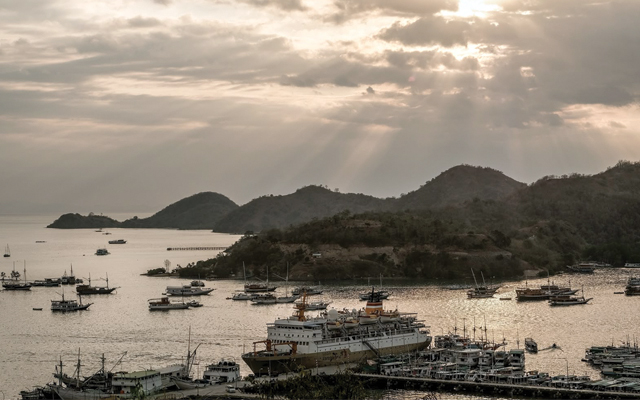
Tourism in Flores is gradually recovering following the August 15 earthquake, with Labuan Bajo and the main Komodo National Park circuit back in operation, although several inland destinations and transport links remain disrupted.

According to Indonesia’s Ministry of Tourism, activities at Padar Island, Loh Liang on Komodo Island, Loh Buaya on Rinca Island, and Gili Lawa have returned to normal, with daily visitor numbers exceeding 2,000 on August 17. Labuan Bajo Marina and Komodo National Park have reopened, while most major hotels in Labuan Bajo remain operational with restored utilities and no reported early checkouts.
Labuan Bajo and major Komodo National Park sites have resumed normal operations, though inland transport and remote destinations remain affected; photo by Indonesia’s Ministry of Tourism

However, recovery across the wider island remains uneven.

Ende Airport has cancelled all flights through August 20, while Wings Air services at Ruteng’s Frans Sales Lega Airport are suspended through August 22. Komodo Airport, Frans Seda Airport in Maumere, and Gewayantana Airport in Larantuka remain open with some schedule adjustments.

Several destinations remain temporarily closed for safety assessments, including Wae Rebo, Ruteng Pu’u, Kelimutu National Park, and Teluk Maumere Marine Nature Tourism Park. Nuca Molas has been permanently closed due to structural damage, while tourism areas in Ngada and Nagekeo continue to face power and communication outages.

Although main sections of the Trans-Flores route have reopened after landslide clearances, ongoing access disruptions continue to affect overland travel. Consequently, some travellers bound for Riung Marine Park cancelled or rerouted their trips, driving up accommodation demand in nearby Ruteng.

Leonardus Nyoman, director of Flores Exotic Tours, reported cancellations from group and online bookings, adding that marine excursions also faced temporary disruptions following a tsunami warning. Although the Indonesian Agency for Meteorology, Climatology, and Geophysics confirmed no tsunami threat, some boat operators remain hesitant to sail as aftershocks continue.

“Some captains don’t want to sail because they are still afraid,” Nyoman said, noting that operators are monitoring ongoing aftershocks. The Meteorology, Climatology, and Geophysical Agency recorded 2,768 aftershocks as of August 19, including 24 above magnitude five.

Oyan Kristian, chairman of the Association of the Indonesian Tours and Travel Agencies East Nusa Tenggara, noted that the impact on Labuan Bajo’s main circuit remains minimal.

“Until today there is no closure in the Komodo National Park area,” Kristian said.

While one of his existing guests cancelled their stay, Kristian noted that the wider impact was likely to be felt more on overland trips to other parts of Flores, where connectivity remains disrupted.

The reopening of remaining destinations will depend on ongoing safety assessments, with full road restoration key to island-wide recovery.
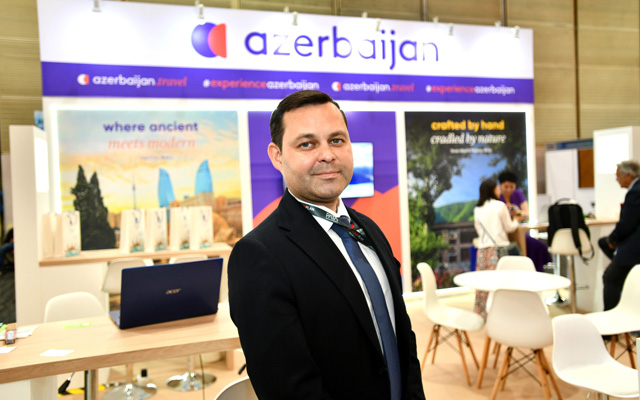
Azerbaijan targets Asian markets amid connectivity challenges

0

Azerbaijan is eyeing new target markets in Asia, setting its sights firmly on Malaysia, Singapore, Indonesia and China.

“We see great potential in Asia, and especially great potential in growing the Chinese market,” said Teymur Suleymanzada, deputy CEO of Azerbaijan Tourism Board.

Suleymanzada says Azerbaijan aims to establish itself as a key Umrah Plus stopover hub to attract Muslim travellers from across the region

He added that the destination recently opened a representative office in China.

In 2025, the country saw a 40 per cent year-on-year increase in arrivals from China, as well as a 36 per cent year-on-year rise in arrivals from Malaysia.

While there are direct flights connecting Azerbaijan with China, Azerbaijan’s ability to tap fully into Malaysia, Singapore and Indonesia is hampered by the lack of seamless air connectivity.

“We believe that air connectivity is one of the driving tools that will enable more visitors from these countries,” he said, adding that talks are taking place to establish a direct route from Malaysia to Azerbaijan.

Suleymanzada told TTG Asia that Azerbaijan Tourism Board has launched marketing campaigns to position the country as an official Umrah Plus stopover hub for religious tourists, which will appeal to Muslim pilgrims.

“We want to become an active part of Umrah Plus and are looking to expand this project in the future,” he said.

While Azerbaijan is a majority Muslim country, it is secular. It ranks 27th out of 150 destinations globally in the Mastercard-CrescentRating Global Muslim Travel Index 2026, achieving an overall score of 58 out of 100 as a Muslim-friendly travel destination.

Suleymanzada also sees potential in building interest through Azerbaijan’s role in the historical Great Silk Road. For over 2,000 years, Azerbaijan sat at the crossroads of the most important trade route that linked China and India to Europe.

He noted that attractions – such as the UNESCO-listed mountain town of Shaki, Karvansaray and Khansaray – on the Great Silk Road are presently very popular with Chinese tourists.

“We have so many things in common,” he remarked.

Sarawak repositions as entry point to Borneo

0

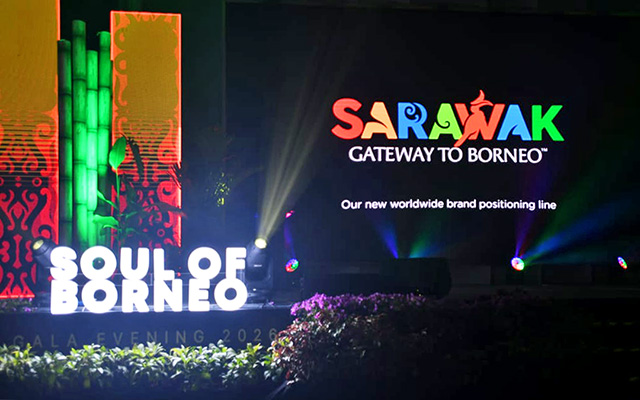
Sarawak marked a defining moment in its tourism journey with the unveiling of its refreshed destination identity and new tourism tagline, Sarawak: Gateway to Borneo, which replaces the former tagline, Sarawak: More to Discover, introduced in 2019 in conjunction with the Visit Sarawak campaign.

The new tourism tagline was revealed during the Soul of Borneo Gala Dinner on August 19, in the presence of Sarawak’s Premier, Abdul Rahman Zohari Openg.

The updated branding reflects Sarawak’s focus on heritage, biodiversity, and community-led tourism development

The refreshed destination identity reflects Sarawak’s continued evolution as a destination that honours its rich heritage and biodiversity while embracing innovation, connectivity, and new opportunities under the state’s broader transformation agenda, the Sarawak Tourism Board said in a press statement.

Sarawak: Gateway to Borneo embodies the state’s aspiration to become the natural entry point to discovering the island of Borneo.

It invites travellers to begin their Bornean journey in Sarawak, where authentic indigenous cultures, UNESCO-recognised heritage, world-renowned biodiversity, vibrant festivals, and meaningful connections with local communities come together in one destination.

Anchored by the new destination brand, Sarawak remains committed to purposeful tourism growth by creating experiences that benefit local communities, celebrate cultural authenticity, and safeguard the state’s natural environment for future generations.

At the recently concluded PATA Travel Mart, Sarawak was also recognised as a Grand Title Winner at the PATA Gold Awards 2026 under the Marketing category for its Guinness World Records Title – Longest Cumulative Distance by a Remote-Controlled Multirotor/Drone Relay initiative.

DTH Travel expands slow rail journeys across Asia

0

DTH Travel is expanding its portfolio of rail journeys across Asia as part of its focus on slow travel and lower-carbon tourism.

The DMC is preparing to launch the exclusive 14-day The Great Train Journey, travelling on the modern EMU high-speed railway from Laos into China’s Yunnan province before continuing to Vietnam, with stops at key destinations along the route.

DTH Travel’s 14-day Great Train Journey combines rail travel across Laos, China and Vietnam with immersive cultural experiences

Earlier this year, DTH Travel also introduced its eight-day Peninsular Train Surfing itinerary, which begins in Singapore before travelling through Johor Bahru, Malacca, Kuala Lumpur, Ipoh and Penang by rail.

Group director of sales Marjorie Aquino said more rail programmes are being developed for launch this year following the positive response to the Blue Jasmine Train in Thailand, which debuted last November.

Aquino told TTG Asia that the itineraries are designed to offer a slower pace of travel while encouraging visitors to engage more deeply with local communities and culture.

“Our programmes are really personal and hands-on, not just hop on, hop off. Travellers get to experience the destination, not only farming or a cooking class but an immersive cultural experience. They really get to experience the place and the people, not just taking photos then leave.”

She added: “We want to promote responsible tourism with authentic local experiences, so we only work with competent tour guides with expertise in the local communities.”

DTH Travel’s rail journeys combine overnight train travel with boutique hotel stays, guided excursions and exclusive experiences. On the Blue Jasmine Train, scheduled to depart in November and December, guests enjoy a private visit to Jim Thompson’s factory and travel aboard a restored 1960s sleeper carriage gifted by Japan to Thailand, featuring more than 2,000 Jim Thompson furnishings and décor.

Community-driven decision-making strengthens long-term tourism benefits

0

Working closely with local communities and giving them a genuine role in decision-making is key to creating authentic tourism experiences, according to tourism experts.

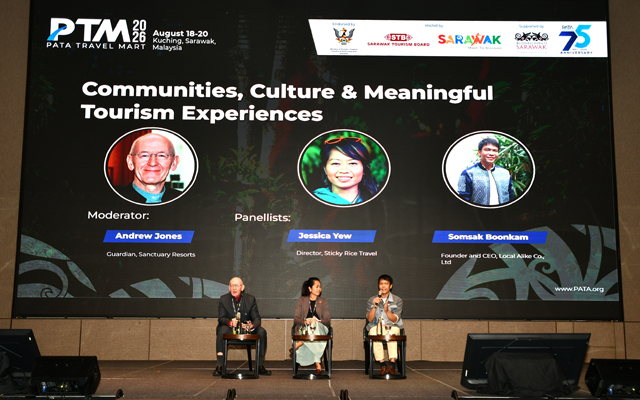
Jessica Yew, director of Sticky Rice Travel, said meaningful travel should leave a lasting benefit for communities after visitors have gone, with tourism income staying locally and residents gaining new skills and exposure.

Tourism experts discuss the importance of involving local communities in decision-making

“Meaningful travel is what stays behind after visitors leave. Rather than being the backdrop, the community is the main author of the story.”

She said communities should be fully involved in tourism activities and positioned as decision-makers rather than simply being consulted. Tourism operators should also recognise that there is no one-size-fits-all approach to community-based tourism.

Yew also highlighted the importance of creating opportunities for genuine participation rather than simply putting communities on display for visitors.

“It’s important to consider participation versus just performance because if there’s participation in something, that creates a lot more meaning than if it’s just a passive performance.”

Somsak Boonkam, founder and CEO of Local Alike, pointed out that a tourism experience should benefit both travellers and the communities they visit.

“Travellers have a deeper sense of understanding now not just to visit a place, but to talk to, learn from and build relations with communities,” he explained.

“On the local side, it’s about how to make sure we don’t only measure by economic value, but the opportunities to better their life and communities.”

However, Yew cautioned that developing successful community-based tourism products requires patience, long-term engagement and an understanding of local conditions.

“There’s a very fine line when working with communities because going into a community and attempting a collaboration takes a long time, it’s not an overnight game.”

She noted tourism operators also need to navigate language barriers, understand the dynamics of individual communities and determine which programmes are appropriate for each location.

Other considerations include building local capacity and providing training, as well as ensuring there is sufficient budget and resources to support the development of community-based tourism initiatives.

Minor Hotels brings Avani brand to Sabah

0

Minor Hotels will introduce its Avani brand to Sabah with the opening of Avani Kota Kinabalu in the first quarter of 2027, expanding its presence in Malaysia.

The 352-key hotel will form part of The Logg Luyang mixed-use development by KTI Landmark and will cater to both leisure and corporate travellers. Located about 10 minutes from Kota Kinabalu International Airport, it will provide access to the city’s business districts, residential neighbourhoods and visitor attractions.

Avani Kota Kinabalu will open in 1Q2027 as the hospitality anchor of The Logg Luyang mixed-use development, marking the brand’s debut in Sabah

The property is part of Minor Hotels’ strategy to grow its lifestyle portfolio in destinations with increasing domestic, regional and international demand. It will join Anantara Desaru Coast Resort & Villas as the group’s second property in Malaysia.

Developed by KTI Landmark, The Logg Luyang combines hospitality, commercial and lifestyle components, with Avani Kota Kinabalu serving as the development’s hospitality anchor.

The hotel will feature 352 guestrooms for business, leisure and extended stays. Facilities will include five dining venues, including an all-day dining restaurant serving Sabahan, Malaysian, Korean and international cuisine, a Chinese restaurant highlighting Sabah Hakka flavours, a lobby lounge, a bakery café and the rooftop SEEN Restaurant & Bar.

The hotel will also offer meeting and banquet facilities, an infinity pool and a gym, with nearby Tun Fuad Stephens Park providing access to outdoor recreation.

Winston Gong, general manager of Avani Kota Kinabalu, said: “Kota Kinabalu is evolving rapidly as a regional business and tourism hub, creating strong demand for a hotel that can move easily between corporate, leisure and social use. Our focus will be on delivering an efficient, locally relevant guest experience while building a property with genuine appeal to the city’s residents.”

New hotels: Conrad Nagoya, Fairmont Bangkok Sukhumvit and more

0
Conrad Nagoya

Conrad Nagoya, Japan
Conrad Nagoya has made its debut in Japan’s third-largest city, occupying the upper floors of The Landmark Nagoya Sakae in the heart of the city’s business and shopping district.

The hotel features 170 guestrooms, including 29 suites, all measuring more than 50m². Facilities include six restaurants and bars, an indoor swimming pool, spa and fitness centre, as well as meeting and event spaces, including a 342m² Grand Ballroom.

Directly connected to Sakae Station, the property is close to Nagoya Castle and Atsuta Shrine, while also providing a base for exploring central Japan destinations such as Ise and Takayama.

Fairmont Bangkok Sukhumvit

Fairmont Bangkok Sukhumvit, Thailand
Fairmont Bangkok Sukhumvit has joined Bangkok’s luxury hotel market as the brand’s first property in Thailand.

Located in Sukhumvit, the hotel features 474 guestrooms and suites, seven dining venues, Fairmont Spa, fitness facilities and more than 2,000m² of meeting and event space across three floors. Family-friendly accommodation and pet-friendly rooms are also available.

The property is close to Sukhumvit’s shopping, dining and entertainment districts, providing easy access to one of Bangkok’s busiest neighbourhoods.

Courtyard by Marriott Ghaziabad

Courtyard by Marriott Ghaziabad, India
Courtyard by Marriott Ghaziabad has become the brand’s first hotel in Ghaziabad, located in the city’s Rajnagar Extension commercial and residential district.

The hotel offers 106 guestrooms and suites, alongside an all-day dining restaurant, lobby lounge and bar, outdoor swimming pool, spa, fitness centre and more than 740m² of meeting and event space.

The property is about an hour from Indira Gandhi International Airport and 20 minutes from Ghaziabad Railway Station. Nearby attractions include Akshardham Temple, India Expo Mart and shopping districts in East Delhi.

Radisson Hotel Chateau de Bangkok

Radisson Hotel Chateau de Bangkok, Thailand
Radisson Hotel Chateau de Bangkok occupies the former Chateau de Bangkok in the city’s Ploen Chit district following an extensive refurbishment.

The hotel offers 178 guestrooms and suites, including long-stay accommodation with kitchenettes. Facilities include three dining venues, an outdoor swimming pool, fitness centre, spa and three meeting and event spaces, with the largest catering to around 250 guests.

Located 400 metres from Ploenchit BTS station, the property provides convenient access to Bangkok’s business districts, shopping areas and diplomatic quarter, while Suvarnabhumi and Don Mueang airports are within a 40-minute drive.

Responsible tourism development brings real impact for three Asian destinations 

0

Three destination leaders demonstrated the positive outcomes of responsible tourism development, with results showing an impact on local host communities.

Representatives from Sarawak, Thailand and Macao presented their case before an audience at the PATA Travel Mart 2026 Knowledge Forum on August 18.

Tourism authorities in Macao, Thailand, and Sarawak showcase community-first initiatives driving sustainable development across Asia

Maria Helena de Senna Fernandes, director, Macao Government Tourism Office, outlined the strategic vision for Macao to become a “world centre for tourism and leisure” through integrated development and community involvement.

“We want to make tourism sustainable and relevant to our people. We are striving to make Macao a good place for people to live in, and at the same time a good place for people to visit,” said Fernandes, adding that this vision is not Macao’s alone, but also written into China’s national development plan.

This approach is seen in Macao’s “tourism-plus strategy”, which combines the advancement of tourism with other sectors such as culture, e-commerce, wellness, and technology.

Sharing an example of how culture and the local community are brought into Macao’s tourism development, Fernandes said the destination’s historic streets are turned into a living stage where visitors can experience traditions, local flavours and see for themselves the peaceful co-existence of Chinese and Western cultures. Old districts are revitalised through street art exhibitions, cultural fairs, and music performances, while a free shuttle bus service connects several resorts with local attractions.

“We want (our people) to become spirits of tradition. They have to take ownership of tourism and feel that they are part of making the city more welcoming for our visitors,” Fernandes explained.

Siripakorn Cheawsamoot, director-general, Designated Areas for Sustainable Tourism Administration (DASTA), a government agency in Thailand, introduced the Nine Designated Areas for Sustainable Tourism across the country, with each being given a unique set of assignment objectives.

For example, Koh Chang Archipelago and Vicinity was designated in May 2024 as DASTA’s first assignment, and the Thai cabinet’s order was to develop the region into a world-class destination in carbon neutral tourism.

Siripakorn shared that DASTA’s vision is built on 4Cs – Community’s benefit, Conduct infrastructure plan, Comply with international standard, and Cross-sector collaboration. The outcomes of assignments are measured against several KPIs, including income distribution, well-being of people living in the designated areas, growth in tourism-related occupations and employment, and tourists’ happiness, using data collected from 45 tourism communities.

“We see that tourism revenues have grown. Ten to 20 per cent of revenue is being used for children’s scholarship and tuition fees. The happiness indexes for both community residents and tourists have gone up. Jobs have increased; we got 200 new jobs last year,” he said, adding that infrastructure investments have also boosted the tourism potential and carrying capacity of designated areas.

When asked by session moderator Yang Li, head of public affairs, APAC, Booking.com for the most crucial KPI, Siripakorn pointed to local community indicators, as these determined the likelihood of young locals staying to build their lives in their community. Improved quality of life would also encourage the Thai diaspora to return to contribute to local and national development.

Morshidi Fredrick,  permanent secretary, Ministry of Tourism, Culture and Performing Arts, Sarawak, conveyed the state’s goal for tourism to build a lasting legacy, where Sarawak’s “diverse communities, culture and nature” are leveraged as assets to turn visitors into loyal repeat guests.

“Our goal is (for travellers to) not just leave less behind but leave Sarawak better than before,” said Fredrick.

An example of how tourism in Sarawak is designed for positive impact lies in the annual Rainforest World Music Festival, which concluded its 29th edition in June this year. A percentage of the festival’s takings is channelled into local environmental conservation and tree-planting initiatives, while a project to plant 10,000 trees to mark its 30th anniversary in 2027 has been accomplished to offset carbon emissions and repair damaged habitats.

Langkawi targets European and Asian markets to offset flight losses

0

Langkawi’s loss of two international flights in May, alongside the suspension of services from Bengaluru and Dubai, contributed to a year-on-year decline of around 200,000 tourist arrivals in 1H2026.

Singapore is currently the only international gateway with direct scheduled flights to the island, though China Southern Airlines will commence three weekly services from Guangzhou in December.

LADA and industry partners seek new air connectivity to rebuild international tourist arrivals

Waffa Wahida Zainol, manager of the Tourism Division at Langkawi Development Authority (LADA), said the island is working to rebuild and diversify its air connectivity. Plans include 20 direct charter flights from Warsaw between November and March 2027, alongside discussions with Batik Air to operate charters from Central Asia.

To encourage more services, LADA offers marketing support of up to US$20,000 to operators committing to at least 10 flights per season. The authority is also partnering with Malaysia Airports and Tourism Malaysia to attract carriers from China and India, including ongoing talks with Air India Express for a Delhi route.

Despite current airlift constraints, delegates at PATA Travel Mart 2026 noted that Langkawi maintains strong appeal through its natural attractions, UNESCO Geopark status, and quality accommodation.

Tricia Loh, country manager for Malaysia and Singapore at Discova, highlighted strong interest from France – supported by direct Malaysia Airlines flights between Kuala Lumpur and Paris – as well as Central Europe and the Baltics. Discova is also exploring combined itineraries linking the island with Kuala Lumpur and Penang for southern Chinese travellers.

Loh noted that European visitors typically stay four to five nights, attracted by year-round good weather and spacious accommodation.

The island’s resort sector is also expanding with the upcoming opening of the 251-room Hilton Burau Bay Langkawi Resort.

Meanwhile, the Malaysian Inbound Tourism Association is organising an October familiarisation trip for Chinese event planners, association leaders, and corporate buyers to highlight Langkawi’s business events potential.

AirBorneo grows flight network to support Sarawak’s tourism growth

0

AirBorneo, the airline owned by the Sarawak state government, has mapped out an expansion plan for its Asian service network, which will bring to life the tourism ministry’s ambition to make Sarawak the tourism gateway to Borneo island.

Abdul Karim Rahman Hamzah, minister of tourism, creative industry & performing arts, Sarawak, shared that AirBorneo has Indonesia’s Jakarta, Thailand’s Bangkok, and South Korea’s Jeju on the cards.

AirBorneo continues to build its international network, linking Kuching to regional travel hubs across Asia

The full-service carrier launched its first international service between Kuching and Singapore on July 22 this year.

Abdul Karim said the Kuching-Jeju connection made sense as Kuching is gearing up for a UNESCO Global Geopark designation come 2027, which would place it on par with Jeju, already a designated UNESCO Global Geopark since 2015.

“Furthermore, South Korea is a very good tourism source market. It is our top ninth market,” added the minister, who pointed to golf and education being strong magnets for inbound South Koreans.

Speaking at the PATA Travel Mart 2026 Knowledge Forum on August 18, Morshidi Fredrick, permanent secretary, Ministry of Tourism, Creative Industry & Performing Arts, Sarawak, stated that good air and land connectivity is crucial for the state to be seen as a tourism gateway.

Fredrick emphasised on the vastness of Borneo island, which is shared by several countries including Indonesia and Brunei, as well as Sabah, another Malaysian state.

He sees an opportunity for Sarawak to facilitate tourism access to all destinations in Borneo.

While AirBorneo facilitates international access into Sarawak, the Sarawak Pan Borneo Highway – commissioned by the Malaysian federal and Sarawak state governments and being progressively opened to the public now – enables travellers to “explore all parts of Sarawak by road”.

The Sarawak Pan Borneo Highway connects major towns, including Kuching, Sibu, Bintulu, and Miri, allowing travellers easy access via buses and cars, and to even enter Brunei, if they so wish, according to Fredrick.