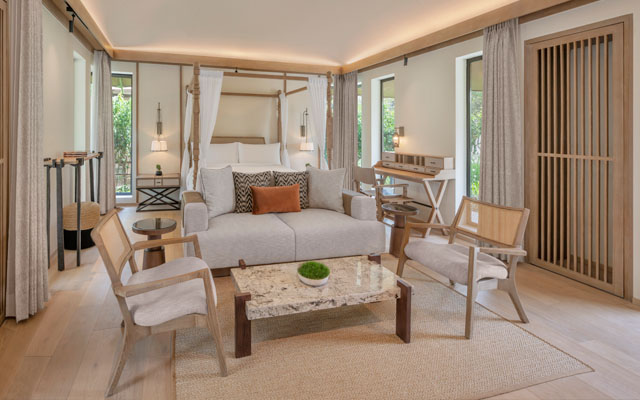
As tourism interest in Vietnam’s Phu Quoc island spikes, Regent Phu Quoc has chosen to capture the attention of guests with a series of expert-led art, wellness and culinary programmes that promise meaningful engagements.
These residency programmes feature different visiting artists, health care practitioners, and chefs throughout the year. A recent residency was led by Angie Tourani, a distinguished holistic health care practitioner, from March to April, coinciding with the International Women’s Month. Her menu of bespoke one-to-one healing experience was designed to offer guests the opportunity to slow down, reconnect, and honour both inner balance and the inspiring stories of women leading with purpose.
The Gallery at Regent Phu Quoc welcomes rotating artists in residence, offering guests a chance to see Vietnam through various art forms
Ongoing now is an art residency, Discover The Memory of Flowers, a solo exhibition by Vietnamese visual artist Pham Tuan Ngoc. Guests are invited to explore the natural cycle of a flower’s life through the lens of the ancient lumen print technique. This art engagement ends on October 31, 2026.
Bastien Pucheu, area director of commercial, IHG BIM Estate Vietnam, whose portfolio includes the luxury Regent Phu Quoc, said the specialist residency programmes were newly launched this year to “bring inspiring moments to our guests during their stay”.
The residency programmes also provide an opportunity to connect guests with local specialists in their craft, be it art or food, and discover Vietnam through different points of view.
“The travel and tourism industry talks a lot about experiential travel, and we agree that there is a trend of high-end clientele wanting to stay on longer in a hotel while exploring or living out a variety of experiences,” said Pucheu.
These residency programmes join Regent Phu Quoc’s immersive seasonal activities that are tailored to the island’s tropical climate. For example, during the June to October wet season – a time when the island gets “renewed through rain and beautiful weather”, according to Pucheu – guests activities adopt an unhurried pace and feature indoor experiences that range from guest chef showcases, printing workshops, and serene spa treatments.
When the dry season settles from June to October, activities take guests outdoors through Embrace the Sun programmes, such as morning cruises aboard its Serenity yacht.
Bruno Anon, resort manager at Regent Phu Quoc, told TTG Asia that guests typically stay for 3.5 days during the rainy season and five days during the dry, high season.
“Regent Phu Quoc is considered a destination resort, where our guests stay in almost all their time in Phu Quoc. We offer a lot of activities that are designed for all ages. Our restaurants boast a highest capture rate because our guests who stay in all day also dine a lot with us,” Anon shared.
When asked if Regent Phu Quoc’s ever-changing calendar of activities had helped to build high repeat visits, Pucheu replied in the affirmative, but declined to cite numbers that define the proportion of repeat guests.
While the seasonal and limited edition activities are a strong magnet for repeat guests, Pucheu said “genuine and elevated service elements, the sense of space, and the sense of belonging” are what mattered most.
“We’ve got lots of team members and associates who are constantly named by our guests (for their outstanding service), and I know these are proud moments for Juan Losada, the general manager, as well as Bruno,” Pucheu said.
Regent Phu Quoc was recently honoured with a regional Virtuoso award in Greater China for having shown the highest annual growth.
The long-held stereotype of Gen Z consumers as screen addicts, uninterested in traditional luxury, passive travellers and prone to impulsive trips has been challenged by Luxury Group by Marriott International APEC’s (Asia-Pacific excluding China) latest State of Luxury Travel report.
Rather than viewing Gen Z as a single traveller segment, the report identifies four distinct traveller profiles with different travel motivations, spending priorities and behaviours.
Connoisseur Traditionalists make up the largest Gen Z segment and place strong emphasis on classic luxury markers
Decisive travellers The study challenges the assumption that Gen Z consumers rely on others to plan and finance their trips. Findings show that more than half of Gen Z respondents fund their own trips entirely, while nearly half plan everything.
They take an average of 3.2 domestic trips and 2.9 international trips every year. For short getaways, 3.3 nights and 3.7 nights are favoured for domestic and international trips respectively. For longer holidays, Gen Zs tend to spend 7.1 nights on domestic trips and 8.8 nights on international trips.
Gen Zs increasingly want to explore the world together – immediate family are their favourite travel companions (51%). Trips with small groups of friends are up 17%, while larger friend gatherings are up 8%.
Precise expectations Safety, impeccable service, personalisation, prestige and high-quality accommodation are non-negotiables for this demographic, but new expectations are emerging.
The State of Luxury Travel report notes that engagement with local communities and cultural immersion represent the most important factors in their choice of travel destinations, at 87%. Close behind are discovering new food or culinary experiences (86%), proximity to nature (86%) and restorative wellness experiences (85%).
Other influencing factors include thoughtful architecture and design, and the ability to purchase locally made products.
Gen Zs dislike potential friction in travel, citing “wasted time” and “communication gaps” as their key pet peeves.
Different identities Instead of being a single profile, Gen Z consumers span four distinct traveller tribes: Connoisseur Traditionalists (34% of Gen Z); Future Proofers (30% of Gen Z); Quiet Luxurists (20% of Gen Z); and Cultural Reclaimers (16% of Gen Z).
Connoisseur Traditionalists make up the largest Gen Z cohort in APEC, and are most concentrated among travellers from Singapore and Thailand, and least among those from Vietnam.
They pay close attention to classic luxury markers, such as a hotel’s brand and reputation, Michelin-starred restaurants, butler service and storied brand names.
They find satisfaction in everything being precisely organised, with 46% conducting their own research to help shape their itineraries, while 45% use online travel platforms and 40% choose professional planners. The majority (66%) book trips at least one to two months ahead, and show relatively little appetite for spontaneity.
They are drawn to new hotels and restaurants, value loyalty programmes, favour trips with immediate family, and gravitate towards Asian destinations.
Next up, Future Proofers form 30% of the Gen Z demographic, and are most concentrated among travellers from Australia and India, and least represented in Japan and Thailand.
They regard travel as an investment in wellness, restorative health and preventative care. Hence, 92% expect in-room wellness facilities, 97% make use of wellness facilities in hotels, and 95% value the availability of in-house healthcare experts. Hotel pools, spas and gyms influence hotel selection, while 93% say that non-alcoholic drinks at bars are important.
They travel solo or in small groups of immediate family or friends, and their destination choice is shaped by access to advanced wellness infrastructure and pre-booked specialist appointments. Their preferred holidays include dedicated spa retreats (56%), beach holidays (53%) and city breaks (43%). A strong connection to nature also underpins their travel decisions, with 95% saying it is important.
Luxury hotels and private villas are preferred (61% and 55% respectively), while exceptional design is also key.
They draw travel recommendations from social media (41%), classic online search (37%), and word-of-mouth recommendations (33%).
The third segment, Quiet Luxurists, make up 20% of the Gen Z demographic, and are strongly represented in Indonesia and least among travellers from Thailand.
They gravitate towards privacy, nature, restorative retreats, low-friction travel and low-technology interaction. They are spontaneous, with 98% having booked a trip within two weeks of departure, and favour less-discovered regions, with 86% wanting somewhere new.
They tend to book longer stays, prioritise sleep and wellness programmes, select accommodation that offers genuine privacy, and travel alone or with small groups of friends.
They are also highly engaged with hotel brands, as 50% book directly through loyalty programmes and 41% book direct.
Finally, Cultural Reclaimers make up 16% of the Gen Z demographic, and are most strongly represented among travellers from Vietnam and Japan, and least among those from India.
They prioritise Asian heritage, family time, place-based discovery and local culture. This tribe leads in family trip planning (100% will do so, compared with 43% of all Gen Z respondents), and 65% are the primary paymaster, compared with 36% of all Gen Z.
They are slow and immersive travellers, preferring to spend extended periods away to get the most from every experience.
The majority (89%) are inspired by places they have seen online, while other sources include private travel planners (31%), online travel agencies (29%), AI tools (29%) and social media (28%).
Most lean towards luxury hotels (74%), with spending priorities focusing on hotel design (26%), location (26%), and authentic local experiences (25%). They also rely on hotel facilities to enhance their trip experience – 92% expect wellness offerings, 91% want award-winning restaurants or bars, and 88% want immersive experiences.
Cultural Reclaimers value what they learn about a place more than social media likes
Impact on luxury hospitality Oriol Montal, Marriott International’s managing director for luxury in Asia-Pacific (excluding China), told TTG Asia that it was important to understand Gen Z consumers, as the findings provide guidance for hotel developments over the next five to 10 years.
The demographic is widely recognised as the next major consumer market, with a report by NielsenIQ, GfK and World Data Lab noting that Gen Z’s spending power is expected to grow to US$12 trillion by 2030.
The four distinct Gen Z identities will help the Luxury Group by Marriott International APEC determine the products, services and experiences that would best resonate with each group.
“With Future Proofers, we know that the JW Marriott brand’s Mindful Rooms, which we debuted at JW Marriott Tokyo earlier this year, will be something that is relevant to them. With Cultural Reclaimers, the Luxury Collection brand would speak to them, as properties are opened in remote destinations,” Montal said.
At the same time, a single brand could also cater to all Gen Z tribes. He pointed to The Ritz-Carlton Reserve collection, where properties boast spacious wellness facilities that appeal to Future Proofers, immersive destination programmes that Cultural Reclaimers value, a high level of space and privacy that is suited to Quiet Luxurists, and a reputation for service excellence and luxury that Connoisseur Traditionalists demand.
He noted that with seven different brands across the Luxury Group by Marriott International APEC, the company is well positioned to “cater to all the different Gen Z tribes”.
However, Montal believes that no single Gen Z consumer will sit within one tribe, as their travel preferences and consumption priorities could change depending on the purpose of their trip and their travel companions.
“The traveller could show characteristics of the Quiet Luxurists segment when travelling solo, but would display Future Proofers tendencies when on a wellness retreat with close friends,” explained Montal.
Hence, it is more important that hospitality brands and operators understand the many layers that make up the Gen Z consumer, tailor dedicated experiences for the four Gen Z tribes, and move beyond a single luxury proposition.
Montal underscored the importance of hyper-personalisation in winning over Gen Z guests, saying that “the secret of success would come from pre-arrival processes” that allow hotels to capture as much information as possible on the guest’s travel intentions.
Forward decisions Montal shared that findings from the 2026 State of Luxury Travel report are now being considered in discussions about upcoming infrastructure changes.
“We are having conversations about the gym of the future, and believe that these facilities should be 30% larger because of what our guests are demanding today. We also recognise the growing importance of the family room product, so that is something we are working on today,” he said.
These changes will take time, as the company will first create a prototype, which will then be refined before being rolled out across properties.
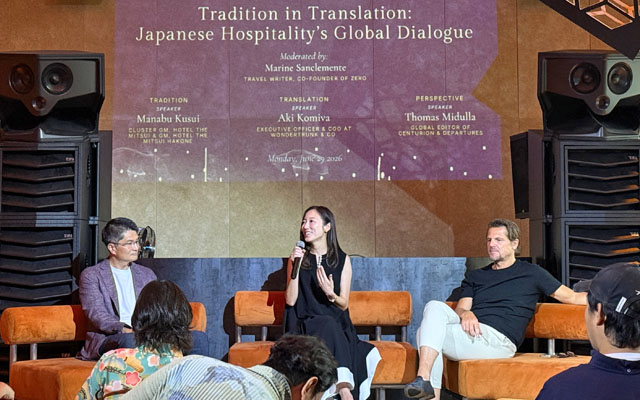
Japan’s tourism industry should adopt greater flexibility in service while preserving the values at the heart of its hospitality as international visitor expectations evolve, panellists said during the Traditions in Translation: Japanese Hospitality’s Global Dialogue on June 29, 2026 at ILTM Asia Pacific 2026.
“Respectfulness will never change. That is the foundation of Japanese hospitality,” said Manabu Kusui, general manager of Hotel The Mitsui Kyoto. “What I’m trying to add is flexibility.”
Panellists discussed how Japan can adapt to changing visitor expectations while preserving the values that define its hospitality
He said empowering front-line staff to make thoughtful decisions, such as allowing guests to check in early when rooms are ready rather than rigidly following set rules, helps bridge Japanese tradition with Western expectations.
Aki Komiya of destination management company Wundertrunk & Co. said the foundation of Japanese hospitality lies not only in omotenashi (wholehearted hospitality), but also omoiyari – empathy and consideration for others.
“As we become more international, we can adapt to make travellers feel comfortable. But I hope the Japanese people themselves don’t change. Our culture, our values and the way we care for others are what make Japan unique,” she said.
The discussion also explored how social media has reshaped travellers’ perceptions of Japan. Komiya said the challenge is to balance meeting visitors’ expectations while introducing them to places they may not have otherwise discovered.
“At the end of the day, what matters is that they go home loving Japan,” she concluded.
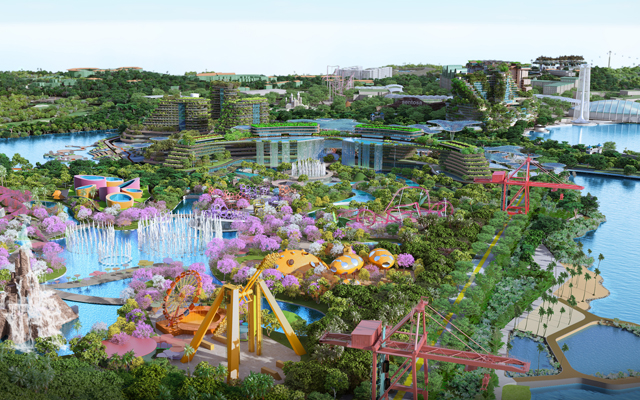
Sentosa Island and neighbouring Pulau Brani will undergo a 20-year transformation under the newly unveiled Greater Sentosa Master Plan (GSMP), which aims to double the size of Singapore’s island destination and significantly increase visitor numbers.
Announced on Wednesday by the Sentosa Development Corporation (SDC), the plan will integrate the 120ha Pulau Brani into the precinct, introducing new attractions, transport infrastructure and expanded green spaces over the next two decades. The strategy is designed to encourage visitors to stay longer and return more frequently, under the vision of Sentosa as Singapore’s “Island Playground and Sanctuary in a Global City”.
Artist’s impression of Brani West, where new entertainment attractions are planned as part of the Greater Sentosa Master Plan; photo by Sentosa Development Corporation
“The Greater Sentosa Master Plan is about shaping the future of Sentosa while staying true to what Singaporeans and visitors from all around the world have always loved about the island,” said Thien Kwee Eng, CEO of SDC.
“We want to create the next generation of world-class experiences inspired by our beautiful coastlines, our greenery, our heritage, our sense of escape as well as the Singapore identity.”
Following the opening of the Sensoryscape walkway in 2024, the first completed project under the master plan, the next major milestone will be delivered by 2030.
This phase includes the Resorts World Sentosa 2.0 expansion, featuring the Waterfront Lifestyle Development and Super Nintendo World at Universal Studios Singapore. Visitors will also see the opening of Imbiah Canopy, a hilltop destination on Mount Imbiah with attractions, retail and dining, as well as the Imbiah Lookout Walk, a sheltered elevated walkway linking Sensoryscape with Imbiah Lookout, surrounding trails and a new treetop skywalk leading to Siloso Beach.
The 2030 phase will also include a redevelopment of Siloso Beach and a floating boardwalk offering an islet-hopping experience.
Beyond 2030, development will shift to Brani West, where SDC is exploring new entertainment attractions with international partners. Longer-term plans also include connecting the island’s forests into a continuous green network that links directly with the Southern Ridges on mainland Singapore.
Currently, international visitors account for 80 per cent of Sentosa’s visitors, with domestic visitors making up the remaining 20 per cent. Once completed, the GSMP is expected to attract twice as many visitors as the island receives today.
To support international growth, SDC will align its strategies with the Singapore Tourism Board’s priority source markets while developing new tourism products and experiences. Domestic demand is also expected to benefit from the Greater Southern Waterfront project, which will add around 100,000 new homes, as well as the opening of Changi Airport Terminal 5 by 2035.
The island’s transport network will also be upgraded. A new gateway, known as the Island Heart, will become the main arrival point for visitors and will be the only reclaimed land within the project. From there, a high-capacity surface tram system will replace the Sentosa Express monorail, while alternative transport options, including water taxis, are also being explored.
Along Sentosa’s coast, Siloso, Palawan and Tanjong beaches will be progressively upgraded with coastal protection measures. Future plans include new beach clubs and treetop dining concepts across the three waterfronts.
To gather public feedback, SDC is launching a travelling exhibition titled Your Island. Reimagined., featuring interactive AI previews of the master plan. The exhibition kicks off at VivoCity from July 3 to 5, 2026, before moving to Our Tampines Hub from July 22 to 27, Jurong Point from August 19 to 23, Waterway Point from September 23 to 27, and returning to Sentosa in October. Admission is free, with attraction promotions and dining vouchers available for visitors.
Royal Caribbean has partnered with Roald Dahl’s Marvellous Children’s Charity ahead of the European debut of Legend of the Seas in July 2026.
The partnership coincides with the introduction of the Broadway musical Charlie and the Chocolate Factory onboard the new ship and will raise funds for the charity’s network of specialist Roald Dahl Nurses, who support children with complex, lifelong illnesses and their families across the UK.
The partnership will support fundraising for Roald Dahl Nurses during Legend of the Seas’ inaugural European season
Launching ahead of National Children’s Nurses Day on June 30, the initiative will include onboard donation opportunities and fundraising activities throughout Legend of the Seas‘ inaugural European season. Funds raised will support more than 250 specialist nurses working across NHS Trusts.
As part of the partnership, Royal Caribbean will also host Roald Dahl Nurses on a four-night preview sailing before the ship’s official debut on July 4, giving them the opportunity to experience the vessel ahead of its maiden voyage.
Following its European season, Legend of the Seas will reposition to Fort Lauderdale in November 2026 to operate six-night Western Caribbean and eight-night Southern Caribbean itineraries, including calls at Perfect Day at CocoCay in The Bahamas.
Gerard Nolan, vice president and managing director, EMEA, Royal Caribbean, said: “With Roald Dahl’s Charlie and the Chocolate Factory headlining entertainment on Legend of the Seas, partnering with the charity felt like a natural fit as we debut the newest family holiday in Europe.”
Louise Griew, chief executive of Roald Dahl’s Marvellous Children’s Charity, said: “Our Roald Dahl Nurses make a profound difference to the lives of children with complex, lifelong conditions and their families and communities.
“We’re delighted to be partnering with Royal Caribbean as Legend of the Seas begins its European journey.”
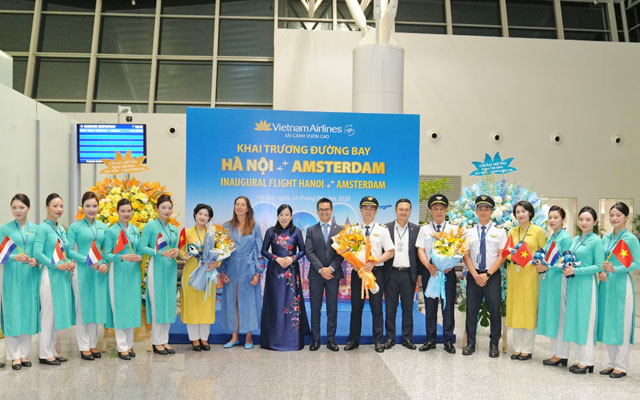
Vietnam Airlines now flies direct between Hanoi and Amsterdam
Vietnam Airlines launches Hanoi-Amsterdam route
Vietnam Airlines has commenced non-stop flights between Hanoi and Amsterdam, becoming the first Vietnamese carrier to operate direct services between Vietnam and the Netherlands.
The airline will operate three return flights a week on the route using Airbus A350 aircraft.
The launch expands Vietnam Airlines’ European network to 12 non-stop routes serving eight destinations: Amsterdam, Copenhagen, Frankfurt, London, Milan, Moscow, Munich and Paris.
Separately, the airline will increase Hanoi-Moscow services from three to four weekly flights from July 1, 2026.
Centrum Air
Centrum Air boosts India-Uzbekistan flights
Centrum Air has increased services between India and Uzbekistan to five weekly flights, strengthening connectivity between the two countries.
The additional frequencies are intended to meet growing demand for travel and provide passengers with greater flexibility and improved onward connections across the airline’s network in Uzbekistan and Central Asia.
The expanded schedule marks the latest growth in Centrum Air’s India operations following its entry into the market.
Air China and Singapore Airlines pursue joint venture
Air China, Singapore Airlines plan joint venture partnership
Air China and Singapore Airlines have signed a memorandum of understanding to establish a commercial joint venture partnership, paving the way for closer cooperation between the two carriers.
The agreement includes plans to expand their existing codeshare partnership to more destinations between Singapore and China, within China and beyond, subject to regulatory approvals. The airlines also intend to coordinate flight schedules, explore joint fare products, and pursue joint marketing and revenue-sharing arrangements.
The carriers will also deepen cooperation between Air China’s PhoenixMiles and Singapore Airlines’ KrisFlyer frequent flyer programmes, allowing members to earn and redeem miles across both airlines’ networks.
In addition, Air China and Singapore Airlines will explore cooperation in areas including ground handling, catering and in-flight service.
Philippine Airlines
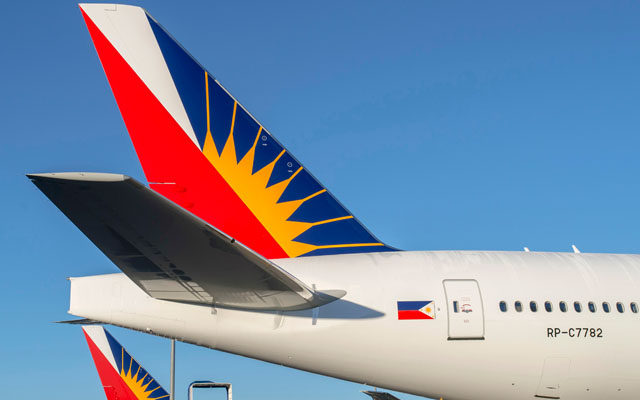
Philippine Airlines resumes Manila-Dubai flights
Philippine Airlines will restore non-stop flights between Manila and Dubai from October 2, 2026.
The airline will initially operate four weekly flights and plans to progressively restore the route to daily service as operational conditions allow.
The resumed service will strengthen connectivity between the Philippines and Dubai, which also serves as a gateway to destinations across the Middle East, Africa and Europe.
How are Asia-Pacific travellers changing, and what trends stand out most today?
Travellers across Asia-Pacific are becoming much more intentional about how they travel. Despite economic uncertainty and geopolitical developments, we’re not seeing people travel less. Instead, they’re planning more carefully, making practical choices and focusing on experiences that have personal meaning.
Our latest Visa’s 2026 Global Travel Intentions study shows that 63 per cent of travellers choose destinations within Asia-Pacific, drawn by familiarity, convenience and confidence. Increasingly, travel is being shaped by passion rather than simply the desire to take a holiday. Around two-thirds of respondents intend to travel for global concert tours, while more than half are interested in travelling for major sporting events. Another 37 per cent are motivated by authentic local experiences, whether that’s food, culture or heritage.
We’re also seeing travellers strike a balance between planning and spontaneity. While 79 per cent secure their accommodation before departure, many prefer to decide on dining, local transport and activities once they’re at the destination. They want the reassurance of having the essentials in place, but they also want the freedom to discover experiences along the way.
This tells us that travellers today are looking for journeys that feel personal rather than prescriptive, creating new opportunities for destinations to engage them throughout the entire travel experience.
How should destinations and travel businesses respond to these changing expectations?
The biggest shift is that digital readiness is no longer a competitive advantage; it’s becoming a basic expectation.
Almost all travellers in our study researched their trips online, while nearly half already use AI-powered tools during the planning process. That means destinations need to ensure they’re easy to discover wherever travellers are looking for inspiration, while providing accurate, relevant and engaging information throughout the customer journey.
Just as importantly, destinations need to understand what motivates people to travel. Consumers are increasingly choosing places that reflect their interests, whether that’s music, sport, gastronomy, wellness or local culture. Those that can package authentic experiences around these passion points, and make them simple to discover and book, will be better positioned to win travellers’ attention.
Technology certainly enables better travel experiences, but it’s the combination of digital convenience and meaningful local experiences that will set successful destinations apart.
One of the key Asia-Pacific findings of the Visa’s 2026 Global Travel Intentions study is that travellers increasingly research payment-related issues before departure, from security and card acceptance to exchange rates and transaction fees. What implications does this have for destinations and travel businesses seeking to build traveller confidence?
Digital payments are second nature to Asia-Pacific travellers. They expect the entire travel journey, from booking flights and hotels to paying for transport, shopping and dining at their destination, to be effortless.
As travellers become more practical and intentional, payment acceptance and security are no longer simply operational considerations; they have become part of the destination experience. In fact, our research found that nearly one in three Asia-Pacific travellers proactively researches payment information before travelling. Payment security is their biggest concern, cited by 33 per cent of respondents, while 27 per cent look at card acceptance, highlighting how important trust and convenience have become when choosing where to travel.
For destination marketers, this means travellers are evaluating not only the quality of attractions but also how seamless everyday spending will be once they arrive. Destinations that communicate secure, reliable and widely accepted payment options across transport networks, retail outlets and visitor attractions will be better positioned to build confidence and attract visitors. Removing friction from payments ultimately makes the overall travel experience more enjoyable and encourages visitors to spend with greater confidence.
Another finding is that nearly half of Asia-Pacific travellers are now using AI tools to find travel destinations and ideas. In your opinion, what should travel brands do to remain visible and relevant in this changing landscape?
AI is rapidly becoming the new front door for travel discovery. It will soon no longer be enough for brands and destinations to appear in traditional search results. As AI increasingly researches, recommends and eventually books travel on behalf of consumers, brands also need to be discoverable and readable by AI agents.
This shift is already well underway. Nearly half of Asia-Pacific travellers are using AI tools to discover destinations and generate travel ideas. AI is also influencing later stages of the decision-making journey, with 41 per cent using it to access reviews and recommendations, while 35 per cent rely on AI to search for tours and experiences. This demonstrates that AI is no longer just an inspiration tool; it is becoming a trusted travel planning companion.
To remain competitive, travel brands should ensure their content is clear, credible and well-structured so AI platforms can easily understand and recommend it. They also need to communicate what differentiates them, whether that’s pricing, accessibility or unique local experiences that cannot be found elsewhere. Collaborating with trusted travel platforms and partners will become increasingly important, as AI systems are more likely to prioritise reliable and authoritative sources when making recommendations.
This remains a new frontier for the travel industry, and organisations will adapt at different speeds. At Visa, we are supporting our clients and partners through AI advisory services that help them evolve from traditional search engine optimisation towards AI discoverability, enabling them to remain visible as traveller behaviour continues to evolve.
The Visa-Trip.com collaboration was launched to bring together travel discovery, personalised offers and seamless payments. How do you see this creating value for travellers, travel businesses and destinations across Asia-Pacific?
Our collaboration with Trip.com Group brings together two complementary strengths: trusted digital payments and one-stop travel discovery built around travellers’ passions and interests. Together, we are creating a more connected travel journey that links inspiration, personalised offers and seamless payments from the moment travellers begin planning until they arrive at their destination.
Trip.com Group has become a global Anchor Partner for Visa Destinations, our new experience-led programme that connects Visa cardholders with curated experiences inspired by local culture and authentic destination insights. Through this integration, travellers using the Trip.com Group ecosystem will be able to discover experiences that better reflect their interests, while Visa Infinite cardholders will enjoy exclusive Trip.com Group offers alongside access to Visa’s portfolio of sports, music and lifestyle partnerships.
The collaboration also reflects how traveller expectations are evolving. Consumers increasingly want discovery, booking and payments to work together seamlessly rather than as separate parts of the journey. By combining Trip.com Group’s travel ecosystem with Visa’s trusted global payment network, we can help travellers move more confidently across borders while creating new opportunities for destinations and travel businesses to reach high-value travellers through personalised experiences and offers.
Ultimately, we see this as benefiting the entire travel ecosystem by making travel more convenient, more rewarding and more relevant to today’s experience-driven traveller.
In a flurry of luxury destination branding, Switzerland Tourism (ST) is opting for understated and meaningful promises over loud declarations with its new Swiss Silent Luxury positioning.
The concept was unveiled at ILTM Asia Pacific as ST looks to strengthen its appeal among affluent travellers seeking privacy, authenticity and meaningful experiences.
Pascal shares that Swiss Silent Luxury is built on three pillars: alpine nature, discretion and privacy, and excellence in service and craftsmanship
Pascal Prinz, director of the global luxury market at ST, said the Swiss approach to luxury “is not about bling bling or bla bla”. Instead, it offers “peace of mind” and lasting perfection.
“And that is exactly what the most discerning travellers in Asia-Pacific are now seeking,” said Prinz.
Swiss Silent Luxury follows the establishment of ST’s dedicated Global Luxury Market last year to strengthen Switzerland’s position as a leading luxury destination.
The concept is a deliberate counter-positioning that underscores authenticity, discretion, alpine nature and exceptional quality. While much of the luxury market competes on scale, spectacle and status symbols, Switzerland offers something rarer: nature without crowds, service without theatre, and craftsmanship without noise.
“We know what we do best: we take pride in treating our guests very well,” he remarked.
Prinz outlined three pillars of Swiss Silent Luxury.
“One, alpine nature that offers year-round landscapes as well as adventure and stillness without the crowds. Whoever is tired and exhausted from the noise of the big city (are welcome). Here, we give you release. As you enjoy our nature, you will feel younger and you will look better.
“Two, discretion and privacy. This is understated hospitality where exceptional quality speaks for itself, free from intrusion or performance. When celebrities and famous people come to Switzerland, they know we will treat them with the same love and care as we do to everybody else. We let them be themselves.
“Three, excellence in service and craft, where quiet precision, generational expertise and timeless reliability define Swiss hospitality at its best. We know that the chocolate has to be good, the wine has to be good, and the cheese has to be good.”
To support the strategy in Asia-Pacific, ST will host the Luxury Embassy Asia Roadshow from July 5 to 10 in Bangkok, Beijing and Delhi. The programme includes VIP receptions at Swiss embassy residences and travel trade workshops.
The Swiss Silent Luxury concept will also feature at the next Switzerland Travel Mart Luxury in St Moritz from March 22 to 24, 2027.
The initiative supports ST’s Travel Better strategy, which promotes Swisstainable tourism, longer stays, deeper exploration and year-round travel.
Prinz said luxury travellers contribute to year-round tourism and help improve visitor distribution, as they tend to avoid crowded destinations in favour of quieter regions. They also stay longer and are more likely to seek local and sustainable products and experiences.
He added that Swiss Silent Luxury will support Switzerland’s goal of achieving higher-value tourism growth with fewer visitors.





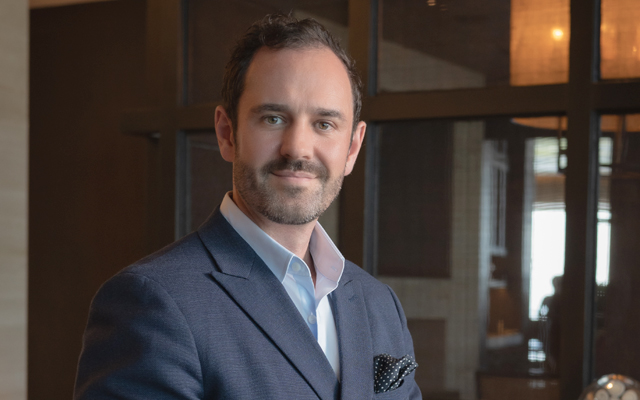
 Previously, he served as general manager of Conrad Dublin after holding senior leadership roles at Conrad Seoul, Hilton Beijing and Hilton Belfast.
 He joins from Breitling Oceania, where he most recently served as managing director. Previously, he was the company’s marketing director.
 How are Asia-Pacific travellers changing, and what trends stand out most today?