The Thai Hotels Association (THA) is urging the government to subsidise domestic group coach travel and provide transparent updates on energy supply, as the hospitality sector grapples with rising logistics costs ahead of the Songkran holiday, amid recent fuel subsidy measures (link to other fuel story) for transport operators.
Hotels across the country are facing operational pressures stemming from recent fuel price increases.
The association noted that this directly affects supply chains for consumer goods and airline operating costs. Despite these pressures, the sector is prioritising rate stability to sustain tourist arrivals and maintain regional market share.
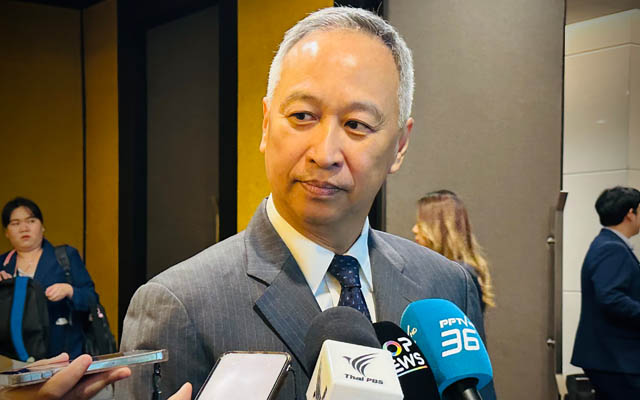
“We will try to absorb these costs as much as we can. Our costs will gradually increase, but we will try not to adjust room rates upwards so that we can remain competitive,” said THA president Thienprasit Chaiyapatranun, who has been elected to remain in office for a second term from 2026 to 2028.
The immediate threat to the upcoming Thai New Year festival is the potential for domestic logistical bottlenecks affecting local travellers.
“We are actually more concerned about a fuel shortage than just expensive fuel. If there is no fuel at all, tourists simply cannot travel. Even if prices are high, we can manage and adjust our strategies, but a shortage would halt travel completely. The industry needs government transparency about the status of its fuel reserves,” said Thienprasit.
To mitigate fuel disruptions and stimulate domestic travel, the THA, along with six other private-sector associations under the Federation of Thai Tourism Associations, has submitted a proposal to the Tourism Authority of Thailand governor and the incoming cabinet. This includes the Tour Teaw Thai campaign as one of the measures to support domestic travel, with a focus on high-volume coach transport.
“The Tour Teaw Thai campaign focuses on bus travel to reduce oil consumption. Travel agents can bring large groups on domestic routes, supported by subsidies of 1,000 baht per head for one night in one province, and 2,000 baht per head for two nights across two provinces, and so on up to four nights in four provinces,” Thienprasit explained.
Asked whether the government will subsidise or cap fuel costs for tour buses, Thienprasit said: “We await the government’s decision on supporting this initiative. There is a clear synergy in shifting the volume from individual cars to coaches, which not only benefits the hotel sector but sustains travel agents and tour guides through an exceptionally challenging period.”
Looking at the immediate Songkran booking pipeline, performance is regionally fragmented. Northern destinations such as Chiang Mai are experiencing subdued demand, linked to severe air pollution, while southern coastal areas remain robust.
“I am quite confident Songkran bookings will not drop much overall. While we may see a slight dip of five to 10 per cent in some specific areas, destinations like Hua Hin and Phuket are doing very well – the latter supported by bookings from the Russian market,” Thienprasit noted.