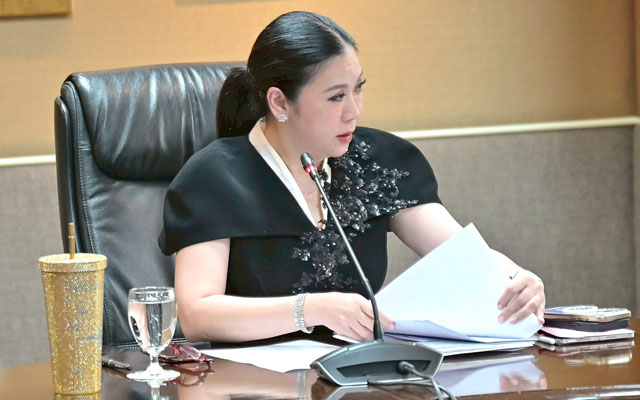
The Tourism Authority of Thailand (TAT) convened on March 20 for an urgent summit at the Tourism Crisis Monitoring Center to assess the short-, medium- and long-term impacts of the ongoing unrest in the Middle East.
Chaired by TAT governor Thapanee Kiatphaibool, the meeting brought together leaders from 10 major private-sector entities: Tourism Council of Thailand, Airlines Association of Thailand (AAT), Thai Travel Agents Association, Association of Domestic Travel, Association of Thai Travel Agents, Association of Thai Tour Operators, Thai Tourism Promotion Association, Thai Transportation Operators Association, Thai Hotels Association, and Airports of Thailand.
Participants exchanged views and proposed measures to enhance adaptability, mitigate business impacts, and establish management guidelines for the Thai tourism sector.
Amid the global crisis, private-sector representatives submitted a formal letter outlining proposed relief measures. A key concern is the surge in global oil prices, which directly affects Thai tourism through higher airfares and operating costs, and indirectly through reduced purchasing power, particularly among longhaul and high-income travellers.
The AAT is preparing to propose a temporary reduction in excise tax on jet fuel to help stabilise airfares amid volatile global energy prices. The measure aims to lower airline operating costs and ease the impact on passengers.
The TAT emphasised that any relief measures must be carefully calibrated to balance the needs of the public and the service sector. To mitigate the current energy pressures, the agency is prioritising energy-efficient strategies, including the promotion of domestic tourism, local conferences and group travel to reduce energy consumption. Campaigns will also encourage travellers to explore nearby destinations and discover Thailand’s “hidden gems”.
The coalition agreed that immediate public-private collaboration is vital. Joint efforts will focus on strategic flight management, targeted regional and domestic tourism promotion, fuel cost controls, and the establishment of a dedicated working group to monitor developments.
Thapanee underscored the agency’s proactive stance.
“While the situation in the Middle East will inevitably impact overall visitor numbers, we are comprehensively managing the situation to minimise these effects,” she stated.
Noting that a swift, one-month best-case resolution is unlikely, she added: “We are currently operating under a base-case scenario. We must actively pursue strategies to offset any losses and continue building robust credibility for our tourism sector.”
Highlighting Thailand’s broader strategic vision, Thapanee said that all agencies are working to identify opportunities.
“We choose to look at the opportunities. As highlighted in our recent campaigns, Thailand is positioning itself as a luxury destination. In the face of any global challenge, we want the world to view Thailand as a space defined by the resilience of its people and its culture. True resilience lies in our capacity to recover swiftly from setbacks, ensuring that our businesses and industry can continue to thrive,” she concluded.