More resorts in South-east Asia will materialise through Mandarin Oriental Hotel Group’s latest expansion thrust – a move that is driven by what its clients demand.
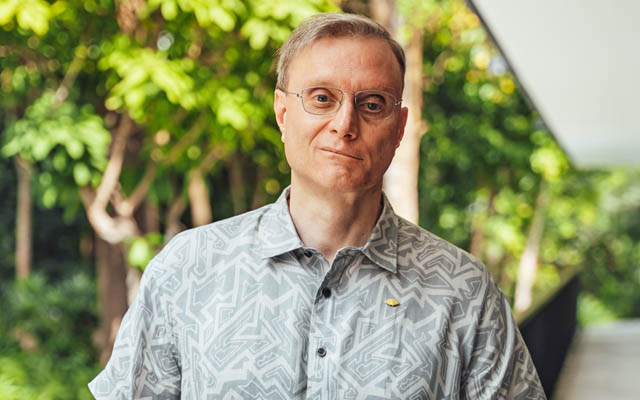
Speaking to TTG Asia on the sidelines of the February 5 launch of Mandarin Oriental, Desaru Coast in Malaysia’s Johor state, Anthony Tyler, area vice president, operations at Mandarin Oriental Hotel Group, said: “In 2024 we announced a 10-year strategy to double our footprint. It is an ambitious strategy, as we want to be very selective with the properties we manage. We want to add high quality properties in the destinations that our clients wish to see us.”
Tyler added that the group is “identifying the right partners” as well as “the right piece of land” in all its expansion considerations.
He said the new Mandarin Oriental, Desaru Coast was a “perfect example of this strategy playing out”.
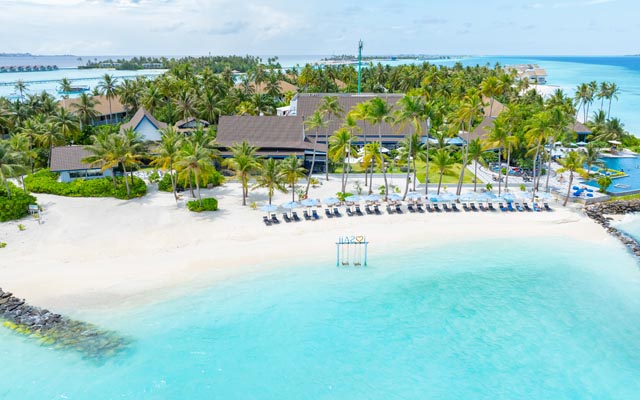
He complimented the location of the 44-suite resort – one that is surrounded by nature, amid a rainforest and close to the sea, and yet within easy reach of both Senai International Airport in Johor and Singapore Changi Airport.
Access between Singapore and the southern Malaysian state will improve when the Johor Baru-Singapore Rapid Transit System Link comes into service by January 1, 2027.
“Anything that allows people to travel in an easier and freer manner is good for us,” stated Tyler, who expects the new commute option to boost leisure and corporate travel traffic to Mandarin Oriental, Desaru Coast.
Tyler reflected on Mandarin Oriental Hotel Group’s successful resorts around the world, and acknowledged that there could be more in South-east Asia.
He cited “obvious synergies” between Mandarin Oriental Hotel Group’s gateway city hotels in Kuala Lumpur, Jakarta and Singapore that would support resort developments in recreational locations close by.
The group has so far announced upcoming openings in South Korea’s Seoul, Indonesia’s Bali, and the Philippines’ Manila.
He hinted at more announcements to come for South-east Asia over the next few years, particularly in beach destinations “where our clients would like to see a Mandarin Oriental”.
When asked how the well-established Mandarin Oriental brand is being conveyed through different age groups, especially among the younger generation of new travellers, Tyler pointed out that the group’s demographic of guests has evolved.
He explained that with every new hotel launched, the Mandarin Oriental brand gains access to a new demographic of guests.
“If you go to some of our newer properties in the Middle East and Europe, you will see a very young and different demographic. In Asia, where we have our legacy properties and have been established for longer time, we naturally have a following that started earlier with the brand and is therefore a little older in age.
“However, we have a very good blend. We do not have a hotel that is catered to only one narrow demographic. And we see (this blend especially) in our resorts, where we have a lot of multi-generational travel,” he said.
As for his business outlook for 2026, Tyler said he remains a “natural optimist”.
“There are reasons to be bullish, as the Asian economy grows and as pockets of wealth increase in this part of the world,” he remarked, adding that there is “a natural feeder for what we offer, for what Mandarin Oriental Hotel Group does”.