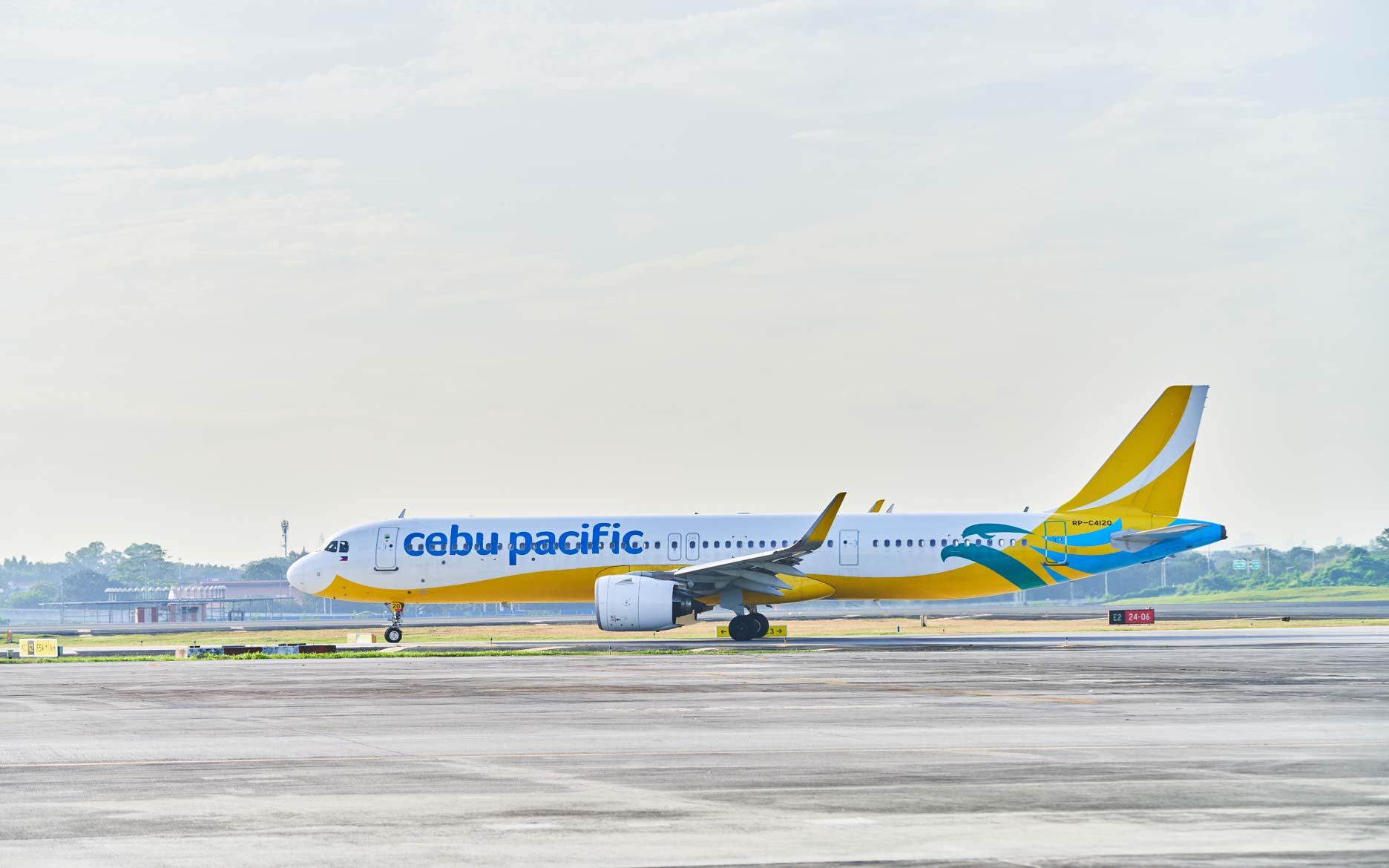
As Philippine low-cost carrier Cebu Pacific marks its 30th anniversary this year, its CEO Mike Szucs said there would be no “fundamental change” to its strategy. Instead, the airline that has built a positive reputation and business model on being “reliable, very affordable, on time, and safe” will continue to do what it does best.
“We have become part of the fabric of the Philippines. The Philippines needs a low-cost carrier that offers safe, reliable, affordable and convenient bus service in the sky, which is essentially what we do, and we’re going to carry on doing that. We’re not going to change our strategy. We’re just going to grow and serve even better,” Szucs told TTG Asia.
The airline will launch its fourth longhaul route on March 1 this year, a direct service connecting Manila with Riyadh (Saudi Arabia). The four-times weekly service will cater to 800,000 overseas Filipino workers in the Kingdom.
Szucs is confident that the Manila-Riyadh flight would also benefit tourism for the two lands, and bring leisure travellers from Saudi Arabia to the Philippines.
“The Saudis are a young demographic with a great propensity to travel,” he said.
Szucs said the airline had put in another year of good business performance, with 27 million passengers served in 2025 – up from 22 million in 2019.
In 2025, Cebu Pacific recorded 8.1 per cent more passengers on its domestic routes and 14 per cent more on its international services. Total seat capacity grew by 10 per cent to 32 million, with an seat load factor of 84 per cent.
“We look forward to similar growth this year. With us being 30 years old in 2026, we should aim for 30 million passengers,” he remarked.
He added that such capacity growth among airlines in the region is uncommon, especially as supply chain issues persist. He credited Cebu Pacific’s fleet management agility and foresight as the reason for the company’s ability to rebuild capacity faster than most other airlines.
While fleet planning was once conducted a couple of times a year “decades ago”, it is now necessary “three times a week”.
He said: “When supply chain issues became apparent three years or so ago, we moved very quickly to bring in additional capacity. As such, we’ve grown substantially. We are at least 20 per cent bigger than what we were pre-pandemic. Not many carriers have grown at that sort of rate since the pandemic, particularly carriers affected by the Pratt and Whitney powder metal issue.”
Cebu Pacific is ready to scale further, having placed an order for 70 A321neo in October 2024 – with room to purchase up to 152 aircraft. The first deliveries are expected in 2029.
However, Szucs urged the expansion of runways across Philippine airports to facilitate both air travel and inbound tourism growth.
“Everyone talks about airports, but it is really the runways more than anything else (that drives air travel and inbound tourism growth). With longer runways, we can take larger aircraft, which then increases the volume of arriving passengers and reduces the seat cost,” he said.
His outlook for Philippine tourism in 2026 is rosy, especially as the Philippine government eases entry for Chinese nationals. Since January 16 this year, Chinese nationals are allowed 14-day visa-free entry into the Philippines.
He said China used to be the second largest tourism source market for the country, but has “struggled to recover post-pandemic”. In response to market conditions, Cebu Pacific reduced its pre-pandemic schedule of 35 weekly flights to China to just seven services serving two Chinese cities.
“This is a great opportunity for the Chinese to come back,” he said.