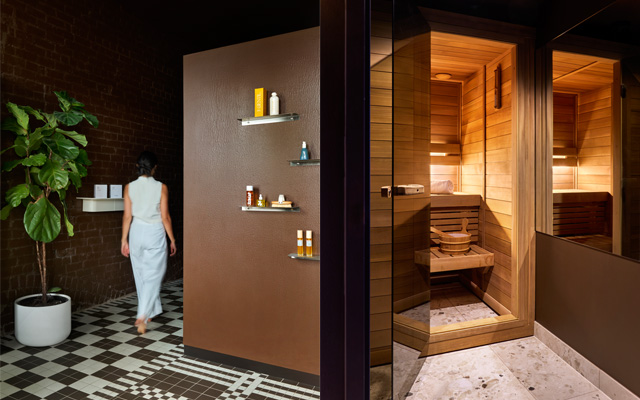
The StandardX Melbourne has partnered with local wellness studio Nimbus Co to offer a Run and Recharge package during Melbourne Marathon weekend on Sunday, October 12, 2025.
The package includes a wellness kit on arrival with electrolytes, face oil, gua sha and body brush, return transport to and from the Nike Melbourne Marathon, access to recovery equipment and refreshments at the hotel including compression therapy boots and LED masks, and a contrast therapy session at Nimbus Co Fitzroy with sauna, ice bath and guided breathwork.
Marathon runners at StandardX Melbourne can access recovery sessions with Nimbus Co
The offer is valid only for stays that include Sunday, October 12.
Bhutan, otherwise known as the mystical Land of the Thunder Dragon, is an intriguing nation where tourism plays an extremely vital role to economic and social development despite the low volume of visitors.
According to Tshering Tobgay, Bhutan’s prime minister, who held a dialogue with a group of Singapore journalists during a fam trip organised by Singapore-based travel agency Chan Brothers Travel, the nation’s tourism thrives on a disproportionately valuable brand identity, one that embodies happiness, the allure of Shangri-La, deep spirituality, and a commitment to being environmentally friendly and carbon negative.
Around 70 per cent of the country is forested, making Bhutan one of the few carbon-negative countries in the world; Iron Chain Bridge of Tamchog Lhakhang Monastery, pictured
This powerful image, intrinsically linked to its Gross National Happiness philosophy, is a cornerstone of Bhutan’s appeal and is further reinforced by its Tourism Master Plan 2025-2034, which prioritises regenerative tourism. This High Value, Low Volume strategy aims to balance economic development with environmental stewardship, ensuring that the benefits of tourism are broadly distributed while preserving the nation’s cultural identity.
Tourism currently contributes approximately 10 per cent to Bhutan’s GDP in 2025. The Tourism Master Plan aims to elevate this to 15 per cent by 2050.
“We want tourism to make Bhutan better – bettering locals’ lives and transforming the lives of (visitors). Tourism must regenerate, restore and revive places, communities and people. This is our goal,” said Damcho Rinzin, director for Bhutan’s Department of Tourism.
Within Asia-Pacific, Singapore is one of Bhutan’s top priority tourism source markets. Arrivals from Singapore grew by 61 per cent from 2,036 in 2023 to 3,277 in 2024, with 1,814 visitors recorded between January and June 2025.
“The projected number (of Singaporean travellers) for this year is 3,000. Singapore is currently the fourth biggest inbound market for Bhutan, just 1,000 travellers behind third-placed China,” Rinzin shared with TTG Asia.
Although the majority of Singaporean travellers are first-time visitors, the Department of Tourism is seeing a modest but steady interest from repeat travellers. Based on feedback from operators, such travellers are more likely to seek wellness retreats, spiritual experiences, or visit lesser-known regions such as central Bhutan.
Hilal Kolu, co-founder of Routes and Journeys, told TTG Asia: “The Singapore market was the first South-east Asian market to explore Bhutan. The first charter was in 2008, after (Hong Kong) actor Tony Leung got married in Bhutan.”
From left: Archery is Bhutan’s national sport; red rice is a staple in Bhutan, and meals often include a variety of dishes
Routes and Journeys is a B2B travel company and DMC specialising in leisure tours. It builds accessibility through chartered flights, prominently offering direct services to Bhutan from places like Singapore, Kuala Lumpur, Hong Kong, and Vietnam. It currently has around 20 Bhutan products listed on the Chan Brothers Travel website.
Pema Tashi, co-founder of Routes and Journeys, is in the process of developing adventure travel-focused itineraries in Bhutan – such as hiking and mountain biking – for Chan Brothers.
“We recently launched itineraries in eastern Bhutan, as Paro and Thimphu are quite well known already. The eastern part of Bhutan is really authentic, beautiful, and is a must-visit. Hopefully, more Singaporeans will be back for a second visit,” he said.
To get there, travellers have to fly from Singapore to Paro, where a smaller chartered aircraft will take them to a domestic airport in eastern Bhutan.
Rinzin said 2026 arrival target is set at 300,000, with no more than 50 per cent from India, the Kingdom’s top market at the moment. Other source markets in Asia-Pacific include Thailand, Malaysia, Bangladesh, and China.
When asked about plans to expand destination marketing to other markets, Rinzin told TTG Asia that efforts are already underway in Australia.
Bhutan has seen steady growth from Australia, from 1,187 visitors in 2023 to 1,710 in 2024, and 1,123 arrivals recorded in 1H2025 alone. This reflects the “effectiveness of our engagement with Australian trade partners and media”.
Visitors to Bhutan have to commit to a daily Sustainable Development Fee (SDF) of US$100. When asked if this requirement made Bhutan too pricey for the average traveller, Rinzin said this fee was revised downwards from US$200 previously to make Bhutan more accessible.
He also stressed the importance of the SDF – it contributes significantly to national revenue and facilitates free healthcare and education for citizens.
He added that as the country is still developing, a lot of infrastructure is needed. Funding for critical development comes from the SDF.
An example of the SDF’s role in nation building is the development of Gelephu Mindfulness City (GMC), which helps to transform Bhutan’s economy, increase its level of participation in international markets, and generate opportunities for the next generation of Bhutanese.
GMC is a Special Administrative Region, “with its own government, legislature, judiciary, and its own rules and regulations”, Tobgay stated.
The construction of the new international airport at GMC is underway now.
When asked about developments in air access to Bhutan, Tobgay said air service agreements are being signed “with as many countries as possible”.
At present, only two airlines operate flights into Bhutan – Drukair and Bhutan Airlines.
He hopes that these agreements will translate into actual services eventually.
Further tourism development efforts include plans to promote Bhutan as a year-round destination, where Rinzin’s team is aiming to create a star attraction for each of Bhutan’s 20 districts.
As to whether the country will welcome more high profile concerts – such as that headlined by Ed Sheeran, who made history as the first international artiste to hold a concert in Bhutan in January 2025 – Rinzin said Bhutan is ready.
“People thought they could not have a concert in Bhutan, but it’s about building visibility and awareness,” he remarked.
A number of tourist spots in Cebu, the Philippines remain closed until further notice following the intensity 6.9 earthquake on the night of September 30, 2025, which has claimed 70 lives as of press time. The tremor was also felt in Bohol, Leyte and Negros Oriental.
Tourism secretary Christina Garcia Frasco said that 80 tourism establishments, 21 site attractions, 36 accommodation and 23 other related infrastructures in Cebu were damaged to varying degrees.
Tourism secretary Christina Garcia Frasco visits the earthquake site with officials as authorities assess the damage; photo by Christina Garcia Frasco
Also affected are 711 tourism workers, including staff from hotels, resorts, restaurants, travel agencies, transport services and related enterprises.
A travel agent said that while September to mid-October is lean season in the Philippines, the full impact of the earthquake on Cebu’s inbound tourism from mid-October onwards will be known shortly.
Frasco said 15 tourists were stranded in Cebu: one in Bogo City – the quake’s epicentre – eight in neighbouring San Remigio and six in Santa Fe.
Of the 15 tourists, eight have checked out and travelled to Cebu City, while six extended their stay in Bantayan Island in Santa Fe. The Department of Tourism (DoT) Central Visayas Office (Cebu, Bohol, Siquijor and Negros Oriental) is facilitating the transfer of foreign guests in Bogo City to another accommodation within the area.
In an advisory yesterday (October 1), DoT Central Visayas noted tourist sites and establishments that remain closed to the public until further notice. In Cebu province, these include seven churches with varying degrees of damage, as well as the Medellin tourist rest area.
Temporarily closed in Cebu City are The Kabilin Centre, Museo Sugbo, National Museum of the Philippines Cebu, Yap-Sandiego Ancestral House and Casa Gorordo.
In Bohol, Hinagdanan Cave in Dauis and the National Museum of the Philippines in Tagbilaran City are closed for structural inspection.
Several hotels have issued public advisories stating they were unaffected by the earthquake and continue to welcome guests, including Bluewater Maribago and Bluewater Sumilon in Cebu, Bluewater Panglao in Bohol, and Red Planet Cebu.
Nustar Resort and Casino announced it had resumed hotel, dining and gaming operations yesterday after a thorough safety check. The same applies to other hotels of Robinsons Hotels and Resorts and Bai Hotel Cebu.
Radisson Blu in Cebu, which was hosting the Miss Asia Pacific International 2025 gala night when the earthquake struck, was commended by the beauty pageant organiser for its “swift and professional response in implementing safety measures during the tremor”.
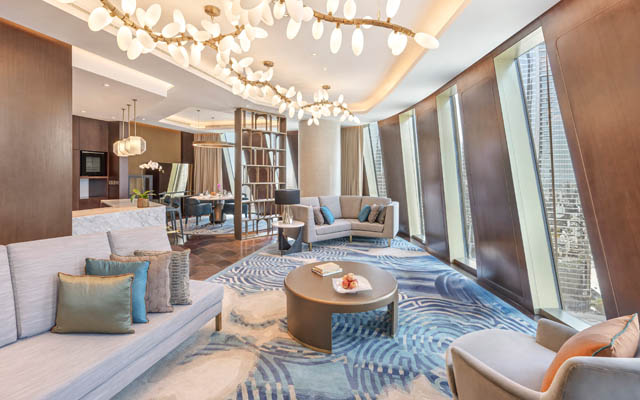
Mandarin Oriental Downtown, Dubai, the UAE Mandarin Oriental Downtown, Dubai is opening this month within the iconic Wasl Tower on Sheikh Zayed Road. The hotel will feature 259 rooms and suites, 224 branded residences, and a rooftop helipad, offering panoramic views of the Dubai skyline and Arabian Gulf.
Facilities include a two-floor spa combining traditional and modern wellness treatments, 10 dining venues covering French, Chinese, Greek, and Italian cuisines, and bars offering nightlife experiences. The residences provide private living with full access to the hotel’s services and amenities.
Wasl Tower’s twisting ceramic façade incorporates energy-efficient design and natural cooling, positioning the development as a new benchmark for sustainable urban hospitality in Dubai.
Tribe Auckland Fort Street
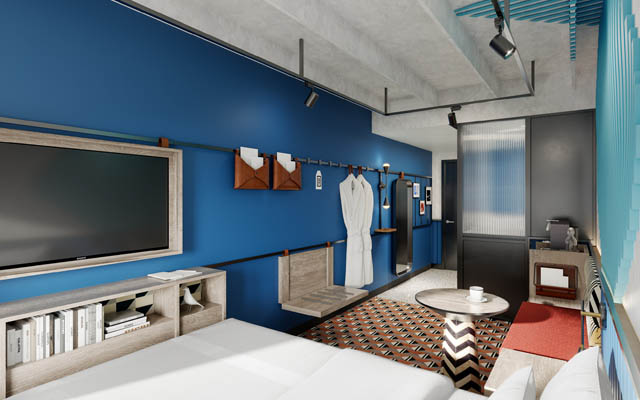
Tribe Auckland Fort Street, New Zealand Tribe Auckland Fort Street is scheduled to open on October 14, 2025, marking the brand’s New Zealand debut. The hotel offers 60 compact guestrooms, a dynamic lobby bar, and a social hub designed for both locals and travellers.
Located near Britomart and Commercial Bay, the property emphasises modern living and communal spaces, providing a central base to explore Auckland’s attractions.
The Laurus, a Luxury Collection Resort, Singapore
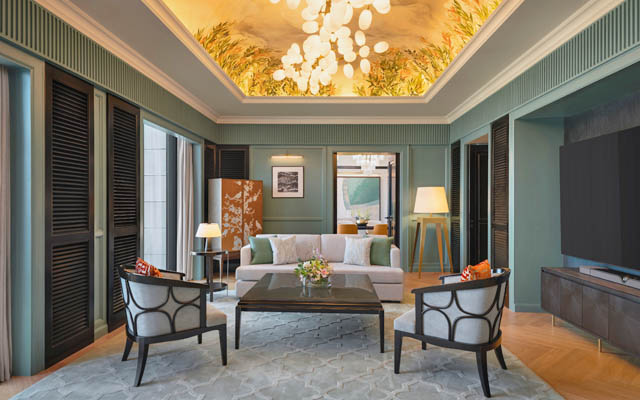
The Laurus, a Luxury Collection Resort, Singapore, Singapore The Laurus, a Luxury Collection Resort, Singapore opens as the first Luxury Collection property in Singapore, located within Resorts World Sentosa.
The resort features 183 suites, each offering luxurious bedding and furnishings, and artisanal local refreshments.
Facilities include Laurus Table, the hotel’s specialty restaurant, a spa and fitness centre, a landscaped pool, and a sensory garden showcasing native flora and wildlife. The property integrates local craftsmanship throughout, including repurposed timber, artworks by Singaporean artists with disabilities, and bespoke design elements.
Situated in Sentosa, the resort provides access to the island’s attractions while offering a private sanctuary with refined comforts and high-end amenities.
The Standard, Pattaya Na Jomtien
The Standard, Pattaya Na Jomtien, Thailand Located just over an hour from Bangkok in the seaside enclave of Na Jomtien, The Standard, Pattaya Na Jomtien is a beachfront resort with 161 rooms and suites. Accommodation ranges from Standard Kings to Ocean View Pool Suites and a 322m² Penthouse, all with garden or sea views and modern amenities.
Facilities include the beach club Esmé, Thai coastal grill Sereia, adults-only rooftop spa and bar Mmhmmm, a beachfront pool with loungers and service, and Surf Shack, a casual grab-and-go spot for ocean sports enthusiasts. Na Jomtien offers swimmable waters, nearby islands such as Koh Kram, Koh Phai and Koh Larn for snorkelling and sailing, as well as local dining, cafés, and kitesurfing opportunities.
A new report from the World Travel & Tourism Council (WTTC) predicts the sector will support 91 million new jobs worldwide by 2035, accounting for one in three net new roles globally.
However, demographic and structural shifts could create a shortfall of more than 43 million workers if action is not taken.
Travel and tourism is projected to create 91 million new jobs by 2035, but labour shortages could limit growth, according to WTTC’s latest report
The report, The Future of Work in Travel & Tourism: The key trends shaping workforce strategies, was launched at WTTC’s 25th Global Summit in Rome and focuses on 20 economies. It was developed with support from the Ministry of Tourism of the Kingdom of Saudi Arabia, Coraggio Group, Miles Partnership, and Hong Kong Polytechnic University, based on global research including surveys of business leaders and interviews with WTTC members and other stakeholders.
The sector supported a record 357 million jobs in 2024 and is forecast to reach 371 million this year. Over the next decade, it is projected to generate 91 million new roles, but by 2035 demand for workers is expected to outpace supply by 43 million, leaving labour availability 16 per cent below required levels.
Hospitality is expected to face a shortfall of 8.6 million workers, around 18 per cent below needed staffing levels. Low-skilled roles will remain in high demand, particularly positions that rely on human interaction and cannot easily be automated.
The labour challenge is expected across all 20 economies studied, with the largest shortfalls projected in China (16.9 million), India (11 million), and the EU (6.4 million). In relative terms, Japan’s travel and tourism workforce is projected to fall 29 per cent below demand by 2035, followed by Greece (27 per cent) and Germany (26 per cent).
The report outlines strategies to address the workforce gap, including promoting career opportunities to young people, aligning training with industry needs, improving retention through leadership development and inclusive workplaces, investing in digital literacy and sustainable practices, and implementing flexible policies to manage workforce demand.
Gloria Guevara, WTTC interim CEO, said: “Travel and tourism is set to remain one of the world’s biggest job creators, offering opportunities for millions of people worldwide – but we must also recognise that wider demographic and structural changes are reshaping labour markets everywhere.
“Many workers left the sector during Covid when travel and tourism came to a standstill. Now, as global unemployment is expected to fall and working age populations to shrink, this is creating an increased pressure on labour supply, especially for fast growing sectors like travel and tourism.”
She described the report as a call to action, saying that collaboration with governments and educators will help the sector address workforce challenges and continue to offer opportunities for future generations, with WTTC supporting policy implementation worldwide to close the gap.
Accor Plus, Accor’s subscription business, has launched a new global premium travel subscription, ALL Accor+ Explorer, the first subscription to feature the new ALL Accor+ global brand, as the business looks to expand into new key markets next year.
The ALL Accor+ Explorer subscription is priced at US$229, and is projected to deliver an average of US$712 in additional savings per member each year.
From left: Belinda Lee (moderator); Accor Plus’s Emilie Couton; and Pullman’s F&B ambassador for F&B in Asia-Pacific Nat Thaipun discussing traveller trends during a fireside chat; photo by Rachel AJ Lee
The benefits, developed after extensive research with over 7,000 members and 200 hotel stakeholders, include up to 50 per cent off hotel stays in Asia-Pacific, and a guaranteed 15 per cent off the public rate with Access More at over 4,500 Accor hotels and 30+ brands worldwide.
The subscription also offers 30 per cent discount on dining and a 15 per cent discount on drinks at 1,600+ restaurants and 1,200+ bars across Asia-Pacific. Furthermore, members are guaranteed ALL Accor Gold Status or higher instantly, which includes a bonus of 30 Status Nights each year, providing perks like room upgrades, early check-in, and late check-out (where available), plus priority access to exclusive member-only events and offers.
This new offering leverages the success of Accor Plus, a travel subscription business that has operated in Asia-Pacific for over 30 years and currently boasts over 450,000 members.
Earlier on Wednesday during a lunchtime media event at the Pullman Singapore Orchard’s Eden Restaurant, Emilie Couton, CEO, Accor Plus, shared that the ALL Accor+ Explorer has been in the works for the “past 18 months”.
Couton explained the timing, noting that while “subscription models have grown 400 per cent over the past decade”, the travel sector remains largely underrepresented. Launching the new programme is a direct move to capitalise on the rapidly expanding global subscription market, which analysts project will exceed US$2 trillion by 2034.
She added: “According to a Travelport study (released in January 2025), 35 per cent of travellers surveyed said they would consider purchasing a travel subscription.”
The programme is fully integrated with the existing ALL Accor platform and app for a seamless member experience. All existing Accor Plus members have been automatically upgraded to the new premium subscription.
Aman will open its first property in Singapore, bringing the brand’s signature focus on privacy, design and service to the city-state. The development, named Aman Singapore, will include a hotel, a limited collection of branded residences and a private members club.
The property will be located within The Skywaters, a new skyscraper set to be Singapore’s tallest. The tower, developed by a consortium led by Perennial Holdings and designed in part by Skidmore, Owings & Merrill, occupies a site at the convergence of the CBD, Marina Bay, and the future Greater Southern Waterfront.
Aman Singapore will feature a hotel, residences and private members club in the city’s tallest upcoming skyscraper
Aman Singapore will feature a dedicated floor of hotel suites offering views across the city and the South China Sea. The property will also provide a global Aman Club for members, Aman Residences, and facilities such as a full-floor Aman Spa with an infinity-edged pool, and dining venues featuring Aman’s signature concepts.
The branded residences, ranging from one to five bedrooms, will offer city and botanical views and access to the property’s amenities and services, providing an elevated urban sanctuary for long-term residents.
Vlad Doronin, CEO and chairman of Aman Group, said: “The launch of Aman Singapore, within the landmark The Skywaters development, marks an exciting chapter for our brand and is something our devoted community has long anticipated. With a robust pipeline including Dubai, Riyadh and Beverly Hills, and established properties in Bangkok, Tokyo and New York, Aman Singapore will embody all the hallmarks of our urban sanctuaries including intuitive service, serene design, privacy, and exceptional locations. It will also serve as a key connection point to our Aman destinations across Asia for our global guests.”
Pua Seck Guan, executive chairman and CEO of Perennial Holdings, added: “Partnering with Aman for its first project in Singapore at The Skywaters is a testament to the exceptional quality of the integrated development. It also further elevates the status of the upcoming tallest building in the country as we create an extraordinary sanctuary in the heart of the Garden City, delivering an experience that redefines urban luxury living.”
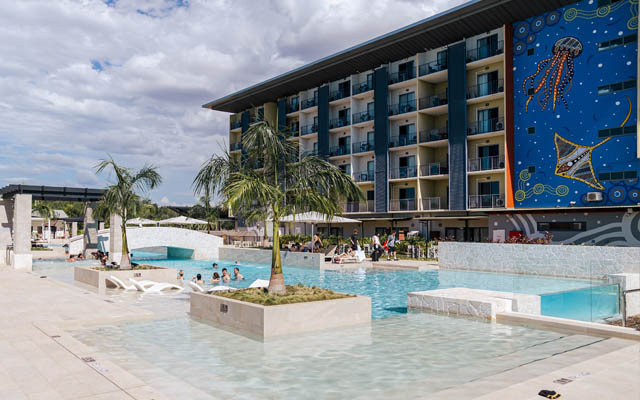
Darwin Airport Resorts, Australia’s first airport resort, is undergoing a A$41 million (US$26 million) upgrading programme that includes new villas and executive suites, refurbishment of existing rooms, and the launch of a Californian-style poolside restaurant.
The property is owned by Airport Development Group (ADG) and managed by Accor. ADG has invested in integrating the three hotels – Novotel, Mercure and ibis – into a single resort destination. The redevelopment links the three hotels around a central area that features a 65-metre lagoon pool, a consolidated reception and lounge, and the alfresco Splash Café.
The resort-style redevelopment at Darwin Airport Resorts adds new stays and leisure options for visitors
The project includes Indigenous artwork and theming, along with an Indigenous Training Academy, to reflect the property’s connection to Larrakia Country.
Eight new Rapid Creek Villas have been built, including three two-bedroom and five one-bedroom villas with private parking. The villas, measuring up to 49m², include king size beds that can be split into singles, a lounge, kitchen facilities and a covered deck with bushland views. They overlook Rapid Creek Conservation Reserve, which features Darwin’s only natural freshwater creek. A walking trail in the reserve provides information on bush tucker, medicinal plants and the cultural and environmental significance of the area.
Five new executive suites have been added to the Novotel following a full refurbishment. Each suite measures 55m² and includes a king size bed, lounge and entertaining area, double glazing, and either lagoon pool or airport views.
A new restaurant, the Poolhouse Bar and Kitchen, has also been launched. Seating 170 diners, it overlooks the lagoon pool, playground, beer gardens and murals by Larrakia artists. The menu, designed by head chef Laurence Lochouarn, features local seafood with Californian influences, with local beers, cocktails and wines also offered. Graduates and trainees from ADG’s Indigenous Training Academy will work in the restaurant.
Raymond Bragg, general manager of Darwin Airport Resorts, said: “The creation of an airport ‘resort’ has not only captured the imagination of visitors, but also locals who are utilising the restaurants and leisure facilities because of the resort-style ambience and convenience of our location.”
He noted that the new accommodation is part of a wider refurbishment that will upgrade all existing rooms and add facilities for the growing conference and events market. The new restaurant, opening this week, will offer a menu designed to reflect Darwin’s lifestyle and enhance the resort’s dining options, while the overall upgrades aim to provide a high-standard experience within the airport.
Adrian Williams, chief operating officer of Accor in the Pacific region, shared: “These three resorts aren’t just places to stay; they’re launch pads for adventure, culture and unforgettable experiences. It’s about giving travellers a reason to fall in love with Darwin and explore everything the Northern Territory has to offer.
“This investment isn’t just about rooms and restaurants, it’s about creating moments that inspire journeys, spark discoveries, and help Darwin shine as a world-class destination.”
Shenzhen will open one of the world’s largest indoor ski domes on September 29, when Huafa Snow Bonski begins operations. The 100,000m² facility includes competition-standard slopes, training systems and recreational areas, positioning the city as a new centre for year-round winter sports in the Greater Bay Area (GBA).
Huafa Snow Bonski integrates professional venues, coaching, structured training, school partnerships and the capacity to host international competitions. The project adopts a model linking snow sports, athletics and tourism to support industry development and winter sports training in the GBA, which includes Hong Kong, Shenzhen, Macau and Guangzhou.
The new Huafa Snow Bonski dome adds year-round skiing to Shenzhen’s sports facilities
At the opening event, a snow performance combining skill, staging and audience participation marked the launch of the venue.
The dome has five ski slopes stretching a combined 1,569 metres. It offers a maximum vertical drop of 83 metres, a maximum slope of 18 degrees, and a single run extending 463 metres. Two terrain parks are included, and both the advanced and intermediate slopes meet International Ski Federation standards, enabling alpine parallel and slalom competitions.
In addition, a 4,000m² Ice and Snow Wonderland offers 14 attractions for visitors. Activities include parent-child participation and youth competitions.
Huafa Snow Bonski aims to attract international visitors and professional athletes through events, training programmes and recreational facilities.
Interhill Hospitality has made a series of leadership changes across its Accor-branded hotels.
Sunardi Song is appointed general manager of Pullman Kuching. With over 15 years of hospitality experience, he will oversee the multi-million-ringgit relaunch of Pullman Kuching.
From left: Sunardi Song, Adrian Ng, Randy Nickcolas Constantine, and Alan Tham
Adrian Ng is promoted to vice president of operations at Pullman Kuching. He will provide strategic oversight across the group’s portfolio, including Pullman Kuching, Pullman Miri Waterfront, and ibis Melaka.
Randy Nickcolas Constantine is now general manager of Pullman Miri Waterfront, bringing with him more than 17 years of international experience with Hyatt, Pullman, ibis, Song Saa Private Island, Swissôtel, and Royal Tulip.
Alan Tham has been named vice president of F&B and will oversee all F&B operations across Interhill Hospitality.