Emirates and Marriott International have signed an agreement to develop Emirates Wolgan Valley, a Ritz-Carlton Lodge, a 40-key all-inclusive property to be located within a 2,833-hectare conservancy in Australia’s Greater Blue Mountains World Heritage area.
The project is expected to be the first Ritz-Carlton Lodge globally and is scheduled to open in mid-2026. The lodge will be developed on the site of the former Emirates Wolgan Valley Resort in New South Wales and will operate within a conservation reserve, with the built footprint occupying less than two per cent of the land.
The 40-key development will add to The Ritz-Carlton’s existing presence in Australia
Since 2006, Emirates has invested A$150 million (US$99 million) in the Wolgan Valley property, including restoration of heritage structures such as the original 1832 homestead and conservation programmes involving the planting of more than one million native trees. Emirates is investing an additional A$50 million in refurbishment works, in collaboration with Marriott International, to reposition the property under The Ritz-Carlton brand.
Following the closure of Wolgan Valley Road in 2023, Emirates maintained the site with a small team of locally employed staff while operations were suspended. The reopening of the lodge is expected to support up to 150 jobs and provide opportunities for local suppliers.
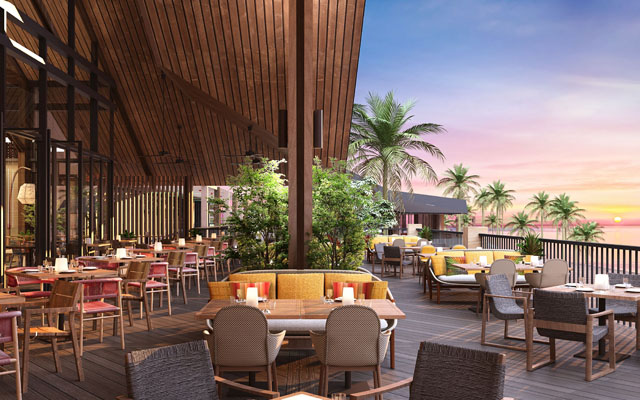
Access to the lodge will be via four-wheel drive along the Donkey Steps or by helicopter. The property is planned to include 40 lodges, each with a private pool, along with dining venues, wellness facilities, recreational amenities and guided outdoor experiences led by resident experts.
The development will add to The Ritz-Carlton’s existing presence in Australia, which includes properties in Perth and Melbourne.
As generative AI shifts from a search novelty to a functional booking engine, the hospitality industry is facing a critical pivot.
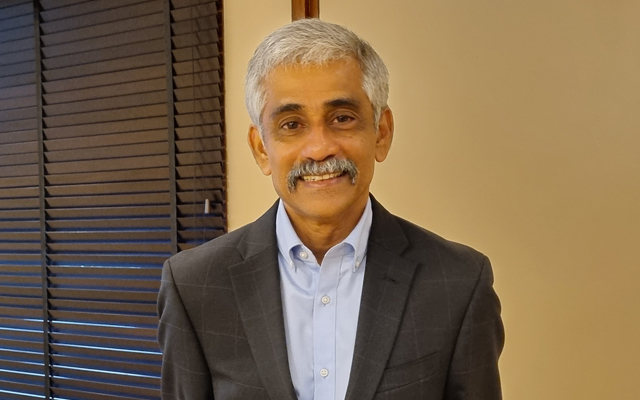
Sam Hon, CEO of CREX, an AI visibility scanner for hotels, stated that travel planning AI adoption rose globally from 22 per cent in 2023 to 48 per cent in 2025, with 78 per cent projected for 2026. Currently, 60 per cent of AI users are using the technology for travel bookings.
Hon emphasised that the goal is visibility during early planning to bypass intermediaries and drive direct bookings; photo by Anne Somanas
Hon said AI should be treated as an emerging distribution channel, comparable to an OTA or wholesaler.
Speed is becoming critical, as AI models refresh roughly every 10 days. Properties that require too much effort to be discovered are often bypassed in favour of more accessible data sets. Traditional SEO keyword matching is proving ineffective, as AI prioritises semantic meaning over keywords.
“SEO doesn’t work very well with AI, because AI looks into semantic meanings – meanings of words, paragraphs or even long conversations; it does not do keyword matching,” Hon noted.
Data consistency is another challenge. AI reasoning models cross-reference a hotel’s declared information against multiple digital touchpoints. Discrepancies between websites and social media profiles, or even images such as lobby posters, can result in lower discovery scores.
Hon also warned of “GEO poisoning”, where external bloggers or third parties shape a hotel’s brand identity if the property fails to manage its own narrative.
Looking ahead, AI wallets and hyper-personalisation will automate the conversion process. The goal is visibility during early planning to bypass intermediaries and drive direct bookings.
“AI wallets are coming soon, and the traveller will be comfortable doing everything within AI. The first step is you must be visible; you must be in the list. Only then does the commerce and the checkout process come in,” Hon said.
Universal Studios Japan and The Pokémon Company have outlined plans to develop new Pokémon-themed experiences, with the first phase set to begin at Universal Studios Japan. The project forms part of the park’s ongoing strategy to expand its range of character-based attractions.
The collaboration aims to introduce new immersive experiences based on the Pokémon franchise. Universal Studios Japan has previously presented Pokémon parades and shows since October 2021, and the new project will build on these earlier initiatives.
Universal Studios Japan and The Pokémon Company plan new Pokémon-themed experiences, with the first phase launching in Japan; photo by The Pokemon Company
Following its debut in Japan, Universal Destinations & Experiences plans to introduce Pokémon experiences at other Universal parks worldwide. Further details, including timelines and formats, will be announced at a later date.
The project is positioned as a long-term collaboration between Universal Studios Japan and The Pokémon Company, marking the next stage in a partnership first announced in 2021. The new development coincides with Pokémon’s 30th anniversary.
Universal Studios Japan said the initiative is intended to expand the park’s portfolio of large-scale themed entertainment, while also serving as a foundation for future international developments across Universal’s global network.
Mark Woodbury, chairman and CEO of Universal Destinations & Experiences, said: “Collaborating with imaginative and inventive storytellers fuels our ability to create and deliver mind-blowing attractions and experiences that shatter guest expectations.”
“As Pokémon celebrates its 30th anniversary this year, we are thrilled to launch this new project at such a significant milestone. Our mission is to enrich both the real and virtual worlds through Pokémon, and with this project, we aim to create theme park entertainment that surprises and delights fans around the globe,” added Tsunekazu Ishihara, president and CEO of The Pokémon Company.
Melbourne’s Pentridge Prison joins the global trend of unique restored stays
Flavourful stays Travellers are increasingly demanding that hotels are more than just a place to rest their heads.
Hotels.com’s contribution to Expedia Group’s Unpack ’26: The Trends in Travel report notes a rise in bookings for restored abbeys, schoolhouses and even prisons. Travellers in 2026 expect “culturally rich experiences by staying in places that tell a story through their architecture and past”.
Skyscanner’s Travel Trends 2026 report states that “hotels are the main event”, with immersive stays becoming more common among travellers who are choosing where to go based on where they want to stay.
Preferred Hotels & Resorts has also seen the rise of unique stays. The Luxury Travel Report, published in May 2025 by Preferred Hotels & Resorts in partnership with The Harris Poll, identifies travellers’ dislike for “sameness in design, service, and experience”.
Seventy per cent of surveyed luxury travellers find that modern luxury hotels have lost their soul to standardisation, and nearly three-quarters of them will not pay for luxury accommodation that feels generic.
Philipp Weghmann, chief development officer of Preferred Travel Group, said demand for independent hotels that offer creative guest experiences is, therefore, on the rise.
“Independent hotels have the flexibility to deliver unique experiences that are not tied to signature programming that comes with being part of a global hardware,” he said.
The power of unique hotels is also influencing travellers to book multiple hotels in one destination to allow them to explore different neighbourhoods, chase better deals, and keep things flexible, according to Hotels.com.
Capoeira showcases Brazil’s living culture as demand for local sporting experiences grows
Sporting magnets Major sporting events are big tourism drivers, but this trend will intensify this year. More travellers are seeking out local sport experiences – not just soccer, cricket, hockey or tennis, which are the world’s most popular sports with billions of fans – that offer a deeper connection to local culture, community, and tradition.
Expedia Group projects a surge in uniquely regional sporting experiences, with 57 per cent of respondents saying they are likely to attend one while on a trip. From capoeira in Brazil to sumo wrestling in Japan, travellers want front-row seats to the traditions, energy, and stories that make each place unique.
Fans of Thai kick-boxing, Muay Thai, can apply for a 90-day Muay Thai visa to stay and train in authentic Muay Thai camps across the country. The special visa was introduced in 2024, and a website, Now Muay Thai, was created to guide foreign fans to the best places in Thailand to train.
In Osaka, travellers sample local favourites from vending machines as part of supermarket safaris
Supermarket safaris Travellers are swapping restaurant reservations for supermarket safaris, claims Skyscanner’s travel outlook. In its study, 38 per cent of Asia-Pacific travellers say they plan to explore local supermarkets or grocery stores while on holiday. They also look forward to picking out local favourites from the snack aisle and vending machines.
Skyscanner notes that how people travel for food is now part cultural deep-dive, part budget hack.
Travellers are visiting Dublin’s Long Room Library as literary‑inspired journeys grow
Literature inspiration Respondents to studies conducted by Skyscanner and Vrbo holiday rentals have expressed a desire to go on a trip that is inspired by literature as well as to slow down and include time to read while travelling.
Skyscanner’s trend report finds that people are choosing travel and literature to escape, reconnect and restore, whether by tracing the footsteps of fictional heroes, planning a slow holiday around a reading retreat or chasing the world’s most beautiful bookshops and libraries.
Similarly, Vrbo reveals that 91 per cent of travellers are seeking getaways focused on reading, relaxation, and quality time with loved ones. The Booktok social media trend is fuelling interest in literary-themed travels, with reading-related terms in Vrbo’s guest reviews nearly tripling.
Family time Quality time with the family on trips has risen in importance post-lockdown, but Hilton’s 2026 Trends Report has identified an interesting development.
Skip-generation holidays are coming up strong, where grandparents and grandchildren are travelling together.
Six in 10 respondents across Asia-Pacific say they have taken or plan to take a skip-generation holiday. The trend is most pronounced in China (86 per cent) and India (79 per cent), where it has moved from novelty to mainstream. In China, more than three-quarters expect to book at least one to two skip-generation holidays in 2026, suggesting such trips may soon rival traditional family vacations.
Families are choosing experiences that encourage shared discovery. Culinary exploration (69 per cent) and visits to historical and cultural landmarks (63 per cent) are the top activities, particularly in destination Singapore, where more than eight in 10 families cite food-related exploration as their preferred activity.
Luxury river cruise specialist AmaWaterways has identified South-east Asian travellers as an ideal market for river cruises, according to Melvyn Yap, the company’s business development director for the region.
Yap, a familiar figure in both the cruise and luxury travel sectors, said South-east Asian travellers tend to be “globalised” in their travel appetite compared with other Asian source markets, and are more open to unfamiliar food, culture and experiences.
Yap: awareness of river cruise products remains limited among South-east Asian travellers
“Filipino and Indonesian travellers, for instance, are less likely to expect a tour guide who speaks in Tagalog or Bahasa Indonesian respectively, or to expect access to their native cuisine while holidaying in a foreign region,” he explained, adding that South-east Asian travellers’ “easy-going nature” and desire for unfamiliar sights and experiences make them ideal for river cruises that often weave into lesser-known, less-commercialised, and less-accessible destinations.
Since his appointment at AmaWaterways in late-2024, Yap has found the Philippines to be a top performing source market for his company while Indonesia offers the strongest growth potential.
“The Philippines is our second largest market in Asia and largest in South-east Asia. Travellers from the Philippines are mostly entry-level luxury travellers at this stage, but given time, they will mature to be very sophisticated travellers,” said Yap.
He noted that this is a natural progression, with most consumers starting their travels with basic products and itineraries that cover several cities and countries at once, before determining their preferences and developing a desire to explore a single destination more deeply.
At present, AmaWaterways river cruises that take guests through clusters of cities along well-known rivers such as the Rhine, the Rhône and the Danube are proving popular with South-east Asian travellers.
However, AmaWaterways faces two main challenges in its pursuit of growth in South-east Asia.
“Most South-east Asian travellers, with the exception of Singapore passport-holders, have to go through a visa application process to travel to Europe. Visa applications can only begin three or four months before departure date, which discourages South-east Asian travellers from booking their holidays well in advance. They also risk trip disruptions should visa applications be delayed,” shared Yap.
AmaWaterways recommends that guests purchase travel insurance always, and offers the AmaWaterways Travel Waiver Plus that provides protection from cancellation for any reason, up to 31 days prior to the start of their cruise. Cancellations within that time frame accords guests a Future Cruise Credit.
The other obstacle, according to Yap, is a lack of awareness of river cruise products among travellers in the region.
“It took a while for ocean cruise lines to build up awareness in this region, and now it is time for river cruise lines to do the same. Many South-east Asian travellers are not aware of river cruises and the advantages of going on one. Being smaller in size, river cruise ships can easily navigate rivers and bring guests to cities not accessible by hefty 45-seat coaches. Journeys down rivers also grant scenic views along the way. Furthermore, for travellers who want privacy on holiday, river cruises can be ideal, as there are fewer guests onboard at once,” he said.
In an earlier interview with TTG Asia, CEO Catherine Powell described AmaWaterways as being “all about small ships that are intimate and where you will experience a high-touch service”. She also noted that guests would enjoy a ship with thoughtful layout as well as immersive land experiences.
To improve understanding of river cruises among South-east Asian travel advisers, Yap is investing in tradeshow presence, allowing him to meet and speak with more trade buyers.
He also expressed interest in hosting Asian corporate incentive events onboard and will be participating in regional tradeshows such as IT&CMA in Bangkok and Indonesia Business Event Mart in Jakarta this year.
The Philippine government is positioning tourism as a core pillar of national development, aimed at driving inclusive economic growth through 2026 and beyond.
Verna Buensuceso, head of Philippine NTO and undersecretary at the Philippines Department of Tourism (DoT), detailed how the sector’s momentum is central to the nation’s broader development goals through a number of key initiatives.
The Philippines is expanding tourism initiatives and infrastructure as part of a broader strategy to support national development
In 2025, the Philippines recorded 6.5 million foreign visitors and returning overseas Filipinos, generating an estimated 694 billion pesos (US$11.8 billion) in tourism revenue.
To increase high-value spending and simplify entry, the government has introduced visa-free entry for Indian, Taiwanese, and Chinese nationals. Other reforms include cruise passenger visa waivers, e-visas for remote workers, and a VAT refund scheme for tourists that will be launched later this year.
Recognising air travel as the backbone of an archipelago, the strategy also involves opening more domestic routes, and longhaul connections to cities like Paris, San Francisco, and Brisbane. Domestically, expanded services are linking islands like Cebu to destinations such as Boracay to spread economic benefits across regions, Buensuceso stated.
Buensuceso also highlighted the success of the Philippine Experience Program, which utilises cultural heritage and arts caravans to showcase regional diversity. To date, the programme has completed caravans across 34 provinces, 33 cities, and 54 municipalities.
“The project was designed to be developed in close coordination with tour operators, including national and local operators, as well as online platforms. These efforts have successfully been translated into 66 tour packages,” she elaborated.
Furthermore, the government has institutionalised the Filipino Brand of Service Excellence, training over 412,000 workers to ensure a consistent, world-class standard of hospitality rooted in seven core Filipino values.
Buensuceso underscored the expansion of the Philippine tourism portfolio, which has diversified beyond traditional beach and dive tourism. This includes developing Muslim-friendly accommodation and halal-certified kitchens – the Philippines climbed to eighth spot in the 2025 Global Muslim Travel Index – and higher-spending segments such as golf tourism, and sports tourism.
To enhance the visitor experience, the DoT has established a 24/7 multilingual tourist assistance call centre, and is building approximately 100 Tourist Rest Areas nationwide to provide clean and secure spaces for travellers.
This national agenda is currently being showcased on the regional stage.
“Hosting the ASEAN Tourism Forum is a timely opportunity to demonstrate our country’s readiness to welcome travellers and partners from across the region,” said Maria Margarita Montemayor Nograles, chief operating officer, Tourism Promotions Board Philippines.
“Through this event, we ensure equal promotional opportunities reach communities across our country, an effort evident in our post-tours to destinations like Pampanga, Davao, and Palawan. This momentum will continue throughout the year as we host around 90 ASEAN dinner functions in Manila, Boracay, Cebu, Iloilo and other key destinations.”
Vietnam’s tourism industry continues to perform well, welcoming 21.2 million international travellers and 137 million domestic tourists in 2025, generating US$39 billion in total spending.
Speaking at the ASEAN Tourism Forum 2026, Nguyen Quy Phuong, director of tourism marketing and international relations at the Viet Nam National Authority of Tourism, identified China (5.3 million), South Korea (4.3 million), and Taiwan (1.3 million) as the top three inbound markets.
Vietnam reports strong tourism performance in 2025 and rolls out new products and infrastructure upgrades ahead of 2026; Tam Coc in Ninh Binh province, pictured
In 2026, Vietnam will continue to expand its e-visa facilities and provide visa exemptions. In addition, Gia Lai province will host the Vietnam National Tourism Year 2026, a major platform to showcase the province’s natural landmarks to both domestic and global audiences.
New tourism products, such as the Hanoi Five Gates heritage train, have also been developed. The service offers a 40-minute journey from Hanoi Station to Tu Son in Bac Ninh province for up to 300 passengers. During the trip, travellers can experience live folk performances, traditional crafts, and local delicacies.
Additionally, upgrades to Phu Quoc and Gia Binh airports are also being fast-tracked ahead of the Asia-Pacific Economic Cooperation summits in 2027.
The Tourism Authority of Thailand (TAT) has officially appointed Lalisa “Lisa” Manobal as its Amazing Thailand Ambassador, positioning the global pop icon at the heart of its Feel All the Feelings campaign and TVC.
Unveiled at Wat Arun, this initiative aims to elevate Thailand’s tourism image toward becoming a Quality Leisure Destination while inviting Thais to be Good Hosts.
TAT welcomed Lisa as Thailand’s new tourism ambassador at the Temple of Dawn on January 28; photo by Anne Somanas
It also seeks to build tourism confidence through the Trusted Thailand project, ensuring every journey is worry-free, memorable, and leads to sustainable repeat visits.
“Portraying the beauty of Thailand through the perspective of ‘Lisa – Lalisa Manobal’ will open a new perception. The campaign invites tourists to experience every emotion in Thailand as more than just a destination, but a high-quality experience in a Quality Leisure Destination,” Thapanee said.
“(Our choice of ambassador) further enhances and improves Thailand’s competitiveness, because Lisa is considered a very powerful individual in terms of connecting the dots across many different groups and subcultures – not just among the tourist population,” she told TTG Asia.
The campaign has already generated significant digital buzz, although not without scrutiny.
Promotional images released earlier in January featuring Lisa at the Red Lotus Sea in Udon Thani sparked online debate, with users questioning the heavy use of CGI and whether the star was physically present at the site.
Thapanee dismissed concerns over the production methods, noting that the viral nature of the content has served the agency’s primary goal of massive visibility.
“If we’re talking about engagement, and eyeballing, just the Red Lotus Sea now has reached over 600 million views already, which is considered very high. Certainly, part of it is from the (controversy) but the reach that has occurred resulted in engagement, and engagement has resulted in positive impact for the destination,” Thapanee said.
Additional images of Lisa at attractions in 55 different provinces will be released over the duration of the campaign, along with a series of collectible items, she told reporters.
Thapanee remains focused on the long-term conversion of this digital reach into high-value tourism arrivals.
“We want every journey in Thailand to create deep, valuable memories that stay in tourists’ hearts for a long time, sparking a desire to revisit Thailand and share these impressive stories,” she concluded.
Batam View Beach Resort, set on a private beach in Nongsa, Batam, Indonesia, will ride the wellness tourism trend in a bigger way starting February when it soft-launches its new Sidjih Wellness Village.
The new-built will offer lush, landscaped surroundings as well as seven spa villas that are each furnished with massage equipment, hot tub, oversized ceramic bath, and rain shower. Sidjih Wellness Village adopts a nature-led Nusantara-style architecture concept while wellness treatments draw on both traditional Indonesian and modern practices. It will also feature a retail space where its own brand of wellness products are sold, a beauty salon, and a foot reflexology zone.
Batam View Beach Resort will soft-launch its Sidjih Wellness Village in February, adding spa villas and wellness facilities to its Nongsa beachfront property
The resort’s general manager, Anddy Fong, told TTG Asia that Sidjih Wellness Village has curated wellness packages that combine hotel or villa accommodation at the newly renovated Batam View Beach Resort, treatments, health-focused dining, and fitness activities such as sound baths and yoga.
“We have positioned Sidjih Wellness Village to offer high quality wellness experiences that are value for money,” said Fong.
He believes that the launch of Sidjih Wellness Village is timely, as it aligns with the Indonesian government’s strategy to position the country as a leading regional health and wellness destination.
He added that Batam can be an accessible wellness destination for many travellers residing in the Asian region as well as those visiting South-east Asia. He pointed to AirAsia’s direct flights between Kuala Lumpur, Malaysia and Batam, commencing this April as well as a new hour-long ferry service from Pasir Gudang Port in Johor, Malaysia to Batam’s Nongsapura Ferry Terminal, set to begin in March.
“The majority of international arrivals to Batam is made up of Singaporeans. However, improved access has led to a growing number of Malaysian guests. We also welcome many South Koreans, Chinese, Indian and Australian guests, many of whom come through the major air hub in Singapore,” Fong said.
Malaysia Airlines (MAS) and Singapore Airlines (SIA) have confirmed the formalisation of their joint business partnership following regulatory approvals in both countries. The Civil Aviation Authority of Malaysia granted approval in January 2026, following approval by the Competition and Consumer Commission of Singapore in July 2025.
The approvals allow both airlines to begin progressively implementing measures to deepen their commercial cooperation. These may include revenue-sharing services between Malaysia and Singapore, joint fare products, coordinated flight schedules and joint corporate travel arrangements.
From left: Malaysia Aviation Group’s Izham bin Ismail and Singapore Airlines’s Goh Choon Phong at the signing; photo by Malaysia Airlines
Further details will be announced as initiatives are introduced.
The partnership is intended to enhance connectivity between Malaysia and Singapore and provide customers with greater flexibility when travelling between the two markets.
Since signing their initial agreement in October 2019, the two carriers have expanded their codeshare arrangements. SIA currently codeshares on MAS flights between Kuala Lumpur and Singapore, London Heathrow, and 15 domestic destinations within Malaysia.
MAS codeshares on SIA services between Singapore and Kuala Lumpur and Penang, as well as flights to Barcelona, Brussels, Cape Town, Copenhagen, Istanbul, Johannesburg, London Heathrow, Rome and Zurich.
In February 2024, the airlines introduced reciprocal frequent flyer programme benefits, allowing members of Enrich and KrisFlyer to earn points and miles on selected flights operated by either carrier.
“This collaboration brings together complementary frequencies and aligned schedules, enabling deeper connectivity between Malaysia and Singapore. Over time, it reinforces Malaysia Airlines’ competitive position by enhancing scale, relevance, and network resilience across key markets,” said Izham bin Ismail, group managing director of Malaysia Aviation Group.
“Our win-win collaboration strengthens both carriers’ operations, while delivering enhanced value to customers across our combined networks. This also reinforces the long-standing and deep people-to-people and trade links between Singapore and Malaysia, supporting economic growth and connectivity that will benefit both nations,” added Goh Choon Phong, CEO of SIA.