Preferred Hotels & Resorts has added Dusit Thani Bangkok to its Legend Collection, a group of luxury hotels within the company’s global portfolio.
The property reopened in late 2024 following redevelopment as part of the Dusit Central Park project in central Bangkok. Located beside Lumpini Park, the hotel has long been associated with Thai hospitality and is designed to combine contemporary architecture with traditional Thai design elements.
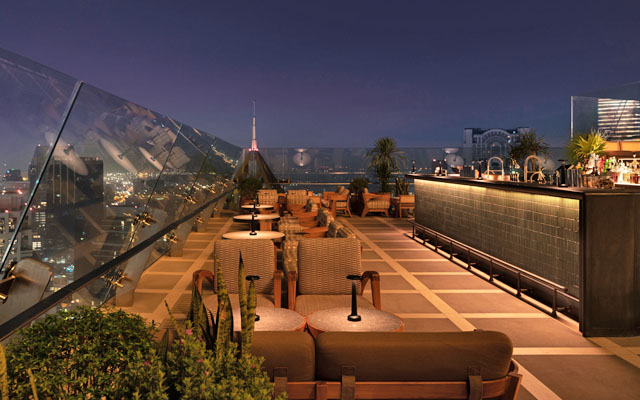
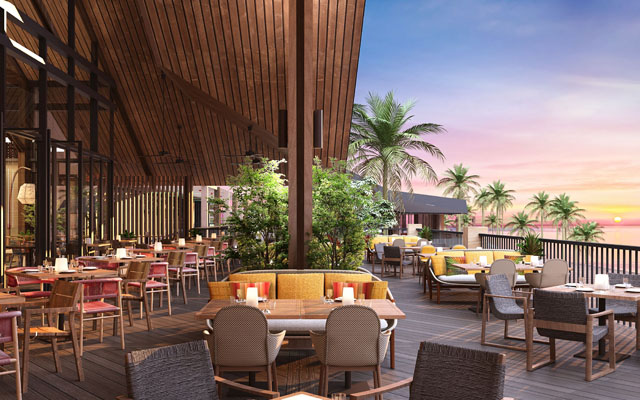
Guests at Dusit Thani Bangkok can view the city skyline from the hotel’s rooftop bar near its golden spire
The new building rises above the park and city skyline and includes 257 guestrooms and suites. It features six restaurants and bars featuring Thai and international cuisine. Dining options comprise a Michelin-starred Italian restaurant and a rooftop bar located beside the hotel’s golden spire.
Facilities also include Devarana Wellness, which offers spa treatments, fitness facilities and a swimming pool. The property also includes event spaces for meetings, celebrations and cultural events.
Preferred Hotels & Resorts said properties in its Legend Collection represent some of the highest-end hotels in its portfolio and are selected for their heritage, location and level of service.
“Dusit Thani Bangkok is honoured to join the prestigious Legend Collection of Preferred Hotels & Resorts and to be part of such a distinguished global portfolio,” shared Marc Handl, managing director of Dusit Thani Bangkok and Dusit Residences.
“Guests of Preferred Hotels & Resorts are discerning travellers who seek meaningful and memorable experiences, and this philosophy closely aligns with ours.”
“We are delighted to welcome Dusit Thani Bangkok to our Legend Collection, an exceptional portfolio of landmark properties that are deeply rooted in their destination and celebrated for their enduring legacy,” added Christine Tan, area managing director for Southeast Asia at Preferred Hotels & Resorts.
What The highly anticipated Disney Adventure has arrived and will call Singapore home, where she will be based for the next five years. As the first Disney Cruise Line ship to be homeported in Asia, she is also the cruise line’s first vessel not built from scratch but acquired and later given a US$1.8 billion retrofit. The ship will operate three- and four-night cruises to the open sea from Marina Bay Cruise Centre Singapore.
Facilities As with any Disney Cruise Line vessel, Disney Adventure offers a range of activities to keep both young passengers and the young at heart occupied during the cruise. There are seven themed areas: Disney Imagination Garden, Disney Discovery Reef, San Fransokyo Street, Wayfinder Bay, Town Square, Marvel Landing and Toy Story Place.
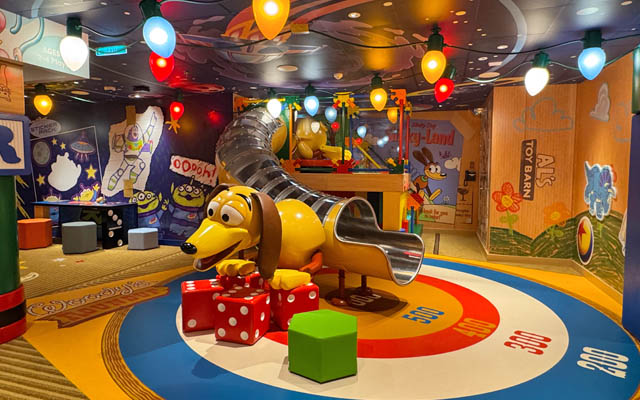
Included in the cruise fare are clubs for kids, tweens and teens. The Oceaneer Club for children aged three to 10 features a Toy Story-themed indoor playground, a rollercoaster simulator where they can design and ride their own coaster, Fairytale Hall for meeting Disney Princesses, the Marvel Web Workshop with interactive stations, and the Walt Disney Imagineering Lab where kids can create things such as cosmic goo with Stitch. Registered children receive a Magicband to wear on their wrist, allowing them to tap in and out easily.
For those aged 11 to 14, there is the Edge club, while Vibe is designed exclusively for teenagers aged 14 to 17. Both provide social spaces with table tennis, board games, video games and movies. Vibe also features a foosball table.
There are also open house periods where adults can visit these clubs to take part in family activities.
Younger children can be cared for at the It’s A Small World Nursery – which also includes Mickey & Minnie’s Captain Deck – available at an hourly charge. The facility includes cribs, diaper changing tables and play areas with age-appropriate toys, as well as interactive features such as a captain’s control panel.
For those looking to spend time by the water, there are several pool areas on board, including the Infinity Pool and Infinity Bar, and the Wayfinder Bay wading pool, which hosts night-time music with a live DJ. Children can enjoy Toy Story-themed water play areas with a pool and water slides.
The ship also has a medical centre, where seasickness pills are provided free, a laundry area as well as a fitness centre and a spa with heated loungers, a steam room and sauna.
On deck five is a shopping arcade offering souvenirs and essentials such as diapers and medication. Additional speciality shops are located on decks 10 and 11.
Concierge guests also have access to a private lounge, sun deck, pool, shops, fitness centre and spa.
Room I was given an Oceanview Stateroom with Verandah, which my children and I found comfortable. We enjoyed sitting on the deck chairs and admiring the ocean. The room was clean, and what I particularly appreciated were the separate shower with sink in one bathroom, and the toilet with sink in another.
Amenities such as shampoo, conditioner, body wash, hand soap and lotion were provided, along with plush towels by Frette. There was even a dark make-up towel – a thoughtful and practical touch.
The room had an open-concept wardrobe with top and bottom clothes bars, and plenty of hangers. There was also a closed cabinet with deep shelves, a pull-out table for room service, a vanity stool, a hairdryer, a safe with an innovative lock system, and a kettle along with Bacha Coffee and TWG tea sachets.
All the walls are magnetic, so my magnetic hooks came in handy. The stateroom door and walls are also magnetic, so we had fun decorating our door with cruise-themed magnets we brought from home.
Convenient charging outlets, including USB, two-pin and three-pin plugs, are located near the bed and dressing table.
Other room types available on the ship include Inside Staterooms, Ocean View Staterooms, Garden View Staterooms, and Reef View Staterooms, with a choice of verandah. Concierge rooms comprise of staterooms and suites.
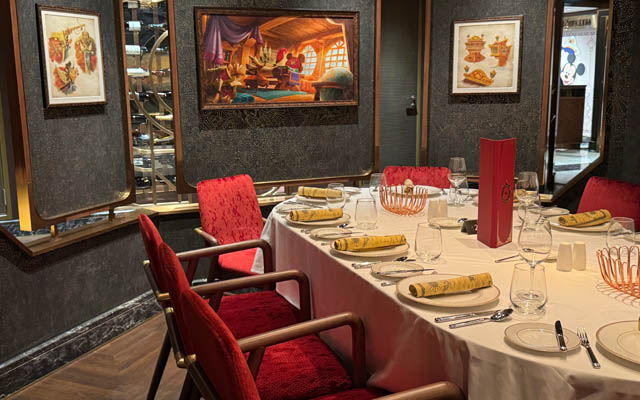
F&B Disney cruises offer rotational dining, a feature across all Disney ships. This allows guests to experience most of the restaurants while being served by the same staff at the same table throughout the cruise. The idea is for the staff to become familiar with guests’ preferences and be aware of any allergies or dietary restrictions.
While this is a thoughtful concept, it did not always play out fully during our meals. Although the staff remembered our names, we occasionally had to remind them of our dining preferences. It may also help if staff check with parents before bringing additional desserts to the children, as some were not ordered and ended up going uneaten.
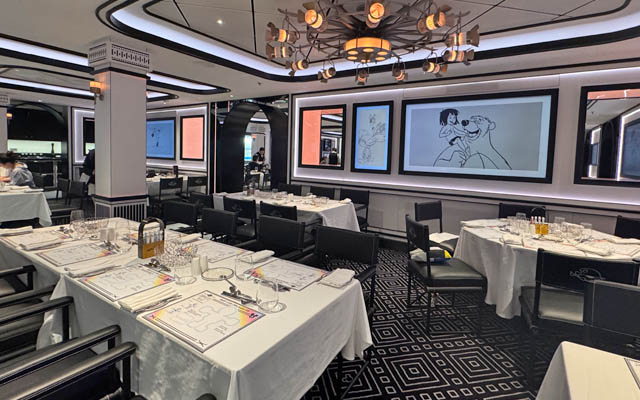
I had sit-down dinners at Navigator’s Club, which featured song and dance performances and appearances by Captain Mickey Mouse and friends; Animator’s Palate, where diners are invited to sketch their own characters before the meal, only to see their drawings later brought to life on screen in animated form; and Pixar Market Restaurant, where each section was themed after a Pixar film, such as Ratatouille, Cars and Monsters University.
The menus at all three restaurants served a variety of Western and Asian dishes, and children get their own menus, often with activities to keep them occupied. Diners can also order more than one entrée, main or dessert.
Disney Adventure
1 of 14
Reef View Stateroom with Verandah; photo by Melissa A Tan
Ocean View Stateroom with Verandah; photo by Melissa A Tan
Navigator's Club; photo by Melissa A Tan
Animator's Palate; photo by Melissa A Tan
Enchanted Summer Restaurant; photo by Melissa A Tan
Pixar Market Place; photo by Melissa A Tan
Andy's Toybox in the Oceaneer Club; photo by Melissa A Tan
Flying Saucer Splash Zone; photo by Disney Cruise Line
Groot Galaxy Spin at Marvel Landing; photo by Disney Cruise Line
Big Hero Arcade in San Fransokyo Street; photo by Disney Cruise Line
Vibe teen club; photo by Melissa A Tan
Infinite Bliss Spa; photo by Melissa A Tan
Concierge Sun Deck; photo by Melissa A Tan
Shops; photo by Melissa A Tan
The other three restaurants in the rotational dining programme are Hollywood Spotlight Club, which also features show performances; Animator’s Table, which follows a similar drawing concept to Animator’s Palate; and Enchanted Summer Restaurant, decorated with themes from Frozen and Tangled.
Besides the sit-down dinners, Pixar Market Restaurant and Enchanted Summer Restaurant also serve buffet breakfasts and lunches, offering a mix of Asian, Indian and Western dishes, along with plenty of fruit and desserts. At breakfast, keep an eye out for the Mickey-shaped waffles and Mickey-shaped churro waffles – a fun and sweet treat.
And of course, the famous Mickey Mouse ice cream bars make an appearance too, though they are only available during dinner and you will need to ask the staff for one.
Other included dining spots are Cosmic Kebabs for Middle Eastern fare, Mowgli’s Eatery for Indian dishes, Gramma Tala’s Kitchen for Asia-Pacific flavours, and Stitch’s Ohana Grill for burgers and hot dogs. There is also Wheezy’s Freezies for soft serve ice cream (with gluten-free cones available), and Pizza Planet, which stays open until midnight. Complimentary 24-hour room service is also available.
Additional charges apply at Palo Trattoria (Italian), Mike & Sulley’s Flavors of Asia (Japanese), and Bewitching Boba and Brews for bubble milk tea. Drinks at the lounges and bars are also not included. The best coffee I had was at Tiana’s Bayou Lounge, accompanied by jazz music, a hot cuppa topped with foam art, and a sweet beignet with chocolate dip.
Entertainment No one will be bored on a Disney cruise. There are Broadway-style shows at the Walt Disney Theatre, such as Disney Seas: The Adventure, a lively performance filled with song and dance, and Remember, an all-new musical that follows a story of love and longing inspired by the Pixar film WALL-E. I especially enjoyed the latter and even felt tears well up by the end of the show.
Other not-to-be-missed shows on board include Moana: Call of the Sea, Baymax Super Exercise Expo, Duffy and The Friend Ship, Avengers Assemble!, and the fireworks night extravaganza: The Lion King: Celebration in the Sky.
Marvel Landing on the ship’s upper deck is a zone dedicated to all things Marvel. Highlights include three attractions: Groot Galaxy Spin, Pym Quantum Racers and Ironcycle Test Run, the first roller coaster on a Disney Cruise Line ship and the longest at sea, spanning more than 250m – I was lucky to get a chance to ride this, and it is way more thrilling and faster than it looks!
My teen spent most of his time at San Fransokyo Street, which is inspired by Big Hero 6. The area features youth clubs Edge and Vibe for tweens and teens, Baymax Cinemas for Disney films, and the Big Hero Arcade with video games and interactive experiences. Guests can also visit the Duffy and Friends Shop, and may even spot Baymax appearing for meet-and-greet moments.
Guests can use the Disney Cruise Line Navigator app – an essential tool on board – to check show times, book character meet-and-greet photo opportunities, and see where they are scheduled to dine that evening.
Families with children aged three to 12 who dream of becoming royalty can opt for a makeover at the Bibbidi Bobbidi Boutique, or join The Royal Society for Friendship and Tea, a paid character dining experience featuring Disney Princesses, music and storytelling.
Service All the staff were friendly and helpful, and did their best to accommodate guests’ requests. The counsellors in the kids, tweens and teens clubs knew the children by name and kept them engaged, and there were smiles all around. Housekeeping was provided twice a day, and the staff were prompt in meeting our needs. I also had a few matters to sort out at Guest Services, which were resolved in a timely manner.
Verdict As my first Disney cruise, I had high expectations after seeing many videos and reviews on social media. I can say Disney Adventure did not disappoint. While there were some teething issues, such as technical problems with shows and rides, the crew responded quickly and arranged additional showings where possible. They were also very apologetic, which helped smooth things over. We will certainly be back to cruise on Disney Adventure again, perhaps to try the Concierge experience next time.
Multi-generational travel is thriving across Asia-Pacific markets, where 50 per cent of surveyed families are going on holidays with three or more generations of a family, finds Hilton’s 2026 Trends Report. Within this movement, Hilton is also seeing a spike in skip-generation travel, where grandparents are choosing to connect with their grandchildren on leisure trips.
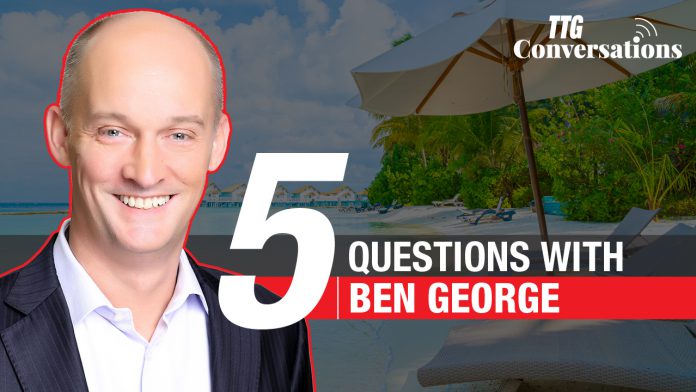
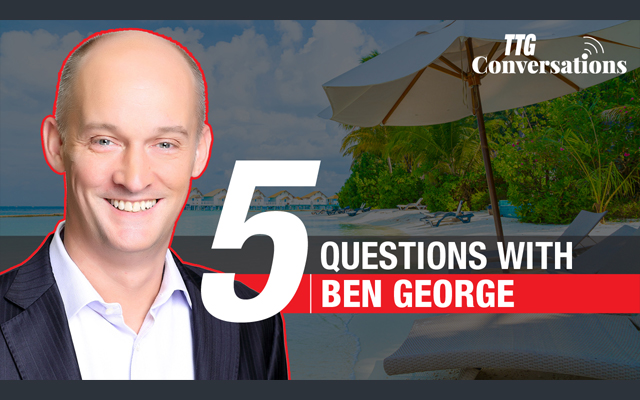
In this episode of TTG Conversations: Five Questions, Ben George, senior vice president and commercial director for Asia-Pacific, Hilton, details the appetite for family travel, reflects on factors that are spurring skip-generation travel demand, and discusses business opportunities tied to family travel.
Fresh from being named the top retirement destination in a TripZilla survey of 100,000 travellers, the Philippines Retirement Authority (PRA) is riding a post-lockdown rebound and scaling up its ambitions.
“In 2024, we achieved 99 per cent of our target,” said Roberto Zozobrado, adding that for 2026, the authority has raised its goal, with January 2026 figures already reflecting “an increase of 25 per cent” year-on-year.
The Philippines highlights healthcare access, English proficiency and long-stay incentives as it seeks to attract more foreign retirees
The Philippines currently hosts more than 84,000 foreign retirees, with 40 per cent from China, followed by South Koreans, Indians, Americans and Taiwanese. English proficiency remains a structural advantage.
“It is very easy for foreigners to really become immersed into the community because of our ability to speak the English language,” Zozobrado said.
The economic spillover extends beyond long-stay arrivals. “Every retiree is required to make a visa deposit, which we hold under their name in one of our accredited banks,” he explained, noting this boosts foreign currency reserves. Retirees may later withdraw the full sum with interest or channel it into condominium purchases, driving property demand. Retirees also contribute through local spending, volunteering and business investments in their host communities.
Healthcare has become central to the pitch.
“From the moment they come to the country, their first question is, where is it that I can easily get health care?” shared Zozobrado. A two-year-old initiative spearheaded by Zozobrado now makes foreign medical insurance portable across 200 accredited hospitals, addressing what he called “the biggest stumbling block” in attracting retirees.
Looking ahead, the PRA is targeting younger, financially capable Asians after lowering the minimum retirement age from 50 to 40. “Retirement these days is no longer based on age. It is based on financial capability,” he said, adding that marketing efforts are being intensified in Europe, Australia and Canada.
Zozobrado also cited the Annual Global Retirement Index 2025 by International Living, which ranked Panama first and Mexico fourth globally. Interestingly, ambassadors from Panama and Mexico chose to retire in the Philippines.
“You can see that even if other people perceive those other countries as a good retirement place, the people from those countries still prefer to come to the Philippines,” he said.
In the updated Annual Global Retirement Index 2026, Panama and Mexico were ranked second and fifth respectively.
S Hotels & Resorts (SHR) reported a record normalised net profit of more than 615 million baht (US$19.2 million) in 2025 and outlined its strategy for further growth in 2026 as it focuses on improving the quality of its hotel portfolio.
The company plans to invest in higher-performing assets, carry out hotel upgrades and strengthen brand positioning while expanding selected developments. SHR expects portfolio revenue per available room (RevPAR) to grow by 20 to 25 per cent, with EBITDA margins approaching 30 per cent and the average cost of debt reduced by more than 0.50 per cent.
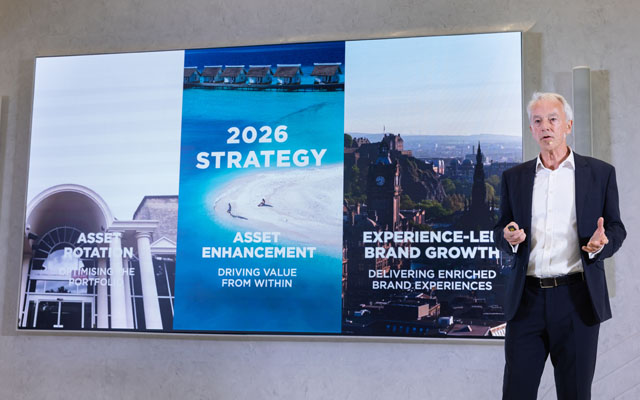
SHR’s Michael David Marshall presenting the company’s 2025 results and 2026 strategy
SHR CEO Michael David Marshall said the company recorded RevPAR growth across all regions in 2025, supported by higher average daily rates and demand from higher-spending travellers. Combined with improved operating efficiency and lower finance costs, this resulted in a record normalised net profit of 615 million baht.
The company also declared a dividend of 0.07 baht per share for 2025, its highest payment since listing.
SHR’s strategy for 2026 focuses on three areas: asset rotation, asset enhancement and brand development.
Under its asset rotation strategy, the company completed the sale of 15 hotels in the UK during 1Q2026. The properties were mainly located outside major markets and relied on domestic demand. Proceeds will be used to repay bank loans and support investment in higher-yield assets.
The company has also allocated about 3,000 to 3,500 million baht for investment in Thailand, focusing on upper upscale hotels and cluster management to improve operating efficiency.
Portfolio upgrades include the rebranding of four hotels in the UK in partnership with Ascott under the lifestyle brands, The Unlimited Collection and lyf. Two lyf properties are expected to open in mid-2026.
SHR also plans upgrades at two SAii Hotels & Resorts properties. SAii Phi Phi Island Village will renovate 12 hillside pool villas, while SAii Maldives Lagoon Maldives, Curio Collection by Hilton will add private pools to 20 overwater villas and develop 18 new villas.
The company is also expanding sustainability initiatives, including solar installations across properties in Thailand and the Maldives and biodiversity protection programmes at the Crossroads Maldives project.
Laguna Phuket will develop a 2.5km walking trail connecting its six resorts as part of a wider upgrade of the destination’s landscape and facilities. The project will be introduced in stages throughout 2026.
The trail will run across the 405-hectare resort area and link parks, cultural spaces, wellness areas and beachfront locations. The aim is to create a walkable route that allows visitors to move easily around the destination while spending more time outdoors.
Laguna Phuket’s planned 2.5km trail will connect parks, beachfront areas and wellness spaces across the 405-hectare resort destination
Features along the trail will include landscaped welcome areas, community parks and seasonal outdoor art displays. Herb gardens, forest therapy areas and quiet beachside spaces are also planned.
The project is part of Laguna Phuket’s broader efforts to integrate nature with visitor experiences across the resort.
In November 2025, Laguna Phuket introduced electric shuttle vehicles that operate between the six resorts and key facilities within the destination. The vehicles provide internal transport while reducing emissions and noise. The resort is also expanding electric vehicle charging facilities as part of efforts to reduce fossil-fuel transport.
Environmental conservation programmes have been part of Laguna Phuket’s operations for many years. Since 1994, its sea turtle conservation programme has released more than 2,294 turtles and involved over 5,000 participants in activities with local marine centres.
Mangrove restoration is another focus. Since 2007, more than 35,500 mangrove saplings have been planted to support coastal protection and biodiversity.
Laguna Phuket has held EarthCheck Gold certification at the precinct level since 2020. The certification requires annual audits covering areas such as energy use, water management, waste and emissions.
Hotels within the destination are also certified under Thailand’s Trusted Thailand programme, which recognises standards for health, safety and environmental management.
Airlines across the Asia-Pacific region have moved into an emergency defensive posture this week, implementing a wave of flight cancellations, steep fare hikes, and phased fuel surcharges.
The drastic measures come as the US-Israel-Iran conflict sends jet fuel prices toward a staggering US$200 per barrel, nearly tripling costs from earlier this year. Aviation fuel currently accounts for up to 40 per cent of an airline’s operating expenses.
Surging fuel prices are forcing airlines to adjust their flight schedules and raise fuel surcharges
Air New Zealand has taken the most aggressive action to date, announcing the cancellation of approximately 1,100 flights – roughly five per cent of its total schedule – through early May. The cuts primarily target off-peak domestic rotations to consolidate fuel use, affecting an estimated 44,000 passengers. The carrier has also implemented immediate fare increases, adding NZ$10 to domestic tickets and up to NZ$90 (US$52) for longhaul services. While the airline is heavily hedged against crude oil, it remains exposed to the cost of refining oil into jet fuel, which has spiked from US$22 to over US$115 per barrel in mere days.
Air India and Air India Express have introduced a three-phase surcharge expansion to combat rising costs and high domestic taxes. Starting March 12, a new Rs 399 (US$4.30) fee applies to all domestic routes, while surcharges to South-east Asia have risen to between US$40 and US$60. A second phase on March 18 will see longhaul surcharges jump to US$125 for Europe and US$200 for North America and Australia, with further adjustments for Hong Kong and Japan expected shortly.
Both Cathay Pacific and Qantas are raising international fares while shifting capacity toward Europe. As travellers avoid Middle Eastern transit hubs, Qantas reported that its European flights are reaching over 90 per cent capacity. Cathay Pacific has suspended flights to Dubai and Riyadh through March, but is adding frequencies to London and Zurich to meet redirected demand. Qantas has flagged a general fare increase of approximately five per cent, warning that some routes may become uneconomical if prices stay at US$200 per barrel.
Across the rest of the region, Malaysia Airlines, Firefly, and Batik Air is set to implement phased rollouts of surcharges. Malaysia Airlines has extended the temporary suspension of its Doha services until March 20, but all other services including Jeddah Madinah, London and Paris continue to operate as scheduled. Malaysia Airlines is also increasing widebody capacity between Asia and Europe to support onward journeys, with flights operating on alternative routes that avoid affected regions.
Vietnam Airlines and VietJet have seen operating costs jump 60 to 70 per cent, leading the former to petition the government for waivers off environment taxes on jet fuel to remain viable.
Over in South Korea, Korean Air has entered discussions regarding significant increases to fuel surcharges for April. Surcharges for longhaul routes like Incheon–New York could triple, potentially reaching 325,000 won (US$220) per ticket.
Singapore Airlines (SIA) and its budget subsidiary Scoot have extended the suspension of their Middle East services. SIA flights between Singapore and Dubai are now cancelled through March 28, while Scoot has suspended its Jeddah services until March 17 at the earliest.
SIA is regarded as having one of the more robust fuel hedging programmes, providing some protection against the refined jet fuel price surge. TTG Asia has reached out to SIA for comments on potential network-wide surcharges, but a response was not provided at press time.
With the US-Iran conflict intensifying, its impact is increasingly being felt on inbound wellness travel from the Middle East to India. The tensions have disrupted international flight connectivity between the region and India, leading to cancellations, rerouted services and uncertainty in travel schedules.
Abhilash Ramesh, executive director of Kairali Ayurvedic Group, shared: “We regularly receive guests from the Middle East, with the UAE accounting for the largest share, followed by Jordan, Syria and Saudi Arabia. Over the next two weeks, we were expecting eight arrivals, three directly from the Middle East and five travelling via the region. While the three guests arriving directly from the Middle East have cancelled their trips, those travelling via the region may still reroute their journeys. Their plans are currently uncertain, and we are awaiting final communication from them.”
India’s Ayurvedic wellness retreats are monitoring travel disruptions as Middle Eastern arrivals face flight uncertainty
Ramesh also expects future enquiries to be affected due to travel restrictions, higher airfares and the limited availability of flights.
Sandeep Arora, director of Brightsun Travel, noted: “Yes, there has been a slight short-term impact on wellness bookings due to travel uncertainty and flight disruptions in the Middle East region. Some international travellers are postponing or reviewing their travel plans. However, interest in wellness retreats in India remains strong, especially from domestic travellers and neighbouring Asian markets.”
The Middle East has also been one of the most consistent source regions for India’s medical travel sector for many years. Patients from markets such as the UAE, Oman, Iraq, Iran, Saudi Arabia and Yemen have traditionally travelled to India for specialised treatments, particularly in areas such as cardiology, oncology, orthopaedics and complex surgeries. However, industry stakeholders say the segment remains relatively insulated from the current geopolitical developments.
“In medical travel, demand tends to behave differently from leisure tourism during periods of geopolitical uncertainty. In situations like the current tensions in the region, what we typically observe is a short-term pause or adjustment in travel timelines rather than a sharp drop in demand. Patients planning elective procedures may wait briefly until the situation becomes clearer, but those requiring treatment generally proceed once logistics such as flights and visas remain workable,” said Ishaan Dodhiwala, co-founder of Medijourn Solutions.
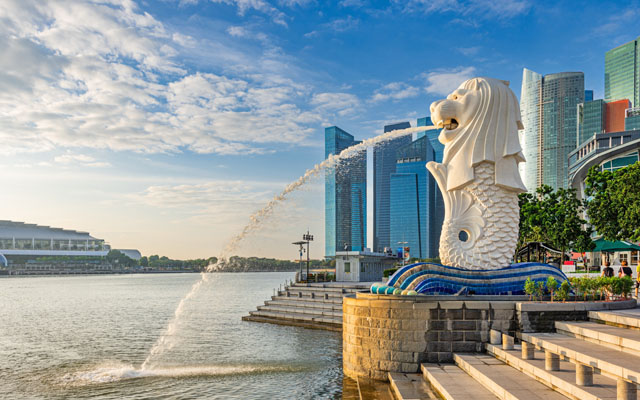
The Singapore Tourism Board (STB) and Scoot have rolled out the third edition of the Singapore Superfans campaign, using the Merlion as the central character to promote travel to Singapore across several markets.
The campaign presents the Merlion as a character encouraging visitors to explore parts of the city beyond its most recognisable landmarks. Scoot supports the campaign by promoting travel to Singapore from its regional markets.
The Merlion takes centre stage in the latest Singapore Superfans campaign by Scoot and STB
The Singapore Superfans film takes the form of a rock-inspired music video directed by Singaporean filmmaker Peggy Goh, with music produced by Bumblebeat. In the film, the Merlion steps out of its usual role as a landmark and becomes the central figure encouraging travellers to discover the city from new perspectives.
Content linked to Singapore Superfans will appear on social media platforms including Instagram, Red Note and TikTok. The campaign also invites audiences to participate in an ongoing narrative through user-generated content.
The initiative aligns with STB’s broader We Don’t Wait For Fun campaign, which targets travellers aged 25 to 39 who seek spontaneous and culturally immersive experiences.
The campaign will run in Australia, China, India, Indonesia and Malaysia from March 12, 2026. It includes a creator-led social media challenge titled #MerlionMadeMeDoIt, in which key opinion leaders from each market invite audiences to suggest new photo locations in Singapore beyond the Merlion.
Selected entries will receive trips to Singapore valued at up to S$3,500 (US$2,600), including flights, accommodation and curated experiences.
Following the social media activation, Scoot will offer promotional fares to Singapore from March 20 to March 27, 2026 in the participating markets.
“Travellers today are looking for experiences that feel personal, expressive and connected to culture, rather than being postcard perfect. This campaign reflects that shift by reimagining a familiar icon as an active character people can engage with and respond to,” said Calvin Chan, chief commercial officer of Scoot.
“For early-career travellers in particular, fun doesn’t wait for perfect plans or ideal moments. Fun starts when curiosity strikes,” added John Conceicao, executive director of marketing partnerships, planning and capability development at STB.