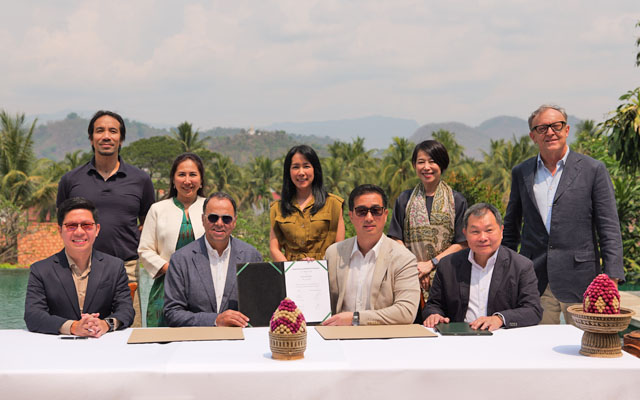
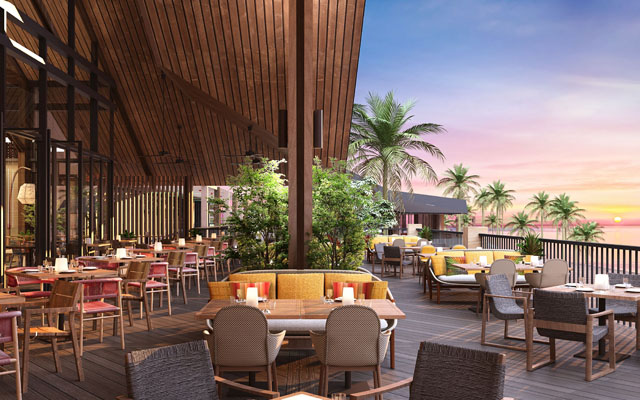
Marriott International has signed an agreement with KS Hotels to debut The Luxury Collection to Cambodia and Laos through the conversion of two boutique properties: La Résidence Angkor in Siem Reap and La Résidence Phou Vao in Luang Prabang.
The move will mark Marriott’s first hotel in Laos and the debut of The Luxury Collection brand in both countries.
Two historic boutique hotels in Luang Prabang and Siem Reap will join Marriott’s Luxury Collection following planned upgrades
Both hotels are expected to undergo upgrades to meet the brand’s global standards while preserving their architectural character and local design influences.
La Résidence Phou Vao in Luang Prabang is expected to join The Luxury Collection in October 2026. Located on a hill overlooking the UNESCO-listed old town, the property sits within tropical gardens with views of temples and the Mekong River.
Following its transition, the hotel is expected to offer 41 rooms and suites designed with Lao craftsmanship and traditional materials. Planned facilities include a restaurant combining French and Lao cuisine, an outdoor pool, fitness centre, yoga deck and spa. Meeting rooms and a retail boutique are also planned.
Luang Prabang, a UNESCO World Heritage Site, is known for its preserved architecture, temples and religious traditions. The property is located about 4.9 km from Luang Prabang International Airport.
La Résidence Angkor in Siem Reap is scheduled to join The Luxury Collection in October 2027. The property is located along the Siem Reap River near Angkor Archaeological Park.
The hotel is expected to feature 59 guestrooms, including 14 suites, designed with Cambodian architectural elements. Plans also include three private residences with outdoor pools.
Dining facilities are expected to include several venues ranging from a brasserie to a street-facing restaurant serving Mekong regional cuisine. Other planned facilities include a spa with six treatment rooms, an outdoor pool, fitness centre and event space.
“This signing marks a defining milestone for Marriott International, as it represents the company’s debut hotel in Laos and the entry of The Luxury Collection in two inspiring, culturally rich destinations,” said Rajeev Menon, president, Asia-Pacific excluding China, Marriott International.
Hoiana Resort & Golf has introduced a new indoor Entertainment Hub as part of its expanding leisure and lifestyle facilities.
The latest addition forms part of Hoiana Resort & Golf’s broader effort to expand its leisure offerings and provide more indoor entertainment options for guests visiting the integrated resort.
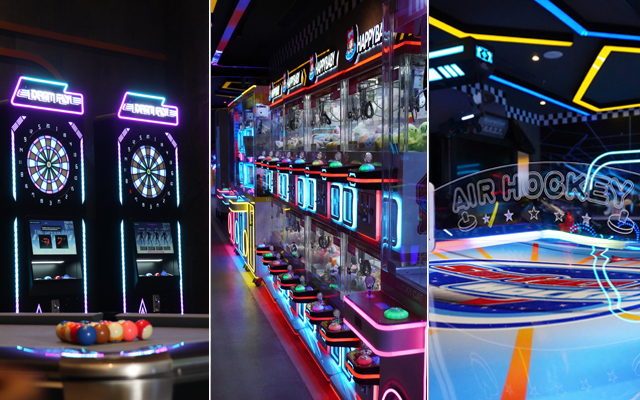
Hoiana Resort & Golf’s new Entertainment Hub features bowling lanes, arcade games and social entertainment spaces
The all-weather venue brings together gaming, social entertainment and leisure activities within a single indoor space. It adds to the resort’s existing attractions, which include a golf course, accommodation, entertainment venues and more than 25 dining outlets across the beachfront development.
The Entertainment Hub includes several zones designed for different activities. A central sports bar acts as a gathering space where visitors can watch international sporting events on large screens. The area also features games such as pool, foosball and darts.
The venue also includes four boutique bowling lanes designed for small-group play. Next to the bowling area is a virtual sports zone where visitors can take part in sports simulations, including golf swing practice and other interactive challenges.
For younger visitors and families, the hub includes a neon-lit arcade area with arcade machines, prize games and other interactive attractions. A nine-hole indoor mini golf course is also part of the space, featuring themed obstacles and interactive elements.
Additional facilities are planned for a later phase of the project. These include five themed karaoke suites equipped with audio-visual systems. The private rooms will feature designs inspired by themes such as science fiction and underwater settings and are intended for small group gatherings and celebrations.
Banyan Tree is expanding its global spa and well-being offerings with a new phase of its Banyan Tree Connections programme, introducing small-group retreats and expanding private wellness experiences across more destinations.
The programme, first introduced in 2025, focuses on well-being activities designed to encourage reflection, mindfulness and shared experiences. The latest phase introduces Connections Retreats, multi-day programmes for small groups that combine guided wellness practices with local cultural elements.
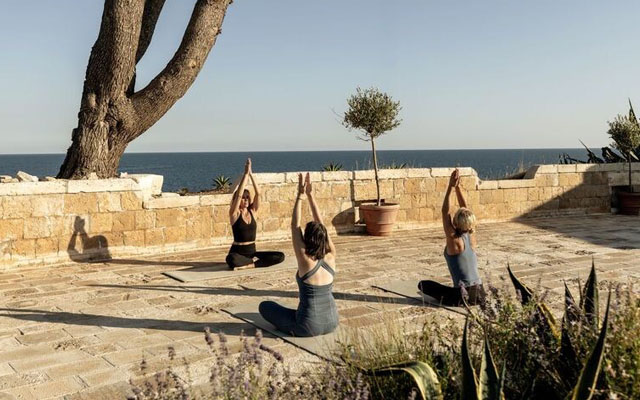
Each Banyan Tree Connections retreat session is designed to combine mindfulness, movement and local wellness practices
Each retreat is designed around the natural setting and traditions of the destination, with activities such as meditation, movement sessions and local rituals.
Planned retreats in 2026 include a five-day programme in May at Mamula Island by Banyan Tree in Montenegro led by Manduka ambassador Nicole Marty. The retreat will include yoga, mindful movement and guided reflection sessions overlooking Boka Bay.
Another retreat is scheduled for October at Buahan, A Banyan Tree Escape in Bali, led by sustainability advocate Nadya Hutagalung. The programme will incorporate meditation, sound healing and wellness activities inspired by the Balinese philosophy of Tri Hita Karana.
The expansion also includes the wider rollout of Banyan Tree Connections, a private well-being programme for two guests. Originally introduced at four resorts in 2025, the programme will expand to eight more Banyan Tree properties from May 2026.
New destinations include Banyan Tree AlUla in Saudi Arabia, Banyan Tree Dubai in the United Arab Emirates, Banyan Tree Lang Co in Vietnam, Banyan Tree Nanjing Garden Expo in China, Banyan Tree Samui in Thailand, Banyan Tree Bintan in Indonesia and Buahan, A Banyan Tree Escape in Bali. The programme will also be introduced at Banyan Tree Guangzhou Jiulong Lake in China when the resort opens later this year.
Banyan Tree is also expanding its visiting practitioner programme, which brings international wellness specialists to selected resorts for workshops, consultations and short retreats.
When Preethi Sanjeevi realised there was a gap in the market for travel services catering to those aged 50 to 70, she decided to create a platform dedicated to them.
Approaching this age group herself, she observed that most travel products and services are designed for the under-40 market.
Greytt curates travel plans, accommodation and activities tailored to travellers aged 50 and above; photo by Kampus Production
With that, she gathered her co-founders and friends – Ramakrishnan CN and Rajeev Lochan – to launch Greytt, a Singapore-based travel innovation company.
“We’re creating a company where purpose is at the centre of it,” she said. “Greytt is reshaping 50+ travel by shifting the conversation from senior tourism to purposeful longevity living. Many people over 50 still want to explore the world, but uncertainty around convenience, safety and comfort often holds them back. Greytt exists to restore that confidence.”
Greytt Journeys is the company’s proprietary platform that provides customisable travel plans for FIT travellers aged 50 and above. Users can key in their destination and activities of interest to receive a suggested travel plan with relevant hotels, activities and logistics providers tailored to their preferences. Subscribers can continue refining their itinerary until they are satisfied.
The company launched in early 2025 and almost a year later, Greytt has more than 270,000 active users and 13 destinations listed on its platform, including Bali, Tokyo, Seoul, Sydney and Bangkok across Asia-Pacific. The team aims to expand this to 25 destinations by the third quarter of this year.
From left: Ramakrishnan CN, Preethi Sanjeevi and Rajeev Lochan
The relatively limited number of cities reflects the company’s emphasis on ensuring its recommendations are suitable for its target age group.
It does so through Greytt Score, its proprietary Fit-for-50+ rating system that evaluates how suitable a hotel, activity or service is for travellers aged 50 and above.
The score assesses factors such as accessibility, comfort and safety, and ranks accommodation based on how age-appropriate it is, helping travellers make more informed choices when booking their holidays.
It is the details that make the difference.
Users can select detailed preferences when booking accommodation, such as standing showers rather than climbing in and out of bathtubs, quiet environments, the availability of staff for on-site assistance, and access to nearby services such as pharmacies and ATMs.
The long-term vision is for Greytt Score to become for travel what the Michelin rating is for food.
Sanjeevi shared: “In a world where people are living longer, travel becomes a powerful way to stay curious, connected and purposeful. Greytt helps travellers move through the world not cautiously, but confidently and fully.”
Island Shangri-La, Hong Kong has launched the Questers Family Adventure, a programme designed for families travelling with children.
The experience centres on a two-night stay on the hotel’s Family Floor and includes activities that introduce younger guests to Hong Kong’s traditions.
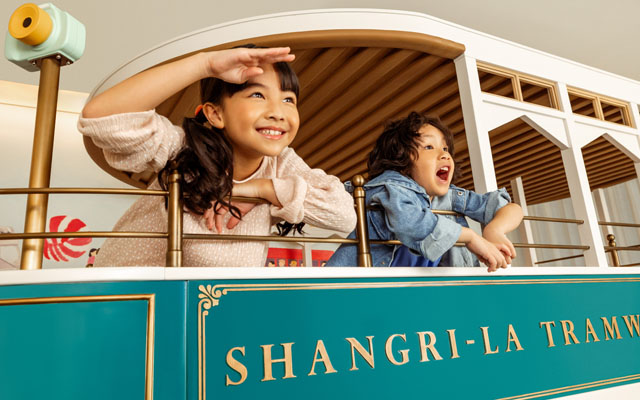
The Questers Family Adventure programme includes themed rooms, workshops and family activities designed to introduce children to Hong Kong traditions
The Family Floor includes 21 themed rooms and suites designed for families, alongside facilities such as The Hangout, a shared living, dining and play space, and The Pantry, which provides appliances and equipment for families travelling with children.
The programme begins with arrival activities at The Hangout, where children receive an activity book with tasks and puzzles to complete during the stay. Guests can also take part in a 60-minute arts and crafts workshop and explore the themed suites.
On the second day, families start with breakfast at Café Too, followed by a private in-room workshop where children create a Hong Kong travel journal to store photographs taken during the stay. A storytelling session and time to explore nearby Hong Kong Park are also included.
Later in the day, families attend a private tea masterclass at Ming Pavilion, where they learn about Chinese tea traditions and create their own tea blends paired with Fujian snacks.
The final day includes access to Waterplay, the hotel’s water playground with splash features and interactive elements. Before departure, children can return to The Hangout for a final craft activity and receive a gift for completing their activity book.
The Questers Family Adventure package starts from HK$32,600 (US$4,200) for a two-night stay and is available until May 31, 2026.
Dubai International Airport (DXB) has begun gradually restoring flight operations after a temporary suspension triggered by a drone-related fire near the airport, adding further disruption to aviation across the Middle East.
A Dubai Airports spokesperson confirmed that some flights to and from DXB are resuming on a limited basis to selected destinations following the precautionary halt. Travellers have been advised to check directly with their airlines for the latest information regarding their flights.
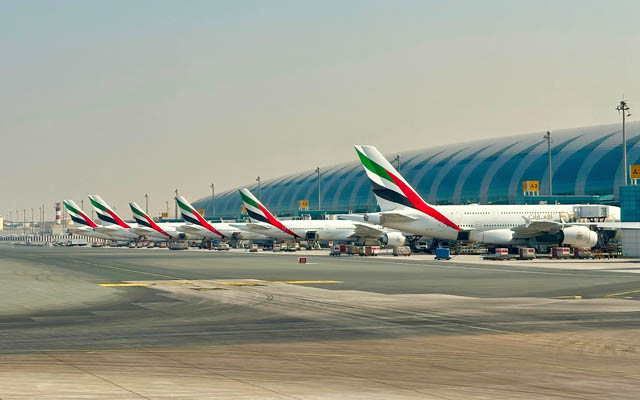
Dubai International Airport is gradually restoring flights after a temporary suspension triggered by a drone-related fire near the airport; photo by Nigel J Harris
Earlier, Dubai Airports had announced the temporary suspension of operations at DXB as a precautionary measure to ensure the safety of passengers and staff.
According to media reports by The Straits Times and Reuters, the disruption on March 16 followed a fire caused by a drone attack that affected a fuel tank near the airport, though no injuries were reported. The incident forced a temporary halt in flights at one of the world’s busiest international air travel hubs.
Emirates said it expected to partially resume operations from 06.00 GMT, although some services were cancelled. Sister airline flydubai also temporarily halted flights, while several aircraft were diverted to Al Maktoum International Airport.
In a separate statement on X, the Dubai Civil Aviation Authority said some flights had begun operating again to selected destinations as the airport works towards restoring normal activity.
The disruption comes amid wider regional tensions linked to the US-Israel conflict with Iran, which has unsettled aviation across the Middle East. Airlines have been cancelling, rerouting or rescheduling flights as large sections of regional airspace remain closed over concerns of missile and drone attacks.
Reuters reported that the March 16 incident marks the third attack affecting Dubai International Airport since Iran began launching strikes across Gulf countries on February 28, which Tehran has said target US military presence in the region.
Gulf Arab states have faced more than 2,000 missile and drone attacks since then, Reuters reported, targeting military facilities as well as civilian infrastructure including airports, hotels and ports.
Earlier in the conflict, two drones were reported to have fallen near Dubai International Airport on March 11, causing damage during an overnight attack across Gulf states.
With the US-Iran conflict disrupting global energy supply chains, Indian hotels are increasingly feeling the strain as shortages of commercial LPG is creating operational uncertainty across the sector.
“There has been some disruption in the supply of commercial LPG cylinders over the past few days. Deliveries that were usually scheduled on time are now delayed, and the availability from distributors has become less predictable. Since the hospitality industry heavily relies on commercial LPG, even short disruptions can create significant operational uncertainty,” said Arindam C Bahel, general manager of The Fern Brentwood Resort Mussoorie.
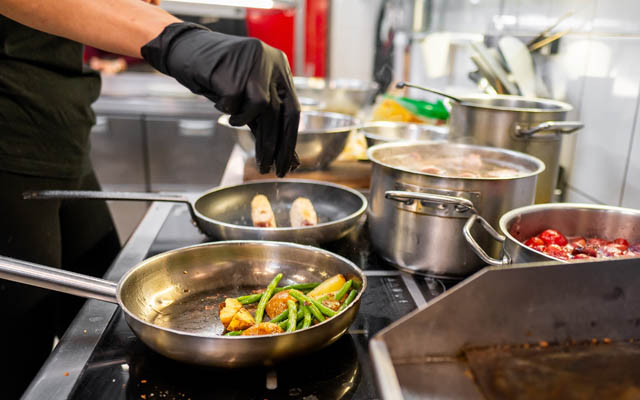
Hotels in India are turning to electric appliances such as induction cooktops as disruptions in commercial LPG supply affect kitchen operations
Hospitality associations including the Federation of Hotel & Restaurant Associations of India (FHRAI) and Hotel And Restaurant Association (Western India) HRAWI have issued advisories to its members to adopt practical operational measures to manage the situation including conserving available fuel, temporarily rationalising menus to reduce high gas consumption items, integrating electric appliances such as induction cooktops and convection ovens where feasible and adjusting operating hours to focus on peak service periods.
“We strongly urge establishments to avoid panic buying or hoarding of LPG cylinders as such actions could further destabilise the market and invite regulatory scrutiny,” said Pradeep Shetty, vice president, FHRAI and spokesperson, HRAWI.
Last week, the Indian government announced that 20 per cent of the average monthly commercial LPG requirement will be allocated by oil marketing companies in coordination with the state governments so that there is no hoarding or black marketing.
“If there is a prolonged shortage, it could affect kitchen planning and meal preparation schedules, particularly in a wellness retreat like ours where meals are prepared fresh and tailored to individual guest requirements,” noted Abhilash Ramesh, executive director Kairali Ayurvedic Group.
“That said, we maintain contingency measures and buffer inventory to ensure guest meal services continue smoothly and without compromising quality.”
Destination management companies (DMCs) operating in the luxury tier face a business hurdle. While many operators excel at logistical execution, a significant portion fail to translate their service quality into a compelling brand identity.
Quentin Desurmont, CEO and president of Traveller Made – the luxury travel consortium that is home to the Serandipians and Takumians invite-only networks – identifies this deficit as a primary threat to long-term profitability in the high-end travel sector.
Traveller Made’s Quentin Desurmont says luxury DMCs must move beyond logistics and develop clear brand narratives to remain competitive in the high-end travel market; photo by Traveller Made
The challenge stems from a misunderstanding of marketing mechanics. Many operators conflate their business name with their brand. This confusion results in lost market share and diminished pricing power.
“I think everybody is struggling with branding. People do not know branding. A brand is the asset number one in a company. It is the biggest asset and yet many fail to register their brand,” Desurmont noted.
To address this knowledge gap, Desurmont looked outside the travel sector. When developing educational content for his Serandipians and Takumians communities, he avoided inviting hospitality executives to share their strategies. He recognised that competition between luxury travel suppliers would limit any meaningful exchange of operational insights.
“I decided to bring people from the luxury goods industry to my conferences. If you start to ask general managers to come, they are all going to fight. It is going to be a mess, and people will never share their secrets anyway,” Desurmont explained.
By pivoting to the fashion sector, Desurmont provided his network with access to a more mature marketing discipline. He views the luxury goods market as a stronger model for travel designers to emulate, as brands in this space have spent decades refining the concepts of desirability and exclusivity.
“Outside of luxury, fashionability means nothing. Fashionability has a meaning. Desirability has a meaning. Luxification has a meaning. These guys in the luxury goods industry have worked with a lot of people to try and reinvent something,” Desurmont stated.
For a DMC to achieve this level of “luxification”, leadership must overhaul their marketing strategy. Desurmont breaks this process down into distinct pillars. The first requirement is establishing a precise client positioning. Operators cannot afford to be generalists. Attempting to capture the entire high-net-worth market dilutes the product offering and confuses potential buyers.
“What do you offer that is different? That’s the added value. If you do what other people do, there is no added value. You need to define what you are bringing to what kind of client,” Desurmont advised.
He advocates for extreme specialisation. A business might choose to cater exclusively to wealthy individuals who travel for opera performances or clients seeking highly technical extreme sports itineraries. This narrow focus allows the operator to build deep expertise and dominate a specific market segment.
“You cannot offer everything to everybody,” Desurmont asserted. “It doesn’t work. Once you know exactly who you are targeting and what you offer that is different, then you can create a brand.”
Once the positioning is locked in, the next step is crafting the brand narrative.
Desurmont has observed that many DMCs rely on plain corporate identities. These businesses lack storytelling. In the luxury tier, the absence of a narrative is a critical weakness.
A high-net-worth traveller does not require a travel designer simply to book a beach resort, Desurmont advised. They are purchasing a transformational experience. Therefore, the brand must reflect this promise of elevation and emotional resonance.
“We are in an industry where travelling is a story,” Desurmont says. “If you do not travel with a story behind (your journey), it is so poor. It is a waste.”
Building this narrative requires corporate leaders to embrace creativity. Desurmont noted that executives are often intimidated by the creative process. They shy away from imaginative concepts out of fear of appearing unprofessional. Yet imagination is the tool needed to differentiate a luxury travel product.
He encourages travel designers to look beyond standard industry marketing tropes. Rather than focusing solely on destination geography or travel experiences, branding should tap into deeper emotional drivers. Operators must draw on cultural myths or historical events to build a distinctive brand persona. Desurmont points to the wine tourism sector as an example of untapped branding potential. There are specialised DMCs operating in regions such as France or New Zealand that focus entirely on viticulture. However, the word “wine” itself lacks strong marketing appeal.
“There are so many myths behind wine. Wine is not a sexy name, nor a sexy word. But ‘Bacchus’ is too obvious. Keep digging. What can you find behind Bacchus? Seek what you can find behind wine and a nice story or within literature to make people dream,” Desurmont said.
By digging deeper into the subject matter, operators can uncover narratives that elevate the perceived value of their services. This level of creative investment is necessary for companies aiming to capture the ultra-wealthy demographic. Desurmont believes the key to unlocking this creativity is reconnecting with a sense of wonder.
“People should more often go back to childhood and think, ‘What did I like when I was a child?’ and ‘What makes me smile because it reminds me of fairy tales’,” Desurmont concluded.
Singapore Airlines (SIA) and Amadeus have renewed their multiyear distribution agreements covering both EDIFACT and New Distribution Capability (NDC) technology.
The agreements ensure continued access for travel sellers using the Amadeus Travel Platform to SIA’s fares, products and services across global markets. The renewal also supports the airline’s indirect sales network, which remains an important channel for distributing tickets and travel services.
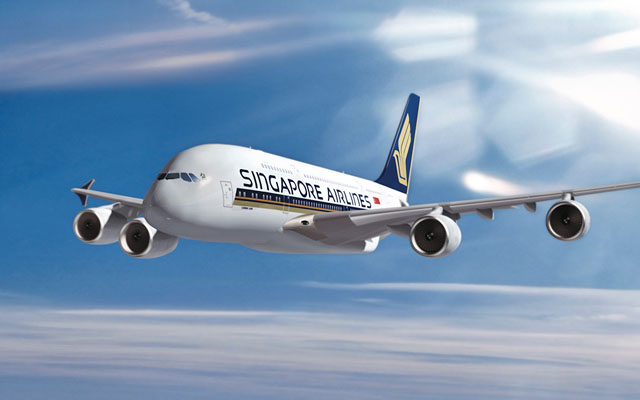
Singapore Airlines and Amadeus have renewed their distribution partnership covering EDIFACT and NDC technology
Under the agreement, the two companies will continue working to expand the use of NDC technology, which allows airlines to offer more detailed and customised products to travel sellers and travellers.
NDC enables airlines to provide real-time offers and additional services through travel distribution systems. This includes the ability to present differentiated products, ancillary services and branded fare options within booking platforms used by travel agencies.
Through the renewed partnership, Amadeus will support SIA in making additional NDC capabilities and content available to travel sellers over time. The aim is to improve product visibility and enable travel agencies to access a broader range of fares and services through a single platform.
The companies also plan to continue developing the NDC solution to improve servicing capabilities, expand ancillary offerings and provide more flexible booking options for travellers.
“The renewal of our distribution agreements with Amadeus reflects Singapore Airlines’ commitment to modernising our retailing capabilities and expanding the reach of our content globally. Together with Amadeus, we look forward to introducing enhanced NDC features that support richer product differentiation and a more seamless booking and servicing experience for travel sellers and customers alike,” said Gan Cai Fong, general manager of distribution at SIA.
“Our renewed agreement with Singapore Airlines underscores our mutual commitment to modernizing airline retailing and expanding access to high value content for travel sellers worldwide,” added Javier Laforgue, executive vice president of the travel unit for Asia-Pacific at Amadeus.
Oceania Cruises has introduced a new global brand campaign titled The Joy of Traveling Well, reflecting the cruise line’s focus on slower-paced and experience-led travel.
The campaign highlights the company’s approach to cruise travel, which emphasises curated itineraries, smaller ships and onboard experiences centred on dining and service.
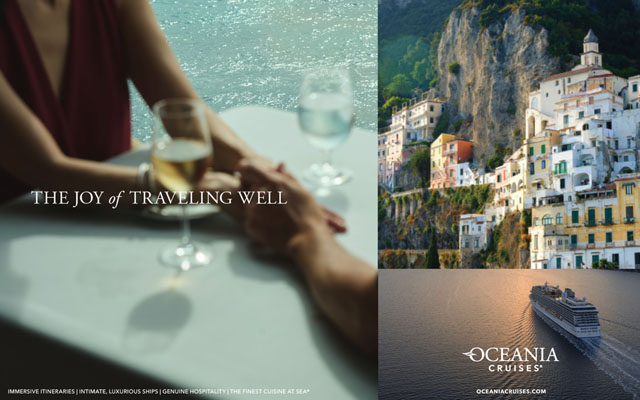
Oceania Cruises’s new global campaign highlights its focus on slower-paced, experience-led travel; photo by Oceania Cruises
According to the cruise line, the new brand expression responds to changing traveller expectations, where luxury travel is increasingly defined by personalisation, comfort and the quality of experiences rather than scale or excess.
The updated brand framework is built around four elements that the company says define the Oceania Cruises experience: itineraries designed around port visits, smaller ships intended to create a relaxed onboard environment, personalised service, and a focus on cuisine.
Oceania Cruises stated its voyages are designed to allow travellers to explore destinations at a slower pace, with itineraries that include both established ports and lesser-known locations. The cruise line added that the brand direction aligns with its transition to adults-only voyages, with ships designed to provide a quieter onboard environment.
The campaign will roll out across digital, social media, print, television and onboard platforms. The launch will also include a new brand film and updated marketing materials.
The initiative will be supported by the company’s Your World Included offering, which includes speciality dining, onboard internet access, gratuities, laundry services and other amenities as part of the cruise fare. Guests can also choose between a shore excursion credit or wine and beer during lunch and dinner.
“The launch of The Joy of Traveling Well campaign offers a clear expression of who we are and what sits at the very heart of Oceania Cruises,” said Jason Montague, chief luxury officer of Oceania Cruises. “This brand evolution reflects what our guests have been telling us for years: that true luxury lies in the freedom to explore at your own pace.”