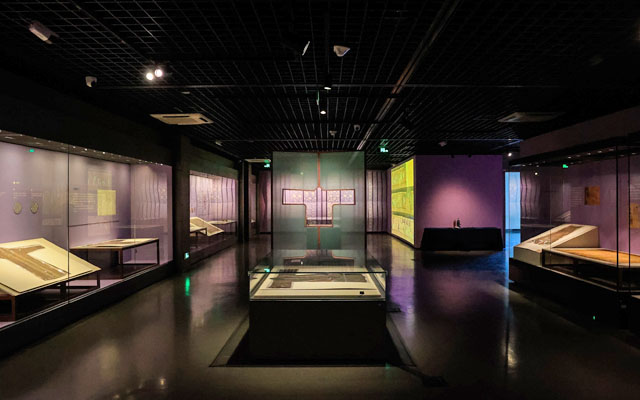
Taipei-headquartered Starlux Airlines has launched flights from Los Angeles and San Francisco in the US to Chiang Mai, Thailand from January 16.
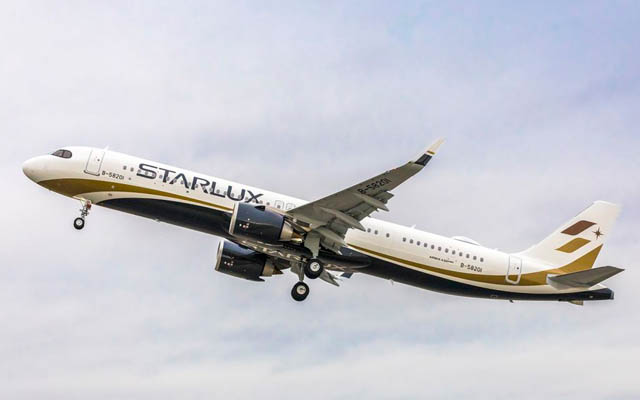
Both services from the US will fly to Chiang Mai via Taipei.
Taipei-headquartered Starlux Airlines has launched flights from Los Angeles and San Francisco in the US to Chiang Mai, Thailand from January 16.
Both services from the US will fly to Chiang Mai via Taipei.

This year will be Singapore’s ArtScience Museum’s Year of Extraordinary Women with major shows that examine, celebrate, and uncover the stories of women whose lives have influenced society throughout the decades.
The exhibitions range from focusing on inspiring artists and screen legends to strong female characters seen in the epic movies of one of the most beloved animation studios in the world.

First to headline is Goddess in April which highlights iconic women in film and television who have defied expectations, overcome stereotypes, and influenced ideas of femininity through their impact and representation on screen. Curated by ACMI, Australia’s national museum of screen culture, the exhibition will head to Singapore after its successful debut in Melbourne.
Frida Kahlo: The Life of an Icon, an immersive exhibition about the life and work of iconic Mexican painter Frida Kahlo, will arrive at the museum. This exhibition marks the 70th anniversary of her passing, and is a unique biographical multi-sensory experience.
In October, The World of Studio Ghibli will celebrate the iconic films of Japanese animation powerhouse Studio Ghibli, and will feature large-scale, interactive theatrical sets from across the studio’s history, inviting visitors to meet some of their favourite characters as well as traverse the enchanting worlds of iconic films such as My Neighbor Totoro, Princess Mononoke and Spirited Away.
For more information, visit ArtScience Museum’s Year of Extraordinary Women.

Hilton has appointed Candice D’Cruz as vice president of luxury brands for Asia Pacific. Based in Singapore, she is responsible for leading Hilton’s luxury brands, Waldorf Astoria Hotels & Resorts, LXR Hotels & Resorts and Conrad Hotels & Resorts, across Asia-Pacific.
 With over two decades of experience, Candice joins Hilton from Marriott International, where she most recently served as vice president of luxury brand management and marketing for Europe, Middle East, and Africa. Her experience includes roles in Starwood Hotels & Resorts Worldwide, Inc. and Emaar, overseeing various aspects of brand, marketing and communications in diverse markets.

Starting from February 14, all international visitors entering Bali will need to pay a one-time levy of 150,000 rupiah (US$10) per person.
This applies to both direct or indirect entry via other port of entries in Indonesia.
The tourism levy aims to contribute to the preservation of Bali’s unique cultural heritage and to reinforce the efforts towards sustainable tourism.
For the first year of operations, the Bali government targets to reap 250 billion rupiah – the fund will be allotted for the cultural preservation programmes and the critical waste management in 2025.
The levy is payable through the Love Bali website or app and a tourism levy voucher with a QR code will be sent to the traveller’s e-mail for scanning upon arrival in Bali.
Speaking at a dialogue with members of the Indonesia Inbound Tour Operator Association (IINTOA), Indah Yustikarini, head of marketing at Bali Tourism Office, said: “We encourage travellers to settle the payment online before arriving in Bali for their convenience and have their QR code ready on their mobile phone for scanning at the airport or seaport.”
However, a payment counter will also be available at the airport and seaports for those who have not made payment prior to arriving in Bali.
For travellers visiting in groups and cruise passengers, their DMCs and cruise agents will take care of the payment process, according to Indah.
She explained that the levy is only applied once, for example, if travelling from Bali to other parts of Indonesia, then returning to Bali, there will not be another charge.
Certain visa categories are exempted from this fee, including diplomatic and official visa holders, conveyance crew, KITAS and KITAP holders, family unification visas, golden and student visa holders, and business visas.
“Business event delegates and travel agents on a familiarisation trip can apply for this exemption,” she said.
To qualify for the exemption, travellers must submit the application at least five days prior to arrival on the Love Bali system – it takes the office a maximum of three days to review and process the requests, Indah said.
For a start, checkpoints will be available at the international arrival terminal at Ngurah Rai International Airport and Benoa harbour. Additional checkpoints at other gateways will soon follow.
She said that her office will work with travel related organisations like hotels and attractions to enable them to check and process payments for their guests through the Love Bali platform.
Several IINTOA members, however, have expressed their concerns over the readiness of Love Bali, such as the ease of application and payment process, as well as the potential long queues at the checkpoints.
Ricky Setiawanto, director at Panorama Destination, said: “Our business partners are informed about the tourism levy but when their clients tried to pay, the (pay levy button) did not respond. They are worried (that if they are unable to pay in advance) they will have to go through a long queue upon arrival.”
In response, Indah said simulations and tests are in progress and she has invited travel executives to participate. The system is expected to be fully operational by February 7.
As for managing queues, Indah shared that 10 staff will be stationed at the international arrival terminal of Ngurah Rai International Airport on February 14, armed with mobile scanners to offer assistance. Her office will adjust operations if more manpower is needed.
IINTOA chairman Paul Talo said: “Our hope is that international travellers will really see the result. The first-year programme, for example, is to tackle waste issue, so we hope that (by end-2025) there will no longer be a garbage issue in Bali.”
Talo added that future tourism levies should be ordered by the central government for implementation on a national level, and not by a provincial government.
Hasiyanna Ashadi, managing director of MarinTur Indonesia agreed, saying that IINTOA should take a proactive step to remind the government of the danger of applying such levies at the provincial level.
Industry players warned that levies implemented by different provincial authorities would result in travellers making multiple payments in order to explore more than one destination in the country.

Asian hoteliers are predicting an energetic business landscape this year due to continued improvement in traveller confidence as well as an enduring revenge travel sentiment.
Yuthachai Charanachitta, CEO at Onyx Hospitality Group, is particularly upbeat about the first six months of 2024 and optimistic about the full year.
“After years of pandemic restrictions and lockdowns, many people have a deep desire to travel again. This revenge travel trend is expected to continue well into 2024, driving demand for all types of travel experiences,” Yuthachai said, adding that resilient consumer spending in 2024 as well as the growing trend in work-leisure travel combinations, preference for local immersion, leisure-focused and family-oriented trips will benefit the company.
“With Onyx’s diverse portfolio of brands – Amari, Ozo, Shama and Oriental Residence – situated in a range of locations across South-east Asia, from cities to beaches, we are well placed to capitalise on these trends,” he remarked.
Boripat Louichareon, managing director of Standard Asia, also expects 1H2024 to be especially rosy, as the “anticipated resurgence” in travel and tourism would drive “heightened demand for our services”.
Boripat said: “As traveller confidence grows, we anticipate increased bookings leading to higher hotel occupancy rates and greater demand for various travel-related services such as dining, beverages, wellness programmes, and activities. This surge might also extend to (business events) or group-related tourism.
“Moreover, the initiation of visa-free travel between Thailand and China from March onward is anticipated to notably stimulate demand for our Thai properties among Chinese travellers. This initiative holds the potential to further elevate the appeal of our Thai accommodation, catering to a larger demographic of tourists from China.”
Minor International is so far off to a promising start, said its founder and chairman William Heinecke in a press statement issued on January 24.
Room bookings for hotels in Thailand in January-February soared by 20 per cent to 30 per cent year-on-year. Chinese bookings have nearly doubled that of 2023.
“We are seeing Chinese tourists coming back strong, despite their economic challenges,” said Heinecke.
The months ahead will see continued investments in portfolio and market presence expansion as well as people development, shared hotel leadership.
Standard Asia will open The StandardX, Melbourne and The Standard, Singapore before the mid-year mark, as well as launch The Standard Residences in two prime Thai locations – Hua Hin and Bang Tao.
“Our primary focus involves boosting visibility and maximising investments in our existing pipelines, alongside actively pursuing collaborations with developers to craft exquisite properties throughout the region,” said Boripat.
Onyx is expanding into the wellness tourism sector through its new Maai Spa brand and concept. It is also growing the footprint of its Prego Italian dining brand. Prego, which has been in the marketplace for two decades, is now operating in Koh Samui, Bangkok, and Pattaya. It will open a new outlet in Kata Beach, Phuket, in early 2024. A spin-off, Pregolino, made its debut in the Maldives last year.
“We also prioritise the development of our people because we firmly believe in the service-profit chain. By taking care of our people, we trust that they will, in turn, take care of our guests, and the bottom line will naturally follow,” added Yuthachai.
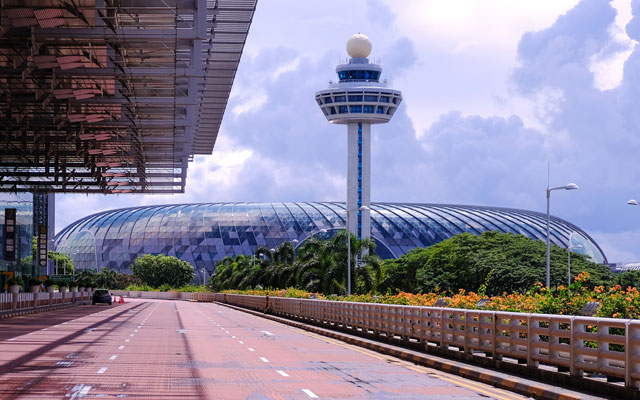
Singapore Changi Airport handled 58.9 million passenger movements in 2023, representing 86 per cent of the traffic recorded in 2019, with traffic in October to December alone achieving a 90 per cent recovery with 16.1 million passenger movements.
Aircraft movements, which include landings and take-offs, totalled 328,000, as compared to 382,000 in 2019.
Compared against pre-Covid passenger traffic, the North America region posted the strongest growth in 2023, exceeding 2019 levels by more than 25 per cent, while Europe, South-west Pacific and South Asia are close to full recovery, registering over 90 per cent of 2019 traffic.
Throughout the year, all regions continued to register strong recovery. North-east Asia was the forerunner, with passenger traffic increasing more than four times that of 2022, largely due to a significant increase in travel between China and Singapore. South-east Asia posted the second strongest growth during the year, registering a 72 per cent year-on-year growth.
Changi Airport’s top five passenger markets for the year were Indonesia, Malaysia, Australia, Thailand and India.
Among Changi’s top 10 markets, China, Japan and South Korea were the fastest growing compared to 2022. With the easing of travel restrictions, China regained its spot in Changi’s top 10 markets, closing the year at number six with close to four million passenger movements. Passenger traffic between Japan and Singapore tripled compared to 2022, while South Korea traffic exceeded pre-pandemic levels by 36 per cent, making it the market with the strongest rebound compared to pre-Covid traffic.
Malaysia’s Kuala Lumpur, Thailand’s Bangkok, Indonesia’s Jakarta and Denpasar (Bali), as well as the Philippines’ Manila were Changi Airport’s busiest routes during the year with the Kuala Lumpur route being the world’s busiest international route based on seat capacity.
“2023 was an invigorating year, as we witnessed the resounding resumption of travel across the world, as well as the full reopening of Changi Airport’s Terminal 2. The upswing in travel was fuelled by strong outbound travel demand, as well as growing inbound travel,” commented Lim Ching Kiat, executive vice president for air hub and cargo development, Changi Airport Group.
“The growth in passenger traffic was especially strong in Asia, with an acceleration seen in the last quarter. Changi Airport also resumed connections to more than 10 cities this year, including Addis Ababa, Changsha, Ningbo, Kaohsiung, and Okinawa. We have restored almost 90 per cent of our pre-Covid city links to date, with Changi Airport now the fifth busiest airport in the world by seat capacity.”
Last year, Changi Airport welcomed three new passenger airlines into the Changi family – Air Macau, Firefly and TransNusa – and added two new passenger city links to its network – Bhubaneswar (India) and Sanya (China). Changi Airport also established its first link to Beijing Daxing Airport via China Eastern Airlines. Through a three-year partnership between Singapore Tourism Board, TUI Airways and Marella Cruises, Changi Airport will welcome fly-cruise passengers from the UK to Singapore between December to April each season, for three years till 2026. TUI Airways operates thrice-weekly services from London-Gatwick, Manchester and Birmingham.
During the year, Air Canada announced its return to Changi Airport after more than 30 years, and will commence its four times a week non-stop Vancouver-Singapore service in April 2024.
Singapore Airlines will also launch new passenger services to Brussels and London Gatwick, commencing in April and June 2024 respectively.
As at January 2024, 93 airlines operate over 6,700 weekly scheduled flights at Changi Airport, connecting Singapore to 154 cities in 49 countries and territories worldwide.
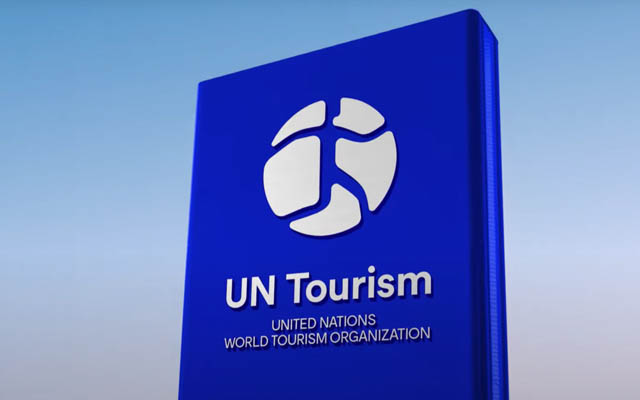
The World Tourism Organization (UNWTO) is now known as UN Tourism.
With this new brand, the organisation reaffirms its status as the United Nations specialised agency for tourism and the global leader of tourism for development, driving social and economic change to ensure that “people and planet” are always centre stage.
Transitioning from UNWTO to UN Tourism, a new brand narrative was crafted to seamlessly align with UN Tourism’s central mission and priorities. This narrative pivots around three main messages: the UN as a global altruistic organisation, the notion of connecting humans around the world, and the concept of proactivity and movement.
By moving away from acronyms, UN Tourism adopts a more approachable stance and capitalises on its strengths: the UN, signifying authority; and tourism, a simple and relatable concept for all. This change has been endorsed by the organisation’s membership, highlighting its united support for the profound transformation and reinvention of UN Tourism in recent years, as it has become more agile, visible, and ever closer to its Member States, partners and the sector as a whole.
UN Tourism’s new tagline, Bringing the world closer inspires the design concept of its new symbol: a Pangea shaping a human figure in action. This evolution from the former globe symbols reflects the organisation’s emphasis on the dynamic nature of tourism and on putting people first.
Beyond the symbol, the rebrand also includes a revamp of the entire visual system, which is now based on a grid of geographical coordinates meant to help people navigate the brand’s touch points, both offline and online, such as events, website, reports, social media channels and campaigns. This system unlocks a rich universe of elements including imagery, fonts, colours, and pictograms all designed to personalise social media campaigns, events, posts, and videos.
The new brand will be gradually implemented across all UN Tourism touch points over the next few months, beginning with digital channels such as the website, social media accounts and newsletters, followed by physical spaces such as offices and events, and elements such as reports and stationery.
Zurab Pololikashvili, secretary-general of UN Tourism, said: “As society progresses, the tourism sector, much like many other sectors, needs to transform to serve as a catalyst for prosperity at a universal scale. Enhancing the well-being of individuals, safeguarding the natural environment, stimulating economic advancement, and fostering international harmony are key goals that are the fundamental essence of UN Tourism. The organisation takes on the role of driving a sustainable force that is now central to many economies.”
With 160 Member States and hundreds of private sector affiliates, UN Tourism has its headquarters in Madrid, Spain, and regional offices in Nara (Japan) covering Asia and Pacific, Riyadh (Saudi Arabia) for the Middle East, as well as forthcoming regional offices for the Americas (Rio de Janeiro, Brazil) and Africa (Morocco). Its priorities centre on promoting tourism for sustainable development in line with the UN’s 2030 Agenda for Sustainable Development and its 17 Global Goals.

In 2024, millennial and Gen Z travellers in Asia-Pacific are declaring shared experiences through travel as their new love language, with almost every nine in 10 travellers (90%) intending to pursue travel with their loved ones.
Klook’s latest Travel Pulse research also revealed that three in five travellers (60%) are set to splurge on 2024 adventures, dedicating up to half their budget to experiences and activities despite rising costs from global inflation.
For millennials and Gen Zs, travel is more than a holiday; it is the ultimate canvas for building connections and creating shared memories that solidify bonds. Klook chief operating officer and co-founder Eric Gnock Fah observed that these travel trends are reflective of a post-lockdown world, where the pandemic-induced isolation and increased digitisation of lives have left people yearning for connection.
“As we move past the pandemic and era of revenge travel, we observe a transformative shift in travel dynamics. It’s no longer just a journey; it’s the embodiment of a new love language – shared experiences. Travel has become an essential outlet, offering individuals the chance to connect genuinely with themselves, their loved ones, and the world around them.”
Prioritising experiences over expenses
For 2024, 64% of millennials and Gen Zs are increasing their travel budgets, with nearly half of them willing to spend up to 50% or more on their holidays. The focus for travellers continues to be on experiences that promise meaningful connections with their companions, with 69% of them booking activities before taking flight.
The availability of experiences and their uniqueness are among the top consideration factors for travellers when planning a holiday. Nature and outdoor adventures take the lead at 59%, followed by the thrill of theme parks (53%), and the cultural richness of museums and historical sites (51%).
Trading solitude for shared adventures
This year, millennials and Gen Zs across Asia-Pacific will break away from pandemic habits of me-time and solitary routines of self-care, and will actively choose to venture back on the road to connect and discover with their loved ones.
Nine out of 10 Asia-Pacific travellers want to pursue trips with others, be it family, partners, or close friends. 30% are opting for getaways with partners, while 26% prefer family adventures, and 21% choose to venture with friends. Millennials also lean towards travel with their partners, while Gen Zs prioritise friend group travel.
About 65% of travellers are pursuing shared adventures through more frequent, shorter holidays rather than extended getaways, to maximise creating these core memories together. New destinations are also on the horizon for 70% of travellers in Asia-Pacific, with the top destinations on the wish list being Japan, South Korea, Thailand, and Singapore.
Driving share-ability factor and travel intent
For most travellers (96%), posting about their journeys on social media platforms is more than just documentation – it’s to be shared with others. This act of online sharing becomes a means of capturing and cherishing memories with their social circles, as these shared experiences take root as constants in digital lives.
Social media continues to be a key source of travel inspiration, with Instagram (77%) and YouTube (77%) leading the way as primary enablers of wanderlust. One in three (33%) travellers engage with travel content daily and more than half regularly share their travel experiences on social media.
Trust dynamics in online travel recommendations are evolving, with non-celebrity figures being the most trusted source of recommendations, reflecting a broader trend towards authentic and relatable content. Online voices continue to be of considerable influence for travel inspiration, as over 80% base their travel bookings on recommendations from content creators, underscoring the pivotal role of digital influencers in shaping travel choices.
Spring is the season of love and shared experiences
For many travellers (65%), climate or season plays a huge part in the shared experience of travel. Spring in the early part of the year is the most popular season across Asia-Pacific, and nearly half of travellers have booked travel within the first three months of 2024. Nature and outdoor activities are among the top ways travellers aim to fully enjoy this coveted season. However, preferences diverge across countries, presenting a diverse tapestry of seasonal affections.
Spring is most favoured by travellers from Malaysia and Indonesia, while travellers from Australia and the Philippines want to embrace the warmth of summer. Taiwan and South Korea share an affection for the vibrant hues of autumn, and winter claims the spotlight for travellers from India, Thailand, and Singapore.
With experiences and social media fuelling how travellers express this new love language in the coming year, Klook anticipates a year of renewed enthusiasm for travel, towards new destinations and things to do.

Onyx Hospitality Group has signed on Shama Suasana Johor Bahru in Malaysia, making Malaysia the first country, outside of home-base Thailand, to host all three Onyx brands: Amari, Ozo, and Shama.
Shama Suasana Johor Bahru is the first Shama property in Malaysia and the second property jointly led by Onyx Hospitality Group and UMLand, following the five-star Amari Johor Bahru in 2017.
Scheduled to open in 1Q2024, Shama Suasana Johor Bahru offers a modern living experience in the heart of the city, nestled next to the Zenith Lifestyle Centre, Johor Bahru’s premier entertainment hub, and within walking distance of malls, department stores, and Johor Bahru’s Heritage Trail.
The hotel is also accessible by the Rapid Transport System, while the CIQ (a customs, immigration and quarantine checkpoint for cars, buses, and the JB Sentral train station) is within walking distance.
Shama Suasana Johor Bahru offers suites with spacious living rooms and separate bedrooms, and fully-equipped kitchenettes.
Location
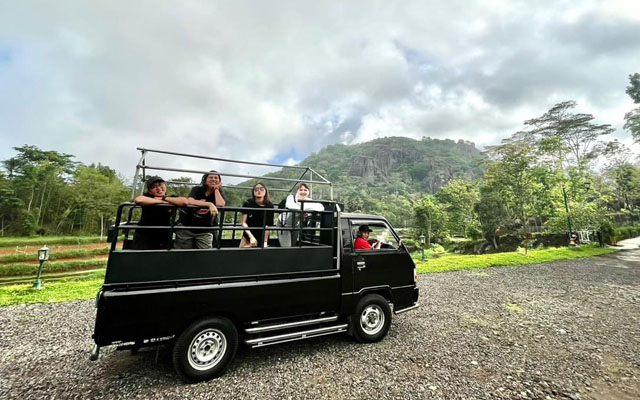
Home to about 700 households of farmers and ranchers, Nglanggeran Tourism Village is located at the eastern part of Yogyakarta, a 45-minute drive from the city centre. The village is nestled in the serene hills of Nglanggeran Ancient Volcano and is part of Mount Sewu Unesco Global Geopark. It was recognised by the UNWTO’s Best Tourism Villages programme in 2021.
Activities
The tour started with trekking the Nglanggeran Ancient Volcano. A pickup truck, which the local dubbed as pajero – an abbreviation from Javanese language which means hot inside and out – took us up to the climbing gate.
Although friendly for beginners, the Nglanggeran trekking route is quite tricky because visitors have to pass through narrow stone passages, and sometimes there are sharp inclines and the road gets a little slippery after it rains. There are four bases to pass to get to the top of the ancient volcano, but our group decided to stop at base two – yet the view there was breath-taking.
We then headed to the cacao plantation and factory where we were taught how to grow cacao trees and transform the beans into a variety of items, such as chocolate cookies and chocolate spa powder.

A simple lunch comprising of rice, chicken, eggs and fresh vegetables was served on banana leaves, while we mingled with the villagers donning traditional batik clothes. After lunch, we enjoyed karawitan, a traditional gamelan (percussion) music performance. The group members also had a chance to try out the instruments and play along with the musicians.
Next on the agenda was a 30-minute cycling tour around the villages, where we enjoyed scenic views of mountains and shimmering emerald paddies. Thereafter, the group indulged in a popular Indonesian dish, bakso meatball soup – a great way to end the tour.
Verdict
Visiting Nglanggeran is not just witnessing the majesty of the ancient volcano – it is also a great way to learn about the history and culture of the destination.
Spending time to stroll through villages, chatting with the locals and participating in various activities will give visitors a deep connection with local traditions and customs. The villagers are warm and welcoming, and eager to engage in a cultural exchange.
For those who wish to experience the local way of life, an overnight stay at over 80 homestays in the area can be arranged. These homestays, managed by residents, provide an opportunity to feel the hospitality of the community.
Contact details
E-mail: gunungapipurba@gmail.com