TTG Asia
Asia/Singapore Monday, 6th April 2026
Page 390

Woman in power

0

Worldwide Hotels consolidated its six brands under one group back in 2018, and started to lay claims to being Singapore’s “largest homegrown tourist class hotel group”. What would you say are the most impressive milestones for Worldwide Hotels since 2018?
We incorporated Worldwide Hotels in 2018 so that we could hold our brands together and give our group an identity. Back then, all our hotels were under different entities even though we were all part of the same group. We knew we needed to start focusing on our brands.

Hence, I think our most important milestone was when we corporatised our organisation. I brought in an external team of professionals with extensive industry experience; before, the business was very much led by myself and my cousin, Chu Poh Yong (chief operating officer at Worldwide Hotels).

Right after we launched Worldwide Hotels, Covid hit. Yet, we stuck to what we believed in for the long-term, kept every staff, refused pay cuts, and even paid out bonuses after the first year. All that really kept our staff very committed and engaged during the tough period when there were many uncertainties.

It is easy to now say that we have survived and thrived despite of Covid, but back then those were really challenging days. The pandemic lasted longer than SARS, longer than what most of us had thought. It was a real challenge to keep the faith. So, I also think that retaining the support of our people was another milestone for the company.

Another important outcome of our efforts during the pandemic was improved processes. We used that downtime to digitalise and establish cross-functional roles.

Besides all that, we have been able to continue with our (property) acquisitions after the height of Covid. In fact, we were able to purchase four hotels after Covid, including the high-profile acquisition of Parkroyal on Kitchener for S$525 million (US$394.9 million).

You now have six brands under one Worldwide Hotels banner, and they are described as offering “comfort, convenience and value for money”. Why has the company chosen to focus on this segment of accommodation?
We’re always focused on economy mid-tier because we feel that this is the segment that we can create the most value. Furthermore, we have a competitive advantage in this space – we have 41 hotels in Singapore, including the upcoming 989-key Mercure Icon City Centre (located in Singapore’s central business district and scheduled to open in 1Q2024). We are able to centralise all our functions, such as payroll, marketing, sales, revenue management, HR, and legal. This creates strong economies of scale and operating efficiencies for our group. This is something that a single owner of multiple hotels can achieve.

Is there a desire to get into the luxury hotel space one day?
We are very tempted, but that’s not where our competitive advantage lies at the moment. If we were to branch into luxury accommodation, our functions would not be as centralised as they are now.

We still have a long way to go before we become an international brand.

Your overseas assets are all bearing other brands, and are placed under external management. Are you looking at bringing your own brands overseas?
That is in our third phase of growth; our second was to build our asset base. We need to ensure that our asset base is sufficient and we have economies of scale.

If you look at all our investments, you will see they are strategically located in key cities. When we have sufficient numbers of owned hotels and can manage well with economies of scale, we can then replicate what we have in Singapore and leverage our strength. With that, we can convince external hotel owners to let us manage their properties. We cannot grow overseas by being asset-heavy.

Of course, our investment horizon is very, very long-term. We are family-owned and I do not have a KPI to show within the next few years. But that is intentional – we will only do something when we are ready and have a competitive advantage.

When the time is right for bringing your brands beyond Singapore, which brand would it be and which destinations are you mostly likely to establish it in?
Well, that would be the Hotel Mi brand. It is a fun, mid-tier brand that targets the young, confident and social generation of travellers who will pay for luxury that they value. We are not targeting the five-star type of travellers – we are not competing in that market space. We are very focused on hospitality that matters, and to provide a level of luxury that the guests value.

Now, Worldwide Hotels are already present in key cities across Asia-Pacific. So, we will be keen to bring Hotel Mi to places like Bangkok in Thailand as well as Melbourne, Sydney, Perth and Brisbane in Australia. We are interested in key cities that attract both corporate and leisure travellers, so as to provide us with a broad base of customers and more consistent demand.

Hotel Mi is also a brand that we are working to build in (home base) Singapore. Our second Hotel Mi opened in Singapore’s Short Street (surrounded by both cultural enclaves and the CBD).

You have given your high-profile Kitchener Road acquisition to Accor’s Novotel brand. Why did you choose to do this, instead of managing it yourself and giving it one of your own labels?
That was under a franchise agreement that allows us to work with Accor and use the Novotel brand. We are able to leverage on Accor’s marketing and distribution channels, and command a higher ADR and RevPAR, while at the same time manage the property ourselves.

This is just us choosing to leverage on the economies of scale that we have.

Our rooms at Novotel Singapore on Kitchener (opened November 1, 2023) are larger than the rooms we normally have – the smallest room types are an average of 28m² compared to 14.5m² to 17m² elsewhere at our other hotels. Hence, we believe that the Novotel brand, being an upper-four-star label, can do more justice to the asset.

We took the same approach with the new Mercure Icon City Centre. We wanted this asset to be the landmark hotel for Worldwide Hotels. We looked at the strong partnership that we have with Accor and saw the advantages of having the Mercure naming rights for this property. Again, the benefits of this arrangement is our ability to drive higher ADR and RevPAR, while at the same time maintain independence in operations.

You have assets overseas that are managed by Accor. Why did you not enter into a similar franchise agreement for those properties?
We will only do something when we are very ready. In Australia, we have Novotel Melbourne Central, Ibis Melbourne Central, and Ibis Styles Brisbane Elizabeth Street that are managed by Accor. Worldwide Hotels does not have the economies of scale to manage properties in Australia ourselves. Accor is established in Australia and has a cost advantage. It has local support and a dedicated Australian country head. At this moment, Accor serves us better than we can ourselves.

Are you also looking at franchise agreements with other hotel companies? As an asset owner, what sort of characteristics do you look for in a franchise partner?
We have requests for proposal from a few international hotel firms, and we have approached a few. So far, we have determined that Accor’s commercial terms and the potential benefits to Worldwide Hotels and the hotel assets are the most attractive.

As an asset owner, we want a partner that is positioned strongly in the world and has a massive loyalty membership base. It is also important that the partner has a brand that suits our product.

What else is on the horizon for the company, especially in the new year?
We are constantly excited these days, as we have many projects. The team is now busy driving business into Novotel Singapore on Kitchener, which is still in its initial months of operations. The first year is crucial, and we must stabilise business by mid-2024.

Hotel Mi Rocher is also new, and we will soon be rolling out our own press initiatives to launch Mercure Icon City Centre.

So, these projects are keeping our core teams very busy. The new year will certainly be very exciting for them.

Worldwide Hotels has so many properties in Singapore. What role do you play in supporting the destination’s inbound tourism efforts?
We participate in almost all of Singapore Tourism Board’s (STB) international fam trips, and have a representative that attends all STB-led initiatives overseas. STB is doing a great job promoting Singapore and building an exciting calendar of events for 2024. That helps a lot to catalyse hotel business.

The challenge for Singapore is that it is deemed a tad too expensive for regional markets. Last year, hotels rates here rose 25 to 26 per cent over pre-Covid. With the appreciation of the Singapore dollar, Singapore may price itself out of reach for some aspiring travellers.

We are in the mid-tier category. The ADR is around S$200 for most of our hotels and even around S$100 for some. It is important that we continue to deliver consistent service and bring value to (price-conscious) travellers who visit Singapore.

How do you balance that though? You are maintaining this affordable price range against rising cost of operations.
Yes, the cost pressure is intense. Utilities have risen by more than 30, 40 per cent. Labour cost is also much higher compared to pre-pandemic. A lot of hotels are curtailing occupancy because there is not enough supporting labour. It is a general trend in the market.

So, what we have done is to adopt cross functions and equip our staff with the ability to multi-task. I mentioned this earlier on, that we used the pandemic period to upskill our staff. There is a movement across Singapore’s travel industry to redesign jobs, so that we can pay our people better but also have them perform a bigger range of work.

How do you get your staff to recognise that expanded job functions is the norm now?
Well, higher pay is a motivator, but staff communication is most crucial. Post-Covid, we are very focused on engaging our staff. We run a quarterly newsletter in multiple languages that shares company-wide updates. We want our staff to feel like they are part of a bigger community.

We set minimum training hours that every department needs to fulfil, and that is part of their appraisal.

Does Worldwide Hotels contribute to nation-wide hospitality talent investment?
For many years before the pandemic, we worked with local institutions to provide internship programmes. We are working with Republic Polytechnic and Temasek Polytechnic in Singapore to provide internship placements this year, and will have four students joining us from March till August.

As a group, we are also very much inspired by the efforts of our founder in supporting local education. He established the Worldwide Hotels Choo Chong Ngen Foundation. Today, the foundation has a continuous relationship with Singapore’s Metta School (which supports students with mild intellectual disability and/or mild autism spectrum disorder) to take in one student yearly. We have so far hired one staff with disability.

Additionally, there will be 10 APSN Delta Senior School (a social service agency that provides special education, vocational training and employment support services for individuals with mild intellectual disability) interns for on-site training from January to May 2024.

We also worked with Yellow Ribbon Singapore (which supports ex-offenders) to employ two staff.

We want to give a lot of support to our society, and are committed to doing even more.

JLL report shows confidence in Japan’s hotel recovery

0
Cityscape of Japan

Japan’s key hotel markets are showing strong signs of recovery led by growth in the high-end segment, according to a new report from global real estate service provider JLL.

In its 2023 report, JLL said the weak yen has particularly benefitted Japan, which has recorded a “significant resurgence of international and domestic tourists”.

JLL predicts Kyoto, pictured, will continue to grow in international visitation

Tokyo recorded 20.3 million international visitor nights over January to October 2023, representing a RevPAR of 109 per cent relative to 2019. Kyoto and Osaka performed similarly, showing a RevPAR of 107 per cent and 106 per cent respectively.

Kyoto, which has historically seen a higher ratio of international visitors than the national average of 20 per cent of total visitors, saw 2.6 million international visitor nights from January to August 2023, 13 per cent more than over the same period in 2019. Domestic visitor nights also exceeded the 2019 figure by 16 per cent.

JLL predicts Kyoto will enjoy “continued growth in international visitation coupled with rising domestic demand”, due to the opening of many luxury brands including Six Senses, Kyoto, Banyan Tree Kyoto Higashiyama and Regent Kyoto, as well as renovations at Kansai International Airport that will see annual international passenger capacity increase from 23 million to 40 million in 2025.

In Tokyo, the total number of international visitor nights over the period reached 20.3 million, 26 per cent more than pre-pandemic. And, although occupancy had decreased by nine per cent relative to 2019, it was still higher than Beijing, Shanghai, Hong Kong and Seoul, at 77.8 per cent. Tokyo’s market therefore has room to grow across all segments, for both leisure and business travellers, according to JLL.

Hotel recovery in Osaka, meanwhile, was driven by “the full recovery in domestic demand”, with international visitor nights from January to August 2023 reaching only 86 per cent of 2019 levels.

The trend reflects the city’s hotel market slowdown before the pandemic but an 11.7 per cent increase in total room inventory this year; the city’s hosting of the Expo 2025 Osaka, Kansai; and the opening of an integrated report in 2030 should attract more international visitors, said the report.

IAAPA makes presence felt in the Middle East

0

IAAPA, the global association for the attractions industry, has established an office for the Middle East in Dubai, United Arab Emirates (UAE), with physical presence led by Ahmed Zakaria as director of operations.

Ahmed has more than 20 years of experience in the exhibitions and event management industry across the Middle East and North Africa region.

Ahmed Zakaria is IAAPA’s new director of operations for the Middle East

Prior to joining IAAPA, Ahmed was the general manager for MICE World, a Dubai-based exhibitions and conferences company specialised in events for the public sector and semi-governmental entities. He also previously held the role of general manager for Informa PLC where he successfully established and managed business portfolios for exhibitions, conferences, and training activities in the Saudi Arabian market.

Ahmed will play a key role within the IAAPA Europe, Middle East, and Africa team, focusing on consolidating and developing our membership reach in the Middle East region. His addition will allow the association to enhance services to members and industry connections in the Middle East and provide an efficient way to expand IAAPA trade events in the future.

Global Hotel Alliance reports record 2023, positive outlook for 2024

0

Global Hotel Alliance has reported record 2023 results, with every key performance metric hitting an all-time high.

Total room revenue of the GHA Discovery loyalty programme, shared by all brands and their collective 800 hotels, reached US$2.3 billion, surpassing 2022 by more than US$1 billion. This reflects the growth and engagement of the loyalty member base, which crossed the 25 million mark in 2023 and achieved 2.7 million new member enrolments for the year compared to 1.6 million in 2022.

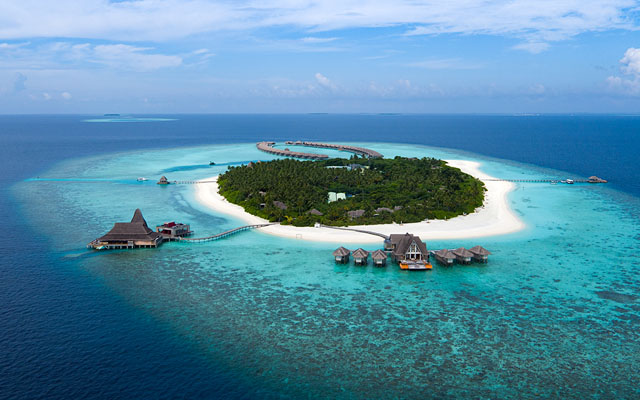
Global Hotel Alliance has a positive outlook for 2024 based on 2023’s performance records; Anantara Kihavah Maldives Villas, pictured

Repeat stay revenue surpassed the billion-dollar mark for the first time, increasing 60 per cent year-on-year to US$1.4 billion, while hotel cross-brand revenue jumped 71 per cent to US$289 million, demonstrating GHA Discovery’s successful loyalty model, which incentivises members to enjoy the programme’s benefits, including earning and spending their Discovery Dollars (D$) rewards currency, across its 40 member brands.

With more members understanding the value of D$ (D$1 equal to US$1) – as easy to redeem as cash toward the bill at checkout – D$ redemptions more than doubled year over year. Redemption spiked during key 2023 holiday periods, with December seeing the highest redemption rate since the rewards currency was launched two years ago.

International stays contributed 60 per cent of all revenue in 2023, with countries receiving the most being the Maldives (100 per cent of all revenue was from international stays), Thailand (90 per cent), Portugal (88 per cent), the Netherlands (83 per cent), the UAE (77 per cent), Singapore (75 per cent) and Italy (74 per cent).

Meanwhile, the US (US$205 million) and the UK (US$111 million) were the top feeder markets for international stays at GHA properties, followed by Germany (US$67 million), Australia (US$56 million), and China (US$45 million).

Top destinations in terms of international stay room revenue reveal Thailand is the most popular overall, favoured by members in the US (US$10.3 million spend), followed by members in the UK (US$9 million). The UAE is the second most popular overall, favoured by members in the UK (US$16.6 million spend) and members in Russia (US$11 million). Members in the US favoured overseas travel to the Caribbean (US$26 million) and Italy (US$25.3 million) followed by the UK (US$15.7 million), while Australian members preferred Singapore (US$10.1 million).

The report also showed that GHA direct web and app bookings doubled last year, up 99 per cent versus 2022, with average spend per member 65 per cent higher on GHA Discovery’s direct channels compared to other third-party channels.

“Our record 2023 results reflect how our customers have embraced the GHA Discovery programme and its new rewards currency, which offers incredible value and choice to members,” said GHA CEO Chris Hartley.

“We marked many milestones in 2023, all of which gave members more reasons to stay within our programme, from introducing a cruise component through our partnership with Regent Seven Seas Cruises, to helping travellers identify hotels committed to sustainability best practices with the introduction of our Green Collection, all while enriching our hotel portfolio with new destinations and an even wider range of hotel options, which has boosted loyalty to record levels.”

Sabre, Malaysia Airlines launch NDC content

0
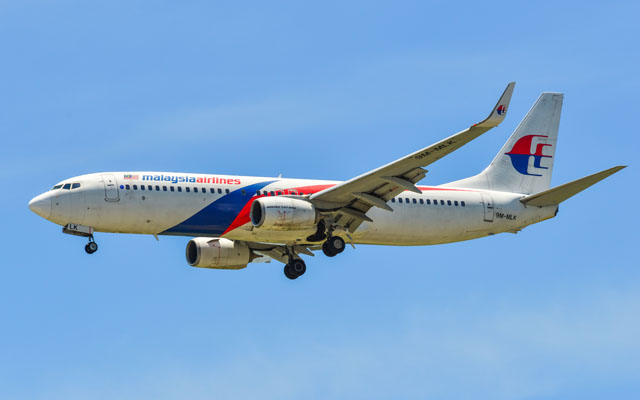
Two Malaysia Airlines flights were diverted from the Middle East

Malaysia Airlines’ NDC content is now available through the Sabre travel marketplace, enabling the carrier to expand its offer-and-order based retailing to travel sellers.

Sabre-connected travel sellers in key markets can now shop, book, and service Malaysia Airlines’ NDC offers, alongside traditional content options, through Sabre’s Offer & Order APIs, agency point-of-sale solution, Sabre Red 360, and Sabre’s corporate booking tool, GetThere.

Malaysia Airlines’ NDC content is now available through the Sabre travel marketplace

Malaysia Airlines’ NDC offers are now available through Sabre’s marketplace in Australia, India, Indonesia, Malaysia, Singapore, and the UK, with additional markets to follow.

Both companies have worked together for more than 20 years, with the carrier already using an extensive suite of Sabre technology, including Sabre’s GDS and a suite of network planning and optimisation solutions.

“It’s essential that Malaysia Airlines has the capabilities it needs to get its content in front of the right travel sellers, as the carrier continues to ramp up services and introduce new products,” commented Kathy Morgan, vice president, product management, distribution experiences, Sabre.

Dersenish Aresandiran, chief commercial officer of airlines, Malaysia Aviation Group (MAG), said: “It’s essential to us that we can provide travel sellers with the best omni-channel purchase experience when shopping for, and booking, our fares and offers. Joining Sabre’s growing family of NDC airlines will enable us to effectively provide our enhanced offers and rich content to travel sellers so they can make the best decisions for travellers.”

airasia members can now access Onyx Hospitality Group perks

0

Onyx Hospitality Group has joined forces with airasia rewards, a loyalty programme operating under the airasia Superapp (soon to be rebranded as airasia Move) to craft travel and stay experiences tailored for airasia members.

This collaboration enables airasia members to enjoy up to a 30 per cent discount on hotel rooms affiliated with Onyx Hospitality Group. Additionally, airasia members will have the exclusive privilege of earning 500 airasia points with the code PAA2324 till December 20, 2024.

The partnership allows airasia members to enjoy more benefits at Onyx Hospitality Group

In addition, airasia members who are also Onyx Rewards members are entitled to exclusive discounts on rooms, restaurants, and spas, as well as benefits such as room upgrades, flexible check-in and late check-out options.

Niwat Vaitayamongkol, senior director of brand and marketing communications at Onyx Hospitality Group, shared that the group has upcoming plans for more strategic partnerships “to curate the most exclusive experiences for travellers and guests staying at our hotels, particularly those who are Onyx Rewards members”.

airasia members with accumulated points can redeem them for flights, hotels, and cash vouchers from numerous renowned brands through the airasia Superapp, shared Bawornpak Siripanich, country head of airasia rewards Thailand.

A new era of vacations

0

Royal Caribbean International and world-renowned sports icon Lionel Messi debuted the Icon of the Seas at a naming celebration in Miami in the US, just shy of the cruise line’s 55th anniversary.

The milestone moment was held in the AquaDome neighbourhood and attended by Royal Caribbean executives, crew, employees, fans and partners.

Lionel Messi debuted the Icon of the Seas at a naming celebration in Miami

Messi, who inaugurated the highly anticipated vacation with a bottle-breaking, said: “Everything I’ve seen on Icon of the Seas is next level. There are experiences for the whole family to make memories that they’ll remember forever.”

Royal Caribbean Group president and CEO Jason Liberty described the new ship as a “culmination of more than 50 years of dreaming, innovating and living our mission – to deliver the world’s best vacation experiences responsibly”.

Icon of the Seas set off with vacationers for the first time on January 27, and will island-hop through the tropics on seven-night Eastern or Western Caribbean adventure from Miami.

Enjoy a luxury cottage stay by the ocean in Koh Samui

0

Cape Fahn Hotel in Koh Samui introduces the new Ocean Cottage – the only two-unit luxury pool villa with glass walls facing the sea on its private islands.

Ocean Cottage allows guests to enjoy the beauty of the Gulf of Thailand from inside its spacious bedroom and living room, which features a bathroom with bathtub as well as an outdoor rain shower. The seaside terrace is a great place to socialise or just to lounge in private. There is even a private pool on the lower sunbathing patio.

Cape Fahn Hotel’s new Ocean Cottage allows guests to enjoy a luxurious stay by the ocean

Ocean Cottage is fully equipped with modern five-star hotel facilities and amenities combining perfectly with a luxury lifestyle.

For more information, visit Cape Fahn Hotel.

Singapore, China to implement 30-day visa-free entry from February 9

0

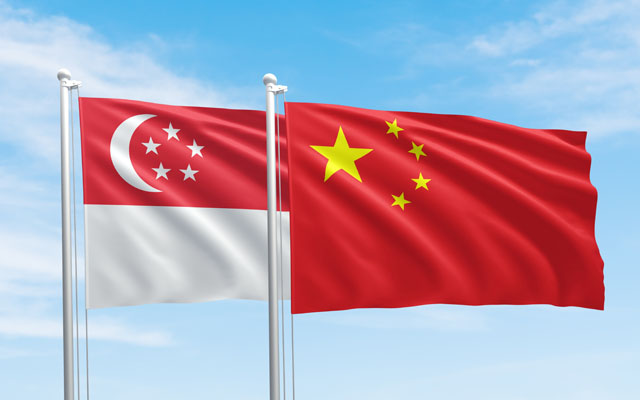
Singapore and China have agreed to a 30-day mutual visa-free entry for their citizens, where the arrangement will begin on February 9.

Under the agreement, Singaporeans and Chinese citizens holding ordinary passports can enter China or Singapore without a visa for no more than 30 days if they are travelling for business, sightseeing, or visiting friends and family.

Singapore and China have confirmed a 30-day mutual visa-free entry for their citizens

Those who plan to engage in activities that require prior approval, such as work or news reporting, or plan to stay for more than 30 days, must still secure the relevant visa before entry.

Plans for the 30-day mutual visa exemption agreement were announced nearly two months ago, during the highest-level annual bilateral forum between Singapore and China, where Chinese vice premier Ding Xuexiang commented that the visa-free arrangement would “provide greater convenience for people-to-people exchanges”.

Currently, Singaporeans holding ordinary passports can enter China without a visa for 15 days for purposes like sightseeing, visiting family and business. Chinese citizens currently require a visa to enter Singapore.

Japan turns to technology to tackle overtourism

0

Japanese organisations are adopting the use of more technology to cope with overtourism amid the country’s rapid inbound travel rebound.

In 2023, 25.1 million international travellers arrived in Japan, a dramatic uptick from the 3.8 million in 2022. Recovery has been particularly strong since September, when arrivals were only 3.9 per cent less than the number in September 2019, culminating in December data which was an 8.2 per cent increase on the number of arrivals in December 2019.

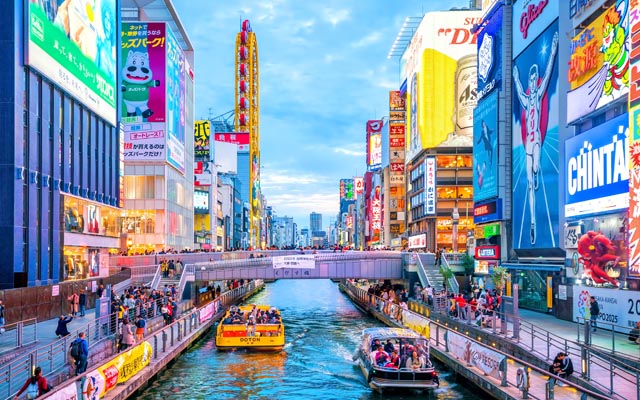
Smart bins have been installed to prevent littering at popular tourist spots such as Dotonbori in Osaka, pictured

With the world’s attention on Hiroshima in 2023 due to the G7 Summit, and an uptick of visitors since April, Hiroshima City plans to introduce an online ticket system for its Hiroshima Peace Memorial Museum as early as March. The museum will also extend its opening hours by two hours for visitors who book online, in a bid to ease congestion.

From April to November 2023 alone, museum visitors totalled 1.5 million visitors, not far off the 1.8 million who visited over April to March 2019.

Osaka is also using technology to tackle some of the negative effects of the tourism rebound, using a subsidy from the Ministry of Land, Infrastructure, Transport and Tourism to install ‘smart bins’.

Some 20 solar panel-enabled bins have been installed to combat the increase in rubbish at popular tourist districts in the heart of the city such as Dotonbori, a growing problem as Japanese municipalities tend not to install bins, preferring people to take their rubbish home, even in areas where street food sellers are prolific.

The solar panels will sense when rubbish is building up inside the bin and compress the garbage by about 20 per cent. The bin can also send alerts to workers for it to be emptied before it is full, thereby reducing the chance of litter polluting the streets and protecting the urban environment.