


Airbnb closes the digitalisation gap with community initiatives

PATA member Airbnb is taking the lead in bridging the digital divide, tackling barriers in rural and underserved regions to foster economic growth, promote inclusive development, and provide exposure to a global community with sustainability and a long-term impact in mind.
According to Asmita Joshi, Airbnb head of public policy, India and South Asia, the hospitality company is addressing issues such as infrastructure challenges, digital literacy and socio-economic and cultural barriers.

The online marketplace best known for connecting people with unique stays, experiences and adventures, has organised capacity building workshops, provided digital skilling and platform training and facilitating hosts communities, she added.
Joshi continued: “We have been engaging and partnering with governments at the central and state level, strengthened by on-the-ground support, and enabling ongoing training programmes and virtual resources.”
Initiatives include partnerships with Uttarakhand Tourism Development Board and Global Himalayan Expeditions (GHE) Impact Ventures; Goa Tourism Department and Self Employed Women’s Association (SEWA); the Internet Society Foundation (ISF); the Airbnb Entrepreneurship Academy in the Philippines (AEAP); and Madhya Pradesh Tourism Board.
Joshi and partners from SEWA, ISF and AEAP were speaking at a recent PATA webinar titled Unlocking economic outlook through community intervention and digital skills: A new approach for tourism capacity building in Asia.
Joyce Dogniez, vice president, empowerment and outreach, ISF, pointed out that “connectivity is taken for granted and one-third of people on the planet do not have it”.
In 2023 in Indonesia, Airbnb launched an Airbnb Entrepreneurship Academy to develop local tourism entrepreneurship through training and support.
The programme, conducted in partnership with Indonesia’s Ministry of Tourism and Creative Economy, has reached 27 villages and continues to expand and disperse the benefits of tourism to more communities. According to Joshi, 197 homestay owners have participated in the programme, of which 46 per cent are women.
This year, ISF and Airbnb partnered to provide technical training and Internet connectivity to Sherpa communities in Nepal, providing access to more than 1,000 sherpas, boosting local income through Wi-Fi services and opening up new career pathways.
Joshi related how one beneficiary of the SEWA and Airbnb initiative earns more from hosting on the platform in a month than from a year of harvesting crops, and her success has inspired others in her community to start hosting.
Beyond homestays and strengthening local culture, GHE lead for community tours Simarpreet Kaur said communities have been transformed with electrification – such as solar-powered homestays and water heating – and understand the concept of being a super host, using social media and digital payments.
Over in the Philippines, Airbnb Philippines also launched a US$100,000 grant programme to empower women entrepreneurs this year.
Maica Neves, executive director, Spark Philippines, said confidence and economic independence of women entrepreneurs, problem-solving and interpersonal skills have been boosted through the Airbnb academy.
“We ensure continuity of participants after the training and have implemented job-matching employment with the industry to reinforce their skills with practical experience in a real-world setting,” shared Neves.
ACI World, Airbus strengthen global cooperation to decarbonise aviation

Airports Council International (ACI) World and Airbus have signed a cooperation agreement to support the industry’s efforts to reduce the environmental impact of aviation.
This partnership leverages the strengths of the aircraft manufacturer and the largest and most important international association of airports to make significant progress in both decarbonising aviation and mitigating aircraft noise impact.

This alliance will address key areas including sustainable aviation fuel (SAF), hydrogen technologies, advanced air mobility, operations efficiency, and aircraft noise management practices. It will foster the exchange of information and perspectives on low carbon operations, communicate industry progress, jointly develop guidance materials, and potentially formulate unified positions on policies and standards to achieve the industry targets.
This collaboration builds on the successful partnership between Airbus and ACI Europe that began two years ago and which has significantly strengthened the relationship by working together on the deployment of alternative energies including hydrogen and SAF within European alliances, sharing technical data with European airports and communicating progress at key industry events.
ACI World director general and CEO Luis Felipe de Oliveira said: “This strategic alliance underscores the unwavering commitment of airports worldwide to sustainable aviation, ensuring that we not only reduce our environmental impact but also maximise the socio-economic benefits of air travel… we are setting new benchmarks for sustainability in aviation, and paving the way for a greener future.”
“By combining our technological expertise with ACI World’s vast network and operational insights, we aim to influence policies and standards that support sustainable aviation and drive industry-wide innovation. Together, we can create a cohesive and aligned approach to achieving our decarbonisation targets and enhancing the sustainability of the global aviation sector,” added Julie Kitcher, chief sustainability officer, Airbus.
Singapore reclaims world’s most powerful passport title

Singapore is once again the world’s most powerful passport, according to latest Henley Passport Index ranking, breaking away from the shared top spot with five other countries earlier this year.
The city-state also sets a new record score, with its citizens now enjoying access to 195 travel destinations out of 227 around the world visa-free.

France, Germany, Italy, Japan, and Spain drop to joint-second place, each with visa-free access to 192 destinations, and an unprecedented seven-nation cohort, each with access to 191 destinations without a prior visa.
Austria, Finland, Ireland, Luxembourg, Netherlands, South Korea, and Sweden now sit in third place on the ranking, which is based on exclusive and official data from the International Air Transport Association.
Meanwhile, the UK is in fourth place along with Belgium, Denmark, New Zealand, Norway, and Switzerland, despite its visa-free destination score falling to 190. The US drops down to the eighth spot, with access to just 186 destinations visa-free.
Former passport powerhouses, the UK and the US jointly held first place on the index 10 years ago in 2014.
The UAE makes it into the Top 10 for the first time, having added 152 destinations since the index’s inception in 2006 to achieve its current visa-free score of 185, and rising 53 places in the ranking from 62nd to ninth position in the process.
China is also among the Top 10 countries, jumping up 24 places from 83rd to 59th (with access to 85 destinations visa-free) since 2014.
Afghanistan remains as the world’s weakest passport, losing access to yet another destination over the past six months, leaving its citizens with access to only 26 countries visa-free — the lowest score ever recorded in history of the 19-year-old index.
According to the latest index published, the Top 20 ‘most open’ countries are all small island nations or African states, with the exception of Cambodia. There are 13 completely open countries in the world that offer visa-free or visa-on-arrival entry to all 198 passports in the world (not counting their own).
The top five countries with the biggest (negative) difference between their own visa-free access and their openness to other nations are Somalia, Sri Lanka, Djibouti, Burundi, and Nepal, and the top five with the least discrepancy between their access and their openness are Singapore, Bahamas, Malaysia, Hong Kong (SAR China), and Barbados.
Commenting in the July 2024 edition of the Henley Global Mobility Report, Christian H Kaelin, chairman of Henley & Partners and the inventor of the passport index concept, said: “The general trend over the past two decades has been towards greater travel freedom, with the global average number of destinations travellers are able to access visa-free nearly doubling from 58 in 2006 to 111 in 2024.
“However, the global mobility gap between those at the top and bottom of the index is now wider than it has ever been, with top-ranked Singapore able to access a record-breaking 169 more destinations visa-free than Afghanistan.”
Raffles Grand Hotel d’Angkor rolls out new sustainable rides

Raffles Grand Hotel d’Angkor in Cambodia has introduced a new fleet of electric tuk-tuks, providing an innovative and eco-friendly transportation option for guests.
The sleek ONiON T1 vehicles feature a white exterior shell that shields passengers from the hot tropical sun and rainy downpours, while their sturdy suspension and ample legroom ensure a smooth ride for those exploring the city of Siem Reap and its surroundings, including the UNESCO World Heritage wonder of Angkor Wat.

The new tuk-tuks are manufactured by ONiON Mobility, a green transport company headquartered in the Cambodian capital of Phnom Penh.
Earlier this year, the hotel also launched a series of exclusive Curated Journeys offering guests new ways to experience Siem Reap’s rich culture and history.
Several of these excursions will be available via the new electric tuk-tuks.
“Sustainability is top of mind in everything we do at Raffles Grand Hotel d’Angkor – from sourcing local ingredients in our restaurants and eliminating single-use plastics to other initiatives aimed at reducing our carbon footprint – and we are thrilled to be able to offer our guests these eco-friendly tuk-tuk passenger vehicles,” said Joseph Colina, general manager, Raffles Grand Hotel d’Angkor.
Enjoy introductory offers at Centara Mirage Lagoon Maldives

In anticipation of its grand opening on November 1, Centara Mirage Lagoon Maldives is welcoming guests to the new underwater world-themed paradise where children stay, play, and dine for free, and guests enjoy up to 25 per cent off the best available room rates along with a variety of introductory perks.
Centara Mirage Lagoon Maldives boasts an array of family-centric activities and facilities designed to entertain guests of all ages. Families will delight in the expansive outdoor water complex, with a swimming pool, kids’ pool, lazy river, and water playground.

Little ones have their own kids’ club and game room, while parents have access to the fitness centre and spa.
The resort also has a diverse selection of dining options, including international all-day dining, seafood and Italian, modern Thai cuisine, Mediterranean mezzes, bar, and an ice cream parlour.
Centara Mirage Lagoon Maldives offers 145 beach and overwater villas, and families will appreciate the convenience of bunk beds in all Family room types.
From now until December 15, CentaraThe1 members will also enjoy an additional 15 per cent discount for stays between November 1, 2024 to October 31, 2025.
For more information, visit Centara Mirage Lagoon Maldives.
Gaming giant Melco takes on integrated resort development in Sri Lanka; lifts business hopes among local travel trade

Sri Lanka’s highly anticipated Cinnamon Life Integrated Resort will be rebranded as City of Dreams Sri Lanka, following an April partnership signing between Melco Resorts & Entertainment and John Keells Holdings. The latter is behind the US$1 billion-plus integrated resort (IR) development in central Colombo.
City of Dreams Sri Lanka will be the first integrated resort in Sri Lanka and South Asia, and is expected to revolutionise luxury hospitality, entertainment, and leisure in the country. It will comprise 800 hotel rooms, of which 687 will be branded as Cinnamon Life and 113 keys as Nuwa; 46,451m² of retail, entertainment and gaming facilities; event venues for up to 5,000 pax, and more.

The casino licence, spanning 10 years, has been awarded to a wholly-owned local subsidiary of Melco. Melco will fit-out and operate the gaming area at City of Dreams Sri Lanka, as well as manage the top five floors of the hotel under its Nuwa brand of ultra high-end luxury rooms.
Set to open progressively, phase one will be ready in October 2024. The gaming centre and Nuwa will open around June or July 2025.
The mega development has drawn approving nods from Sri Lanka’s travel and tourism players.
Nishad Wijetunga, president of the Sri Lanka Association of Inbound Tour Operators, said the IR would enhance the product mix in Colombo, as the city has been lacking in entertainment and activity-related events.
“We need an events calendar for the city so that travellers are aware of what it offers. We have been talking to the authorities about this,” he said.
Hiran Cooray, veteran hotelier and chairman of Jetwing Group which has a string of resorts across the island, welcomes the new angle on which to market the capital city.
“Colombo is a vibrant city and full of life, but we have failed to position and market the capital (the way) cities like Singapore, Manila, Bangkok or Kuala Lumpur (do),” said Cooray, adding that Colombo already has plenty of “cafés, parks, restaurants, bars, a vibrant seafront promenade, lake, historic monuments, and many other attractions”.
“The outside world is unaware of what we have to offer in Colombo,” he told TTG Asia.
Krishan Balendra, chairman of JKH, which also has a string of resorts in Sri Lanka and the Maldives, said the IR would fill the entertainment gap in the country. He expects visiting families from South Asia and South-east Asia to also enjoy the casino.
Balendra added that Sri Lanka would benefit from Melco’s South-east Asian client base.
The scale of City of Dreams Sri Lanka will require a large number of hospitality workers. When asked about potential hiring issues, considering the large number of hospitality professionals that exited the country during the economic crisis of 2022, industry leaders expressed optimism.
Balendra said it would be possible to recruit the required 2,500 staff for the new facility.
Jetwing’s Cooray added that workers who left Sri Lanka have been coming back after realising that “the grass was not as green on the other side”. They have also been attracted by the country’s tourism opportunities.
“Many chefs who left us are returning, and the state-owned hotel school is unable to cope with the demand from applicants now,” shared Cooray.
Trade responds to travel demands for off-the-beaten-path experiences

Experiences beyond visiting the main highlights of a tourist destination are increasingly sought after by travellers and the travel trade has responded positively to meet this growing demand.
Stephan Roemer, partner and group CEO of DTH Travel Group, shared: “We have noticed this trend throughout all age groups and have reacted accordingly.

“Our approach has been not only to design a tour off the beaten track but design completely new experiences that give true insights for the travellers. Modern and experienced travellers are sick of queueing for hours at a UNESCO World Heritage Site because everyone wants the famous camera shot.”
Banyan Group’s senior vice president, Philip Lim, highlighted that showcasing distinctive offerings at the property levels, such as horse-riding excursions at Banyan Tree AlUla and farm visits at Buahan, a Banyan Tree Escape in Bali, resonates well with millennial and Gen Z guests.
Incorporating local culture is also central to enhancing the guest experience while benefiting the local community. Lim remarked: “Through our Stay for Good programme, guests are immersed in authentic cultural experiences that benefit local communities. These experiences not only enrich their stay but also foster a deep connection with the destination.”
Carina Chorengel, senior vice president commercial Asia-Pacific for Hyatt, shared: “Our new Be More Here global brand platform connects with guests by crafting transformative journeys where every interaction leaves a lasting impression through unforgettable experiences.
“For example, Park Hyatt Kyoto offers exclusive access to the UNESCO World Heritage Site, Kiyomizu-dera, including a lecture from the temple’s Abbot. This can also be woven into the hotel itself, such as Taoxichuan Hotel in Jingdezhen, where the city’s ceramics heritage is reflected in the hotel’s interior design and guests can discover the rich history through exclusive workshops and art exhibitions.”
Booking.com’s managing director Asia Pacific, Laura Houldsworth, commented that promoting lesser-known destinations not only fulfils the wanderlust of travellers but also diverts attention from over-touristy areas. Some of these off-the-beaten-track destinations growing in popularity, crowned as Booking.com’s trending destinations for 2024, include Jozankei in Japan, Ella in Sri Lanka, and Mũi Né in Vietnam.
Houldsworth noted that promoting these destinations has challenges, including the perception that they may lack the necessary infrastructure and amenities. Raising awareness about the unique attractions and experiences these destinations offer requires targeted marketing efforts and partnerships with local tourism boards.
Booking.com’s research also reveals that Gen Zs and millennials are more likely to prioritise sustainability in their travel decisions compared to the older generation.
Inspiring adventurers in Singapore to lead a round-the-world in 80 days

3Playtopia, a community-based travel platform in Singapore, is teaming up with 2Travelling Aunties, a globe-trotting Singaporean duo who are social media sensations, to launch a journey through 20 countries in 80 days, starting in Portugal on August 9, 2025 and concluding in Singapore.
The trip will be “an unparalleled transformative adventure that offers cultural, religion, landscapes, history, language, racial, art and architectural diversities, spreading across vast timelines from Noah’s Ark times to modern times”, according to 3Playtopia.

In Europe, tour participants can expect to uncover secretive organisations that shape and run the world from behind the scenes, delve into the eccentric minds of famous artists, and hear stories of famous fashion designers. The journey will cover cities in Spain, France and Italy, stunning land formations across Slovenia and Croatia, and coastlines of Montenegro and Albania, and more.
As the group crosses the globe, participants will tread through Bosnia and Herzegovina’s past, see the mystical wonders of Greece, visit Turkey’s Bronze Age city, and call on Central Asia’s hidden gems such as Kyrgyzstan and Tajikistan.
From there on, the tour will explore China’s ancient Silk Road cities as well as majestic deserts and mountain ranges, before setting foot in the tropical landscapes of South-east Asia.
The 20-country journey reflects the motivation of 3Playtopia, which was established to connect like-minded travellers and inspire unique travel experiences, as well as the adventurous spirit of the 2Travelling Aunties. The latter are two women in their 50s – Norah Soeb and Susie Chua – who broke free from their corporate jobs to explore the world together. They recently completed a 460-day overland trip through the Americas on a campervan, igniting conversations about how their life choice was vastly different from their peers in the same age bracket.
Through this tour, the duo hoped to share their unique travel experiences from their own journey through six continents and 38 countries in the last five years, and demonstrate to fellow travellers the “beauty of travelling local” and the enriching experiences that could be gained from non-touristy routes and activities.
Alicia Seah, one of the founders of 3Playtopia, described the itinerary as “not a typical tour (that visits) typical destinations”.
“We can leverage on the strength of our Singapore passport, which allows Singaporeans to visit 194 countries, visa-free. We hope to inspire people to step out of their comfort zone and explore the world; to live their lives to the fullest by seeking experiences that bring fulfilment, growth and happiness,” said Seah.
Acknowledging that taking off for an 80-day holiday is not possible for everyone, Seah told TTG Asia that the programme could be bought as one of five standalone trips, ranging from 11 to 24 days per segment.
The first leg covers Western Europe in 19 days. Eastern Europe is next, stretching across 16 days. The third leg features Central Asia in 24 days, followed by China in 11 days. The fifth and final segment of the journey focuses on South-east Asia through 11 days.
Despite the immense duration, Seah said there are already interested travellers – and most of them are keen on the full 80-day adventure.
The tour is sold through 3Playtopia, with Singapore outbound travel agency EU Holidays as a strategic partner.
Minor Hotels to debut Tivoli and NH Hotel brands in North-west China
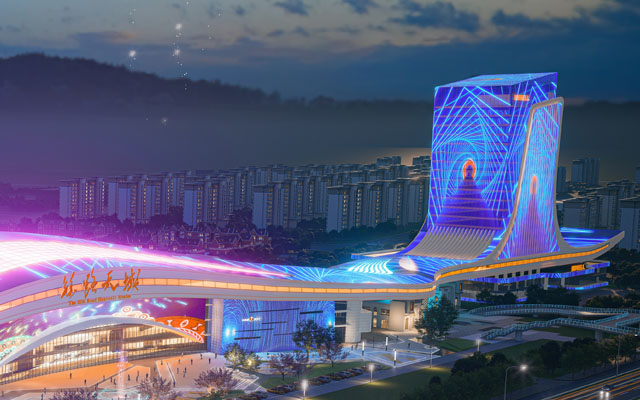
Minor Hotels (China) will introduce the Tivoli Hotels & Resorts and NH Hotels & Resorts brands to North-west China with the signing of a dual-branded property in Yining, Xinjiang, slated to open in 2026.
The project is located near local tourist attractions and the CBD, with ease of access via highways, high-speed trains, and flights. Covering 1.6 million square metres, it will offer 200 guestrooms for each of the Tivoli and NH brands, as well as a commercial zone, a cultural performance centre, and residential areas. The cultural performance centre will host regular music and dance shows, while the commercial area, inspired by the ancient Silk Road design, aims to become a shopping and leisure venue.
A city on China’s western border, Yining is known for its picturesque natural landscapes and rich ethnic cultures, and boasts numerous attractions like the Kazak Folk Tourism Area and Six Star Street, making it a popular destination for domestic and international tourists.
Dillip Rajakarier, group CEO of Minor International and CEO of Minor Hotels, commented: “With such high profiles and strong reputations throughout Europe, we are confident that the Tivoli and NH brand offerings will appeal to both Chinese and international travellers.”
“The establishment of Tivoli and NH hotels in Yining is expected to significantly improve the local hotel industry landscape, attracting more visitors and contributing meaningfully to the economic development of Yining and the entire Ili Kazakh Autonomous Prefecture,” added Eddy Tiftik, vice president of operations and development for Minor Hotel (China).







With the ongoing political unrest in Bangladesh, medical tourism from the country to India has taken a hit. Many of such travellers are either cancelling or postponing their trips, according to stakeholders of the industry.
“There are about 30 to 40 hospitals in Kolkata (capital of West Bengal) for whom Bangladesh is one of the major source markets. The current situation has led to setbacks for them. Kolkata is also a weekend destination for many Bangladeshis who visit the city for shopping. So, the impact is on the overall local economy as well,” shared Kolkata-based Debjit Dutta, director and CEO of Impression Tourism Services.
Besides the bordering Indian state of West Bengal, a large number of medical tourists from Bangladesh visit different Indian cities for medical reasons.
“About 85 per cent of Bangladesh inbound tourist arrivals to India are for medical reasons. The volatile situation in Bangladesh is impacting the medical tourism business in the country,” said Zia Siddiqui, managing director, Alliance Hotels & Resorts.
For over 10 days, protests have continued against a government job quota system in Bangladesh. The country has witnessed clashes between the protestors and law enforcement agencies over the issue.
“We have been exploring the Bangladesh market for some time now and have seen a slight increase in people coming from there for treatments. We were talking to a few Bangladeshi clients who were planning a trip next month but have now postponed their trips for later this year,” said Abhilash K Ramesh, executive director of Kairali Ayurvedic Group.
However, Dutta sees the current unrest in Bangladesh as a matter of concern for overall inbound tourism to India and regional tourism too.
“There are two things involved in this issue: one is regional business and the other one is bilateral business. Bangladesh is the largest inbound source market for India. Post-pandemic, 23 per cent of the total inbound tourism business to India has been from Bangladesh. Unlike natural calamities, the impact of social or political unrest on tourism is for a longer period,” he said.
Dutta further elaborated on the destinations favoured by Bangladeshi leisure tourists, including Delhi, Agra, Jaipur, and Ajmer. Some also visit north-eastern Indian states like Meghalaya via the Dawki border crossing and Agartala through the Akhaura border.
“We, as a company, had a couple of cross-country tours lined up, combining Bangladesh and India. If the situation persists, we are going to lose that business. This is a bad time for unrest as foreign tour operators start to work on their brochures for 2025. If the situation lingers, they might be sceptical about working on a regional tour product that might not materialise,” Dutta added.