Globus family of brands (GFOB) has named Hallie Chua as its regional marketing manager for South-east Asia, a newly-created role.
Based out of Singapore, Chua will be responsible for all GFOB’s marketing activities across key areas throughout the region.
She brings with her more than a decade of experience in the travel sector, and has previously worked across brands including Genting Hong Kong and Nam Ho Travel.
Moxy Solo, Indonesia
Moxy Solo makes its debut in Indonesia’s Central Java region, offering 108 guestrooms, co-working social space, pool, fitness centre, bar, restaurant and event venues.
Located 20 mins away from Adi Soemarmo International Airport in Surakata, the hotel is just a few minutes away from the iconic Pura Mangkunegaran and Keraton Surakarta, where guests immerse in Javanese culture, while the local neighborhood offers a mix of shopping options and dining.
AC Hotel by Marriott Seoul Geumjeong
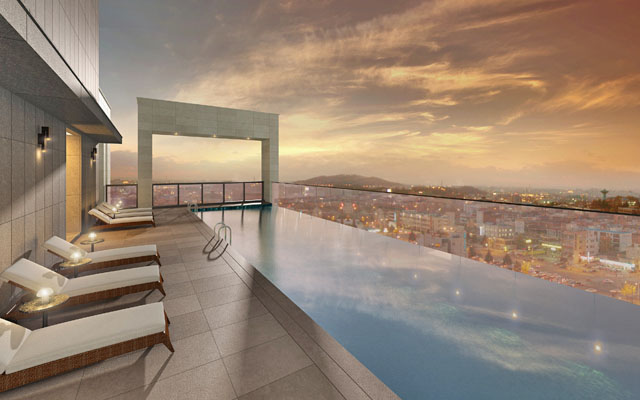
AC Hotel by Marriott Seoul Geumjeong, South Korea
The 22-storey AC Hotel by Marriott Seoul Geumjeong features a total of 191 rooms, including 19 suites and a penthouse suite. It offers dining options, lounge, two swimming pools, and event venues.
Situated close to major industrial complexes like Pyeongchon Smart Square, Anyang IT Valley, and Gunpo High-tech Industrial Complex, the property is also just a five-minute walk from Geumjeong Station, a big transfer point for subway lines 1 and 4 in Gunpo City.
Fusion Resort & Villas Da Nang
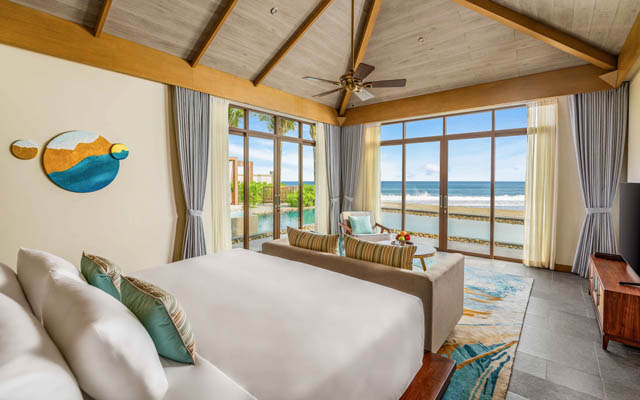
Fusion Resort & Villas Da Nang, Vietnam
With sweeping views overlooking the Non Nuoc beach, Fusion Resort & Villas Da Nang is a new resort comprising 85 private villas ranging from one to five bedrooms, in addition to a 157-key hotel tower, where 29 of these rooms come with private pools in the sky.
Wellness facilities include F&B options, spa, fitness centre, and an indoor heated pool.
The resort offers convenient access to the city of Danang, Marble Mountain, Bana Hills and the UNESCO World Heritage town of Hoi An. It is situated halfway between Hoi An and Danang, with the international airport just 15km away.
Shama Suasana Johor Bahru
Shama Suasana Johor Bahru, Malaysia
Shama Suasana Johor Bahru welcomes guests with a blend of homely comfort and sophistication, boasting 87 suites ranging from one-bedroom to executive three-bedroom suites.
It offers facilities such as a fitness centre, outdoor swimming pool, lounge, meeting rooms, 24-hour security and concierge services. Shama Suasana Johor Bahru also implements various eco-friendly initiatives and partners with local businesses to provide guests with authentic local experiences.
The property is nearby the city’s key attractions, with popular malls such as Zenith Mall, KOMTAR JBCC and City Square Johor Bahru located in the vicinity.
The central Indian state of Madhya Pradesh is expecting to grow its inbound tourism market by hosting the 39th Annual Convention of the Indian Association of Tour Operators (IATO) from August 30 to September 2 at the Taj Lakefront in the capital city of Bhopal.
This year’s convention’s theme, Resurgent India Inbound, is expected to highlight inbound tourism’s opportunities as well as challenges.
Madhya Pradesh tourism representative and members of IATO leadership team at a news conference in New Delhi
Madhya Pradesh is currently witnessing an overwhelming demand from the domestic tourism market, however, comparatively, international tourist arrivals have failed to take off.
“The domestic tourism market has grown manifolds in Madhya Pradesh and we expect the trend to continue in the next few years. However, we are still unable to make inroads in the inbound tourism market especially since post-pandemic international tourist arrivals (have) yet to pick up. We are hoping that after hosting the IATO convention, the participating tour operators will be able to promote the destination in international markets,” said Sheo Shekhar Shukla, principal secretary, Department of Tourism and managing director Madhya Pradesh Tourism Board (MPTB) while speaking to TTG Asia on the sidelines of a news conference in New Delhi on Tuesday.
As per the department of tourism, Madhya Pradesh, 115 million domestic tourists visited the state in 2023 compared to 34 million in 2022. The statistics from India’s Ministry of Tourism show that the state welcomed 327,958 international tourists in 2019, a number that has declined sharply to less than 100,000 in the post-lockdown period.
IATO vice president Ravi Gosain, who will chair the convention, shared that about 1,000 delegates including tour operators, government officials, hoteliers and media representatives are expected to participate at the convention in Bhopal.
He said: “We are organising 10 post-convention tours covering different tourism sites including Sanchi, Udayagiri, Bhojpur, Bhimbetka, Ujjain and Satpura National Park among others. These trips will help our members to effectively promote Madhya Pradesh in international markets.”
Gosain claimed that there has been an increase of 20 to 30 per cent in international tourist arrivals in states which have hosted the IATO’s conventions in the past.
“We want to take the bull by its horns when it comes to inbound tourism. We are actively participating in international trade shows and collaborating closely with 25 Indian missions abroad to drive positive change in inbound tourism. We are developing destinations such as Gandhi Sagar, Kuno, and Chanderi as glamping sites, which we aim to promote on an international scale. Additionally, we want to promote rural and tribal homestays in global markets,” added Shukla.
An analysis of Agoda’s accommodation search data shows that in Asia, Japan is the market where most searches for Paris originated from.
Agoda noted 43% more searches for stays in Paris in late-July and early-August, as the world’s ‘city of love’ becomes the ‘city of sports’.
Paris is a highly sought-after destination by travellers from Asia
Following Japan, the Asian markets that saw the most searches for Paris were South Korea, Hong Kong, Mainland China, and India respectively.
Paris is set to host the world’s biggest sporting event later this month, and that seems to have sparked interest from travellers across Asia. The increase in accommodation searches on Agoda’s platform highlights the enthusiasm and anticipation for the events, with many eager to experience the global spectacle first-hand.
Agoda’s data revealed that Paris is a highly sought-after destination from Asia, reflecting the city’s allure and perpetual popularity. The increase in searches underscores the importance of the event and the city’s readiness to not only welcome the global sporting community, but also many international fans and visitors.
Andrew Smith, senior vice president, supply at Agoda, shared: “The upcoming events in Paris are generating traveller excitement, and we were not surprised seeing this increase in interest from Asian markets.”
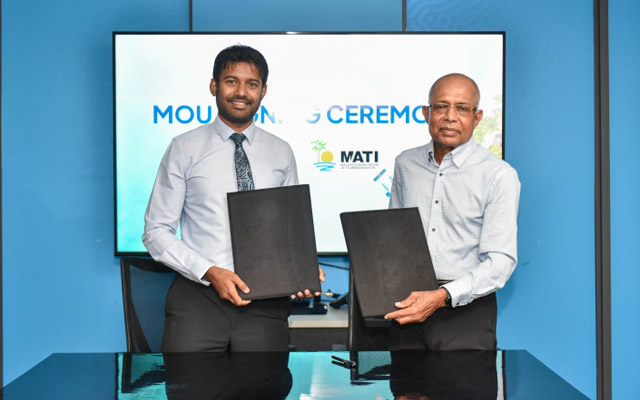
Maldives Marketing and Public Relations Corporation (MMPRC/Visit Maldives) and the Maldives Association of Tourism Industry (MATI) have signed a memorandum of understanding to strengthen collaboration and amplify destination marketing efforts.
Under the terms of this agreement, MATI will play an advisory role to MMPRC to aid in the conceptualisation and formulation of destination marketing strategies, campaigns, and tactics for the Maldives.
MMPRC and MATI will collaborate on destination marketing strategies, campaigns, and tactics for the Maldives
Moreover, both parties will cooperate in sharing tourism-related data compilations, analytical findings and insights.
“We are delighted to formalise this important collaboration with MATI, (whose) extensive industry knowledge and experience will undoubtedly be an indispensable asset in strengthening our destination marketing efforts, and their insights and support will be invaluable as we work towards achieving our strategic objectives,” commented Ibrahim Shiuree, CEO and managing director of MMPRC.
Ahmed Nazeer, secretary general of MATI, echoed this sentiment: “We have always maintained a close working relationship with MMPRC and we hope that our understanding today will serve to further solidify and enhance that relationship. Furthermore, it is our wish that this collaboration can help to bolster MMPRC’s Destination Marketing efforts, which are undoubtedly crucial for increasing our destination’s brand appeal and achieving our overall performance targets.”
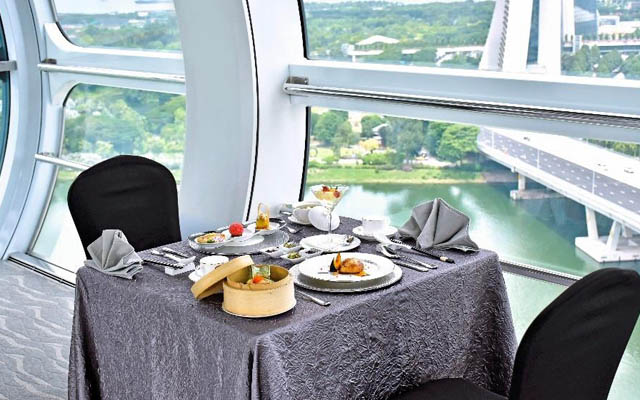
Singapore Flyer has launched the Skyline Lunch Experience, a revolving dining experience that takes guests up to 165m high aboard one of the world’s largest observation wheels. Featuring a refined five-course Cantonese-style set menu, the Skyline Lunch Experience menu is crafted by the culinary team from Sky View Pavilion.
Starting off the culinary adventure is a dim sum trio platter, followed by double-boiled chicken soup and osmanthus-smoked cod. The highlight of the meal is the lotus leaf rice with 10-head South African abalone, before ending with lemongrass jelly adorned with assorted fruits.
Book the Private Skyline Lunch Experience to indulge in a truly intimate lunch in a private capsule
Throughout the 60-minute experience across two rotations on the Singapore Flyer, guests can enjoy the attentive service of a dedicated in-capsule host.
Available from July 26 to November 25, every Friday through Monday, the Skyline Lunch Experience is priced at S$300 (US$223) for two persons in a shared capsule. With just one seating at 12.30, it accommodates only 20 guests each day.
Guests will be treated to a seamless experience with escorted priority boarding from the VIP Lounge and complimentary admission to the immersive Time Capsule, where they can take a stroll through Singapore’s rich history after the meal.
For guests seeking a more private setting, the Private Skyline Lunch Experience offers an exclusive dining experience, comfortably seating up to 10 persons for S$1,500++.
Tickets can be purchased through Singapore Flyer’s website and the WeChat Mini Programme.
Australia’s favourite food festival Taste Port Douglas – presented by Sheraton Grand Mirage Resort, Port Douglas – has chosen its first airline partner Singapore Airlines (SIA) as well as received financial support from the Australian and Queensland Governments through the Disaster Recovery Funding Arrangements following ex-Tropical Cyclone Jasper.
Taste Port Douglas’ eighth edition will see the festival hosting international talent for the first time with Michelin-star chef, Michael Wilson from Singapore in the fan-favourite Chef Takeover Dinners, which is now the Taste Port Douglas Takeover Series presented by Singapore Airlines.
Taste Port Douglas returns for its eighth year, celebrating the best of food and drink experiences in Queensland
From August 7-10, Wilson from Singapore’s Michelin-starred restaurant, Marguerite, located in the Gardens by the Bay’s Flower Dome will join the all-star brigade of top Australian culinary talent, participating in one of the eight exclusive events, spanning across picturesque venues in Port Douglas, Palm Cove, and Cairns.
On August 11, Laughing Heart Comedy’s Palate Cleansers will be popping up during the day’s activities, hosted by Melbourne-based comedian Bron Lewis.
There will also be two competitions will give Australians and Singaporeans the chance to win an ultimate foodie weekend – the first being at Taste Port Douglas and the second in Singapore.
The first offers one lucky Singaporean resident the chance to win two Economy Class return flights from Singapore to Cairns for a foodie weekend at the Taste Port Douglas festival. The offer includes five nights’ accommodation at the Sheraton Grand Mirage Resort, two Weekend Season Foodie Passes and a Great Barrier Reef and Mossman Gorge experience.
The second offers an Australian resident two Economy Class return flights from any SIA-operated city in Australia to Singapore, for a Singapore foodie weekend, including three-nights’ accommodation with daily breakfast at The Westin Singapore and a Seven-Course Dinner Experience with Wine and Temperance Pairing at Marguerite.
With more than 10,000 guests expected to attend Taste Port Douglas from across Australia and the Asia-Pacific, the new partnership with SIA highlights the ease of access to the region with direct flights four times a week between Singapore and Cairns on board their Airbus A350-900 aircraft.
“We’re delighted to be shining a light on Far North Queensland and the incredible food and drink experiences it has to offer. Increased government funding and our first international brand partnership are massive milestones and have enabled us to bring fans our best festival yet,” shared co-founder and culinary director of Taste Port Douglas Spencer Patrick.
Tourism minister Michael Healy added: “Taste Port Douglas is the perfect way to experience everything this incredible region has to offer and it’s terrific that the Australian and Queensland Governments are supporting the event to help attract even more visitors this year. What an opportunity for visitors to enjoy a magnificent four-day, warm winter escape, while drinking in Port Douglas’ spectacular landscapes and envied lifestyle.”
Korean Air has launched its inaugural flight from Seoul Incheon to Tokyo Narita today on its first Boeing 787-10 Dreamliner, an advanced aircraft that boasts the latest technology, superior fuel efficiency and reduced carbon emissions.
The Boeing 787-10 Dreamliner also introduces Korean Air’s new Prestige Class cabin for business class passengers. The Prestige Class seats, Prestige Suites 2.0, are designed to offer passengers a luxurious experience through its design and functionality.
The new Prestige Class seats on Korean Air’s Boeing 787-10 Dreamliner are designed to offer passengers a luxurious experience
Prioritising passenger privacy, each seat is a virtually independent space, with an open top that enhances a sense of openness while maintaining a level of privacy. The seats fully recline to a flat 180 degrees, transforming into a bed. The seat length has been extended to about 198cm, with a seat pitch of 117cm and a seat width of 53cm, ensuring a generous amount of personal space.
Additional convenience is provided by expanded personal space next to the armrest, featuring a table for cups and small personal items, a personal storage compartment, a wireless phone charger, dual 220V/110V outlets, and two high-speed USB-C ports.
Meanwhile, the economy class offers seats in a 3-3-3 configuration – the seats recline up to 120 degrees with headrests adjustable in multiple directions.
High-resolution monitors supporting 4K resolution offer an enhanced inflight entertainment experience in both classes. Inflight Wi-Fi service is also available.
Hotel and ryokan operators in Japan are expecting record revenues in fiscal 2024 (April 2024 to March 2025), buoyed by the almost full rebound of revenue in fiscal 2023 to pre-pandemic levels and the ongoing strong growth in inbound tourism.
Accommodation revenue for the year ending March 2024 totalled 4.9 trillion yen (US$31.3 billion), according to a survey by financial research firm Teikoku Databank, which found that the record high annual revenue of five trillion yen (reached in 2019) could have been reached if not for the damage caused to hotels and ryokans by the Noto Peninsula earthquake in January.
Japan is expecting revenues for accommodation and ryokans to continue to soar this year
Overall, 52 per cent of accommodation surveyed said their revenue is set to increase this year, although there were regional disparities. Respondents in Hiroshima Prefecture were most optimistic, at 84 per cent.
Overnight stays in Japan totalled 600 million in 2023. Of that, international visitors accounted for 20 per cent, marking a return to pre-pandemic levels, according to a lodging and travel statistics survey conducted by the Ministry of Land, Infrastructure, Transport and Tourism.
By prefecture, Tokyo saw the highest increase in domestic and international hotel guests in 2023 compared to 2019 (23 per cent), followed by Kochi (18 per cent), Tochigi (10 per cent), Osaka (four per cent) and Kyoto (four per cent), according to the Japan Tourism Agency.
The Teikoku Databank study predicts fiscal 2024 will generate at least five trillion yen in revenue for hotel and ryokan operators, although it noted that ongoing labour shortages pose a threat to income growth.



 Tavares has over 20 years of hospitality management experience, and brings extensive revenue, sales and marketing experience to her new role.














Globus family of brands (GFOB) has named Hallie Chua as its regional marketing manager for South-east Asia, a newly-created role.
Based out of Singapore, Chua will be responsible for all GFOB’s marketing activities across key areas throughout the region.