China’s affluent Chinese females shape the future of luxury travel
High-value Chinese female travellers are seeking more meaningful travel experiences, seeing travel as opportunities for enrichment, new learnings, and personal fulfilment, revealed Finn Partners in its latest industry report, China’s Women in Charge.
This report was presented by the global marketing agency in association with ILTM Asia Pacific 2024.

According to the UNWTO, China has reclaimed its position as the top spender on international travel in 2023, with an expenditure of over US$195 billion, 23% higher than the US in second place. Moreover, six out of 10 Chinese tourists last year were women. Given their increased spending power and economic status, high-net value Chinese females will continue to have a profound impact on luxury travel.
“Debunking the stereotypical image of affluent Chinese females shopping at designer boutiques or dining out with their multi-generational family when travelling, our study reveals affluent Chinese women have a newfound sense of empowerment,” stated Joshua Wang, associate vice president of brand & market intelligence of Finn Partners.
“Where travel was once a form of conspicuous consumption, it is now a sign of independence.”
Determined to make their mark on the industry, 54% of high-valued Chinese females intend to increase their leisure travel over the next three years, while over 60% intend to spend more on travel, including hotels and accommodation.
In detailing the ways Chinese women are using their economic and social influence on the travel industry, the report highlighted five key takeaways:
1. Redefining luxury
Luxury is no longer associated with acquiring material possessions. As the report reveals, the definition of luxury has shifted away from external validation to self-fulfilment. 63% of respondents define luxury as enjoying total privacy or “me time”, while 50% interpret luxury as things or experiences that evoke joy.
2. Travel to enrich, not escape
For China’s female luxury tourists, the benefits of travel go beyond escaping daily routines or family obligations. Instead, they view travel as an opportunity to challenge themselves or learn new skills. An overwhelming 99% believe that travel brings profound joy, and over 99% see it as essential to expanding their horizons.
3. The need for niche
While most Chinese tourists travel familiar routes, almost 90% of Chinese female travellers are attracted to niche destinations for their natural beauty and landscapes. As an expression of individuality and nonconformity, 66% are drawn to unsung destinations that offer unique local experiences, while 58% are willing to veer off the beaten path to visit destinations of cultural or historical significance.
4. Seeking solo
While multi-generation travel remains a mainstay of Chinese outbound tourism, there is a growing trend for solo travel, particularly among female travellers. Solo travel illustrates their independence and cultivates a sense of self-empowerment. Regardless of their marital status, over 80% of respondents said that they were equally comfortable travelling on their own as with a spouse or partner. Interestingly, 73% of married respondents said they are likely to increase their solo travel in the coming years. For those with children, 46% plan to travel without or travel less with their children. In response to the growing number of solo tourists, 31% of female travellers prefer accommodation designed specifically for women.
5. Rising self-influence
Women are overwhelmingly in control of travel plans. Empowered by financial autonomy and the rising demand for solo travel, 82% of women say they their opinions matter more than before when arranging future travel. While they may be influenced by partners (60%), this demographic is less likely to be swayed by celebrities and social media influencers (10%) or advertisements (9%). Older affluent female travellers favour travel advisors, trusting their insights and seeking guidance from experts when curating bespoke travel experiences, while younger affluent female travellers are more open to celebrities, influencers, and travel bloggers for inspiration.
China’s female travellers can be categorised into individual tribes. The study identifies the following five distinct archetypes that reflect the current market forces:
Daring Dragon: Confident, independent, and ambitious, these women prefer solo travel and are likely to be among the first to visit niche destinations or try new experiences. They value the freedom they have and are willing to splurge on meaningful luxury travel.
Curious Deer: While keen to explore the world, they may lack the adventurous spirit of the Daring Dragon. Heavily influenced by marketing, social media and mainstream culture, they are quick to identify emerging trends and eager to follow them.
Magnificent Phoenix: Defying expectations, these older travellers are seizing opportunities that were not available to them earlier in life. Rather than travel with family members, they choose to explore the world with friends.
Mama Tiger: These women are deeply committed to fostering their children’s success, viewing travel as an active learning experience. However, unlike the traditional, self-sacrificing tiger mums, they prioritise self-care, using family travel opportunities to explore and unwind.
Spirited Dolphin: This open-minded, well-educated millennial traveller seeks hedonistic – yet enriching – experiences. While they may eschew the trappings of luxury travel, they will prioritise wellness experiences.
“This in-depth study offers revealing insights into the changing priorities, spending habits and motivations of China’s upwardly mobile female travellers,” said Jenny Lo, managing partner for China of Finn Partners.
“As this growing demographic continues to reshape the luxury travel industry, we hope this report will help destinations, hospitality groups, travel brands and companies anticipate the evolving needs of this sought-after market segment.”
The China’s Women in Charge report also provides in-depth analysis of other areas of interest, including the factors that drive their passion for travel, the importance of sustainability, and female travellers’ expectations of hotel brands and guest services, and more.
View the report here.
Morazen Yogyakarta launches after rebrand
The Grand Dafam Signature International Airport Yogyakarta hotel is rebranding to Morazen Yogyakarta as announced by Surabaya Mercusuar Indonesia at the celebration gala dinner which also served as the hotel’s grand opening.
Partially in operation since June 2022 under the Dafam Hotel Management, the hotel development was completed last year – however, the owner had decided to run it independently, hence the delay of the launch.

Hengky Tambayong, general manager of Morazen Yogyakarta told the media in a press conference prior to the gala dinner: “The rebranding is a strategic step to strengthen the hotel’s identity and service standards. The new name Morazen – derived from the combination of ‘mora’ from Latin meaning ‘to linger’ or ‘to delay’, and ‘zen’ from Japanese signifying tranquillity – reflects the hotel’s vision of offering a luxurious and relaxing stay experience.”
Located right across from Yogyakarta International Airport (YIA) in Kulon Progo Regency at the western part of Yogyakarta, the hotel features 197 rooms, an all-day dining and poolside restaurant, coffee corner, rooftop bar and lounge, spa, fitness centre and swimming pool as well as a kid’s corner. It also has a ballroom with a total capacity of 1,200 guests, the biggest in the area, six break-out rooms and a social/working corner at the lobby.
“Although we are located near the airport, we are not an airport hotel. While we do get six-to-eight rooms per night of travellers who stay the night to catch an early morning flight from here, our facilities are here to cater to wider market segments including those looking to relax with family, or on business trips.”
Currently FITs, government meetings, weddings and social events top the market.
“We get guests from OTAs, family staycations from Yogyakarta and our neighbouring city, Purworejo,” he said.
To attract the market, Hengky said his team created special kids’ programmes for weekends, experiential and excursion packages for FITs and groups, and are participating at wedding exhibitions.
He is optimistic that with YIA becoming the only international airport in Yogyakarta and Central Java, the location of the hotel will prove strategic.
“Starting next year, half of the Haj pilgrimage groups from Yogyakarta and Central Java which currently all embark from Solo, will depart from YIA. We are talking about around 180,000 passengers,” he said, adding that as an international gateway not only to Yogyakarta but Central Java province, more international airlines are expected to start flying in this year and the next.
In addition, the development of the toll road connecting Yogyakarta city centre and the airport is expected to start soon, which will cut travel time from 90 to 120 minutes to just 30 minutes.
Hengky also shared that there are plans for Kulon Progo to become an aeropolis city – YIA covers 600 hectares, but there is still land open for developments, such as a cargo city.
S Hotels & Resorts partners Ascott to enhance UK hospitality sector
S Hotels & Resorts has teamed up with The Ascott Limited (Ascott) to strengthen the former’s portfolio in the UK, while expanding Ascott’s in Europe.
S Hotels & Resorts’ portfolio features 25 hotels comprising 2,678 keys nationwide, with the UK as its largest market.

This partnership will play a major role in contributing to the diversification of S Hotels & Resorts’ portfolio and sustainable revenue growth, helping the company to achieve its target of 11 billion baht (US$299 million) in total full-year revenue in 2024.
“This is an important step forward in our business strategy, as we continue to broaden our portfolio by introducing international brands to the UK market and creating new opportunities for growth,” said Michael Marshall, CEO of S Hotels & Resorts.
Ascott’s CEO Kevin Goh added: “As an Asia-based hospitality company with 40 years of track record, our strong relationships with owners in this region has been key to Ascott’s success. We look forward to bolstering our partnership network by forging new relationships with owners and strengthening ties with existing ones as we chart Ascott’s global expansion.”
Formula 1 fever at Singapore’s Marina Bay Sands
Marina Bay Sands (MBS) is gearing up for this year’s Singapore night race season with a multitude of Formula 1 (F1) race-themed offerings across the property.
Beyond on-track excitement, racing aficionados can relish the thrill of the season with offerings by Scuderia Ferrari and a limited number of premium hotel packages at MBS.

The top all-access package, priced at S$100,000 (US$73,703) including a four-night stay for four in the Paiza Signature Suite, a three-day all-access pass to the Marina Bay Sands Sky Suite at the race circuit, and access to exclusive invite-only events, such as a cocktail reception with the Scuderia Ferrari team drivers Charles Leclerc and Carlos Sainz.
As part of the package, guests can indulge at signature restaurants, including at Bread Street Kitchen and the new Greek restaurant estiatorio Milos.
Other hotel packages are also available, like the three-day F1 Experience passes, a table at LAVO Party Brunch, resort credits worth up to S$2,000, as well as VIP access to the F1 afterparties at MARQUEE Singapore.
For more information, visit Marina Bay Sands.
Langham celebrates 2023 banner year, strong start to 2024
Langham Hospitality Group (LHG) is off to a strong start this year, following an excellent year of business performance where the company recorded a 78 per cent growth over the previous year as well as several “amazing” hotel openings.
Speaking to TTG Asia at ILTM Asia Pacific 2024, LHG’s senior vice president, sales and marketing, Lawrence Ng, remarked that even geopolitical tensions have failed to put the brakes on corporate growth. “We are also performing better than last year at this point,” he remarked.

The group is making deeper inroads through China’s important business cities. It opened the five-star Cordis, Xuzhou in China last year, marking the brand’s entry into the rising tier-three Chinese city. It is also in the midst of putting the Cordis label on a hotel in Foshan, China – another key city in the booming Greater Bay Area.
Ng shared that Cordis, Foshan, Lingnan Tiandi, which will unveil the results of its massive transformation this September, will be an important showcase of the brand.
Earlier in February, the group signed management agreements for three hotels on a single plot in Xiamen, China, which are part of Xiamen Seaworld, China Merchants Group’s mixed-use development perched on the western shore of Xiamen’s main island. Set to open in 2025, each hotel will carry a different brand – the flagship Langham, Cordis, and Ying’nFlo.
However, portfolio expansion will not be limited to Greater China, where its parent company, Great Eagle Holdings, is based. In the coming years, the group will take its brands to destinations including Riyadh in the Middle East; Venice in Italy; San Francisco and Seattle in the US, and more.
Besides new openings, several properties will undergo major renovations “to make them look even better”.
Ng said the group intends to be present in all key cities, with priority given to prime and unique locations within each.
“For instance, we knew we must be in Shanghai, but there we wanted an amazing location. So, we opened in Xintiandi (The Langham, Shanghai, Xintiandi) in the entertainment hub.
The group is also keen to grow its presence in resort destinations. While it currently has a number of urban resorts – city properties with indulgent facilities and a variety of recreational and celebratory experiences, Ng said the company’s developers are hunting down opportunities in beachfront locations.
Ng teased that some announcements would be made soon along these lines while Shelley Tso, vice president, marketing and communications, shared that the parent company has set a target for the hospitality group to achieve one opening every month.
“However, this growth will be matched by equal commitment to our community and to bring our people closer together. Our Eaton brand, for example, supports local arts and our properties host a lot of amazing activities with local artists and musicians. Cordis is another brand that is big on arts and culture, and every property has some form of collaboration with local artists,” Ng said.
Additionally, Ying’nFlo’s recent collaboration with acclaimed Hong Kong-based artist Bao Ho has resulted in a vibrant mural on an exterior wall of Ying’nFlo, Wesley, Admiralty. The mural is said to symbolise the intricacies of the human condition, and serves as a portal to people’s inner worlds and imagination.
Langham Hospitality Group, cluster managing director, Adam Hipp, said the artwork “aligns perfectly with Ying’nFlo’s vision of creating immersive and inspiring experiences for its guests”.
“We have always believed that art has the power to evoke our emotions and transform us, and this mural is a testament to that view,” stated Hipp.
Amadeus modernises hotel business intelligence using AI
Amadeus has partnered with Microsoft to harness the power of generative artificial intelligence (Gen AI) to simplify a hotelier’s ability to search and understand business intelligence data using chatbot functionality.
For today’s busy hoteliers, having fast and easy access to business intelligence insights to support confident, data-driven decisions is critical. In response to this, Amadeus will incorporate Gen AI into an innovative new chatbot for its business intelligence suite, debuting with Agency360+ .

The Amadeus Advisor chatbot powered by Azure OpenAI Service will be able to access the comprehensive travel agency and corporate booking data available in Agency360+, where hoteliers can use the new chatbot, Amadeus Advisor, to enter complex data requests and receive answers quickly and in natural language.
Among the benefits of applying Gen AI is its ability to instantaneously collect an in-depth level of insight to speed up complex data analysis and pave the way for more strategic business decisions. Whether hotel revenue managers are looking for information on their average daily rate (ADR), room nights, or revenue pipeline, the entire process is streamlined for them and removes the need for manual searches.
Even less technical staff or novices to data are empowered to access the solution – they can enter a search via the chatbot and then apply their findings across sales, marketing, operations, and distribution strategies.
Julie Shainock, managing director travel, transport & logistics, Microsoft, said: “Amadeus Advisor now offers a more intelligent experience to hoteliers around the world, accelerating real-time decision-making and their operational efficiencies. This is a new step in our strategic partnership with Amadeus aiming at driving innovation together and building the future of travel.”
Michael Yeomans, senior vice president, business intelligence and data solutions, hospitality, Amadeus, added: “At Amadeus, we are committed to innovation as we work to shape the future of hospitality technology, and the Amadeus Advisor chatbot powered by Azure OpenAI Service is a great example of this ambition coming to life. This is a transformational step forward in our offering to provide more intelligent and responsive technology, an improved user experience, and remove the need for hoteliers to manually comb through data. The tool quickly presents complex information in a simple and easy-to-understand format, freeing up time for hoteliers to focus on more strategic initiatives that drive revenue.”
Switzerland Tourism unveils new brand visuals to Asian audience, spotlights diversification goals
Switzerland Tourism’s rebranding exercise, first announced in early May, has finally made an appearance in Asia, as the NTO revealed visuals during its participation at the ongoing ILTM Asia Pacific 2024 luxury travel tradeshow in Singapore.
The new logo is represented by the word ‘Switzerland’, with the Swiss cross taking the place of the letter ‘t’, set against a colour gradient backdrop of five shades of red.

Batiste Pilet, director for South-east Asia, Switzerland Tourism, said the new logo reflected a single identity that could easily be used by all Swiss tourism suppliers and stakeholders, not just Switzerland Tourism, and was more suitable for the modern digital environment.
Furthermore, the colour gradient gave off a more “active and energising” vibe and allowed destination marketing materials to be playful with colours.
“However, a brand is still just a brand, and it is important that it (reflects) our strategy. Just as the new Switzerland logo is a future-ready logo, so is our strategy,” said Pilet.
“Our strategy is to be ready for tomorrow. Currently, Switzerland has an issue with overbooking during the peak seasons. As the tourism board, we want to encourage travellers to make the right choices in order to have the best travel experience in Switzerland,” he elaborated.
Switzerland Tourism is working to emphasise the country’s year-round appeal, so that travellers would visit beyond the peak June to August period, as well as lesser known locations and experiences “in between the hot cities”.
The move to spread out tourism traffic would benefit travellers too, as they could enjoy more products and experiences at better prices during the off-peak periods.
Pilet said the South-east Asian markets are an ideal and important solution for Switzerland’s peak traffic issues, as travellers from the region tended to visit between March and June and between October and December. As such, the tourism board is dedicating much efforts into growing South-east Asian arrivals.
“Of course, we want to have the right guests. That’s why we are here at ILTM Asia Pacific. Luxury travellers are the ideal target for Switzerland. We have the infrastructure, hotels, and experiences that luxury travellers appreciate, and we can build an unforgettable experience for them,” he said.
Pilet believes that popular cities in Switzerland will continue to feature in a big way in travellers’ itineraries, but travel advisors could recommend additional unique activities in less-travelled areas. This would spread tourists deeper into the country, enhance the overall journey, and lead to longer stays.
“For example, choose one of the many special accommodation available in Jungfrau before or after exploring Interlaken. Perhaps take a tuktuk (motorised rickshaw) from the Geneva city centre to a vineyard on the fringes, or make a detour between Interlaken and Lucerne for a biscuit-making activity with the popular Swiss bakery, Kambly,” he suggested in an interview with TTG Asia.
Travelling from point to point could also be a unique excursion, he added, as Switzerland offers several panoramic trains that go down scenic routes. The experience is ideal for premium travellers, as trains like the Bernina Express and Glacier Express have “excellent carriages with quality catering onboard”.
The focus on offering new ways to enjoy Switzerland also aligns with the growing demand for local and immersive experiences among luxury travellers, he opined.
PARKROYAL COLLECTION Pickering leads the way in sustainable hospitality
Brought to you by PARKROYAL COLLECTION Pickering, Singapore
Nestled in the heart of Chinatown and at the gateway to Singapore’s Central Business District stands the 367-key PARKROYAL COLLECTION Pickering, Singapore, known not just for its eye-catching design of abundant greenery, but for leading the way in sustainable hospitality.
Since its opening in 2013, PARKROYAL COLLECTION Pickering, Singapore has championed sustainability through its design, operations, building management, and in-room amenities. Not to mention, the hotel’s green design makes up over 15,000m² contributing to more than twice its total land area.
Certified by the Global Sustainable Tourism Council, where it achieved the global standard for sustainable travel and tourism, the property has implemented systems to reduce and reuse wherever possible in its operations.
For instance, the rainwater harvesting and auto-irrigation systems conserve six million litres of water annually, while 262 solar panels generate 65,000 kWh of renewable energy per year. The hotel even converts food waste into greywater, which is discharged into sewage instead of landfills.
Innovative methods for greater efficiency and impact
Central to PARKROYAL COLLECTION Pickering, Singapore’s sustainability efforts are its innovative measures that leverage technology to reduce environmental impact and improve operational efficiency.
For one, check-in has been streamlined and made more efficient with the hotel’s E-Visitor Authentication, which uses facial recognition technology to automate parts of the process. Guests can go online to input their details ahead of their stay or via an iPad at the reception for a paperless experience. For guests driving to the hotel, they can easily scan a QR code to fill in a form for parking coupons.
As for in-room convenience, guests will soon get to experience a more integrated and seamless smart room with the introduction of a tablet featuring an AI-powered voice assistant. This allows them to control room settings, request amenities and housekeeping, order in-room dining, and make reservations at Lime Restaurant and Bar.
Behind the scenes, various processes have also been enhanced with the help of technology.
An all-in-one cloud-based service management mobile platform utilises AI to prioritise tasks based on factors like room occupancy, check-out times, and guest requests, ensuring efficient resource allocation and timely room cleaning.
Bluetooth Low Energy beacons track movable objects such as in-room dining trays, improving the tray retrieval process. Additionally, items like uniforms, linens, and banquet chairs are tagged with Ultra High Frequency RFID technology for accurate asset tracking, eliminating the need for manual counting.
Guests get to play their part
All sustainability measures by the hotel enable guests to minimise their environmental impact as well, from thoughtfully planned in-room amenities to dining options.
Rooms no longer provide single-use plastic water bottles – instead, premium filtered water dispensers are available in all rooms, saving around 230,000 plastic bottles each year. Recycling bins are also found in guestrooms and public areas throughout the hotel.
In a tropical country like Singapore, the hotel conserves energy through naturally ventilated corridors, water features and green walls, which also ensure a cool and comfortable indoor climate for guests.
When it comes to food, guests will appreciate the hotel’s Urban Farm on the top floor – home to more than 50 varieties of vegetables, fruits, herbs, and edible flowers – which supplies ingredients to Lime Restaurant and Bar, embodying the farm-to-table concept.
Plus, the restaurant embraces conscious dining, showcasing nutritious dishes made from locally sourced ingredients, a commitment that has earned it the highest tier recognition in the Singapore Food Agency’s Farm-To-Table Recognition Programme.
This dedication to sustainability extends beyond the plate. Lime Bar exemplifies this sustainability ethos with its zero-waste cocktails where bartenders use every part of the fruit – from seeds and leaves to skin and roots – while displaying their creativity in crafting innovative and delicious drinks.
As for what lies ahead, PARKROYAL COLLECTION Pickering, Singapore is certainly not one to rest on its laurels. The hotel remains fully committed to reducing its impact and continues to set the benchmark for sustainable hospitality through the integration of advanced technology and the implementation of innovative practices.

Want your favourite travel brand to win at TTG Travel Awards 2024, Asia-Pacific’s Most Prestigious Travel Industry Accolade? Vote for PARKROYAL COLLECTION Pickering for Best Hotel – Singapore and Best Business Hotel – Singapore now.
A 50 and Fabulous Special: The Park Lane Hong Kong
The Park Lane Hong Kong is celebrating 50 years in business this year.
It all began in 1974 when The Park Lane Hong Kong, owned by the Chan family, first opened its doors under the name Hotel Plaza, which was part of a cluster of great hotels in Causeway Bay, together with the Lee Garden hotel and The Excelsior.

Since then, this sole grand dame has been a fixture here – it underwent a transformation in 1985 and was renamed The Park Lane Hong Kong, encapsulating the hotel’s commitment to offering timeless luxury, personalised experiences, and perfecting the art of hospitality.
Today, the hotel boasts 807 rooms and 13 suites, an executive lounge, three distinctive dining venues and over 1,700m² of event spaces, as well as recreational facilities.
The property’s continuous investments, modernisation and unique repositioning has strengthened its appeal to today’s traveller.
Next year in 2025, The Park Lane Hong Kong will join Marriott’s Autograph Collection under a 15-year franchise deal.
Luc Bollen, general manager of The Park Lane Hong Kong, shared: “We embarked on a transformational repositioning of the hotel in early 2015. The classic feel was replaced by a tech-savvy, engaging and interactive feel, all restaurants were completely recreated, and state-of-the-art meeting facilities were developed on the highest floors with breathtaking views over the views of the harbour, Victoria Park, and the Kowloon skyline. Rooms were turned into contemporary yet classy and tech-rich experiences. Today, SKYE Roofbar & Dining has become iconic in the Hong Kong dining vibe.”
He continued: “In order to bring our farm-to-table culinary concept to life, we have established our own rooftop Secret Garden, where we source fresh fruits, herbs, and spices. It also highlights the hotel’s commitment to sustainability and low carbon emission, ensuring an eco-friendly and sustainable future.”
In addition, The Park Lane Hong Kong’s dedicated staff members, many of whom have been with the property for a decade or more, are at the core of its exceptional service.

Over the years, the hotel has hosted heads of state and other celebrities. In recent years, it welcomed notable guests like US vice president Dan Quayle, as well as top celebrities such as Japanese actor Koji Yakusho, British fashion designer Vivienne Westwood, British singer Henry Moodie, and Australian celebrity chefs Curtis Stone and Dan Hong.
Additionally, The Park Lane Hong Kong has served as the official hotel for various events, including the Soccer Sevens, Hong Kong Open (tennis), World Open (snooker) 2024, FIBA 3×3 World Tour 2024, and Clockenflap 2023, a music and arts festival.
The property is celebrating its 50th anniversary with a theme of Where Heritage Meets Innovation. Since November 2023, a series of celebratory events centred around art, sustainability, heritage, and innovation have been launched.
Bollen contended: “My vision for The Park Lane Hong Kong is to strengthen it as a community icon in Causeway Bay, and to engage meaningfully with all stakeholders over the next 50 years. My greatest aspiration is for the hotel to be recognised as a benchmark for exceptional guest experiences, locally and globally. We strive to meticulously tailor every aspect of our guests’ stay to their needs and expectations. I firmly believe that the hospitality industry thrives on creativity, flexibility, and adaptability.
“By embracing innovations and staying abreast of new trends, we can continually raise the bar and provide even better guest experiences. Moreover, during my time here at The Park Lane Hong Kong, I am excited to lead my team in adopting more sustainable practices. By prioritising sustainability, we aim to make a positive impact on the environment and encourage others in the hospitality industry to follow suit.”


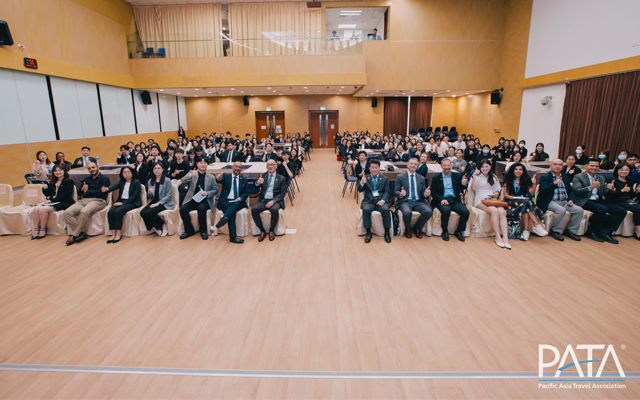
The opportunity for inbound tourism to China is often overlooked, a sentiment echoed by industry leaders during the high-level industry leaders dialogue session at the China-Thailand Cultural Tourism Industry Summit, held in Bangkok on July 1.
“We shouldn’t lose sight of inbound tourism while strategising to attract Chinese tourists abroad,” stated Xu Jing, vice-chairman of the Global Tourism Economy Research Centre (GTERC), who was the panel moderator at the summit.
Highlighting China’s cultural richness, PATA chairman Peter Semone pointed to the country’s ranking within the top five for cultural resources globally on the World Economic Forum’s Travel and Tourism Development Index.
“China has 57 UNESCO World Heritage Sites and 43 intangible cultural heritage offerings. This is a massive opportunity for China, and it’s one that remains largely untapped,” remarked Semone.
He further emphasised the recent merging of China’s Ministry of Culture and Tourism as a strategic move and highlighted tourism’s role in fostering global understanding and peace.
He stated: “People travel to immerse themselves in different cultures and connect with others. If destinations offer homogenous experiences, why travel? One might as well stay home and use virtual reality. Those cultural experiences (are the ones) that promote empathy, respect, and cross-cultural communication, ultimately contributing to social harmony and global interconnectedness.”
William Heinecke, founder and chairman of Minor International, underscored the significance of both inbound and outbound tourism for China.
“We have hotels in China and we have restaurants in China so the domestic market and even the foreign market that goes to China is very important to us for our hotels. But equally important to us is, of course, the outbound market from China,” he said.
Heinecke remarked that his strategic acquisition of Spanish chain NH Hotel Group pre-Covid, which added 350 hotels to Minor’s portfolio, reflects what he foresees as a growing trend – Chinese tourists will increasingly seek diverse experiences beyond Asia.
He elaborated: “We made a very big bet that the travellers of China will not only be going to Asia and be heavy users of Asia, but they’ll also be going to Europe. They’re going to go around the world, because they are seeking richer, more experiential journeys.”
Additionally, Heinecke observed Chinese outbound travel today is less shopping-driven than in the past, saying that the Parisian shopping landscape has already been transposed to major cities like Shanghai or Beijing, and shopping is “less critical” today – having been replaced with the outbound hunger for experiences, food and culture.
Minor is also equally keen on the inbound travel market to China, with Heinecke predicting it will become “one of the largest markets”.
He shared that Minor is working with its partner in China for a pipeline of hotels that will cater to experiential travel, leveraging the country’s plethora of untapped cultural heritage and natural attractions.
The summit, which kicked off a cultural and tourism industry exchange visit by over 200 delegates comprising various industry leaders from Mainland China, Hong Kong SAR and Macau SAR over two days on July 1 and 2, convened key industry figures to discuss bilateral cooperation and unlock new promotional avenues in the Sino-Thai cultural tourism sector ahead of the 50th anniversary of Thailand-China diplomatic relations in 2025.