


Trisara promotes movement for the mind with new retreat package
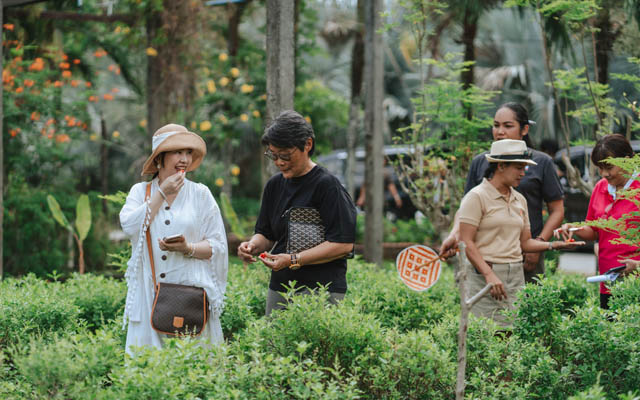
Thailand’s wellness resort Trisara in Phuket is introducing its wellness retreat programme to help guests move towards better cognitive wellness.
Led by renowned neuroscientist, Hanna Poikonen, the five-day WiseMotion Retreat will be held between November 24 and 28, and is designed to enhance brain health and well-being through a combination of improvisation, scientific knowledge, and interactive discussions.
Participants on the retreat will benefit from exercises and scientific knowledge designed to balance emotional well-being, calm the nervous system, and improve cognitive function.
The programme includes daily movement meditation sessions, WiseMotion masterclasses, and opportunities for creative movement and inspirational discussion.
Priced from US$3,200 per person per package (double occupancy) and US$5,350 per person per package (single occupancy), it includes four nights in an Ocean View Pool Junior Suite, return airport transfers to/from Phuket International Airport, daily breakfast, communal lunch, and dinner hosted by Poikonen.
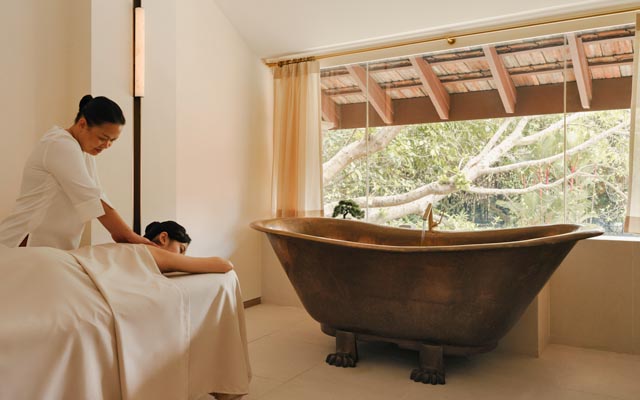
Other inclusions encompass a 60-minute Jara Spa treatment per person at Trisara’s Jara Wellness, daily morning movement meditation and afternoon WiseMotion masterclass with Poikonen, access to Trisara’s group fitness activities and fitness centre, and an excursion to the 16,000m² Pru Jampa organic farm which supplies fresh produce for PRU and JAMPA, Montara Hospitality Group’s Michelin-accoladed Phuket restaurants.
For more information visit Trisara.
Disney Cruise Line unveils first look into the heart of Disney Adventure

Disney Cruise Line (DCL) has revealed all-new details about Disney Imagination Garden, one of the seven themed areas aboard the Disney Adventure, which will set sail from Singapore in 2025.
Disney Imagination Garden, the central hub of the ship, will transport guests into the pages of well-loved Disney stories alongside their favourite characters with its colourful landscapes.

At the centre of the courtyard is the Sorcerer’s Apprentice Mickey Mouse topiary that stands with his wand held high as if conjuring this magical garden to life.
The open-air garden will be set against a three-deck-tall, storybook castle art piece, a first-of-its-kind onboard a DCL ship. The space will also include a theatrical Garden Stage that will bring beloved Disney stories to life, an open area leading to a large staircase that will double as amphitheatre-style seating, and a selection of garden-view staterooms.
Here, guests will also find two eateries – Mowgli’s Eatery serving Indian, vegetarian and regional dishes, and Gramma Tala’s Kitchen, inspired by the scenery and island flair of Moana.
One signature entertainment experience performed on the Garden Stage will be Avengers Assemble!, an action-packed stage show with stunts and special effects where Deadpool makes his DCL debut to lend his signature irreverence and comedy to the spectacle.
“Disney Imagination Garden is the heart and soul of the Disney Adventure, where our guests will interact with our Disney, Pixar and Marvel stories in a whole new way,” said Laura Cabo, portfolio executive creative director, Walt Disney Imagineering. “Rooted in the rich legacy of Disney storytelling, we’re creating an area that will open doors to new adventures and encourage guests to create magic of their own.”
The other themed areas on the Disney Adventure include Disney Discovery Reef, San Fransokyo Street, Wayfinder Bay, Town Square, Marvel Landing and Toy Story Place.
More details about these themed areas will be released at a later date.
Practical experience key to developing curriculum for institutes of higher learning

A “gap” between institutes of higher learning (IHL), students and industry was raised during a recent PATA Youth Symposium and has resulted in a call for curriculum to be developed by academics with practical experience, to be updated on a regular basis to close it.
Ex-hotelier and Innovative Internship Coaching founder, David Jones, who has worked in the US and Asia, commented faculty with “real-world industry experience are essential in bridging the gap between academic learning and practical demands”.
First-hand knowledge provides students with a deep understanding of what it takes to succeed, he added.
Nisha Abu Bakar, co-founder World Women Tourism and founder of Elevated Consultancy and Training, suggested more guest lecturers from industry be incorporated into the curriculum.
She pointed out: “This is not given priority now. Also required are more industry-based projects that are closely monitored and assessed to ensure that student learning happens effectively.
“Soft skills such as resilience and agility, critical thinking, networking, very relevant to the industry are not taught in IHLs adequately.”
Retired tourism professor and former research and strategic information head at PATA, John Koldowski, observed a lack of talent training in critical thinking, design thinking and other similar approaches to enable new talent to develop “real flair in problem-solving”.
He proposed that “IHLs systematically and routinely meet with and hear, not just listen, to a cross-section of industry executives”.
He continued: “Just hearing C-suite views, far removed from the actual workers to fully understand what is needed and required of trainees at the practical level, could give a distorted view in some cases.”
Senior public sector industry executives, he said, also need to be part of the discussions with IHLs and industry.
“Failure must be seen as ‘trying’, not as failure per se. If you are not failing, then you are not trying, is perhaps a more appropriate mantra, to a point,” Koldowski opined, while Jones added mistakes are learning opportunities and not to be feared.
Koldowski quipped: “One idea that has been floated is funding for IHLs be linked to their job placement proportions for recent graduates and the satisfaction the employer has with those placed graduates. Get that right and employers will be coming to the IHLs.”
As for Abu Bakar, she urged employers to view training and talent development as an investment, not an expense.
Hyatt to acquire Standard International and its brands
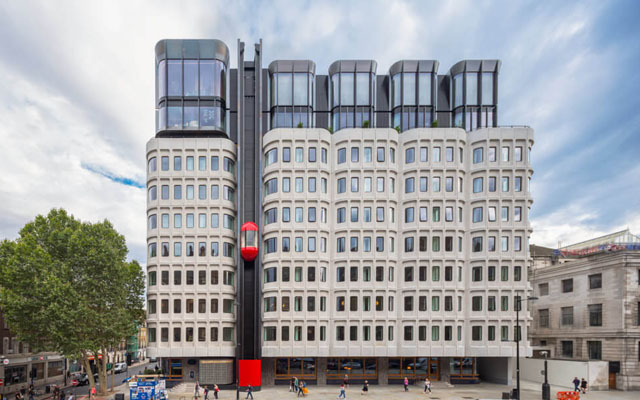
Hyatt Hotels Corporation has plans to acquire the brands and most of the affiliates of Standard International, parent company of The Standard and Bunkhouse Hotels brands, to enhance Hyatt’s position as the leader in the industry’s premier lifestyle space.
The transaction is anticipated to close later this year, subject to customary closing conditions.
With this transaction, Hyatt will form a new dedicated lifestyle group that will be headquartered in New York City. Led by Standard International’s executive chairman Amar Lalvani, the lifestyle group will leverage Hyatt’s best-in-class operational and loyalty infrastructure while assuming distinct leadership across key functions including experience creation, design, marketing, programming, public relations, restaurants, nightlife and entertainment.
The new lifestyle group will be made up of the Standard International team as well as Hyatt colleagues. The acquired portfolio will be 100 per cent asset-light and includes management, franchise and license contracts for 21 open hotels with approximately 2,000 rooms, including The Standard, London, The Standard, High Line in New York City, The Standard, Bangkok Mahanakhon and boutique treasures like Hotel Saint Cecilia in Austin, Texas and Hotel San Cristóbal in Baja California, Mexico.
In addition to The Standard and Bunkhouse Hotels brands, Standard International’s brand portfolio includes Peri Hotels and its two newest additions, The StandardX, which launched this month in Melbourne, Australia, and The Manner, which launches next month in Soho, New York. Beyond its hotel brands, the portfolio includes world-class restaurant and nightlife concepts including The Boom Boom Room, The Standard Grill, The Standard Biergarten, and more.
The acquisition also includes more than 30 projects with a signed agreement or letter of intent, including new properties expected to open over the next 12 months: The Standard, Pattaya Na Jomtien, The StandardX, Bangkok Phra Arthit, as well as Bunkhouse Hotels Saint Augustine and Hotel Daphne. Standard International has also developed a robust residential business with Standard Residences under development in Miami, Lisbon, Phuket, Hua Hin and Mexico City as well as completed Bunkhouse Residences at the Hotel Saint Cecilia in Austin.
Following the closing of the transaction, Hyatt plans to integrate these hotels into World of Hyatt, bringing this portfolio of lifestyle properties to the programme’s 48 million loyalty members.
Sansiri, which acquired a majority position in Standard International in 2017 and facilitated the company’s international expansion, will continue to own several properties that will be managed or franchised under the acquired brands.
Mark Hoplamazian, president and CEO, Hyatt, commented: “We are thrilled to welcome Standard International’s properties and team to the Hyatt family with the newly-created lifestyle group and draw on their brilliance, creativity, culture and innovation.”
Upon closing, Lalvani will take on the role of president and creative director of the lifestyle group, overseeing the integration of the brands to be housed within the group. He said: “We waited a long time to find the right company with whom to join forces. In choosing Hyatt, we tap into a powerful global infrastructure and loyal guest base. We have a shared vision for the enormous potential that still lies ahead.”
Trip.com Group to showcase Thailand’s tourism offerings through new live-streaming hub

Trip.com Group has unveiled its Asia Live Streaming Centre in the company’s Bangkok office in Thailand, which will facilitate daily content to showcase Thailand’s tourism offerings.
The launch of the Asia Live Streaming Centre marks a significant expansion of Trip.com Group’s content marketing strategies. It aims to bring the best travel inspiration and deals to adventurers via live-streaming, revolutionising the way partners and consumers connect to boost the tourism industry.

The centre will serve as the group’s regional hub, broadcasting daily content in Thai on the social media channels of Trip.com Thailand in the first phase, and subsequently in English for international audiences.
Trip.com Group plans to partner with hotels, local attractions and businesses in Thailand to showcase various travel products and deals. The live-stream will focus on high-quality products, including the offerings listed on our Trip.Best, a ranking list on Trip.com that enables global travellers to select the best experiences a destination has to offer.
The live-streaming content will also increase exposure and provide additional sales channels for business partners, complementing the group’s existing marketing initiatives such as mega sales, exclusive collaborations with social influencers in Thailand, food tourism campaigns – all as part of a comprehensive, one-stop marketing solution.
Promotions for Trip.com’s double-digit mega sale campaigns on September 9, November 11, and so on, will be featured in the live-stream. The group intends to bring the live-stream content to its Trip.com sites in the South-east Asia region, with rollouts targeted for 1Q2025. The long-term goal is to expand this live-streaming initiative to other markets where the format continues to gain traction.
Bo Sun, chief marketing officer, Trip.com Group, shared: “The new live-streaming centre aims to capitalise on Thailand’s active social media user base and status as a top travel destination in the region. The move has the potential to elevate travel in the Asia region to new heights, as we leverage the power of live-streaming to engage with passionate travellers.”
Aloft Singapore strives for heartland connections to create a unique welcome for guests
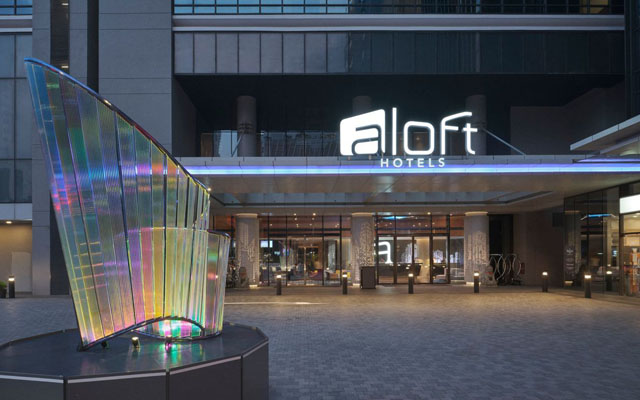
As Aloft Singapore Novena crosses into its second year of operations this September, a focus on enriching guest engagement and experience through local connections has taken shape. Plans include strengthening its ongoing Live@Aloft signature music event that pledges to support local singers and songwriters and curating programmes that highlight the neighbourhood’s rich heritage.
General manager Tan Kim Seng told TTG Asia: “Enhancing our weekly hotel signature programme, Live@Aloft, will not only serve as a platform for emerging talent, but also provide a unique and evolving experience that resonates with our guests.”
At the same time, he intends to leverage on the hotel’s address in “a very Singaporean locale” to infuse “flavours of the community” into future guest programmes.
Tan sees possibilities of hosting events that introduce guests to Singapore’s cultural events, traditions and community lifestyle as well as connect travellers with residents around the area for authentic interactions.
“Through various collaborations and events in the pipeline, we aim to offer an authentic, hyper-local experience that appeals to both locals and tourists, ensuring that every stay at Aloft Singapore Novena is memorable and meaningful,” he stated.
By creating events that involve local merchants, artisans and people living in the neighbourhood, Tan believes that the hotel also fulfils its responsible and sustainable tourism development agenda.
At the same time, crafting a uniquely local experience at Aloft Singapore Novena also grants the property differentiated ammunition to compete against hotels in the prominent city centre areas.
Tan explained: “We are a lifestyle hotel that is hip and alive, and our market comprises people who want to experience the destination and the local community.
“We are in this flavourful part of Singapore, where locals come for their daily coffee and toast, and favourite chicken rice, bak kut teh (pork ribs soup) and old-school coffee blends sold in shops that have been around for generations. The mix of shops along these long streets are eclectic, from home tiles and furnishing to traditional cakes and foodstuff. There is the Sun Yat Sen Nanyang Memorial Hall just next door to our hotel, and we have the Balestier Heritage Trail (set out by the National Heritage Board) on our doorstep.
“We have so much to offer right on the edge of the city centre, which also means guests enjoy prices that are a lot more accessible than what they would be charged in the prime city areas.”
He said the hotel strove to keep prices accessible to both travellers and locals. For example, a National Day special four-course set meal for two at the hotel is priced at S$59++ (US$45), with dishes comprising premium seafood. Regular set lunches are priced from S$26 per person. Dining deals are updated regularly, and are loved by residents in the area.
He acknowledged that Singapore’s destination marketers have taken the right approach to “addressing cost concerns by emphasising value and quality experiences”.
“In today’s competitive global market, travellers are increasingly looking for unique, immersive experiences that justify their spending. By highlighting Singapore’s rich cultural heritage, world-class attractions, and innovative dining and entertainment options, we can position the city not just as a destination, but as an experience that offers exceptional value for money,” Tan stated.
Marriott International elevates gastronomy with new dining series
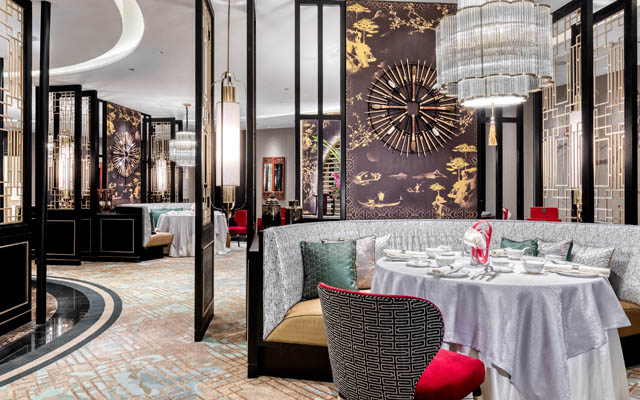
The Luxury Group by Marriott International has launched its Luxury Group Dining Series, a multi-city regional dining series commencing from September to November featuring six handpicked hotels including The Ritz-Carlton, Tokyo, The St. Regis Bali, The Ritz-Carlton, Melbourne, The Athenee Hotel, a Luxury Collection Hotel, Bangkok, The St. Regis Mumbai, and JW Marriott Hotel Singapore South Beach.
The series offers specially designed gastronomic experiences at each property, presented by a line-up of culinary talents across the Asia-Pacific region and beyond.
In conjunction with Marriott Bonvoy Moments, the series also presents discerning travellers an opportunity to discover an unprecedented culinary journey where members can also bid for these exceptional experiences using loyalty points.
The Luxury Group Dining Series takes place in six destinations, activating 23 restaurants and bars, with participation from over 25 hotels and resorts, and showcases the skills of over 55 culinary and beverage talents.
The dates to look out for are September 27-29 at The Ritz-Carlton, Tokyo; October 4-6 at The St. Regis Bali; October 17-19 at The Ritz-Carlton, Melbourne; October 31 to November 3 at The Athenee Hotel, a Luxury Collection Hotel, Bangkok; November 15-17 at The St. Regis Mumbai; and November 29 to December 1 at JW Marriott Hotel Singapore South Beach.
For more information, visit Luxury Group Dining Series.
Thailand celebrates 50 years of Thailand-China relations with events, promotions

To mark the 50th anniversary of Thailand-China relations in 2025, the Tourism Authority of Thailand’s (TAT) Nihao Month will feature special events and promotions from September to October this year, which will lead up to the year-long celebration next year.
TAT has set a target for the Nihao Month festival to materialise into 250,000 arrivals from China during the upcoming Golden Week. Special events and promotions aim to help generate about 500 million reaches and further enhance the positive image of Thailand as the preferred destination for Chinese tourists.

Starting in September is a KOLs Mega Fam Trip hosting up to 100 KOLs from China. The activity is intended to boost awareness of Thailand’s soft power and five must-do activities through content shared with followers of the participating KOLs via various online platforms, including Little Red Book, Weibo, and Douyin.
In addition, the buzz surrounding the Nihao Month is set to reach 400 million more views through the Amazing Thailand, Mid-Autumn Night on September 17, to be held at Parc Paragon, Siam Paragon in Bangkok. The event will see a special appearance by the China-Thailand Cultural Friendship Ambassador, Chinese actor Luo Yunxi, along with Thai actors DaOu Pittaya Sae-chow and Mai Davika Hoorne.
In October, TAT will present the Sound of Friendship Concert at Siam Paragon in Bangkok, playing one show per day on October 5 and 12.
TAT will also launch promotions with China’s Ctrip, Fliggy, Meituan, Tongcheng, and UnionPay between September and December to motivate Chinese tourists to book travel to Thailand. These include special deals on airfares, accommodation, travel activities, discount vouchers, and souvenirs.
Furthermore, Chinese tourists visiting Thailand from September 19 to October 31 can take advantage of the Chinese Passport Special Deals, a collaboration between TAT and shopping malls, transportation services, duty-free shops, spas, and restaurants. Chinese tourists just need to show their passports to participating vendors to enjoy special privileges, deals, and lifestyle benefits.
TAT is also jointly organising two Thailand-China friendship caravan trips for 200 travellers.
The first trip, from September 22 to October 13, will comprise 50 travellers and 20 luxury vehicles including Land Rover, BMW, and Porsche. Covering Lao PDR, Thailand, and Malaysia, the caravan will enter Thailand on September 27 and travel through Chiang Mai, Bangkok, Hua Hin, Chumphon, Trang, Nakhon Sawan, and Chiang Rai, totalling 11 days.
The second trip, from September 30 to October 7, will comprise 150 travellers and 50 vehicles from Kunming, China. The caravan will feature Thailand only on the Chiang Rai-Chiang Mai-Lampang route.
This year, Thailand has already recorded 4.5 million arrivals from China between January 1 and August 17, buoyed by Thailand-China mutual visa exemption, marketing campaigns and promotions implemented by TAT. The momentum is expected to continue to successfully reach the year’s target of 7.3 million arrivals.
TAT governor Thapanee Kiatphaibool said: “The Nihao Month heralds the grand celebration TAT has planned for the 50th Anniversary of Thailand-China relations. In this connection, TAT warmly invites Chinese tourists to come enjoy this Mid-Autumn Festival and Golden Week in Thailand and many more special events scheduled through the end of this year to early next year, culminating in the Chinese New Year and the 50th year festivity.”
Asian travel rewards app hits growth targets within six months after launch

Launched in February this year, azgo, the latest travel cashback app in Asia, has already achieved its ambitious growth targets for the year in just six months.
The app has amassed over 250,000 users across key markets such as China, Singapore, and Hong Kong since its launch, and has generated more than US$2.4 million in Gross Merchandise Value (GMV), which is the total value of transactions made through azgo. This represents a fast growth trajectory of close to 620 per cent growth month on month.

This rapid growth demonstrates that not only has there been a gap in the market that azgo is now filling for both consumers and merchants, but that the industry is ready for new disruptors and ripe for change.
Backed by azgo’s experienced team of leaders hailing from Booking.com, Trip.com and Skyscanner, azgo is leading the evolution of the travel tech industry.
Some of the changes introduced and led by azgo that have fuelled its rapid growth include accelerating the pay-outs of rewards to its customers in just seven days; leveraging artificial intelligence (AI) to speed up validation of cashback from best deals and offerings from a network of established travel partners, such as Booking.com, Agoda, Creatory by MoneyHero Group, and Pelago by Singapore Airlines; and being the first mobile-first platform for travel bookings that will respond to each customer query within 30 minutes with personalised responses during its customer service operating hours, instead of relying on automated responses.
azgo aims to become the leading AI-driven platform for rewards and price comparison, so users are empowered to make smarter decisions when they travel. With many top-tier OTAs already entering into partnerships with the app, azgo will continue to focus on expanding its partnerships and delivering impactful results to its key merchants and partners.
As part of its initial phase, azgo has launched in China, Singapore, Hong Kong, and Vietnam. In the next phase of its journey, azgo will be setting its sight on the US and Australia markets.
Yan Yuan Sng, head of country, Singapore, said: “Our commitment to revolutionising the travel experience through our AI-driven platform and innovative solutions have resonated well with travellers and merchants throughout the region, exceeding our initial expectations. This spectacular growth is testament to the capabilities of our team, made up of leading industry experts, who have a unified mission to deliver unparalleled value to our customers and partners.
“Our journey has only just started, and we are looking forward to continue redefining the travel tech landscape and unlocking greater value for everyone.”







Laguna Lakeside Residences, Thailand
Laguna Lakeside Residences joins the iconic Laguna Phuket integrated resort community at Bang Tao beach on Phuket’s Central West Coast, just 30 minutes from Phuket International Airport.
The new residences are conveniently situated at the gateway to Laguna Phuket, overlooking a lagoon and right on the doorstep of the popular Boat Avenue entertainment district at Bang Tao area.
Set in landscaped gardens, each one-, two- and three-bedroom residences boasts its own expansive rooftop infinity pool.
Travelodge Suites Busan Centum, South Korea
Travelodge Suites Busan Centum offers panoramic views of either Haeundae Beach, the Marine City, or the Olympic Park from all its guestrooms, some of which comes with in-room washing machines, and kitchens. Facilities include a rooftop pool, fitness centre, Italian restaurant, and a meeting room.
Located in Centum City, nearby the property are Haeundae and Gwangalli Beaches, major shopping, museums, Busan Cinema Center, X-the Sky, Luge, Lotte World, and the Hub MICE, BEXCO.
HIIVE by fusion Binh Duong New City, Vietnam
Situated in Binh Duong in southern Vietnam, HIIVE by fusion Binh Duong New City is just 38km north of Tan Son Nhat International Airport in Ho Chi Minh City, and is near Hikari Complex, Binh Duong New City Park and the Binh Duong World Trade Center Association.
All guestrooms and suites include a workspace, high-speed Wi-Fi, individually controlled air-conditioning units, kitchenette, and other modern amenities.
The hotel also offers 24-hour laundry services, a fitness centre and golf simulator, restaurant, bar, and two meeting rooms.
La Vie D’or Hotel and Resort, Trademark Collection by Wyndham, South Korea
La Vie D’or Hotel and Resort offers 190 rooms, a nine-hole golf course, fitness centre, saunas, swimming pools and dining options, as well as event venues.
Nestled in the city of Hwaseong-si, South Korea, just a 30-minute drive from Seoul, guests can visit attractions like the Yungneung and Geolleung Royal Tombs and Yongjusa Temple or take a short drive to Seoul and Suwon.