Vietnam’s tourism industry continues to perform well, welcoming 21.2 million international travellers and 137 million domestic tourists in 2025, generating US$39 billion in total spending.
Speaking at the ASEAN Tourism Forum 2026, Nguyen Quy Phuong, director of tourism marketing and international relations at the Viet Nam National Authority of Tourism, identified China (5.3 million), South Korea (4.3 million), and Taiwan (1.3 million) as the top three inbound markets.
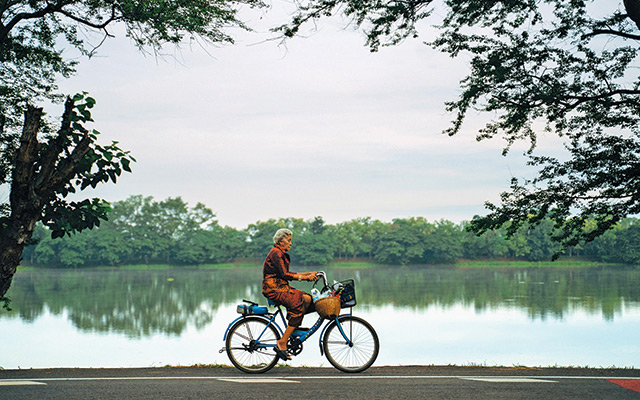
Vietnam reports strong tourism performance in 2025 and rolls out new products and infrastructure upgrades ahead of 2026; Tam Coc in Ninh Binh province, pictured
In 2026, Vietnam will continue to expand its e-visa facilities and provide visa exemptions. In addition, Gia Lai province will host the Vietnam National Tourism Year 2026, a major platform to showcase the province’s natural landmarks to both domestic and global audiences.
New tourism products, such as the Hanoi Five Gates heritage train, have also been developed. The service offers a 40-minute journey from Hanoi Station to Tu Son in Bac Ninh province for up to 300 passengers. During the trip, travellers can experience live folk performances, traditional crafts, and local delicacies.
Additionally, upgrades to Phu Quoc and Gia Binh airports are also being fast-tracked ahead of the Asia-Pacific Economic Cooperation summits in 2027.
The Tourism Authority of Thailand (TAT) has officially appointed Lalisa “Lisa” Manobal as its Amazing Thailand Ambassador, positioning the global pop icon at the heart of its Feel All the Feelings campaign and TVC.
Unveiled at Wat Arun, this initiative aims to elevate Thailand’s tourism image toward becoming a Quality Leisure Destination while inviting Thais to be Good Hosts.
TAT welcomed Lisa as Thailand’s new tourism ambassador at the Temple of Dawn on January 28; photo by Anne Somanas
It also seeks to build tourism confidence through the Trusted Thailand project, ensuring every journey is worry-free, memorable, and leads to sustainable repeat visits.
“Portraying the beauty of Thailand through the perspective of ‘Lisa – Lalisa Manobal’ will open a new perception. The campaign invites tourists to experience every emotion in Thailand as more than just a destination, but a high-quality experience in a Quality Leisure Destination,” Thapanee said.
“(Our choice of ambassador) further enhances and improves Thailand’s competitiveness, because Lisa is considered a very powerful individual in terms of connecting the dots across many different groups and subcultures – not just among the tourist population,” she told TTG Asia.
The campaign has already generated significant digital buzz, although not without scrutiny.
Promotional images released earlier in January featuring Lisa at the Red Lotus Sea in Udon Thani sparked online debate, with users questioning the heavy use of CGI and whether the star was physically present at the site.
Thapanee dismissed concerns over the production methods, noting that the viral nature of the content has served the agency’s primary goal of massive visibility.
“If we’re talking about engagement, and eyeballing, just the Red Lotus Sea now has reached over 600 million views already, which is considered very high. Certainly, part of it is from the (controversy) but the reach that has occurred resulted in engagement, and engagement has resulted in positive impact for the destination,” Thapanee said.
Additional images of Lisa at attractions in 55 different provinces will be released over the duration of the campaign, along with a series of collectible items, she told reporters.
Thapanee remains focused on the long-term conversion of this digital reach into high-value tourism arrivals.
“We want every journey in Thailand to create deep, valuable memories that stay in tourists’ hearts for a long time, sparking a desire to revisit Thailand and share these impressive stories,” she concluded.
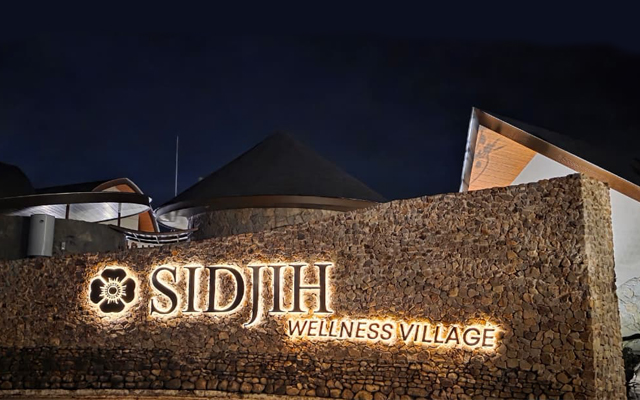
Batam View Beach Resort, set on a private beach in Nongsa, Batam, Indonesia, will ride the wellness tourism trend in a bigger way starting February when it soft-launches its new Sidjih Wellness Village.
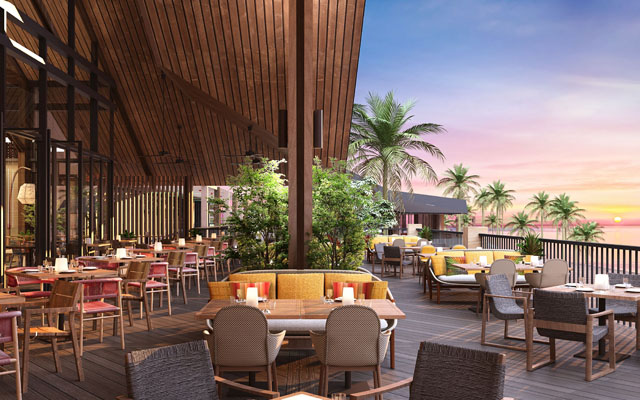
The new-built will offer lush, landscaped surroundings as well as seven spa villas that are each furnished with massage equipment, hot tub, oversized ceramic bath, and rain shower. Sidjih Wellness Village adopts a nature-led Nusantara-style architecture concept while wellness treatments draw on both traditional Indonesian and modern practices. It will also feature a retail space where its own brand of wellness products are sold, a beauty salon, and a foot reflexology zone.
Batam View Beach Resort will soft-launch its Sidjih Wellness Village in February, adding spa villas and wellness facilities to its Nongsa beachfront property
The resort’s general manager, Anddy Fong, told TTG Asia that Sidjih Wellness Village has curated wellness packages that combine hotel or villa accommodation at the newly renovated Batam View Beach Resort, treatments, health-focused dining, and fitness activities such as sound baths and yoga.
“We have positioned Sidjih Wellness Village to offer high quality wellness experiences that are value for money,” said Fong.
He believes that the launch of Sidjih Wellness Village is timely, as it aligns with the Indonesian government’s strategy to position the country as a leading regional health and wellness destination.
He added that Batam can be an accessible wellness destination for many travellers residing in the Asian region as well as those visiting South-east Asia. He pointed to AirAsia’s direct flights between Kuala Lumpur, Malaysia and Batam, commencing this April as well as a new hour-long ferry service from Pasir Gudang Port in Johor, Malaysia to Batam’s Nongsapura Ferry Terminal, set to begin in March.
“The majority of international arrivals to Batam is made up of Singaporeans. However, improved access has led to a growing number of Malaysian guests. We also welcome many South Koreans, Chinese, Indian and Australian guests, many of whom come through the major air hub in Singapore,” Fong said.
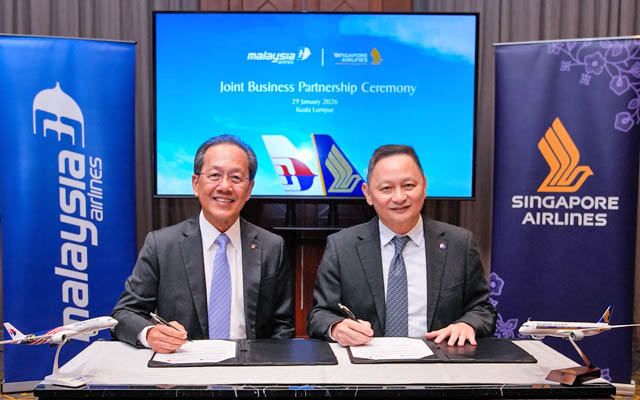
Malaysia Airlines (MAS) and Singapore Airlines (SIA) have confirmed the formalisation of their joint business partnership following regulatory approvals in both countries. The Civil Aviation Authority of Malaysia granted approval in January 2026, following approval by the Competition and Consumer Commission of Singapore in July 2025.
The approvals allow both airlines to begin progressively implementing measures to deepen their commercial cooperation. These may include revenue-sharing services between Malaysia and Singapore, joint fare products, coordinated flight schedules and joint corporate travel arrangements.
From left: Malaysia Aviation Group’s Izham bin Ismail and Singapore Airlines’s Goh Choon Phong at the signing; photo by Malaysia Airlines
Further details will be announced as initiatives are introduced.
The partnership is intended to enhance connectivity between Malaysia and Singapore and provide customers with greater flexibility when travelling between the two markets.
Since signing their initial agreement in October 2019, the two carriers have expanded their codeshare arrangements. SIA currently codeshares on MAS flights between Kuala Lumpur and Singapore, London Heathrow, and 15 domestic destinations within Malaysia.
MAS codeshares on SIA services between Singapore and Kuala Lumpur and Penang, as well as flights to Barcelona, Brussels, Cape Town, Copenhagen, Istanbul, Johannesburg, London Heathrow, Rome and Zurich.
In February 2024, the airlines introduced reciprocal frequent flyer programme benefits, allowing members of Enrich and KrisFlyer to earn points and miles on selected flights operated by either carrier.
“This collaboration brings together complementary frequencies and aligned schedules, enabling deeper connectivity between Malaysia and Singapore. Over time, it reinforces Malaysia Airlines’ competitive position by enhancing scale, relevance, and network resilience across key markets,” said Izham bin Ismail, group managing director of Malaysia Aviation Group.
“Our win-win collaboration strengthens both carriers’ operations, while delivering enhanced value to customers across our combined networks. This also reinforces the long-standing and deep people-to-people and trade links between Singapore and Malaysia, supporting economic growth and connectivity that will benefit both nations,” added Goh Choon Phong, CEO of SIA.
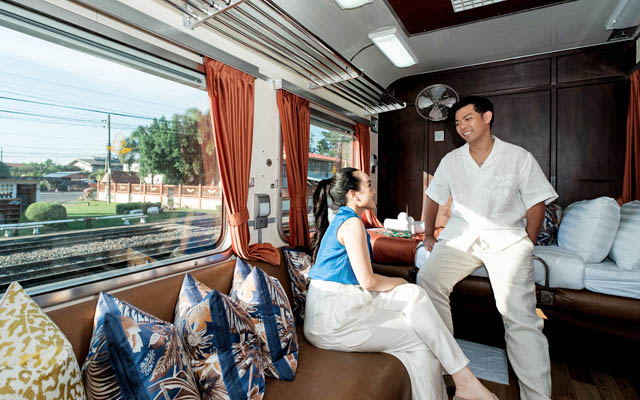
The Blue Jasmine, a restored heritage train from the 1960s, has begun operating cultural rail journeys from Bangkok’s Hua Lamphong Station, travelling through key historical destinations across Thailand.
In a collaboration with DTH Travel, Jim Thompson has developed a series of travel experiences linked to the journey, including onboard design elements and pre-departure activities.
The restored 1960s train departs from Bangkok on curated rail journeys developed with Jim Thompson and DTH Travel
The Blue Jasmine consists of 10 wagons and accommodates up to 36 passengers. The route connects Bangkok with Ayutthaya, Uthai Thani, Sukhothai and Chiang Mai. The programme focuses on slower travel, with scheduled stops that allow guests to visit UNESCO-listed sites, meet local communities, observe craft practices and sample regional food.
The experience begins with a dining event at Jim Thompson, A Thai Restaurant, located within the Jim Thompson Heritage Quarter. A five-course menu presents dishes influenced by regional Thai cooking and seasonal produce. Guests also visit the Jim Thompson House Museum, which comprises six teak houses built in 1958, and the Jim Thompson retail store, before boarding the train at Hua Lamphong Station.
Onboard, the train interiors incorporate more than 2,000 Jim Thompson design items across all wagons. These include furnishings, textiles and accessories used in accommodation, dining and shared areas. Items include curtains, cushions, bed runners and table runners, as well as placemats, napkins, coasters and amenity kits. Designs reference botanical patterns and traditional weaving techniques.
The train also includes the first Jim Thompson showroom on a train, featuring silk products and selected fashion and lifestyle items. Purchases can be made via QR code, with delivery arranged at the end of the journey.
Following its first journey in November 2025, further departures are scheduled for January, February, July, November and December 2026.
Details for 2027 departures will be announced later.
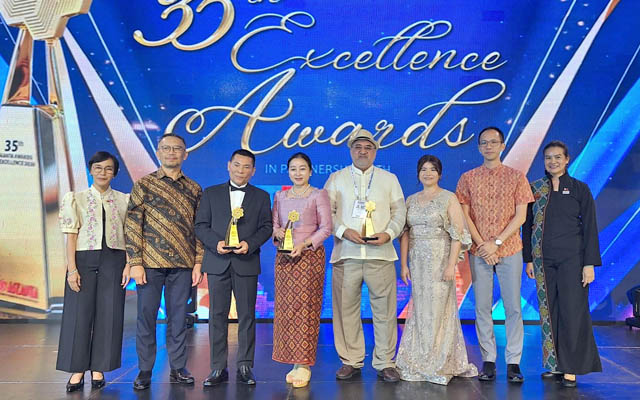
The ASEAN Tourism Association (ASEANTA) presented the 35th ASEANTA Tourism Awards of Excellence on January 27, 2026, in Cebu, the Philippines, recognising achievements across South-east Asia’s tourism sector.
The awards ceremony was held alongside the ASEAN Tourism Forum (ATF) 2026 with the support of the Tourism Promotions Board Philippines and the Department of Tourism of the Philippines.
Winners were recognised during the 35th ASEANTA Tourism Awards of Excellence held alongside ATF 2026 in the Philippines
Now in its 35th year, the ASEANTA Tourism Awards recognise organisations and individuals whose initiatives demonstrate measurable outcomes in areas including sustainability, cultural preservation, marketing and visitor experience. The awards aim to promote quality standards and responsible tourism development across the region.
This year’s recipients represented a cross-section of tourism operators, attractions, accommodation providers and industry initiatives from across ASEAN member states.
SMX Convention Centre in the Philippines received the Best ASEAN Convention Centre award, while Borneo Nature Tours of Malaysia was recognised for both the Best ASEAN Cultural Preservation Effort Award and Best ASEAN Eco-Lodge.
Lotus Desaru Beach Resort & Spa in Malaysia received the Best ASEAN Hotel Package award, while AirAsia Move, also from Malaysia, was named Best ASEAN Marketing and Promotional Programme. Enchanted Kingdom in the Philippines received the Best ASEAN New Tourism Attraction Award, and Sudamala Resorts of Indonesia was recognised for Best ASEAN Sustainability Programme. CSL Travel & Tours from Cambodia received the Best ASEAN Tour Operator award, with Shroff Travel of the Philippines named as Best ASEAN Travel Article.
ASEANTA said the awards serve as a platform to share best practices and encourage collaboration across the region’s tourism industry. By highlighting proven initiatives, the association aims to support replication and adaptation across different ASEAN destinations.
The awards are conducted through a regional evaluation process involving tourism leaders from across South-east Asia, with ASEANTA acting as custodian of the programme.
“This year’s awardees represent the very best of ASEAN tourism – from sustainability leadership and cultural preservation to innovative marketing and world-class visitor experiences,” said ASEANTA president Eddy Krismeidi Soemawilaga. “Their achievements show how tourism excellence can drive positive impact not only for individual destinations, but for ASEAN as a region.”
Tour operators in Thailand are tapping into tertiary territories to ignite fresh appeal in the country amid a noticeable shift in visitors’ travel demand and desire to steer well off the beaten track.
Edwin Briels, managing director of Exploration Travel Thailand, said he launched the company three years ago with the “aim of doing things differently” in response to the need for the nation’s industry to endure a “shake-up”.
Thai tour operators turn to lesser-known regions as travel demand shifts
“Now, we have agents and clients who are more educated about Thailand and are looking for real experiences, not the staged Thailand,” Briels said, adding that it is important for tour operators to seek out tertiary destinations.
“We’re looking at more unexplored areas and how we can tell the story of that area to create unique itineraries. This paints a much nicer image of Thailand, as a lot of people now think of overtourism in some areas, like Phuket,” he stated.
Itineraries include less explored destinations such as Kaeng Krachan, Isaan, Chanthaburi, Sukhothai and Chiang Khong, which Briels said have piqued the interest of international tour operators that have grown tired of Thailand.
Briels added that this also taps into the community development element of tourism, with the company working with locals to curate tours and experiences, as well as training them to be skilled guides and hosts.
He noted: “Two tour operators from Europe and one from the US said they stopped selling Thailand for 10 years because everyone is doing the same thing, but have come back because we’re doing something different.”
Matthew Clancy, general manager of Khiri Travel Thailand, also highlighted a shift in demand for destinations beyond Thailand’s main hotspots. “Travel, once again, is becoming more and more about the journey and less about the final destination,” he commented.
“People want journeys that feel authentic, personal, and exploratory rather than commercial or overdeveloped, and there seems to be a growing appetite for places that still feel real, where culture, nature and everyday life have not been shaped primarily around tourism.”
Clancy cited Isaan, where a new Khiri Travel office has been launched in Khon Kaen to develop operations in the region, Lampang, Nan and Loei provinces, as well as Trang province and its islands, as destinations Khiri is developing.
Outbound travel from Malaysia has received a boost as the stronger ringgit enhances overseas spending power, having appreciated by more than 10 per cent against the US dollar in 2025 to emerge as the best-performing currency in Asia.
The strengthening of the ringgit against other major currencies has enabled Suka Travel & Tours either to reduce rates for its series departure packages to several destinations, or to maintain prices while introducing add-ons such as upgraded meals and complimentary traditional costume rentals in South Korea.
Herman shared that demand from Malaysian incentive planners for centrally located five-star accommodation has increased
Its CEO, Adam Kamal, said that beyond Asian destinations, demand is also picking up for Central and Eastern Europe for the upcoming autumn and winter seasons.
“With the stronger ringgit, we are able to include more centrally located hotels in our packages. In the past, we relied on hotels on the outskirts to keep package prices competitive,” he said.
Apple Vacations group managing director Koh Yock Heng shared that the company has seen growing demand for Japan, as the yen depreciated by 11.3 per cent against the ringgit over the one-year period from January 20, 2025, making travel, accommodation and shopping more affordable for Malaysian travellers.
He said demand for China was also strong due to the visa-free arrangement for short stays of up to 30 days, direct air connectivity to first-, second- and third-tier cities between China and Malaysia, and the favourable exchange rate. The renminbi weakened by around 6.5 per cent against the ringgit over the same one-year period.
Koh said repeat travellers are increasingly seeking new destinations, prompting the company to introduce charter services to places without direct flights from Malaysia. These include 11-day, nine-night packages to Northern and Southern Xinjiang with four fixed departures in September and October, as well as seven-day, five-night itineraries to Japan’s Tohoku region with two departures scheduled for December.
Kazakhstan is another destination gaining traction following the introduction of direct flights from Kuala Lumpur to Almaty by AirAsia X in 2024. Koh said the destination is particularly appealing to more mature travellers seeking something different, with its mix of cultural heritage and natural attractions.
He added that travellers have already started booking for the coming autumn and winter seasons, reflecting confidence and sustained appetite for travel.
Bhara Tours & Travel Bandung managing director Herman Rukmanadi said there has been an increase in requests from Malaysian incentive planners for five-star accommodation in centrally located areas compared with previous years. The number of requests for proposals from Malaysia has also risen in the first quarter compared with the same period last year, although it remains too early to assess conversion rates.
Meanwhile, Manila-based Annset Holidays assistant sales and marketing manager Jenny C Valenzuela said the company has received more requests for tours beyond Manila.
“In the past, FIT and private tour travellers would only purchase city tours, but now they are looking for add-ons such as island-hopping experiences. We are also seeing stronger demand for four-star accommodation, whereas previously travellers tended to opt for budget hotels,” she said.
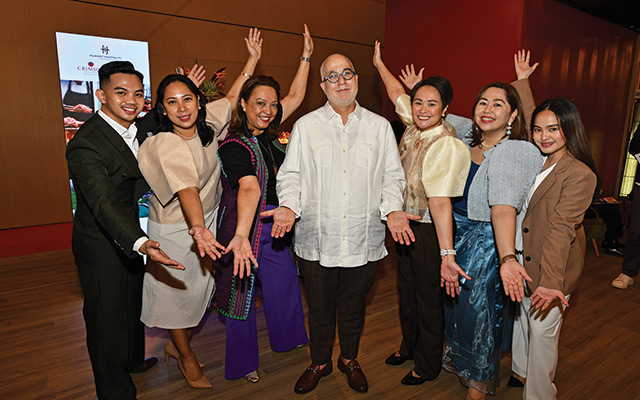
Chroma Hospitality is entering its next phase of expansion with a trio of developments that signal both brand diversification and scale, according to country manager James Montenegro.
The group is currently operating more than 2,000 rooms and is targeting close to 3,000 rooms within the next five years, driven largely by fully owned developments rather than management contracts.
Chroma Hospitality sets out next growth phase with new lifestyle brand, resort development and loyalty programme
Leading the roll-out is the debut of Grafik, Chroma’s first in-house lifestyle brand, launching in Baguio with a 256-room property called The Pinehouse, located within the historic John Hay estate. Positioned as a millennial-forward, experiential brand, the property is fully contactless and designed around open, social spaces. It will house three dining concepts: Hey Diner, Spanish restaurant Altitude, and bistro Shira, alongside two bars, including a speakeasy and a club.
“It’s a brand that’s supposed to engage people in experiential states,” Montenegro said, noting that Grafik is built around curated touchpoints such as walking tours and wellness activities that connect guests with the estate’s natural setting. “It’s a little bit different from what we normally do, and that’s what excites us about it.”
Chroma is also preparing to break ground on its next Crimson Hotels & Resorts property in Clark in 2H2026. The 300-room hotel will feature a sky bar restaurant, club floor, ground-floor bistro and a large ballroom.
The third pillar of Chroma’s expansion is Chroma Beyond, a new loyalty programme designed to deliver instant rewards rather than long-term point accumulation. The app-based platform allows digital check-in and provides mobile room keys and immediate perks, from dining rewards to complimentary stays.
Montenegro noted that guests can claim benefits after each booking and choose whether to redeem immediately or on a future visit.
Together, the initiatives reflect Chroma Hospitality’s intent to scale deliberately while strengthening brand identity and guest experience across its growing Philippine portfolio.
“We do the full complement. We’re one of the local resorts that has Michelin restaurants. We are well known for our food and restaurant products, and also for the quality of our guestrooms. Our service rating is almost 96 per cent. Our NPS (net promoter score) is about 85 per cent. And that is our advantage. We play in the mass upper mass market,” concluded Montenegro.
The Philippine Travel Agencies Association (PTAA) has confirmed its new board of directors, which will serve as the association’s leadership body representing travel agencies across the Philippines.
PTAA is the national association representing travel agencies and allied tourism stakeholders in the Philippines. It works to support collaboration between the public and private sectors and to advocate for the interests of its members across the travel trade.
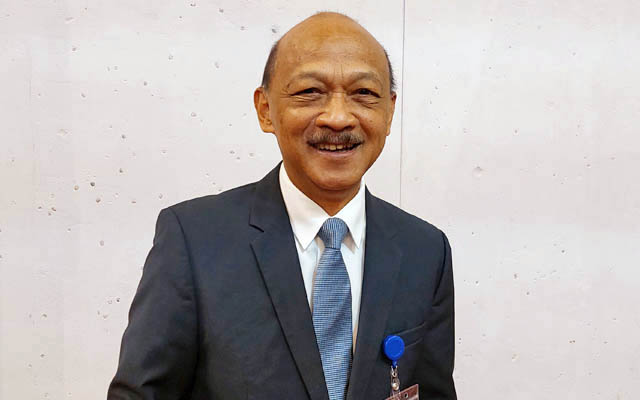
PTAA sets its leadership line-up for the current term
The association has more than 600 member agencies nationwide, covering outbound and inbound travel. It works to represent industry interests, promote professional standards and support sector development.
The new board is led by president Jaison P Yang. The other officers are executive vice president Evelyn Dy Bondagjy; vice president for Visayas and Mindanao Matt Poonin; vice president for outbound Rowena Coloma; vice president for inbound Ellen Cobarrubias; secretary general Arnel DC Gomez; past president and chairman for international affairs Evangeline Tankiang-Manotok; treasurer Helena Ty; public relations officer Chal Lontoc; and auditor Amie Demapindan.
Supporting the board are assistant vice president for outbound Dominic Castillejos, assistant vice president for inbound Kristoffer Kim Paollo Guzman, assistant secretary general Cherry Caritativo, assistant treasurer Rolando Maramo, and assistant public relations officer Kem Aldrich Lim.
The board acts as the authorised voice of PTAA, with all official statements and media coordination managed through designated officers. The association continues to work with the Department of Tourism and local government units on industry engagement, professional development and community-related initiatives through the PTAA Foundation.
PTAA stated it will continue to engage with industry stakeholders and media partners to share updates and developments related to Philippine travel and tourism.