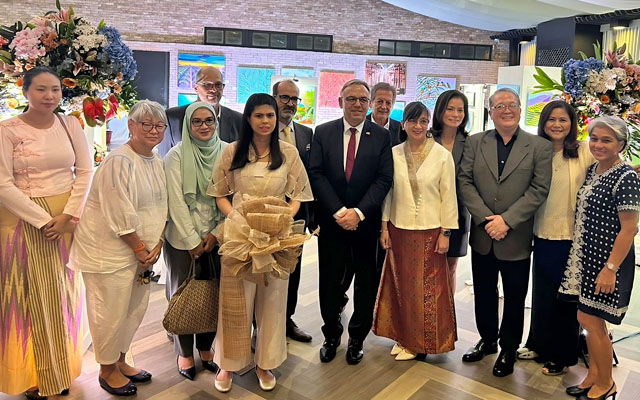
In its commitment to back initiatives that promote biodiversity conservation and sustainable practices, Banwa Private Island recently showed its support for the ASEAN Centre for Biodiversity with the Biodiversity in Full Colour Art Exhibition on September 24, which showcased the artworks of Samantha Kaspar, an artist with special needs.
In addition to the art exhibition, Banwa Private Island’s Aquos Foundation, in partnership with the Tubbataha Reefs Natural Park and World Heritage Site Management Office, held an event for students from Tumarbong Elementary School. The event featured the introduction of the book Mga Hero ng Planetang Blue, produced by the ASEAN Centre for Biodiversity, which inspires young readers to become guardians of our planet.
At the ribbon-cutting ceremony for the Biodiversity in Full Colour Art Exhibition, organised by the ASEAN Centre for Biodiversity
Banwa Private Island was recently recognised as one of the Philippines’ top 10 Important Shark and Ray Areas, a recognition that highlights the island’s critical importance in preserving these vulnerable species and their habitats.
To further bolster its conservation efforts, the island has also undertaken important research projects, including studies on the native Tabon Bird (or Philippine Megapode) and Mantanani Scops Owl, as well as initiatives to preserve the indigenous beach forests where these species nest.
Commenting on the art exhibition, Janet Oquendo, island manager of Banwa Private Island, shared: “Aquos Foundation’s mission to protect marine ecosystems deeply resonates with Samantha’s beautiful and evocative artworks. Her paintings capture the essence of the underwater world, reminding us of the delicate balance of nature. We’re honoured to have supported her and to continue contributing to the preservation of our island home’s fragile ecosystems through our conservation initiatives, including research on native species and habitat preservation.”
RateHawk, in partnership with Rail Europe, has introduced a rail travel booking service on its platform, allowing its partners – travel agents, operators, and other industry professionals worldwide – to book rail tickets across various European destinations.
This new service complements the existing travel options already available on RateHawk, which include accommodation, flights, car rentals, and transfers.
Rail tickets across various European destinations are now available to book on Ratehawk
RateHawk’s partners can now book all travel components within a single system. Rail tickets are available across 13 European countries including France, the Netherlands, Hungary, Poland, Belgium, Luxembourg, the UK, Spain, Italy, Switzerland, Germany, Czech Republic, and Austria.
The new initiative streamlines the booking process for travel agents, allowing them to quickly filter options based on client preferences and select the best choices for their clients.
Travel professionals will have the flexibility to book trips using various payment methods, including payments by card, wire transfer, credit limit or overpayments, or by pay-by-link options – travel professionals can even book railway tickets using their credit limit.
Rail Europe’s product portfolio features leading railway carriers across Europe, including Italo in Italy, Renfe and Iryo in Spain, SBB CFF FFS and Rhätische Bahn in Switzerland, ÖBB in Austria, TGV InOui in France, Rail Delivery Group in the UK, Eurostar in France, the UK, the Netherlands, and Belgium, as well as RegioJet in the Czech Republic.
Fredrik Bonnalt, head of non-accommodation supply at Emerging Travel Group, RateHawk’s parent company, commented: “Rail travel offers great opportunities for our partners’ businesses, enabling them to meet customer needs and attract new clients.
“Rail transportation is widely recognised as the most environmentally friendly option, and with many companies prioritising carbon footprint reduction and incorporating Environmental, Social, and Governance initiatives into their corporate travel programs, our TMC partners can greatly benefit from this new booking service.”
Björn Bender, CEO of Rail Europe, added: “This dynamic partnership reflects our shared commitment to offering seamless travel solutions through advanced technology. At Rail Europe, we believe train travel is the best way to explore Europe – not only for its efficiency but also for its positive environmental impact. By empowering travel agents with the best tools to integrate rail services, we aim to make every journey a memorable experience for travellers.”
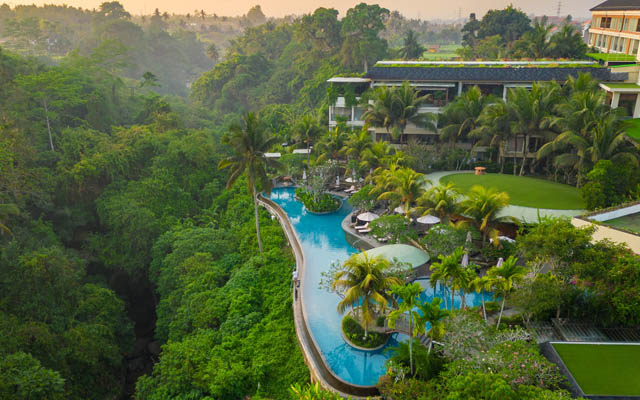
Guests at The Westin Resort & Spa Ubud, Bali can now engage with nature in unique and meaningful ways with the introduction of the Trigona stingless bees and the launch of the resort’s Hydro Haven hydroponic garden.
The Trigona bee hive is home to stingless bees that play a crucial role in supporting the environment. Guests can observe the bees at work, and taste honey straight from the hive, or even adopt a bee – the honey is also integrated into wellness treatments at the spa.
The Westin Resort & Spa Ubud Bali offers eco-friendly initiatives for guests to connect with nature
Hydro Haven, a hydroponic garden where fresh vegetables are grown to supply the resort’s farm-to-table dining experiences, ensures that guests enjoy fresh, locally-grown produce while supporting a more eco-friendly lifestyle during their visit.
In addition, Marriott Bonvoy members can now enjoy an exclusive points redemption offer, with up to 20 per cent off points redemptions starting from just 25,000 points per night.
The offer is available for stays booked and redeemed until March 31, 2025.
WTTC has launched its Supporting Global Indigenous Tourism report at its 24th Global Summit in Perth, Western Australia, highlighting how indigenous tourism is projected to contribute US$67 billion to the global economy by 2034.
The report shows how indigenous tourism plays a crucial role in preserving cultural heritage, languages, and traditional practices, and showcases the sector’s role in driving economic growth, particularly in remote regions.
Australia is one of the countries that is incorporating indigenous experiences into national tourism marketing
Indigenous tourism is rapidly emerging as a key economic driver, creating jobs and economic value in remote areas. It promotes and protects indigenous people’s cultures, languages and lands, and gives visitors a unique opportunity to experience and learn about indigenous history and tradition.
With the global indigenous tourism market set to grow at a compound annual growth rate of 4.1 per cent over the next decade to reach US$67 billion, this sector is empowering communities to take control of their economic futures.
Interest and participation in Aboriginal tourism experiences continues to grow in Western Australia, while the indigenous tourism sector in Canada supports nearly 2,000 businesses, and over 39,000 jobs. In Panama’s Guna Yala region, tourism is the primary economic driver, sustaining the Guna people and their culture while creating a self-sufficient economy.
This economic boom is fuelled by increasing demand for authentic cultural experiences, in countries such as Canada, Australia, and the US, among others.
In Australia, more than 1.4 million international visitors engaged in indigenous tourism experiences in 2019, marking a six per cent year-on-year growth since 2010.
Western Australia Indigenous Tourism Operators Council (WAITOC) CEO Robert Taylor highlighted the importance of authentic indigenous experiences. WAITOC has worked closely with Tourism Western Australia to develop an action plan to support the continued development of indigenous tourism in the state – The Jina: Western Australia Aboriginal Tourism Action Plan 2021-2025 supports new businesses and encourages more Aboriginal people to work in the tourism industry.
Taylor remarked that “Western Australia is well on its way to becoming the premier destination for authentic Aboriginal experiences in the country”, naming programmes like Camping with Custodians as an example of “the continued growth of Aboriginal tourism in Western Australia”, along with a strong growth in product offerings, such as women-only experiences.
In Northern Europe, the Sámi people have developed certification marks such as Sámi Duodji to protect their rich traditions, while Peru’s innovative Kipi robot helps preserve endangered languages like Kukama, spoken by just 2,000 people.
Indigenous tourism is also a sustainable career path, exemplified by Canada’s Indigenous Tourism Association of Canada, which empowers communities to control their futures through tourism.
Meanwhile, countries like Australia and the US are increasingly incorporating indigenous experiences into national tourism marketing, ensuring authentic representation.
WTTC president and CEO Julia Simpson said: “This report demonstrates the immense potential of indigenous tourism to drive economic growth, particularly in remote regions, while preserving invaluable cultural heritage. As global demand for authentic experiences continues to rise, it is crucial that we support indigenous businesses and ensure they have access to the resources and funding needed to thrive.”
Cities in Japan’s central region of Chubu are preparing for an uptick in inbound tourists thanks to a promotional boost ahead of and during Tourism Expo Japan 2025.
The country’s annual travel and tourism showcase will be held in the region for the first time from September 25 to 28, 2025 at Aichi Sky Expo, next to Chubu Centrair International Airport, in a bid to “promote the diversification of inbound tourism, regional revitalisation and recovery from the Noto Peninsula earthquake”, according to organisers.
The famous waving cat (maneki neko) of Tokoname in Japan
Tokoname, which is famous as the birthplace of Japan’s maneki neko (waving cat), is among the lesser-known cities expecting greater visibility.
Home to Chubu Centrair International Airport, it is part of the Aichi and Tokoname Super City Initiative, which aims to develop the area into “an international tourism city” using technologies such as face authentication systems at the airport, automated transportation including drones, smart mobility and hydrogen-powered clean energy.
Exhibiting for the first time at Tourism Expo Japan 2024, Tokoname showcased its 1,000-year history in producing pottery, its renown domestically for seafood and seaweed, and its efforts to promote international exchange through tourism.
Wajima, on the Noto Peninsula, will also be promoted heavily to stimulate its economic recovery from the earthquake that devastated the region in January. Although the city is still accepting tours slowly, tourism stakeholders are preparing to introduce international visitors to Wajima’s traditional lacquerware and Shiroyone Senmaida terraced rice fields, a designated National Scenic Spot.
“We will help people see the current situation and charms of Wajima, which is taking steps for recovery towards a ‘new Wajima’,” said expo organisers.
Malaysia has launched the Edu+ programme, in its efforts to elevate the country’s edutourism sector. The initiative targets students (under the age of 16), who are holding tourist visas, to pursue short-term education programmes while vacationing in Malaysia.
Together in collaboration with the National Association of Private Educational Institutions (NAPEI), Edu+ reflects the synergy between the tourism and education sectors to create unique learning opportunities.
The Edu+ programme aims to attract students to pursue short-term education programmes while vacationing in Malaysia
The Edu+ programme aligns with Malaysia’s broader tourism goals ahead of Visit Malaysia 2026, and is poised to enhance the national tourism industry by indirectly driving Malaysia towards a preferred tourist destination in the region.
In its initial phase, the Edu+ programme focuses on the Japanese market, with plans to expand to other regions such as South Korea, China, Russia, and Vietnam. The initiative is designed to promote cultural exchange, educational enrichment, and tourism growth between nations.
Featuring a comprehensive model centred around learning English at educational institutions in Malaysia, the Edu+ programme comprises various components, including education, cultural and heritage experiences, collaborations with local schools, home-stay experiences, sports tourism learning, eco and nature experiences, and Sustainable Development Goals programmes.
Presently, 19 private educational institutions and eight travel agencies have committed to developing Edu+ packages under this programme.
Malaysia’s deputy minister of tourism, arts and culture Khairul Firdaus Akbar Khan commented: “As a country rich in diversity, history, arts and culture, Malaysia has great potential in this tourism segment where Edu+ is set to have a key role in attracting young tourists to explore the uniqueness of the country. It is estimated that as many as 10,000 students will enrol in this programme in 2024, generating 50 million ringgit (US$11.65 million) of income for the country.”
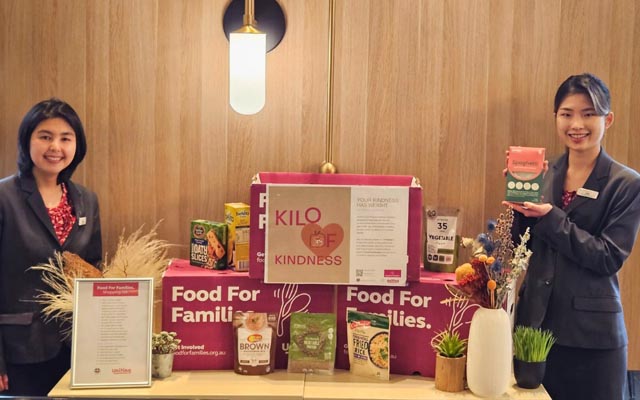
Mövenpick Hotels & Resorts’ ninth edition of it Kilo of Kindness initiative has brought together over 75 hotels and resorts across 30 countries to support their local communities through meaningful acts of kindness.
The 2024 Kilo of Kindness initiative invites guests, Heartists (Accor staff), and local communities to contribute food, clothing, school supplies, toys, linen, furniture, books, sports equipment, and second-hand electrical equipment such as computers, from now to November 15 at participating Mövenpick hotels.
Heartists at Mövenpick Hotel Melbourne on Spencer prepare to accept contributions to the Kilo of Kindness initiative
All donations will then be distributed to local charity partners.
The donations will support the work of organisations around the world which celebrate food for good, supporting people with nutritious meals and essential food supplies, as well as initiatives that inspire connection and discovery through educational materials, books, and art supplies. Each participating hotel selects a local charity partner, ensuring that there is a positive impact in the neighbouring community.
This year, Mövenpick hotels across Australia and New Zealand are supporting the initiative in the following ways: Mövenpick Hotel Melbourne on Spencer has partnered with Uniting Food for Families, with every kilo the hotel collects going towards feeding a family in crisis; Mövenpick Hotel Hobart is supporting the Hobart Women’s Shelter, who provide safe, emergency accommodation, support and housing to women and children affected by family violence and those experiencing homelessness; Mövenpick Hotel Auckland has teamed up with Auckland City Mission to introduce a guest donation box in the hotel lobby to further support the mission’s work; while Mövenpick Hotel Wellington is supporting their local community by partnering with Wellington City Mission, contributing 100kg of food to their food support programme.
Benoît Racle, global president of premium brands at Accor, commented: “By fostering genuine human connections, we’re not just providing support; we’re inspiring others to carry forward this spirit of giving. This tradition of kindness is more than a moment; it’s a movement that reflects the very heart of who we are as a brand.”
AI systems have the potential to reduce energy consumption by up to 30 per cent, which could help hotels improve both sustainability and operational efficiency, claimed World Sustainable Hospitality Alliance.
According to the latest insights by EHL Hospitality Business School, up to 60 per cent of a hotel’s carbon emissions are driven by systems such as HVAC and lighting.
Karčiauskas: any unplanned maintenance can affect guest experience, so predictive maintenance offers a valuable way to keep operations running smoothly while avoiding costly downtime
The latest AI-based platforms can automatically adjust energy usage in real-time based on factors like occupancy levels, guest check-ins and check-outs, and even weather conditions, catering to the 24/7 energy needs of the sector.
While Exergio’s core expertise is in commercial buildings such as offices and shopping centres, the lessons from these projects apply well to the hospitality sector. A JLL report recently compared buildings that have the highest energy savings potential, with hotels taking the sixth spot, surpassing offices and retail properties.
Donatas Karčiauskas, CEO of Exergio – a company that creates AI tools for energy performance in buildings – shared that in one case in Poznan, Poland, Exergio’s AI-driven platform achieved a 20 per cent reduction in energy waste over nine months in an office building, showcasing how real-time energy optimisation can translate to almost €80,000 (US$87,431) savings.
Looking ahead, trends in the hospitality industry point towards an increasing reliance on AI-driven solutions for managing energy use. The EHL insights note that sustainability is no longer optional for hotels, with both regulators and consumers expecting higher standards of environmental responsibility.
Karčiauskas pointed out that hotels need to maintain consistent comfort for guests while managing fluctuating occupancy and constant energy demand – one of the unique challenges faced by the hospitality industry.
“AI tools could enable hotels to manage energy far more efficiently by tailoring systems to actual demand in real-time, rather than running at a constant, wasteful level. We’ve seen it happen to all kinds of commercial buildings, and the hospitality sector is no exception.”
Beyond basic energy management, AI platforms can predict maintenance needs, identifying when equipment like HVAC systems or lighting may require servicing before an issue disrupts operations,” said Karčiauskas.
He concluded: “As AI continues to advance, we expect that energy management systems will become increasingly sophisticated. We are already developing systems that allow human-AI interaction. It will be easily integrated with other hotel technologies to optimise every aspect of operations – from guest comfort to back-end systems. AI will become a core tool for hotels seeking to balance sustainability, cost-efficiency, and superior guest experience in the years to come.”
Philippine Airlines connects to US cities, expands Australian network Philippine Airlines (PAL) now operates non-stop services to Seattle from Manila, flying thrice weekly using the Boeing 777-300ER aircraft.
The new route is the first and only non-stop link between the Philippines and the US. Seattle now joins San Francisco, Los Angeles, New York, Guam and Honolulu as PAL’s sixth US destination.
In addition, PAL continues its interline partnership with Alaska Airlines, the Seattle-based mainline US carrier, to offer more convenient connections to cities across the US, including Chicago, Las Vegas, Washington DC, Houston, Portland, Anchorage and other destinations served by Alaska Airlines.
PAL has also strengthened its Australian presence with an offering of 22 weekly flights to Australia.
The airline will introduce a seventh weekly non-stop frequency from Manila to Brisbane from October 27, adding to its current daily flights to Brisbane, daily flights to Sydney, five weekly flights from Melbourne and three weekly flights from Manila to Perth.
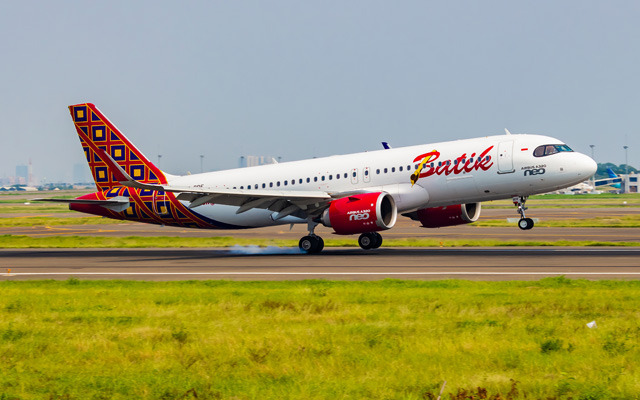
Batik Air
Batik Air introduces new Kunming-Penang service
Batik Air has started its weekly charter service from Kunming in China to Malaysia’s Penang, operated on the Boeing 737-8 aircraft which holds a capacity of 189 passengers.
This new route is expected to significantly drive further growth of Malaysia’s tourism sector and attract more visitors from China.
Hong Kong Airlines
Hong Kong Airlines now flies to Sendai in Japan
Hong Kong Airlines will start a new direct route to Sendai from December 18, its ninth destination in Japan.
Operating three times a week on Mondays, Wednesdays and Saturdays, the new Sendai service offers convenient access to the heart of Tohoku region.
In addition to the new Sendai route, Hong Kong Airlines will also increase its Sapporo service to daily flights and its Tokyo (Narita) service to five times daily this winter.
Scoot
Scoot adjusts network for Northern Winter season
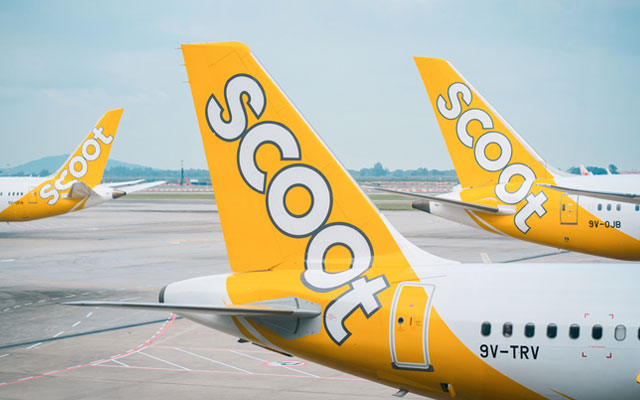
Scoot, the low-cost subsidiary of Singapore Airlines, will be making adjustments to its network in anticipation of stronger demand during the Northern Winter season.
From November, extra weekly flights will be mounted to Chiang Mai and Hanoi, increasing services from 10 to 11 times weekly and five to six times weekly respectively.
From December, services to Perth will increase from 13 to 14 times weekly. Services to Melbourne will also increase from 12 to 13 times weekly, and subsequently to twice daily from January 2025.
In addition, three more weekly flights will be mounted to Seoul (Incheon) via Taipei, making it a daily service, and services to Tokyo (Narita) via Taipei will also increase from 12 to 14 times weekly.
Scoot will be increasing flights to destinations operated by the Embraer E190-E2 aircraft, such as to Davao, which will increase from seven to nine times weekly, as well as Balikpapan and Makassar, which will each increase from three to four times weekly.
Meanwhile, services to Ningbo in China will be suspended, with its last flight on October 26 this year.
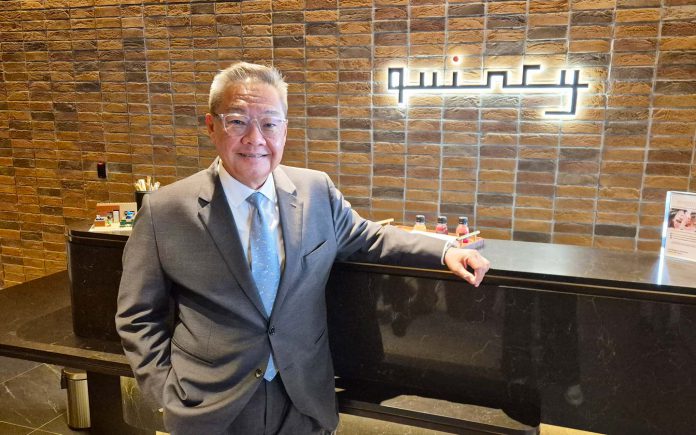
We are sitting here in your brand-new Quincy House Singapore. It is so stylish and welcoming. How would you describe the character of this serviced residence and what is the profile of guests it targets? To answer you, I need to take a step back to give you a picture of the changing trend in the extended stay market.
Not too long ago, serviced residences catered to expatriate families arriving primarily from G7 countries. They would come on a very generous package from their employer and stay for a month or two in a serviced residence while waiting for their furniture to arrive and sorting other things out, like securing an international school for their kids.
As such, our serviced residences are more or less all the same – multi-bedroom apartments that are located in the heart of town, close to workplaces and international schools.
That customer profile has changed. Firstly, they are no longer all coming from G7 countries; they are coming from a very diverse range of geographies, like Eastern Europe, China, India, South Korea and Taiwan.
We also see the advent of the solo traveller. Companies have found it increasingly expensive to offer the traditional expatriate package, so many are picking the younger and more upwardly mobile staff who do not have a family relocating with them. These customers are also staying for a shorter duration, no longer for years.
So, demand for larger apartments is becoming less and seasonal.
Another important change is in location preference. While in the past location is very important, customers today prioritise accessibility. Their offices are no longer in the CBD, but in Singapore’s business parks. Customers want to be able to travel easily to the business parks, instead of staying there, and to be able to get around other parts in Singapore.
As a result, we are competing precinct to precinct, no longer block to block where differentiated layout (influences the customers’ decision).
In order to compete by precinct, we have to ensure the attractiveness of the area our serviced residences are in; they must be incredibly well integrated with their surroundings.
There are very few places in Singapore where locals and foreigners can agree on being a great place to be. I think Holland Village is one of the very few such places, so this is where Quincy House Singapore is.
At the same time, we know that the human touch and local experiences are important to extended stay customers. Upon arrival, they have to figure out their neighbourhood and essential services. They could do this themselves over time, or we could help them with information and to identify experiences they would like. Some argue that there is really no need to do this for extended stay customers because they would eventually figure it out themselves. But we think not – we know that people will appreciate their hosts for curating experiences according to their preferences.
So, this leads us to what Quincy House Singapore has to offer. One, it is different; it is not just for families but also for solo travellers, and we have different configurations to choose from. Two, it is not only in a great location, but also a very accessible one. Three, it has a very articulate level of service that would be relevant to the extended stay customer that is evolving.
If you plan on differentiating your product through curated experiences for residents, then you need to rely heavily on people who are curious about their neighbourhood, passionate about wanting to find the coolest things around, and willing to serve. How do you find such people? Recruitment is horrendously difficult these days, but it helps when the organisation has a foundation and reputation of a culture that is endearing as well as a track record of creating noteworthy and award-winning experiences.
Far East Hospitality has built a reputation of both an endearing culture and a track record of award-winning experiences through our properties like Amoy, The Clan Hotel, The Barracks Hotel, The Outpost, and Village Hotel Sentosa. This makes it easier for us to recruit people with a particular profile.
Now, it obviously took us a long time to build this reputation and what we stand for. I would suppose being able to find these good people is testimony to the successful employer branding that we have worked for many years to establish.
I’ve always believed that organisations at the end of the day always get the employees they deserve.
So, where do we find these people? Is it from our existing staff? Is it from schools? Well, we must have a core team from the organisation going out to schools to engage with people who are graduating and want to do tourism. Another source is Singapore Workforce Skills Qualifications courses, which are taken by people who are in mid-career but wanting to switch to hospitality. The third source is fresh job seekers.
I see that Quincy House Singapore distributes a handy booklet that captures experiences in the Holland Village neighbourhood. How often is the content refreshed so that there is always something new for extended stay customers to discover? We intend to critically review our Quincy Qurate Neighbourhood Guide every quarter. While we will obtain guest feedback on our curated experiences, we will do so with confidence and not with great sensitivity to polling. What this means is that we will not change something just because a guest said this and that. We know what the market is like, and which experiences are relevant.
You spoke of how Quincy House Singapore was created to serve this new breed of extended stay customers. What is the future for Far East Hospitality’s traditional service residences then? Let’s talk about chicken rice for a moment. If you have a stall selling tasty chicken rice in a well-located hawker centre, you have a first call advantage and you are always full at lunchtime. But, if you are oblivious, you will not know that actually the market for chicken rice is declining over time, as more and more people are wanting to eat something else. You will probably only get a sense of that when people start to quibble with you over the price of your chicken rice.
What I am saying is, there is always demand for our traditional serviced residences, but we find that certain products are beginning to face price sensitivity. Is this price issue simply seasonal? We have to take a step back to find out.
Every now and again we have to come up with new products in order to get insights on market trends. If we were to only act when the trend becomes so clear because there is empirical data, we would be too late.
Did Far East Hospitality try out curated destination experiences for guests at its traditional serviced residences? We did that when we launched the Adina brand of apartment hotels and serviced apartments. We refurbished the Regency House for Adina Serviced Apartments Singapore Orchard in 2022 and created something a bit more experiential to see whether the market was prepared to pay.
We built a network of partner merchants around the area to offer residents discounts and perks when they flashed their Adina keycard. We found that, yes, they responded well to such services. One of the most popular perks that our guests have responded positively to are F&B deals, especially those nearby the property.
So, we were emboldened and decided to try something a little more dramatic with the Quincy House Singapore.
Will you bring the Quincy House concept to other destinations, perhaps to Melbourne where your stylish Quincy hotel is doing so well? It is our aspiration, but at this point in time we don’t have a specific plan. We have to see how Quincy House Singapore works, and then watch for a combination of opportunity and preparedness.
Well, Quincy House Singapore has now been opened for more than a week. How well is it doing? It opened on October 1 and has beaten our own expectations. It is doing double the volume of what we had when we opened Oasia Residence in 2016.
This achievement is noteworthy because in terms of size, Quincy House Singapore has 255 rooms while Oasia Residence has 140.
The vast majority of customers here are booked for between a week to a several months, although we have a couple of bookings that stretch across years. We are really grateful and wish for more customers like that.