Visitors to Japan can now purchase tours that immerse them in Japanese culture, starting from Sumida City, home of the Tokyo Skytree.
The tour includes a geisha performance, a sumo show, and a special photo session on the tower’s observation deck, where participants gain exclusive access before or after regular hours.
Have fun playing games with a geisha while admiring the Tokyo night view
Also included is the night plan, which allows tourists to enjoy the night view from the observation deck, followed by a traditional dance performance by geishas from Sumida City’s entertainment district, a cultural heritage dating back to the Edo Period (1603-1867).
Another tour option features an early morning itinerary, where participants can savour a specially prepared breakfast using local Tokyo ingredients while watching the sunrise from the observation deck. This experience also includes a sumo show with retired wrestlers, the chance to participate in a mock sumo match in a full-body costume, and professional photographs.
Additionally, the company offers a mini plan that provides priority entry to Tokyo Skytree, accompanied by a private guide, along with a souvenir Edo Kiriko shot glass.
Malaysia and Thailand have joined hands to promote cross-border tourism through the launch of a self-drive initiative aimed at raising awareness of tourism routes and activities in both countries.
Tourism Malaysia, together with the Tourism Authority of Thailand (TAT) and Ministry of Tourism and Sports of Thailand, organised a launch event to promote tourism across the Malaysia – Thai border where a special Malaysia – Thailand self-drive tourism fun map was introduced, highlighting attractions along the route in both destinations.
Both countries have introduced a self-drive tourism fun map that highlights attractions along the route
The event saw both parties flagging off the Thailand-Malaysia Self-Drive Tourism convoy, which included over 50 cars and motorcycles from both Malaysia and Thailand. More than 150 drivers and motorcyclists participated in this cross-border journey, experiencing the rich tourism offerings and engaging in cultural exchanges between the two countries.
Thapanee Kiatphaibool, governor of the TAT, said: “The Royal Thai Government, through the operation of TAT and the Ministry of Tourism and Sports, continually seeks opportunities to enhance Thailand as a global tourism destination and promote cross-border tourism with neighbouring ASEAN countries, especially Malaysia. Currently, Malaysia ranks as the second-largest source market for tourists visiting Thailand, after China.”
“Mooted from the Malaysia-Thailand Joint Task Force on Tourism Cooperation, this initiative aims to enrich the tourism experience while fostering deeper cultural exchange between our two nations,” added Yasmeen Yasim, deputy secretary-general (tourism) of the Ministry of Tourism, Arts, and Culture Malaysia.
The Hilton Global Foundation has committed US$5.3 million towards 16 non-profit organisations working to combat poverty, foster career development opportunities and protect the destinations where people live, work, and travel.
The foundation’s annual grant process allocates funds to organisations that support its primary funding pillars of environmental sustainability, career development and community resilience. It aims to make a positive social and environmental difference for communities, ensure a sustainable future for generations to come and supercharge Hilton’s progress towards its 2030 Travel with Purpose goals.
The funding will support 16 non-profits in their efforts to uplift communities around the world; The Felix Project in London, pictured
Since its launch in 2019, funding from the Hilton Global Foundation has provided more than 220,000 people with access to clean water, donated more than 18 million pounds of food to communities in need and created nearly 113,000 learning and career growth opportunities.
The Hilton Global Foundation aims to empower communities by funding projects that offer training, skill development, and career opportunities for all in the hospitality industry. For instance, Hilton has been partnering with the International Youth Foundation in Mexico since 2012, supporting its global efforts to connect young people with opportunities to transform their lives through training, skill-building workshops and career opportunities.
Other initiatives comprise empowering homeless individuals including veterans and prison leavers by offering training, career development and financial support to overcome barriers to employment in London, England; providing job coaching and training to individuals with Down Syndrome and other intellectual disabilities in Istanbul, Türkiye; supporting vulnerable youth in Vietnam, including orphans and trafficked individuals, by offering residential training programmes in hospitality and tourism in Danang, Vietnam; among others.
For the environment, the foundation supports projects that reduce waste, increase access to clean water in our communities, and protect the biodiversity in the destinations and communities served. One highlight is Scholars of Sustenance Indonesia, a food rescue organisation dedicated to fighting hunger and food waste by redistributing surplus food to vulnerable communities in Bali and Jakarta, including low-income villages, orphanages, and organisations supporting the elderly and disabled. Another is the World Wildlife Fund, which builds on a previous grant from the Hilton Global Foundation to collaborate with stakeholders on projects that focus on conserving and restoring biodiversity across vital landscapes in the Asia-Pacific region.
The Hilton Global Foundation also supports organisations that manage local initiatives, disaster recovery efforts, and create economic opportunities in their communities, including identifying partnerships that enhance responsible business practices and human rights initiatives. Some examples are the Kechara Soup Kitchen in Kuala Lumpur, which serves marginalised communities in Malaysia; and The Felix Project, a London-based food redistribution charity that provides meals to vulnerable communities in London like the homeless, children dependent on free school meals, the elderly, and those living in isolation.
In addition to the annual grants distributed by the Hilton Global Foundation, micro grants are being distributed to 100 local organisations nominated by Hilton hotel-based and corporate team members. These funds will be used to support volunteer efforts in communities that are home to Hilton properties around the world.
“Now more than ever, our communities need meaningful positive impact, and the Hilton Global Foundation is proud to be supporting these remarkable 16 grantees with the largest ever donation in our history,” said Katherine Lugar, executive vice president, corporate affairs, Hilton and president of Hilton Global Foundation.
“Together, we are working to address some of the world’s most urgent challenges, and we look forward to making a positive impact and ultimately a better world for travel.”
Plaza Premium Group (PPG) has signed an agreement with Shanghai Airport Group Co. to open the new Aerotel airport hotel at Shanghai Pudong International Airport Terminal 2, marking the official debut of Aerotel in Shanghai.
Set to open in the 2Q2025, the Aerotel Shanghai Pudong Airport Hotel is an integrated hospitality facility combining accommodation, dining, and wellness, with 82 hotel rooms in total.
Shanghai’s first Aerotel hotel will open at Shanghai Pudong International Airport Terminal 2 next year
Launched in 2016, Aerotel airport hotels offer flexible hourly booking, quality services, and cosy environments. To date, Aerotel has established locations in ten cities globally, including Beijing, Qingdao, Kuala Lumpur, Cebu, Singapore, Sydney, Rio De Janeiro, London, Muscat, and Jeddah. The new Aerotel in Shanghai represents the eleventh global location and the third in China.
Additionally, Smart Traveller, the global travel membership by PPG, will also be launched in China.
PPG founder and CEO Song Hoi-See commented: “As one of China’s three major hub airports, Shanghai Pudong International Airport boasts a robust international passenger traffic, offering favourable conditions for us to establish a new Aerotel.
“With the increase of international transfer routes and experience enhancement for transfer and customs clearance, the number of international transfer passengers at Shanghai Pudong International Airport has grown substantially.
“We are confident that the new Aerotel will further elevate the airport experience and make a great in-airport accommodation option for passengers.”
Skyscanner has published a new report exploring the latest trends in travel – titled Skyscanner Horizons: 2024/5 spending, planning and destination insights, the report unpacks and explores a combination of consumer survey and proprietary search data to provide a unique view of how travellers are thinking about their plans for the next 12 months.
Surveying 19,000 consumers across 16 markets, the report delves into key indicators such as travel propensity, spend, trip type, and the trip planning process, including the top sources of destination inspiration, AI use and views on overtourism. Of the total, there were 6,000 survey respondents from Asia-Pacific, including Australia, India, Japan, Singapore, and South Korea. Skyscanner’s search data further complements these insights by offering details on destination choice, average lead times, average trip length and year-on-year search volume comparisons.
Travellers in Asia-Pacific continue to prioritise travel and travel expenditure
Asia-Pacific travellers are continuing to prioritise travel and travel expenditure, with those from India planning to travel and spend the most. 80% of those in the region are planning as many, if not more trips in 2025 than in 2024.
Across the board, travel behaviour is being shaped by a desire for collective experiences, from sports events and immersive art installations to gaming ‘pilgrimages’ that bring people together. Seven travel trends were identified, consisting of Sport mode, Astro Adventurers, Reset Jetters, Art-Venture, Cowboy Core, Horti-Culture and Gami-Vacation.
Travel remains priority, with travellers expecting to spend more
72% of Asia-Pacific travellers are planning to spend more or the same on flights in 2025 versus the previous year. Similarly for accommodation and car hire related behaviour, 71% and 46% of travellers in the region are planning to spend more or the same, respectively.
For ancillaries spend, top flight upgrades were seat selection (38%), insurance (38%), better quality food (29%), access to airport lounge (25%) and extra baggage (23%). About 31% of travellers are willing to upgrade their hotel rooms – for example to a larger room or one with a sea view – and the same proportion would be open to upgrading accommodation for a higher star rating.
Food triumphs as top factor in travel planning
Outside of costs, food is the biggest decision-making factor when choosing a destination. Two thirds of Asia-Pacific travellers (67%) agreed that food is important when picking a holiday destination. Other top factors observed were the weather (55%), natural landscape (55%), the attractions (54%) and culture (54%).
Confidence in using AI for planning grows
46% of Asia-Pacific travellers express confidence in using AI tools to assist with travel planning and booking, with about 17% indicating they are very confident.
Top four applications of AI in travel include destination research (40%), the creation of travel itineraries (36%), comparison of options (33%), and destination inspiration (31%).
Attitudes towards overtourism and impact
When asked how they would change the way they travel in the future, more than one in four (27%) Asia-Pacific travellers said they would consider less touristy destinations and 25% would try to make a positive impact on the places they go.
South Korean travellers are observed to be especially interested in visiting quieter, less busy destinations, while Indian travellers are the most inclined to make a positive contribution to the destinations they visit.
When discussing factors that will influence their choice, travellers are increasingly interested in exploring lesser-known destinations, with 27% Asia-Pacific respondents expressing intentions to visit these less touristed areas.
59% of Asia-Pacific travellers cited safety as a top reason for hesitance to choose an under-touristed destination over a popular one. A high proportion of Singapore (67%), India (60%) and South Korea travellers (64%) contributed to this sentiment.
Additionally, understanding where to go (36%) and confidence in available activities at the destination (34%) were also significant factors influencing their decisions to travel to lesser-known locations.
Top sources of travel inspiration
Social media and word-of-mouth recommendations are the leading sources of travel inspiration for travellers worldwide. More than half of Asia-Pacific respondents (55%) look to social media for travel ideas, while 45% rely on word-of-mouth recommendations.
Other notable sources include online media (42%), films and television shows (40%) and guidebooks (28%), all of which play significant roles in shaping travel choices.
2025 destination trends and trip lengths
Travellers continue to seek inspiration through Skyscanner’s popular ‘Everywhere’ search feature, which ranks highly across all regions. The top destinations identified in Asia-Pacific revealed a preference for big cities across Asia.
Average trip length is short, peaking at six days, apart from London at two weeks. Across the board, trip lengths are down year-on-year (YoY) by around a day. Average lead times broadly fall between 30 and 70 days, with the highest being for London and Tokyo. Travellers are booking flights to New Delhi, on average, just 28 days before departure.
Trending destinations identified in Asia-Pacific showed a love for off-the-beaten path Asian destinations – with China’s Dayong and India’s Shillong both experiencing large YoY increases in search volume of over 800%.
Smaller destinations in India, Japan and Cambodia are seeing a surge in popularity, taking up six of the top 10. Average trip lengths are short – all in single digits – as travellers keep their visits brief.
“Our data shows that travel demand remains resilient, and travellers are adapting their itineraries as they seek out collective experiences. This blend of resilience, ingenuity and innovation from both travellers and airlines looks set to make next year a transformative one for all,” noted Hugh Aitkens, vice president, strategic relations and development at Skyscanner.
“Looking ahead, we expect the market to become more active with seat sales and promotions as airlines compete for share of wallet.”
Amadeus has signed an enhanced distribution agreement with United Airlines, helping the Chicago-based carrier to offer a wide range of content through the Amadeus Travel Platform.
The partnership includes both new distribution capability (NDC) and Edifact content, providing travel sellers the broadest selection of flights and fares in the US and around the world, helping them to create the personalised trips travellers increasingly expect through NDC.
The collaboration will offer travel agents a wide range of content to build personalised experiences for travellers
“Amadeus has been a vital distribution partner in the deployment of NDC, and we are delighted to accelerate that journey today,” said Kurt Van Meir, managing director, distribution, United Airlines. “We look forward to deepening our collaboration with Amadeus as we work together to create an enhanced shopping experience for travellers across every channel.”
Kamal Singhee, senior vice president, airlines, North America at Amadeus, added: “Building upon our longstanding relationship with United Airlines will enable travel sellers to provide the full benefits of NDC content and technology to travellers in the US and around the world.”
Korean Air expands network to Japan and China
Korean Air will resume its Seoul Incheon-Kumamoto service from November 24, as well as introduce a new service from Seoul Incheon to Fuzhou, China from December 28.
The airline will commence daily flights on the Seoul Incheon-Kumamoto route after a 27-year suspension due to the Asian financial crisis in 1997. Korean Air has also increased frequency on the Seoul Incheon to Okayama and Kagoshima routes, while also resuming the Seoul Incheon-Nagasaki route with four weekly flights.
Meanwhile, its new service from Seoul Incheon to Fuzhou will operate three times a week, flying on Tuesdays, Thursdays and Saturdays.
Korean Air currently flies daily from Seoul Incheon to Xiamen, and operates four weekly flights to Kunming.
Hong Kong Airlines
Hong Kong Airlines introduces new daily direct service to Chiang Mai Hong Kong Airlines has inaugurated its new daily direct service to Chiang Mai, Thailand on October 27.
This new route marks the airline’s third destination in Thailand, joining Bangkok and Phuket, with daily flights now available.
The launch coincides perfectly with Thailand’s Loy Krathong (Festival of Light) in November, allowing travellers to experience the vibrant parades and celebrations.
Vietjet
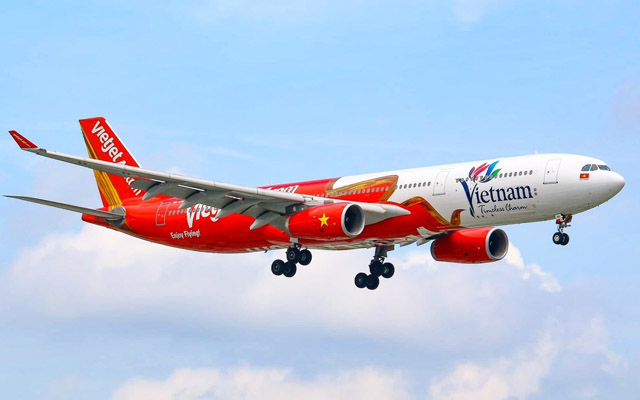
Vietjet launches Danang-Ahmedabad service
Vietjet has commenced its direct service connecting Vietnam’s Danang to Ahmedabad in India.
The new service offers two round-trip flights per week. Travellers from North-east and South-east Asia can now transit through Danang more easily to reach India’s major cities, including New Delhi, Mumbai, Kochi, and now Ahmedabad, via Vietjet’s extensive network.
The airline has plans to launch new routes connecting Hanoi to Kuala Lumpur and Nha Trang to Daegu, as well as resume the Ho Chi Minh City-Tainan route, and increase flight frequencies throughout the region.
Air India and Singapore Airlines; photo by Air India
Air India, Singapore Airlines add 51 new codeshare destinations Air India and Singapore Airlines (SIA) have expanded their codeshare agreement, adding 11 Indian cities and another 40 international destinations to their network.
From October 27, Air India and SIA will codeshare on each other’s flights between Singapore and the Indian cities of Bengaluru and Chennai, increasing their total weekly scheduled codeshare services between the countries to 56 from 14.
SIA will codeshare on Air India’s domestic flights between Delhi and Amritsar, Bengaluru, Coimbatore, Lucknow, and Varanasi, between Mumbai and Ahmedabad, Amritsar, Bengaluru, Coimbatore, Goa, Jaipur, Kolkata, Lucknow, and Thiruvananthapuram, as well as between Kolkata and Guwahati.
Air India customers will be able to access 29 destinations across SIA’s network. These are Adelaide, Brisbane, Cairns, Darwin, Melbourne, Perth, and Sydney (Australia), Bandar Seri Begawan (Brunei), Phnom Penh and Siem Reap (Cambodia), Denpasar, Jakarta, Medan, and Surabaya (Indonesia), Fukuoka, Nagoya, Osaka, Tokyo-Haneda, and Tokyo-Narita (Japan), Busan and Seoul (South Korea), Kuala Lumpur and Penang (Malaysia), Auckland (New Zealand), Cebu and Manila (the Philippines), as well as Danang, Hanoi, and Ho Chi Minh City (Vietnam). This includes existing codeshare arrangements to Kuala Lumpur.
SIA customers will also be able to connect to Air India’s international services from Bengaluru, Delhi, and Mumbai to 12 destinations across Europe, the Middle East, and Africa. These are Copenhagen (Denmark), Paris (France), Frankfurt (Germany), Milan (Italy), Nairobi (Kenya), Amsterdam (the Netherlands), Jeddah and Riyadh (Saudi Arabia), Colombo (Sri Lanka), as well as Birmingham, London-Gatwick, and London-Heathrow (the UK).
Subject to regulatory approvals, the codeshare flights will be progressively made available for sale through the airlines’ respective booking channels.
WTTC will gather the world’s travel and tourism leaders and professionals in the Italian capital of Rome for its 2025 WTTC Global Summit – the first time the event will be held in the city.
Scheduled for late 2025, the summit will be staged in collaboration with the Italian Ministry of Tourism.
Rome is set to welcome the next WTTC Global Summit
This marks the summit’s return to Europe after six years; the last was in Spain.
Daniela Santanchè, minister of tourism, Italy, said: “This event is recognised as the most important setting for dialogue between governments and the private sector, where leaders shape the future of global travel and tourism. We look forward to welcoming our guests and members of WTTC to Rome, a city rich in history and innovation.”
The event is expected to showcase Italy’s rich cultural heritage and contemporary tourist offerings to the world’s leading travel executives.
Thailand, on track to achieve its 2024 target of 35 million international tourist arrivals, is already building towards a 39 million target for 2025, shared its tourism and sports minister Sorawong Thienthong.
The Tourism Authority of Thailand (TAT) will launch the Amazing Thailand Grand Tourism and Sports Year 2025 campaign. This will comprise collaboration with tourism partners to offer Grand Festivals, Grand Moments, and Grand Privileges to tourists, as well as the promotion of five must-dos in Thailand – Must Taste (Thai cuisine), Must Try (Muay Thai), Must Buy (Thai fashion and local products), Must Seek (new destinations and experiences), and Must See (Thai festivals). The latter aims to diversify Thailand’s tourism appeal and spotlight lesser-visited regions across the country.
From left: TAT’s Thapanee Kiatphaibool and Sorawong Thienthong
“This concept will create grand, unforgettable experiences for every traveller who visits our beloved kingdom,” said Sorawong.
Sunny Kim, vice president, global sales of Onyx Hospitality Group, which has properties across Thailand, said TAT’s focus on lesser-visited regions creates an opportunity for the hotel group to feature its hotels outside of the city to both domestic and inbound tourists.
While Thailand is already a popular destination, there are still countless hidden gems waiting to be discovered across the country.
“That’s Thailand’s beauty. You’ve been there, you know Thailand, but there are still so many things to discover,” Kim added and cited Bang Saen beach in Chon Buri province as an example. Amari The Tide Bang Saen hotel is scheduled to open there next year.
Combining traditions and modern experiences, Thailand aims to enhance its tourism offerings in several ways.
The wide popularity of Thai cuisine provides an opportunity to further promote regional culinary experiences. Since 2017, Thailand has been working with the Michelin Guide to promote gastronomy tourism. Next year, the guide will be expanded to include Chon Buri province.
Another driver of tourism is the entertainment industry. This year, Thailand saw a surge in shorthaul arrivals that reached 65 per cent of overall international tourist numbers. This was driven up by K-pop concerts.
At the same time, screen tourism has gained momentum, added Sorawong. The popularity of Thai movies and series has led many Asian tourists to locations that appeared in shows such as Phuket Old Town and Chiang Mai University.
On the sustainability front, the government is also encouraging businesses to join its Sustainable Tourism Acceleration Rating programme, which assesses businesses based on their eco-friendly practices. TAT also offers the CF-Hotels, which lists hotel operators’ carbon footprint.
Improved connectivity within the South-east Asia region is another key element of Thailand’s strategy. The kingdom is promoting travel routes with Laos through a new train service that connects the two countries. It is also collaborating with Malaysian tour operator Golden Century Tour and Travel to enhance the southern rail route.
To improve air connectivity, Thailand is working on charter flights and establishing new routes – two new routes launched in 2H2024 include a service between Xi’an and Koh Samui with Tibet Airlines, and a route from Astana to Phuket with Air Astana.
Destinations around the world are adjusting their offerings to appeal to increasingly discerning high-net-worth individual (HNWIs) travellers for whom exclusivity and authenticity are key.
Franka Gulin, director of the Croatian National Tourist Board, noticed a post-lockdown shift in Asian touring behaviours. From previously large groups, a new type of FITs is on the rise, she noted.
Petra can tap into wellness tourism, leveraging Jordan’s strong reputation in medical services; ancient tombs called Loculi in Petra, pictured
“These types of tourists are in need of a curated tailored experience, and this is something that they expect of the premium destination,” she added.
Croatia has capitalised on this trend by offering small, luxury accommodation with rich histories, providing HNWIs with a sense of exclusivity as these are often difficult to book.
Jordan, another rising star in luxury tourism, is leveraging its wealth of UNESCO World Heritage Sites, like Petra. However, historical appeal alone is not enough to attract luxury travellers.
“In Petra, 87 per cent of our tourists in 2023 were from North America and Western Europe and a few other (overseas markets). After the war in Gaza, we lost over 80 per cent of (them). Therefore, we have to look into the diversification of markets and products. Luxury tourism is fundamental to that direction,” said Fares A Braizat, chief commissioner of the Petra Development and Tourism Region Authority.
One opportunity that Petra could capture would be wellness tourism, he shared, highlighting how Jordan is highly regarded for its medical services and medical industry.
Over in Japan, overcrowding in key cities has been an issue. One strategy is to focus on regenerative tourism, especially to combat overtourism in certain areas, as well as to heighten travellers’ emotional involvement while increasing revenue, said Naomi Mano, president and CEO of Luxurique.
Mano added that working with municipalities, unique temples and destinations to curate exclusive experiences can channel tourist dollars to the local community.
“We are almost customising the emotional involvement that these travellers have with these destinations – because when you’re donating to something you believe in, or you’re donating your time to what you believe in, it gives a further emotional involvement to that destination,” she said.