TTG Asia
Asia/Singapore Wednesday, 25th March 2026
Page 2180

Smart air travel

0

Airlines and airports are not shy to spend on technology. Raini Hamdi finds out why and how the investment will change the way passengers travel in the future

12sept_smartairtravel

A media roundtable organised by SITA in Singapore recently painted a picture of future air travel that is, in one word, smart.

Imagine the day when a client, upon arrival at the airport, is whisked away by a service staff who has every relevant information about him literally on eye or hand through smart glasses, watches or phones.

Or when long and horrifying US immigration queues are a thing of the past, thanks to self-service immigration clearance kiosks.

Or when a client passing through the airport gets just the discount vouchers he needs popping up on his smartphone or tablet because ‘beacons’ installed around the airport track his whereabouts.

Or when arrival and departure information boards will be non-existent because beacon technology will prompt a client’s smartphone when he should board, at which gate and how long it takes to get to the gate.

All these technologies are being trialled today by airlines and airports. They will have implications for the travel trade which will be felt in time.

Airport IT spending has grown at a compounded annual growth rate (CAGR) of 12 per cent since 2010, despite airport revenues rising only 2.8 per cent CAGR over the same period, according to the latest Airport IT Trends Survey sponsored by SITA.

In 2013, airports were tipped to spend 5.4 per cent of their revenues on IT, up from 4.9 per cent in 2012 and 4.3 per cent in 2011. This equates an IT spend of US$6 billion by airports globally.

With the exception of Europe, where 35 per cent of airports expect a decrease in IT spend this year, in all other regions – North America, the Middle East and Asia-Pacific – their airports expect IT spend to remain stable or increase further this year. In Asia-Pacific, China airports’ IT spend is forecast to reach 5.9 per cent of revenues last year, well ahead of the global average and worth US$580 million in absolute dollar terms. It is expected to rise further this year.

Airlines are spending less on IT than airports, however, at 2.2 per cent of their total revenues this year (source: the latest SITA-sponsored Airline IT Trends Survey), but that still is a massive amount.

SITA’s record revenue of US$1.63 billion last year only attests to IT spending by airlines and airports. This was on the back of a record US$2.2 billion in contracts, more than half of which was new business. SITA, 100 per cent owned by the air transport community, operates on a commercial-cooperative model.

Why are airlines and airports prepared to invest in IT? According to Ilya Gutlin, SITA president Asia-Pacific, “for the last two years, customer experience came up as the number one reason for investment, not factors such as cost savings, security, etc”.

Reducing cost of operations comes second after improving passenger service as the aim airports hope to achieve from IT spending, the latest Airport IT Trends Survey shows.

Many airports in Asian countries, especially those in emerging markets, are being driven to spend on IT by extraordinary passenger growth. Indonesia, the biggest aviation market in South-east Asia, counted over 68 million passengers in 2013; the market is forecast to reach more than 300 million passengers by 2025.

This motivated Angkasa Pura I, which operates 13 airports across Eastern Indonesia, to deploy technology. In May, it awarded SITA the contract to install IT that allows any airline to use any agent desk, gate position or self-service kiosk for passenger check-in and bag drop, and to incorporate the electronic passenger service charge into the passenger flow monitoring system, which provides accurate revenue collection, faster check-in and passenger processing.

“We have set an aggressive timeline to deploy the technology in all our airports within a year. This will allow us to cater for the doubling of passenger numbers expected in Indonesia over the next five years,” said Tommy Soetomo, CEO, Angkasa Pura I, in a statement.

The rise of low-cost carriers (LCCs) in Asia is also fuelling IT spend in the region. In June, Kuala Lumpur’s new LCC terminal klia2 deployed technology that makes check-in and boarding simpler, and processes baggage efficiently, ensuring on-time departures, which is key for LCCs. Airlines such as AirAsia, Malindo Air, Cebu Pacific and Tigerair are already using the system.

12sept_llya


For the last two years, customer experience came up as the number one reason for (IT) investment (by airports and airlines), not factors such as cost savings, security, etc.
Ilya Gutlin
President
SITA Asia-Pacific


What’s next

The next steps, according to Gutlin, would be wearable technology, beacon technology and more customer self-service technology.

Results of the wearable technology trials Virgin Atlantic and Copenhagen Airport did recently with SITA were promising, he said.

Virgin tried with two devices, Google Glass and Sony smartwatch, which were worn by its Upper Class staff to see if this could result in better customer experience.

“The main idea is to free staff from being behind a wall looking at passenger details,” said Gutlin. “But the problem it (Virgin) ran into with the Sony watch was, as the staff kept having to look at the watch for the details, it was as if they were sending the signal to the customer that they were bored by him. So the staff became uncomfortable using the watch or their smartphone (which was also trialled).

“With the Google Glass, it was the passengers who were a bit nervous; they were asking questions like, ‘What’s going on? Are you taking my picture? What are you seeing in there?’ But after a while, they got excited and asked, ‘Can I see what you are seeing in there?’ They became quite involved and got used to it within a short period of time.

“Virgin learnt that the glasses, though a bit geeky, were fairly comfortable to wear. The staff felt they enabled them to provide better service and there was a lot less paperwork along the way. But they also found the battery life was not great and the glasses needed to be recharged often.

“So whereas Virgin is not going to go with the Sony watch or the smartphone, it is still considering how it can roll out the Google Glass.”

With beacons, airlines can easily provide passengers with indoor directions, walk times to gates, lounge access and alerts about boarding, to name a few uses. iBeacon is a technology Apple introduced with iOS 7 that uses Bluetooth to trigger the display of location-relevant information on devices at the right time and situation.

A pilot project at Dallas/Fort Worth International Airport is the world’s biggest airport deployment of beacons to date, while SITA has launched a Common-use Beacon Registry, so that beacons are consistently deployed at all airports. “We’re still in a discovery phase on how this will work. We’re looking at this potentially as the breakthrough in improved customer service,” Gutlin said.

Self-service is also expected to rise. “People are a lot more comfortable using their smartphones and tablets, and self-service kiosks. As people get more comfortable with self-service, they prefer to deal with equipment rather than people,” Gutlin said.

According to the Airport IT Trends Survey, check-in kiosks will be an option at 98 per cent of airports by 2016. Existing kiosks are being upgraded to allow bag-tag printing, with more than four out of five airports offering the service by 2016.

Nine out of 10 airports will offer bag drop as well, with two-thirds offering unassisted bag drop by 2016. Self-boarding gates are being adopted at a similar pace.

Meanwhile, new self-service passport control kiosks at Miami International Airport are processing passengers in less than two minutes. The kiosks scan a passenger’s passport, collect flight information and declaration data, take a photo and give the passenger a receipt to present to an agent on the way out.

Currently for US passport holders and returning Canadian passport holders entering the US, the kiosks will be extended to nationals of visa-waiver countries, including self-service fingerprint capture, in the second phase.

This article was first published in TTG Asia, September 12, 2014 issue, on page 5. To read more, please view our digital edition or click here to subscribe
Making a connexion

0

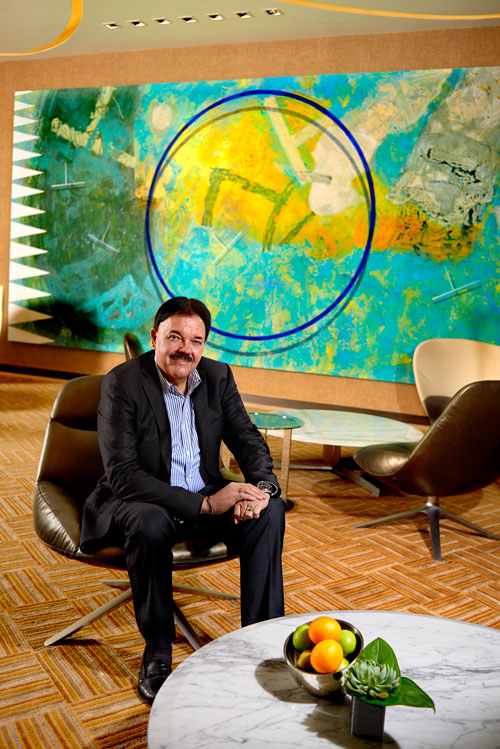
Former Raffles International’s head honcho Richard Helfer is back with a luxury hotel in a humble neighbourhood of Singapore. Raini Hamdi talks to the chairman of One Farrer Hotel & Spa about his new baby which opened on September 3

12-september-drhelfer

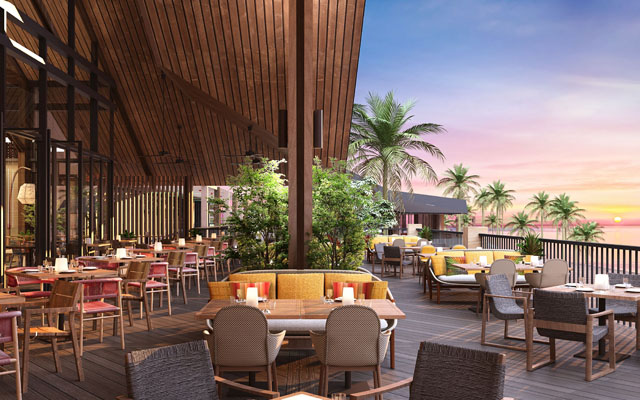
A luxury hotel in a non-luxury location, Farrer Park, raises a few eyebrows.
Farrer Park is one of the most interesting and centric locations in Singapore…A lot of times when I walk out of a hotel whether in Singapore or New York, I really don’t know where I am, it could be anywhere. I think if you ask people why they haven’t stayed in Farrer Park, they would say it’s because there has not been a five-star hotel there.

Are you saying just by having a five-star plus hotel is enough to open demand to a location that many overseas visitors aren’t familiar with?
No, to drive a destination, you must first understand what the destination does not have and what it has too much of, so you can come in and complement (the offering). Once you’ve identified that, then you have to totally focus on building a property that is not only the best in the particular area but, being centric located in Singapore, you also have to look at what everyone else in the marketplace is doing.

We don’t have the convention size facility of Marina Bay Sands, but we do have a 550 pax ballroom and three meeting rooms and fibre optics cabling running through Farrer Park Hospital’s 18 operating rooms and our Institute of Nutrition (a culinary studio) so we can actively go after specialist medical-related/lifestyle meetings. By nature those meetings are not large and we can cater for them better than anyone else in the market, because of our ability to enable technology to make our facilities state-of-the-art.

Why Farrer Park, and how did the whole Connexion at Farrer Park come about?
Farrer Park is probably one of the last bastions in the heart of Singapore that has not been overly developed as a hotel destination.

When our company, The Farrer Park Company, tendered for the site, it was a large ‘white site’ (a planning concept which allows developers more flexibility to optimise land for various uses without incurring hefty charges), 40 per cent of which was required to be a hotel. Part of the investors is a group of medical doctors and their dream was to build the best private hospital in Singapore, so the rest of the white site became in time, The Farrer Park Medical Centre (home to more than 200 medical specialists) and Farrer Park Hospital (one of the first private hospitals to be built ground-up Singapore after 30 years).

I came in shortly there after. Originally, the thinking was the hotel would be dependent on the hospital and medical centre, but having been on both hospital and hospitality boards, it has been shown, as with other lifestyle businesses, that they are separate business models. Over the years, we’ve conceptualised and developed many mixed-use developments; I’ve never once believed that an office building, for example, could not survive by itself without the condominium, shopping mall, hotel or hospital. They will find the natural synergy among each other, but you don’t go into a mixed-use development with the expectation one would shore up the other.

So the hotel is not dependent on the hospital/medical centre for occupancy?
The hospital and medical centre are like a good corporate account for the hotel and will probably comprise 23-25 per cent of the hotel’s business mix – families and relatives staying pre-, during or post-treatment. It’s good seed business. The remainder 75 per cent is  based on our ability to attract corporate, MICE and leisure travellers to One Farrer Hotel & Spa, as a five-star venue in an exciting new area of Singapore.

Exactly my point, what has the area to offer; why did you decide on a five-star positioning?
Three-star hotels are what everyone has built there to date and the way I look at it is it’s only by having a five-star hotel that you can control the nature of the business.

I know that for so many of the hotels we have built, be it in Asia, Europe, the US or what have you, it is us who drive the market. And we drive the market by concept, by understanding what is required to make the market work, with a bit of passion thrown in to ensure that we achieve what we said we were going to do.

Plus, if you look at the exorbitant land costs in Singapore, it is a shame if you under-build.

Could you compare this with any of hotel/lifestyle projects you’ve done before?
We’ve done over 100 hotels and resorts, and most don’t repeat themselves. Even if it’s two heritage hotels in Cambodia, they aren’t the same because we prefer not to do a cookie-cutter approach in creating ‘total environment’ hospitality experiences.

It is exciting to again be doing a project in our own hometown.  At a time when people sometimes say Singapore is a mature destination and there’s nothing exciting coming up anymore, we can prove them wrong by taking one of Singapore’s unique heritage districts and adding an exciting lifestyle component to it.

So will it be Raffles standard?
(Pause) We’re a five-star plus hotel and we’ll deliver a five-star plus quality. In the recent past, we had many times spoken of the need to meet and exceed guest expectations. I think with the new generation, and with the technology that we have today, we must also proactively anticipate what our guests want. So that’s the new part that wasn’t there – before if we took care of guests and wowed them on a few things, we would exceed their expectations. Now we must anticipate what the guests themselves do not even know they want. And the things that had served us well 10-15 years ago are not necessarily what the market considers important today, plus they can more effectively be accomplished today by enabling a higher level of both product and service through the intuitive use of technology.

Why did you decide to be independent than chain-managed?
In an established market like Singapore, we can expect 70 per cent of our business to come online. Thus one of the draws of hotel management companies, the ability to provide a proprietary reservation system, is no longer such a benefit.

Secondly, we want to build a unique brand for us, not for somebody else, so we can spend our energies creating a product with a difference and we can best tell our own unique story. We’ve also linked up with Preferred (Hotels Group), which is a leading worldwide hotel marketing affiliation, not a cookie-cutter company and does not sign up hotels indiscriminately.

Is this the first hotel that you’ve had done since the Raffles days?
We have, and continue to undertake a number of hospitality, lifestyle and mixed-use projects focused mainly in greater Asia, but One Farrer Hotel & Spa is the first hotel project we have conceptualised, developed and implemented in Singapore since Raffles City, Raffles Hotel and the Merchant Court Hotel.

Singapore being our home base makes this project even more special.

This article was first published in TTG Asia, September 12, 2014 issue, on page 7. To read more, please view our digital edition or click here to subscribe.

Dilemma of development

0

When is development stumbling? Bali debates the way forward as it balances the desires of hotel investors against the threat to its nature and culture

12-september-balianalyss

Hotel developments in Bali are  continuing unabated despite escalating land and construction costs, causing concern among industry members that Brand Bali may lose its identity.

Speaking at the Indonesia Hotel Investment Conference held in Bali in June, Indonesia Hotel and Restaurant Association chairman, Yanti Sukamdani, said: “There are 67 hotel projects in Bali until 2016. I don’t know where these hotels are going to be built, and we have no more rice fields.”

This year, the number of hotel rooms in Bali is expected to hit 34,226, compared with 30,100 in 2013 and 22,000 in 2011.

“When we build more hotels, we also need more supply of water, electricity and food, things that tourism stakeholders need to consider,” said Yanti.

Not excessive, but wrongly placed
Bali has been portrayed as paradise with its rice terraces and rich culture and tradition, but there are fears it will become an urban island like Waikiki or Phuket.

Accor Indonesia-Malaysia vice president for development, Rio Kondo, said: “The interest in building hotels is mind boggling. I have received requests for hotels in the oddest places, with investors deciding to go ahead with the location despite my advice against it.

“So the problem is not necessarily overdevelopment but development in the wrong places. Of the 67 hotels coming up probably half are not feasible…Those building  hotels in a mature market like Bali have to be careful.”

Some companies are already exercising caution. Ciputra Property, for instance, has a massive 80ha luxury resort and residential project in Tabanan. General manager for business development, Agustono Effendy, said: “Land prices in south Bali are very high, so we are looking for new areas. We believe developments will shift from Kuta to Seminyak, Canggu and Tabanan.”

Echoing these sentiments, Rio added: “There has been too much development in the south, but there are opportunities to grow in the east, north or west. However, infrastructure is the issue.”

A ring road around Bali is needed to spread developments out to other areas, he suggested.

Beyond Bali, Lombok has also been singled out as an alternative, but development there is still nascent.

Agustono said: “Although it is hard to find a big space in expensive Bali, it is still the best bet for us. Lombok has potential,  but will take time to develop.”

Panorama Group group CEO, Budi Tirtawisata, added: “Many investors are eyeing Lombok, but everyone seems to be waiting for someone else to kick off something before considering entrance.”

To restrict or not
With land being costly in Bali, investors have called on the government to relook the regulation that requires buildings not to exceed the height of a coconut tree (up to four or five storeys high).

Rio opined: “It is a very controversial issue….From my discussion with some people, maybe what (the authority should do is) just designate an area where high-rise buildings are allowed.”

However, Budi said allowing high-rise buildings would not help but “would only push prices higher as the interest to build will also increase”.

Still some like Douglas Wallace, general manager of Gending Kendis Luxury Villas & Spa Estate, felt that retaining the current regulation would keep Bali’s character.

“I have a picture of Kuta Beach I took 30 years ago, and although developments have taken place, the view over Legian and Seminyak is pretty much the same because of the restriction on building heights.”

Ida Bagus Ngurah Wijaya, chairman of Indonesian Tourism Industry Association (GIPI) Bali Chapter, said: “Bali’s assets are its people, culture and tradition. Some 80 per cent of the people’s income is from tourism, so Bali cannot be developed the same way as other destinations in Indonesia. Bali without its culture is another Singapore.

“We have seen the Balinese culture diluting in the overdeveloped Badung area (in south Bali). Performances, shows and attractions in the area are dominated by non-Balinese ones.”

Ngurah explained that while the locals were not against development, they did not want development to outpace capacity. As such, high land prices as well as more stringent government regulations and licensing should be the way to go.

Regional cooperation needed
Although Bali’s governor had issued in 2010 a moratorium on principal licences for tourism accommodation in Badung and Gianyar regencies as well as Denpasar municipality, the concept of regional autonomy has placed property development licensing in the hands of the regency and municipality governments.

Ngurah said: “So at the end of the day, it is up to the regencies to decide if and when they should stop issuing licences for hotel development.”

GIPI Bali Chapter, which was established to become the government’s think-tank as stipulated by the Tourism Law, has repeatedly called for the regional government to impose a moratorium on hotel development, Ngurah said, adding that the other problem is that Bali does not have a development masterplan.

“The provincial government has made a draft masterplan, but it needs the approval of all the regencies and municipalities before implementation. The governor needs to lobby the regencies to get the masterplan going.”

In his keynote address at the Indonesia Hotel Investment Conference, former minister of culture and tourism, I Gede Ardika, reminded the industry to consider Bali’s carrying capacity and unique characteristics as a destination.

Ardika, a Balinese who is also a member of the UNWTO committee on Global Code of Ethics for Tourism, said: “The approach that we have adopted so far is unlimited or open-ended development. This is one of the reasons why the world faces global warming. Development with no limitation creates overexploitation of resources.”

He urged that development should be based on what the destination needs and not what the industry wants, pointing out that it is the way of life, nature and culture that make Bali what it is and why travellers keep coming back.

Look ahead, not backward
The urbanisation of Bali is an inevitable direction for the destination, according to Bill Barnett, managing director of C9 Hotelworks, highlighting that the changes that Bali faces have also been occuring across Asia since the global economic crisis in 2008.

“The global financial crisis turned the tables. In the past, we looked to the West, people coming from longhaul destinations,” he said. However, the burgeoning economy in Asia and the surge of low-cost carriers have given rise to more intra-regional travel, changing the game.
“Airlift is a major driver, redefining our destination…Bali and the rest of Asia are dealing with entirely new dynamics.

“What is important for Asians is not the beaches. They are not like the Europeans,  who spend one or two weeks on the beach. (With Asians), it’s about retail, about spending money, about tourist attractions; they are also multi-generation travellers.

“So the new Bali is going to look at these new markets and adjust accordingly. It’s not going to go back to the old days which aren’t going to be back,” Barnett quipped.

To that end, urbanisation is not necessarily always a bad idea. “I have heard people saying Bali is overbuilt, but the culture is still here. I have been visiting this place for the last 30 years and (its attractions) are not only the beaches and idyllic locations, but the people. All these continue to exist,” he said.

Alexander Jovanovic, general manager of The Trans Luxury Hotel Bandung, whose owner CT Corp is developing another property – the five-star Trans Resort Seminyak, added: “At Sunset Road, the land price has increased 10 times in the last five years.

“(But) Indonesia has a growing economy and middle class. Young Indonesians are looking for something different and experiential. We should not forget that they are the ones we will be serving in the future.”

This article was first published in TTG Asia, September 12, 2014 issue, on page 6. To read more, please view our digital edition or click here to subscribe.

Air ancillaries take off

0

With more legacy airlines unbundling their products and LCCs distributing through B2B, booking of ancillaries through the GDS has become more seamless

12-september-gds1

12-september-abacus
Ho Hoong Mau Vice president, airline distribution

How different are ancillaries booked on LCCs vs full-service carriers (FSCs)?
Today, most FSCs are just selling baggage and pre-reserved seats, while LCCs offer the full suite like meals, comfort kits, in-flight entertainment and early boarding. The main difference is fulfilment. For FSCs, the issuance of EMD-A is needed by the agencies for fulfilment. EMD-A is clearly not needed for the LCCs.

Why have airlines been slow in making ancillaries available to agencies?
For FSCs, unbundling to itemise ancillaries and charge for them separately is retrospective, and so, much more costly and involved. In many respects, their response has therefore been pretty fast.

The defence from some quarters is that Asians like all-in packages and that ancillary strategy and full-service brand strategy don’t mix: in a recent poll we conducted with Asia-Pacific carriers, almost eight in 10 still experience resistance

from travellers in paying for services that used to be included in the fare. Asian carriers are also hesitant as they don’t see a net revenue gain on ancillaries yet, once the operational adjustments have been costed in.

But ancillaries are now gaining momentum, given the strong competition from LCCs with their more flexible fare structures; ancillary-friendly industry standards being developed by ATPCO and IATA; GDSs’ ability to support the ancillary-friendly industry standards via evolving technology as well as sale of ancillaries via XML connectivity; and ease of fulfilment of ancillary sales via EMDs.

Around half the LCCs based in Asia-Pacific are now integrated with Abacus to access the B2B channel for ancillaries.

Why have agencies been slow in booking ancillaries through the GDS?
They have not been slow. They are responding to customer demand for ancillaries and are providing them as a value-add to their offering, within the ancillary provision of the GDS. They are selling these ancillaries without any incentive or commission from the carriers.

Where we need to move faster, however, is in integrating the ancillaries into the more complex workflows, as with the managed travellers gaining pre-ticket approval and then adding ancillaries post-ticketing. We are working on it.

The alternative for some full-service airlines – the introduction of premium economy class, has gained immediate traction. Currently, up to seven per cent of Abacus bookings are premium economy.

How are you encouraging bookings?
With Abacus Air Extras, ancillary options are visible to agencies during the shopping and pricing workflow. Agencies are able to offer the specific product attributes customers want using Abacus point-of-sale technology, without having to check other sources like the airline’s website. The graphical interface allows easy sale of excess baggage, pre-reserved seats, lounge access, Wi-Fi and more. These ancillaries can then be fulfilled easily with the Abacus EMD-A document.

Many carriers have chosen to bundle ancillaries into fare families, presenting them to Abacus agencies as branded fares. It’s a tactical marketing tool for the
carriers to compete more effectively. Travellers are given more packages to choose from, priced accordingly. Our research shows that the majority of carriers are choosing to package ancillaries rather than present them in an à la carte menu, so branded fares have their place.

How many airlines do you have selling ancillaries?
So far, we are working with nine carriers on Abacus Air Extras, with many more offering fare families.

What is the most-booked ancillary by agencies?
Pre-reserved seats.

What is the most profitable ancillary for agencies?
Agencies are not making any profit from ancillary products at present. There’s no commission given by the carriers for ancillary sales. In one respect, they are profiting from the confusion among consumers over what is included or excluded online. Travellers are more inclined to use a travel consultant when it begins to look complicated and they want advice.

How can agencies make money from ancillaries?
Either add a mark-up or service fee.


Leon Herce Vice president, distribution commercial, Asia-Pacific
Leon Herce
Vice president,
distribution commercial,
Asia-Pacific

How different are ancillaries booked on LCCs vs full-service carriers (FSCs)?
LCCs have been ‘creative practitioners’ of the ancillary revenue art, while FSCs are still catching up.
LCCs typically rely upon a mix of à la carte fees to generate good levels of ancillary revenue. FSCs’ ancillary activity, on the other hand, may consist of fees associated with excess or heavy baggage, and limited partner activity for frequent flier progammes.
However, we have also noticed that FSCs are also moving towards adopting à la carte fees. All Nippon Airways, for example, is testing the sale of upgrading meals to economy class passengers on longhaul routes.

Why have airlines been slow in making ancillaries available to agencies?
Airlines are facing some of the most challenging times in the history of aviation. With increasing fuel prices, cut-throat competition and rising traveller expectations, airlines are looking to opportunities like ancillary services to drive new revenue.

Travellers’ appetite for ancillary services is growing as well. The IATA’s 2013 Global Passenger Survey found that nearly half (48 per cent) of passengers bought ancillary products in the last 12 months, compared to 34 per cent in 2012.  In the beginning, ancillaries were primarily offered via an airline.com website, but today, airline sales strategies have evolved to include B2B channels like the GDS. Technology advancement has been crucial to enable the successful sale of ancillary services via a B2B channel.

Why have agencies been slow in booking ancillaries through the GDS?
Ease of booking, system reliability, cost efficiency and content aggregation are top concerns for travel agencies. Historically, booking ancillary services could mean learning new commands, more time investment without necessarily any financial gains.

However, as travellers today expect a more personalised service, travel agencies must be able to advise quickly and efficiently while being able to book a completely customisable ticket. This often means being able to offer clear value-added services from the airline, such as extra leg room, advanced seat selection or a comfort kit, and depending on the travel agency’s preference, being able to charge for this value-added service via service fees.

How are you encouraging bookings?
Amadeus believes that the ability to advise and book a completely personalised  fare allows travel consultants to deliver far greater value to their customers. Our role is to make this process as seamless as possible.

The Amadeus Selling Platform is a fully integrated solution that completely incorporates ancillary services into the booking flow, ensuring that the booking and pricing of ancillary services is as simple as booking airfares.

Additionally, we are also integrating ancillary services into Amadeus Web Services and our online corporate travel booking tool, AeTM, to enable ancillary sales via the online travel agency channel. We have also invested heavily to evolve our solutions to ensure they are built in the same way that travel agencies think.

How many airlines do you have selling ancillaries?
To date, 56 airlines are using Amadeus to power their ancillary service sales, including Tigerair, Qantas and AirAsia, with 25 already selling ancillaries across 108 markets.

What is the most-booked ancillary by agencies?

Advanced seat selection. This is largely because airlines have not only started to unbundle seat reservations from their lowest booking fare, but also because travellers have come to appreciate seat reservation as an ancillary option.

How can agencies make money from ancillaries?
Travel agencies will be able to provide an enhanced level of customer service through the personalised ancillary offering – differentiating them in a highly competitive travel landscape while also providing them with an opportunity to enhance their service fee strategy.


Damian Hickey Vice president, global sales & distribution, Asia-Pacific
Damian Hickey
Vice president,
global sales & distribution,
Asia-Pacific

How different are ancillaries booked on LCCs vs full-service carriers (FSCs)?
Traditionally, LCCs have opted for a more unbundled product offering and hence, ancillaries are booked more often and played a bigger part in an LCC revenue stream.

However, we are now seeing hybrid and FSCs unbundling their ancillary products. An example are those airlines that distribute fares on industry standard (like ATPCO) while distributing ancillaries via a more flexible direct API connect.

Why have airlines been slow in making their ancillaries available to agencies?
Airlines have been slow due to the lack of flexibility in distributing ancillaries. Previously, airlines were limited to distributing ancillaries through industry standard such as ATPCO.
According to a study by SITA, 87 per cent of airline ancillary revenues come from direct channels although indirect channels account for nearly half of the ticket sales. This presents great opportunity for the airline to capture additional ancillary revenue by making their offering more available through the B2B channel.

This is changing with the Travelport Merchandising Platform, which enables airlines to distribute and differentiate all of their content and products via the agency channel, connecting to Travelport exactly how they choose to – whether it be industry standard, direct API connect, or a hybrid of both.

Why have agencies been slow in booking ancillaries through the GDS?
Traditionally, agencies have to go outside of their normal booking flow to the airline’s website to book ancillaries for their customers. Not only is this extra process time-consuming, it also makes the accounting, payment and fulfilment process more complicated.

However, this does not mean that agencies don’t want to sell ancillaries. In a series of interviews conducted by Travelport in November 2012 with 33 global corporations – 88 per cent of agencies want to offer baggage allowance, 87 per cent want to offer seat upgrades.

This has again changed with Travelport Merchandising Platform, which enables agencies to fully understand and compare products and offers from those airlines within the agencies’ existing desktop environment.

How are you encouraging bookings?

Travelport Merchandising Platform has three core components, which are accessible from our Smartpoint desktop:

  • Travelport Aggregated Shopping – aggregates LCC content alongside those of traditional carriers, all on the same screen.
  • Travelport Ancillary Services – allows agencies to sell airline ancillaries or ‘optional extras’, such as lounge passes, seats and bags, within their existing workflow rather than via an airline website.
  • Travelport Rich Content – enables airlines to fully differentiate themselves with graphical content and product descriptions to help agencies become more informed about their offering to increase upsell and cross-sell opportunities. This component is currently in alpha testing.

How many airlines do you have selling ancillaries?
FSCs like Air Canada, KLM, Qantas, Air France, Alitalia, Air New Zealand, Aegean and Air Berlin, as well as LCCs like EasyJet, Jet2.com, Transavia.com, Tigerair and AirAsia.

What is the most-booked ancillary by agencies?
Checked baggage and seats with extra leg room.

What is the most profitable ancillary for agencies?
The key is not to focus on ancillary profit, but the overall service they can offer to customers, who expect a one-stop-shop from the agencies.

To be profitable, agencies need to satisfy the increasing demands of today’s consumers within the same workflow; upsell through easy access to detailed product and fare information; and improve customer loyalty.

How can agencies make money from ancillaries?
By providing a high-value service. The opportunity always exists for mark-ups for value-added services. Some airlines do pay commission on ancillaries.


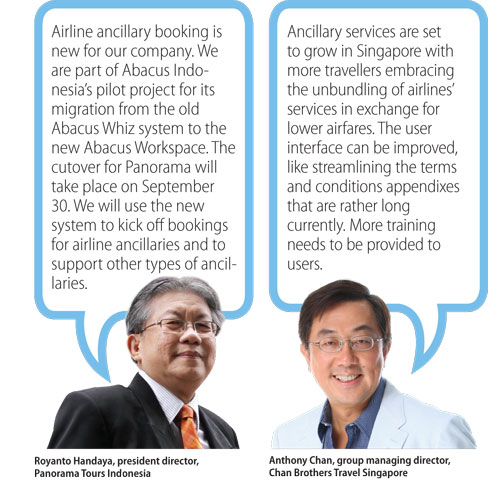
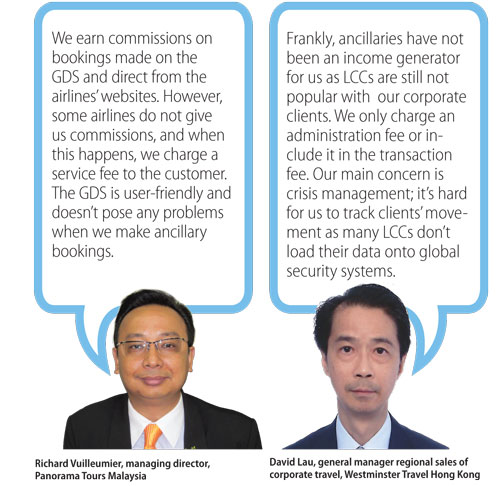
Travel agencies weigh in…

12-september-comment1

12-september-comment2

Additional reporting from Paige Lee Pei Qi and Kathy Neo

This article was first published in TTG Asia, September 12, 2014 issue, on page 18. To read more, please view our digital edition or click here to subscribe.

Stamford, IMPACT join hands to groom future MICE experts

0

A MEMORANDUM of Understanding on academic collaboration has been inked between Stamford International University and Thailand’s IMPACT Exhibition Management.

The collaboration will see opportunities being created for students to develop skills and perspectives that will lead them to successful careers in the MICE industry, and enable Stamford International University to be a source of young MICE talents.

Loy Joon How, general manager of IMPACT Exhibition Management, said: “This agreement…is intended to produce young people who will be a major force in driving the future of the MICE industry in Thailand. We expect the new generation, through innovative education and real-world training offered by Stamford, to specifically answer demands of the employment market.”

Reed China grows show portfolio, invests in online prowess

0

FOLLOWING the launch of seven industry events focusing on the auto, energy and publishing sectors last year, Reed Exhibitions Greater China is maintaining its growth momentum with the debut of FIBO China fitness event in Shanghai this month, the China Wuhan Daily-Use Articles Trade Fair in November and the China Bakery Show in Shanghai next May.

Nat Wong, president of Reed China, told TTGmice e-Weekly in an interview that the China Bakery Show was created through a joint venture with the China Association of Bakery & Confectionery Industry.

“Reed China brings in (event) knowledge and experience, while the local partner (contributes) local (industry) know-how and entrepreneurship. We expect this segment (bakery and confectionery) will grow very fast,” Wong commented.

Reed China is also leveraging the recent boom in the country’s gift industry by expanding its stable of related events to 10 in a single calendar year. These gift shows will be held in major cities like Beijing, Shenzhen, Shanghai, Chengdu and Wuhan.

“This segment accounts for a quarter of Reed China’s business and targets the domestic market,” said Mike Jiang, general manager of Reed Huabo Exhibitions (Shenzhen) Co. “Reed China holds about 90 per cent of the marketshare in China’s gift and homeware event sector.”

While acknowledging that the company’s growth in China is “fast”, chairman and CEO of Reed Exhibitions, Mike Rusbridge, said “it still represents a small fraction, given the group’s growing portfolio of over 500 events”.

“We now manage more than 50 events a year in China (and want to) continue to explore and develop new sectors. Our strategy is three-fold – we look for acquisitions, standalone launches and new show concepts,” revealed Rusbridge.

Noting that “customers are changing generationally” and “Generation Y and Millennials are (familiar with) going online or using mobile”, Rusbridge said: “That is changing the way we organise the services we provide. (Knowing) how to market on social media is vital.”

The company has invested US$30 million in a web hosting platform that will support all its events within the next few years.

“The new platform will kick-start in 2015 and be rolled out in phases and by country through 2017. This will enable the China office to plug into data systems, marketing tools, etc and access (Reed’s services) in any part of the world,” he said.

Pro-Health China takes 4,000-pax incentive to Sydney

0

PRO-HEALTH China kicks off its five-day incentive in Sydney today, bringing more than 4,000 of its top performing distributors in seven waves to the Australian city.

The event, said to be worth A$20.4 million (US$18.3 million) in estimated economic impact for the New South Wales economy, will see delegates participating in a Corporate Social Responsibility walk in the iconic Blue Mountains, a teambuilding session on Bondi Beach, and a gala dinner in Luna Park.

The Chinese health and skincare company last took a smaller VIP incentive to Sydney in 2009, and has been keen to return. This is the first time that Pro-Health China has held its annual conference outside of Asia, according to a press release issued by Business Events Sydney.

Pro-Health China’s annual conference comes in a busy year for Sydney, which has experienced a steady flow of Asian business events. The destination will welcome a total of 28 incentive events from Asia this year, attracting 60,328 delegate days and generating an economic impact of A$60.2 million for the state.

With the short-lead nature of this market, the bureau is expecting this number to rise by year’s end.

Johor to establish CVB

0

JOHOR is on the hunt for hotel investors, as it prepares to set up a state convention bureau in 2016 to bring more business events to the southern-most state of Peninsular Malaysia.

Backed by the Johor state government, Iskandar Regional Development Authority (IRDA) and Johor Department of Tourism, a working committee was recently formed, comprising members from the private and public sector, to hammer out the details of the new CVB.

Ismail Ibrahim, chief executive, IRDA, said the state is concurrently developing hardware in order to attract more business events. Hotel inventory in Iskandar Malaysia, which is being developed as a metropolis three times the size of Singapore, is expected to increase to 6,600 rooms by end-2015, from around 5,000 rooms now. The state of Johor has about 17,000 rooms.

Ismail added: “Currently, we have a main convention centre known as Persada Johor International Convention Centre in Johor Bahru (capital of Johor) that can accommodate a maximum of 4,000 delegates. We have projected that we will need another three to four convention centres – in Nusajaya, Pasir Gudang and Senai.”

Ismail and his team from IRDA are at PATA Travel Mart to network and attract private investors. Current incentives for the development of three- to five-star hotels are 10-year tax holidays, but additional incentives can be considered on a case-to-case basis.

Ganneesh Ramaa, manager, Luxury Tours Malaysia, said the new set-up would help attract more MICE visitors to the state, which in turn would create business opportunities for suppliers. He added: “To attract more business events, there must also be convention centres that can accommodate group sizes of 5,000 to 6,000 pax and are professionally run.”

Johor will be the third secondary destination in Malaysia to have a CVB, after Sarawak in East Malaysia and Penang in the north, which is in the midst of setting up the Penang International Convention and Exhibition Bureau (PICEB). PICEB is likely to be up and running in early 2015.

Hemophilia congress picks Kuala Lumpur for 2020

0

THE Malaysian capital has won the bid to host the World Federation of Hemophilia (WFH) World Congress in 2020, an event that will draw 4,300 delegates from around the world and generate an estimated RM55 million (US$17 million) in economic impact for the country.

The biennial congress is dedicated to the advancement of treatments to improve the lives of people with genetic bleeding disorders including hemophilia, von Willebrand disease, rare factor deficiencies, and inherited platelet disorders, and is regarded the most significant international forum for the global bleeding disorders community.

Commenting on the win, Zulkefli Haji Sharif, CEO of the Malaysia Convention & Exhibition Bureau (MyCEB), said: “One of MyCEB’s goals is to make Malaysia the choice destination in business events and meetings for healthcare professionals. As such, we are proud that Kuala Lumpur is given the nod by the WFH as the venue for its 2020 congress.

“The bidding process was a long and exciting journey for our team who worked closely with the Hemophilia Society of Malaysia to produce the winning submission.”

Faraizah Dato’ Abd Karim, president of the Hemophilia Society of Malaysia, said the WFH members were impressed by Malaysia’s comprehensive bid to host the event and look forward to bringing the congress to Kuala Lumpur in 2020.

Asia-Pacific leads in travel booking via mobile devices

0

TRAVELLERS from Asia-Pacific use mobile devices most compared to travellers from other regions when planning and purchasing travel, according to the Travel Flash Report released by Criteo.

The report examined the share and value of bookings generated from mobile devices for more than 1,000 travel websites worldwide including airlines, hotels, car rentals, cruises and apartments in 1H2014.

One of the key regional findings include Asia-Pacific being the leader with more than 20 per cent of travel bookings made on a mobile device. Brazil and Germany turned in less than 10 per cent.

Globally, smartphones and tablets accounted for 21 per cent of hotel bookings, while peer-to-peer apartment rentals saw the highest mobile penetration of 34 per cent.

Additionally, the value of mobile bookings increased in every area except accommodation – average booking value was 21 per cent higher for air travel and 13 per cent higher for car rentals, but 30 per cent lower for hotel bookings on mobile devices than desktop.

Jason Morse, vice president for mobile products at Criteo, said: “Mobile is the driving force behind the exponential growth in online travel booking and sales, and that’s only set to continue in the second half of this year and beyond.

“Travel marketers need to think strategically about developing a highly effective omni-channel marketing experience, ensuring the entire consumer experience – from the ads to shopping carts – is mobile optimised.

“Determining budget across desktop and mobile must be completely fluid because consumers are making decisions in real-time, requiring that the booking experience be streamlined and integrated with mobile-friendly payment systems to ease the all-important path to purchase.”

Criteo’s complete report can be downloaded at http://www.criteo.com/resources/travel-flash-report-online-travel-never-looked-so-mobile/