TTG Asia
Asia/Singapore Tuesday, 24th March 2026
Page 2179

Touring Angkor heritage park on the river

0

ANGKOR Expeditions is giving travel consultants a new way for customers to view and appreciate the UNESCO World Heritage Site of Angkor Archaeological Park.

The company has recently gained approval from UNESCO and Apsara Authority, which protects and manages the park, to begin Float Angkor – river rafting and kayaking tours down a 1.7km stretch of river that winds through Angkor.

Paula Harrigan, general manager of Angkor Expeditions, which exhibited at PATA for the first time, hopes to begin first tours by early 2015.

“Clients visiting the Angkor complex start feeling the heat by lunchtime, when they’ve already visited a number of temples and taken 300 photos. This is a great option for them to get a break from the heat. The temples of Angkor are highlights, but there are other aspects of Cambodian culture they can learn to appreciate on the tours,” she said.

This includes learning the importance of water to Angkor culture, as well as opportunities to learn more about the local flora, fauna, and wildlife through the naturalists-cum-guides attached to each raft, aspects of the park that are often overlooked.

Each raft will hold a maximum of six passengers with groups sent off in 15-minute intervals during peak season for a more exclusive and private experience with nature and the sights.

Speaking to the Daily, Harrigan said Float Angkor took 18 months to get up and running, and each expedition will last 1.5 hours.
Asked what is next on the agenda for Angkor Expeditions, Harrigan said: “Kayaking, which allows for solo trips and are for people with more experience on the water. In comparison, rafting is more tame. You can paddle if you want to or simply float along. We’re also looking at doing water sports throughout the country.”

Read more stories in TTG-PATA Travel Mart Show Daily

Jababeka helps secondary destinations go digital

0

PATA’S Indonesia Chapter (PIC) is taking the lead in developing secondary destinations in Indonesia, beginning with a pilot programme in Cirebon that aims to drive tourism to the port city, which is on the north coast of Java and three hours away from Jakarta.

With support from Indonesian industrial estate developer, Jababeka, PIC is creating B2B and B2C platforms, making tourist attractions and other services in a destination more accessible to both the travelling public and the trade.

A B2C booking platform for Cirebon will be launched on October 23.

Agus Canny, director of Jababeka investment & promotion board, who is also PIC’s director of marketing & new business development, said: “Most cities in Indonesia have different tourist attractions, but many of them are not managed or promoted well.”

In Cirebon, for example, there still remains palaces of the late 15th century Muslim sultanate (Keraton Kasepuhan, Kraton Kanoman, Keraton Kacirebonan and Keraton Keprabonan).

Explained Agus: “We are first developing an online ticketing system that enables domestic travellers to buy entry tickets to the palaces.
“PIC (through Jababeka) is inviting Telkom Indonesia and financial institutions to develop a distribution system to sell the palaces (with Kasepuhan as the first).”

Hotels, travel companies and convenience stores within Indonesia can also connect with the network, enabling travellers to buy entry tickets through offline means or directly via the website.

Added Agus: “PIC will also develop a B2B platform by linking the system with the worldwide business network that it has and promote it to international wholesalers (for packaging).”

After Cirebon, PIC will facilitate the development of similar digital platforms in Semarang (Central Java) and Medan (North Sumatra). Currently, 17 destinations are in the pipeline.

“These cities will be linked to each other and content in the website will grow,” Agus said.

While Jababeka’s flagship development is the 5,600 ha industrial township of Kota Jababeka in Cikarang, it has also invested in tourism projects.

Using Kota Jababeka as a blueprint, the company is developing an integrated resort destination in Tanjung Lesung, approximately 200km south-west of Jakarta.

Philippines braced for Mayon volcano eruption

0

THE Philippine authorities have tightened security around Mt Mayon, located near Legazpi City, Albay province in southern Luzon, following reports yesterday that indicated imminent stronger eruption and ashfall activity.

Pagasa, the country’s national weather unit, extended the safety perimeter around Mayon volcano from six kilometres to 10km, as magma has begun to flow out of the volcano’s crater.

The unit also said any ash expelled from within the volcano would likely go towards the towns of Tabaco and Santo Domingo, given current weather patterns.

Meanwhile, the Civil Aviation Authority of the Philippines instituted a 15-mile no-fly zone as an additional precaution.

All treks and ATV rides up to the six-kilometre “permanent danger zone” have been suspended, according to Miggie Macasinag, general manager, Roam International, which has just lost two forward bookings in October.

“I won’t discourage visitors to come (to Legazpi), but I have to tell them the truth.”

ATV rides in the area of Camalig in Tabaco were still possible, she added, as long as no ashfall occurs.

Jessica Noelle Wong, sales and marketing manager, Donsol Ecotour, said further eruptions could take place in the next two to three weeks but that there is nothing to be scared about.

Instead, Wong said, the event presents viewing opportunities for tourists, particularly in the evening, in areas such as Daraga church and Legazpi Boulevard in the city’s downtown, as well as Lignon Hill, which remains closed after 19.00 for safety reasons.

Lufthansa ties up with three Myanmar travel agencies

0

LUFTHANSA Airlines today announced it concluded the extension of its contractual partnerships with three leading travel agencies in Myanmar.

Dirk Grossmann, general manager of Lufthansa Thailand and the Mekong region, said: “Now tickets can easily be purchased not only by individual travellers but also by smaller travel agencies in the sales office of Columbus Travels Lufthansa City Centre in Yangon, which is Lufthansa’s global franchise travel agency partner; Sun Far Travels and Tours; and Myanmar Aviation Center.

“The staff of these agencies are highly qualified and have received special training on the Lufthansa product.”

Lufthansa’s Star Alliance and bilateral airline partners, among them Thai Airways, and Bangkok Airways, offer services several times a day from Naypyidaw, Yangon, and Mandalay to Europe with seamless connection via Bangkok.

The partnerships make it convenient for Myanmar people to connect to the Lufthansa flight to Frankfurt, the Swissair flight to Zurich or the Austrian Airlines flight to Vienna.

“Myanmar is a rapidly growing market with increasing demand from business and leisure travellers to Europe. Also, more and more travellers from all over the world are exploring Myanmar,” said Grossmann.

“Mobility is the key to economic growth. Against the background of Myanmar’s increasing trade integration with the Mekong region, Asia and Europe, a functioning infrastructure is required even more. We are excited to support that development,” he added.

Besides the passenger transport business in Myanmar, Lufthansa also has been operating its airline catering company LSG Sky Chefs, in Myanmar for 15 years.

In 2012, Lufthansa Systems also signed a contract to provide flight navigation system with Golden Myanmar Airlines.

Historic ship to offer luxury stays for future Bintan visitors

0

A CENTURY-OLD ship will make its permanent home on Bintan island, Indonesia and take on its new role as a luxury heritage hotel that caters to both leisure travel and corporate events markets.

The Doulos Phos, built just two years after the Titanic in 1914, will be land-berthed off Bandar Bentan Telani Ferry Terminal come 3Q2015 and converted into a five-star hotel offering some 100 cabins with an average size of 25m2. Larger suites, some with balconies, will be offered, as will a Master Marina Suite which will be converted from the captain’s cabin.

A small number of cabins which once served as spartan accommodation for travelling missionaries when the ship was SS Roma, a pilgrim vessel in the late 1940s, will be marketed as Experience Cabins.

Other onboard facilities include a maritime museum, a 180-seat all-day-dining restaurant, three meeting rooms with capacity for 30 to 50 pax each, a boardroom and a library. They will be joined by infrastructure on land, including a banquet hall for 300 to 400 guests, a piano lounge and a semi-fine dining restaurant at the stern of the ship, an al fresco restaurant that will serve South-east Asian cuisine, as well as a spa, Jacuzzi and swimming pool.

Speaking to TTG Asia e-Daily in an interview, Eric Saw, chief executive of BizNaz Resources International, the company that takes stewardship of Doulos Phos, revealed that the entire cost of the project – comprising conservation and refurbishment of the vessel, land reclamation and construction of facilities on land – will amount to S$25 million (US$19.7 million).

“It will be a five-star boutique hotel, and we are now exploring a few marketing representatives specialising in luxury hotels to market and sell Doulos Phos,” said Saw.

“We expect a fair bit of guests to be Singaporeans, and we intend to target international visitors to Singapore who are willing to extend two or three days in Bintan, particularly the Australian and Chinese markets which we’ve been told are strong for Bintan,” he added.

Saw plans to “work with as many hotels in Bintan as possible” and to build a “reciprocal relationship”. He explained: “We will not be able to accommodate a 400-pax group that holds its event in our banquet hall, so we will need the support of other hotels on the island. Similarly, guests of other hotels are welcome to dine at our restaurants and visit our maritime museum.”

River cruise gains steam

0

AS MYANMAR becomes an increasingly popular tourist destination, river cruises along the Irrawaddy and Chindwin have become a segment to look out for buyers and sellers alike.

“We are seeing about a 50 per cent increase in demand for river cruises over the last two years,” said Swe Swe Myint, managing director, Legendary Myanmar Travel and Art. “We used to operate with just two cruises, but now we have expanded to five cruises.

“The demand is coming strongest from European and American visitors, who are keen to view the daily lifestyles on riverbanks, experience parties on sandbanks and spot the Irrawaddy River dolphins,” she added.

Thomas Carnevale, managing director of Asian Trails Myanmar, opined that while ocean cruising might have reached its limits in Myanmar mainly due to limited port facilities, the country’s river cruise market is “still in its infancy and further growth can be expected, especially from the US and Australia”. Demand for river cruises is coming strongest from the UK market, he added.

Cruise lines are also responding to this demand, with an influx of boutique vessels set to make their debut in the next two years. AmaPura and Sanctuary Ananda will begin sailing in November this year, while Avalon Myanmar and Shin Arahan will debut in 2015.

Union of Myanmar Travel Association general secretary, U Naung Naung Han, said: “All vessels are full until March 2015.

“(In fact), tour operators need to pay deposits of between 50 per cent and 100 per cent when making bookings.”

However, Myanmar’s dearth of hotels is stymieing the growth of the river cruising market.

“Myanmar definitely has potential and many Americans haven’t been to Myanmar yet, but the price factor is stopping them from readily purchasing Myanmar, especially when they compare prices with countries in the Indochina region,” observed Cindy Lam, president of US-based Solutions Travel Service.

“I expect the surge (in river cruising) to really pick up after 2015 when more hotel rooms come online and prices become even more competitive.”

Read more stories in TTG-PATA Travel Mart Show Daily

Additional report from Mimi Hudoyo

Free admission to Chinatown Heritage Centre pre-rejuvenation

0

SINGAPORE Tourism Board (STB) is temporarily closing the 12-year-old Chinatown Heritage Centre for the attraction’s rejuvenation works from October 1.

The NTO said in a press statement the aim of the rejuvenation is to “enhance the visitor experience with stronger storytelling content and presentation style”.

To provide locals an opportunity to re-acquaint with the museum before it closes, STB and the centre’s operator, Singapore DUCKtours, will offer free admissions to the centre from September 20 to 30.

The centre is expected to reopen in 2H2015.

Poh Chi Chuan, director of STB’s Cultural Precincts and Tourism Concept Development, said: “The Chinatown Heritage Centre draws an average of 150,000 visitors per year, many of whom are locals interested in learning more about the stories of our forefathers and their roots in the precinct.

“We hope that the rejuvenated centre will continue to stir interest among locals and visitors to better appreciate the history of Chinatown and Singapore.”

When the rejuvenated centre reopens, visitors can expect a more interactive experience with a stronger and more holistic story of Chinatown beyond its current 1960s-focus.

Topics will be explored in greater depth, and interactive story panels, immersive soundscapes and mood lighting will be used. A new space will also be set aside for temporal exhibits and community events.

Details of the finalised concept will be shared at a later date.

Malaysian trade diversifies markets to ride out Ramadan slump

0

INBOUND tour operators in Malaysia are diversifying their source markets in the face of a decline in the lucrative Middle Eastern market, as the Muslim fasting month of Ramadan will coincide with the Gulf’s peak summer travel season until 2017.

“We don’t think the market will improve much for the Middle East summer next year,” said Ally Bhoonee, World Avenues Malaysia’s executive director, who saw a 10 per cent drop in business from the GCC countries this year.

“We have started to promote to Maghreb countries in North Africa – Algeria, Tunisia and Morocco – which are a good diversification alternative as most travellers from these countries spend seven to eight days in Malaysia and buy full-board packages.”

World Avenues has also opened a representative office in Paris in July to attract more business from France.

Likewise, Ganneesh Ramaa, manager at Luxury Tours Malaysia, has started promoting Malaysia to the East African states of Kenya and Tanzania to offset the arrivals decline.

Meanwhile, Yap Sook Ling, managing director at Asian Overland Services Tours & Travel, saw a 15 per cent year-on-year drop in business from the GCC market, in addition to an ongoing price war among tour operators eager to seize a piece of the market.

AOS is therefore intensifying efforts to get more regional business. “ASEAN is a volume market. Stays are shorter, but you get volume year-round,” she said.

Tourism Malaysia’s deputy director-general (promotion), Azizan Noordin, believes the Middle East market will recover in 2018, when Ramadan no longer clashes with the summer season.

Meanwhile, to attract Middle Eastern travellers to experience Ramadan in Malaysia and make them feel at home, the Malaysian NTO has rolled out efforts to educate hoteliers and inbound tour operators on how they can fulfil the needs of this market.

“We also worked with the religious department in Malaysia to invite imams from the Middle East to lead the Tarawih prayers in key mosques in Kuala Lumpur,” he added.

Tourism Malaysia has also stepped up promotion of the annual 1Malaysia Mega Sale Carnival in the Middle East, as the festival coincides with the peak summer travel season.

Read more stories in TTG-PATA Travel Mart Show Daily

Cambodia Bay surfaces as next destination to watch

0

CAMBODIA Bay’s Kep is being touted as a destination with star potential as buyers seek out fresh offerings beyond Siem Reap and Phnom Penh.

ICS Travel Group sales manager, Kanoungnit Thongpunparn, observed growing demand from not just Europe and the US, but also an increase in regional business.

Services Excellent Tours Phnom Penh general manager, Hem Chan Piseth, said: “Kep gives tourists another feeling compared to Siem Reap, as well as Sihanoukville (also located in Cambodia Bay), which draws a younger crowd. Kep is for middle-aged to older tourists.”

Calling Cambodia’s coastal destinations “underfocused (on) and underdeveloped”, Angkor Expeditions’ general manager, Paula Harrigan, said: “Sihanoukville is a kind of Vegas by the sea, very racy and vibrant, but Kep is a small town with an unspoiled stretch of beach.

“You can still see the remnants of Kep’s past glory in the old villas, of what it was before. It’s now undergoing a renaissance.”

The southern province, popular among Cambodians for its fresh seafood, was a beach town during colonial rule, drawing French residents and elite Cambodians who built beachfront villas.

Hem elaborated: “You can go cycling, visit waterfalls and nearby islands. There are a lot of French colonial buildings and new hotel investments are also coming into Kep…There are nice, almost five-star resorts such as Veranda Natural Resort.”

The Phnom Penh-Kep road has also been reconstructed, he pointed out.

Cambodian tourism minister Thong Khon told media at PTM yesterday that the government is also considering easing visa restrictions for travellers heading to Cambodia Bay, which stretches across four provinces.

Read more in TTG-PATA Travel Mart Show Daily

Additional report from Mimi Hudoyo

Longhaul report – Switzerland, Germany, the UK

0

Switzerland, Germany and Britain are all saying that customers  want more immersive, individualised experiences, and are stepping up efforts to help tour operators and travel agencies cater to the new desire. By Raini Hamdi, Prudence Lui and S Puvaneswary

Swiss’ grand hopes
By Raini Hamdi

12sept_longhaul_map_grand_tour_v2

Switzerland Tourism’s latest effort to encourage overseas visitors to do a grand tour of the country (TTG Asia e-Daily, August 18) comes at a time when Swiss hotels – still suffering declining or stagnating arrivals from traditional sources – are keen to attract new markets. At the same time, Asia, especially the drivers China and South-east Asia, seem hungry for new products and destinations, according to Switzerland Tourism’s director global accounts and director Asia-Pacific, Simon Bosshart, who is urging the trade to respond with “new and deeper products in order to satisfy the customer demand”.

The Grand Tour of Switzerland, which the NTO has mapped, is launched to attract higher-spending FITs, get them to stay longer, spread demand to lesser-known destinations such as Valais, Ticino or eastern Switzerland, as well as spread the season, said executive vice president markets & meetings, Urs Eberhard. Traditionally, the winter season is peak; markets such as Asia can help fill the gap hotels suffer in summer.

The whole route covers 1,600km and is designed to make it convenient for the trade to promote self-drive or train journeys, not just through the entire tour but segments of it that fit clients’ duration or specific interests. With it, the trade can easily flesh out a tailored itinerary for clients, with rental car or Swiss train pass and hotel vouchers included, said Eberhard.

“We want to be the go-to destination for individuals seeking immersive experiences without worrying about safety issues or discomfort. Switzerland is easy to explore as it is well-connected. It may be small, but it has diverse attractions – no two places are alike. Visitors can have a safe, hassle-free and comfortable experience,” he said.

Swiss hotels in areas that are relatively new to Asians are starting to see the market’s appearance and are hoping to get more of these visitors.

Asia is “bubbling”, said Pierre Berclaz, general manager of the luxury wellness hotel, Les Sources des Alpes, in Leukerbad, the largest thermal spa resort destination in Valais boasting no fewer than 65 natural hot springs. “Leukerbad is synonymous with health, not just wellness, a place where you can have a rejuvenating holiday yearround in all sense of the word,” said Berclaz.

Art Furrer, who pioneered tourism in Riederalp and now owns a string of hotels there, has been tapping Hong Kong and Chinese visitors for three years, and is now receiving Asians in both summer and winter. Furrer is glad for them, saying business has changed, with the traditional markets such as France, Italy and Germany being “no longer here” as a result of the strong Swiss franc and other issues. Riederalp, also in Valais, offers different attractions compared to Leukerbad or famous Zermatt. Said Furrer: “Zermatt has the Matterhorn; we have the Aletsch glacier.” The 23km long glacier with 27 billion tons of ice is the mightiest glacier in the Alps and is a UNESCO World Heritage site.

Over in Arosa, in the canton of Graubunden in eastern Switzerland, the veritable Tschuggen Grand Hotel is also seeing more Asian tourists. The hotel used to operate only in winter but massive investment in the property in the past seven years (see article below), which include a CHF35 million  (US$38 million) spa designed by Mario Botta, a CHF7.5 million private mountain railway for guests and a luxurious renovation of rooms and suites, has propelled the hotel to woo the summer business since 2008. The hotel is now open from July to April each year.

Said general manager Leo Maissen: “Since the investments, we have brought down the age of our clientele by 17 years to an average of 42 years old. Our clients are also more international now, with 50 per cent being Swiss and the rest from Germany, Benelux, England and Russia. New markets include China and Japan, especially during summer, and Brazil in winter.”

He added: “The Chinese visitors come for the spa as Mario Botta has done several work in China.”

A new cable car linking Arosa with Lenzerheide, home to Roger Federer’s new family chalet complex, triples the slopes for skiers to some 225km and opens more trails for walkers and hikers. “The coming winter is the first season when we’ll see the real impact from this. We are confident this will attract new clients to Arosa,” said Maissen.


Eventful Germany
By Prudence Lui
12sept_longhaul_berlinwall

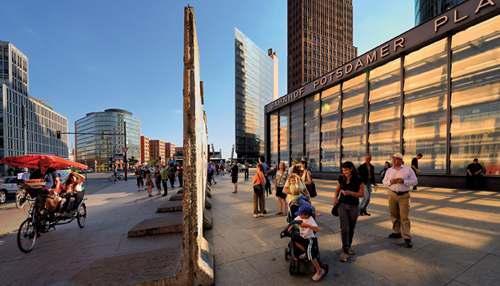
Germany is banking on several theme events, including the 25th anniversary of the fall of the Berlin Wall this November 9, to further boost international arrivals.

In Berlin, a major highlight of the anniversary of German reunification will be a 12km light installation using thousands of illuminated white balloons running along the former course of the Berlin Wall through the city centre on the November 9 weekend, said Visit Berlin director of market management, Ralf Ostendorf.

A GPS-guided walking tour on the trail of the Berlin Wall, guided or self-guided bicycle tours on the Wall path, visits to former watch towers, Wall memorials or the GDR Museum and a drive into the east of the city in an original GDR Trabant car, are among immersive events clients could enjoy.

German National Tourist Board has also unveiled Beyond the Cities – Holidays in the German Countryside and Scenic Routes of Germany themes for 2015, and Holidays in the Heart of Nature for 2016.

Asian agency CEOs such as Beijing Bejoy International Travel Service general manager, Du Hai, welcome any move that focuses on German history, culture and heritage.

“Frankly, Germany can’t compete with the French beaches and Swiss mountains, however, its culture, particularly the UNESCO sites, make it stand out from the neighbours. That’s why I have focused on cultural tours for years as the Chinese have limited knowledge that there is much to offer in areas like north Germany,” said Du Hai.

Making it convenient for international visitors to explore picturesque small towns, Frankfurt Airport Services Worldwide has launched Riverside Romance tours, cooperating for the first time with partners DB Bahn and Eurotours Deutschland.

Senior manager Stefan Kopp said: “Sightseeing destinations are quite spread out around Germany, so our aim is to promote unforgettable and romantic experiences starting from Frankfurt Airport, by rail, car or partly by boat or bicycle. It’s bookable from tour operators and we target agencies that do tailormade products.”

There are already plans to extend the tours and provide information in Mandarin. “The potential from Hong Kong and China is unbelievable as I observe more travellers from Shanghai and Beijing (30-35 years old) who speak perfect English and like individualised tours. They want to be free, for instance, to bike along the River Rhine. We hope to tap repeat visitors and will hold four roadshows in secondary Chinese cities next year. In June, China Southern Airlines inaugurated Guangzhou-Changsha-Frankfurt services,” said Kopp.

Visa rules for Chinese tourists have been further relaxed, with interviews no longer required.

Arrivals from Asia to Germany rose 6.8 per cent last year over 2012, with China/Hong Kong being the highest potential market with 870,748 arrivals, from 757,290 in 2012.


Britain steps up training and support
By S Puvaneswary

VisitBritain has taken training to the next level in Asia-Pacific, tailormaking its BritAgent programme to specific niches including shopping, heritage, music, sports, culture, countryside and food.

“Travellers are maturing and becoming very sophisticated, even in emerging markets. Thus, it is important to educate agencies to go beyond the generic multi-tours into specific offerings,” said VisitBritain’s regional general manager, Asia-Pacific and the Middle East, Sumathi Ramanathan (above).

The NTO has also been identifiying strategic partners since 2013 for jointly funded advertising and promotional campaigns in key markets such as Australia, India, China and Japan. These pacts are a step-up from previous tactical campaigns as they involve proper planning and commitment to build up a market over a three-year period, and include the sharing of databases and hosting of fam trips for media and travel consultants.

Among partners VisitBritain is working with thus far are Cox & Kings and Mercury Travels, India; CITS and Caissa Travel, China; and STA Travel, Australia.

VisitBritain’s travel trade website has also been revamped. The trade can now search for suppliers in the UK for specific products and services. Agencies also have a toolkit comprising sales collaterals, itineraries, images and posters for downloading.

Yuva Arumugam, sales manager-emerging markets, Apex Hotels UK, said Chinese guests to the group’s eight properties in the UK are growing in numbers and, to cater to this market, the hotels have welcome letters written in Mandarin. Agencies with clients who have special requirements or require halal food can also be catered for, if these needs are made known in advance.

Michael Bremner, managing director of Edinburgh-based Highland Experience Tours, said business from the Indian market has grown and his tours cater for Indian vegetarians. “Now we want to create halal tours to tap the Middle East and South-east Asian markets,” he said.

Tourists from Asia-Pacific, Middle East and South Africa (APMEA) to the UK rose seven per cent last year from 2012 to a record 4.3 million visits.

The top five APMEA markets in 2013 were Australia (1.1 million visitors, up 7.7 per cent); India (375,000, up 10.6 per cent); GCC (590,000, up 11.3 per cent); Japan (221,000, down 9.1 per cent); and China (196,000, up 9.7 per cent).

Ramanathan said APMEA is important for the UK as the visitors stay 12 to 16 nights.


This article was first published in TTG Asia, September 12, 2014 issue, on page 14. To read more, please view our digital edition or click here to subscribe