Indonesian president Prabowo Subianto has confirmed that the increased value-added tax (VAT) from 11 per cent to 12 per cent, effective from January 1, applies only to luxury goods and services.
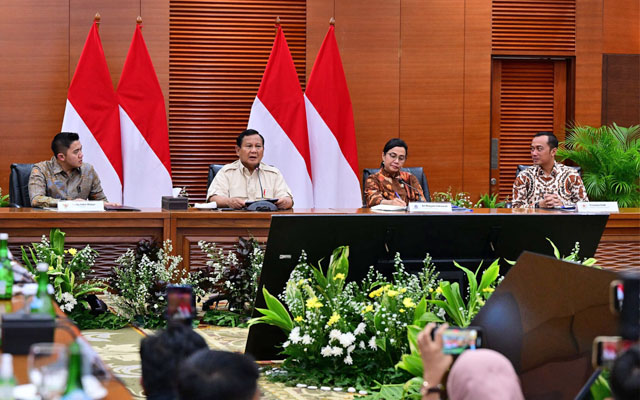
Speaking at a press conference in Jakarta on New Year’s Eve, Prabowo explained that the VAT increment would only be be imposed on luxury goods (classified under the Sales Tax on Luxury Goods or StoLG category) and services, such as private jets, cruise ships, yachts, and luxurious houses.
Prabowo Subianto clarifies impact of VAT increment; photo by the Indonesian Cabinet Secretariat
He further clarified that VAT on non-StoLG goods and services would remain unchanged. Items that have been subject to 11 per cent VAT since 2022 will not be affected, while basic goods and services, which have been exempt from VAT, will continue to benefit from these tax exemptions.
Sri Mulyani Indrawati, Indonesia’s minister of finance, also explained: “Goods and services that have so far received VAT exemptions, such as staple foods, public transportation services, train tickets, ferry services, travel agency services, government and private medical health services, financial services, pension funds, and credit cards, will still receive zero per cent VAT.”
The government’s plan to raise the VAT from 11 per cent, which has been in place since 2022, to 12 per cent had previously raised concerns across various sectors, including the hospitality industry.
For example, the Indonesian Hotel and Restaurant Association (IHRA) had requested a review of the plan, arguing that a higher VAT would result in weaker earnings, particularly among hotels catering to lower- and middle-class consumer segments.
IHRA secretary general Maulana Yusran said: “Purchases of necessities are subject to VAT, and the VAT hike will increase operational costs. The impact could still be significant.”
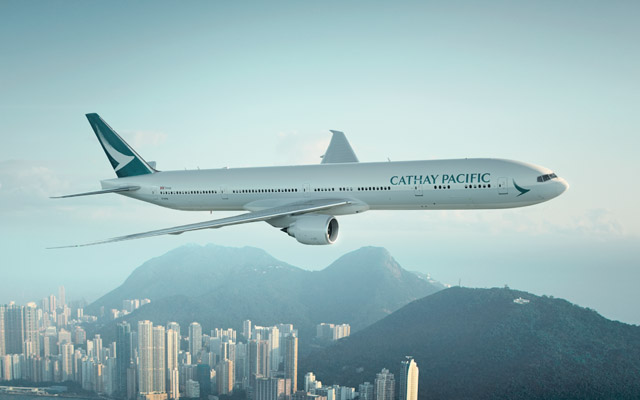
Travelport and Cathay Pacific have renewed their multi-source content distribution agreement and are collaborating on the integration of Cathay Pacific’s New Distribution Capability (NDC) content into Travelport+, with the launch expected in the coming months.
The multi-year agreement extends the partnership between the two companies, ensuring that travel agencies using Travelport+ have streamlined access to a wide range of content from Cathay Pacific. As the airline’s NDC content and servicing capabilities are gradually integrated into Travelport+, agents will be able to easily compare and book both NDC and non-NDC offers in one unified view.
Travelport and Cathay Pacific have renewed their multi-source content agreement to enhance distribution of airline content
Damian Hickey, global head of air partners at Travelport, said: “This extended multi-source content agreement reflects our commitment to providing travel agencies and their customers with a modern, effortless retailing experience when booking Cathay Pacific with Travelport+.”
“We look forward to taking this productive relationship to the next level enabling our business partners access to an even more comprehensive range of Cathay products in Travelport+ with unique NDC-sourced offers which they can use to curate products that best answer to their customers’ individual needs,” added Kinto Chan, general manager sales and distribution at Cathay Pacific.
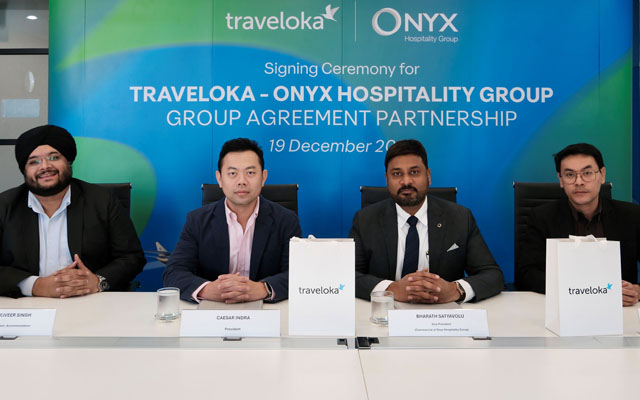
Traveloka has teamed up with Onyx Hospitality Group to strengthen collaboration, drive growth, enhance visibility for Onyx properties, and contribute to the continued success of the travel industry across the region.
This partnership also aligns with Onyx Hospitality Group’s growth objectives, targeting the management of over 50 hotels and residences by 2025 and 70 by 2028.
Traveloka has partnered with Onyx Hospitality Group to drive growth and expand its property portfolio in the region
Caesar Indra, president of Traveloka, commented that the collaboration “will enable us to enhance the travel journey for millions of users on our platform and create meaningful value for the region’s travel ecosystem”.
Bharath Satyavolu, vice president of commercial at Onyx Hospitality Group, said: “Traveloka’s extensive reach, innovative platform, and market leadership make it an ideal collaborator for Onyx Hospitality Group. This partnership allows us to connect with the growing online consumer base, delivering exceptional stays and seamless travel experiences. By combining Onyx’s tailored approach with Traveloka’s expertise, we are confident that this collaboration will drive significant results and serve as a powerful catalyst for growth, benefiting both parties and supporting the region’s tourism recovery.”
Location
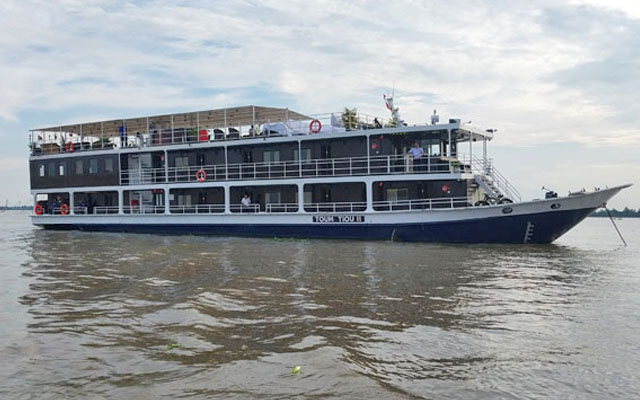
The six-day-five-night discovery tour on the 38-metre Toum Tiou II, operated by CF Mekong River Cruises by CroisiEurope, starts in the Cambodian capital of Phnom Penh and traverses the mighty River Mekong to Ho Chi Minh City in Vietnam, docking at riverine villages along the way.
Accommodation
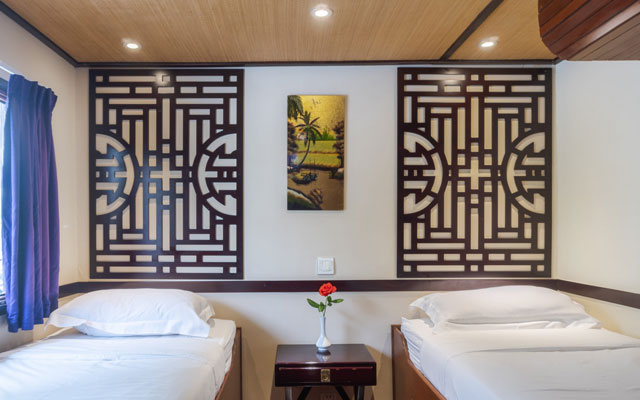
Each of the boats feature 14 cabins – with a maximum capacity of 28 pax – are fitted out with two single beds and a separate bathroom with a hot shower. The cabins are decked with Cambodian teak, hard wood and palm, giving it an Olde World vibe.
My cabin was on the lower deck, with a large window allowing me to relax on my bed and watch life on the banks of the Mekong pass by. Cleverly thought-out storage space, such as a drawer under the beds large enough to stash a suitcase, meant that the cosiness of the cabin was not a problem.
Amenities
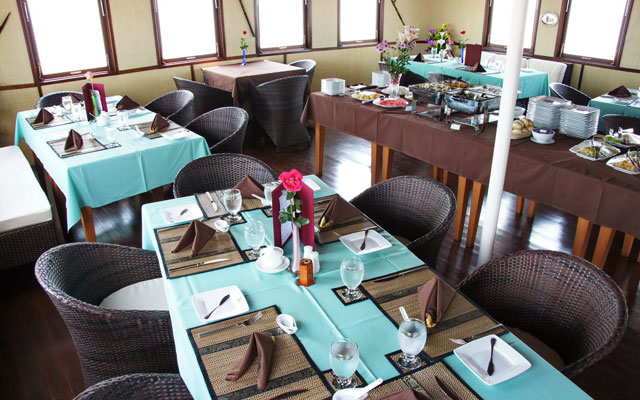
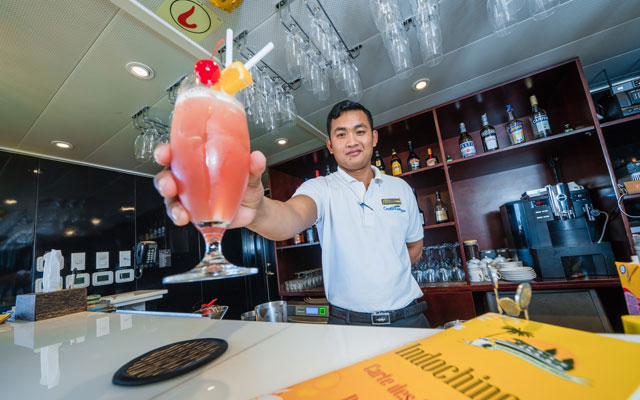
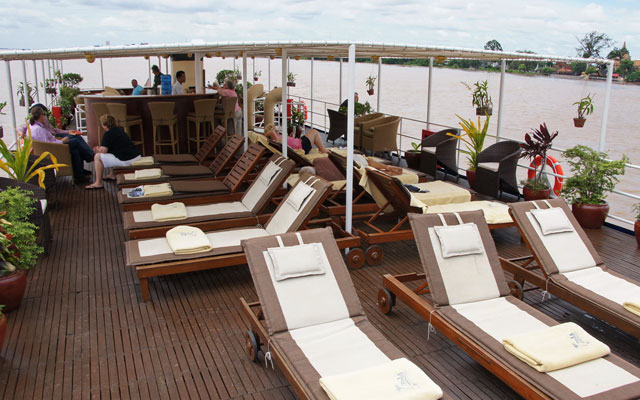
On the top deck sits a sun deck complete with sun beds, perfect for soaking up the scenery. An adjacent bar lounge serves a range of cocktails, wine, beers and soft drinks, so we were able to enjoy the striking sunsets with a cocktail in hand. Complimentary snacks, tea and coffee are available. The spacious upper deck also houses a covered lounge area, complete with comfortable tables and chairs. This space was cleared one evening when a karaoke night was hosted. An air-conditioned restaurant sits on the second deck.
Toum Tiou II
1 of 7
Dining area
Sun deck
Cabin
Bar lounge
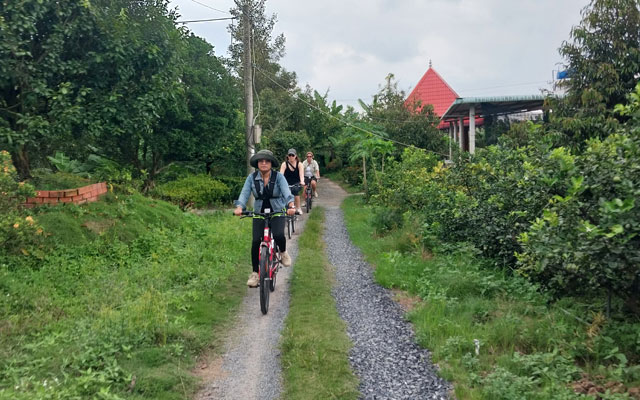
Cycling
Kayaking
Mekong Delta
F&B
The meals predominantly comprised Cambodian food, with lavish buffet dinners offering a range of meat and seafood dishes, rice and noodles, soup and Khmer desserts. Set menus were also served on some evenings. Breakfast came in the form of a buffet with a mixture of European and Asian options. Lunch was either served on board as we continued on our journey, or at a village we visited as part of the daily excursions.
Excursions
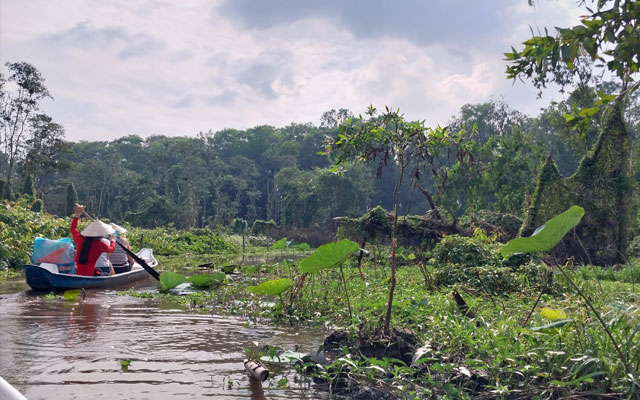
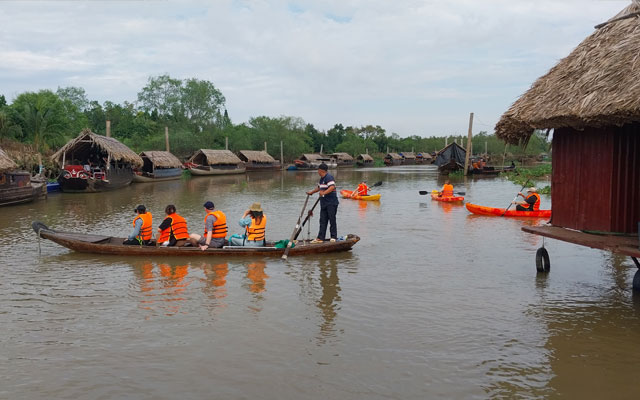
The beauty of this cruise lies in its journey through the Mekong Delta, home to diverse communities, nature, and sacred sites. Along the way, we visited Chau Doc, Sa Dec, Cai Be, and My Tho, cycling through rural roads, taking cookery classes, kayaking along tributaries, rowing through wildlife-rich mangroves, and visiting weaving workshops to experience local life. On day four, we docked near the city centre, spending 1.5 days exploring the vibrant Vietnamese city to round off the adventure.
Verdict
This is an excellent way to get an insight into life on the Mekong Delta, delivered by a small team of talented staff, who were firm friends by the time we disembarked.
Namia River Retreat, Vietnam
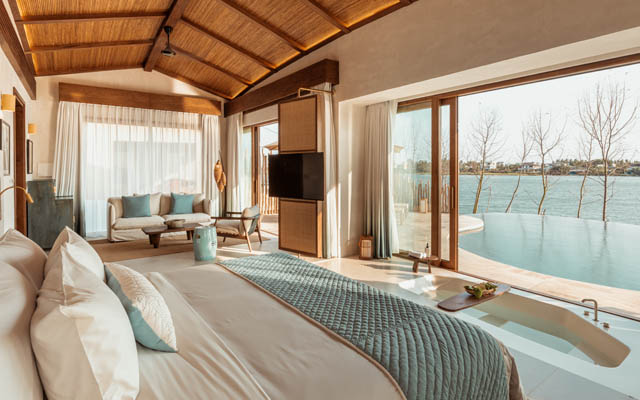
Namia River Retreat features 60 pool villas, each with views of either the Nipa Palm Forest or the Thu Bon River. The resort is just a short bike ride from Hoi An’s UNESCO Heritage Town.
The resort focuses on wellness with a 90-minute daily wellness journey per person, per night, which includes a herbal remedy, a 30-minute herbalhammam (a herbal steam room), and a 60-minute treatment. Signature wellness offerings include Dien Chan reflexology, Vietnamese massage, cupping, and acupressure. Guests can choose from two wellness pathways: Deep Rest for stress relief and Body Balance for improved circulation and tension relief.
Mindfulness experiences such as Vietnamese Duong Sinh breathing exercises and Silent Walking Meditation are also available to help guests reconnect with nature and achieve inner peace.
Facilities include F&B options, a sauna, and outdoor swimming pools.
Rosewood Miyakojima
Rosewood Miyakojima, Japan
Rosewood Miyakojima, located on a remote island paradise in Okinawa, will be Rosewood Hotels & Resorts’ first property in Japan. Nestled amid sugarcane fields in the north of the island and overlooking Oura Bay with direct beach access, the 55-key resort offers four restaurants and bars, an infinity pool by the beach, spa, yoga studio and fitness centre.
A private pavilion overlooking the ocean will house weddings and special occasions, while families will find enriching experiences at the Rosewood Explorers Club.
Grand Mercure Imperial Palace Seoul Gangnam
Grand Mercure Imperial Palace Seoul Gangnam, South Korea
Located in the heart of Gangnam, Seoul, the dual-wing Grand Mercure Imperial Palace Seoul Gangnam, formerly the Imperial Palace Seoul, features 224 rooms in the Hotel Wing, including the Royal Suite, and 90 serviced apartments in the Residence Wing.
The hotel offers four dining venues, the Club Imperial Lounge, a fitness centre with pools and sauna, and a business centre.
Twinpalms Bangtao Phuket Tented Resort
Twinpalms Bangtao Phuket Tented Resort, Thailand
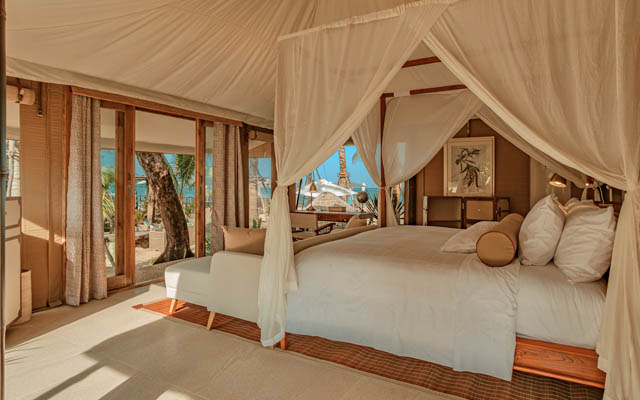
Twinpalms Bangtao Phuket Tented Resort offers a unique luxury glamping experience on Phuket’s West Coast. Located just 30 minutes from Phuket International Airport, the resort features 28 adults-only luxury tents, where guests can choose from Beach Tents with sea views and Lagoon Tents set amid tropical gardens, with private plunge pools in some.
Amenities include a communal Tented Lounge, a Spa Tent offering Thai therapies, a fitness centre at Twinpalms Surin Phuket Resort, and access to nearby dining destinations like Catch Beach Club and The Lazy Coconut.
Guests can enjoy daily wellness activities, including meditation and yoga, as well as yachting excursions to nearby islands.
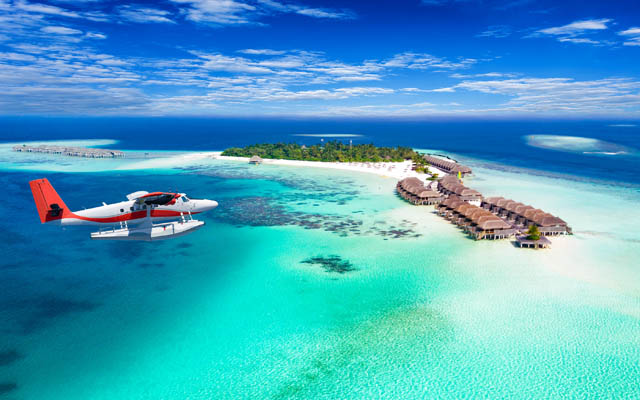
The Maldives Marketing and Public Relations Corporation (MMPRC/Visit Maldives) has announced an ambitious target of US$5 billion in tourism receipts for 2025, building on the success of 2024.
The Maldives welcomed two million tourists in 2024, setting new records for daily and monthly arrivals, particularly in February. MMPRC highlighted that extensive marketing efforts contributed significantly to this success, including 23 fairs and roadshows, 15 social media campaigns, and 23 virtual events. Notably, the Discover Maldives Webinar Series played a key role in showcasing the destination’s unique experiences to key markets.
MMPRC targets US$5 billion in tourism receipts for 2025 with new initiatives and expanded global marketing efforts
The Maldives also achieved its largest-ever representation at ITB Berlin 2024 and ATM Dubai 2024, and for the first time, served as the Host Country sponsor at ITB China in Shanghai, expanding its reach in these key markets. Additionally, The World’s Biggest Giveaway 2025 campaign was launched at WTM London, one of the most highly anticipated global initiatives for the upcoming year.
Increased connectivity, with new airline routes and more frequent flights, also played a key role in making the Maldives more accessible and driving the success of its tourism sector.
MMPRC hosted the inaugural Data Forum 2024 and Tourism Symposium 2024 to drive industry growth, signing key agreements with partners like Fliggy, Weixin Pay, and Maldivian Airlines.
Tourism receipts grew by 15 per cent in 2024, and government tax revenues from tourism increased by eight per cent. The Maldives also won several awards, including World’s Leading Green Destination and World’s Leading Destination for the fifth consecutive year. 2024 also marks the 11th anniversary of reaching one million annual tourist arrivals.
MMPRC’s plans for the year ahead include Visit Maldives shifting from trade shows to conversion-driven marketing, focusing on video-based campaigns and strengthening partnerships with airlines, tour operators, and retail brands to expand reach.
Key initiatives to support this direction include the launch of the Visit Maldives Shop for branded merchandise, the Visit Maldives Calendar for event planning, and the Visit Maldives Academy offering Destination Specialist certification. The Visit Maldives Content Portal will showcase curated content and provide a platform for local creatives to sell digital assets, while the Visit Maldives Data Dashboard will centralise industry insights in partnership with global data leaders.
To boost its global presence, Visit Maldives will launch Visit Maldives Week in key markets, featuring media events, seminars, networking evenings, food trucks, and outdoor marketing initiatives. Targeted campaigns will focus on markets such as Germany, Dubai, India, and Russia. While the annual highlight moves from ITB Berlin to ATM Dubai, major activities will still take place in Berlin.
Building on the success of Winter is Blue, which reached 22 million unique users, Visit Maldives will strengthen collaborations with Meta and other platforms. New campaigns will target segments like MICE, solo travellers, and “bestie” getaways. The Visit Maldives Club will also launch Burunu Boma, the world’s largest sustainable fishing competition, in April-May 2025, attracting a global audience.
Visit Maldives aims to sustain consistent quarterly engagement in the top 25 markets throughout 2025, supported by major summer campaigns and a strong public relations strategy. The organisation is focused on building solid industry partnerships to drive success across all initiatives.
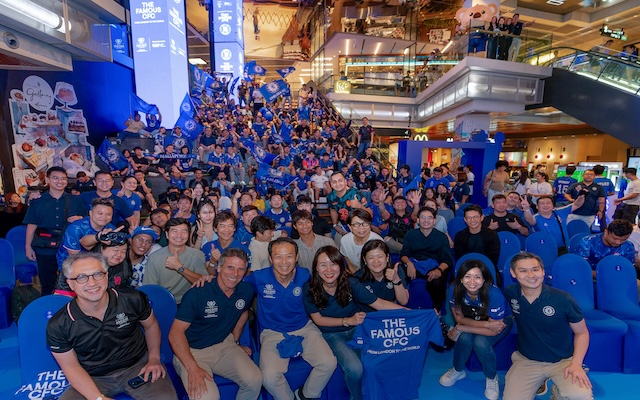
Fans of Chelsea Football Club – also Ascott Star Rewards members – with Chelsea legend Gianfranco Zola (front row, second from left)
Last year, the wildest dreams of Chelsea Football Club (Chelsea) fans came true. They spent an unforgettable weekend with Chelsea legend Gianfranco Zola: witnessing his football skills up close, receiving personal tips during coaching clinics, and gaining insights into his journey during an intimate fireside chat. To cap it all off, they watched the Blues in action against Aston Villa alongside Zola in an exclusive watch party.
This was part of The Famous CFC, Chelsea’s flagship international fan engagement event, brought to the region for the first time following Ascott’s recent appointment as the club’s Official Global Hotels Partner in July 2024. This partnership brings exclusive Chelsea experiences, including access to matches at Stamford Bridge stadium and VIP visits to The Blues Cobham Training Ground, to all members of Ascott Star Rewards (ASR) – Ascott’s loyalty programme that offers a host of elevated member experiences and hospitality packages with exceptional value, ensuring its customers “Stay Rewarded”.
Top-tier global events As part of the ASR programme, members gain access to exclusive global events including major sporting highlights, top-class entertainment, gastronomy greats, lifestyle events and more, through the introduction of the new Ascott Privilege Signatures.
These elevated member experiences were introduced in April 2024 to celebrate the fifth-year milestone of the ASR programme. This was alongside other enhancements such as full 24-hour stays from the time of check-in, and a 48-hour room guarantee. The expanded suite of benefits also includes late check-out, milestone rewards, and airport lounge access.
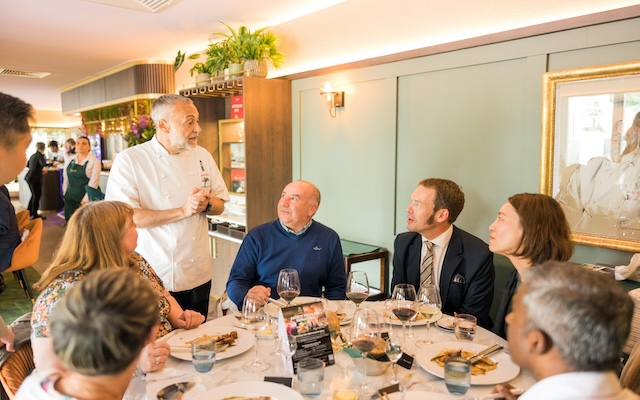
Ascott Star Rewards members indulged in an afternoon of fine dining at Le Gavroche in London with renowned chef Michel Roux Jr. (standing)
At the inaugural Ascott Privilege Signatures event in London, ASR members indulged in an afternoon of fine dining at Le Gavroche with renowned chef Michel Roux Jr, alongside VIP access to the Wimbledon finals, and a prime city-centre stay at The Cavendish London.
Another Ascott Privilege Signatures event saw loyalty members invited to the exhilarating Singapore Night Race, where they had a bird’s eye view of the action, complemented by a gourmet selection of food and beverages at the Ascott Privilege Signatures Lounge at the Singapore Flyer.
Curated local experiences In tandem with the global events offered to platinum tier members under its Ascott Privilege Signatures programme, Ascott has also launched a series of by-invite-only ASR Local Signatures to also engage and reward members through local experiences planned in key cities around the world.
In foodie paradise Penang in Malaysia, ASR members stayed at the vibrant lyf Georgetown Penang and embarked on a gastronomic journey, uncovering hidden local gems and relishing culinary delights across three other Ascott properties. They joined MICHELIN Guide Kuala Lumpur and Penang 2024 Young Chef Award recipient Chef Johnson Wong on a local food trail, enjoyed a quick stop for local coffee, and indulged in a specially curated menu at Chef Wong’s restaurant. The adventure concluded with dinner at the stylish Citadines Connect Georgetown Penang
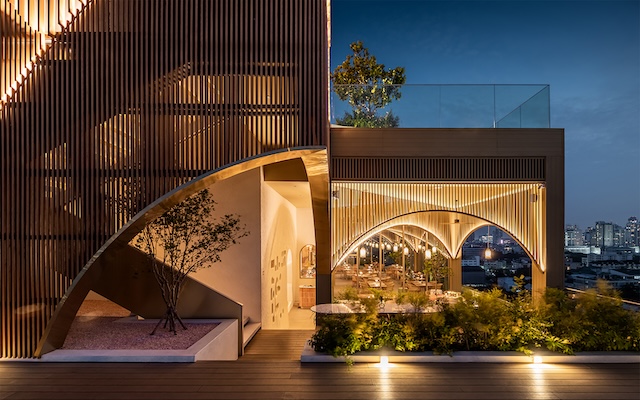
Members were treated to a five-course dinner and wine pairing at Sol & Luna, the rooftop restaurant and bar at Somerset Sukhumvit 71 Bangkok
Over in Bangkok, Thailand, another South-east Asian city known to be a powerhouse of local cuisine, ASR members enjoyed an exclusive culinary-focused Local Signatures event at its newly opened Somerset Sukhumvit 71 Bangkok. They had an unforgettable evening at the hotel’s Sol & Luna rooftop restaurant and bar, where they relished an exquisite five-course dinner and wine pairing. Complementing this gastronomic experience was a live violin recital and the unbeatable views from the well-located property in the vibrant yet tranquil Ekamai district. They also had the privilege of being among the first guests to stay at the property.
Singapore, too, played host to the first-ever ASR Local Signatures event, held at The Robertson House by The Crest Collection in November. Diners were treated to an interactive dining experience, with each course accompanied by a unique dance performance that drew inspiration from corporate life. Apart from gourmet experiences, ASR members based in the romantic city of Paris, France, were immersed in the fine arts. They were invited to a private concert by award-winning violinist Pilar Winter Hill at the elegant La Clef Louvre Paris by The Crest Collection.
More star-studded experiences to come In the pipeline for the Ascott Star Rewards loyalty programme are a host of global events spanning sports, entertainment, gourmet, arts as well as lifestyle themes for its loyalty members, says Ascott. These incoming ASR perks include more exclusive experiences with Chelsea Football Club, as well as invites to first-class tennis tournaments, The French Open, Roland Garros Paris in May, and The Championships, Wimbledon in June.
ASR members can enjoy these privileges and more at Ascott properties across 14 brands in more than 30 countries. Find out more about the global loyalty programme.
With sustainable aviation fuel (SAF) being crucial for reducing carbon emissions in aviation and transitioning to cleaner energy, new estimates from IATA show strong growth in SAF production, although it remains below previous expectations.
In 2024, SAF production reached one million tonnes, double the 0.5 million tonnes produced in 2023. SAF accounted for 0.3 per cent of global jet fuel production and 11 per cent of global renewable fuel. However, this is still below earlier projections of 1.5 million tonnes, as key SAF production facilities in the US have delayed their ramp-up to the first half of 2025. In 2025, SAF production is expected to reach 2.1 million tonnes, representing 0.7 per cent of total jet fuel production and 13 per cent of global renewable fuel capacity.
IATA calls on governments to accelerate SAF development, focusing on long-term sustainability in aviation
“SAF volumes are increasing, but disappointingly slowly. Governments are sending mixed signals to oil companies which continue to receive subsidies for their exploration and production of fossil oil and gas. Investors in new generation fuel producers seem to be waiting for guarantees of easy money before going full throttle. With airlines, the core of the value chain, earning just a 3.6 per cent net margin, profitability expectations for SAF investors need to be slow and steady, not fast and furious,” said IATA’s director general Willie Walsh.
However, he added that “airlines are eager to buy SAF and there is money to be made by investors and companies who see the long-term future of decarbonisation”.
He stressed: “Governments can accelerate progress by winding down fossil fuel production subsidies and replacing them with strategic production incentives and clear policies supporting a future built on renewable energies, including SAF.”
IATA’s senior vice president sustainability and chief economist Marie Owens Thomsen echoed the sentiment, stating that aviation’s decarbonisation should be part of the global energy transition. Renewable fuel refineries will support various industries, with SAF as a small share, and airlines simply want access to their fair portion of renewable energy.
To achieve net-zero CO2 emissions by 2050, IATA analysis suggests that between 3,000 and 6,500 new renewable fuel plants will be required. These plants will also produce renewable diesel and other fuels for different industries. The annual capital expenditure needed to build these facilities over the next 30 years is estimated at around US$128 billion per year, in a best-case scenario. Notably, this figure is significantly lower than the US$280 billion per year invested in solar and wind energy markets between 2004 and 2022.
Governments must implement policies quickly to accelerate renewable energy production, using the wind and solar transition as a model. The energy shift, including SAF, will require less than half the investment needed for wind and solar, with much of the funding potentially coming from redirecting fossil fuel subsidies, continued Walsh.
To further accelerate SAF production and use, three key actions are needed.
First, existing refineries should be allowed to co-process up to five per cent renewable feedstocks alongside crude oil. Expanding this practice could save 347 billion pounds (US$425 billion) by 2050, as it would reduce the need for building over 260 new renewable fuel plants.
Second, while the HEFA method currently accounts for around 80 per cent of SAF production, increasing investments in alternative certified pathways like Alcohol-to-Jet and Fischer-Tropsch, which use biological and agricultural waste, would help boost SAF volumes.
Finally, creating a global SAF accounting framework is essential. A transparent registry would allow airlines to track and claim the environmental benefits of their SAF purchases, ensuring a well-functioning global SAF market and preventing double counting.
Australia’s tourism industry is experiencing a remarkable renaissance, with both domestic and international travel surpassing pre-pandemic levels, according to a report by Canvas8.
The How Shifting Trends Are Shaping the Tourist Boom Down Under report was authored by Gwyneth King and includes expert commentary from Sofia Geraghty, deputy editor of Travel Weekly Australia, and Gina Gaw, a veteran inbound travel agency manager with over 20 years of industry experience.
Australia remains a top destination for those seeking adventure, nature, and unique cultural experiences
The report highlights that, as one of the world’s most diverse and stunning destinations, Australia continues to attract visitors seeking adventure, a connection with nature, and unforgettable cultural experiences. However, this new wave of tourism is driven by shifting travel preferences, particularly among younger generations and international visitors from the Asia-Pacific region.
Increased interest in once-in-a-lifetime experiences, a growing desire for authenticity, and the rise of bleisure travel – which combines business and leisure – are all driving the tourism boom Down Under. Insights from industry experts provide a deeper understanding of how brands can adapt to these shifting trends and meet the evolving demands of today’s tourists, offering a glimpse into the future of Australia’s tourism sector.
Young Aussies embrace experiential travel
Among the most noticeable trends in Australia’s tourism sector is the growing inclination of younger Australians to prioritise travel over traditional financial milestones, such as homeownership. According to recent reports, 71% of Aussies under 30 prefer spending their money on vacations rather than investing in property. For these young travellers, the appeal of nature-centric experiences and proximity to coastal areas is undeniable, with 64% seeking out natural adventures and 59% favouring destinations near the coast.
Fuelled by social media and the continued rise of post-lockdown ‘revenge travel’, young Australians are willing to invest in unique and transformative travel opportunities, Geraghty noted. More and more, this generation is choosing to trade future savings for once-in-a-lifetime experiences, eager to live in the moment.
This change in mindset has also led to an unexpected surge in interest in cruise vacations. Once primarily associated with older generations and families, cruises are now attracting younger age groups. Destinations like North Queensland, Tasmania, and Sydney are popular among this younger crowd looking for affordable, convenient ways to explore.
A rise in international tourism from the Asia-Pacific
Australia’s tourism sector is also benefiting from a growing influx of international visitors, particularly from the Asia-Pacific region. Tourism Australia’s Come and Say G’daycampaign, launched in 2022, has helped boost awareness and engagement, especially in key markets like Indonesia, and Singapore, with 73% and 48% from each country, respectively, planning a visit. Notably too, Indian travellers have also surged to record numbers, with 402,200 Indian visitors arriving in the year between February 2023 and January 2024 – surpassing pre-pandemic levels.
Gaw attributed this surge to several factors, including the country’s proximity and ease of access for Asia-Pacific visitors. The rise in direct flights from India to Australia and the introduction of three-year, multiple-entry visas has significantly eased travel for Indian tourists.
Additionally, Australia’s expanding network of international flights, including Qantas’s partnership with IndiGo, has made it easier for travellers from India to explore key Australian cities like Sydney, Melbourne, and Brisbane.
Luxury tourists and the allure of nature
In an era where personal enrichment and meaningful travel are highly valued, luxury tourists are flocking to Australia for its exclusive, nature-infused experiences. Australia is the most anticipated destination for Asia-Pacific luxury travellers, with 46% planning to visit the country in the next 12 months. These high-end travellers are drawn not only to the country’s vibrant cities but also to its pristine natural landscapes. From luxury lodges to immersive Aboriginal-guided experiences, Australia offers something for every taste and budget.
Travellers are seeking restorative, meaningful connections with the environment. Australia’s diverse ecosystems, including its 12 Natural World Heritage Sites, offer transformative experiences for those looking for more than just a vacation.
The growing demand for authentic and sustainable travel
With a focus on sustainability, 95% of Indian travellers prioritise eco-friendly practices when planning trips. While this interest in sustainability is strong, Geraghty noted that it does not always translate into a willingness to spend extra money on green alternatives. Still, there is an increasing appetite for experiences that foster genuine connections with local communities.
To respond to this demand, Tourism Australia recently launched an Aboriginal Culture and Australia Highlights tour, focusing on cultural education and indigenous empowerment. This immersive 13-day experience is designed to honour the heritage and natural beauty of Australia, giving travellers an authentic and transformative journey.
Geraghty pointed out that brands offering sustainable and community-centred experiences are likely to attract more loyal customers.
Opportunities for brands
As Australia’s tourism industry continues to flourish, brands have numerous opportunities to connect with both domestic and international visitors. To capture the interest of young Aussies, brands should focus on offering value-driven experiences that cater to a generation eager for meaningful and affordable travel. Additionally, promoting sustainable and culturally immersive experiences will resonate with international tourists seeking authenticity.
For the growing luxury travel market, providing exclusive experiences that allow visitors to fully immerse themselves in Australia’s natural beauty will be key. From eco-lodges to tailored, once-in-a-lifetime adventures, the demand for high-quality, nature-based travel experiences is set to rise.
Nick Morris, founder and managing director of Canvas8, said: “Australia’s tourism sector is at a pivotal moment in its growth, fuelled by shifting consumer desires and an increasingly globalised travel market. By embracing these trends and responding to the needs of today’s travellers, brands can help shape the future of Australian tourism for years to come.”
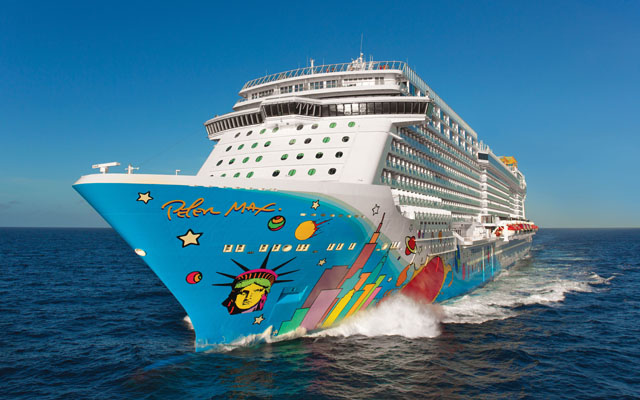
Norwegian Cruise Line’s Norwegian Bliss and Norwegian Breakaway will undergo major updates, including the new Silver Screen Bistro, Horizon Park, expanded dining options like Cagney’s Steakhouse and Teppanyaki, and enhanced accommodations in The Haven by Norwegian.
After Norwegian Bliss‘ dry dock from January 17 to February 2, guests can enjoy Horizon Park, a new outdoor venue which will feature lawn games like cornhole and giant Jenga, plus reclining loungers for sunbathing.
Norwegian Breakaway enhancements start February 19, before immersive European itineraries
Norwegian Bliss will update its Premiere Owner’s Suites to include three bedrooms, three-and-a-half baths, a separate dining room, and fully refurbished living areas, master bedrooms, and outdoor balcony furnishings. Additionally, 24 new balcony staterooms and two club balcony staterooms will be added by repurposing part of the Observation Lounge on deck 15.
Due to guest demand, Norwegian Bliss will enhance public areas with an expanded Cagney’s Steakhouse (replacing Los Lobos), an enlarged Teppanyaki (replacing Coco’s), and the introduction of Palomar, a seafood specialty restaurant from Norwegian Prima. After a two-week dry dock, the ship will begin a 13-day journey from Southampton to Miami on February 2, followed by Western Caribbean and Mexican Riviera cruises, and its Alaska season starting in April 2025.
Norwegian Breakaway will undergo enhancements from February 19 to March 14, 2025. The ship will introduce the Silver Screen Bistro, an immersive movie and dining experience for all ages featuring oversized recliners, retractable tables, and a menu of shareable handheld items, including select dishes from the global fusion restaurant, Food Republic. This will replace the existing Spiegel Tent.
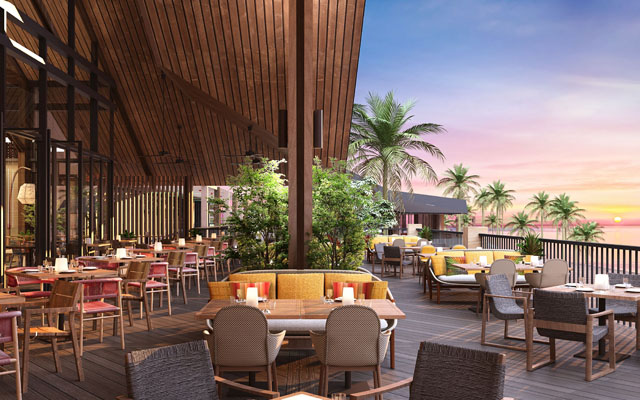
Like Norwegian Bliss, Norwegian Breakaway will debut Horizon Park, an outdoor recreation area offering 360-degree ocean views. This al fresco space will also include a large stage for live music and entertainment, providing guests with a vibrant space to enjoy performances with family, friends, and fellow cruisers.
Due to its popularity on the Prima Class ships, Norwegian Breakaway will introduce The Stadium, a complimentary outdoor activity space offering family-friendly games. Additionally, the guest-favourite Cagney’s Steakhouse will replace Moderno Churrascaria, providing more seating, while Ocean Blue will be transformed into Palomar. The Vibe Beach Club, an adults-only outdoor venue, and The Haven Sundeck will be expanded with more seating and cabanas, offering guests enhanced views of the sea and destinations.
After a three-week dry dock, Norwegian Breakaway will embark on a variety of European itineraries from Barcelona, Spain, and Venice (Trieste), Italy, visiting cities such as Florence/Pisa (Livorno), Palma (Majorca), Cannes, Corfu, and more.
Norwegian Cruise Line offers a variety of tropical cruises to the Caribbean and Bahamas from over 10 ports, including Miami, Orlando (Port Canaveral), New York, and San Juan. These sailings visit destinations like St. John’s (Antigua), Bridgetown (Barbados), Puerto Plata (Dominican Republic), Harvest Caye (Belize), and the private island Great Stirrup Cay (Bahamas), which will debut a new pier in late 2025.
Norwegian Cruise Line’s president David J. Herrera said: “From creating new concepts that offer more outdoor gathering spaces for making memories with friends and family, to expanding dining options that consistently bring joy to our guests across our fleet, we’re providing more to do and more to enjoy for all types of travellers.”


 Location