BUILDING strong collaborative ties with Chinese counterparts and raising awareness about Estonia were the two main aims of the Estonian Tourist Board’s nine-day sales mission this week.
The NTO’s market manager for Asia, Helina Andruškevitšus, told TTG Asia e-Daily: “As we don’t know what the Chinese are interested in doing in Estonia, we came up with a diverse range of activities from bear-watching to handicraft workshops. Once we’ve gathered all the travel consultant feedback, we can develop niche products for the market. We can’t take millions of arrivals, so we hope to target specific market, especially nature lovers.”
Visiting Beijing, Shanghai and Hong Kong earlier this week, the Estonian Tourist Board was joined by seven trade partners including hotels, city tourism boards and travel agencies.
Tallinn-based Baltic Travel Group’s head of group department, Anne Kurgpold, suggested first-time Asian travellers could join group tours. “It gives a better idea of what the destination offers before coming back as FITs as (Estonians) speak English.
“However, the Chinese market hasn’t taken off yet.”
Estonia has planned fam trips for travel consultants this summer and will introduce a new tourism website in two weeks’ time.
The Baltic state welcomed three million tourists in 2014, out of which Chinese travellers accounted for only 12,000, improving 50 per cent year-on-year from the previous year.
MINOR Hotel Group (MHG) is rolling the Avani brand into Down Under with the planned launch of two new properties in Perth.
Representing an investment of more than A$110 million (US$84.6 million), the Avani hotel and residence will open as part of the A$5 billion Perth City Link project, according to a press release.
This puts both the hotel and residence adjacent to the Perth Arena, and within waking distance of a new bus terminal and other public transport options.
The high-end Avani Hotel, slated to open in 4Q2017, will offer over 250 keys, while the Avani Residences will have more than 200 units of serviced one- and two-bedroom apartments for sale.
Avani Hotel will have a rooftop bar open to the public, alongside al fresco bars and restaurants, as well as a public space for events.
MHG currently has an existing portfolio of 50 Oaks Hotels and Resorts in Australia.
AIRASIA Group has announced plans to launch an IPO for its affiliate Indonesia AirAsia in 1H2016.
Group chief executive Tony Fernandes told Bloomberg on the sidelines of the World Economic Forum in Jakarta that AirAsia is aiming to raise about US$300 million from the exercise by selling off a 30 per cent stake in the airline.
More information about the offering will become available in the next couple of months, said Fernandes.
Indonesia AirAsia captured headlines in December after one of its planes, flying from Surabaya to Singapore, crashed in bad weather.
The same Bloomberg report quoted Fernades as saying that the airline has not resumed Surabaya-Singapore flights.
However, AirAsia Group is looking to start its Japan venture in early 2016.
MAHARASHTRA Tourism Development Corporation (MTDC) has thrown together big plans and even bigger funding for developing tourism attractions.
One such product is coal mine tours in regions like Wani in Yavatmal, Nagpur and Chandrapur, where visitors venture into operational coal mines led by accredited tour guides to learn about the process.
Paraag Jaiin Nainuttia, managing director, MTDC, said the tours will be launched “very soon” and required clearance from government ministries is on the way.
Travel agencies that TTG Asia e-Daily spoke to were optimistic about the potential of mining tourism, but highlighted the need for publicity.
Sudhir Patil, director, Veena World, said: “The mining tourism product (shows that) the state is thinking out of the box. We can achieve good (visitor) numbers, but it should be promoted in the right way by giving prominence to safety and security measures.”
Director of Grisbi Holidays, Alpa Gadoya, pointed out: “Tourism authorities must work to promote mining tourism as an experiential tourism product by clubbing together various other activities.”
Maharashtra also intends to push its other attractions with US$8.6 million allocated for the integrated development, conservation and preservation of 10 forts in the state, while an Eco-Tourism Promotion Board is being established.
Other initiatives in the pipeline include beach tourism promotion, the development of a botanical garden in Ballarpur, and the launch of safari-style attractions modeled on Kenya’s Maasai Mara National Reserve at Sanjay Gandhi National Park, Tadoba Andhari Tiger Reserve and Gorewada Zoological Park & Rescue Center.
As the momentum of business investment and infrastructure development shifts beyond traditional economic centres in Asia-Pacific, serviced residence operators are seeing opportunities in new hotbeds of activity, our reporters discover
Where are your serviced residence development hotspots in Asia-Pacific?
The emerging hotspots are Chengdu, Wuxi and Tianjin in China, where Frasers Hospitality has established a presence and is planning continued growth.
Why are you focusing on these cities?
China’s burgeoning second- and third-tier cities are new areas that are experiencing rapid growth, as demonstrated by the influx of FDI and demand for travel accommodation. This is driven by rising business and leisure travel, due to the proliferation of high-tech and industry parks in these cities and a growing segment of middle-class consumers contributing significantly to the increase in leisure travel.
Fraser Suites Chengdu
More business travellers are choosing to stay in serviced residences even on leisure trips, and leisure travellers are more aware of the benefits serviced apartments offer.
These high-growth second- and third-tier cities are key growth areas for Frasers Hospitality. Our China expansion strategy works on the strong demand for our serviced residences, as reflected in high occupancy rates since we set foot in the country and the numerous industry awards the brand has garnered in the region.
How are you expanding in these cities?
We plan to open the 192-unit Fraser Place Tianjin by 2015; the 307-unit Fraser Suites Tianjin, the 180-unit Fraser Place Chengdu; the second Modena by Fraser Wuxi with 120 units by 2017; and the 200-unit Fraser Suites Wuxi by 2019.
Where are your serviced residence development hotspots in Asia-Pacific?
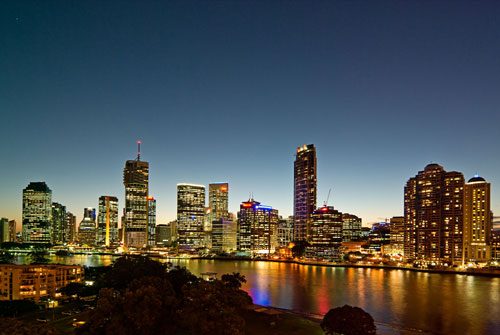
Besides China and India, current hotspots in Asia-Pacific include Brisbane in Australia, Colombo in Sri Lanka and Yangon in Myanmar.
Why are you focusing on these cities?
In Australia, serviced apartments are in high demand and short supply – a trend that shows no sign of slowing. The demand for quality accommodation is rising nationwide, Stimulated by growth in agriculture, telecommunications and construction.
Colombo is currently undergoing a dramatic transformation. Driven by Sri Lanka’s economic growth and infrastructure development, there has been greater urban migration towards Colombo, while a number of wealthy Sri Lankans are moving back to the city following the end of the country’s civil war, leading to demand for both luxury and affordable housing.
Myanmar is the other fast-growing South-east Asian state with a lot of strong initiatives championed by the government. The current shortage, along with the weak supply pipeline of serviced residences in Yangon, will pose challenges for new inbound expatriates. As the government grants more foreign business licenses, expatriate accommodation requirements will persistently rise amid limited quality housing options in the city.
How are you expanding in these cities?
We are constantly taking on projects in areas where there are aggressive developments initiated by both the government and private sectors. We look to double our existing portfolio in the near future and these markets will be the key thrusts in our business development.
Where are your serviced residence development hotspots in Asia-Pacific?
Ascott has 21 new cities in our serviced residences portfolio, and we plan to open over 20 serviced apartment properties in Asia this year.
We recently opened our first serviced residences in Sriracha, Thailand and Haiphong, Vietnam. Our first properties in China’s Wuxi, Ascott Central Wuxi and Somerset Wuxi, are also slated to open later this year.
Why are you focusing on these cities?
Somerset Wuxi
Ascott is the first international serviced residence operator in Sriracha and Haiphong.
Citadines Grand Central Sri Racha is close to industrial estates where many MNCs are based and is also near Pattaya. Situated in Vietnam’s third-largest city, Somerset Central TD Hai Phong City is in the new CBD where we foresee strong demand for quality accommodation.
Wuxi’s economy is growing steadily and its GDP exceeded RMB807 billion (US$130 billion) in 2013. With more MNCs and large local enterprises setting up in Wuxi, we expect healthy demand for our serviced residences by expatriates and local business travellers.
How are you expanding in these cities?
We have four properties in Sriracha, Haiphong and Wuxi so far, and we are open to opportunities. We will expand through investments, management contracts, strategic alliances and franchises.
Where are your serviced residence development hotspots in Asia-Pacific?
We are looking to expand our serviced apartment brands – Shama, which is well established in Hong Kong and China, and the Amari Residences in Thailand – not only within existing markets but also beyond new markets, which we feel will have a growing demand for this type of accommodation. Currently, we are looking at India, Indonesia and Malaysia as areas of expansion.
The specific cities include Jakarta in Indonesia, and Kuala Lumpur and Iskandar in Malaysia. At this point we are looking for both brown-field and green-field opportunities, and we plan to announce new projects soon.
Why are you focusing on these cities?
We are now looking into India, Indonesia and Malaysia because of the existing strong demand for corporate long-stay clientele – these are the key consumers of Shama and Amari Residences.
We have also seen a shift in the demand from long to short stays in residence-style accommodation, especially among families who are looking for more space and have (lower) priorities for (on-site) F&B facilities.
How are you expanding in these cities?
The Shama brand includes three tiers: Shama, the core brand providing luxury serviced apartments; Shama Luxe, the brand’s more premium tier featuring more spacious layouts with tailor-made furnishings and appliances; and Shama Lite, which was introduced in 2013.
Shama Lite is geared towards mid-market profiles with more compact units and are often located in residential areas, appealing to business travellers and families, whereas residences under the Amari brand present more facilities, including F&B, which is not typically available at Shama properties.
In the key areas of India, Malaysia and Indonesia, the location will dictate the brands we choose to introduce. For instance, as part of our recently announced expansion plans to India, we will be introducing the first Amari Residences at GIFT city in Gujarat, featuring 120 residences, one restaurant, a swimming pool and a fitness centre. After studying the market, we discovered that this product caters to the demands of guests, as they expect more facilities and services to be available, especially F&B. The number of keys will also depend on the space available, as we are looking at both green-field projects or existing structures.
Where are your serviced residence development hotspots in Malaysia?
Kuantan, Malacca and Kota Bharu.
Why are you focusing on these cities?
These destinations attract tourists and corporates, which are our target markets. Choosing a location is important, as the serviced residences have to appeal to both corporate clients (for long stays of more than a month) and the tourists (for those staying for at least a night).
Swiss-Garden Hotel & Residences Malacca is located close to the historic core, and the Malacca Industrial Park is targeted mainly at tourists visiting Malacca for leisure or business events. The hotel has a large ballroom which can accommodate 840 guests in banquet seating and the serviced residences provide one, two- and three-bedroom options.
Swiss-Garden Resort Residences Kuantan is strategically located within the Malaysia-China Kuantan Industrial Park to attract mainly corporate clients and leisure tourists. Having the in-house Underwater City of Teruntum mini water theme park attracts families with young children and even extended families.
How are you expanding in these areas?
Expansion is through property management. For example, SGI is managing two new serviced residences – the 179-unit Swiss-Garden Resort Residences Kuantan with a mini water theme park and Swiss-Garden Hotel & Residences Malacca, with 484 serviced apartment units in one tower and 306 hotel rooms in another tower. Both properties opened in January 2015.
SGI will also manage its first serviced residence property in Kota Bharu with the opening of Pavilion Garden Suites in 1Q2017. This managed property will also be part of a mixed development.
Where are your serviced residence development hotspots in Indonesia?
Definitely the top five cities of Jakarta, Surabaya, Medan, Bandung and Makassar; but the greater Jakarta area is really where most of the action is and will be.
For Archipelago International, however, Balikpapan is another success story. The city has a lot of demand from expatriates working in the oil and gas industry.
Why are you focusing on these cities?
Jakarta-based developers are more sophisticated and so are the clients; the market is mature and competitive, and the demand is there. Jakarta developers are aware of the pull a brand can bring to a residential project or serviced residence, and 20 to 30 per cent of the premium buyers are willing to pay.
There are also a few successful high-end luxury branded residences already in the market, so the next trend will be that more mainstream, upscale and mid-market brands like Aston are getting into the serviced residence markets.
How are you expanding in these cities?
We operate serviced residences in various cities across Indonesia, with the most successful ones located in Jakarta and Balikpapan. We currently have projects in Karawaci (west of Jakarta), the southern part of Jakarta and Surabaya.
This article was first published in TTG Asia, April 10, 2015 issue, on page 16. To read more, please view our digital edition or click here to subscribe
Additional reporting from Greg Lowe, Xinyi Liang-Pholsena, S Puvaneswary, Mimi Hudoyo
TRAVEL companies eyeing North Korea’s tourism market have welcomed news that the new terminal at Pyongyang International Airport will be completed by end-2015.
State-run media reported that North Korean leader Kim Jong-un recently visited the site of Terminal 2 at the airport and “expressed satisfaction over its construction”.
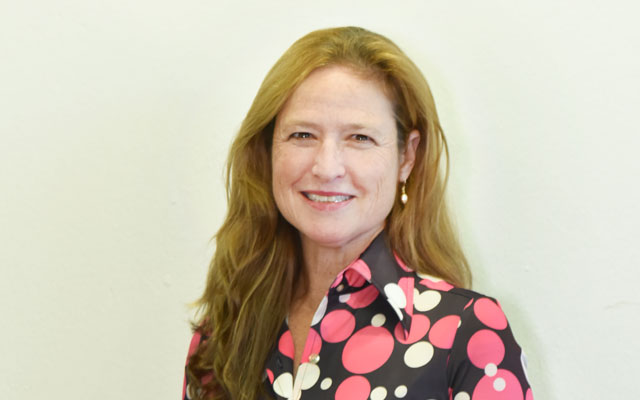
Nicholas Bonner, who set up Beijing-based Koryo Tours in 1993, said: “We are expecting inbound tourism into North Korea to increase by around 10 per cent a year for the next few years, in part because there is such interest in the destination, but also because the North Korean authorities do seem to be keen to bring more people in.”
Koryo Tours took 270 people into the North Korean capital in mid-April for the second-ever Pyongyang Marathon, where a record 650 foreign runners competed this year. North Korea has already indicated that it wants to increase this figure to 1,000 in 2016.
“The Pyongyang airport is able to cope at the moment, with its one luggage carousel and four immigration booths, but once you start getting regular flights coming in and several hundred people arriving all at once, they are going to need bigger and better facilities,” Bonner added.
Geoffrey Tudor, an analyst for Japan Aviation Management Research, told TTG Asia e-Dailythat while North Korea would benefit from the foreign currency brought in by the rising tourist arrivals, the airport needs better infrastructure to cope with the influx. “Revamping the existing facilities at Pyongyang airport would go some way to doing that, but a new terminal is a wise move.”
How different is a ‘premier beachfront resort brand’ from other beach resort brands?
The other big brands have beachfront resorts, mountain resorts, city hotels, etc, but Outrigger’s portfolio is exclusively beachfront properties. Secondly, we are in the premier category.
Why does it matter to be exclusively beachfront?
When travel consultants have a client who wants to go to a beach destination, Outrigger should be the number one on their list because of the clarity of the brand.
Outrigger started on the beach in Hawaii. Through the decades, we had a wide variety of products at different levels that was confusing for travel agencies for a long time. This was why we decided to clarify the brand and cleaned out the portfolio, so that our guests know what they are getting. And we’re raising that (positioning) as our strategic push throughout South-east Asia, the Pacific and the Indian Ocean.
So you’re not interested in city hotels?
We already do that in Hawaii with our Ohana brand and condominiums which are ‘by Outrigger’. It’s left to be seen if we will have a push there but right now, all our focus is on Outrigger.
We are interested in the real estate side as well, not just the hospitality side, so what we’re doing is buying, not just managing, as we have done in Mauritius, the Maldives and so on.
Our earlier experience – about 10 years ago when we first went to the Pacific with primarily management contracts – shows we do better when we own the property, as we have better control. We are a family-owned business and we are true and authentic to the culture of the place we operate in.
How did Outrigger start?
The company (Outrigger Enterprises Group) is 68 years in operation. My grandparents came to Hawaii from California in 1920s. My grandfather was an architect – that’s how we got into commercial buildings. Until WW2, there were only two hotels in Hawaii and they catered primarily to military personnel and VFRs. So my grandparents started building hotels to cater to (the leisure market) in the rest of America, Canada and Australia. He carried the bags and my grandmother cleaned the rooms.
I’m Gen-3 and I have children, so they are Gen-4, and grandchildren, Gen-5. In the family, we call each other G1, G2, G3, G4 and G5 (laughs).
Who runs the business today and who decides on the direction for the group?
G2 and G3 run the business now. G4 are in their 20s and 30s and are out getting their experience and education.
The family is the shareholder so it decides the final strategic direction. It’s a group decision. My dad, who has retired, is chairman-emeritus. My brother, who is a doctor, is chairman. My brother-in-law is president and CEO.
Why the need to go beyond Hawaii?
We had a big hurricane in 1982 and another in 1992, which made us realise we had all our assets in one place in Waikiki and we needed to diversify.
What’s on Outrigger’s bucket list of where it should be?
Key iconic beach locations – Seychelles, additional locations in Thailand, Bali in Indonesia and other Micronesian locations. We’d also love to be back in Palau and are looking at Okinawa, Japan; Sri Lanka and the Philippines.
Is it instilled in everyone in the family that hospitality is going to be their life?
Oh no, we never force anyone to be in the business. We encourage people to go find their passion. You’ll be successful wherever your passion is. Then, if there is something that fits with the family business, you can come back and see what’s available. We’re a big corporation now, not just hotels. If your passion is in law, there’s a whole legal department. IT? There’s a whole IT department. Get your education and experience first, then we probably have something for you back at the company.
Why did you choose corporate communications?
I ended up having a career in the media and was living on the mainland for a while, with my own TV and radio show. I decided to leave when my brother-in-law, the president and CEO, said, ‘I need you in corporate communications’.
What are the advantages and disadvantages of being family-owned?
Being privately owned allows us to have a long-term view, versus a public company where you have a shorter window to perform by. We can think 50 years out; we don’t need to report to other shareholders. The other key advantage is just being able to have control. You don’t have this when you have other investors.
The disadvantage is the potential to fall apart. Most family businesses do not survive past the second generation as each family often get bigger and it becomes harder to align them to the original goals of G1, as these dissipate from one generation to the next. So we work very hard to ensure things don’t fall apart. The family meets every quarter. We work hard to communicate with one another and to make sure everyone is still engaged in the business and understands its culture. We also bring outside facilitators to work with us on topics of ‘gray’ areas – for example, should everyone in the family be entitled to a job at the company?
Are they?
No, we created an employment policy for the family, to make sure that we are professional and that only those who are serious about it can come work for it.
So did you go through an interview?
Yes, I met with Sean Dee (the group’s executive vice president-chief marketing officer) and also the HR department. You’re not entitled to or are guaranteed a job. You’re not specially treated. I’m absolutely accountable and I go through reviews like everyone else.
You could get fired?
Yes I could (laughs), if I don’t perform, just like a regular job.
This article was first published in TTG Asia, April 10, 2015 issue, on page 8. To read more, please view our digital edition or click here to subscribe.
NOVOTEL Vines Resort in Swan Valley, Western Australia is running a campaign that gives out a discounted or free night’s stay to guests who have a certain amount of social capital online in a bid to boost its own online presence.
Guests who have a certain number of followers or likes on Instagram or Facebook will be entitled to participate in this deal that runs until March 31, 2016. For example, guests with 1,000 Instagram followers will receive a 10 per cent discount, and for 10,000 followers or more the room is free.
To qualify, guests need proof of their fan base upon booking and to post a minimum of two photos throughout their stay.
“We saw the impact the bloggers had with their social media throughout their stay and it made us think it was an area we could tap into a little better than we had been,” said Carly Odgers, marketing manager of Novotel Vines Resort.
Hosting a group of bloggers from Singapore in partnership with Scoot in February inspired Novotel Vines Resort to use social media as currency.
“It’s a more cost-effective way to market and use the social media influencers to gain traction for your property,” Odgers added.
Stockholm’s Nordic Light Hotel claims to be the world’s first hotel to have implemented this strategy. Over seven months ending December 2014, 194 guests traded their social media connections for a total of 423 free nights’ accommodation.
MELIÁ Hotels International has signed up two new hotels on Bali to take its total on the island to six, with both to operate under the Spanish chain’s Sol House beach brand.
The 132-room Sol House Kuta Bali opened only recently but will be adapted in the next few months to fit in with the brand’s concept of a casual setting for the young, lifestyle-conscious clientele.
Sol House Jimbaran, also on the southern tip, is a 178-room condominium-style complex that is scheduled to open in 2018.
Other markets the group is looking to open up in are Thailand, Myanmar, the Philippines and Lombok in Indonesia.
Now represented in five countries, the group’s Asian division says it expects to surpass one million stays this year with an average of 55 per cent of clients coming from domestic markets.
Vice president of Meliá Hotels International for Asia-Pacific, Bernardo Cabot, said the company’s long experience in traditional western vacation markets will help in developing the Sol House resort brand in Asia.“For several decades our company has led the vacational sector in much of the Mediterranean and the Caribbean.
“So we are in the best of conditions to expand into the main holiday destinations of Asia-Pacific and satisfy the expectations of modern travellers, offering innovative experiences that revolutionise the traditional sun-and-beach concept,” he said.
KERALA’s newly unveiled tourism campaign for 2015 could backfire as its alcohol ban kicks in, with the conference and convention sector in particular expected to take a hit.
Since April 1, only 24 five-star hotels in Kerala have been licensed to serve India-made foreign liquor.
This spells trouble for Kerala Tourism’s Rs150 million (US$2.4 million) Visit Kerala 2015initiative, which was rolled out on April 15.
“We will focus on products that are unique to Kerala like Ayurveda and spice route. We will foray into new markets like China by participating in trade fairs and roadshows and organising fam tours. Kerala will be promoted as a major wedding and MICE destination through online campaigns,” said G Kamala Vardhana Rao, secretary, Kerala Tourism.
However, Kunju Michael, managing director of Hotel Maharani in Calicut, lamented that the alcohol ban will drive tourists to other destinations instead.
“The ban will have a direct effect on services like conferences and conventions. I presume that every year we’ll see a 10 per cent drop in the business,” he added.
Similarly, Abraham George, chairman and managing director, Intersight Holidays and president, Kerala Travel Mart, believed that the ban would have a negative effect on MICE and convention businesses.
“We are discussing with the government to amend the rules and allow us special licences for conferences and conventions,” he added.
Nevertheless, Kerala Tourism will continue venturing into new markets in China and Sri Lanka through trade fairs, roadshows and fam tours, court upcoming markets like the US, and continue aggressive campaigns in traditional markets such as the UK, France and Germany.
A focused Ayurveda and monsoon campaign will be conducted in the Middle East where 90 per cent of the Indian diaspora is from Kerala.


 Where are your serviced residence development hotspots in Asia-Pacific?
 Where are your serviced residence development hotspots in Asia-Pacific?
 Where are your serviced residence development hotspots in Asia-Pacific?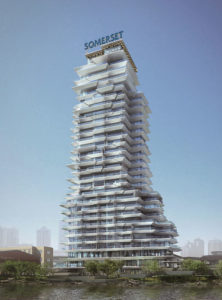
 Where are your serviced residence development hotspots in Asia-Pacific?
  Where are your serviced residence development hotspots in Malaysia?
 Where are your serviced residence development hotspots in Indonesia?