TTG Asia
Asia/Singapore Tuesday, 10th March 2026
Page 2042

Osaka to become Scoot’s next Japanese destination

0

SCOOT is set to start a new service from Singapore to Osaka from July 8.

The LCC will connect Osaka and Singapore six times weekly, with three via Bangkok and three via Kaohsiung in Taiwan.

The Bangkok-Don Mueang route is scheduled to run on Wednesdays, Fridays and Sundays, while travellers bound for Osaka via Kaohsiung will need to travel on Tuesdays, Thursdays or Saturdays.

Campbell Wilson, CEO of Scoot, commented: “Osaka has long been on our radar, and we’re excited to add it to our network.”

“Besides Osaka’s many attractions, such as Dotonbori food district, its castle and Universal Studios Japan, it is also the gateway to the stunning historic capital of Kyoto with its many temples and sights. When combined with our existing service to Tokyo, Scoot’s guests can now complete the Golden Triangle of Tokyo, Kyoto and Osaka without backtracking.”

To commemorate the launch of this new route, Scoot is offering one-way Economy Fly fares from Singapore to Osaka starting at S$99 (US$74). On sale from now until May 24, fares exclude taxes and surcharges and are valid for travel between July 8 and October 25.

Orchard Hotel Singapore names new GM

0

RICHARD Ong has been picked to lead Orchard Hotel Singapore as its new general manager, and will take charge of the hotel’s business operations in this role.

Bringing over 30 years of local and international hospitality experience to the job, Ong joined Millennium & Copthorne last year as general manager, operations, Asia.

The Singapore-born hospitality veteran has held several key leadership roles in Singapore, the US, Cambodia, Australia, China and Japan.

New CEO for Sunway International Hotels & Resorts

0

SUNWAY International Hotels & Resorts has appointed Albert Cheong as CEO.

Cheong will oversee and manage all Sunway hotels, both local and overseas, while continuing to hold the position of group general manager for Sunway Resort Hotel & Spa.

Prior to joining the company in 2014, the 30-year hospitality veteran was area general manager for Landmark Lancaster Hotel Group.

Malaysian travel consultants lament sorry state of rate parity

0

WHILE local tour operators have long complained that hotels offer them contract rates that are higher or similar to the dynamic rates offered to OTAs, the gap has widened in recent months to place traditional travel consultants at the losing end.

Arokia Das, senior manager at Luxury Tours Malaysia, shared: “A year ago, OTAs were offered rooms without breakfast at slightly higher rates. This year, they get rooms with breakfast at rates that are lower than what we get.”

The average contract rate for a four-star hotel ranges from RM220 (US$61) to RM250 for local travel consultants, but OTAs get rates as low as RM190, including breakfast, he said. “This is happening because hotels need business and there is an oversupply of rooms.”

As a result, “local players lose out to OTAs who make money and are not even based here”, he opined.

Agreeing, Ally Bhoonee, executive director of World Avenues, said this is unfair to travel consultants who have invested in destination promotion. “It also makes the destination look ‘desperate’ to overseas outbound tour operators, who will take full advantage and squeeze the local travel consultants for further discounts.

“The industry – Malaysian Association of Hotels (MAH), Malaysian Association of Tour & Travel Agents and the Ministry of Tourism and Culture – must come together to find a solution to this issue,” he said.

However, MAH president, Cheah Swee Hee, told TTG Asia e-Daily the association does not regulate rates as “This is a free market”.

Asked whether there is a solution to rate parity, he said: “If travel consultants want good rates they must also be able to commit a certain number of room nights to the hotel.”

Meanwhile, Alex Lee, CEO of Ping Anchorage Travel & Tours, has found a way out of competing against OTAs by diversifying into the hospitality industry with the 22-room boutique hotel, Terrapuri Heritage Village, in Penarik, Terengganu.

He said: “We sell rooms to OTAs and traditional travel consultants, and we have also diversified to offer services to small inbound MICE and bespoke programmes to high-end clients.”

South-east Asia the centerpiece of Mövenpick’s Asian growth

0

MÖVENPICK Hotels & Resorts will open seven hotels in Asia over the next three years as part of the company’s plan to focus on South-east Asia as a key growth area.

This will see the Swiss hotelier expand its footprint from eight to 15 properties, six of which will be in Thailand.

Jens Reichert, the management company’s vice president of development, said South-east Asia will become an increasingly important market for Mövenpick, which has another 10 properties in the regional pipeline.

“We believe there’s a lot of opportunity within South-east Asia’s existing destinations; it has good ingredients for hospitality and the right kind of entrepreneurs that we can work with (as investors in hotels).”

The company will open seven properties across the region in the next three years: two in Thailand, two in Malaysia and one each in China, Indonesia and Vietnam.

Even though markets such as Bangkok are fiercely competitive and have some of the cheapest five-star hotels in the region, Reichert said Mövenpick believes there is still ample room to build new business within the upscale market.

Beyond South-east Asia, Mövenpick recognises China’s strong development potential but has no plans to significantly expand its footprint there.

Beijing’s current crackdown on graft and profligate spending among public officials has resulted in a notable reduction in the number of luxury hotel licences issued. Said Reichert: “We will only go into China when (a project) ticks all the boxes.”

That said, the hotelier will target Chinese tourists travelling within the region.

“There are about 100 million middle-class Chinese who travel outside of the country each year. South-east Asia is a key destination for them. (While they initially may travel on group tours), by their second or third trip a large chunk of those 100 million tourists will stay at an upscale hotel,” opined Reichert.

South Korea welcomes first Holiday Inn Express

0

INTERCONTINENTAL Hotels Group has opened Holiday Inn Express Seoul Euljiro, South Korea’s first Holiday Inn Express hotel.

Located in the heart of Seoul, the 224-room hotel is just a minute’s walk from the Euljiro 3-ga subway station and an hour from Incheon International Airport.

Holiday Inn Express Seoul Euljiro offers a choice of twin- and double-bed rooms, free on-site parking, Wi-Fi and breakfast.

Travellers can visit the nearby Bukchon Hanok Village, a preserved traditional village, the famous N Seoul Tower atop Namsan Mountain, or shop at Dongdaemun Fashion Town, a designated tourist zone.

The hotel is promoting an opening rate of 137,500 won (US$126) per night for bookings made until August 31.

Airbus launches 2 new models of jetliners

0

dn200515_airbus-acj320neo_
The Airbus ACJ320neo. Credit: Airbus

BOASTING improvements in cabin comfort and fuel capacity, Airbus’ two new jetliners took off yesterday.

The Airbus ACJ319neo and ACJ320neo, which Airbus promises will offer customers a better corporate jet solution, seat eight and 25 passengers respectively.

Both models are fitted with CFM International LEAP-1A or Pratt & Whitney’s PW1100G engines that have larger diameters than those on rival aircraft, resulting in better aerodynamic flows, advanced materials and higher pressure-ratios, which cuts fuel consumption.

Cabin altitude, which is typically maintained at the breathable atmosphere of 8,000ft in-cabin, is also lower on the Airbus ACJneo family. At under 6,400ft, this offers passengers an atmosphere that is more similar to being on the ground.

The ACJ319neo comes with up to five additional centre tanks that will allow baggage storage underfloor and on board.

Sister model ACJ320neo on the other hand is equipped with up to four additional centre tanks in the cargo hold, two more than offered. It is also 16 per cent more fuel efficient than its current incarnation, the ACJ320ceo.

Onyx signs two new properties in latest China expansion

0

THAI hotel giant Onyx Hospitality Group has announced two new management contracts for properties in China, which will operate under the Shama and Ozo brands.

Located near Jing’an, one of Shanghai’s CBDs, Shama Caojiadu Shanghai will feature 168 units, consisting of studio, one-, two-, and three-bedroom apartments.

Facilities include a breakfast area, fitness centre, lounge area and kids’ area. The serviced apartment is the first co-operation with Shanghai Bao Shun Investment Company.

As part of the ‘Gold Coast’ beachfront project, Ozo Shishi Xiamen will offer 213 rooms, an all-day dining outlet with an integrated pool bar, fitness centre and meeting room. The hotel is a management agreement signed with Shishi Minnan Golden Coast Resort Company.

Both properties are scheduled to open in 2017.

The latest announcement builds on Onyx’s expansion plans in the China, where the company is currently targeting key cities.

Other Onyx properties in the pipeline for China include Amari Huidong Guangdong, Shama Beijing, Shama Chengdu and Shama Guangzhou, as well as Amari Dali Yunnan.

Ancient village depicting life in Myanmar to come up in Amarapura

0

A MANDALAY-BASED company has announced that it plans to construct an ancient village depicting life from many centuries ago close to one of Myanmar’s most popular tourist sites.

Taung Tha Man Thit Sar, a Mandalay-based company which was registered last year, said that it will construct the village on a 16.2ha site close to U Bein Bridge, in Amarapura on the outskirts of Mandalay.

The bridge, which was built in the middle of the 19th century, is believed to be the longest and oldest teak bridge in the world.

According to a local media reports, the village will replicate buildings from when Amarapura was the capital of the Konbaung Dynasty, the final dynasty in Myanmar’s royal lineage, and will take three years to complete.

Speaking at a press conference, Soe Myat Thu, executive consultant of Taung Tha Man Thit Sar, said that the company would ensure that the project, which is to be built on former farmland, will abide by guidelines set by the Ministry of Culture.

“The highest building will be two storeys and will not affect views of the lake,” he said, while also maintaining that no trees will be felled during the project’s construction.

Myanmar already has some villages depicting life in the country, for example the National Races Village on the outskirts of Yangon.

The rising tide in Asian cruising

0

New and bigger ports are in the works in East Asia, while the rising middle class in South-east Asia is driving the region’s booming cruise market
22may_ports-of-call4

South-east Asia’s fast-rising middle class, which has fuelled a boom in budget air travel, is likely to lift the tide for the region’s fledgling cruise industry too.

The most popular routes among South-east Asian cruise travellers, especially among first-time cruisers and travellers with small budgets or limited time, are regional routes plying around Singapore, Malaysia, Thailand and Vietnam.

Tina Cortez, president, TravelPeople Philippines,said: “Asia is really the sweet spot now. A lot of tonnage has been diverted to Asia and most of the cruise brands are now here. There are also more choices of ships and programmes to choose from.”

Wally Cervantes, vice president and general manager of Manila-based Arpan Air, attributes the “surge in demand for Asian cruises” to the affordability of travel driven in part by LCCs, which help to defray costs for cruising too.

Cooper Huang, CEO of Malaysia’s Harmony Tours & Travel, said: “It is easier to sell Asian cruises to the masses because it is more affordable. Malaysians find the food on board Asian cruises more palatable compared to European food.”

Singapore is a popular homeport for first-time cruise travellers from Malaysia, as the city-state’s proximity makes travel affordable. Said Lim Chee Tong, managing director of Kuala Lumpur-based Jebsen Travel & Tours Services: “You can drive, take a bus or fly on a budget airline. It won’t cost as much as taking a flight to North Asia or to Europe to take a cruise.”

Furthermore, the affordability of regional cruises have ensured its popularity among Asian families too.

Alicia Seah, director of marketing communications at Dynasty Travel Singapore, notes that the family market makes up the majority of the bookings, especially during the year-end holiday season. “Hence homeport sailings are more popular, and Royal Caribbean, Princess Cruises and Costa Cruises are own main cruisers for the year end,” she added.

Cruising interest among the Indonesian outbound market has grown significantly in the last couple of years, thanks to the aggressive promotion of the cruise liners and the country’s burgeoning middle class.

While classic shorthaul itineraries like Singapore-Port Klang-Phuket may not be new destinations, it’s the experience on board cruise ships that is novel for Indonesians and attracts them, observed Dharmawan Rahardja, managing director of Genta Tours Jakarta.

Japan, South Korea top for East Asia
Like its South-east Asian counterparts, intra-region cruises are favoured by cruise travellers in East Asia, with industry watchers keeping a close eye on the lucrative and thriving outbound market of China.

Along with Japan’s recent lifting of visa regulations for Chinese tourists on board selected cruise ships that homeport in China, short-term cruise products calling on both Japan and South Korea ports are the most popular in the China market.

“This year’s keyword search volume for Japan/South Korea routes has increased 300 per cent compared to last year,” said Jenna Qian, spokesperson of Qunar.com, which has nearly 1,000 agencies selling cruise products.

According to Qian, South Korea’s Jeju, Seoul and Busan, as well as Japan’s Fukuoka and Nagasaki, are the most preferred ports of call for the “mass” cruise itineraries in China, which typically last four or five nights to accommodate most customers’ limited holiday entitlement.

“Four-night products count for 80 per cent of our sales for Shanghai as homeport,” said Zhang Ji, cruise product director at Tuniu.com. “Shanghai-Jeju-Fukuoka-Shanghai is the best seller at the moment.”

Many cruise lines have changed their South-Korea-only routes with Japanese ports to attract more guests, Zhang added.
Meanwhile, Taiwan, Okinawa and Kyushu are listed among Hong Kongers’ favourite cruise destinations, shared Jeff Bent, managing director, Worldwide Cruise Terminals. “I believe the local source market is starting with shorter sailings close to home, and will soon venture into longer cruises in medium to longhaul destinations, after they have taken to cruising.”

Japan, in particular, is tipped to be a hot cruising destination this year given the depreciation of the yen.

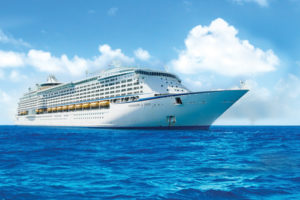
Said Westminster Travel, cruise general manager, Edmond Tsu: “For the very first time, a liner (Royal Caribbean’s Voyager of the Seas) offers a Japan/Jeju journey from Hong Kong, which will certainly draw some longhaul cruise passengers to give this route a try. It’s also good news for elderly passengers, especially those on wheelchairs, who want to visit Japan without going through the hassles of air travel.”

Wing On Travel CEO Lanny Leung notes that fly-cruise sailings are still not mainstream and that the mass market prefers journeys of under 10 days in South-east and North Asia.

Likewise, fly-cruise holidays have yet to pick up momentum in Japan. “The core of our customers are older people and they like to join a Japanese cruise ship where they can enjoy Japanese food, the same language and the omotenashi service we find in Japan,” Minehiro Toyoyama, manager of public relations, sales planning division, NYK Cruises, told TTG Asia.

Mariko Kobayashi, manager of PR and marketing for Carnival Japan, added: “Cruise passengers are staying closer to home, with cruises around Japan and short trips the most popular.”

Longhaul cruising retains allure
As much as shorthaul sailing has been making inroads in Asia’s cruise market, longhaul destinations remain the most sought-after for experienced cruise travellers, with Alaska and the Mediterranean high on the cruise bucket list, observed outbound agencies across the region.

“We still have a big percentage of the market cruising longhaul,” said Cervantes.

Seah said: “Alaska appeals to the affluent and well-heeled customers, comprising mainly elderly couples who have the money as well as time to travel out in sea.”

Lim points out that longhaul cruises to European destinations are frequented by the Malaysian upper-middle segment who would usually extend their stay with a cruise. “Their primary reason for visiting Europe may be to visit their children who are studying there, or they have business or own properties in Europe,” he said.

Interest for Greece’s Santorini, Delos and Mykonos are on the rise for Indonesians this year, remarked Johnny Judianto, cruise consultant of Cruise Centre in Indonesia.

On the other hand, the Black Sea is seeing a dip in cruising demand as many cruise lines in Europe have stopped making Sochi and Ukraine – main highlights of this region – as ports of call due to the political unrest there, according to Lim.

Also selling less is the Caribbean, Florida, Bahamas and Mexico, as most travellers who have been to Philippine beaches think local beaches are more beautiful, said Noriel Veslino, sales and marketing representative at Cruise Professionals.

Additional reporting from Prudence Lui, Li Xu, S Puvaneswary, Paige Lee Pei Qi, Mimi Hudoyo and Rosa Ocampo

This article was first published in TTG Asia, May 15, 2015 issue, on page 16. To read more, please view our digital edition or click here to subscribe.