TTG Asia
Asia/Singapore Friday, 13th March 2026
Page 2000

Closing the loopholes

0

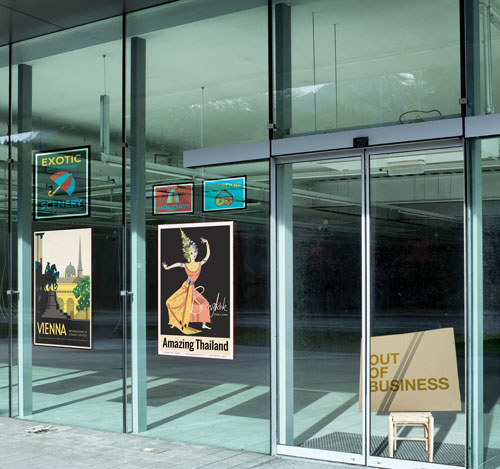
The recent spate of abrupt travel agency closures in Singapore has affected many travellers and given the industry a bad name. Paige Lee Pei Qi examines why these businesses fail and what should be done to address the root of the problem
07-aug-loopholes-main

As more travellers turn to the Internet to plan their own trips and the proliferation of OTAs continue to pose a strong threat, the heat has proven too much for a growing number of players in the traditional travel agency sector.

Managing the bottom line of businesses while keeping pace with the dynamism of the rapidly evolving customer needs is a constant challenge in a mature travel market like Singapore, opined Jane Chang, head of marketing communications, Chan Brothers Travel.

Chang said: “We are constantly at the mercy of health epidemics, natural calamities and political unrest, among a whole host of possible travel disruptions that can wipe out months of sales collection.”

CTC vice president of marketing and PR, Sylvia Tan, commented: “While there is still demand for traditional travel agencies from the more mature age group, there is a lot of competition today with more choices and options available for travellers via different distribution platforms with travel offerings directly from suppliers to consumers.”

A total of 86 travel agencies have shuttered in the first five months of 2015 according to the Singapore Tourism Board (STB), and this number looks set to exceed the 114 that ceased operations last year. There are currently 1,195 travel agencies in operation in Singapore as of end-May this year.

Major player Asia-Euro Holidays surprised the trade and consumers alike with its sudden closure in May, leaving hundreds of customers in the lurch. Likewise, Five Stars Tours, another well-known travel agency, went bankrupt in January last year and affected thousands of travellers.

NATAS spokesman Gregory Tan attribute the high operation costs, a sluggish economic outlook and poor business planning or management as some of the factors driving agencies to fold up.

Michael Chiam, senior tourism lecturer at Ngee Ann Polytechnic, agreed: “Agencies who are prone to failure include those small agencies with limited capital and those who compete purely based on price. Competition is becoming more intense and that may lead to price cutting and low margins for the agencies.”

These abrupt closures have resulted in industry experts rallying for tighter regulations on travel consultancies to prevent more of such shutdowns that cast the  industry in poor light.

According to STB’s director, travel agents and tourist guides, Ong Ling Lee,  all travel consultants operating in Singapore are licensed by the board under the Travel Agent (TA) Act & related regulations.

“The intent of the legislation is to weed out fly-by-night TAs and provide safeguards for the public against malpractices,” explained Ong.

“When applying for, renewing their licences or at all times during their operation, TAs have to fulfil certain requirements, such as maintaining a minimum of S$100,000 (US$74,000) in paid-up capital and net worth, or minimally S$100,000 cash for sole proprietors or partnerships.”

The barrier to entry is not enough though, remarked Alicia Seah, director of marketing communications at Dynasty Travel. She said: “We can increase the paid-up capital to at least S$500,000 or even up to $$1 million so that the owners will be more committed and not set up a “pop-up” store.

“This will show that these TAs are making a serious commitment and they have the capacity to last in the industry.”

Seah added that STB, in addition to its annual audits of TA licensees, should perform stringent checks on the background and qualifications of owners or directors before issuance of the TA licence.

Likewise, Chan Brother Travel’s Chang proposed a minimum capital amount of S$1 million as well as stricter financial audits to “flush out those without financial strength or with financial woes to continue their businesses”.

Ngee Ann Polytechnic’s Chiam suggested for STB to also assess applicants based on their prior experience and business model – on top of the capital amount – before issuing them with a TA licence, although he added that it is not STB’s  duty to monitor the travel agencies’ operational cash flow to ensure that they will not go into the red.

To protect travellers in the meantime, all licensed travel consultants in Singapore must now ask outbound leisure customers if they would like to purchase travel insurance covering travel consultant insolvency.

This new licensing condition, which has been introduced since July 15, requires travel consultants to offer their customers travel insurance against the company’s insolvency and to record their customers’ final decision.

It is applicable on a per person basis whenever a consumer makes a deposit or payment of S$500 or above, or purchases a travel package costing S$1,000 or more.

According to STB, the new rule “serves to educate consumers of the measures they can take to protect their interests when they make travel bookings”, and was launched following STB’s discussions with the trade assessing consumer protection measures over the past year.

STB, assistant chief executive, Yap Chin Siang, said: “With the implementation of the new licensing condition, consumers will now be better informed on steps that they can take to protect themselves against unforeseen circumstances including travel consultant insolvency.”

Yap said STB will assist industry stakeholders with implementation of the new condition and will “layer on with continued consumer education efforts”.

However, Dynasty Travel’s Seah said the insurance does not provide 100 per cent coverage hence more has to be done to address the “root of the problem” and the financial health of travel consultants.

In response to whether new measures will be rolled out to protect outbound travellers, STB’s Ong said: “As the tourism landscape is constantly evolving, STB keeps a close watch on industry trends and developments. We are already engaging our industry stakeholders on this and will share more details when ready.”

This article was first published in TTG Asia, August 7, 2015 issue, on page 6. To read more, please view our digital edition or click here to subscribe.
Latam programme lets Indian trade gain insights on South America

0

LATAM Airlines Group, the only Latin American airline to promote itself in the Indian market, will launch the LAN & TAM South America Specialist Advanced programme this week to educate travel consultants about the continent.

Comprising four different modules, the first module features Peru and Chile, Brazil in the second module, and Colombia and Ecuador in the third module. The fourth module will highlight technical information about Latam Airlines Group.

Nayan Srivastava, senior sales and marketing manager, India of Latam Airlines Group, stated: “The through fare arrangements that Latam has with six airlines connecting Latin America via hubs in Europe like Milan, Madrid, Frankfurt, London and Paris help us to cater to the Indian market. So far we have certified almost 100 travel (consultants) as Latam specialists.”

Latam has through fare agreements in India with Air India, Lufthansa, Virgin Atlantic, British Airways, Jet Airways and Air France.

Luis M Cabello, economic and commercial consular at the Embassy of Peru in India, said: “Last year, over 5,000 Indians visited Peru and we are expecting over 20 per cent growth year-on-year. The Peruvian Embassy will hold its own workshop from September to November covering Mumbai, Bengaluru and Delhi to promote tourism.”

Starwood’s first ski resort in Japan makes debut in Rusutsu region

0

STARWOOD Hotels & Resorts Worldwide will launch its first ski property in Japan when The Westin Rusutsu Resort opens in Hokkaido’s Rusutsu region in December 2015.

Located in the northern-most region of Japan, the resort will serve as one of the country’s annual winter retreats due to its close proximity to a number of mountain ranges, slopes and ski operations.

The Westin Rusutsu Resort will feature 210 guest rooms, including suites that can contain up to seven beds. Amenities such as a hot spring, sauna, outdoor baths, tennis courts and a gym are also available.

There will also be three dining venues offering a variety of food options, plus more than 110m2 of meeting room space for corporate functions.

A conversion property owned by Kamori Kanko, the resort is located less than a 90-minute drive from Chitose International Airport, while Hokkaido is connected to Honshu by the underwater Seikan Tunnel railway.

Dusit deepens Philippine presence with Cebu stake

0

DUSIT International will be staking out a wider presence in Asia with its plans to expand to the Philippine island of Cebu by 2018.

Representatives from Dusit International and Cebu-based developer Grand Land, Inc (GLI) signed an agreement to develop a Dusit Princess hotel in Cebu during a recent ceremony held at the City Sports Club in Cebu Business Park.

The 295-key property, located north of Metro Cebu in the North Reclamation area, will be part of a mixed-use development containing retails outlets, offices and apartments. Facilities within the hotel include restaurants, meeting rooms, a gym and swimming pools.

Ryan Bernard Go, president of GLI, expressed confidence that the construction of the project will begin this year.

Go also revealed in a press statement that the firm is venturing into the hotel-apartment business because it sees the need for Cebu tourism to have more branded hotels.

“We want to expand the tourism industry so we hope to develop hotels and resorts, north or south of Cebu. The partnership with Dusit International may extend to more GLI hotel projects. For this project, there will be units in the integrated development to be sold to individual investors while office spaces will be made available for purchase,” Go disclosed.

New GM picked for first Movenpick hotel in Bangkok

0

MOVENPICK Hotels & Resorts has announced the appointment of Simon Rindlisbacher as general manager of its first Bangkok property, Movenpick Hotel Sukhumvit 15 Bangkok.

Prior to his appointment, Rindlisbacher, a Swiss national, was the general manager of Ramada Hotel and Suites Bangkok for three years.

new-gm-picked-for-first-movenpick-hotel-in-bangkok
Credit: Movenpick Hotels & Resorts

His career also included stints as hotel manager of Rembrandt Hotel & Towers Bangkok; executive assistant manager at Amari Watergate Hotel and Spa, Bangkok; and Amari Emerald Cove Resort and Spa, Koh Chang.

HK Express offers new flight to Jeju as MERS scare wanes

0

IN VIEW of last week’s official announcement that the South Korea MERS outbreak has ended, HK Express is launching a new thrice-weekly flight to Jeju beginning September 1, 2015.

To further encourage Hong Kong citizens to revisit South Korea, the LCC is also offering 20 per cent off airfares for travellers flying to either Seoul or Busan for online bookings made from August 4 to 10, with the travel period valid until June 30, 2016.

The promo code GOKR20 will entitle users to the discount.

Aligning with government advice to limit leisure travel to South Korea, HK Express had previously reduced the number of weekly flights from Hong Kong from 28 to 17, but is now ramping up flights again.

Sino Hotels now available on Far East Hospitality’s online platforms

0

SINO Group of Hotels has formed an alliance with Far East Hospitality, allowing travellers to make reservations with any of their hotels in Hong Kong, Singapore and Kuala Lumpur through Far East’s online booking platforms.

“This initiative is part of our ongoing efforts to enhance value for guests so that visitors and onward travellers from Singapore or Hong Kong can, from a single location, easily find accommodation at Far East Hospitality or Sino Group of Hotels at the most attractive rates,” said Arthur Kong, CEO of Far East Hospitality.

Together, the two brands now offer travellers a diverse range of accommodations such as luxury boutique hotels, heritage hotels, serviced residences and beach resorts from a single site.

Kevin Chuc, associate director and deputy group general manager of Sino Group of Hotels, said: “With the current traffic and buoyant tourism in key Asian destinations, this alliance is a customer-centric move, enabling us to serve our travellers better.”

Far East Hospitality has also enhanced its website to be mobile-friendly and languages such as Mandarin, Bahasa Indonesia and Japanese have been added to cater to key markets.

Garuda posts record earnings as cost-cutting drive bears fruit

0

GARUDA Indonesia has recorded a US$29.3 million net profit in 1H2015, climbing 114.5 per cent from a negative of US$201.3 million during the same period last year.

The Indonesian national carrier has attributed its performance growth amid the economic downturn to various cost-cutting initiatives.

The airline also succeeded in increasing its operating revenue by 4.7 per cent from US$1.76 billion compared with US$1.84 billion the previous year, while operating expenses decreased by 11.6 per cent from US$1.99 billion to US$1.76 billion.

In a press statement, Garuda also revealed that it now commands 44 per cent of domestic market share, an increase from 37 per cent last year. International market share has risen to 28 per cent from 21 per cent last year.

Garuda (including Citilink) has transported 15.9 million passengers, up 19.5 per cent from a total of 13.3 million passengers last year.

New DOSM for The Discovery Leisure Company

0

THE Discovery Leisure Company has named Charley Magabo director of sales and marketing for its two luxury resorts, Discovery Shores Boracay and Club Paradise Palawan.

Magabo joins the Filipino hospitality group after a decade of marketing luxury resorts and cultivating global and wholesale MICE markets for Shangri-La Hotels and Resorts and Shangri-La’s Mactan Resort & Spa in Cebu.

new-dosm-for-the-discovery-leisure-company
Credit: The Discovery Leisure Company

Air France terminates KL-Paris route due to low yields

0

AIR France will suspend its four-times weekly flights between Kuala Lumpur and Paris from October 26, just 30 months after launching the route in April 2013.

Explaining the reason behind the suspension, Aude-Lise Combier, country manager for Air France-KLM in Malaysia, said: “While there is good load factor, the yield is low and we don’t see a short term improvement in yield.”

The carrier’s network and connections will still allow passengers from Kuala Lumpur to continue to fly daily from Kuala Lumpur to Paris via Singapore or Amsterdam from October 26 and the Air France–KLM office in Kuala Lumpur will continue to operate as usual.

Abdul Rahman Mohamed, deputy general manager, channel management of Mayflower Acme Tours, said: “With only Malaysia Airlines flying on the Kuala Lumpur–Paris-Charles de Gaulle route from October 26, I foresee a shortage in capacity to Paris during the peak outbound travel period during the year-end school holidays.

“Passengers from Johor will not mind taking an Air France flight from Singapore but for those in Kuala Lumpur and the city outskirts, they will still prefer a direct connection.”