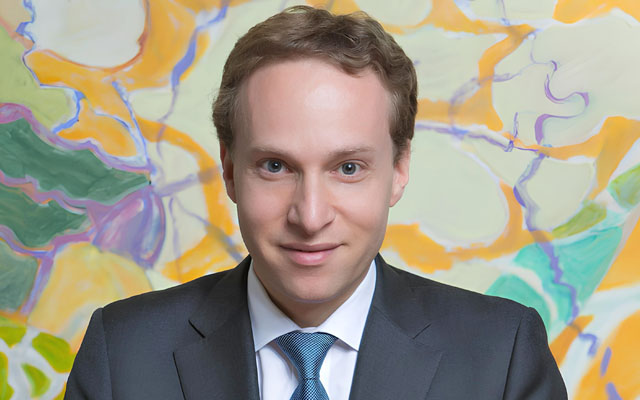
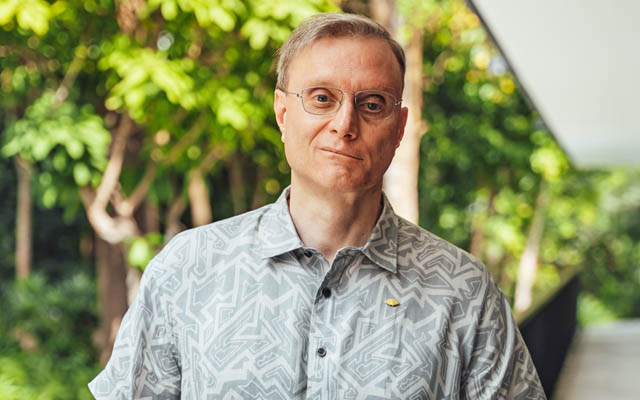
Etienne Dalançon has been named general manager of the upcoming Waldorf Astoria Kuala Lumpur, set to open in late 2026.
He brings over 20 years of luxury hospitality experience and most recently served as general manager of Waldorf Astoria Maldives Ithaafushi. His career spans senior leadership roles across Asia and Europe, with a strong focus on service excellence and operational leadership.
Indonesia and South Africa have agreed to strengthen synergy across a range of strategic tourism sectors, marking a new chapter in both nations’ commitment to building a resilient, inclusive and sustainable tourism industry.
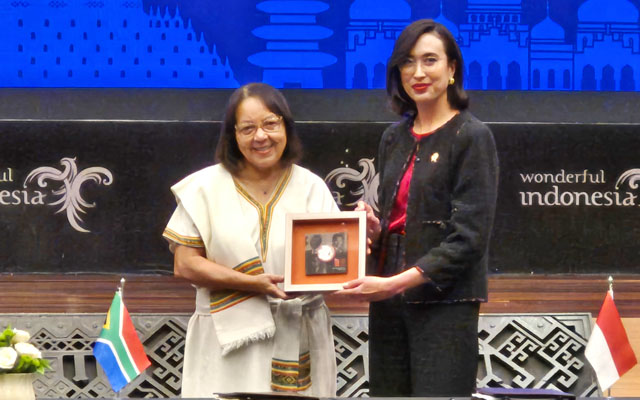
The collaboration was formalised with the signing of a memorandum of understanding (MoU) between Indonesian minister of tourism Widiyanti Putri Wardhana and South African minister of tourism Patricia de Lille in Jakarta, as part of de Lille’s official visit to South-east Asia.
Indonesia and South Africa have signed an MoU to strengthen cooperation across tourism, connectivity and sustainability
Widiyanti said the partnership builds on a 2015 bilateral agreement, which remains the foundation of the two nations’ diplomatic relations.
“This MoU reflects a shared commitment to strengthening tourism cooperation as a driver for economic growth, cultural exchange, and deepened mutual understanding between the people of our two nations,” Widiyanti said.
The partnership’s first concrete priority is enhancing accessibility, involving high-level coordination between the Ministry of Transportation and the private sector.
It also revives the spirit of the 1955 Asian-African Conference held in Bandung, which underscored the importance of solidarity, mutual respect and collaboration among Global South nations. The strengthened bilateral relationship is seen as a tangible continuation of that legacy.
Martini Mohamad Paham, deputy for tourism resources and institutions at the Ministry of Tourism, said the ministry will coordinate with InJourney, the holding company for state-owned enterprises in aviation and tourism, to improve connectivity. This effort also extends to visa policy, following a statement by Indonesia’s vice president Gibran Rakabuming Raka during his visit to South Africa last year.
“The vice president stated that Indonesia would provide visa-free entry, which is currently still in process; at present it remains Visa on Arrival (VoA),” Martini noted.
Beyond logistics, the collaboration places a strong emphasis on sustainability and education. Indonesia aims to learn from South Africa’s expertise in managing national parks and its successful approach to educating both local communities and visitors on environmental “dos and don’ts”. On the education front, Indonesia’s six tourism polytechnics will participate in exchange programmes.
“We will learn from one another regarding hospitality and tourism development, as well as MICE,” Martini said.
The two countries also plan to advance their digital and promotional strategies, with South Africa expressing strong interest in participating in the Bali & Beyond Travel Fair in Bali in June, following its participation at the ASTINDO Travel Fair in Jakarta last week.
Planned initiatives include joint familiarisation trips, digital marketing collaborations and exhibitions to increase visibility in both markets. While South Africa is not yet a top-tier destination for Indonesian travellers, Martini highlighted its strategic importance as a gateway to the African continent.
“Both countries believe that the signing of this MoU will strengthen bilateral tourism cooperation while opening opportunities for a more inclusive, sustainable, and resilient sector,” Widiyanti added.
De Lille welcomed the partnership, citing the strong historical ties between the two nations.
“The signing of this memorandum of understanding will further deepen the relationship between our two countries,” she said.
During the occasion, de Lille announced that South Africa is reforming its visa system, with Indonesian citizens now able to apply for visas online via digital devices, with processing times of less than 24 hours. She also invited Indonesian travel agents and tour operators to participate in familiarisation trips across South Africa.
She added that South Africa is committed to developing halal tourism and digital-based tourism, working with the Muslim Judicial Council and relevant authorities to ensure Muslim travellers feel safe and comfortable during their visit.
Data shows that 30,000 South African tourists visited Indonesia in 2025, while Indonesian arrivals in South Africa reached approximately 3,000.
“As part of this collaboration, we aim to increase tourist numbers in both countries. Indonesians will always receive a warm welcome in South Africa,” de Lille said.
Buoyed by a 20 per cent growth in Indian tourist arrivals last year, the Taiwan Tourism Administration is now looking to attract a greater number of leisure travellers to the island. At present, the corporate and MICE segments are driving travel demand from India to Taiwan.
To rebalance this mix, the Taiwan Tourism Administration is strengthening its engagement with the travel trade to grow leisure travel from the Indian market.
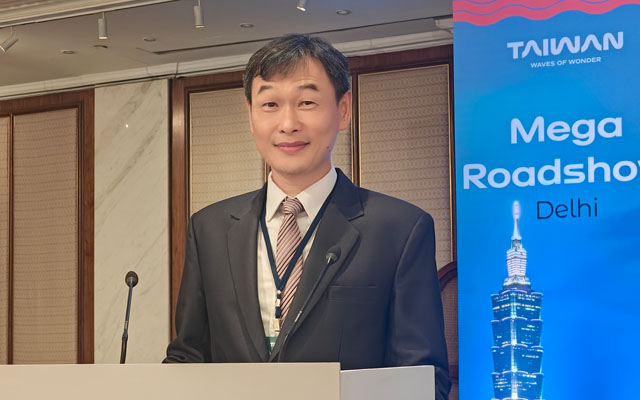
Shih: we are now focusing on leisure tourism through our travel trade engagements; photo by Rohit Kaul
“Incentive travel demand from India is growing for us. Last year we welcomed an 800 pax strong Indian incentive group of Asian Paints. We are now focusing on leisure tourism through our travel trade engagements,” said Paul Shih, director, Taiwan Tourism Administration, Singapore Office. Shih was speaking to TTG Asia on the sidelines of the Taiwan mega roadshow in New Delhi, which took place on February 3.
The NTO also participated in OTM 2026 from February 5 to 7 and has planned pan-India roadshows later this year across key markets such as Kolkata, Pune and Chennai. It is also working to showcase destinations and experiences beyond Taipei to Indian travellers.
“We have much more than Taipei to offer. From mountains and forests to coastlines and temples, Taiwan presents a diverse range of tourism products and experiences. Activities such as biking and diving are also available. Over the past two years, we have hosted more than 50 Indian travel agents, media representatives and opinion leaders,” said Kuanchu Chen, chief, Taiwan Tourism Administration, International Affairs Division, while addressing participants at the New Delhi roadshow.
Taiwan recorded more than 47,000 Indian tourist arrivals last year.
“We will also be hosting a few Indian travel agents for the Taiwan Lantern Festival scheduled to take place next month. Educating travel agent partners is a key pillar of our Indian market strategy,” concluded Shih.
TFE Hotels is expanding its presence in Tasmania with the addition of its Adina apartment-style hotel brand in Hobart. The opening marks the first Adina property in the state and joins the group’s existing Vibe Hobart within the same mixed-use development.
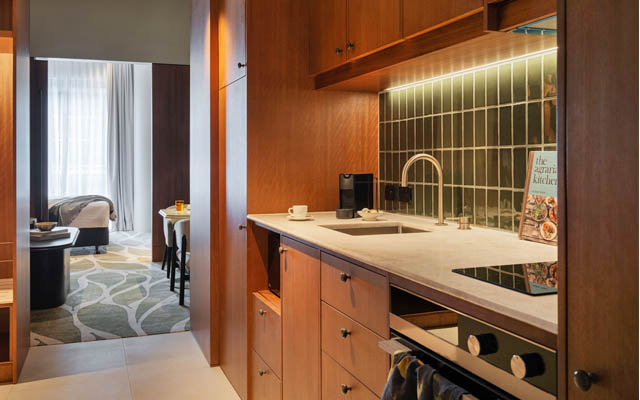
Adina Hobart is a 48-key property offering studio, one- and two-bedroom apartments, with options to interconnect into larger configurations. Designed to support longer stays, the apartments feature fully equipped kitchens and self-contained living spaces aimed at both leisure and business travellers.
Adina Hobart is expected to welcome guests in the 2H2026
The hotel is located alongside the 142-key Vibe Hobart, with Adina guests having access to shared onsite facilities including a restaurant and bar, conference spaces, swimming pool and gym.
TFE Hotels said the opening responds to growing demand for apartment-style accommodation at the premium end of the market, particularly for extended stays and travellers seeking flexible accommodation formats.
The addition of Adina Hobart brings a second TFE Hotels brand to the site and forms part of the group’s wider strategy to grow its apartment hotel portfolio across Australia. The company said the development also supports Hobart’s ongoing CBD regeneration, reinforcing the area’s role as a mixed-use hospitality and accommodation hub.
Chris Sedgwick, group COO, TFE Hotels, said: “As we expand our global footprint, we’re seeing increasing demand for apartment style hotels that offer the space, flexibility, and contemporary design that Adina does so well. With every new opening, whether here at home or in key international cities, Adina anchors our premium offering and showcases the best of Australian hospitality on the world stage.”
Jamie Capp, general manager, Adina Hobart, added: “Apartment-style stays are increasingly important to the visitor economy because they encourage extended travel and support local operators. With both Adina and Vibe now in Hobart, we’re offering travellers more choice – whether they’re here for business, culture, or nature.”
S Hotels and Resorts (SHR) has completed the rebranding of two UK hotels, Mount Royal Hotel Edinburgh and The Grand Hotel Leicester, under The Unlimited Collection brand by Ascott.
The repositioning forms part of SHR’s wider asset enhancement strategy aimed at strengthening its presence in key European markets.
The Grand Hotel Leicester now operates under The Unlimited Collection by Ascott
The Unlimited Collection focuses on highlighting the individual heritage and local character of each property. Mount Royal Hotel Edinburgh completed its rebranding in 4Q2024, while The Grand Hotel Leicester has undergone a full refurbishment and reopened on February 2, 2026.
The initiative reflects SHR’s strategy to reposition selected UK properties as lifestyle hotels for both domestic and international travellers. As part of its partnership with Ascott, the hotels are now integrated into the Ascott Star Rewards loyalty programme. SHR said the approach is already delivering results, with occupancy at its Edinburgh property reaching close to 98 per cent in 3Q2025.
Mount Royal Hotel Edinburgh by The Unlimited Collection is located on Princes Street and occupies a site that dates back to the early 1800s, when it operated as the Royal Hotel. The property now offers 169 guestrooms, many with views across Edinburgh Castle, Princes Street Gardens and the Old Town. Interior updates draw on the surrounding landscape through natural tones and Scottish design references, alongside a bar and restaurant positioned as a social space for guests and local residents. The hotel sits opposite the Scott Monument and the National Gallery.
The Grand Hotel Leicester is located on Granby Street in the city centre and is the only hotel in Leicester constructed in the early 1900s. The property has hosted notable historical figures and features preserved architectural elements, including a grand staircase, high ceilings and the restored King’s Room ballroom. The hotel offers 104 renovated guestrooms and a range of meeting and event spaces, with the redevelopment forming part of broader regeneration activity in the city centre.
SHR said further UK hotels are scheduled for rebranding as part of the next phase of its long-term growth strategy.
Michael Marshall, CEO, S Hotels and Resorts, said: “In Europe, enhancements to The Unlimited Collection portfolio allow us to create hotels that are deeply connected to their destinations, strengthening guest engagement while unlocking long-term value. This complements our recent success with repositioning of SAii Hotels & Resorts across Asia-Pacific.”
Thai Airways International (THAI) has expanded its strategic relationship with Amadeus, selecting three retailing solutions to support more consistent and personalised offers across its sales channels.
The airline will implement Altéa NDC, Air Dynamic Pricing and Anytime Merchandising as part of its wider retailing and distribution strategy. The move is intended to improve offer relevance, pricing accuracy and ancillary merchandising across both direct and indirect channels.
Thai Airways has selected additional Amadeus retailing solutions to support its distribution and pricing strategy
Through the adoption of these solutions, THAI aims to deliver a more consistent experience for passengers regardless of how they book. Real-time pricing aligned with demand and inventory is expected to support more competitive fares, while enhanced merchandising capabilities will allow the airline to present ancillary products through timely and context-aware recommendations.
Altéa NDC will serve as THAI’s NDC-enabled distribution platform, allowing the airline to create and distribute richer offers while preparing for future Offer and Order-based retailing. Air Dynamic Pricing applies AI-driven models to adjust fares in real time based on booking context and availability, with the airline expecting an average revenue uplift of more than three per cent. Anytime Merchandising will enable THAI to present personalised ancillary offers consistently across channels, supporting both revenue optimisation and customer experience objectives.
Together, the three solutions are designed to support THAI’s transition towards modern airline retailing, with integrated systems enabling improved control over pricing, offers and distribution.
Amadeus said the agreement builds on its long-standing relationship with Thai Airways and reflects a shared focus on next-generation retailing. The technology rollout will be supported by Amadeus’ local presence in Thailand, allowing closer collaboration during implementation and ongoing development.
The expanded partnership forms part of THAI’s broader transformation programme, as the airline continues to invest in digital capabilities to support its commercial strategy and passenger experience across web and mobile platforms.
Thai Airways CEO Chai Eamsiri said: “This technology investment represents a significant step in Thai Airways’ transformation. It strengthens our retailing capabilities, enabling us to offer passengers more relevant choices and a consistent experience across our digital channels.”
Javier Laforgue, executive vice president, travel unit and managing director, Asia Pacific, Amadeus, added: “This agreement is a milestone in our long-standing cooperation, and we look forward to working hand in hand with Thai Airways on its transformation journey.”
Hokuto City in Yamanashi Prefecture is launching a new one-night, two-day experiential tourism programme that invites travellers to step into Japan’s warrior past. Set along the historic Shingen-bo-michi mountain trail, the Two-Day Ninja Training Experience Tour blends nature, history, traditional lifestyle and regional cuisine into a deeply immersive cultural journey.
Led by the Yatsugatake Historical Road Tourism Promotion Committee in collaboration with local governments, travel agencies and regional businesses, the programme highlights Hokuto City’s unique setting, surrounded by Mount Fuji, the Southern Alps and the Yatsugatake Mountains. With strong cultural ties between Hokuto City and Taiwan, the tour is positioned as a premium inbound experience for international travellers seeking authenticity beyond major cities.
Walk ancient mountain paths and discover Japan’s warrior heritage through an immersive two-day journey
Shingen-bo-michi is believed to have been developed by Sengoku-era warlord Takeda Shingen as a military route. Sections of original stonework and natural terrain remain intact, allowing participants to walk the same paths used more than 400 years ago through forest landscapes at the foot of Yatsugatake.
Participants wear traditional ninja attire and, guided by professional instructors, learn ninja walking techniques, etiquette, breathing practices and mindset. The experience is educational rather than theatrical, offering insight into the philosophy and daily discipline of historical warriors.
On Day One, the programme begins near JR Kobuchizawa Station with costume fitting and foundational instruction, followed by training in movement, awareness and mental focus. The evening is spent at the traditional inn Oyado Izumien, where guests enjoy locally sourced cuisine and a quiet woodland setting designed to deepen immersion.
Day Two features a full walk along Shingen-bo-michi, passing grasslands, forests and stone Buddhist statues, with a stop at Sanbuichi Yusui, one of Japan’s 100 Famous Waters. The journey concludes with a certificate of completion, creating a lasting memento of the experience.
Aiming to tap into the surging spending power of the Early Career segment – a demographic that accounted for more than 40 per cent of international arrivals in 2025 – the Singapore Tourism Board (STB) is continuing the rollout of its multi-phased global campaign.
Titled We don’t wait for fun, the campaign targets travellers aged 25 to 39 across nine key markets, including China, Indonesia and India, with the goal of converting their high propensity for travel into confirmed bookings.
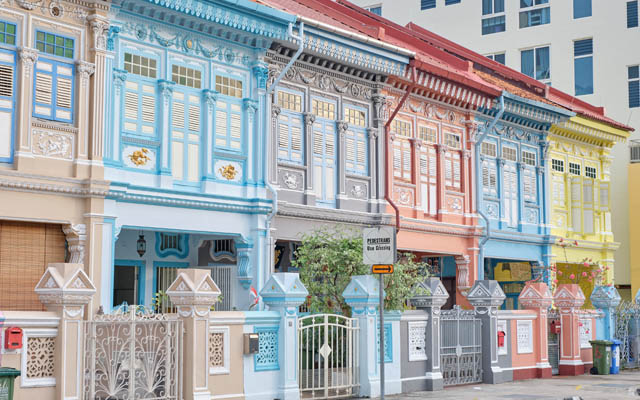
Neighbourhoods such as Katong reflect the authentic, culture-led experiences STB is promoting to early career travellers
“With global income growth and Gen Z’s purchasing power expected to increase, 2026 is an opportune moment to capture this segment,” Lim Shoo Ling, STB’s director of segment marketing and visitor experience, told TTG Asia.
Early career travellers also align with Singapore’s largest visitor demographic, spanning the 25-34 and 35-44 age groups, across its top five source markets: China, Indonesia, India, Malaysia and Australia.
“Visitors aged 25-44 from these markets represented nearly 25 per cent of total arrivals in 2025, demonstrating their significant contribution to tourism growth,” she added.
Rolled out progressively, the campaign debuted in May 2025 in partnership with Universal Music Singapore during Lady Gaga’s exclusive Asian tour stop. Social media influencers from across the region were invited to experience Singapore alongside the concert.
Similar initiatives followed during the Grand Prix Season Singapore in October 2025 and Singapore Art Week in January 2026.
During last year’s Grand Prix Season Singapore, for example, visitors were introduced to lifestyle concepts at New Bahru, events such as Jam Off and GrooveDriver Festival, and immersive dining experiences including AndSoForth, Lim shared.
January 2026 also marked the expanded roll-out of digital and social content, out-of-home activations, key opinion leader collaborations and industry partnerships across China, Indonesia, India, Japan, Malaysia, the Philippines, South Korea, Thailand and Vietnam.
When asked what this segment is seeking, Lim said: “This segment seeks authentic experiences, like experiencing local life and culture, or trying a new activity. They value the process of engagement and self-discovery, which leaves meaningful impressions that last far longer than the Instagrammable shot.”
Examples include snowboarding lessons at Trifecta in the heart of Orchard Road, exploring heritage precincts such as Joo Chiat with a local guide, or participating in animal encounters within the Mandai cluster of attractions.
As for other traveller segments, including active silvers and families, Lim said STB will continue to “market a good spread of products and experiences that are relevant and appealing to those segments”.
“This corresponds with our Tourism 2040 focus area to create an attractive destination through distinctive experiences and products, driving visitorship and spend,” she concluded.
More resorts in South-east Asia will materialise through Mandarin Oriental Hotel Group’s latest expansion thrust – a move that is driven by what its clients demand.
Speaking to TTG Asia on the sidelines of the February 5 launch of Mandarin Oriental, Desaru Coast in Malaysia’s Johor state, Anthony Tyler, area vice president, operations at Mandarin Oriental Hotel Group, said: “In 2024 we announced a 10-year strategy to double our footprint. It is an ambitious strategy, as we want to be very selective with the properties we manage. We want to add high quality properties in the destinations that our clients wish to see us.”
Tyler: there are reasons to be bullish, as the Asian economy grows and as pockets of wealth increase in this part of the world
Tyler added that the group is “identifying the right partners” as well as “the right piece of land” in all its expansion considerations.
He said the new Mandarin Oriental, Desaru Coast was a “perfect example of this strategy playing out”.
He complimented the location of the 44-suite resort – one that is surrounded by nature, amid a rainforest and close to the sea, and yet within easy reach of both Senai International Airport in Johor and Singapore Changi Airport.
Access between Singapore and the southern Malaysian state will improve when the Johor Baru-Singapore Rapid Transit System Link comes into service by January 1, 2027.
“Anything that allows people to travel in an easier and freer manner is good for us,” stated Tyler, who expects the new commute option to boost leisure and corporate travel traffic to Mandarin Oriental, Desaru Coast.
Tyler reflected on Mandarin Oriental Hotel Group’s successful resorts around the world, and acknowledged that there could be more in South-east Asia.
He cited “obvious synergies” between Mandarin Oriental Hotel Group’s gateway city hotels in Kuala Lumpur, Jakarta and Singapore that would support resort developments in recreational locations close by.
The group has so far announced upcoming openings in South Korea’s Seoul, Indonesia’s Bali, and the Philippines’ Manila.
He hinted at more announcements to come for South-east Asia over the next few years, particularly in beach destinations “where our clients would like to see a Mandarin Oriental”.
When asked how the well-established Mandarin Oriental brand is being conveyed through different age groups, especially among the younger generation of new travellers, Tyler pointed out that the group’s demographic of guests has evolved.
He explained that with every new hotel launched, the Mandarin Oriental brand gains access to a new demographic of guests.
“If you go to some of our newer properties in the Middle East and Europe, you will see a very young and different demographic. In Asia, where we have our legacy properties and have been established for longer time, we naturally have a following that started earlier with the brand and is therefore a little older in age.
“However, we have a very good blend. We do not have a hotel that is catered to only one narrow demographic. And we see (this blend especially) in our resorts, where we have a lot of multi-generational travel,” he said.
As for his business outlook for 2026, Tyler said he remains a “natural optimist”.
“There are reasons to be bullish, as the Asian economy grows and as pockets of wealth increase in this part of the world,” he remarked, adding that there is “a natural feeder for what we offer, for what Mandarin Oriental Hotel Group does”.
Tourism authorities across South-east Asia are intensifying efforts to reposition the May-October Green Season as a commercially viable travel period, citing lower costs and reduced crowd levels.
In Cambodia, Prak Vuthy, director of the Overseas Tourism Marketing and Promotion Department, said the season continues to be widely misunderstood.
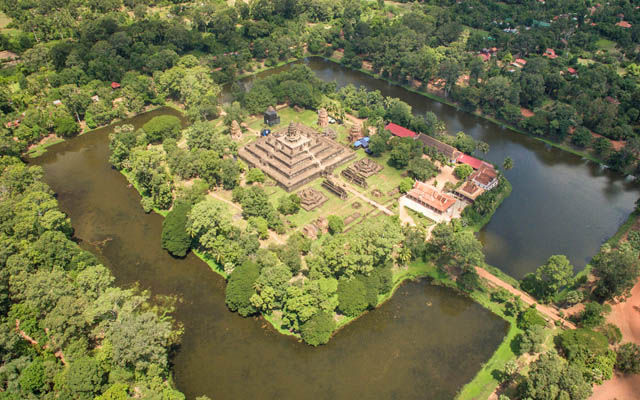
Cambodia, pictured, is among the South-east Asian destinations repositioning the Green Season as a value-led travel period; photo by KimlongMeng
“From May to October, Cambodia traditionally experiences the green season, with more rainfall, and this is a period that many travellers tend to misunderstand,” he noted. “Some visitors assume that the green season means travel is not suitable, but in reality, this period offers many advantages.”
To address this, Prak remarked “that’s why we are actively promoting travel during the May to October green season, with incentives across hotels and tourism activities”, adding that “many of our major events are intentionally scheduled during this time to encourage visitation”.
He emphasised that the objective is to spread demand more evenly and “create value for travellers”.
The positioning aligns closely with corporate and incentive travel, where programmes are largely indoor-focused and benefit from higher hotel availability and more competitive rates, even if weather conditions are variable.
In Laos, Phouthone Dalalom, deputy director general at the Ministry of Culture and Tourism, highlighted the destination’s natural strengths during this period.
“During the Green Season, Laos offers very high tourism potential, with lush landscapes, waterfalls at their best, and beautiful natural scenery,” he stated, noting that “each province has its own strengths during the Green Season, particularly in terms of nature, views, and outdoor experiences”.
Across South-east Asia, reframing the Green Season from a perceived drawback into a selling point is increasingly seen as a strategic opportunity for both leisure and group travel.