NATIONAL carrier SriLankan Airlines is planning to increase services from India, the island nation’s largest source market, in an effort to support Sri Lanka Convention Bureau’s (SLCB) goal of growing inbound MICE business.
The airline is studying the feasibility of flying to Visakhapatnam, Chandigarh and Hyderabad in addition to increasing frequencies to other popular destinations in India.
Gayan Peiris, a senior manager at SriLankan Airlines, said the company now operates 86 flights to seven destinations – Mumbai, Delhi, Chennai, Cochin, Trivandrum, Trichy and Bengaluru, and frequencies to some of these destinations will increase.
Meanwhile, SLCB general manager Vipula Wanigasekera told TTGmice e-Weekly that the CVB is bringing forward an October roadshow in Bengaluru to September 6-8, coinciding it with PATA Travel Mart that will be held in the Indian city that week. SLCB is also planning to run a MICE promotion for some 200 to 300 buyers during PATA Travel Mart.
MICE promotions in Mumbai and Delhi are also in the pipeline.
Wanigasekera said these efforts are aimed at “reviving interest from our neighbours” and added that the CVB “didn’t do much MICE promotion in India last year”.
India is Sri Lanka’s largest source market, contributing 170,134 arrivals in the first seven months of 2015, up 27.4 per cent from the same period last year. Indian MICE travellers account for around 30,000 arrivals a year.
SINGAPORE Tourism Board (STB), Singapore Airlines (SIA) and Changi Airport Group (CAG) have joined forces to lure business travellers and events from the Philippines with generous perks and intensified marketing.
The trio “have been working individually behind the scenes in the Philippines” but have decided to come together due to the “huge volume of traffic from the Philippines,” said Carol Ong, SIA general manager Philippines, Guam and USTT (United States Trust Territories).
“The three parties have high confidence in this market when it comes to MICE and corporate segments. We have an ambitious target of 15 to 20 per cent increase”, said Ong.
Total Philippine arrivals to Singapore reached 676,000 last year, of which 20 per cent is MICE.
Adrian Kong, STB area director Philippines and Brunei, said arrivals from the Philippines is “consistent” and is Singapore’s seventh biggest Asian market.
Targeted at BTMICE to and through Singapore via SIA and its subsidiary SilkAir, perks from STB, SIA and CAG include customised packages featuring land and air components with preferential rates, and financial grants depending upon group size, among others.
Under this falls the trio’s collaboration called Singapore MICE Advantage Programme (SMAP), valid till December 31, 2016 for events taking place by December 31, 2017, and Be in Singapore 2 (BEiS2) which offers different qualifying criteria for different BTMICE segments.
Likewise, all MICE bookings made on SIA and SilkAir from now till October 31 for travel before January 1, 2016 will receive travel incentives.
Adeline Lee, CAG assistant manager for passenger development, said that as the first point of contact for MICE visitors, the airport wants to ensure a seamless passage and a world-class airport experience. CAG is offering perks like Changi Dollar vouchers as part of SMAP.
You joined in October 2011, just after the tsunami. Was that the biggest challenge of your illustrious career?
It was one of the most difficult challenges. I have been in the private sector for some time now and there have been so many ups and downs (laughs). But the tsunami was very serious, because of the number of lives lost and the nuclear radiation fears. Even when we had said Japan was safe to visit, no one believed us. But we kept giving only the facts and we invited 1,000 journalists and travel agency people to see Japan for themselves. As well, celebrities like Lady Gaga – she loves Japan – was spreading the good message for us.
Eventually we were able to restore the confidence of visitors, including those from countries such as Singapore and Germany who were sensitive (about safety). Arrivals went up drastically and we hit 10 million in 2013. We had 8.6 million in 2010, 6.2 million in 2011 (disaster year), 8.3 million in 2012, 10 million in 2013 and 13.4 million in 2014.
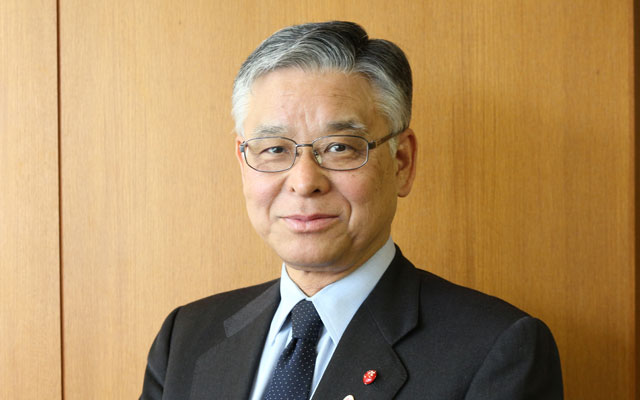
Ryoichi Matsuyama
Was visa easing the main reason why Japan rose to such prominence in the last couple of years?
It was a combination of factors, including our effort to restore the confidence of people to visit Japan; Abenomics, which saw the devaluation of the yen and made Japan cheaper for people to visit; a growing middle class in Asia; visa facilitation on our part of course. But I believe a major driving force was that the private sector – airlines, hotels, meetings sector, etc – was eager to collaborate with one another to bring back arrivals. In the past they operated more on an individual basis; the disaster brought them closer together.
Regarding the visa easing, was that a government initiative or did you have to push for it?
We assess the different visa requirements for different countries and try to streamline them. But of course we always have to work with other government departments and approach visa facilitation with the perspective of having a balance: ease visa on the one hand but maintain law and order on the other, making sure the ‘right’ people are coming in and they don’t stay longer than they should.
Singapore, Thailand and Malaysia now enjoy visa-free status and we are now seriously working to try and get this facility for Vietnam, Indonesia and the Philippines – but it will take time. India and China now have multiple-entry visa status, from single entry previously.
We are also trying to speed up visa processing and are studying to implement electronic visas but again, this will take time.
So now your task is to double the 10 million to 20 million by 2020.
Yes, as you know, Japan is hosting the Olympic Games in Tokyo in 2020. We have also successfully bidded for the 2019 Rugby World Cup (which will be held in 12 venues across Japan) and, in 2021, we will host the World Masters Games (in Kansai – the event is an international multi-sport athletic competition which gives the middle-aged and older generation the opportunity to participate).
With the Olympics you can draw some 10 thousand visitors. With the World Masters, 26 thousand, sometimes even more.
So there is a chain of mega events and everyone can take this opportunity to visit Japan. We also believe these events will expand and strengthen the image of Japan as a place for meetings.
How so?
Actually right after we won the bid to host the Olympics, in September 2013, Japan secured four big events with more than 6,000 delegates, outbidding strong countries including Singapore.
I think such events demonstrate to planners our capability to host and organise meetings. For example, we took over the IMF/World Bank meetings in 2012 when they had to move from Cairo. Such meetings are huge and complicated; normally it takes four years of preparation but we did it in two years.
So track record and the ability to perform are important for MICE.
Studies have shown it isn’t necessary that host countries of mega events actually benefit from them.
Yes, there is an argument that they require lots of investment in the construction of the necessary infrastructure, that afterwards the economy drops. Sometimes that happens, especially to emerging countries, but in the case of Japan, we hosted the Olympics in 1964 and there is some legacy remaining. Then, we had invested heavily in building freeways, bullet trains, stadiums, hotels, so for the Tokyo Olympics we will try to use the existing facilities as much as possible. Our Olympics investment isn’t huge, estimated at 340 billion yen (US$2.5 billion), compared with more than US$13 million for the London Olympics.
There are lessons from the past which we can learn from. For example, when Nagano hosted the Winter Olympics (in 1998), it built huge facilities and faced serious financial trouble afterwards. Mega events create a good impact but the key is to pay attention to what happens after the event – how do we persuade people to come back as repeat visitors?
This is what we are now seriously discussing with VisitBritain, with which we signed an MoU. London, which successfully hosted the Olympics in 2012, is also a mature city like Tokyo and there is much we can learn from it. London used the Olympics as a means to change the image of Great Britain as a friendlier destination. Los Angeles was so commercial, with lots of sponsorships. Barcelona used it to build a new city. We are at the stage of discussing with the many stakeholders in Japan what legacy we want the Tokyo Olympics to leave behind. One is perhaps as the most handicapped-friendly Olympics; another is as a model of how a mature city can successfully host the games without the normal heavy investments that come with them, and one that is able to sustain the benefits after the event. 2020 is a milestone, it’s not the end.
There are not enough rooms as it is in Tokyo. What are you doing about it?
We are persuading hotel developers to come in and build more hotels, especially more four-star hotels. We don’t give incentives; we present the facts and they can see for themselves how attractive it is to build. Price increase is a worry but presently Tokyo hotels are two-thirds of London prices, so they are fairly cheap.
This article was first published in TTG Asia, August 7, 2015 issue, on page 9. To read more, please view our digital edition or click here to subscribe
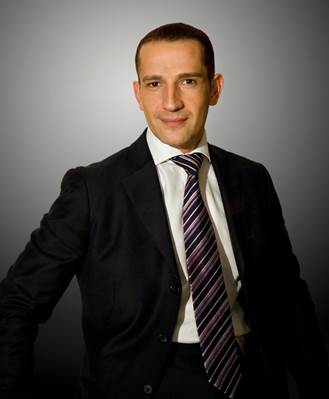
ACCORHOTELS has appointed Goran Aleks in a dual role as vice president, operations of South China and general manager of Sofitel Macau At Ponte 16.
Based in Sofitel Macau At Ponte 16, Aleks will oversee over 40 properties in operation and development across South China, including luxury Sofitel brands like Pullman and MGallery, as well as Mercure and AccorHotels Hong Kong.
Aleks specialises in the Sofitel brand, having worked with AccorHotels since 1995. He oversaw the opening and management of Sofitel Khao Lak in Thailand from 2002 before moving on to Sofitel Paris in 2005. He had also been the general manager at Sofitel Gold Coast and Brisbane as well as Novotel Langley in Perth.
He moved to Asia to launch and run Sofitel Philippine Manila Plaza for three years before his most recent appointment as area general manager of Sofitel Indonesia and Sofitel Bali Nusa Dua.
MANOR Group will launch the 30-suite Akyra Manor Chiang Mai this October, as part of its planned 500 million baht (US$14.2 million) investment in Thailand’s hospitality and F&B sectors, said CEO John Lim.
The Singapore-based developer has invested about 350 million baht in the hotel, which is located in the west of the city near Chiang Mai University and will be managed by the Akaryn Hotel Group.
According to Lim, the property will leverage its contemporary design, high service standards and hallmark F&B offerings to differentiate itself in the market, as well as pricing rooms in the US$200-US$250 segment.
Lim admitted he was “taking a bit of a risk” developing a property with an investment cost of about US$333,000 per suite, but he was confident that the high-design city hotel would create the demand needed to hit the profitable occupancy rate of 70–90 per cent.
“Currently Chiang Mai has a lot of properties at the US$10 per night market and the traditional five-star properties at about US$200 per night,” he said. “There are also some very successful luxury boutiques charging US$400 per night. So we’re targeting a different guest, someone who’s younger, design conscious and wants to stay in an iconic property.”
Akyra Manor, which also has meetings facilities, will focus on its F&B offerings, including the poolside/rooftop Rice Bar, to attract customers in a city with a burgeoning café culture but lacks high-concept branded venues.
Manor Group recently opened Italics restaurant in Bangkok, a joint venture with Akaryn, and plans to develop another property in Chiang Mai.
SRI Lankan hospitality chain Jetwing Hotels is embarking on a rapid expansion drive, opening five new hotels and enhancing three existing properties in the country to boost an inventory of close to 1,000 rooms by 2016.
“We are driving the Jetwing brand to be synonymous with Sri Lankan hospitality,” Shiromal Cooray, managing director of Jetwing Hotels told TTG Asia e-Daily.
In September 2015, the company will launch two new properties – the 55-room Jetwing Yarl in the northern city of Jaffna, and the 25-room Jetwing Kaduruketha in the south-central town of Wellawaya.
New hotels coming online by August 2016 include Jetwing Colombo, an upscale hotel in the Sri Lankan capital featuring 70 rooms and 30 serviced apartments; the 94-room Jetwing Lake in central Dambulla; and the 20-villa Jetwing Arugam Bay in Pottuvil, on the country’s east coast.
For enhancement plans, six new thatched pavilions will be built in Jetwing Vil Uyana in Sigiriya while the Jetwing Kurulubedda hotel in southern Galle will see the addition of four new pool villas. Twenty-four rooms will also be added to the Jetwing Ayurveda Pavilions, a luxury wellness resort in the western beach resort of Negombo.
JETSTAR Asia will be launching thrice-weekly flights to three new destinations – Palembang, Pekanbaru and Danang – later this year.
The new service from Singapore to Palembang and Pekanbaru, both in Sumatra, will start from October 29 and November 5 respectively, while flights to Danang will begin from November 27.
“Indonesia and Vietnam are two of the fastest-growing economies in South-east Asia and with the opening of their domestic aviation markets, we’ve seen a growth in demand for new low-fare travel opportunities,” said Bara Pasupathi, CEO of Jetstar Asia.
Jetstar is currently offering special fares from Singapore to these three destinations, with fares to Palembang starting from S$84 (US$60.58), Pekanbaru at S$68 and Danang at S$108.
THOMAS Cook India has acquired Sri Lanka-based DMC Luxe Asia for an undisclosed sum through its wholly owned subsidiary Thomas Cook Lanka.
The company will be operated as an independent entity with Chaminda Dias as managing director.
“The acquisition offers us three-pronged benefits: establish a global destination management presence, tap viable emerging geographies and leverage synergies with our Thomas Cook India Group business lines of inbound, outbound, corporate MICE and foreign exchange,” said Madhavan Menon, managing director of Thomas Cook India.
According to Madhavan, Sri Lanka has witnessed increased interest from Asia such as from the Indian and Chinese markets. He added that the country receives more Chinese tourists than India does, for instance.
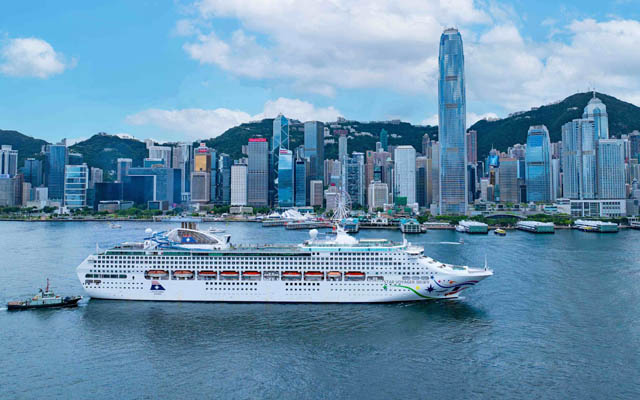
NORWEGIAN Cruise Line (NCL) has unveiled plans to resume cruise ship sailings in Asia and Australia next year, following a 13-year hiatus.
The cruise line will offer trips onboard the Norwegian Star from Asia to the Middle East with itineraries departing from Singapore, Hong Kong, Istanbul, Dubai, Sydney and Auckland.
Ports of call will include Phuket, Penang, Kuala Lumpur, Singapore, Ho Chi Minh City, Mumbai, Goa and Colombo.
This will be the first time NCL will be sailing to the Persian Gulf and India.
Andy Stuart, CEO of NCL, revealed that the company is looking at two things with this comeback. “One of these is deploying a Norwegian ship to the Asian market, designed to serve our current focus markets of the US, the UK and Europe.
“It would be another deployment option for our passengers – we haven’t had a ship in this region since 2001,” he said in an interview with UK-based TTG Digital.
He added: “(Next) would be to deploy a ship in Asia, for the Asian market. It is an important region that we are not currently represented in as Norwegian Cruise Line.”
NCL remained coy when asked whether they would be placing any of their new ships – which are due in 2018 and 2019 – into the region, with Stuart saying, “we wouldn’t rule it out”.
He also admitted that NCL will have to customise any ship being placed in Asia to better suit the Asian market. “No decisions have been made yet,” he said.
Alas, if Switzerland is not able to find the solution to fill up the hotels in the mountains, its tourism industry will retreat as surely as the glaciers have and are continuing to.
Hello summer and by the time this issue is out, I would have romped through a couple of Swiss mountains. At the time of writing this, I am in Gstaad. Clearly, the impact of the de-pegging of the Swiss franc to the euro – coupled with the fact that Switzerland’s traditional western European markets can no longer afford the high prices Swiss hotels and restaurants must charge due to their high operating costs – is having an impact. The fancy Gstaad promenade, lined with only the Louis Vuittons and Rolexes of this world, is not bustling with people.
Switzerland, along with Greece, France (see our Longhaul Travel report, page 14), Italy, Spain and the rest of them, need Asian and Middle Eastern visitors – any source market that has strong purchasing power – badly. But Switzerland is currently in a particularly difficult position. With the Swiss franc being almost on par with the euro today, it is attractive for Swiss themselves to holiday in neighbouring destinations rather than at home, while the neighbours find it awfully expensive to holiday in Switzerland. The weak euro, meanwhile, is a strong pull for Asians to travel to other European destinations than Switzerland. Forward bookings traced by ForwardKeys show Amsterdam, Milan (which is hosting the World Expo till October), Munich, Barcelona and Istanbul as among the top spots for longhaul leisure travel from Asia.
This is a pity, because the alpine country has so much to offer: hard-to-forget experiences at such high quality, comfort and security that every single franc paid for is worth it. For example, from Gstaad, I went to Glacier 3000, the cable cabin taking me 3,000m up above sea level and there, on a sunny summer’s day, I walked on the snow-covered glacier to a splendid monolith, a two-hour walk that did not feel long because of the uniqueness of the experience and the beauty of the surroundings (plus there is always a panoramic restaurant at the end of these walks that serves mouth-watering food and drinks). There are also other attractions such as a Peak Walk (walk on a suspension bridge between two peaks) and the world’s highest alpine rollercoaster (with a starting elevation of 2,971m and length of 1,000m) which uses bobsled-like cars on its tracks, so you can control the speed.
That’s just a day’s outing and just one of the out-of-this-world places in Switzerland. Alas, if Switzerland is not able to find the solution to fill up the hotels in the mountains, its tourism industry will retreat as surely as the glaciers have and are continuing to.
One solution perhaps is for the Swiss at home and aboard to recognise the challenge the industry is facing and support it by holidaying in Switzerland.
And for Asian travel agencies to sell to their clients the idea that glaciers are not forever.
This article was first published in TTG Asia, August 7, 2015 issue, on page 2. To read more, please view our digital edition or click here to subscribe



 Credit: Akyra Manor Chiang Mai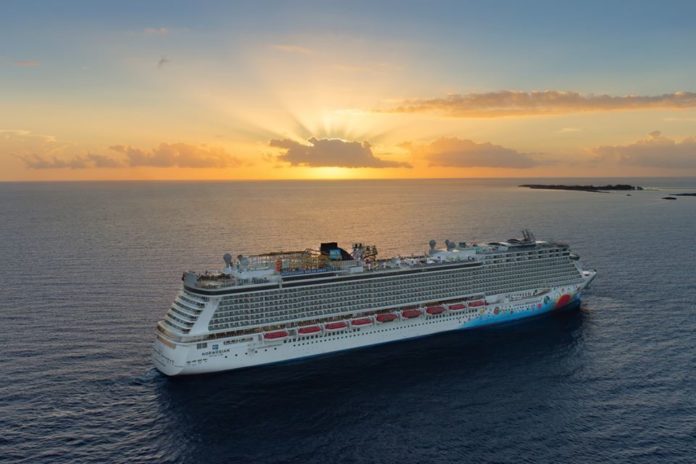
 Credit: Norwegian Cruise Line
 Alas, if Switzerland is not able to find the solution to fill up the hotels in the mountains, its tourism industry will retreat as surely as the glaciers have and are continuing to.