TTG Asia
Asia/Singapore Monday, 16th March 2026
Page 1980

Jumeirah pens deal to run new hotel in US$1bn Dubai tower

0

JUMEIRAH Group has signed a management agreement with RP Global to operate the Jumeirah Business Bay, which is expected to open in time for the World Expo 2020.

The mixed-use development, located within RP Global’s US$1 billion iconic tower, will include a 200-room hotel, 350 serviced apartments and 290 residences managed under the Jumeirah brand.

Located in the heart of Business Bay and a stone’s throw away from the Dubai metro station, the tower will have a built-up area of over 278,709m2 and offer views of downtown Dubai and the Burj Khalifa.

The tower, designed by Atkins Global, will include various F&B outlets, a Talise Spa, health club, conference and banquet facilities, a rooftop bar as well as a thrilling sky attraction.

The Jumeirah Group currently operates 23 hotels in Europe, the Middle East and Asia with a further 25 properties in the pipeline.

More travellers from Spain heading to Thailand as economy picks up

0

THAILAND has seen a major resurgence in arrivals from Spain this summer, with the European country posting strong growth among the longhaul markets.

Figures released by the Tourism Authority of Thailand (TAT) show that arrival numbers from Spain climbed almost 40 per cent in June and 62 per cent in July, translating to 70,542 arrivals as of end-July. Total arrivals for 2014 stood at 116,414, according to TAT.

Francesc Escanez, managing director of Atlantida Viatges, added that Thailand’s success is being shared by other regional destinations such as Myanmar, Cambodia and Vietnam.

“Travel is slowly recuperating in Spain, and it is South-east Asia that is performing best for longhaul (travel),” said Escanez. “We thought Thailand would suffer after what has been happening there in recent months, but we haven’t had cancellations.”

India and China are also showing growth this year, but Thailand and Indochina are benefitting most because of the value they offer, explained Escanez.

He added: “There has been little increase in prices in these (South-east Asian) countries and with their standards of service they are seen as (offering) better value than elsewhere like Brazil.”

ANA to revive Skymark with 18 billion yen bailout deal

0

31292104_xlCredit: 123rf

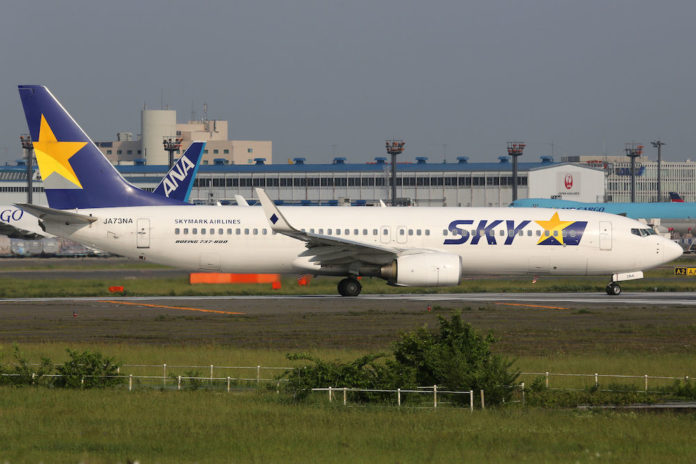
ALL Nippon Airways (ANA) has agreed to a bailout plan for Skymark Airlines that will see the ailing budget carrier receive a major injection of cash and a new management team.

Skymark Airlines, Japan’s third-largest carrier, filed for court protection from its creditors in January with estimated liabilities amounting to 71.1 billion yen (US$603 million).

The carrier’s ambitious expansion plans, including a fleet of new Airbus aircraft worth US$2 billion and longhaul routes to London and New York were dashed as the soaring cost of aviation fuel and the falling yen took its toll.
Now, a rehabilitation plan will be set in motion with a new management team starting work at the airline on September 29. Additionally, 18 billion yen in new capital will be injected from a private equity fund and ANA Holdings, the parent firm of the airline.

“We are considering the ways in which we will work together in the future,” Maho Ito, a press official for ANA, told TTG Asia e-Daily. “The details have yet to be decided but we anticipate this will mean codesharing on some routes, although it will take some time to coordinate ticketing and other systems.”

Ito admitted that the two airlines are “rivals” but added that ANA has a tradition of assisting fledgling airlines, including Air Do and Starflyer.

Skymark declined to comment on the agreement, but said in a statement: “Skymark will make repayments to creditors in accordance with the rehabilitation plan and will make every effort to implement it. We request your full support in this regard.”

TripAdvisor to bring instant booking feature to Indian travellers

0

INDIAN consumers will soon be able to book hotel stays on TripAdvisor, a feature that has all along been available in the US and UK markets.

The company is currently testing the instant booking feature and has refrained from confirming the launch date.

“We will launch instant booking in India when we are ready with the perfect product and system,” said Helena Egan, director of industry relations at TripAdvisor. “We are hoping to be live in more markets very soon and in most of the 48 domains we have across the globe.”

Egan added that the product is slated to be available on mobile, desktop, or both platforms, and are in talks with hotel chains in India for possible tie-ups.

“We have received positive responses and feedback from the hotels in India. We are studying the needs of Indian consumers and may customise the product to suit their requirements should there be a need,” added Nikhil Ganju, the company’s country manager in India.

About 70 per cent of the company’s revenue today comes from advertisements, while the instant booking feature is the company’s second revenue generator.

Commenting on the need to introduce instant booking to its users, Egan remarked: “(It) is a friction-less way for consumers to book (a hotel) in two clicks and it does away with the middleman.

“A lot of hotels in India are highlighting that owning the consumer is important for them as some platforms only provide the names of the consumers, and details such as their emails and physical addresses are not shared.”

TripAdvisor is also looking to roll out this instant booking feature to other Asian countries, especially key markets like China and Japan.

Read more in TTG-PATA Travel Mart 2015 Show Daily

Indonesians plan shorter vacations closer to home as rupiah weakens

0

THE weakening rupiah has put a damper on Indonesian consumers’ travel desires, causing outbound tour operators in the country to report a 20 to 25 per cent dip in travel bookings so far this year.

Rudiana, WITA Tour’s director of sales and marketing, told TTG Asia e-Daily that recent travel offers by airlines and tourism boards had failed to elicit much interest from customers.

“Singapore Airlines and Garuda Indonesia will hold their travel fairs this month and they are the industry benchmark, so results from these shows will paint (for) us a clearer picture of how Indonesia’s outbound leisure market will perform for the rest of the year and during 2016’s low season,” commented Rudiana.

However, with the rupiah now valued at 14,000 to US$1, the lowest ever since 1998, Rudiana is bracing for poor outbound business, especially as consumers wait for the currency depreciation to stabilise.

Exacerbating the cautious buying sentiments among Indonesians is the new government regulation for all transactions and prices to be in rupiah.

“Travellers who are used to buying their trips in US dollars are taken aback by the number of digits represented in rupiah. It affects them psychologically,” he said.

Anthony Akili, president and CEO of Smailing , also observed a change in travelling patterns. “(The poor economic situation today) isn’t stopping travel altogether, as Indonesians regard travel as a need. There is however, a shift in travel patterns. Those who have budgeted for their trips will still travel, but they are choosing either to shorten the vacation or head to a destination closer to home,” Akili explained.

As such, Akili expects domestic and regional travel to do well while longhaul demand will languish.

But Rama Tirtawisata, group managing director of Panorama Leisure Group, has found a silver lining in the cloud.

Tirtawisata said: “The strengthening of the US dollar has affected many countries, and data from Bank Indonesia shows that there are many currencies that have dipped deeper than the rupiah.”

Bank Indonesia’s 52-week data compilation on currency performance since June 30, 2014 reflected a 49 per cent decline in the Russian rouble against the greenback, a 27 per cent dip in the Turkish lira, and a 22 per cent fall in the Australian dollar. Some European currencies like the Swedish krona and the Danish krone were down between 19 and 22 per cent.

“The rupiah was down 14 per cent so it is stronger (than these currencies), which makes travelling to these countries cheaper,” said an optimistic Tirtawisata, who revealed that Panorama Tours Indonesia will focus on promoting these destinations with special packages soon.

“We will also allocate more budget for promotions and educate the market which is currently in shock,” he added.

Read more in TTG-PATA Travel Mart 2015 Show Daily

Reduced KL-Delhi links will dent Indian business: trade

0

MALAYSIA Airlines’ decision to halve frequencies of air services between Kuala Lumpur and Delhi from September 1 has travel consultants in Malaysia and India fretting over the possible loss of business.

The beleaguered flag carrier, which had on August 28 undergone a rebranding and is being restructured into a new company, now flies daily on this route, down from twice-daily services previously.

Nanda Kumar, managing director of Hidden Asia Travel & Tours Malaysia, said this would slow down corporate incentive and group travel segments because clients would not be able to get seats for the entire group.

“Clients can still travel to Malaysia on premium airlines, via Singapore and Bangkok, but they may cut short their time in Malaysia. For instance, they may choose to stay two to three nights, instead of four,” he said.

Ganneesh Ramaa, manager at Luxury Tours Malaysia, is bracing for a drop of at least 10 per cent in Indian arrivals from Delhi this coming travel season, which runs from mid-September to year-end.

He said: “If clients cannot get seats on Malaysia Airlines, they will simply go elsewhere. Singapore and Thailand will benefit.”

With capacity down, Rajesh Sethi, managing director of Carnation Holidays in Delhi, warned of likely fare hikes by Malaysia Airlines for this route.

There is, however, a spark of optimism in this situation, arising from Malindo Air’s plans to launch twice-weekly flights between Malaysia’s Penang and India’s Tiruchirapalli come September 26. As the only service that connects Penang with an Indian city, it is expected to boost Indian interest in Malaysia’s northern region and mitigate a major loss of Indian traffic to Malaysia.

Travel consultants from both countries told TTG Asia e-Daily that they are eager to create new itineraries that leverage the new airline.

Kumar said: “We will combine Penang with Bukit Merah Laketown Resort in Perak, and Penang with Langkawi.”

Arokia Das, senior manager at Luxury Tours Malaysia, said: “There are now options to do tours in the north or to sell Penang as a mono destination as it offers many attractions in the city, on the hills and along the beach that appeal to Indians.”

Meanwhile, Chennai-based Holiday 18 Leisure Services’ director & CEO, K Gia, is looking for Malaysian partners from Penang to work with him to build new programmes, as “suppliers from Kuala Lumpur charge more”.

Read more in TTG-PATA Travel Mart 2015 Show Daily.

Falling yuan does little to dampen mood of Chinese vacationers

0

24891193_xlShenzhen Bao’an International Airport. Credit: 123rf

CHINESE consumers are not depriving themselves of overseas holidays despite reduced buying power as a result of a depreciating Chinese yuan and emerging cracks in their national economy.

Buyers from China at PATA Travel Mart 2015 said their customers are still booking travel packages in earnest and the weak Chinese yuan, which has fallen four per cent against the greenback since August, is having minimal impact on outbound business.

Shanghai-based outbound specialist, Alex Zhang, regional manager for Thailand and South Asia department at Spring Tour, said: “My company has seen a year-on-year increase in bookings to popular destinations such as Thailand, India and Sri Lanka. These destinations are inexpensive for the Chinese.”

He added: “Sri Lanka, India and Nepal have also risen in popularity among smaller groups (of eight to 10 people) without a tour leader. Such groups comprise friends and family members who are keen on exploring different cultures together.”

Also observing a pick up in Chinese demand for Sri Lanka is Romeo Luo, FIT specialist with Spring Airlines Chongqing business office & Chongqing International Travel Service.

“The demand is up especially from honeymooners who are drawn to beach resorts (which Sri Lanka has aplenty),” Luo said.

Travel trade from South-east Asia also revealed that Chinese demand is holding strong.

Ronald Poe, managing director of Yangon-based Asia Global Travels & Tour, said the Chinese are drawn to Myanmar as it is a “newly opened destination”.

Hui Seila, deputy director of marketing & promotion department, Ministry of Tourism of Cambodia, told the TTG Asia e-Daily that “Chinese arrivals to Cambodia are still strong due to the close proximity (of the countries).”

Read more in TTG-PATA Travel Mart 2015 Show Daily.

Additional reporting from Mimi Hudoyo and Paige Lee Pei Qi

JAL to roll out Diamond Premier Lounge at New Chitose Airport

0

diamond-premier-lounge
Diamond Premier Lounge. Credit: Japan Airlines

JAPAN Airlines (JAL) has revealed plans to introduce its Diamond Premier Lounge service at the New Chitose Airport in Sapporo and revamp the existing Sakura Lounge at the same time.

Scheduled to open in summer 2016, the new lounges will be relocated from the second to the third floor in the domestic terminal.

sakura-lounge
Sakura Lounge. Credit: Japan Airlines

During the period of the revamp, the Sakura Lounge and some facilities will be unavailable for service for customers. Renovation will begin on November 4, 2015.

In addition, priority check-in counters and security inspections will be renovated for JAL First Class customers, JMB Diamond members and JGC Premier members.

JAL lounges at Osaka’s Itami and Fukuoka airports will also be undergoing enhancements.

Competition sparks makeover for The Star Sydney

0

THE Star Sydney will embark on a A$130 million (US$90.1 million) refurbishment of its Astral Tower and Residences Hotel, set to be completed by mid-2016.

The Astral Tower is being repositioned to attract Gen X and experienced business travellers, offering new high-end suites, a club lounge, meeting rooms and a business centre. The hotel will be operational throughout the refurbishment period.

Astral Residences will be aimed at leisure travellers and young professionals, featuring a fresh, minimalist design accentuating the uninterrupted views of the Sydney Harbour.

Additionally, The Darling at The Star has just upgraded their spa facilities, adding a mosaic aromatherapy heated steam room and a saltwater Jacuzzi. A new fitness facility with kinesis walls is also ready for use.

Making the announcement at Luxperience in Sydney today, John Autelitano, general manager of hotels at The Star Sydney, said: “The Star Sydney is a pinnacle tourism destination in Australia and a significant contributor to the visitor economy, welcoming over 11 million visitors each year.

“The national and international markets being targeted include generations of peole who are increasingly affluent, and as such, are spoilt for choice.”

He added that “the enhanced rooms, suites, and business facilities will ensure our competitiveness and attract visitors to the city of Sydney.”

Phuket’s 1H arrival gains not enough to lift occupancy, spend

0

AN INCREASE in the number of visitors to Phuket in 1H2015 has not boosted occupancy or spend, according to C9 Hotelworks’ latest Phuket Mid-Year Hotel Market Update.

Aided by a revitalised Phuket International Airport, passenger arrivals grew 11 per cent from 2.8 million in 1H2014 to 3.1 million in 1H2015. However, neither room rates nor RevPAR surged as a result.

Market-wide occupancy slid to 71 per cent while average room rates fell from US$175 to US$154, resulting in a significant drop in RevPAR from US$126 to US$109, states C9 Hotelworks in the same report.

While most traffic originated from direct flights from China, recent wobbles in the Chinese economy has resulted in an inability for room rates to continue the uptrend.

Bill Barnett, managing director of C9 Hotelworks, told TTG Asia e-Daily that the more important underlying factor is the absence of longer-staying Russian tourists due to the depreciation of the rouble.

“The average length of stay for mainland Chinese is 2.2 to 2.6 days while Europeans stay considerably longer,” said Barnett. “The Russians stay 12 days for package tours. Shorter stays mean you are constantly chasing your tail to grow.”

Another problem flagged by Barnett is availability of alternative sources of accommodations in nearby Andaman Islands as well as from unofficial sources.

“There is a large issue with unregistered condos and villas. It is taking up considerable market share and the government needs to address this issue as it did serviced apartments in Bangkok a few years ago,” he added.