THE number of foreign visitors to South Korea tumbled nearly 7 per cent in 2015, with the outbreak of Middle East Respiratory Syndrome (MERS) largely blamed for the decline, resulting in only 13.2 million arrivals last year.
This is the first time South Korea is reporting arrival contractions in 12 years.
The figures were particularly disappointing given that arrivals in the first five months of the year were up around 10 per cent compared to the same period in 2014, but soon plummeted after the MERS outbreak.
Arrivals from Singapore, Malaysia and Brazil were hit the hardest, said Irin Lin, spokesperson for the Korea Tourism Organisation (KTO) in Singapore.
“There were several factors for the decline in Singapore visitors to South Korea last year, including the outbreak of MERS during the June school holidays, which is usually one of the peak periods.”
Chinese visitors similarly stayed away, with numbers declining 2.3 per cent to 5.9 million arrivals last year as numerous flights and tour packages cancelled during the peak summer months.
But arrivals recovered after the outbreak was declared over and the KTO has been active in promoting South Korea as a destination for 2016 and beyond.
“In view of the 2018 PyeongChang Winter Olympics, KTO has launched the Visit Korea campaign this year and it will run until 2018,” said Lin.
“During these three years, more activities, events and promotional campaigns will be lined up to encourage travel to South Korea.”
THE 576-room Shangri-La at the Fort, Manila is set to open its doors come March 1 at the Bonifacio Global City (BGC) mixed-used development in Metro Manila.
Part of a landmark mixed-used complex, Shangri-La at the Fort has deluxe rooms measuring between 45m2 and 47m2, and are equipped with Shangri-La amenities, complimentary Wi-Fi and other modern luxuries.
Opening in tandem are the 97-key Shangri-La Residences, a collection of one-, two- and three-bedroom apartments, and the 98-unit Horizon Homes, a set of luxury private homes.
Shangri-La at the Fort, Manila’s facilities include five fitness zones, a spa with ten treatment rooms, tennis and squash courts, an NBA-grade indoor basketball court, and a children’s adventure zone with party rooms – all measuring a total of over 8,000m2 of space across the fifth and sixth floors of BGC named Kerry Sports Manila.
The hotel also offers 21 event spaces, with the grand ballroom accommodating the largest space at 1,800m2.
Seven dining and bar options are available inhouse, namely Samba, a South American restaurant and bar; Canton Road, a restaurant specialising in Cantonese and Huaiyang cuisines; Raging Bull Chophouse and Bar featuring grain and grass-fed dry-aged beef; Raging Bull burgers, a burger shop; High Street Cafe, a modern food hall; High Street Lounge serving coffee and tea; as well as Limitless, a two-level bar offering cocktails and bar snacks.
Shangri-La at the Fort, Manila is offering an introductory rate of 9,800 pesos (US$204) per night for a deluxe room including breakfast, complimentary use of Kerry Sports Manila and the outdoor pool, as well as late checkout until 14.00 subject to availability.
HONG Kong-based Dorsett Hospitality International has named Hotel Representation Australia (HRA) as its general sales agent (GSA) for the Australia and New Zealand markets, effective since February 1, 2016.
Sydney-based HRA, which has offices in Brisbane, Melbourne and New Zealand, will be responsible for sales and marketing activities, utilising contacts with key operators to negotiate the inclusion of Dorsett Hotels, undertake sales calls and participate in travel events, among other things.
“With their network and strong existing relationships with key business channels (wholesalers, corporate, MICE, leisure, media etc.), we are confident that HRA will play an instrumental role in assisting Dorsett Hospitality International to expand its market share in the Australian and New Zealand market,” said Rebecca Kwan, senior vice president sales, Dorsett Hospitality International.
AUSTRIAN Airlines has enabled the use of real-time mobile flight planning technology in its cockpits, a world’s first.
The tool, named eFlight Manager, is developed in partnership with Sabre Corporation and allows for weather and flightplan updates throughout a flight whenever air-to-ground communication is available in the cockpit.
According to a statement by Sabre: “This will help to further improve the safety of flights, by providing pilots with the necessary information to track and avoid bad weather. Airlines will also be able to adjust fuel calculations based on this data.”
Beta testing of the technology took place in November last year with Austrian Airlines pilots using the solution inflight on tablet devices. The national carrier will be rolling out the new tool to its entire flight staff of 950 in the coming months.
RESIDENTIAL meetings held at any participating properties under the Pan Pacific or Parkroyal banner from now till the year-end will stand to benefit from a variety of perks that will increase in numbers along with the size of the group.
The limited-time Meeting Delegate Package features complimentary use of a meeting room from 08.00 to 17.00, morning and afternoon tea break with snacks, coffee or tea, lunch, Wi-Fi access, as well as executive meeting setup with flipchart, stationery and bottled drinking water.
Meeting groups can choose to enhance their experience with options such as unlimited soft drinks during lunch; one complimentary room for every 15 payable rooms with a maximum of two complimentary rooms per night; next room category upgrade for every 10 payable rooms with a maximum of two rooms per group; complimentary drinks for one hour which includes house red or white wine, beer and soft drinks for at least 20 delegates; a three per cent discount on the master bill excluding taxes.
Groups with at least 15 delegates and 10 rooms can pick one of the many privileges, while those with at least 30 delegates and 20 rooms can enjoy two. Larger gatherings involving at least 45 delegates and 30 rooms can chose any three perks, and those 75 delegates and 50 rooms or more can benefit from four.
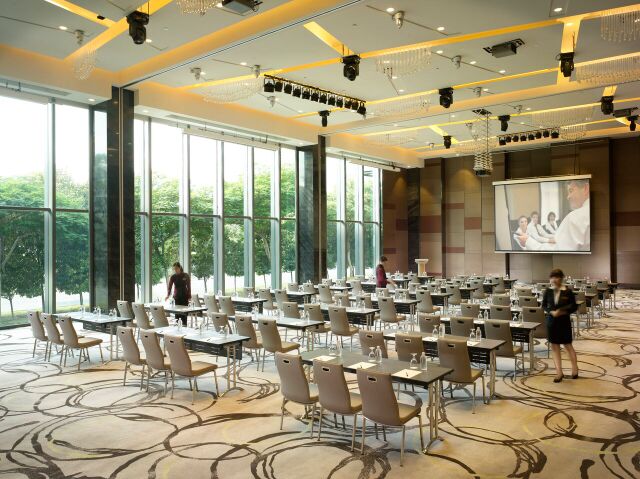
Participating properties include Parkroyal on Beach Road, Singapore (Sky Ballroom pictured above), Parkroyal Kuala Lumpur, Parkroyal Yangon, Pan Pacific Manila, Pan Pacific Perth and Pan Pacific Seattle.
Bookings must be made by April 30 this year and meetings must be held by December 31. Other terms apply.
Email exceptionalmeetings@pphg.com for more information and the full list of participating hotels and resorts.
STUART Bailey, managing director of Diversified Communications Hong Kong, has been appointed the new chairman for Hong Kong Exhibition & Convention Industry Association (HKECIA) for the remainder of the current term which runs until June 2016.
Bailey has been with Diversified Communications since 2005 and has also previously held the office of vice chairman and honorary treasurer within the HKECIA.
He replaces Javed Khan of Mega-Expo, who has resigned his position on health grounds.
INDIA based KW Conferences has won the bid for the 14th Asia Oceania ORL-HNS Congress 2019 which will coincide with the 71st Annual Conference of The Association of Otolaryngologists of India, taking place in Hyderabad from January 9 to 13.
The PCO has tied up with the Association of Otolaryngologists of India and the Asia Oceania Association of Otorhinolaryngology-Head & Neck Surgery Societies to organise the congress.
The bid for the event – regarded as the region’s foremost ENT scientific gathering – was first initiated in Taiwan, where the congress was last held from March 19 to 22, 2015.
Monimita Sarkar, managing director of KW Conferences, told TTGmice e-Weekly that the bid process was a “quiet and complex procedure because there were about four (other) agencies that the organisers had met”.
The organising committee eventually chose to go with KW Conferences based on the PCO’s track record, expertise and detailed sponsorship plans for the congress, revealed Sarkar.
Sarkar added: “The fact that we are the first officially accredited PCO in the country and our extensive experience of over 24 years played a major role in helping us to win the bid. We also proposed innovative marketing strategies to engage delegates.”
The five-day congress will be enriched with workshops, live surgeries, plenary and parallel technical sessions, industry exhibits and e-poster presentations. More than 5,000 delegates from Asia, Australia, North America and Europe are expected to participate.
KW Conferences is actively promoting the congress through its partners and local chapters of the association overseas.
Sarkar believes that the congress will benefit Hyderabad’s medical and MICE industries. The Indian city houses a number of speciality hospitals and the world-class Hyderabad International Convention Centre.
She elaborated: “(Scoring a major conference for Hyderabad) puts the city back on the map as a favoured MICE destination and provides an opportunity for healthcare professionals to be actively engaged with international participants and very senior doctors from across the country.”
What inspired you to establish Plaza Premium Lounge?
Following my career in investment banking, I started my own business and spent considerable time at airports, struggling to work effectively while on the go. Flying economy class without the airport lounge privileges that I had previously enjoyed, I found that such travel experience was somewhat incomplete.
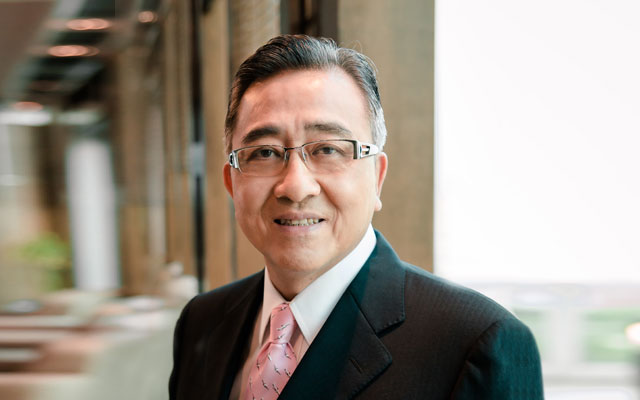
Song Hoi-see
Driven by a heartfelt desire to do something for the majority, I wished that all travellers, regardless of airline and class of travel, could have access to airport lounges. I wanted to change the stereotype that airport lounges should be reserved for premium travellers only.
I identified an opportunity in this segment and seized an opportune moment to introduce the first Plaza Premium Lounge, the world’s first independent airport lounge concept, at Hong Kong International Airport and Kuala Lumpur International Airport in 1998.
Plaza Premium Lounge has since evolved into Plaza Premium Group and expanded into airport hospitality. What drives the group’s diversification strategy?
Five to six years after starting our airport lounge business, we realised more products could be added into the lounges and the demands (of travellers) kept increasing, so we spun out independent operations such as wellness salon, food, meet-and-greet services, and then we integrated all services into one to offer a seamless service.
In 2015, we introduced Aerotel, our airport transit hotel brand, and Allways, our airport meet-and-greet service brand, to our existing airport lounge and airport dining portfolio, consolidating the group’s evolving businesses into four core pillars to complement travellers’ overall airport experience.
Now we are flourishing worldwide, covering five continents with more than 130 outlets and 35 international airports. Why we expand from airport lounge to other business is not by chance, but by virtue of our understanding of what the passengers require and their needs in the airport. We try to fill up the inefficiency gaps in the airports by developing other services to provide a seamless service (for passengers). A lot of people doing similar business (in airport hospitality) wait for Tarzan to see them, but we go into the jungle to look for Tarzan (laughs).
For my independent lounge business I’m only seeing the tip of the iceberg because a lot of people don’t know that they can use a lounge when they travel economy class. I want to change the perception that the airport lounge is only a privilege available to certain people and we’re happy to change travel patterns and behaviour.
What’s game-changing about the first Aerotel in Singapore?
Most people don’t have high expectations of transit hotels because they think it’s a place where they sleep for just a few hours. But we have a different view. As travellers become more affluent and demanding, they want better quality of service. We do not want to just satisfy customers’ basic demands; we want to give them more than that.
Singapore is a major transit hub, and when passengers spend six, 10 or even 12 hours at the airport what do you expect them to do? We create recreational products to (complement) transit hours. They can spend a few hours sleeping, therefore we sell our hotel in six-hour blocks, unlike other transit hotels which are booked for 24 hours.
Aerotel Singapore is the first transit hotel with an outdoor swimming pool, poolside bar, jacuzzi, massage services, gym and library facilities, alongside 70 premium rooms. Another special characteristic at Aerotel is our pillow menu. Our quality is value for money – you get five-star hardware at three-star prices.
Why did you choose to launch Aerotel in Singapore over other hub airports?
Singapore is the best airport in the world, and when you want to showcase the best of what you can do in aviation, obviously you go to the best airport to showcase this. We’re very glad that Changi recognises our services. We were lucky that when Changi renewed the concessions we bidded and won the tenders.
The first Aerotel landed in Singapore Changi Airport in October 2015, with subsequent openings in Abu Dhabi International Airport and London Heathrow Airport scheduled for 2016/17.
How do you differentiate your lounges from that of airlines’?
A lot of people ask if we are competing with airlines. Our lounges started by taking care of people not taken care of by airlines, i.e. the remaining 85 per cent flying on coach. But does it mean that a few per cent of this 85 per cent do not require this service just because they do not want to play double or triple the price of an economy class ticket? However, a lot of airports ignore this 85 per cent.
Airlines do not want to operate lounges. For example, Singapore Airlines does not operate their lounges, they outsource it; likewise for Cathay Pacific. A lot of premium airlines do not want to touch the lounge (area) because it’s not their forte.
We have been here for the last 17 years, and in the last 10 years airlines started recognising us, so we have been managing airline lounges for Singapore Airlines, Cathay Pacific, Lufthansa, Thai Airways, United Airlines, etc. We take care of the HR, F&B, cleaning, everything.
Except for the front desk where (airlines) have their own people, the rest is taken care of by us.
What’s your expansion plans for Premium Lounges?
The latest ones opened in Singapore, Phnom Penh and Salalah – which is the second one we’re opening in Oman after Muscat – with Siem Reap and Brisbane expected to open in the next few months. We will open in Taiwan Taoyuan and Rio de Janeiro by April before the Olympics.
Our plan by 2018 is to launch 200 outlets and we have allocated over US$100 million for our (overall) expansion, with US$56 million budgeted for Premium Lounges, up from US$40 million.
Who do you think will be interested in your meet-and-greet services Allways?
A lot (of people). For example, when corporations have an important guest arriving, we can meet them at the gate and bring them out to you. Or imagine an old mother coming to Hong Kong or Singapore while you are travelling overseas and you are worried if she can go through the airport on her own, contact us. Others like lovers can use our service as a surprise.
This service is available at Toronto Pearson International Airport and New Delhi’s Indira Gandhi International Airport, as well as Singapore, Macau, Kuala Lumpur, Muscat and London Heathrow.
This article was first published in TTG Asia, February 8, 2016 issue, on page 18. To read more, please view our digital edition or click here to subscribe.
THE Japan National Tourism Organisation (JNTO) plans to open new promotional offices in seven new destinations before the end of fiscal 2016, namely in India, Vietnam, the Philippines, Malaysia, Russia, Spain and Italy.
JNTO currently has offices in 13 markets, including South Korea, China, Singapore, New York, London and Paris.
“We want to create JNTO offices in countries that do not have a presence at the moment but are also experiencing an increase in tourist numbers,” said Yoko Takano, of the general administration department at JNTO.
Japan welcomed a record 19.7 million visitors in 2015, an increase of more than 47 per cent on the previous year and significantly beyond the 13 million arrivals that tourism officials anticipated.
Arrivals from Malaysia were up 28 per cent to 50,300, according to the JNTO, while visitors from the Philippines climbed 50 per cent to 32,700 and Vietnamese tourists were up 29.7 per cent.
Indian arrivals were up a modest 10.8 per cent to 6,700, but the rapidly expanding middle-class in the country is expected to boost numbers.
Arrivals from Spain were up a remarkable 46.8 per cent and Italian tourists increased 23.7 per cent. Meanwhile, Russian arrivals shrank by 0.6 per cent to just 3,900 travellers.
The JNTO has no plans to increase its presence in China, South Korea or Hong Kong as numbers from those markets are already impressive.
Some 4.99 million mainland Chinese visited Japan in 2015, the largest single national group and more than double the previous year. South Koreans accounted for the second-largest number of visitors, with slightly over 4 million arrivals, up 54 per cent on 2014.
(Seated from left) Laith Pharaon, owner of Singapore Hospitality Holdings; Yuthachai Charanachitta, owner of Onyx Hospitality Group
It aims to open 46 properties in key city and resort destinations by 2024, bringing the total portfolio of Ozo and Shama branded properties to 70.
Ozo developments in Bangkok, Phuket, Pattaya and the Maldives are set to receive the initial rounds of investments.
There are currently four OZO hotels in operation in Thailand, Hong Kong and Sri Lanka and an additional four under development in Vietnam, Malaysia and China.
The Shama portfolio consists of 10 serviced apartments in China, Hong Kong and Thailand, with an additional six properties under development in Malaysia and China.