TTG Asia
Asia/Singapore Monday, 23rd March 2026
Page 1886

A budding region

0

The new crop of travel trade shows in northern Thailand gives second-tier destinations like Chiang Mai a chance to shine.
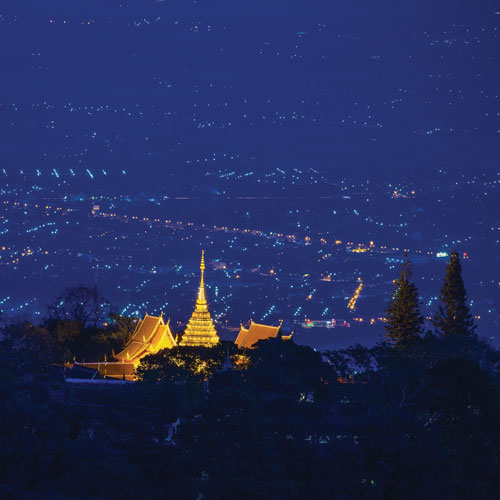
11-mar-doi-suthep-pagoda-chiang-mai-thailand-17840896_cmyk

With international arrivals reaching just under 30 million in 2015, a figure that was barely conceivable just a few years ago, Thailand’s tourism experts are now projecting 32 million arrivals this year. A bigger target, however, also brings with it the inevitable question of how to cope with the ever-increasing arrival numbers and manage tourism in a more sustainable way.

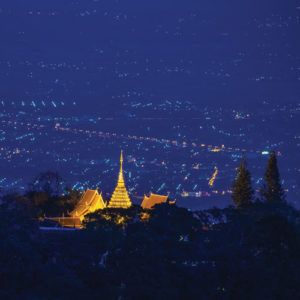
It is with the aim of diversifying market sources and spreading tourist footfalls beyond the key destinations of Bangkok and Phuket that the Tourism Authority of Thailand (TAT) finally turns its attention to Chiang Mai, which will be the host destination of Thailand Travel Mart Plus (TTM+) this year.

“This is a good opportunity for Chiang Mai,” said Juthaporn Rerngronasa, TAT’s deputy governor for international marketing Europe, Africa, Middle East and Americas. “Chiang Mai is ready to host major events, as it has a new convention centre and many boutique hotels. It is also the closest Thai city to the Greater Mekong Subregion countries.”

With the exception of one year when TTM+ was held in Pattaya, 13 of the past 14 editions had been held in the Thai capital since the show’s launch in 2001. This year’s show will be held at Chiang Mai International Exhibition and Convention Centre from June 8-10 under the theme, Smile with Us.

The novelty of Chiang Mai as a new event destination is also a strong drawcard for TTM+, claimed Juthaporn, with this year’s edition netting a stronger reception from buyers than previous years. As of February 11, there were 321 buyers and 305 sellers, marking the highest numbers for the show since its inauguration, according to officials.

Although Chiang Mai has in recent years acquired a glowing shine among mainland Chinese travellers following the success of the Chinese movie Lost in Thailand, Juthaporn admits that the city has yet to attain similar level of interest from other international markets like Europe.

TAT governor Yuthasak Supasorn said in a press statement: “The level of interest is also a very good indicator of the growing interest in Chiang Mai and the Northern Thailand region. Traditionally, the travel trade has featured the beach resorts of South Thailand in their programmes. Clearly, that will now change and help us meet one of our major objectives of shifting the location, which is to better balance the distribution of visitors all around the country and reduce congestion at the popular tourist spots.”

In February, PATA Adventure Travel and Responsible Tourism Conference and Mart was held in Chiang Rai, the northernmost province in Thailand, reflecting the association’s strategic “dispersal of tourists” move, said PATA CEO Mario Hardy.

“Chiang Rai is one of these destinations that has great potential,” he said. “I’m really pleased to know that the regions of Thailand are developing the MICE market; it’s a great way to get these destinations to be known by a larger number of people. It will boost their profile and hopefully encourage other event organisers to consider them in the future.”

However, with the proliferation of trade shows the likes of ASEAN Tourism Forum and ITB Asia in the region, in addition to other Mekong countries such as Vietnam and Cambodia launching their own tourism fairs, it remains to be seen if these events in northern Thailand will spark greater interest in Chiang Mai and Chiang Rai as travel destinations.

Trade members have also constantly urged the development of more domestic air links such as Chiang Mai-Phuket and Chiang Mai-Hua Hin, which will allow travellers to bypass Bangkok and pair the northern cultural cities with the beach destinations in the south.

This article was first published in TTG Asia, March 4, 2016 issue, on page 4. To read more, please view our digital edition or click here to subscribe.

Thousands arrive in Indonesia to witness solar eclipse

0

37434687_l_1

TOURISTS, researchers and observers from around the world have begun arriving in Indonesia, fully equipped and ready to witness the total solar eclipse, visible throughout the Asia-Pacific on March 9.

Indonesia is the only country in the world where the rare occasion can be witnessed in totality across the entire archipelago.

Arief Yahya, Indonesia’s minister for tourism, said: “Travellers are spread out in 12 locations across Indonesia, including West Sumatra, Bengkulu, Jambi, South Sumatera, Bangka-Belitung, East, West, South and Central Kalimantan, West Sulawesi, Central Sulawesi, and North Maluku.”

Around 10,000 foreign arrivals have come specially for this, with an estimated 100 events being organised in conjunction with the rare occasion.

“We have also prepared local homestay options in anticipation of the influx of arrivals in places where accommodation facilities are minimal,” added Yahya. Some cruise companies have formed floating accommodation services as well to leverage on the opportunity.

Yahya said that the total solar eclipse, which takes place once every 350 years, would give Indonesia a media value of 400 billion rupiah (US$30.4 million).

Thai hoteliers lobby against illegal accommodation providers

0

inside-no_3-surapong-techaruvichit

Surapong Techaruvichit, president of Thai Hotels Association

THE Thai Hotels Association (THA) is urging the government of Thailand to clamp down on businesses that provide alternative accommodation to travellers in Thailand, such as Airbnb, crying foul over unfair competition and the lack of enforcement of safety regulations.

This comes on the back of rising short-stay boarding at residential properties in Thailand, with unlicensed operators buying apartments and converting them into accommodations without being held to the same standards and costs that hotel owners are subject to.

Surapong Techaruvichit, president of THA, said: “We cannot keep up with the pricing these alternative accommodations are offering, since they require less investment to operate and do not have to comply with the same safety standards hotels are held accountable to.”

Hotels have to adhere to “many, many laws on security and safety”, including the size of corridors, size of fire escapes and having the necessary fire-fighting equipment, he explained.

In addition, Techaruvichit pointed out that the informal hotel sector allows for lapses in national security, saying that suspects in last year’s Erawan Shrine bombing managed to evade detection by putting up at an alternative accommodation.

“Article 38 makes it necessary for hotels to report guests (who contravene immigration laws), but (hotels in the informal sector) will never report these offenders as they themselves are illegal,” he elaborated.

Techaruvichit said THA will lobby against these “illegal hotel operators”.

He added: “We are trying to push for the government to enforce the Building Control Law and close illegal hotels down for contravening the Hotel Act.”

Enacted in 2004, after some consultation between the THA and the Ministry of Interior, the Hotel Act makes it illegal for apartments to be rented out on a daily basis, while allowing for monthly rentals.

He also proposed imposing taxes on these unlawful operators to level out the playing field.

Exact figures on the scale of hotels operating under these technical illegalities are not readily available, but the government estimates there are 8,000 hotels in Thailand’s formal tourism sector with some 380,000 rooms, which dwarves in comparison to the 800,000 rooms being sold by alternative accommodation sites.

Airbnb is only a small part of this, Techaruvichit said, putting its share of the market between five and 10 per cent.

Airbnb was approached for comment but did not respond as of press time.

Chain hotel brands to descend upon Phuket

0

jw-marriott-phuket

The JW Marriott Phuket Resort & Spa

CHAIN hotel brands will be overshadowing independent establishments in Phuket in the near future, with 90 per cent of all developments in the pipeline belonging to an international brand, according to data by consultancy C9 Hotelworks.

From a total of 32 projects slated to open within the next few years, only four will be operated by independents while Marriott and Best Western will come to dominate, collectively controlling more than 25 per cent of Phuket’s supply pipeline in terms of rooms.

An increase of 5,216 rooms between 2016 and 2019 is forecasted, with chains accounting for 4,677 keys.

In terms of number of properties, Louvre has the most in the pipeline with four total, followed closely by Marriott with three. Giants Wyndham, Accor and Starwood, among others, will open two properties each, while small to medium-sized brands such as IHG, Banyan Tree and Kempinski will be unveiling a single property each.

“Sentiment by developers is now firmly leaning on the side of the chains. It is not only reflected by the current pipeline but also demonstrated by a number of recently announced conversions, notably led by French hotel group Accor,” said Bill Barnett, managing director, C9 Hotelworks.

He adds: “We expect this trend to continue, with a secondary shift that takes the form of increased number of hospitality-led residences.”

According to the study, around 34 per cent of these new hotels will be erected in the popular west coast region of Patong.

Shorthaul repeat visitors a boon for Noku Roxy

0

noku-roxy

UPMARKET boutique hotel Noku Roxy, which only opened in Kyoto last November, is seeing a strong 70 per cent forward reservation rate at the hotel this month.

Teo Hong Yeow, managing director of Roxy-Pacific, told TTG Asia e-Daily that the decision to open in the traditional low season paid off as the inevitable early kinks were worked out during the relatively quiet winter months.

“We have been particularly targeting shorthaul but frequent, repeat visitors because that is our immediate region and market,” he added, explaining that “about 50 per cent of guests are from overseas, but only 10 per cent to 15 per cent of this group are longhaul visitors.”

The 81-room six-storey hotel is primarily being marketed through “bespoke travel agents that specialise in Japan,” he said, adding that the use of social media also helps.

However, Yeow insists that the property’s strongest promotional tool remains word-of-mouth recommendation from guests.

Malaysia launches visa-free entry for Chinese travellers

0

29313060_l_1AFTER many failed attempts, the Malaysian government has finally launched ENTRI (electronic travel registration and information) and e-visa services for mainland Chinese travellers. Both services started on March 1 and will run until December 31.

Malaysian prime minister Najib Abdul Razak had earlier this year announced a way for short-stay travellers from mainland China to visit Malaysia visa-free.

This has resulted in ENTRI, where mainland Chinese travellers visiting Malaysia for a period of not more than 15 days can apply for visa-free entry, with processing fees costing 160 yuan (US$25).

Meanwhile, the launch of e-visa services allows applicants with not more than 30-day stays to apply for visas online, with processing fees costing 200 yuan.

Marco Polo gets new regional sales director

0

MARCO Polo Hotels has appointed Kitty Liu as regional director of sales, Shanghai for the hotel group.

marco-polo-gets-new-regional-sales-director

In her new role, Liu will drive incremental business across all major segments to Marco Polo and Niccolo hotels from the Shanghai market.

The Chinese national was most formerly assistant director of sales – regional sales office for Park Hotel Group, and has further sales experience during her time with Starwood, Shangri-La and Carlson Rezidor.

Photo of the Day: JW Marriott Hotel Hong Kong turns 27

0

jw-marriott-hotel-hong-kong-27th-anniversary-celebration-1

JW Marriott Hotel Hong Kong turned 27 on February 27, 2016 and the occasion was celebrated with the hotel’s Quarter Century Club members – those who have loyally been with the hotel for more than 25 years – during a cake-cutting ceremony. Mark Conklin (front left), general manager and Iris Chan (front right), director of rooms operations, joined in the celebrations. Chan has been with the JW Marriott family since the hotel opening.

Don Mueang fully reopens upgraded Terminal 2

0

don-mueang

THAILAND’s Don Mueang International Airport will officially reopen its upgraded Terminal 2 tomorrow, allowing the airport to accommodate 30 million passengers a year, 11.5 million more than before.

The terminal was already partially reopened since December 24, 2015, allowing most domestic flights to operate from there.

“It is going to relieve the crowded situation at Don Mueang,” said Chula Sukmanop, director general, Department of Airports. “The area is almost double from what we have now.”

Upgrades comprise improvements to the terminal, three concourses, walkways and toilets.

There will, however, be no increase in flight capacity as airside facilities – such as runways, taxiways and aprons – did not undergo upgrades, said Sukmanop.

An upcoming 10 billion baht (US$282.3 million) third phase of developments will focus on renovating the old domestic terminal to include a new walkway connecting the building to the Sky Train station and parking for up to 3,000 cars.

Kazakhstan sets its sights on Singapore

0

11698398_l

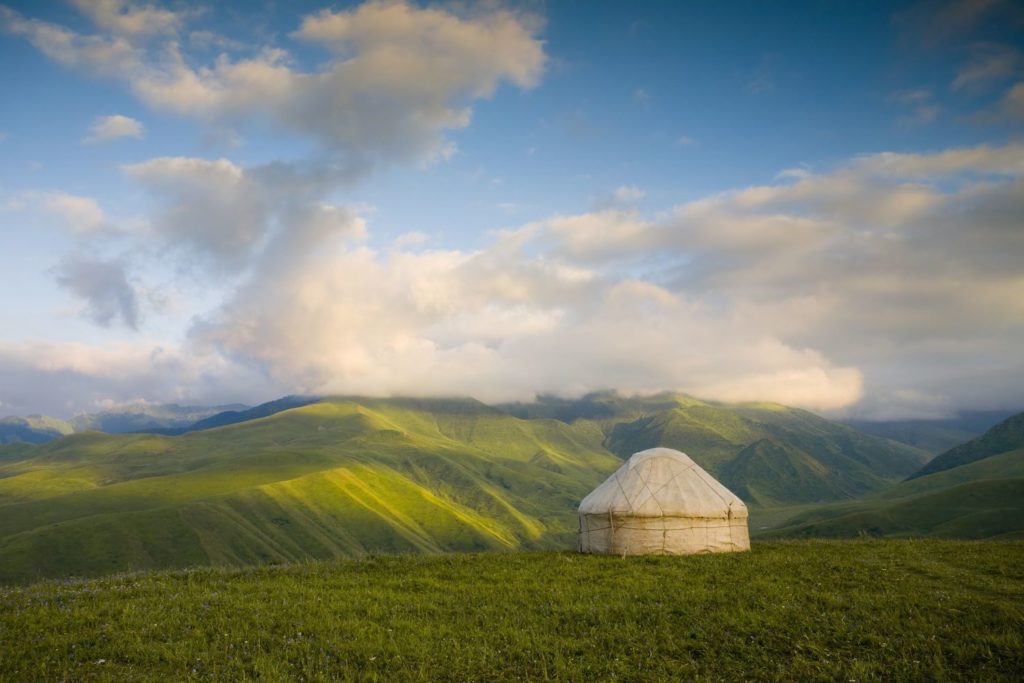
A Kazakh yurt.

THE nation of Kazakhstan, which made its debut at the NATAS Travel Fair 2016 last week, is targeting well-travelled Singaporeans to boost inbound numbers from South-east Asia.

Speaking to TTG Asia e-Daily, Nurlan Meirmanov, third secretary of the Embassy of the Republic of Kazakhstan of Singapore, Australia and New Zealand, said their key inbound markets are China, Russia, Europe and US, while “tremendous potential for growth” is found in South-east Asia.

Meirmanov said: “Singaporeans have travelled to many places and we know Kazakhstan will appeal to them because this is one country that many of them have yet to visit.”

Hence, the need to raise awareness about the destination’s natural and cultural offerings propelled them to participate in tradeshows like NATAS for the first time, said Meirmanov, who added that they will use this opportunity to reach out to travel agents.

As the lack of direct air connectivity is currently a stumbling block, Meirmanov said the potential new direct air connection between Kazakhstan and Singapore, which is still in its “processing stage” by Air Astana, will be “highly welcomed”.

Air Astana’s ticketing and reservation officer, Randolph Leonor, confirmed that there are plans to introduce this new direct flight by end-2017.

Mohan, outbound manager of Famous World Tours, said: “Kazakhstan is more suited for the regular travellers who have been to many places and just want a new place to explore.”

While Mohan said they have not received any interest about this destination, he added: “If there are new direct flights and more information about the place, we may consider offering them because it is an exotic place that will attract Singaporeans.”