TTG Asia
Asia/Singapore Tuesday, 24th March 2026
Page 1880

So, will it be Marwood or Anwood?

0

HOTEL investors and brokers are split down the middle as to who, between Marriott International and Anbang Insurance Group, will fit the glass shoe and save damsel-in-distress Starwood Hotels & Resorts before the stroke of midnight Eastern time on March 17 (13.00 Singapore time, March 18).

That question, along with the whole issue of hotel consolidation, was the hot topic at HICAP Update which ended yesterday.

Hotel owning companies such as Hong Kong-based SHKP Hotels whose portfolio includes Marriott brand Ritz-Carlton (in Hong Kong and Shanghai), and Starwood’s W Hong Kong and St Regis Beijing, are watching the development closely.

Asked what he thinks will happen, SHKP Hotels CEO, Ricco deBlank, said: “It will result in three options. Either Marriott will come back with a bigger offer, which means it will have to pay a little over US$13 billion; two, Marriott walks away, with US$400 million in break-up fees from Starwood, and Starwood goes with Anbang; or three, they will possibly split, with Anbang taking the real estate assets, which they are more interested in, and leave the operation to Marriott.

“That’s not a bad option as Marriott is an asset-light company and therefore keeps the management of all those hotels, having 5,500 hotels, still going from 19 to 30 brands, but not having to put money into buying assets they don’t want.”

Asked what he’d prefer, deBlank said from an owner’s standpoint, it would be Marriott, if only because of familiarity. “If it’s Anbang, we would have to understand what its longterm strategy is, see if it is easy to work with, see if it understands the hotel business – lots of questions we would not have with Marriott,” he said.

Another owner, Bill Heinecke, chairman and CEO of The Minor Group, picked Anbang. Contacted by email for his views, Heinecke said: “This is an interesting new dilemma and the final result will see Starwood forging one of two very different paths.

“I feel that the union of Marriott and Starwood will lead to the homogenisation of two great brands and I don’t think this benefits anyone. The brands’ and guest experience will be streamlined, a restructuring will occur and jobs will be lost, common operating platforms and standards will be used, all resulting in a diminished offering to guests and owners alike,” said Heinecke.

He added: “Of course this could be beneficial for companies such as Minor Hotel Group as we continue to showcase a diversified guest experience across all our brands. In addition, I think it will ensure a larger pool of talented individuals who are looking to work for a dynamic and energetic company…such as Minor Hotels.

“If Starwood is acquired by Anbang, I feel that the hotel company will continue to operate with a high level of autonomy through the appointment of a seasoned hotel professional overseeing Starwood whilst representing the owning companies interests. On many occasions we have seen Chinese companies acquiring international brands and overall it has not been ‘business as usual’ but more dynamic leadership.”

Minor has in its portfolio The St Regis Bangkok, JW Marriott Phuket Resort & Spa and Marriott Pattaya Resort & Spa.

robert-hecker

Hecker: “Which consumer is asking for a bigger hotel company?”

Robert Hecker, managing director-Pacific Asia at Horwath HTL, preferred an Anwood deal. “I guess I’d like to see Anbang because then at least Starwood will still be separate from another hotel company and its brands would be separate. There will still be some dynamism in the market, one more competition out there. Which consumer is asking for a bigger hotel company?”

When news of Marwood first broke, Hecker told TTG Asia e-Daily then: “I was figuring one of the Chinese contenders would make the best offer. The industry didn’t really need a new ‘largest’ hotel company like this, whereas Starwood seemed a perfect way for a new owner to enter the global hotel market.”

Sympathies also went to employees of both hotel chains, particularly Starwood, for having to go through so much uncertainties. A partner at Withersworldwide, Robert Williams, said: “I’ve friends at both as they are both clients. Was just swopping text with one of them and he said it’s just ‘nutty’. With these M&As, literally on day two, people look at the organisation charts and say, that’s me, I don’t have a job. After all the driver for Marwood is massive reduction in overheads.

“If you ask a Starwood employee who he prefers, he might say I prefer Anbang, as there is still a need for me. If you ask Starwood owners, they might say we’re not sure about Marwood, the brand overlaps are massive, and especially in cities with neighbouring properties, owners are likely to prefer an Anbang outcome, but then worry about Chinese integration in what is a big US group.”

Eric Levy, managing director, Tourism Solutions International, said: “I don’t really care, but emotionally, if Anbang buys Starwood, then Starwood lives, the famous SPG (loyalty programme) lives and the integrity of the brands continues.

“Certainly for my friends in top positions in Starwood, their future will be less uncertain.”

Healthcare-hospitality complex Connexion opens it doors

0

farrer_park_complex

LEADING the way in the region’s medical tourism scene, Farrer Park Hospital, part of Singapore’s first fully-integrated healthcare-hospitality Connexion complex, made its grand opening yesterday.

Singapore’s minister for health, Gan Kim Yong, officiated the opening ceremony at the complex, sited directly above Farrer Park MRT Station.

Besides the hospital, the US$580 million complex comprises Farrer Park Medical Centre (which houses specialist clinics), Owen Link (a retail and dining strip), and One Farrer Hotel and Spa (a 250-key five-star hotel).

The entire complex boasts plentiful artworks and green spaces, with a total of 700 original art pieces and 15 gardens spaced throughout. One of the gardens, The Farm @ Farrer, grows fruits, vegetables and herbs for use by the hotel kitchens, which also prepares meals for Farrer Park Hospital patients.

Facilities at the hotel include several F&B options, a signature Asian Wellness Spa, swimming pool, and a 700-seater One Farrer Conference Centre.

Free one-hour guided tours of the complex are also given daily from 15.00 at the hotel lobby.

China surpasses India as Sri Lanka’s top source market

0

23738614_l

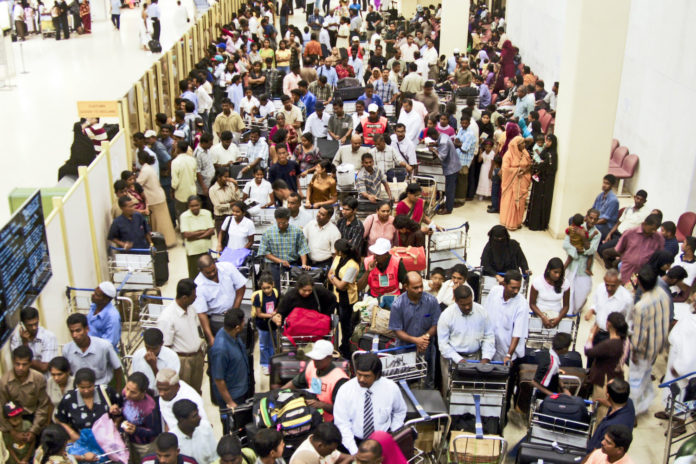
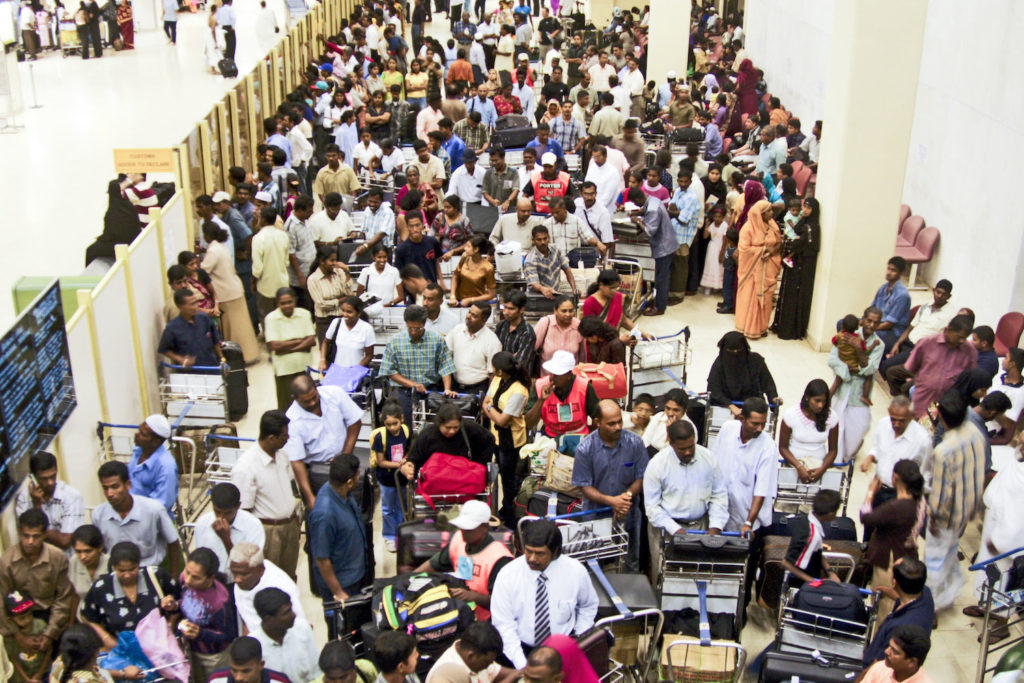
CHINA overtook India as the leading source market for visitors to Sri Lanka last month, with arrivals up 48.5 per cent to 58,269 in February against India’s 29.1 per cent growth to 55,454.

Among the factors contributing to China’s performance is the number of Chinese companies that have recently embarked on billion-dollar infrastructure projects in Sri Lanka.

Reacting to the surge, Renuka Koswatta, general manager of Best Western, Colombo, said the hotel group has plans to cater to Chinese visitors with special menus in Mandarin or Cantonese. Many resorts are also preparing to hire Chinese speakers and introduce specialty Chinese restaurants.

Veteran hotelier Malin Hapugoda, now executive consultant for RIU Resorts in Sri Lanka and the Maldives, explained that while China is currently the “biggest travelling nation” in general, there is also a tendency for these visitors to be attracted to more China-friendly nations, such as Sri Lanka.

China is expected to maintain the lead as the top source market for visitors to Sri Lanka this year.

Hong Kong, Taiwan jointly promote to US travellers

0
(L-R) Director of HKTB U.S. Mr. Bill Flora, Executive Director of HKTB Mr. Anthony Lau, Chairman of HKTB Dr. Peter Lam, Deputy Director-General of TTB Dr. Wayne Liu, Director of TTB New York Mr. Thomas Chang, and Director of TTB Los Angeles Mr. Brad Shih share a toast to solidify the multi-destination partnership between the Hog Kong Tourism Board (HKTB) and Taiwan Tourism Bureau (TTB) on Thursday, March 10, 2016, in New York. (Photo/Yifu Chien). (PRNewsFoto/Hong Kong Tourism Board)

(L-R) Director of HKTB U.S. Mr. Bill Flora, Executive Director of HKTB Mr. Anthony Lau, Chairman of HKTB Dr. Peter Lam, Deputy Director-General of TTB Dr. Wayne Liu, Director of TTB New York Mr. Thomas Chang, and Director of TTB Los Angeles Mr. Brad Shih share a toast to solidify the multi-destination partnership between the Hog Kong Tourism Board (HKTB) and Taiwan Tourism Bureau (TTB) on Thursday, March 10, 2016, in New York. (Photo/Yifu Chien). (PRNewsFoto/Hong Kong Tourism Board)

(From left) Director of HKTB US, Bill Flora; executive director of HKTB, Anthony Lau; chairman of HKTB, Peter Lam; deputy director-general of TTB, Wayne Liu; director of TTB New York, Thomas Chang; and director of TTB Los Angeles, Brad Shih 

HONG Kong and Taiwan tourism are partnering for the first time to jointly promote themselves as twin destinations to the North American leisure market.

The Hong Kong Tourism Board (HKTB) and Taiwan Tourism Bureau (TTB) collaboration comes on the back of an expected 6.5 per cent increase in flight connections between the US and the two countries, as well as a prospective 4.5 per cent growth in arrivals.

“According to our survey, 92 per cent of visitors from the US arriving in Hong Kong would like to visit other destinations on the same trip,” said Anthony Lau, executive director, HKTB, adding that the trend of multi-destination travel in Asia has been gaining importance in recent years as tourists try to get the most out of each trip.

Wayne Liu, deputy director, TTB, is equally sanguine. “Data shows that in recent years US arrivals has been increasing steadily, and the growth was the fastest among all longhaul markets in the last year,” he said.

“This suggests that travelling to Taiwan has already sparked interest among American tourists.”

Currently, travel between Hong Kong and Taiwan takes about 80 minutes by air, and the two nations are connected by over 60 flights daily.

Airport capacity limiting Asia arrivals growth

0

33989708_l

THE expected surge in travellers to the Asia-Pacific over the next 20 years may fail to materialise unless governments quickly address the issue of overcapacity at airports, warned aviation experts during Routes Asia 2016, which took place in Manila last week.

Currently, a majority of airports in Asia are operating at maximum or above capacity as an estimated 100 million travellers arrive in the Asia-Pacific every year.

IATA reported that strong demand for air travel continued in January this year with a 7.1 per cent increase in global passenger traffic from January 2015, due to the drop in oil prices.

In Asia-Pacific, carriers posted a 10.3 per cent increase in passenger traffic in January compared to the same period last year, pushing up their load factor by 2 percentage points to 79.2 per cent, due to more direct airport connections within Asia, mainly by LCCs.

“Unfortunately, airport development is an afterthought. We should have started building airports five years ago,” said Vinoop Goel, APAC regional director of airport, passenger, cargo and security department, IATA.

Goel said IATA is now focusing on showing the value of aviation in terms of jobs creation, productivity, GDP, and other economic measures so as to urge policy makers to begin building and expanding airports.

“Just imagine the economic impact that the Philippine economy would have gained from an airport that can handle all potential travellers. The longer the delay, the bigger the loss to the country,” he added.

Andrew Cowen, CEO, HK Express, said the share of air travel in Asia has kept on increasing due to higher than average growth numbers. Infrastructure then becomes critical in coordinating that growth, he explained.

As of now, the Philippine government has yet to decide when and where to build a new international gateway despite the longstanding overcapacity at Manila’s Ninoy Aquino International Airport.

[PERSPECTIVES] Bleisure – a win-win for corporates and business travel

0

BLEISURE has truly taken off in Asia. An October 2015 survey of 2,500 Asian business travelers by the Singapore Tourism Board showed that more than half consider travel to be a perk of their jobs, and almost the same number – some 48 per cent – want to build weekends or extra nights into their work-travel itineraries purely for leisure purposes.

For some it’s even more than that. Business travel is a lifestyle choice; a way of seeing the world without incurring substantial personal expense. These business travelers routinely take advantage of company-paid flights to explore a new city, tap into local culture, or simply to relax and unwind before or after business commitments. HRS data show the impact of this trend. Average stays are increasing in length, especially in key global cities such as Tokyo, London, and New York.

todd_arthur_managing_director_asia_pacific_hrs

This is good news for the business travel industry, and also for companies – since having happier and more rested employees should lead to better business performance. However this trend also challenges all stakeholders to become ever more traveller-centric and really respond to the emerging needs and priorities of executives on the road.

When mixing business and leisure, travellers want to stay in the best locations, for the right price, with flexibility and convenience as standard. To meet these needs, HRS offers negotiated rates on more than 40,000 properties, a cancellation policy that allows travellers to change their plans up to the night before arrival, and a simple-to-use mobile app that works on all platforms. We expect that in 2016, mobile will account for a third of all HRS bookings.

In addition to having happier and more engaged employees, encouraging bleisure travel can lead to cost savings for companies. Travel managers are in a better position to negotiate with hotels if they can demonstrate a higher take-up of their corporate nightly rate. This, however, depends on having the relevant data, and makes it even more important that bookings go through the authorised channels.

The trend towards longer average stays is also advantageous for hotel groups, which are continuing to sharpen their focus on attracting the business-leisure traveler. This includes tailoring loyalty schemes, providing spa, dinner, or events packages, or simply creating an environment that encourages hotel guests to relax and socialise. Ensuring that business travelers enjoy their stay and become rapidly connected to the best of what the city has to offer is key to hotels’ ongoing competitiveness.

In today’s digital age, there is increasingly little separation between our personal and working lives. We’re looking to seamlessly blend social interaction and personal interests with a demanding 24/7 business environment. Against this backdrop, it seems that bleisure as a lifestyle choice can only continue to become more prevalent.

This is a positive development for corporates and the business travel industry, but also one that requires us to deeply understand and respond to emerging traveller priorities. If we don’t provide the right tools, options, and price points, our savvy customers can easily find their needs met elsewhere.

Todd Arthur is the managing director, Asia-Pacific of Hotel Reservation Service (HRS). HRS is a global hotel solutions provider and serves more than 40,000 corporate customers worldwide through its inventory of more than 300,000 hotels in 190 countries.

Todd Arthur’s core responsibilities include setting the business direction, driving organic growth with new and existing customers across Asia-Pacific markets, establishing strategic partnerships and talent development.

Article by Todd Author

The Vines Resort launches new outdoor function space

0

pavilion021a

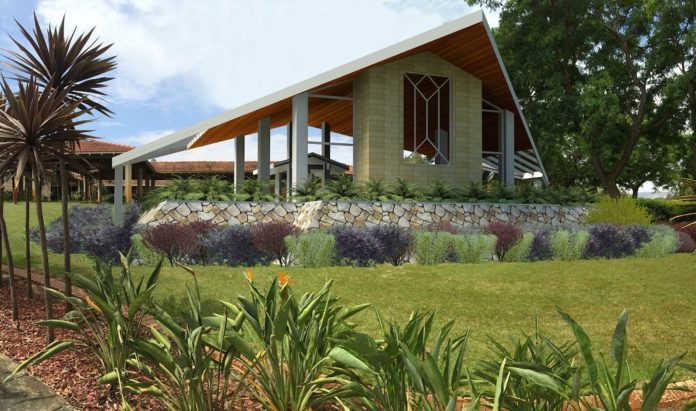
THE Pavilion, an outdoor event space that can accommodate up to 100 guests cocktail-style, recently opened on March 1 on the grounds of The Vines Resort & Country Club in Perth’s Swan Valley area.

Three sides of the covered structure open out into the grounds, featuring views of the manicured gardens, koi ponds, and distant vistas across the golf course.

The Pavilion joins the resort’s list of function spaces that include The Barrett Lennard Room, The Boardroom, Samuel Copley and Cabernet.

Other on-site facilities include a golf course, the Keshi Day Spa and Muscat’s Restaurant, among many other F&B options.

Safety, familiarity key concerns for US incentive planners

0

INCENTIVE groups from the US are not choosing Singapore as a destination because of concerns on safety and a lack of understanding of what the island country has to offer, according to some panellists at the Trends in Incentive Travel panel discussion at theSingapore: A Curated Discovery seminar.

Bill Sellmer, president, Sellmer Meeting & Incentive Travel, said that Americans are “ignorant of geography” and had the perception that “Singapore is not that safe”.

But concerns about Singapore not being safe were not well-founded as it is known to be a safe country.

Alluding to this gap between perception and reality, Ping He, Maritz Travel’s global general manager, Asia-Pacific, said: “The key word is perceived safety.”

Groups from the US are also deterred by the fear of an unfamiliar destination far from home.

Mike Farmer, vice president, group travel business development, Meridian Enterprises, said coming to Asia means long flights and North-Americans know more about nearby Europe than faraway Asia.

“There is the fear of getting around cities like Beijing, Shanghai and Hong Kong,” he added.

However, he opined that groups from the US can be motivated to pick Singapore if they had the right information.

“If you can get the client here on a site inspection, Singapore will sell.”

Integrated resorts: what’s hot and what’s not

0

Hotels, casinos, celebrity restaurants and family-friendly attractions often go hand in hand at Asia’s integrated resorts. TTG Asia speaks to travel agents to find out what’s hot and what’s not at these destinations

integrated-resorts-pics

SINGAPORE

By Paige Lee Pei Qi

Marina Bay Sands

WHAT’S HOT Home to a 2,561-room hotel, a 120,000m2 convention centre, a casino, some 300 retail and F&B outlets and three 57-storey towers that have been hailed as an architectural marvel, Marina Bay Sands (MBS) has been a key icon in the city skyline since its launch in 2010.

Tour East’s senior vice-president sales & marketing international market Judy Lum said: “The success of MBS is really the amazing design of the building itself. This, together with the infinity pool on the rooftop that gives an illusion of a swim in the clouds, has made MBS the bucket list item (of many travellers).”

MBS’ central location that is easily accessible by public transport also makes it a top draw among tourists, pointed out Daniel Goh, manager at Siam Express. “Moreover, MBS is within walking distance to another tourist attraction, Gardens By The Bay.”

WHAT’S NOT High room rates and stringent booking conditions make MBS, already one of the world’s most expensive integrated resorts, a harder sell for travel agents. Said Goh: “There are additional hotel booking conditions for (travel agents). For example, name changes are not allowed after the cut-off date of about 30 to 45 days prior to check-in, and they are not flexible with their cancellation policy.”

Star Holiday Mart general manager, Dominic Ong, agreed: “They have inflexible policies and the premier rate does not provide a (full) luxury experience. Hotel guests may find it too crowded because apart from the house guests, there are crowds that come for the shopping and attractions nearby.”

Resorts World Sentosa

WHAT’S HOT Resorts World Sentosa’s (RWS) compelling selection of attractions – including South-east Asia’s only Universal Studios theme park, Adventure Cove Waterpark, Dolphin Island and the SEA Aquarium – keeps the destination constantly on the radar among families.

Tour East’s senior vice-president sales & marketing international market Judy Lum commented: “The resort has numerous types of hotels that cater to various markets and price brackets, and they are constantly coming out with activities to attract the family market.”

Daniel Goh, manager at Siam Express, said: “There is the matter of convenience too as theme parks are located within 
the premises, which plays an important role in attracting tourists. Secondly the room rates are also reasonable and easy transportation makes RWS very accessible.”

WHAT’S NOT As gaming makes up a major component of its overall revenue, RWS has a tendency to “place priority on markets more inclined to gaming”, observed Lum.

Star Holiday Mart general manager Dominic Ong agreed: “RWS is very market-focused and certain nationalities will get the most attention, hence there is a case of limited inventory to split between the leisure tourists, MICE clients and gaming (visitors).”
For Goh, on the other hand, the main factor that hinders him from selling RWS to clients is the crowd, as the public areas in the hotels are often overcrowded.

MALAYSIA

By S Puvaneswary

Resorts World Genting

WHAT’S HOT Resorts World Genting’s (RWG) attractiveness will be further enhanced when the destination rolls out new products in the coming months, as part of the RM5 billion (US$1.2 billion) Genting Integrated Tourism Plan Investments announced in December 2013.

When Genting Skyway opens in mid-2016, the new 2.8km cable car system will link the mid-hill Awana Hotel to the hilltop. It will comprise 106 gondolas and carry up to 2,000 passengers per hour.

Saini Vermeulen, executive director, Within Earth Holidays, said: “(Genting Skyway) will provide repeat visitors to RWG a different route and scenery by cable car. It is also fast, thus reducing the queue during peak periods.”

Inbound agents are also looking forward to the opening of two large shopping outlets: Sky Avenue (2H2016) and Genting Premium Outlets (end-2016).

Confidence Travel & Tour executive director, Law Wai Shyang, said: “(The shopping outlets) will bolster demand from China and make it easier to sell. Demand slowed down over the last two years, mainly due to the closure of the theme park, a main highlights for families.”

As well, the world’s first Twentieth Century Fox World theme park is slated to open at the end of 2017. The 10ha family-friendly destination will boast attractions themed around movies such as Ice Age, Rio, Epic and Aliens vs Predator.

WHAT’S NOT Delay in the opening of the much-anticipated Twentieth Century Fox World, originally set for 2016, had upset the marketing plans of Luxury Tours Malaysia, which had used the theme park as a main draw in  multiple packages.

The company’s manager Ganneesh Ramaa, said: “We had to redo our marketing strategy where the emphasis was not on Genting. Apart from the casino, there are not many activities for overnight tourists. There is very limited indoor amusement activities for children. Our challenge is how to keep families who wish to stay overnight at RWG occupied.”

Ally Bhoonee, executive director of World Avenues, added: “Genting brands itself as a City of Entertainment but it has not kept its tag line. Major construction work is currently in progress and a lot of shopping outlets and attractions are closed. The casino is still open but this does not appeal to our main market segment of Middle East tourists.”

MACAU

By Prudence Lui

Sands Resorts Cotai Strip Macao

WHAT’S HOT The addition of the first ‘live-action-role-play’ theme park Planet J, the Monkey King – a Mythical Theatre Show and the 3,000-room Parisian Macao later this year will spur a wave of new entertainment, hotel and dining opportunities for Sands Resorts Cotai Strip Macao, with approximately 9,000 rooms, 600 luxury boutique stores, 100 dining outlets, and 120,000m2 of meeting and exhibition space.

Michael Wu, managing director of Hong Kong-based Gray Line Tours, is confident that the new attractions will help to “pull repeat traffic from Hongkong, especially for families with kids” while enabling tour operators to enhance the Macau travel experience by combining historical sightseeing with more entertainment elements.

WHAT’S NOT The Parisian Macao is set to inject 3,000 keys into Sands China’s inventory in Macau, but the trade is ambivalent of the new hotel’s impact on room rates.

“Gaming still plays a key role, so the additional 3,000 rooms may (draw) the high-spending gamblers rather than leisure traffic,” said Ng Hi-on, director of CTS International Science-Technology & Culture Exchange in Hong Kong.

City of Dreams Macau

WHAT’S HOT Already home to diverse attractions like The House of Dancing Water show extravaganza, Michelin-star restaurants and three hotels, the City of Dreams (COD) will complete a massive 300,000m2 retail expansion this year.

WHAT’S NOT Information regarding the COD’s retail expansion project is still scare, but trade players reckon that a new mall with simply F&B and retail outlets will not be attractive enough due to similar establishments in the city.

Said W Travel’s managing director, Wing Wong: “The city’s malls are dominated by luxury shops that target high spenders from China. If COD’s new facility caters to high spenders, I don’t think general tourists can afford the items there.”
Wa Ou Tourismo’s marketing manager, Elvis Li, agreed: “The House of Dancing Water has been up and running for a while and many tourists from China and neighbouring countries have seen it. It’s time for (COD) to create something new or have more facilities for kids.”

THE PHILIPPINES

By Rosa Ocampo

Solaire Resort & Casino

WHAT’S HOT A sophisticated ambience, quality F&B outlets and a convenient location make Solaire Resort and Casino popular with local and foreign travellers alike, said Pia Alfonso, outbound leisure officer of JTB Asia Pacific Philippines.

The rooms, many of which have arresting views of Manila Bay, are more spacious and attractive than other integrated resorts in town. Public areas are tastefully adorned, with giant chandeliers, curated artworks and gleaming marble adding to its luxury vibe.

Under Solaire’s management, the restaurants are gaining reputation for delicious food, reliable service and well-trained staff, add Alfonso. Red Lantern, in particular, is popular for its high-quality Chinese cuisine and attentive wait staff.

Solaire’s other advantage, according to Alfonso, is its location in the Manila Bay area, near the Mall of Asia, making it easily accessible from business districts like Makati and Bonifacio Global City.

WHAT’S NOT Solaire’s expensive rates are reflective of its quality and service, but its designer stores, which are understandably  targeted at high rollers, could be intimidating for the usual tourists, according to industry feedback.

Following the intensive marketing blitz  and series of inspection trips that accompanied its opening three years ago (March 2013), Solaire appears to be giving less focus on marketing but more on service and quality, opined Alfonso.

Resorts World Manila

WHAT’S HOT Resorts World Manila (RW Manila) has crafted a reputation for mounting local productions and harnessing local talent, puting up regular entertainment acts for diverse audiences.
“They should be doing more of that. Their shows are more accessible and the audience really appreciate that,” said TravelExperts consultant Arnie V Bayag.

The resort is a pioneer in staging local musicals like Bituing Walang Ningning, based on the well-loved movie of the same title. It also has a pool of foreign dancers and acrobats, and brought in big-ticket foreign acts like Chris Botti and Sting.
What’s also hot, pointed out Bayag, is last year’s opening of the 10,000m2 Marriott Grand Ballroom, which has hosted a number of RW Manila’s bigger shows.

The 480-key Belmont Hotel Manila also opened last year, bringing the complex’s inventory to 1,707 rooms, including the 713-key Remington, the 172-key Maxims and the 342-key Marriott Manila.

WHAT’S NOT While the resort is located near Ninoy Aquino International Airport (NAIA) just opposite Terminal 3, the area is prone to traffic congestion due to the ongoing construction of the skyway that will link NAIA to various points in the metro, said an industry source.

RW Manila was initially promoted as a destination for travellers to pass time before flights, but access – which requires walking to Terminal 3 and taking a short taxi ride to RW Manila – is rather complicated as the area is chokeful of elevated highways and the roads are not well planned, the source added.

City of Dreams Manila

WHAT’S HOT City of Dreams (COD) Manila’s three hotels – Crown Towers, Nobu and Hyatt – offer accommodation and attractions to different market segments, said Marlene Insigne, manager – tours division, Southeast Travel Corporation.

COD’s quality clubs are a pull factor for Insigne’s clients. Chaos boasts world-class DJs and high-tech sound and lighting effects, which can cater to different parties and events. Pangaea, on the other hand, is favoured by a more mature audience due to its exclusivity and lavish interiors.

Meanwhile, the educational and interactive DreamPlay by DreamWorks, according to Insigne, plays the role of an “equaliser” for the casino, attracting families with kids. The recent reduction in its entrace fees has made the attraction even more affordable, she added.

DreamPlay’s professional calibre in handling children further elevates its status as a family destination, observed Bayag. “Parents would be very comfortable in going there with their kids or leaving their children in that safe and secure place as they shop or snack,” he said.

WHAT’S NOT As the latest entrant in Manila’s integrated resorts scene – COD just celebrated its first year anniversary in December – trade members opined that it’s too early to assess its weak points.

AUSTRALIA

By Rebecca Elliot

Crown Melbourne

WHAT’S HOT Crown Melbourne occupies two blocks of the city’s most prestigious real estate on the south bank of the Yarra River, near to the CBD and major attractions.

“It is the location, available entertainment and the lunch specials they have that’s hot about Crown,” said Nayaz Noor, CEO of Safir Tours.

It’s no wonder that acclaimed chef Heston Blumenthal chose the largest casino complex in the Southern Hemisphere for his latest venture. While Dinner by Heston Blumenthal may be the new headline act, it’s still Crown Melbourne’s “fabulous selection” of restaurants – including Nobu, The Atlantic and Rockpool Bar & Grill – that make it stand out, said Joanne Alderman, managing director of The Conference Connection.

WHAT’S NOT Despite the property’s size, moving large coaches in and out of the driveways of all three hotels – Crown Metropol, Crown Promenade and Crown Towers – can be somewhat of a challenge, according to Alderman. Roads surrounding the complex are some of the city’s busiest, making peak hour a little hectic.

It may boast some of the best tucker in town but be prepared to give the credit card a workout, agents cautioned. Restaurants also “tend to be on the expensive side of the scale,” said Alderman. “Some are open to working with group business, others not no much.”

INDIA

By Rohit Kaul

The Deltin, Daman

WHAT’S HOT Marketed as India’s largest casino integrated resort, the four-hectare Deltin, Daman boasts 176 rooms, four gourmet restaurants, three bars, 743m2 of high-end retail space and a luxury spa.

Arun Anand, managing director, Midtown Travels, said: “F&B options like the Emperor Restaurant, which serves Pan Asian cuisine, is popular among guests. The Deltin’s whiskey lounge also finds many takers.”

Anand added that the poolside is also popular among guests seeking a get-together with live band performance or for drinks at its pool bar.
The Deltin, Daman is also known as a wedding venue, which can host between 20 to 2,000 pax. Guests looking to host weddings in an opulent venue away from the hustle and bustle of the city will find property suitable, said Rahul Gupta, owner, Designed Holidays.com.

WHAT’S NOT “There is not much to do in Daman besides visiting the city and its beaches, so one has to confine himself in the hotel.  The prices of the drinks in the hotel restaurants are considered on the higher side by some visitors,” said Anand.

Other agents find the property’s location a disadvantage. “The hotel is a little far from the beach,” said Jayendrasingh Jhala, managing director, Transline Tours & Travels.

This article was first published in TTG Asia, March 4, 2016 issue, on page 20. To read more, please view our digital edition or click here to subscribe.

Singapore’s suburban appeal

0

Offering a more immersive local experience and lower hotel rates than its counterparts in the city, suburban hotels are gradually growing in popularity among foreign visitors, discovers Paige Lee Pei Qi

march18_sg

The emergence of suburban hotels into Singapore’s hotel landscape over the past few years has drawn foreign travellers with their offer of a different experience away from the tourist belt.

According to the latest statistics from the Singapore Tourism Board (STB), there were about 14 million room nights available as of November 2015, a seven per cent year-on-year increase, with hotels in suburban areas contributing most to the increase.

The April 2015 launch of Genting Hotel Jurong, sister property to Resorts World Sentosa (RWS), marks the first major hotel in the growing Jurong Lake District. The 557-room hotel is a 15-minute drive from Tuas Checkpoint, which connects Singapore to Johor Bahru in Malaysia.

“We hope (the hotel) will infuse new energy and vibrancy into this thriving business and lifestyle hub,” said Chow Keng Hai, vice president of rooms at RWS.

Genting Hotel Jurong has enjoyed a “very healthy occupancy rate” driven by both leisure and business travellers since its opening, with a strong demand from Malaysia and Indonesia, added Chow.

Likewise, the new 443-key Park Hotel Alexandra has been enjoying an average occupancy rate of 70 per cent since its soft opening in June 2015, according to its general manager Angeline Tan.

“Many travellers are increasingly looking for immersive experiences be it on business or leisure travel, and there is more to shopping and sightseeing in Singapore,” observed Tan, who counts Europe, Australia, Hong Kong, China and Malaysia as the hotel’s key target markets.

Tan believes that the historical flavour of the Alexandra-Bukit Merah area lends to the property’s unique selling points.  “The hotel overlooks the lush verdant green belt of the Southern Ridges on one front and the heritage enclave of Queenstown on the other. The area itself is full of history,” she added.

Katong’s Peranakan heritage, on the other hand, is a stronger drawcard for Grand Mecure Singapore Roxy located on East Coast Road. Said Jennifer Narcis, the hotel’s director of sales & marketing: “We are located within the rich cultural district of Katong where traces of Peranakan history are found. The hotel is also a short walk away to the scenic East Coast Park.”

Meanwhile, Capri by Fraser, Changi City’s location in the far eastern corner of Singapore will enable travellers to seek out “Changi’s rich history and its great historical sites”, opined Choe Peng Sum,  CEO of Frasers Hospitality, which launched the 313-key hotel residence in 2012.

For example, Choe highlighted how the hotel’s new cycling expedition in East Coast Park on complimentary bicycles, led by the hotel’s general manager, is a hot favourite among the guests.

Commenting on Village Hotel Changi Singapore, Arthur Kiong, CEO of Far East Hospitality, said: “The hotel offers guests a breath of fresh air that is unlike the densely populated urban city centre. It provides guests off-the-beaten-track experiences that enables them to experience the best of Singapore and live like a local.”

For visitors interested to see a slice of rustic Singapore, the hotel offers the Ubin Adventure package that provides complimentary bikes to explore Pulau Ubin, an island located a short ferry ride away.

Apart from the immersive experience, the strongest pull towards these suburban hotels is their competitive hotel rates, which can be 10 to 15 per cent lower than city hotels, inbound travel agents told TTG Asia.

Hardeep Singh, director of sales and operation in Chariot Travels, said: “These (suburban) hotels are attractive because city hotel rates are high in Singapore, and the good thing about them that they usually provide shuttles to the city so (location) is not a problem at all.”

On the other hand, Siam Express’ manager Daniel Goh has not received special requests for suburban hotels as they are perceived to be “inconvenient” by his clients.

This article was first published in TTG Asia, March 4, 2016 issue, on page 28. To read more, please view our digital edition or click here to subscribe.