TTG Asia
Asia/Singapore Wednesday, 1st April 2026
Page 1800

IATA agents in Hong Kong gear up to combat industry issues

0

larry-lo-westminster
Larry Lo, CEO, Asia at Westminster Travel

THE Society of IATA Passenger Agents (SIPA) in Hong Kong has made a leadership reshuffle as part of renewed efforts to take a stronger stand against “industry and commercial issues directly affecting the livelihood of its members”.

SIPA last week accepted the resignation of its chairman Gary Leung, from Poloair International (China), who stepped down in order to focus on his other business and trade commitments, according to a statement by the association. Larry Lo from Westminster Travel will succeed Leung.

Jason Shum from Nan Hwa Express Travel Service also resigned from SIPA’s executive committee in order to focus on his current term as the chairman of the Hong Kong Association of Travel Agents.

Going forward, SIPA said its new executive committee, which sees former chairmen Francis Bagaman from American Lloyd Travel Service, Sunil Nanda from GC Nanda & Sons, and Martin Wong from Citizen Thunderbird coming back on board, has agreed on new priorities and that working groups have been established to map out an action plan for the next 60 days.

Issues that SIPA hope to address include “the impact of increased non-commissionable levies, a revised IATA’s New Gen ISS accreditation and settlement system, and new GDS charges and airline content fees, which are merely a veiled attempt for airlines to recover their distribution costs from their travel agency customers,” it stated.

SIPA was formed in 1978 to protect the specific interests of IATA appointed agents in Hong Kong.

Qantas, Tourism Australia make peace with multimillion dollar deal

0

qantas-and-tourism-australia
Qantas Group’s CEO Alan Joyce and Tourism Australia managing director John O’Sullivan

THE national carrier of Australia and the country’s top tourism body have put their differences aside in pursuit of greater international arrivals, sealing their renewed friendship with a new A$20 million (US$15.2 million) deal signed yesterday.

Qantas and Tourism Australia will embark on a three-year agreement to invest in joint campaigns involving public relations, social media and trade activities with a focus on Asia, Europe, the US and the UK.

It also includes an anonymised data sharing arrangement to better reach customers considering travelling to Australia.

The move comes four years after the two entities had a row over differences centered around Qantas CEO Alan Joyce and his former mentor Geoff Dixon, who was also chairman of Tourism Australia for a time.

“Both Qantas and Tourism Australia want the same thing – a strong tourism industry that makes Australia the first choice for people all over the world. With tourism both to-and-within Australia on the rise, it’s the ideal time for us to join forces once again,” said Joyce in a press statement.

“This new investment builds on the marketing we already do and our partnerships with state and territory governments to put Australia’s best foot forward. Qantas has always been the biggest private sector supporter of Australian tourism and we will continue to focus on growing visitor numbers.”

Tourism Australia managing director John O’Sullivan also expressed his optimism for the partnership, which has been a long time coming.

“When you consider the nature of our respective businesses, this is a deal which just makes sense – for Tourism Australia, for Qantas and, most of all, for Australian inbound tourism,” he said.

“The shared resources this agreement brings together are considerable and we’re very excited about the opportunities that lie ahead to grow international inbound traffic and increase regional dispersal.”

Costa celebrates 10 years in Asia with new products, agent contest

0
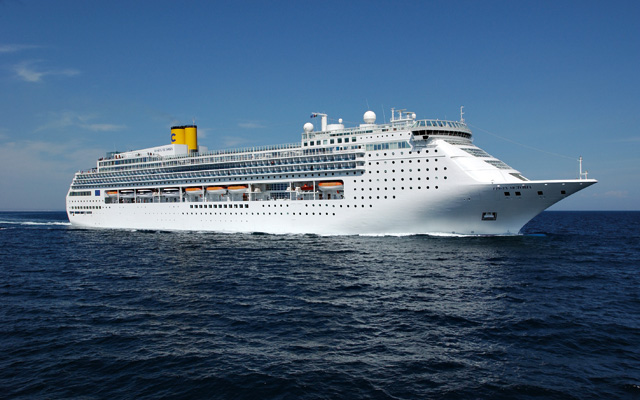
Costa Victoria

COSTA Cruises marked their 10th anniversary in Asia yesterday with a slew of new products that will be rolled out across all their ships positioned in the continent.

In their move to continuously innovate and embrace technology, Costa Asia has created the MyCosta mobile app and outfitted vessels with self-service kiosks.

Costa Victoria

The MyCosta app allows for free unlimited calls and messages with friends and family who are also onboard. This is aimed at helping make communication easier as travellers are often busy with their own activities in different parts of the vessel.

Meanwhile, the self-service kiosks help to streamline manpower processes. Available in several Asian languages such as Bahasa and Mandarin, the kiosks can be used to book shore excursions, spa treatments and make restaurant reservations, such as for the recently-launched Asian-style Hot Pot sessions.

The sessions (US$25 per head) will be held in the Magnifico Club Restaurant and available only for all Singapore sailings this winter season (October 22, 2016 to January 8, 2017). The Hot Pot features over 20 condiments.

Costa Asia’s marketing director, Eunice Lee, elaborated: “The Hot Pot will be rolled out to all ships in the Costa Asia fleet – Costa Victoria, Costa Serena, Costa Fortuna and Costa Atlantica. Asians, especially from the China and Japan markets, seem to like hot pot very much.”

When asked for an update on Costa’s Asia performance, Lee told TTG Asia e-Daily: “The China market is growing very well, and this year we have four ships, with the fifth ship –Costa neoRomantica – arriving next year.

“As for Japan, it is our first time entering the market (July 25 to September 8, 2016) with the 6D/5N itinerary from Fukuoka. Overall, in terms of capacity, we’ve grown about 30 to 40 per cent across Asia.”

Food aboard the Costa Victoria will also be certified halal for sailings from Singapore, Thailand or Malaysia from October 22, 2016 to January 8, 2017.

On why the company decided to introduce halal cuisine, Lee said: “We see a lot of demand, and it is a segment we can tap into. We are welcoming more Muslim guests and this segment is growing at about 30 per cent every year.”

Costa Asia is also recognising the important role that travel consultants have played in its success. As such, the company will be holding a Mr/Ms Costa Free Voyage contest for travel agents. Any employee of a travel agency which sells Costa Cruises Asia and is above 18, is eligible to enter.

To enter, travel agents have to answer the question “Which ship is your favourite Costa ship and why?”, include a picture of themselves with a Costa element such as a cup or sticker, and provide their personal information. All submissions should be sent to chiu@costa.it.

The best entry from agents in Hong Kong, Indonesia, Malaysia, the Philippines, Singapore and Thailand will each win one free cruise per year in a Balcony Twin Cabin, for 10 consecutive years.

The contest entry period runs from August 11 to September 2. Results will be announced on September 12.

Free rebooking for Emirates passengers affected by Dubai airport closing

0

emirates-dubai-airport
Damaged Emirates flight EK521 at Dubai International Airport

THOSE flying with Emirates and were affected by flight cancellations, delays or diversions due to the closing of Dubai International Airport for a few hours yesterday can rebook or cancel their bookings at no charge.

The world’s busiest airport was forced to close momentarily after Emirates flight EK521 arriving from Thiruvananthapuram, India at around 12.45 local time made an emergency crash-landing on the tarmac before bursting into flames.

All 282 passengers and 18 crew aboard were evacuated safely, but a firefighter who was part of the rescue efforts died.

The Boeing 777-300 aircraft was first delivered to Emirates in 2003. The cause of the accident is still unknown, but the Middle Eastern airline is currently “fully collaborating with local authorities to determine the cause of the incident”, it said in a statement.

The carrier added that all Emirates passengers holding tickets purchased on or before August 3 can rebook or cancel their bookings for free.

For a few hours, all flights at Dubai’s main airport were either cancelled, delayed or diverted due to the incident. Some flights were rerouted to Dubai’s smaller Al-Maktoum International Airport, which opened back in 2013.

Dubai International Airport gradually resumed operations at approximately 18.30 local time yesterday.

No Chinese tourist boycott in Chiang Mai, say travel agents

0

chiang-mai-chinatown
Warorot Market in Chiang Mai, Thailand

CHIANG Mai tour operators have downplayed fears of a Chinese tourist boycott, saying visitor numbers were on track to exceed last year.

Reports of a boycott have circulated in the Thai media, which suggested that Chinese visitors felt belittled after a number of incidents went viral. The president of the Association of Thai Travel Agents in Chiang Mai, Boonta Chailert, was quoted as saying there had been a 30 per cent drop in demand.

However, Natchuda Nanthichanaphat, inbound manager for Chiang Mai at Quality Express, said the numbers up to the beginning of August were 50 per cent stronger than the same time last year.

“The numbers have increased so fast,” she said. “We are trying to find interesting places in Chiang Mai and Chiang Rai for them.”

Natchuda said there were occasional culture clashes, but these were often blown out of proportion.

“Sometimes they don’t know the culture, sometimes there are problems, but if it’s a tour when there’s a guide, there’s usually no problem.”

The reports have put the Tourism Authority of Thailand (TAT) on the PR offensive, saying all visitors including the Chinese were welcome in Chiang Mai.

TAT’s latest data showed 240,000 Chinese visitors to Chiang Mai in the first quarter, a 40 per cent year-on-year increase.

Chiangmai To Travel owner Peter Rungrod, who has been critical of Chinese visitors for taking part in zero-dollar tours, said he had not noticed a drop in numbers.

The most obvious change was fewer Chinese driving to Chiang Mai after tougher enforcement of the laws governing foreign vehicles.

“If they can drive safely, that’s fine,” he said. “It’s for their safety too, and it’s good for everyone.”

Going beyond growing pains

0

Thailand’s minister of tourism & sports Kobkarn Wattanavrangkul tells Xinyi Liang-Pholsena why creating sustainable inclusive growth in tourism remains an enduring aim and challenge
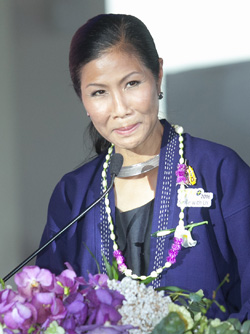
aug5_kobkarn-wattanavrangkul

What’s life after 30 (million arrivals) for Thailand?
We aim to be a quality leisure destination, and that’s definitely the route we would like to pursue. We no longer care much about the number of arrivals. The revenue, spending per head per day, length of stay, and quality of activities that we can offer tourists, etc, are our ultimate goals.

Are you making progress so far in being a quality destination?
Yes, we have improved. If comparing 1Q, 2Q or even last year with the previous year, we have seen an increase not only in terms of revenue but also spending per head. The length of stay grew a bit and we can still do more. That is why we are working very hard to introduce new destinations, and this partly explains why we are in Chiang Mai (for Thailand Travel Mart Plus; TTM+ where the interview was done) to showcase new destinations in the country.

For example, Lampang was introduced under TAT’s (Tourism Authority of Thailand) 12 Hidden Gems campaign last year, so this year’s 12 Hidden Gems Plus campaign introduced Lamphun (next to Lampang). This will help to extend the length of stay and work towards our mission of spreading tourism out for greater inclusion and wealth distribution.

We are also working on this under the National Tourism Board, which is a collaboration of 10 ministries headed by the deputy prime minister to oversee short- and long-term planning and budget for tourism. The roads, trains, national parks, airports, etc, should all be geared towards the same goal of sustainability and quality tourism.

‘Thainess’ is used to convey the tourism message. What’s Thainess to you?
It’s the way of the Thai people. There is no one Thainess – there can never be, because Thailand comprises so many ethnic groups and they’re all Thai. Chiang Mai used to be the capital of the Lanna kingdom; likewise for the south, which was another country in the olden days. Thainess means the ways of each region in Thailand, each reflecting their own identity.

To me, the Discover Thainess campaign is not just for international tourists but also to educate young Thais to value what we have and carry on the torch. This generation was born with computers, Internet, etc; they will only watch (TV shows like) Kim Kardashian, Gossip Girl and MasterChef; and think that’s value.

I used to hate ram Thai classical dance in school and now I appreciate it very much. You will pass the stage where you think the outside world is more modern and civilised.

How do you perceive Thailand’s marketing efforts on the global front? Will Amazing Thailand be changed soon?
I think we are on the right track. I have received many comments that we should change (the slogan), but I believe in the good things that we have. We should have one identity, but develop from that and keep the goodness of what we have.

Personally, I like the new Amazing Thailand logo reflecting the Land of Smiles. At the end of day it’s about the people, that Thai people love to serve, give our best and give happiness to our friends and guests – it’s in our blood.

What’s the greatest challenge in the Thai tourism landscape now?
It’s the management. With the increment of tourist arrivals, questions on how to manage the safety, convenience or even the identity of the place come into play. For example, by promoting community tourism we hope farmers will be less reliant on agriculture for a living, but if there are too many visitors, (communities) might start to lose their identity and sell their land for quick cash.

Is it hard to manage the China market, which is coming in droves?
It’s hard but manageable, and Chiang Mai and Chiang Rai are good examples. The success of the Lost in Thailand movie brought big numbers of Chinese, but the local community has learnt how to manage and communicate with the Chinese despite their initial complaints. If we understand (visitors’ motivations and intentions), that they come because they love Thailand and our culture, then that’s a good starting point already. We should seek to educate (the Chinese visitors), let them know the proper etiquette, say, refrain from talking loudly in temples or using the toilet in a certain way.

They (a discussion during TTM+) said only five per cent of Chinese have passports [laughs], and we have to ask ourselves if we want another five per cent to come to Thailand.

And do you want them?
[Pauses] Yes, but we have to prepare ourselves. I think they will learn faster than the first generation, just like Thais. I had the same problem when I took my Thai dealers abroad 20 years ago (Kobkarn was formerly the head of Toshiba Thailand) – they were loud, full of complaints, grabbed everything when they shop, must have Thai food every day, etc. The second generation (of Thai dealers) is much more sophisticated. I think it’s the same thing for Chinese. Once the country opens up, they will learn faster and faster.

How do you deal with the regular negative coverage of Thailand’s tourism sector and regain trust from visitors?  
We have to face the problem, take it seriously and talk to the people – the team, the locals, those concerned – and not give up. If we look at it from a broader view, the percentage (of incidents) has decreased (against arrival numbers). We have to continuously improve our safety measures. We will never have enough police, tourist police, equipment, so joint efforts are important – how everyone  can help to take care of tourists in each destination. A good thing is (stakeholders) now believe tourism is their duty; in the past everyone would point their finger at the other person.

What have you achieved so far to challenge your critics that you came into this role without experience in tourism?
The growth of the industry is an achievement of the team. I don’t know everything, but I believe in teamwork and supporting a good team. We have many good things and plans in place already. If anyone coming (into this position) always comes up with new things, continuity will become a problem because plans change according to the new minister, governor or the political party.

You don’t need the best ideas as much as commitment and actual implementation. (Continuity) is something the National Tourism Board has put an emphasis on in order to solve some of the past problems. I know I’ll be changed after elections next year, but the ideas and planning should not be changed so there’s continuity.

What do you want your legacy to be?
If people only think of (creating a legacy) there will be no continuity [tears]… If I were to think ‘this should be (for) me’, the new minister would think the same thing and we would go back to (square one). We should think for the country, not for the individual – it’s important to put the country above self.

This article was first published in TTG Asia, August 5, 2016 issue, on page 10. To read more, please view our digital edition or click here to subscribe.

Indonesia on the radar of longhaul MICE planners

0

LONGHAUL MICE planners who attended the Business Matching session in Jakarta last week have said they are keen to organise events, meetings or post-conference incentive tours in Indonesia.

The 12 European buyers were in the city as part of the post-tour organised by the Indonesia Ministry of Tourism, in conjunction with the Singapore MICE Forum and the Asia Meeting & Incentive Travel Exchange 2016.

Stephane Mockels, head of MICE, Emile Weber Voyages France, said: “We have confirmed plans for three conferences to take place in Singapore and we are now looking for an incentive destination for our corporate clients in the banking and insurance industries. These will be small groups with very high level (executives), and we are looking for high-end products.”

Kin Fung Michael Chow, director – corporate development & staff affairs of Provident Global Capital Group, South Pacific Asia and The Great China Region, said the group has 49 projects all over the world and organises 60 meetings and four incentive trips every year.

Chow said: “We used to organise them in Europe but with the economic situation, we now look at Asia. As we have many meetings, we keep looking for new destinations. I just did one in Bali and am looking at what Jakarta has to offer.”

Meanwhile, Shell Eastern Petroleum has just set up an events team in Singapore and the company is looking to expand its supplier base in the Asia-Pacific region; Indonesia is included, while Singapore will be the hub.

For AD Meetings & Events based in Rome, Italy, its major business is in Asia and its director, Debora Comune, said destinations like Bali are not new anymore and she was instead interested in up-and-coming ones like Toraja in South Sulawesi.

One of the sellers, Abdullah Lajam, managing director of Abbey Travel Indonesia, said regionally, Indonesia is seen as a good value destination when compared to Singapore, Thailand and Vietnam where prices have started to rise. However, the challenge is having to create awareness of the destination among event planners.

Wienna Valerie Damanik, account director of Cakrawala Event Organizer Indonesia, also sees the potential of Jakarta as a destination, and expects the Ministry of Tourism to organise such events more often to help buyers become more familiar with the destination.

PCMA Asia-Pacific Scholarship benefits 20 APAC association executives

0

TWENTY association executives from around Asia-Pacific have benefitted from the inaugural PCMA Asia-Pacific Scholarship which funded their trip to Singapore in July for the PCMA Meetings Forum.

Created by the Professional Convention Management Association (PCMA) and the Singapore Exhibition and Convention Bureau, the scholarship also drew interest and funding support from Tourism New Zealand, Thailand Convention and Exhibition Bureau, Korea Tourism Organization.

Usa Thisyakorn, president of the Pediatric Infectious Diseases Society of Thailand and congress chair of the 8th Asian Congress of Pediatric Infectious Disease 2016, was one of the scholarship recipients. She told TTGmice e-Weekly that the scholarship provided her with a “valuable learning experience” at the Forum.

“The discussions here are in-depth and the perspectives are global – not something association executives can easily access in Thailand,” Usa remarked, adding that she found the education focus on sponsorship issues especially beneficial.

Haesook Ma, assistant manager, convention team with the Korea MICE Bureau, said her organisation was motivated to field three local association executives for the scholarship as it recognised the educational value of the Forum.

Ma said: “The international speakers at the Forum provided our scholars with a precious opportunity to learn from the more experienced Western associations. While we have the annual Korea MICE Expo, we do not have anything that focuses heavily on association education.”

“Furthermore, our scholars act as ambassadors of South Korea when they converse with fellow association executives,” she added.

Commenting on the outcome of the scholarship, Jeannie Lim, executive director, conventions, meetings & incentive travel with the Singapore Tourism Board, said: “We are heartened by the interest and response to the inaugural PCMA Asia-Pacific Scholarship. The positive feedback received from the scholarship recipients underscores the need to champion and cultivate association executives and meeting planners. With our partners, we hope to grow the scholarship and further support association executives in the region next year.”

Expanded BITEC targets events from lifestyle and entertainment sector

0

bitec-expansion

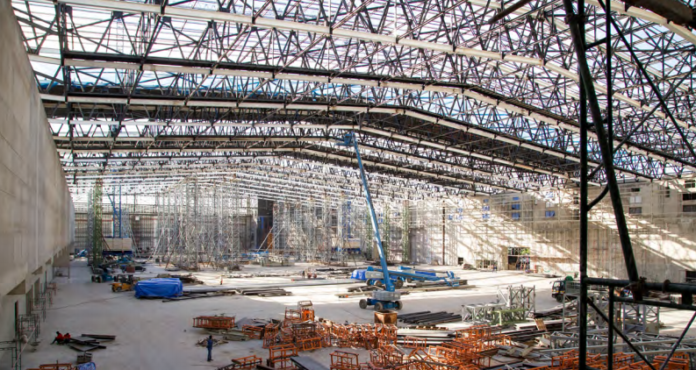
IN AN effort to capitalise on the six billion baht (US$170 million) expansion due for completion in November, the Bangkok International Trade and Exhibition Centre (BITEC) is seeking to secure major international concerts and theatre shows.

Set to become one of the largest venues in Asia – almost doubling in size to boast 70,000m2of event space – managing director, Panittha Buri, said BITEC would continue to be an industry leader for international trade exhibitions, consumer fairs and conventions.

Along with three new event halls, BITEC will add 12 meeting rooms, three convention halls, retail and dining areas, an outdoor concert area and a mixed-use office building to its existing facilities. It will also boast greater transport links with a direct connection to Bangkok’s skytrain network, a terminal for 31 coaches and a helipad.

However, its growth strategy is “geared towards the lifestyle and entertainment sector such as concerts, live entertainment and theatre productions”.

“This was one of the driving factors to create EH 100 – our new lifestyle event hall with a 25m-high ceiling. The height allows for greater possibilities in terms of staging and backdrops as well as light and sound shows,” Panittha said.

Panittha said that once Phase II was complete, BITEC would be able to accommodate 40,000 people at a time. The expansion will be ready in time for Grand Metalex 2016, which will use all 10 event halls.

“Our organisers will be able to deliver bigger events, not only in terms of space, but also in terms of profile and exposure,” she said. “There will be opportunities to deliver multiple concurrent events – different events held at the same time, but separated by halls.”

First, business class traffic surge between Europe, APAC: Amadeus

0

qatar-airways-first-class

THE Gulf carriers have recorded strong growth for first and business class passenger volumes between Europe and Asia-Pacific from 2014 to 2015, according to Amadeus IT Group’s travel intelligence team based on worldwide bookings made on the GDS.

For the 10 most popular routes between Europe and Asia-Pacific operated by Emirates, Qatar Airways and Etihad Airways, Amadeus observed a staggering 67 per cent increase in first class passenger volume and a 47 per cent increase in business class traffic in 2015 from the previous year. The increase was seven per cent across all cabin classes for these routes.

In terms of passenger numbers, the top 10 most popular routes between Europe and Asia-Pacific are Frankfurt-Bangkok, London-Bangkok, London-Delhi, London-Mumbai, Paris-Tokyo, Paris-Seoul, Munich-Bangkok, London-Hong Kong, Amsterdam-Bangkok and Paris-Bangkok.

At the same time, passenger traffic for flights between Europe and Asia-Pacific going through Doha, Abu Dhabi and Dubai airports also increased by eight per cent.