TTG Asia
Asia/Singapore Saturday, 20th December 2025
Page 1794

Sharing economy should be embraced with caution

0

taleb-rifai-secretary-general-unwto_online

UNWTO secretary-general, Taleb Rifai

EMERGING business models in travel should not be stifled, but fully embraced, a panel organised by the UNWTO agreed, albeit not without implementing measures to ensure a level playing field with traditional players.

At the 60th Meeting of the UNWTO Commission for Europe held in Vilnius, Lithuania, an expert panel made up of representatives from Airbnb, TripAdvisor, BeMyGuest, the Lithuanian Hotels and Restaurants Association, the European Commission, and more, concurred that the business opportunities afforded by peer-to-peer distribution should not be missed out on.

This is especially so as tourism dollars become ever more important for nations. “At a time when economic recovery is still quite slow, tourism has been a major contributor to the European economy, generating 404 billion euros (US$450 billion) in exports,” said UNWTO secretary-general Taleb Rifai.

However, this should not cause unnecessary friction within the industry. At the same time, consumers still need to be ensured the same level of protection afforded to them by current industry stalwarts.

Said Rifai: “Sustainable measures and other tourism policies should be applicable to all business models, so that all stakeholders across the value chain hold the same level of responsibility with regard to the sector.”

“Only by working in cooperation and by building bridges will the tourism community be able to capitalise on the strong potential of the sector,” he added.

China’s HNA takes 13% stake in Virgin Australia

0

virgin-australia

HNA Aviation Group, a division of HNA Group, has taken a shareholding of approximately 13 per cent in Virgin Australia Group as part of a strategic commercial alliance between the two companies.

Under the agreement, new direct services between China and Australia will be jointly looked into, as well as greater cooperation in terms of codesharing, loyalty programmes, lounge access and promotions.

According to Virgin Australia, HNA is also committed to increasing its stake in the company over time up to 19.99 per cent.

Further details about the alliance will be made available as they finalise, according to a statement released by Virgin Australia, adding that the alliance is still subject to authorisation by the Australian Competition and Consumer Commission, regulatory approvals from Chinese authorities and other commercial conditions.

Commenting on the move, CEO of Virgin Australia, John Borghetti, said: “The alliance will see us leverage the opportunities offered by China as well as the synergies of HNA’s comprehensive aviation supply chain.

“The Chinese travel market represents Australia’s fastest growing and most valuable inbound travel market, with inbound passengers from China increasing by approximately 18 per cent per year since 2010.”

Airlines operating under the HNA Aviation Group include Hainan Airlines, Tianjin Airlines, Lucky Air and Urumqi Air, among many others.

Less Singapore outbound as spending power declines

0

changi-airport-departure_online

Singapore Changi Airport 

OUTBOUND traffic from Singapore shrank 1.3 per cent in the first five months of 2016 compared to the same period last year.

According to business management consultant GfK, the reduced traveller volume can be attributed to cutbacks on discretionary expenditure such as leisure travel, fueled by a weakening economy and uncertainty in the financial markets plus rising redundancy in job functions.

China remains the top destination for Singapore travellers but growth in arrivals has dipped to a mere 1.3 per cent. Meanwhile, Thailand maintains its runner-up position.

Of the top 10 destinations, only Indonesia reported double digit growth with a 10.8 per cent gain in arrivals, while Japan saw a significant 18.4 per cent drop.

Commenting on Japan’s slow growth, Anthony Tan, APAC lead for travel and hospitality at GfK, said: “Despite continued efforts in marketing Japan, the recent earthquake has taken its toll.”

Currency effects are keeping certain markets buoyant however, with Australia seeing a modest 1.2 per cent growth due to favourable exchange rates for the Singapore dollar.

Beyond the 10 most popular destinations, South Korea saw a 16 per cent increase in Singaporean arrivals, a trend that may be partially attributed to the appreciation of the Singapore dollar against the Korean won.

Data shows that South-east Asia is still the most travelled region for Singapore travellers with traditional beach holiday destinations like Phuket, Bali and Langkawi gaining in popularity versus those further afield.

GfK predicts leisure travel to continue facing strong headwinds in the second half of the year as market conditions remain tenuous.

Cambodia’s top markets get better visa facilities

0

visa-5

TOURISM industry leaders in Cambodia have welcomed a move by the Ministry of Tourism last month that will allow Chinese, South Korean and Japanese visitors three-year multiple-entry visas.

The visas are valid for 30-days per visit and are expected to be introduced later this year.

Said World Express Tour president Ho Vandy: “This is good because it saves time and money for tourists, and in turn they will spend more time and money in Cambodia. It is a big incentive.”

Kimhean Pich, founder and CEO of Discover the Mekong, noted that while the move will result in lower income from visa fees for the authorities, there is the potential for financial gain elsewhere.

“With the visa scheme, the tourism sector should make more money and this will result in higher tax revenues for the government,” he said.

Ang Kim Eang, president, Cambodia Association of Travel Agents, said that the new visa plans should also help boost slower growth in arrivals.

He said: “The increase in arrivals last year is small, so the government is now trying to promote tourism by offering longer visas to the top three tourist markets for Cambodia.”

Best Western shows MICE prowess with Bangkok property

0

best-western-plus-wanda-grand-bangkok

BEST Western Hotels & Resorts last week launched the Best Western Plus Wanda Grand Hotel, its latest property in Bangkok.

A 927m² ballroom with a capacity for almost 900 people is among the nine separate function spaces at the hotel, which is expected to become “a major hub for the MICE market”.

“With its extensive conference and banqueting facilities, including four floors of function rooms, Best Western Plus Wanda Grand Hotel will surely become a firm favourite with meeting planners,” said Olivier Berrivin, Best Western’s managing director of international operations for Asia.

The new hotel offers a range of accommodation for short and long stays, a restaurant serving modern Thai and international cuisine, a cafe, an outdoor infinity pool and a fitness centre.

Best Western Plus Wanda Grand Hotel is located close to Don Mueang International Airport, the Thai government complex, IMPACT convention centre, World Medical Center and several major retail and entertainment areas.

SMF 2016 seeks to encourage new ways of doing events

0

janet_tan-collis_headshot_image1
SACEOS president, Janet Tan-Collis, believes that
SMF 2016 will help event professionals to think
outside the box

THE annual Singapore MICE Forum (SMF) will return this year with the theme,<RE:Imagine> MICE, aimed at spurring event professionals towards new ways of doing events and embracing a more radical strategy to empower talent and results-driven organisations.

Taking place on July 28 and 29, the event organised by the Singapore Association of Convention and Exhibition Organisers (SACEOS) will be held at the Sands Expo & Convention Centre in Singapore.

The programme will include a day of business matching at the Asia Meeting and Incentive Travel Exchange.

SACEOS president, Janet Tan-Collis, believes that SMF 2016 will further enhance an event professional’s strong operations skills by helping them think outside the box and deliver unconventional ideas that work.

She said: “An event of leaders for leaders by leaders, SMF 2016 serves as a powerful platform where leaders of our industry co-create content and co-explore business and growth opportunities.”

More than 450 local, regional and international MICE and Events professionals are expected to attend this year’s Singapore MICE Forum.

GAHP announces roundtables for association decision-makers

0

FOLLOWING its launch in October 2015, the Global Association Hubs Partnership (GAHP) – an alliance comprising Destination DC, Dubai Association Centre, Singapore Exhibition & Convention Bureau (SECB) and visit.brussels – has announced a host of dialogue platforms for senior executives of associations.

Roundtable discussions will be held throughout the rest of the year – at the European Association Summit 2016 in Brussels, May 31-June 1; the Global Engagement Summit in Washington DC, June 8-9; American Society of Association Executives Annual Meeting in Salt Lake City, August 13-16; and IMEX America in Las Vegas, October 18-20.

“A key aspect of the GAHP is to establish and drive on-going dialogues with association decision-makers. These platforms provide opportunities for associations to exchange best practices while also allowing us to understand their market demands and leverage their experiences and advice,” said Jeannie Lim, executive director, conventions, meetings & incentive travel, SECB.

“We can then facilitate suitable channels to meet their global expansion needs.”

Meanwhile, Hervé Bosquet, who was head of the Brussels Convention Bureau until the end of 2015, has been appointed senior advisor of GAHP.

Melissa Riley, vice-president, convention sales & services, Destination DC, said: “The long-term issues guiding Hervé and all partners are to help associations to build capacity, better support their overseas membership and grow their activities.”

The Luxury Collection works its way through the tummies of event delegates

0

PROPERTIES under Starwood Hotels and Resorts’ The Luxury Collection portfolio are flaunting their epicurean charms to court an “increasingly sophisticated” corporate event clientele that demands quality dining experiences.

Speaking to TTGmice e-Weekly last Friday, Starwood’s director, brand management for St Regis and The Luxury Collection, F&B marketing, Yeoh Fay-Linn, said: “Corporate groups are more sophisticated these days. They want a local taste of the destination during their dining functions, and they don’t want to be limited to the usual banquet rooms.”

“True to The Luxury Collection’s new tagline (which came with a brand rejuvenation last September), Hotels that Define the Destination, our properties bring the destination’s unique flavour into corporate events,” she said.

“For instance, while the Keraton At The Plaza hotel in Jakarta has a Mexican chef to add variety (to the cuisine options), attention is also paid to providing a spread of popular local food.”

Yeoh said hotels must think out of the box when providing banqueting options today.

Yeoh said The Andaman, Langkawi, partners with The Els Club Teluk Datai golf course to deliver dining functions at a particular scenic hole, while planners desiring a corporate social responsibility element in their dining function can book the Dine in the Dark programme at Sheraton Grande Sukhumvit’s BarSu. Servers are visually-impaired individuals that are paid a regular wage and 50 baht (US$1.40) from each cover they serve goes to charity.

“Understanding that dining plays an important role in the travel and event experience, The Luxury Collection properties also have a strong culinary offering through experienced chefs,” Yeoh remarked.

The prowess of these chefs are celebrated in a series of pop-up dining events called Epicurean Journeys, with one taking place this week in Singapore.

Bindu Panicker, general manager, corporate communications with India-based ITC Hotels which has 11 properties under The Luxury Collection, said her hotels are renowned for their “dedication to culinary excellence” and that a premium dining experience delivered by various chefs from across its portfolio in a single location can be organised.

Such arrangements have been adopted by clients such as Dell, GE and Cisco Systems, shared ITC Hotels corporate chef Manjit Gill.

Panicker has also observed greater emphasis on healthy dining, sustainable sourcing and local food options at corporate events. To cater to these needs, ITC properties have rolled out Alert Meets, a menu that is locally sourced and prepared to keep participants alert and focused; SunyAqua, ITC’s signature drinking water that is sourced and bottled on premises and infused with healthy indigenous herbs; One Bite Wonders, small portions of snacks that are convenient to eat during networking events and will help delegates maintain an appetite for main meals later on; and Responsible Sourcing, a promise to provide farm to plate organic food.

Dusit’s power lady

0

Having made her mark as CEO of Thaicom Plc, Suphajee Suthumpun, the new group CEO of Dusit International, is someone to watch in this industry

3-june-suphajee-suthumpun-dusits-group-ceoWhy did you decide to leave Thaicom and join the hotel industry and Dusit?
Originally, I felt I had completed my mission in bringing Thaicom to the world. I was ready to retire from full-time work, and wanted to create more impact by supporting organisations and universities, and by doing executive coaching (she had attended an intensive bootcamp for established leaders at Berkeley Executive Coaching Institute).

I joined Dusit as board member last October and discovered that its passion and vision are exactly the same as mine, i.e. bringing a Thai brand to the world, and developing hospitality education, both of which are impactful. I’m happy and honoured to join that mission, so I accepted the role as group CEO on January 1.

You brought the Thai satellite operator from nowhere to eighth in the world and increased its market capitalisation five to six times in the four-plus years you ran the company. Can we expect that kind of growth at Dusit?
I’m not looking at just number of hotels, more schools to open or to increase the size of company. My goal is first, for each of our 4,000 employees – and this will grow to 12,000 as we open more hotels  in the next few years – to be proud of being a part of Dusit and to believe in our mission. Ultimately, for Dusit to be seen as the homegrown asset of the country which all Thais can be proud of.

You’re the third CEO in the company’s 67-year history and the first from outside the founding family. Do you mark a new era for Dusit?
I’d say a new chapter, not new era – that’s too big; I’m not that significant. I’m joining the company when it is already in a tremendous growth phase with both its lines of businesses – hotels and hospitality education – and so my priority will be to strengthen its foundation to support this growth.

Some say founding lady Thanpuying Chanut Piyaoui still ‘controls’ Dusit as advisor to the board. Is Dusit still more family-run than corporate even with your appointment?
We’re public-listed and governed by a board of directors. The former CEO (Chanin Donavanik) has (retired, but is chairman of the executive committee) and now has me as a professional to run the business. They (mother and son) are still part of the board but there is no family intervention. Khun Chanin has been kind, open and respectful of my team and I. Besides, their vision is the same as mine; it’s ingrained in the whole company: We would like to bring Thai hospitality to the world and help strengthen the education system not just for us, but  the whole industry.

What challenges does being a woman and coming from outside the industry pose?
At Thaicom, and at IBM, there were no women (at the top)!

Gender is not an issue. When you get to a certain level, it’s gender neutral. It’s about your professionalism in approaching challenges, how you respect individuals, share your vision and objectives, and so on.

The obstacle many women have is a doubt in themselves.

As for coming from a different industry, I also believe that at this level, content is less important than context. You have to hire capable people who have more knowledge than you. My managing director of education has more than 20 years of experience. Such people bring in the content. You have to understand the context and make use of it wisely.

In fact, coming from a different industry is an advantage. You look at things with fresh eyes; you don’t have paradigms.

You’re leading Dusit at a time of huge growth and I notice hotels are opening from Asia to Africa.
Yes, we need to ensure we can support this growth at the quality level. We operate 29 properties and in the pipeline are over 40 signed contracts that will be operational in the next three to five years. A majority are new-builds and, yes, they are across Asia, the Middle East and Africa. This year, we are targeting to sign another 20 hotels.

How will you strengthen Dusit’s foundation to support this much growth?
For quality growth, I’m looking at five areas: people, process, property & branding, technology and financial capability.

First, people. As our staff size will grow from 4,000 to 12,000 in the next three to five years, we must ensure we have the right competencies and organisation structure to support this growth. We also need to build a strong culture and career paths for our people. While we keep our legacy and core values, we need to adapt to the current environment and ensure that we remain relevant to the new generation.

People are the heart of everything and this is why we must have the right foundation for it.

Second, we need efficient and consistent processes. If I were to pick two or three, it would be to tighten up our customer relations (owners & guests) process es, and our internal and external communications processes.

Third, property & branding. As hotel owners, we need to look at each of our property. For example, do we have the facilities for the market we’re after? Our asset in Phuket is targeting MICE; we need to invest in a conference hall to support the drive.

It’s not only about renovations but how to optimise the value of the property. We have a big land next to our property in Hua Hin, should we invest in a mixed-used or residential development?
We’re also starting a branding exercise to look at our four brands (Dusit Thani, Dusit D2, Dusit Deverana and Princess). and evaluate if each brand promise is clear.

Fourth is technology, which is closest to my heart. How can we use technology to strengthen our processes, also to increase direct bookings to our website while providing convenient and relevant information to customers?

Last but not least, financial capabilities. To do all of the above, we need financial capabilities. Our group will eventually hire a chief investment officer, which it has never done before, to explore the various investment instruments to support our plans.

Shiploads of Chinese guests

0

3-june-gdr_ship-shot

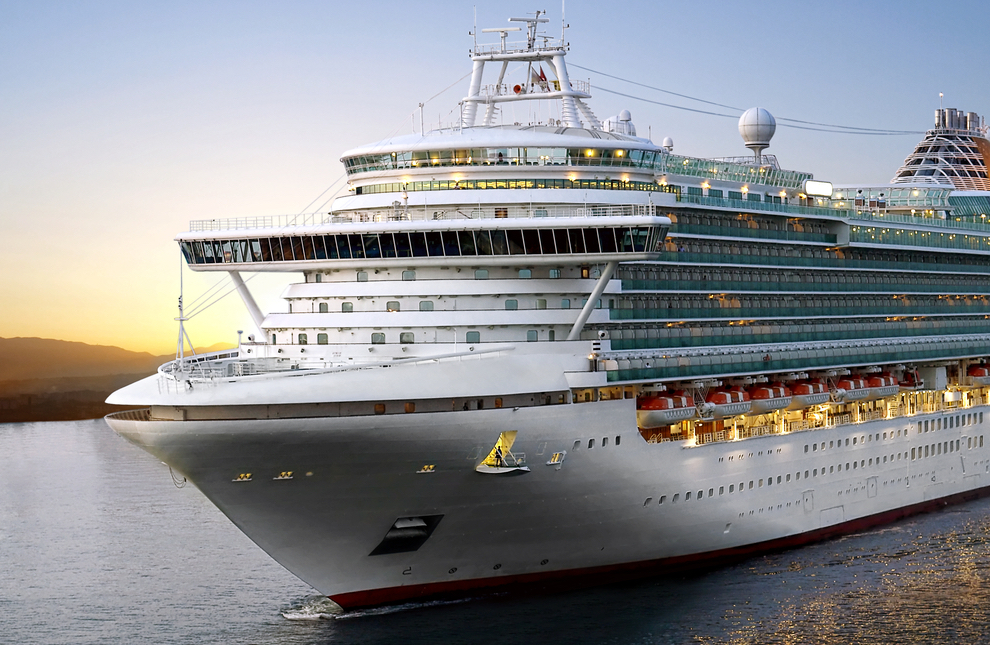
Back when international cruise lines were only beginning to show some interest in homeporting a ship in Asia either for a few months or year-round cruising, I remember expressing an opinion in TTG Asia how shortsighted they were to be deploying their older ships. The Asian leisure outbound market was already going places, its travellers quickly grasping a quality product from a musty one. The cruise companies had thought their older ships sent to Asia, as they took delivery of new ones, were good enough for the region.

How quickly they learn. Today no fewer than nine new ships are being built for Asians, in particular mainland Chinese travellers. Godmothers of ships were Western superstars; Chinese actress Fan Bingbing has broken that roster as godmother of Royal Caribbean International’s Ovation of the Seas (discounting Michelle Kwan, godmother of Oasis of the Seas, who is Chinese-American).

You can imagine China-centric ships as having more family or interconnecting rooms as it is said that Chinese passengers are multigenerational. There will be Chinese and international entertainment, many more restaurants, KTV rooms, retail outlets, and so on.

Will I go onboard? No. One appealing aspect of cruising for me is to meet people of different nationalities; besides, with passengers being Mandarin-speaking, I will feel like fish out of water.

Hotels face the same issue today: Too much of any nationality is not good for business.

There will be Chinese travellers themselves who will not go onboard these tailored-for-Chinese ships for the same reason that they’d rather enjoy an international atmosphere. Fortunately for cruise companies, there are millions of Chinese passengers and it is unlikely their ships will go empty. They will be full, but given the enormous capacity that is heading to China, the question is – at what price?

Currently, with the exception of Genting Hong Kong’s Dream Cruises – Asia’s first luxury cruise line which will debut in November and based in Guangzhou – many of the new China-specific ships look like they are designed for the mass market. While their entry should be welcomed as new products means more marketing, international cruise lines must approach the market with the loftier goal of trying to expand it. After all, the concept of cruising as a wonderful alternative vacation to land holidays is still a nascent one in China.

It is sad if cruise companies just ‘pack them in’ and make hay while the sun shines. With shiploads of Chinese passengers, cruise lines have the rare opportunity to win over a captive audience to cruising with excellent value, quality offerings and service.

Otherwise the real price we will be paying is an unrealised potential of the Chinese cruise market.

And that’s as huge as these ships are.